New World Screwworm

New World Screwworm

New World Screwworm Latest News

Recently, the Department of Health and Human Services reported the first human case of the flesh-eating parasite, the New World screwworm, in the United States. 

About New World Screwworm

  • Screwworms are a type of blue-grey blowfly, typically found in South America and the Caribbean.
  • The parasites are named after the screwlike way they burrow into the tissue.
  • Screwworms — specifically females — are attracted to and lay eggs on and in open wounds or another entry point like a nasal cavity in warm-blooded animals and, rarely, humans.
  • One female can lay up to 300 eggs at a time and may lay up to 3,000 eggs during her 10- to 30-day lifespan.
  • These eggs hatch into larvae (known as maggots), which burrow into the wound using their sharp mouth hooks to feed on the living flesh, leading to infestation.
  • After feeding, the larvae fall into the ground, burrow into the soil and emerge as adult screwworm flies.

What are the Symptoms of Infestation?

  • Its infestations can be extremely painful, especially in humans, with a high mortality rate if left untreated.
  • Symptoms of infestation include: wounds or sores that do not heal; bleeding from open sores; feeling larvae movement within a skin wound or sore; and a foul-smelling odour from the site of the infestation.

Source: IE

New World Screwworm FAQs

Q1: What is the New World screwworm disease?

Ans: It is a species of parasitic fly typically found in South America and the Caribbean.

Q2: Does screwworm infect humans?

Ans: They can infest many types of animals, including livestock, pets, wildlife and, in rare instances, humans.
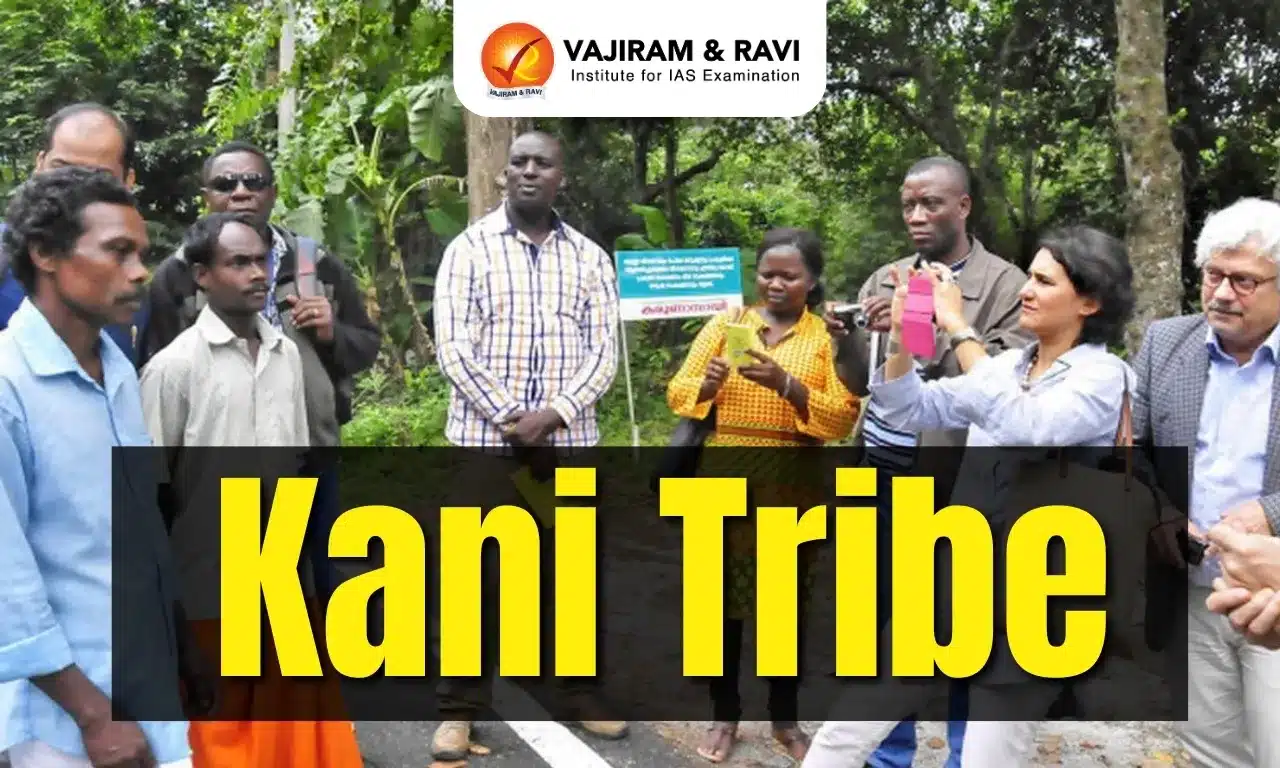

Kani Tribe

Kani Tribe

Kani Tribe Latest News

Recently, Kuttimathan Kani belongs to the Kani tribal community who revealed Arogyapacha has died.

About Kani Tribe

  • The Kani tribals or Kanikarars are a traditionally nomadic community, who now lead a settled life in the forests of the Agasthyamalai hills of the Western Ghats in the Thiruvananthapuram district of Kerala.
  • Every Kanikkarar settlement has a community council for maintaining social control.
  • It consists of the Mootukani (chief), the Vilikani (convenor) and the Pilathi (physician and priest). All these offices are hereditary.
  • The traditional structure of the community was that of a highly coordinated unit under the control of a tribal chief, called the Moottukani.
  • Traditionally the Moottukani combined the roles of the law giver, protector and dispenser of justice, physician and priest.
  • Pilathi are believed to have magical powers and perform various rituals and chant mantras with the help of an instrument named ‘Kokara.”
  • Today, the Kanis live in several tribal hamlets, each consisting of 10 to 20 families dispersed in and around the forest areas of Thiruvananthapuram district.
  • Occupation: The Kani tribe’s traditional occupations include the production of handicrafts, seasonal collection of minor forest products such as honey and beeswax, and cultivation of edible plants such as tapioca, banana, millets and cash crops.
  • Language: They speak Tamil and Malayalam as their language.
  • They have vast knowledge about medicinal plants.
  • According to Kani tribal customs, only the Plathies have the right to transfer and disseminate their traditional medical knowledge.

 Source: DTE

Kani Tribe FAQs

Q1: Which Indian state is home to the Kani tribe?

Ans: Kerala

Q2: Who are the kanikkar tribes in Kerala?

Ans: Kanis or Kanikkars are a prominent group among the tribals in Kerela mostly found in western parts of Trivandrum and Kollam districts.

National Designated Authority (NDA) to Enable Carbon Emissions Trading Regime

National Designated Authority (NDA) to Enable Carbon Emissions Trading Regime

National Designated Authority (NDA) to Enable Carbon Emissions Trading Regime Latest News

The Ministry of Environment, Forest and Climate Change recently announced a National Designated Authority (NDA), a mandatory requirement under the provisions of the 2015 Paris Agreement, to enable a carbon emissions trading regime.

About National Designated Authority (NDA) to Enable Carbon Emissions Trading Regime

  • Within the Paris Agreement, a section called Article 6 defines the contours under which such an emissions trading regime or a market can take shape. 
  • A long-standing bone of contention among countries, Article 6 was finally passed at the 29th edition of the climate Conference of the Parties (COP29) in Baku, Azerbaijan, in November 2024.
  • The creation of an NDA is a mandatory requirement under Article 6.
  • NDA will be a 21-member committee headed by the Secretary of the Environment Ministry. 
  • Representatives include officials from the Ministries of External Affairs, Steel, and Renewable Energy, and NITI Aayog.
  • The NDA’s responsibilities include 
    • recommending to the Union government a list of activities that can be considered for the trading of emission reduction units from projects under Article 6;
    • modifying them from time to time in line with national sustainable goals, country-specific criteria, and other national priorities; 
    • receive projects or activities for evaluation, approval, and authorisation; 
    • authorise the use of emission reduction units from projects for use towards achievement of Nationally Determined Contributions (NDC).
  • The NDC refers to commitments by countries to reduce emissions by diverting their energy consumption towards renewable energy sources and taking action to reduce carbon concentrations in the atmosphere.
  • India’s NDC commits to reducing its GDP’s emission intensity by 45% by 2030 from 2005 levels, achieving 50% electric power capacity from non-fossil fuel sources by 2030, and creating an additional carbon sink equivalent to 2.5-3 billion tonnes of carbon dioxide by 2030 through afforestation.

Source: TH

Carbon Emissions Trading Regime FAQs

Q1: The creation of a National Designated Authority (NDA) for carbon emissions trading is a requirement under which article of the Paris Agreement?

Ans: Article 6

Q2: Who will head the 21-member National Designated Authority (NDA) to Enable Carbon Emissions Trading Regime in India?

Ans: Secretary, Ministry of Environment

Q3: By 2030, India aims to achieve what percentage of its electric power capacity from non-fossil fuel sources?

Ans: 50%

Super Garuda Shield 2025

Super Garuda Shield 2025

Super Garuda Shield 2025 Latest News

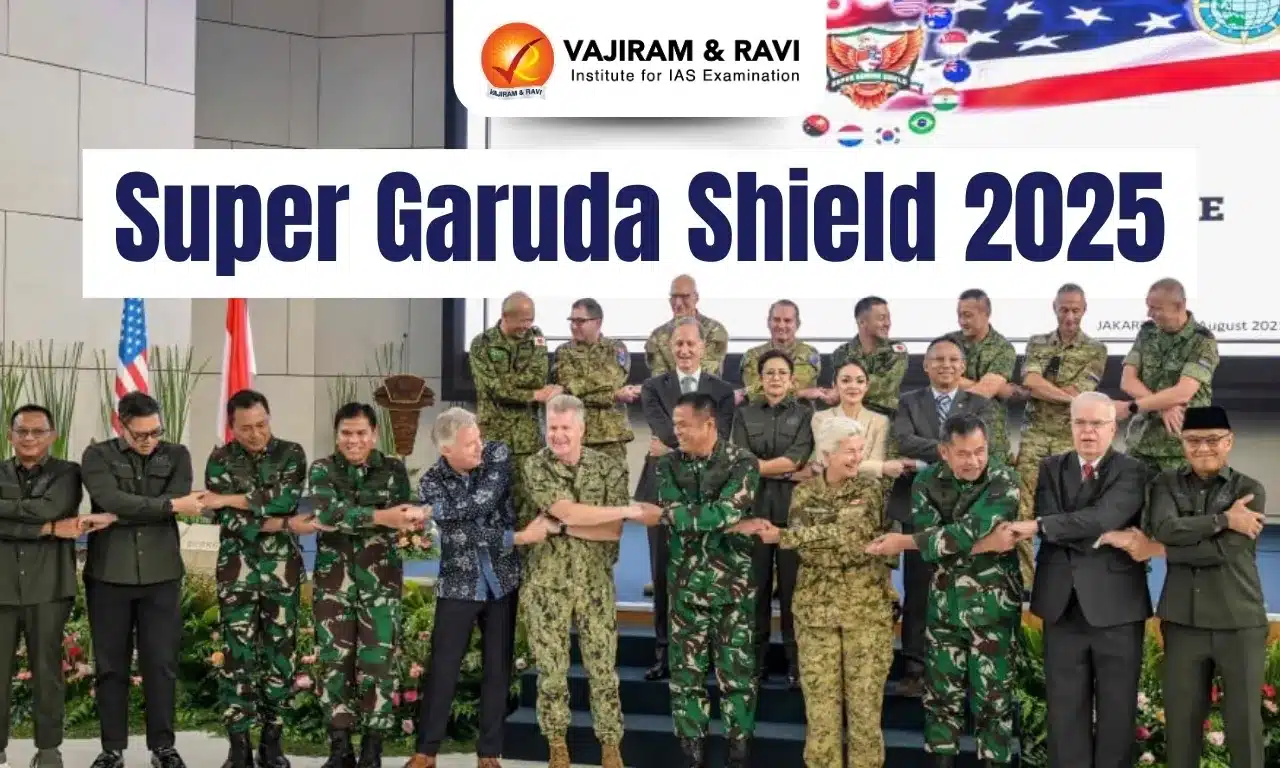
Indonesia and the United States recently launched the annual joint military exercise, Super Garuda Shield 2025.

About Super Garuda Shield

  • It is a large-scale, multinational joint military exercise designed to enhance interoperability, build mutual trust, and strengthen collective readiness among the participating armed forces of partner nations. 
  • Originally established in 2006 as a bilateral information and training exchange between the United States and Indonesia under the name Garuda Shield, the exercise expanded in 2022 to include additional partner nations, reflecting the growing importance of defense cooperation in the Indo-Pacific region.
  • The “Super” was added to the title of the exercise in 2022.
  • The exercise has been held annually in Jakarta, Indonesia.
  • With more than 4,100 Indonesian and 1,300 American troops taking part, the 2025 edition of Super Garuda Shield will be the largest ever.
  • This year’s participating nations include Australia, Brazil, Canada, France, Germany, Indonesia, Japan, the Netherlands, New Zealand, the Republic of Singapore, South Korea, the United Kingdom, and the United States. 
  • Observing nations include Cambodia, India, and Papua New Guinea.
  • It will feature maritime and field training events to include engineering construction activities, staff training exercises, airborne operations, jungle training, air assault operations, an amphibious exercise, a large field training exercise and combined arms live fire exercises, and a High Mobility Artillery Rocket System (HIMARS) live fire exercise.

Source: TD

Super Garuda Shield FAQs

Q1: Super Garuda Shield exercise is led by which countries?

Ans: It is led by the Indonesian National Armed Forces and the United States Indo-Pacific Command

Q2: Where is the Super Garuda Shield exercise held annually?

Ans: Jakarta, Indonesia

Q3: What is the primary objective of the Super Garuda Shield exercise?

Ans: To enhance interoperability, build mutual trust, and strengthen collective readiness among the participating armed forces of partner nations.

Inverted Duty Structure under GST

Inverted Duty Structure under GST

Inverted Duty Structure under GST Latest News

Tax experts have broadly welcomed the Centre’s proposal for a two-tier GST rate structure while cautioning that critical issues such as inverted duty structure need to be addressed for the reform to be fully effective.

About Inverted Duty Structure under GST

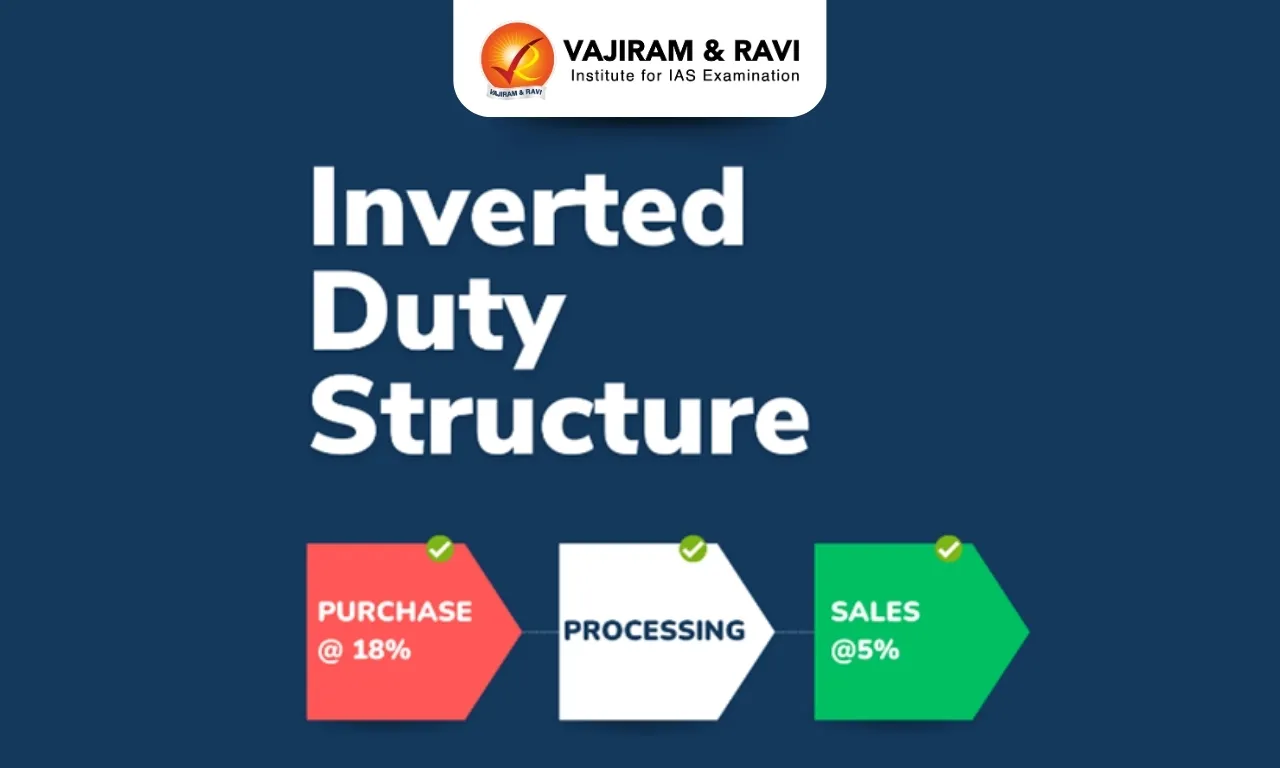
  • An inverted duty structure in GST occurs when the tax rate on inputs exceeds the tax rate on output. 
  • For example, in the textile industry, the input tax rate ranges from 12 to 18%, while most finished products are taxed at 5%. 
  • This implies that sellers have fewer options for offsetting the cost of input taxes.
  • This situation might result in an accumulation of input tax credit (ITC), which can’t be used for the output tax liability. 
  • The accumulation of ITC due to unutilized ITC will have to be carried over to the next financial year until it can be utilized by the registered taxpayer for payment of output tax liability. 
  • This can result in higher tax costs for businesses and/or an increase in the hidden tax cost for consumers. 
  • To solve this issue, the GST law allows for a refund or reversal of ITC. 
  • The refund is determined using a method including the turnover of the inverted rated supply, the net ITC, and the overall turnover.
  • Exceptions where the refund of the unutilised input tax credit cannot be claimed, are as follows:
    • Output supplies are nil-rated or fully exempt supplies except for supplies of goods or services or both as may be notified by the Government on the recommendations of the GST Council.
    • If the goods exported out of India are subject to export duty.
    • If the supplier claims a refund of output tax paid under the IGST Act.
    • If the supplier avails duty drawback or refund of IGST on such supplies.

Source: HBL

Inverted Duty Structure under GST FAQs

Q1: What does an inverted duty structure under GST mean?

Ans: When the tax rate on inputs exceeds the tax rate on outputs.

Q2: What is the main issue caused by an inverted duty structure?

Ans: Accumulation of input tax credit (ITC), which can’t be used for the output tax liability.

Q3: Under GST law, how is the issue of accumulated input tax credit (ITC) due to inverted duty structure addressed?

Ans: By allowing refund or reversal of ITC.

Rare Earth Magnets

Rare Earth Magnets

Rare Earth Magnet Latest News

Automakers too are cutting down on certain non-essential equipment in their vehicles to reduce the usage of rare earth magnets. 

About Rare Earth Magnet

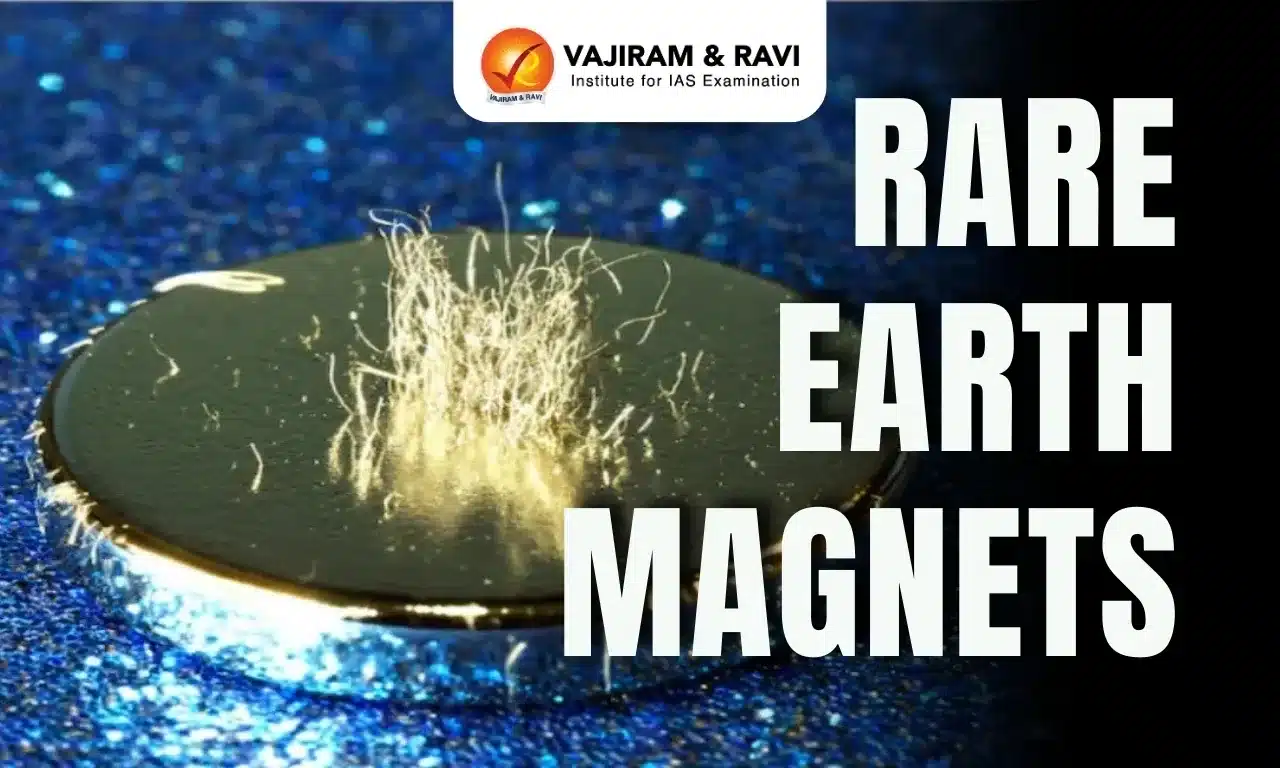
  • Rare earth magnets are a type of permanent magnet made from alloys of rare earth elements. 
  • Properties: They are known for their exceptional magnetic strength, high energy density, and superior performance compared to other types of magnets.
  • These magnets are widely used in various industries due to their ability to generate strong magnetic fields in compact sizes.
  • Their global supply chain is currently dominated by China, which accounts for about 90% of processing capacity.

Rare Earth Magnets Types

  • Neodymium (Nd-Fe-B) and Samarium Cobalt (SmCo) are the two most common types of rare earth magnet materials. Both types are extremely strong.
  • Neo magnets are composed primarily of neodymium, boron and iron, and samarium cobalt is composed of samarium and cobalt.
  • Both materials come in different grades, or strengths, and have different magnetic and physical properties.
  • These magnets tend to be brittle and are vulnerable to corrosion. Manufacturers typically nickel-plate the material to protect it from oxidation.

Rare Earth Magnets Uses

  • These are used in medical applications such as magnetic resonance imaging (MRI) machines, as well as X-Rays and positron emission tomography (PET) imaging. 
  • They are also utilized in aviation, national defense, electronic devices, smartphones, consumer goods, jewelry, hard drives, and electric vehicles (EVs), to name several applications.

Source: PIB

Rare Earth Magnet FAQs

Q1: What are rare earth magnets?

Ans: Rare earth magnets are a type of permanent magnet made from alloys of rare earth elements.

Q2: What are the three primary elements that make up Neodymium magnets?

Ans: Neodymium, boron, iron

Vibrant Villages Programme (VVP)

Vibrant Village Programme

Vibrant Villages Programme Latest News

Union Home Minister and Minister of Cooperation recently inaugurated a two-day workshop on the Vibrant Villages Programme (VVP) in New Delhi, organised by the Border Management Division of the Ministry of Home Affairs.

About Vibrant Villages Programme

  • It is a Centrally Sponsored Scheme implemented over the financial years 2022-23 to 2025-26.
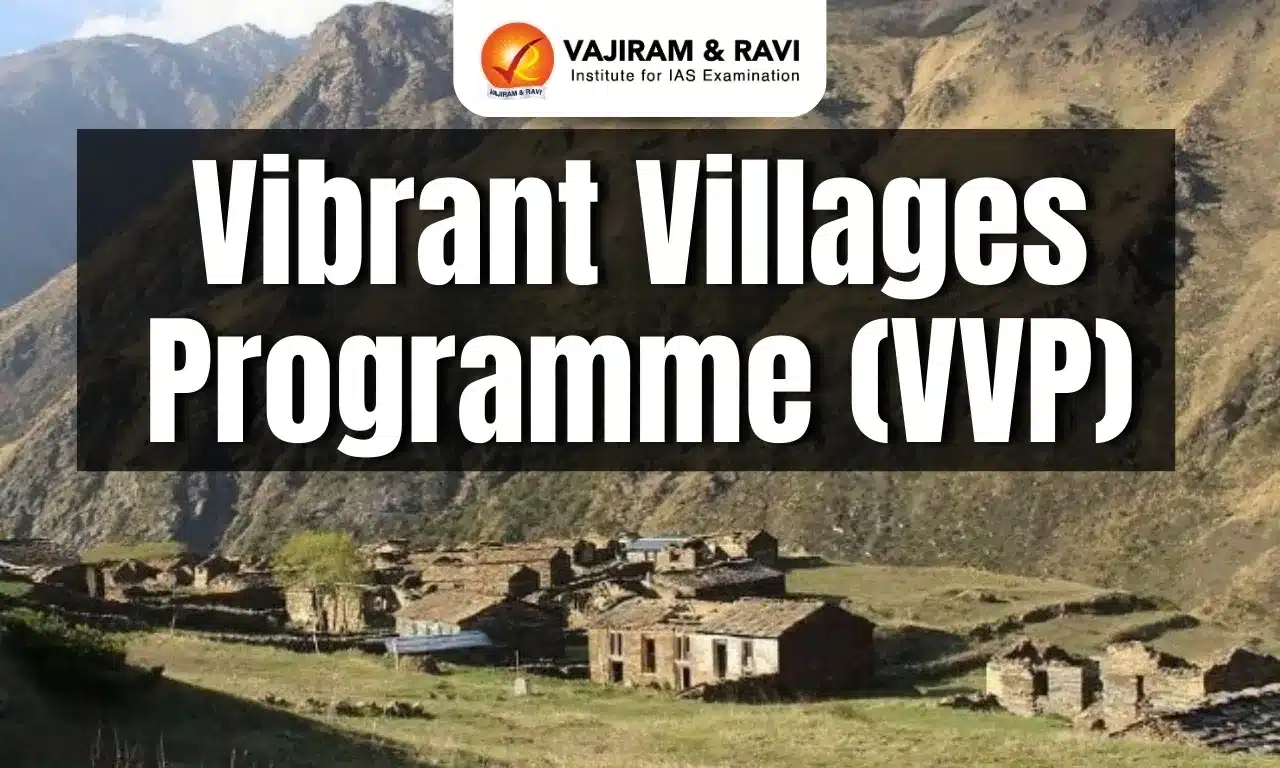
  • Objective: Comprehensive development of the 2,967 villages in 46 blocks in 19 districts abutting the northern border in the States of Arunachal Pradesh, Himachal Pradesh, Sikkim, Uttarakhand, and UT of Ladakh.
  • This will help in encouraging people to stay in their native locations in border areas and reversing the outmigration from these villages, adding to improved security of the border. 
  • The programme will provide funds for the development of essential infrastructure and the creation of livelihood opportunities.
  • The programme envisages focused areas of intervention in the select villages for the creation of opportunities for livelihood generation through promotion of tourism and cultural heritage, skill development and entrepreneurship, and development of cooperative societies, including agriculture/horticulture, cultivation of medicinal plants/herbs, etc.
  • Interventions also include providing road connectivity to unconnected villages, housing and village infrastructures, energy including renewable energy, television and telecom connectivity.
  • Vibrant Village Action Plans will be created by the district administration with the help of Gram Panchayats, and 100% saturation of Central and state schemes will be ensured.
  • There will be no overlap with the Border Area Development Programme.

Vibrant Villages Programme-II (VVP-II)

  • It is a Central Sector Scheme (100% Centre funding) approved by the Union Cabinet during April 2025, furthering its commitment for the vision of Viksit Bharat@2047 for ‘Safe, Secured & Vibrant land borders’.  
  • It has a total outlay of ₹6,839 crore. 
  • The Programme would help in the comprehensive development of the villages located in the blocks abutting international land borders (ILBs), other than the Northern border already covered under VVP-I.
  • With a total outlay of Rs.6,839 crore, the programme shall be implemented in select strategic villages in the States/UTs of Arunachal Pradesh, Assam, Bihar, Gujarat, J&K (UT), Ladakh (UT), Manipur, Meghalaya, Mizoram, Nagaland, Punjab, Rajasthan, Sikkim, Tripura, Uttarakhand, Uttar Pradesh, and West Bengal till the FY 2028-29.
  • Both VVP-I and VVP-II are transformative initiatives designed to make border villages self-reliant and vibrant.

Source: DDN

Vibrant Villages Programme FAQs

Q1: The Vibrant Villages Programme is implemented during which financial years?

Ans: 2022–23 to 2025–26

Q2: Vibrant Villages Programme covers villages along which border?

Ans: Northern border in the States of Arunachal Pradesh, Himachal Pradesh, Sikkim, Uttarakhand, and UT of Ladakh.

Q3: What is the objective of Vibrant Villages Programme?

Ans: To make border villages self-reliant and vibrant.

National Awards to Teachers

National Awards to Teachers

National Awards to Teachers Latest News

Recently, the Department of Higher Education, Ministry of Education selected 16 teachers in Higher Educational Institutions (HEIs) and Polytechnic for National Awards to Teachers (NAT) 2024.

About National Awards to Teachers

  • It was first instituted in the year 1958 to felicitate remarkable teachers and head masters in their quest to improve the quality of school education and enrich their students’ learning experiences.
  • This Award program is designed to honour and celebrate the unique contribution of some of the finest teachers in the country.
  • These awards are given away by the President of India (or) the Vice President of India on 5th September (Teacher's Day) every year to give public recognition to meritorious teachers working in primary, middle and secondary schools.
  • The NAT is being executed under the overall supervision of the Ministry of Education (MOE).

Eligibility Criteria for National Awards to Teachers

  • School teachers and Heads of Schools working in recognized primary / middle / high / higher secondary schools under the following categories:
  • Schools run by State Govt./UTs Administration, schools run by local bodies, schools aided by State Govt. and UT Administration and Private schools affiliated to State/UTs Board.
  • Central Govt. Schools i.e. Kendriya Vidyalayas (KVs), Jawahar Navodaya Vidyalayas (JNVs), Sainik Schools run by Ministry of Defence (MoD), Schools run by Atomic Energy Education Society (AEES) and Eklavya Model Residential Schools (EMRS) run by Ministry of Tribal Affairs.
  • Normally retired teachers are not eligible for the award but those teachers who have served a part of the calendar year (at least for four months i.e. upto 30th April in the year to which National Awards relate) may be considered if they fulfill all other conditions.
  • Educational Administrators, Inspectors of Education, and the staff of training Institutes are not eligible for these awards.
  • Teacher / Headmaster should not have indulged in tuitions.
  • Only regular Teachers and Heads of Schools with a minimum ten years of services are eligible.
  • Contractual Teachers and Shiksha Mitras are not eligible.

Source: PIB

National Awards to Teachers FAQs

Q1: What is the prize money for the National Award for teachers?

Ans: INR 50,000/-

Q2: Which is the highest award for teachers?

Ans: The Global Teacher Prize, an international award, celebrates outstanding teachers from around the world, including India.

River Tawi

River Tawi

River Tawi Latest News

Recently, India forewarned Pakistan as a “humanitarian gesture” about a potential flood in the Tawi river.

About River Tawi

  • It is a major left-bank tributary of the Chenab River and an important river in the Jammu region. 
  • It is considered sacred and holy. The Tawi River is also called "Surya Putri" in ancient texts.
  • Origin: It rises from Kalpas Kund of Seo Dhar in the Bhaderwah in the Doda district of Jammu and Kashmir, then descends to Sudh Mahadev.
  • It traverses steep hills and plains before entering Pakistan's Punjab province and merging with the Chenab River. 
  • The catchment area of the river up to the Indian border (Jammu) is 2168 sq.km. and falls in the districts of Jammu, Udhampur, and a small part of Doda.
  • Tributaries of Tawi River: On the way, many tributaries such as Bhuteshwari (Birma), Duddhar, Jajjhar, etc., join this river.
  • The Tawi River traverses through and divides the city of Jammu into two segments
  • The water of this river is the main source of water for the entire city.

Source: IE


Tawi River FAQs

Q1: The Tawi River is a major tributary of which river?

Ans: Chenab River

Q2: The Tawi River originates from which location?

Ans: The Tawi rises from Kalpas Kund of Seo Dhar in the Bhaderwah in the Doda district of Jammu and Kashmir.

Q3: What is the approximate length of the Tawi River?

Ans: 141 km

Q4: After flowing through Jammu and Kashmir, the Tawi River enters which province of Pakistan?

Ans: Punjab

Q5: The Tawi River divides which major city into two parts?

Ans: Jammu

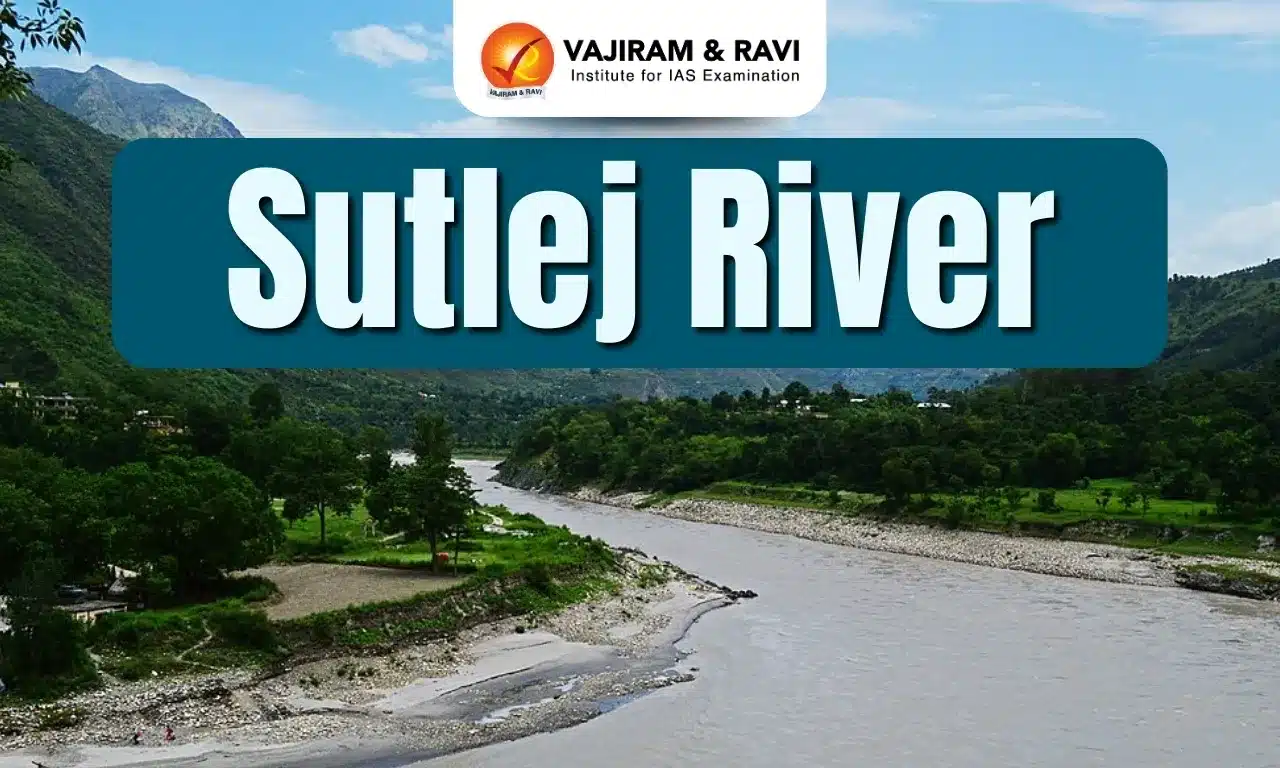
Sutlej River

Sutlej River

Sutlej River Latest News

With the Sutlej swelling due to incessant rain in its catchment areas and heavy releases from dams, evacuation in several low-lying villages of Fazilka and Ferozepur districts began late Tuesday afternoon.

About Sutlej River

  • It is an important tributary of the Indus River.
  • It is the longest of the five big rivers that flow through the Punjab region in northern India and Pakistan.
  • It is also known as “Satadree”.
  • It is located north of the Vindhya Range, south of the Hindu Kush segment of the Himalayas, and in Pakistan. 
  • Course:
    • Origin: It rises on the north slope of the Himalayas in Lake Rakshastal in southwestern Tibet at an elevation above 15,000 feet (4,600 metres).
    • It is one of only three Trans-Himalayan rivers originating in the high Tibetan Plateau that cuts across the mighty Himalayan ranges. The other two are the Indus and the Brahmaputra.
    • The Sutlej enters India by flowing west and south-westwards through the Shipki La Pass in Himachal Pradesh at an altitude of 6,608 metres. 
    • The river then flows through Punjab near Nangal before meeting the Beas River. The merger of these two rivers goes on to form 105 Km of the India-Pakistan border. 
    • The river continues to flow for another 350 Km before joining the Chenab River.
    • The combination of the Sutlej and Chenab Rivers forms the Panjnad, which finally flows into the Indus River.
  • Length: It has a total length of 1550 km, out of which 529 km is in Pakistan.
  • The hydrology of the Sutlej is controlled by spring and summer snowmelt in the Himalayas and by the South Asian monsoon. 
  • Tributaries: Spiti River, Baspa River, Soan River, and the Nogli Khad are the major tributaries of the Sutlej River.
  • The waters of the Sutlej are allocated to India under the Indus Waters Treaty between India and Pakistan, and are mostly diverted to irrigation canals in India.
  • There are many hydroelectric and irrigation projects across the river, such as the Bhakra-Nangal Dam, Kol Dam, Nathpa Jhakri Project, and Baspa Hydel Scheme.

Source: IE

Sutlej River FAQs

Q1: The Sutlej River is a major tributary of which river system?

Ans: Indus River

Q2: The Sutlej originates from which lake in Tibet?

Ans: Rakshastal

Q3: The Sutlej enters India through which pass?

Ans: Shipki La Pass

Q4: What is the total length of the Sutlej River?

Ans: It has a total length of 1550 km.

Enquire Now