Punatsangchhu-II Hydroelectric Project

Punatsangchhu-II Hydroelectric Project

Punatsangchhu-II Hydroelectric Project Latest News

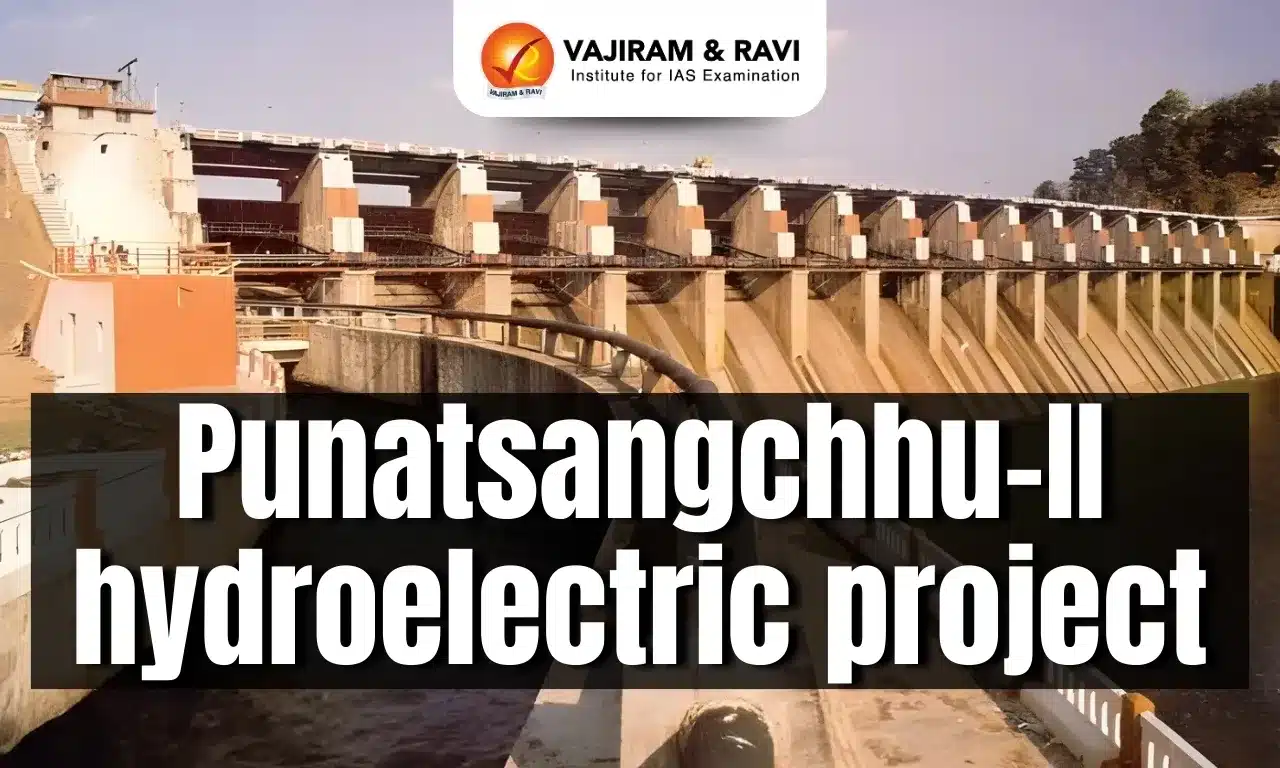
The 1020 MW Punatsangchhu-II Hydroelectric Project in Bhutan has been successfully completed with the synchronisation of its last and final unit, Unit 6 (170 MW), with the power grid, the Embassy of India in Thimphu said recently.

About Punatsangchhu-II Hydroelectric Project

  • It is a 1 GW run-of-the-river hydroelectric power generating facility located in the Wangdue Phodrang district of Bhutan.
  • It is located on the right bank of the Punatsangchhu River.
  • The project is being developed by the Punatsangchhu II Hydroelectric Project Authority, under an Inter-Government Agreement (IGA) between the Royal Government of Bhutan and the Government of India.
  • It is funded by the Government of India (GoI): 30% grant and 70% loan at 10% annual interest, repayable in 30 equated semi-annual installments commencing one year after the mean date of operation. 
  • With the completion of the Punatsangchhu-II project, Bhutan's installed power generation capacity has increased by about 40 percent to over 3500 MW.

Punatsangchhu-II Hydroelectric Project Features

  • The project involves the construction of a 91 m-high and 223.8 m-long concrete gravity dam, along with an 877.46 m-long and 12 m-diameter diversion tunnel with a discharge capacity of 1118 cubic metres per second.
  • The project also involves a 168.75 m-long and 22 m-high upper cofferdam and a 102.02 m-long and 13.5 m-tall downstream cofferdam.
  • The main dam will have seven sluice gates measuring 8m-wide and 13.20 m- high each.
  • It will comprise an underground powerhouse measuring 240.7 m-long, 23 m-wide and 51 m-high. The powerhouse will be equipped with six Francis turbines of 170MW capacity each. 
  • The turbines will operate at a water head of approximately 236m.

Source: TRIB

Punatsangchhu-II Hydroelectric Project FAQs

Q1: The Punatsangchhu-II Hydroelectric Project is located in which country?

Ans: Bhutan

Q2: What is the installed capacity of Punatsangchhu-II Hydroelectric Project?

Ans: How is the Punatsangchhu-II project funded by the Government of India?

Q3: Punatsangchhu-II project is funded by the Government of India (GoI): 30% grant and 70% loan at 10% annual interest

Ans: What type of dam is constructed under the Punatsangchhu-II project?
Gorumara National Park

Gorumara National Park

Gorumara National Park Latest News

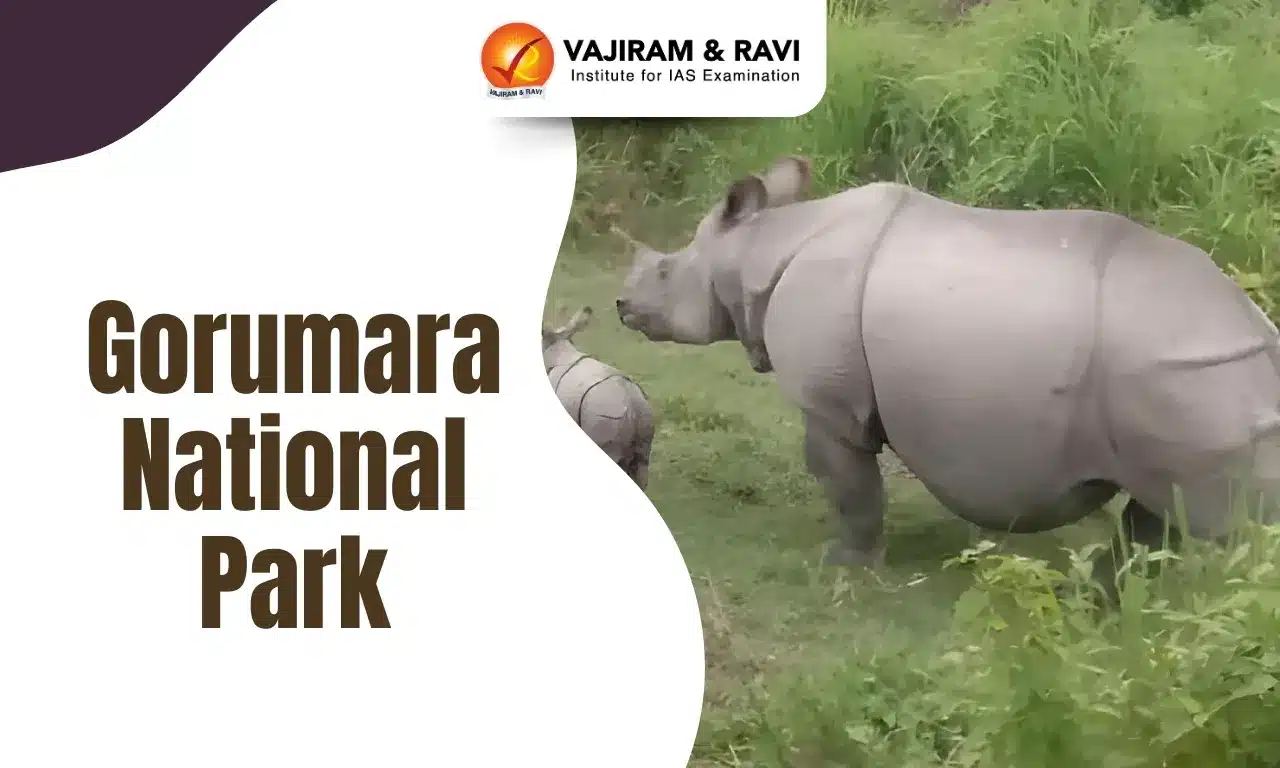
The population of one-horned rhinos has risen at the Gorumara National Park in Jalpaiguri with the birth of two rhinos recently.

About Gorumara National Park

  • It is located in the Jalpaiguri district of West Bengal. 
  • It was declared a national park in 1992 and covers an area of approx 79.45 sq.km.
  • It is situated on the bank of the Murti and Raidak rivers  in the Terai region of Dooars on the foothills of the Eastern Himalayas. 
  • The park is known for its rich diversity of flora and fauna and is home to many endangered species, especially the one-horned rhinoceros.
  • Flora:
    • Typical flora include: Sal forests with Common Teak, Rain Tree (Shirish or Albizia lebbeck), and Silk Cotton (Shimul or Bombax malabaricum) trees, Bamboo groves, Terai grassland vegetation, and tropical riverine reeds
    • It is also home to numerous tropical orchids.
  • Fauna: It is home to many animals such as Indian rhinoceros, Asian elephant, Indian bison, leopard, sambar deer, barking deer, spotted deer, wild boar, and many species of birds, including peafowl, red jungle fowl, and the Indian hornbill. 

Key Facts about Greater One-Horned Rhino

  • The greater one-horned rhino, also known as the Indian rhinoceros, is the largest of the three Asian rhinos and, together with African white rhinos, is the largest of all rhino species.
  • Scientific Name: Rhinoceros unicornis
  • Distribution:
    • It can be found in India and Nepal, particularly in the foothills of the Himalayas.
    • In the past, Greater one-horned rhinos roamed freely in the floodplains and forests alongside the Brahmaputra, Ganges, and Indus River valley.
    • Kaziranga National Park in Assam, India, contains the largest population (2,401).
  • Habitat: Greater one-horned rhinos are semi-aquatic and often take up residence in swamps, forests, riversides, and anywhere that is near nutritious mineral licks.
  • Features:
    • The largest of the Asian rhinos, male Indian rhinos weigh approximately 2,200 kg (nearly 4,840 pounds) and range in height from 170 to 186 cm (67 to 73 inches) and are 368 to 380 cm (145 to 150 inches) long. 
    • It is identified by a single black horn about 8-25 inches long and a grey-brown hide with skin folds, which gives it an armor-plated appearance.
    • The species is solitary, except for females with small calves. Males maintain loosely defended territories.
    • The rhino is primarily a grazer. Its diet consists almost entirely of grasses, but it also eats leaves, branches, fruit, and aquatic plants.
  • Conservation Status:
    • IUCN Red List: Vulnerable.

Source: TELE

Gorumara National Park FAQs

Q1: Gorumara National Park located is located in which state?

Ans: West Bengal

Q2: Gorumara National Park is situated in which geographical region?

Ans: Dooars Terai Region, Eastern Himalayas

Q3: The Gorumara National Park is located on the banks of which rivers?

Ans: Murti and Raidak

Pong Dam

Pong Dam

Pong Dam Latest News

The water level breached the danger mark at Pong Dam recently.

About Pong Dam

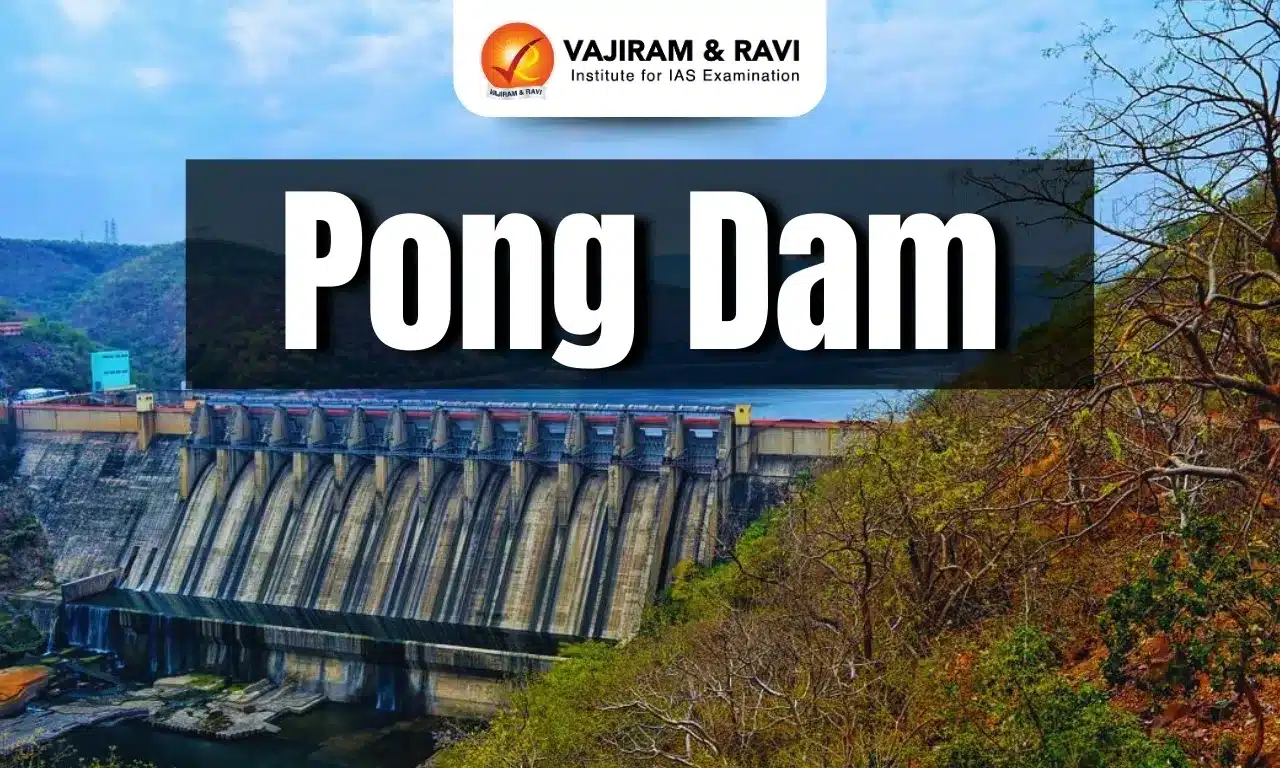
  • The Pong Dam, also known as the Beas Dam, is an earth-fill embankment dam constructed on the river Beas in the wetland of Shivalik hills in the Kangra district of Himachal Pradesh.
  • The purpose of the dam is water storage for irrigation and hydroelectric power generation.
  • The construction of the dam began in the year 1961 and was completed in 1974, and at that time it was known as the tallest of its type in the country.
  • The raised water level thus invariably created an artificial lake called the Maharana Pratap Sagar, after the great ruler of Mewar.
  • It was declared a bird sanctuary in 1983 due to its waterfowl diversity. 
  • Over time, the reservoir emerged as a sanctuary for migratory birds, leading to its designation as a Ramsar Wetland Site in 2002.
  • It is home to several species of avifauna, some of which include Barheaded Geese, Red-neck Grebe, northern lapwing, common teal, spot-billed duck, Eurasian coot, black stork, egrests, etc.
  • It is the most important fish reservoir in the foothills of the Himalayas in Himachal Pradesh.

Pong Dam Features of Dam

  • The Pong Dam is a 133 m tall and 1,951 m long earth-fill embankment dam with a gravel shell. 
  • It is 13.72 m wide at its crest, which sits at an elevation of about 435.86 m above sea level.
  • The base of the Pong Dam is about 610 m wide and has a total volume of 35,500,000 metre cube.

Source: TRIB

Pong Dam FAQs

Q1: Pong Dam is constructed on which river?

Ans: It is constructed on the river Beas.

Q2: Pong Dam is located in which state?

Ans: Himachal Pradesh

Q3: What is the name of the artificial lake created by Pong Dam?

Ans: The lake is called the Maharana Pratap Sagar, after the great ruler of Mewar.

Glanders

Glanders

Glanders Latest News

Recently, the Department of Animal Husbandry & Dairying (DAHD) under the Ministry of Fisheries, Animal Husbandry & Dairying  has issued the Revised National Action Plan on Glanders. 

About Glanders

  • It is caused by the bacterium Burkholderia mallei.
  • It primarily affects equines such as horses, mules, and donkeys, and poses risks to other animals as well as humans.
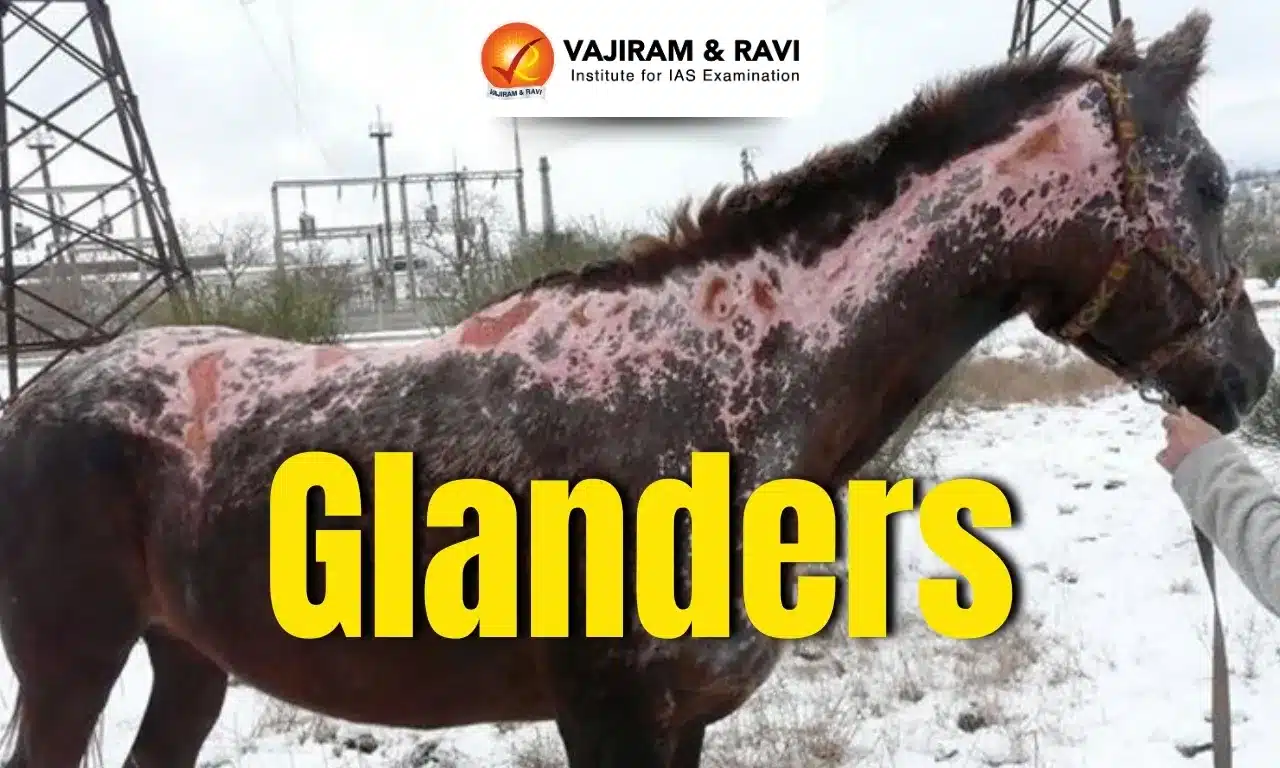
  • Signs: The disease causes nodules and ulcerations in the respiratory tract and lungs in animals. A skin form, known as ‘farcy’, also occurs.
  • Glanders is commonly contracted via the following routes:
    • Ingestion of food or water contaminated with nasal discharge from infected (carrier) animals
    • Contact with contaminated harness components
    • Ingestion of infected horse meat
  • Glanders has traditionally been clinically categorized into nasal, pulmonary and cutaneous forms based on the most commonly affected organ systems in equines.
  • It remains sporadically reported in a number of Asian, African, Middle Eastern, and South American countries.
  • Glanders is an WOAH-listed disease as described in the Terrestrial Animal Health Code of the World Organisation for Animal Health (WOAH). As indicated in the WOAH Terrestrial Animal Health Code any occurrence of glanders must be notified to the WOAH.
  • The disease is notifiable under the Prevention and Control of Infectious and Contagious Diseases in Animals (PCICDA) Act, 2009.  

Source: PIB

Glanders FAQs

Q1: What is the disease called glanders?

Ans: Glanders is an infectious and life-threatening disease that mainly affects horses, donkeys or mules caused by the bacterium Burkholderia mallei.

Q2: What is another name for glanders?

Ans: Glanders has also been known by other names viz., equinia, malleus, droes and farcy.

Project Aarohan

Project Aarohan

Project Aarohan Latest News

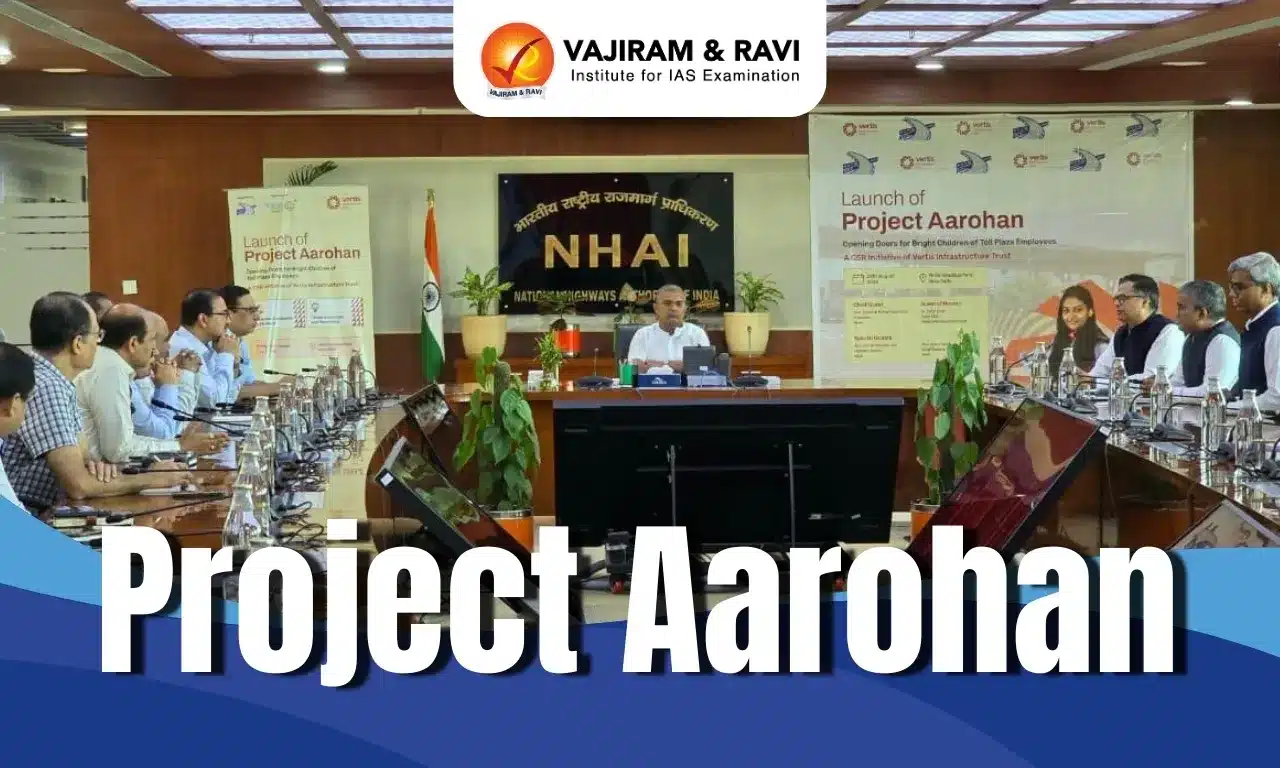
Recently, the National Highway Authority of India launched Project Aarohan.

About Project Aarohan

  • It has an objective to support the educational aspirations of the children of toll plaza employees.
  • It was launched by the National Highway Authority of India.
  • The nationwide project will reach a community of toll‑plaza personnel that are deployed at a vast network of toll plazas on National Highways.
  • The initiative aims to address financial barriers, bridge socio-economic divides and provide equal access to quality education for students from economically weaker sections, including girls from low-income households, first-generation learners and those from Economically Weaker Sections/Scheduled Castes/Scheduled Tribes/Other Backward Classes and minority communities.
  • The program combines financial aid with structured mentorship, skill-building workshops, and career guidance to holistically prepare students for higher education, employment and entrepreneurship.
  • It will be implemented by SMEC Trust’s Bharat Cares,

Funding for Project Aarohan

  • The first phase of ‘Project Aarohan’ will have a fund allocation of Rs. 1 Crore and will span from July 2025 to March 2026.
  • The project aims to cover 500 students from Class 11 to the final year graduation, each receiving an annual scholarship of Rs.12,000 during FY 2025–26.
  • Additionally, 50 bright students aspiring for postgraduate and higher studies will be supported with scholarships of Rs. 50,000 each.

Source: PIB

Project Aarohan FAQs

Q1: What is National Highways Authority of India (NHAI)?

Ans: It is a statutory body under the administrative control of the Ministry of Road Transport and Highways entrusted with developing, maintaining, and managing National Highways.

Q2: What are the two major projects developed by NHAI?

Ans: Two major projects developed by NHAI are the National Highways Development Project (NHDP) and the Bharatmala Pariyojana.

Matsya Shakti Project

Matsya Shakti’ project

Matsya Shakti Project Latest News

The ‘Matsya Shakti’ project will be launched by the Union Minister of State for Fisheries, Animal Husbandry & Dairying.

About Matsya Shakti Project

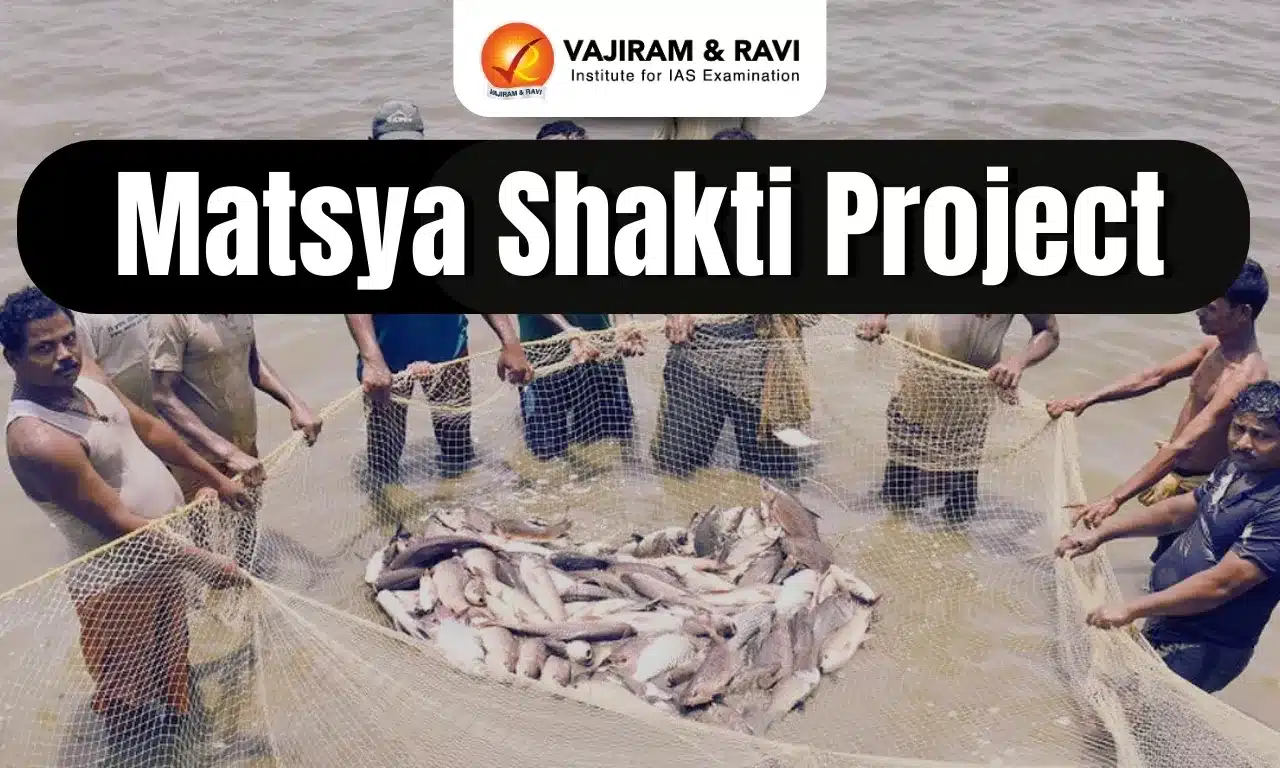
  • It is designed to empower minority fishing communities.
  • It aims to equip participants with comprehensive skills for improved livelihoods and community welfare.
  • The initiative will be implemented by the Vizhinjam Regional Centre of the ICAR–Central Marine Fisheries Research Institute (CMFRI), under the Ministry of Agriculture and Farmers’ Welfare.
  • It is conceived under the Pradhan Mantri Virasat Ka Samvardhan (PM VIKAS) scheme.

Features of Matsya Shakti Project

  • The project seeks to enhance the socio-economic well-being of minority fisherfolk families in the district.
  • It promises a year-long, phased training programme for members of the community, focusing on sustainable livelihood practices and modern skill development.
  • Through hands-on training in areas such as integrated aquaculture, seed production, and advanced fisheries technologies.

Key Facts about Pradhan Mantri Virasat Ka Samvardhan (PM VIKAS) scheme 

  • The PM VIKAS Scheme launched under the Ministry of Minority Affairs is a central sector scheme.
  • It provides skill development, leadership training and entrepreneurship to minorities and artisan communities all over India.
  • The scheme is divided into four components and is expected to benefit around 9 lakh candidates during the 15th Finance Commission Cycle (2025-26).
  • The PM VIKAS Scheme also consolidates five already existing schemes: Seekho aur Kamao, USTTAD (Upgrading the Skills and Training in Traditional Arts/Crafts for Development), Hamari Dharohar, Nai Roshni Nai Manzil 
  • The merging of the scheme provides financial support to minorities and artisans while also integrating Skill India Mission and also working with other ministries like Women and Child Development, Panchayati Raj, Tourism and Education for the overall development in minority concentrated areas.

Source: PIB

Matsya Shakti Project FAQs

Q1: What do you mean by entrepreneurship?

Ans: Entrepreneurship is the skill and willingness to create, organise, and manage a business venture, navigating its uncertainties to generate profit.

Q2: What is the Usttad scheme?

Ans: The USTTAD scheme promotes and preserves traditional arts and crafts practised by minority communities.

Exercise Bright Star

Exercise Bright Star

Exercise Bright Star Latest News

Personnel from the Armed Forces & Headquarters Integrated Defence Staff are set to participate in the Multilateral Exercise ‘BRIGHT STAR 2025’.

About Exercise Bright Star

  • It is a multilateral exercise hosted by Egypt in conjunction with the US since 1980.
  • It is amongst the largest Tri-Service multilateral exercises in the region. 
  • The exercise is held biennially, with the last edition having taken place in 2023, which witnessed the participation of a host of nations including India along with troops.
  • The upcoming edition will feature a comprehensive spectrum of military activities, including:
    • Live Firing by the three Services showcasing the operational capabilities of the Indian Army, Indian Navy and Indian Air Force.
    • Command Post Exercise to enhance joint planning, decision-making and operational coordination.
    • Short Training Exercises by all three Services focusing on varied aspects of modern warfare.
    • Subject Matter Expert Interactions on multiple domains of contemporary military operations.
  • Significance: Participation of the Indian Armed Forces in this exercise underscores India’s commitment to regional peace, stability, and security while enhancing Jointness, interoperability and cooperation with friendly foreign countries.

Source: PIB

Exercise Bright Star FAQs

Q1: What is the name of the military exercise between India and Egypt?

Ans: Cyclone 2025

Q2: Which country is hosting exercise Bright Star 25?

Ans: Egypt

Guillain-Barre Syndrome

What is Guillain-Barre Syndrome?

Guillain-Barré Syndrome Latest News

Gaza has recently seen a surge in Guillain-Barre syndrome, which can cause full-body paralysis in extreme cases.

About Guillain-Barré Syndrome 

  • It is a rare autoimmune condition in which the body’s immune system attacks the peripheral nervous system. 
  • This is the part of the nervous system outside the brain and spinal cord. 
  • It controls muscle movement, pain signals, and temperature and touch sensations.
  • GBS is also called acute inflammatory demyelinating polyradiculoneuropathy (AIDP).
  • It can occur at any age, but it most commonly affects people between 30 and 50.

Guillain-Barré Syndrome Causes

  • The exact cause of the disease remains unclear, but it is often observed following a viral or bacterial infection, vaccination, or major surgery.
  • At such times, the immune system becomes hyperactive, leading to this rare condition.

Guillain-Barré Syndrome Symptoms

  • Patients often begin with an unknown fever, followed by weakness and other nervous system-related symptoms
  • It can increase in intensity over a period of hours, days, or weeks until certain muscles cannot be used at all. 
  • Some cases of GBS are very mild and only marked by brief weakness. Others cause nearly devastating paralysis, leaving the person unable to breathe on their own.

Guillain-Barré Syndrome Treatment

  • There's no known cure for GBS. 
  • Several treatment options can ease symptoms and help speed recovery. 
  • Most people recover completely from GBS, but some serious illnesses can be fatal. 
  • While recovery may take up to several years, most people are able to walk again six months after symptoms first began.

Source: AJ

Guillain-Barré Syndrome FAQs

Q1: Guillain-Barré Syndrome (GBS) primarily affects which part of the nervous system?

Ans: Peripheral nervous system which controls muscle movement, pain signals, and temperature and touch sensations.

Q2: Guillain-Barré Syndrome (GBS) most commonly affects people in which age group?

Ans: Is there a cure for Guillain-Barré Syndrome (GBS)?

PM Svanidhi Scheme

PM Svanidhi Scheme

PM SVANidhi Scheme Latest News

Recently, the Union Cabinet has approved the “Restructuring and extension of the lending period beyond 31.12.2024 of Prime Minister Street Vendor’s AtmaNirbhar Nidhi (PM SVANidhi) Scheme”.    

About PM SVANidhi Scheme

  • It was initially launched on 1st June 2020 to support street vendors who faced unprecedented hardships during the COVID-19 pandemic.
  • It is implemented jointly by the Ministry of Housing & Urban Affairs (MoHUA) and Department of Financial Services (DFS), with DFS being responsible for facilitating access to loan/ credit cards through banks/financial institutions and their ground level functionaries. 

Key Facts about the Restructured PM SVANidhi Scheme

  • The scheme’s coverage is being expanded beyond statutory towns to census towns, peri-urban areas etc.. 
  • The enhanced loan structure includes first tranche loans increased up to ₹15,000 (from ₹10,000) and second tranche loans increased up to ₹25,000 (from ₹20,000), while the third tranche remains unchanged at ₹50,000. 
  • The introduction of UPI-linked RUPAY Credit Card would provide immediate access of credit to the street vendors in order to meet any emergent business and personal requirements. 
  • In order to give boost to digital adoption, the street vendors can avail cashback incentives upto ₹1,600 on making retail & wholesale transactions. 
  • The scheme also focuses on building the capacity of the street vendors with a focus on entrepreneurship, financial literacy, digital skills, and marketing through convergence. 
  • Standard hygiene and food safety training would be conducted for street food vendors, in partnership with FSSAI. 
  • In order to ensure holistic welfare & development of the street vendors and their families, the ‘SVANidhi se Samriddhi’ component will be further strengthened, through monthly Lok Kalyan Melas.
  • Significance: It envisages the holistic development of street vendors by offering a reliable source of finance to support business expansion and opportunities for sustainable growth. This will not only empower street vendors but will also foster inclusive economic growth, socio-economic upliftment of street vendors and their families 

Source: PIB

PM SVANidhi Yojana FAQs

Q1: Which ministry launched PM SVANidhi Yojana?

Ans: Ministry of Housing and Urban Affairs

Q2: Which institution is the implementing agency of the PM SVANidhi Yojana?

Ans: Small Industries Development Bank of India (SIDBI)

Q3: What is the maximum initial loan amount provided under PM SVANidhi Yojana?

Ans: Rs. 10,000

Enquire Now