Extended Range Attack Munitions (ERAM) Missile

Extended Range Attack Munitions (ERAM) Missile

Extended Range Attack Munitions (ERAM) Missile Latest News

Recently, the Trump administration has approved the sale of 3,350 Extended Range Attack Munitions (ERAM) missiles to Ukraine.

About Extended Range Attack Munitions (ERAM) Missile

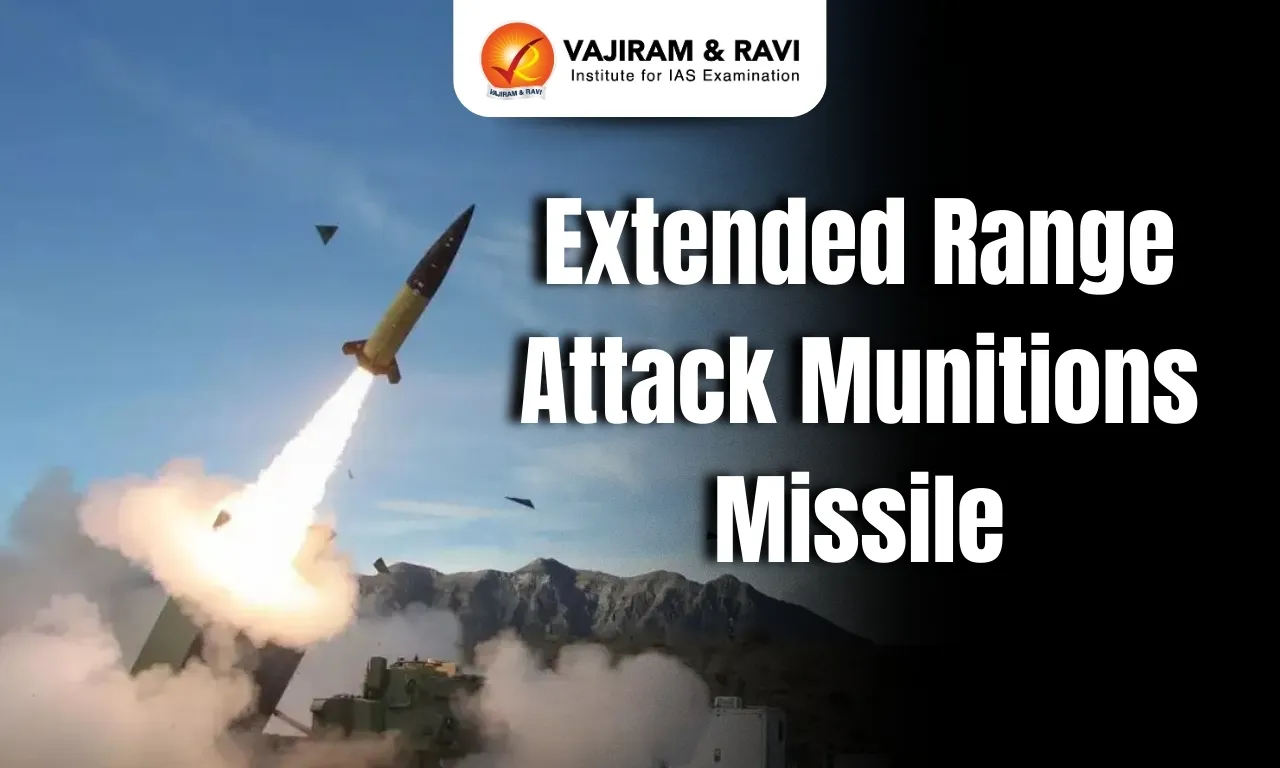
  • It is a next-generation, air-launched, precision-guided missile.
  • It blends the destructive power of a heavy bomb with the standoff range of a cruise missile.

Features of Extended Range Attack Munitions (ERAM) Missile

  • Range: Depending on flight profile, ERAM can reach between 240 and 450 kilometers.
  • Warhead: Each carries a 500-pound high-explosive warhead, able to destroy hardened bunkers, fuel depots, or ammunition storage.
  • Guidance: A combination of GPS, inertial navigation, and a terminal seeker provides accuracy within about ten meters.
  • Launch platforms: Compact and modular, ERAMs can be mounted on Western fighter jets such as the F-16s Ukraine is now receiving, or potentially retrofitted on existing Soviet-era aircraft.
  • ERAM is designed for volume, cheaper to produce, and compatible with multiple aircraft types.

Source: NOA

Extended Range Attack Munitions (ERAM) Missile FAQs

Q1: What is a ballistic missile?

Ans: These are a type of missile that uses projectile motion to deliver explosive materials (warhead) from the launch site to their aimed target.

Q2: What is the meaning of inertial navigation system?

Ans: An inertial navigation system (INS) is a self-contained technique to estimate vehicle position, orientation, and velocity by means of dead reckoning.

Mitochondrial Protein Import

Mitochondrial Protein Import

Mitochondrial Protein Import Latest News

Recently, researchers at Caltech University have uncovered new rules governing mitochondrial protein import, revising the long-standing understanding of how proteins are transported into mitochondria.

About Mitochondria

  • Mitochondria are double-membraned organelles that generate ATP (adenosine triphosphate), the universal cellular energy currency.
  • They originated over a billion years ago through endosymbiosis between a primitive archaeal cell and a bacterium.
  • Over time, mitochondria transferred most of their genes to the host nucleus, making them dependent on the host cell for protein supply.

Traditional Model of Protein Import

  • Earlier, it was believed that mitochondrial proteins are imported only after translation is completed in the cytosol.
  • Proteins were thought to fully synthesize on ribosomes before passing through mitochondrial membrane channels.

New Findings by Caltech Scientists

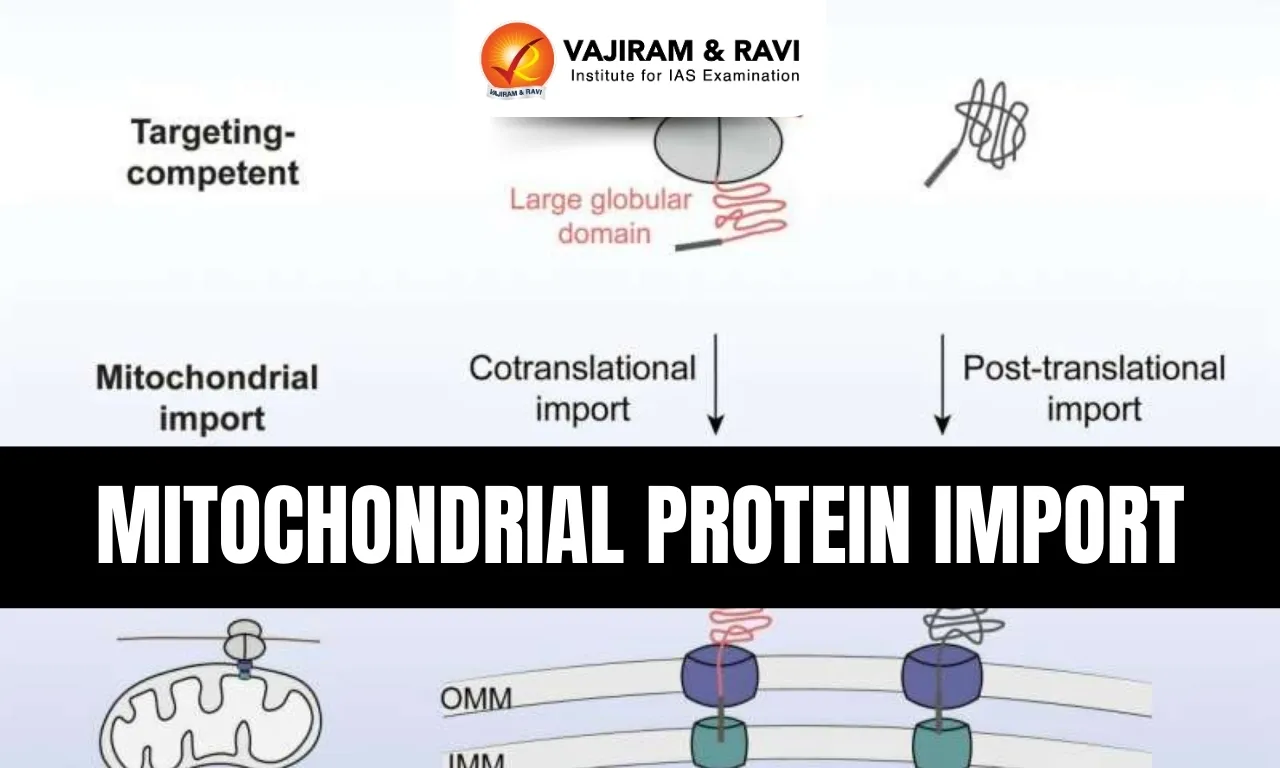
  • Around 20% of mitochondrial proteins are cotranslationally imported, i.e., they are imported while still being synthesized by ribosomes.
  • This mechanism mainly applies to large and structurally complex proteins that require assistance during folding.
  • If these proteins fully fold in the cytosol, they risk forming irreversible structures that block import channels.

Mechanism of Cotranslational Import

  • Such proteins contain a mitochondrial targeting sequence, but this alone is insufficient for cotranslational delivery.
  • A second signal is required – the first large protein domain that emerges during translation.
  • This domain acts like a “code to unlock the boarding pass”, ensuring the protein is guided into mitochondria early.
  • Experiments confirmed that transplanting these domains onto other proteins rerouted them for cotranslational import.

Source: PHY

Mitochondrial Protein Import FAQs

Q1: Why are mitochondria dependent on the host cell for proteins?

Ans: Most mitochondrial genes were transferred to the nucleus during evolution, so proteins are now synthesised in the cytosol and then imported.

Q2: What is cotranslational import?

Ans: It is the process where mitochondrial proteins are imported during their synthesis, not after the ribosome finishes translation.

Q3: What signals guide proteins into mitochondria?

Ans: Two signals are essential: the mitochondrial targeting sequence (MTS) and the emergence of a large foldable domain during translation.

Cordualadensa acorni

Cordualadensa acorni

Cordualadensa acorni Latest News

Recently, researchers from McGill University identified a new dinosaur-era dragonfly fossil named Cordualadensa acorni from Alberta’s Dinosaur Provincial Park.

About Cordualadensa acorni

  • It represents the first Mesozoic dragonfly fossil in Canada and fills a 30-million-year evolutionary gap in dragonfly history.
  • The fossil is a partial wing impression fossil preserved in the 75-million-year-old Dinosaur Park Formation (UNESCO World Heritage Site, Alberta, Canada).
  • The fossil led to the creation of a new family, Cordualadensidae, highlighting its unique anatomical features.

Features of Cordualadensa acorni

  • Wingspan: Roughly the width of a human hand.
  • Anatomy: The wing structure indicates adaptation for gliding flight, a feature common in migratory dragonflies today.
  • Ecological Role: Though small, it would have been an important part of the Cretaceous ecosystem, possibly serving as prey for raptors.

Distribution & Significance

  • First dinosaur-aged dragonfly fossil discovered in Canada.
  • It is the first North American member of the dragonfly group Cavilabiata.
  • Before this, only one insect fossil (a microscopic aphid in amber) had been reported from the region.

Source: PHY

Cordualadensa acorni FAQs

Q1: Why is the discovery of Cordualadensa acorni significant?

Ans: It is significant because it is the first dinosaur-era dragonfly fossil in Canada, fills a 30-million-year evolutionary gap, and provides insight into the Cretaceous ecosystem.

Q2: Where was this fossil found?

Ans: The fossilised wing was discovered in 2023 at Dinosaur Provincial Park in Alberta, a UNESCO World Heritage Site known for its rich dinosaur fossils.

Q3: What makes Cordualadensa acorni unique?

Ans: Its wing anatomy suggests gliding adaptation, and its distinct morphology led scientists to create a new family, Cordualadensidae.

National Disaster Management Authority (NDMA)

National Disaster Management Authority

National Disaster Management Authority (NDMA) Latest News

Prime Minister Narendra Modi on August 29, 2025, nominated two people as new members of the National Disaster Management Authority (NDMA) and re-nominated three existing members for three years.

About National Disaster Management Authority (NDMA)

  • Establishment: The NDMA, established under the Disaster Management Act, 2005, is the country's apex body for disaster management and is chaired ex officio by the Prime Minister of India.
  • Objectives: NDMA is responsible for laying down the national policies, plans, and guidelines for disaster management, coordinating and enforcing implementation of these policies, and approving plans developed by ministries, states, and other agencies to ensure integrated responses to disasters.
  • Vision: NDMA's vision is to build a safer and disaster-resilient India through proactive, technology-driven, and sustainable strategies involving all stakeholders.

NDMA Organisation Structure

  • Composition: The NDMA is chaired by the Prime Minister of India, assisted by a Vice-Chairperson (Cabinet Minister rank) and up to eight Members (Minister of State rank).
  • Divisions: It operates through specialized divisions, including Policy & Plans, Mitigation, Operations, Communications & IT, Administration, and Finance.
  • Institutional Mechanism: At the state and district levels, State Disaster Management Authorities (SDMAs) and District Disaster Management Authorities (DDMAs) function under NDMA’s overall framework and guidelines.

NDMA Functions and Responsibilities

NDMA, as the apex body, is mandated to lay down the policies, plans and guidelines for Disaster Management to ensure timely and effective response to disasters. Towards this, it has the following responsibilities:-

  • Laying down policies, approving the National Disaster Management Plan.
  • Framing guidelines for central and state authorities, integrating mitigation measures into development plans.
  • Coordinating the enforcement and implementation of disaster management policies and plans.
  • Recommending provision of funds for mitigation efforts and capacity building.
  • Supporting international disaster relief as directed by the central government.
  • Overseeing the functioning of the National Institute of Disaster Management (NIDM).
  • Training officials, conducting preparedness drills, and developing community resilience strategies.

Source: TH

National Disaster Management Authority (NDMA) FAQs

Q1: Who heads the National Disaster Management Authority in India?

Ans: The National Disaster Management Authority of India is headed by the Prime Minister.

Q2: Under which Ministry is NDMA?

Ans: NDMA operates under the Ministry of Home Affairs.

Q3: What are the 12 natural disasters under NDMA?

Ans: NDMA covers disasters like floods, earthquakes, cyclones, droughts, landslides, avalanches, tsunamis, forest fires, pest attacks, nuclear, chemical, and biological emergencies.

Q4: Where is the headquarter of NDMA?

Ans: NDMA headquarters is located in New Delhi, India.

India’s First EMI-Based Credit Card

India's First EMI-Based Credit Card

India's First EMI-Based Credit Card Latest News

BharatPe and Unity Small Finance Bank (Unity Bank) recently launched the Unity Bank BharatPe Credit Card—India's first EMI-driven credit card on the RuPay network.

About India's First EMI-Based Credit Card

  • Launch: Unity Small Finance Bank (Unity Bank) and BharatPe have jointly launched a credit card that allows customers to either pay in full or convert their spends into equated monthly instalments (EMIs). This is being introduced as India’s first EMI-driven credit card on the RuPay network.
  • Partnership: The Unity Bank BharatPe Credit Card has been developed in association with the National Payments Corporation of India (NPCI).
  • UPI Linkages: The card can be linked to Unified Payments Interface (UPI), enabling payments at a wide range of merchants nationwide.
  • Eligibility: The card will be available to both salaried and self-employed individuals. Applications can be made through the BharatPe app, where users can complete onboarding, KYC, and credit eligibility checks digitally before card activation.

Key Features of First EMI-Based Credit Card

  • Auto-EMI Conversion: Purchases can be instantly split into EMIs up to 12 months, with flexible repayment options.
  • Zero Fees: No joining, annual, or foreclosure charges—lifetime free card.
  • UPI Integration: Linked to UPI for widespread merchant acceptance and instant payments.
  • Reward Program: Earn flat 2% rewards on EMI transactions, redeemable through the BharatPe app.
  • Premium Benefits: Complimentary domestic and international lounge access, and preventive health checkups.
  • Digital Onboarding: Seamless application, KYC, and activation via the BharatPe app.

Source: MINT

India's First EMI-Based Credit Card FAQs

Q1: What is India’s first EMI-based credit card?

Ans: India’s first EMI-based credit card allows users to instantly convert everyday purchases into EMIs (up to 12 months) as a core feature.

Q2: Are there any hidden charges or fees associated with the card?

Ans: No. It has a zero-fee structure: no joining fee, no annual fee, no processing fee, and no foreclosure penalty.

Q3: What network and payment options are available?

Ans: The card is powered by RuPay and can be linked to UPI, enabling usage across millions of merchants online and offline in India.

LUPEX Mission

LUPEX Mission

LUPEX Mission Latest News

Recently, the Prime Minister of India welcomed the agreement between the Indian Space Research Organisation and the Japan Aerospace Exploration Agency for the Chandrayaan-5 mission under the Lunar Polar Exploration (LUPEX) programme. 

About LUPEX Mission

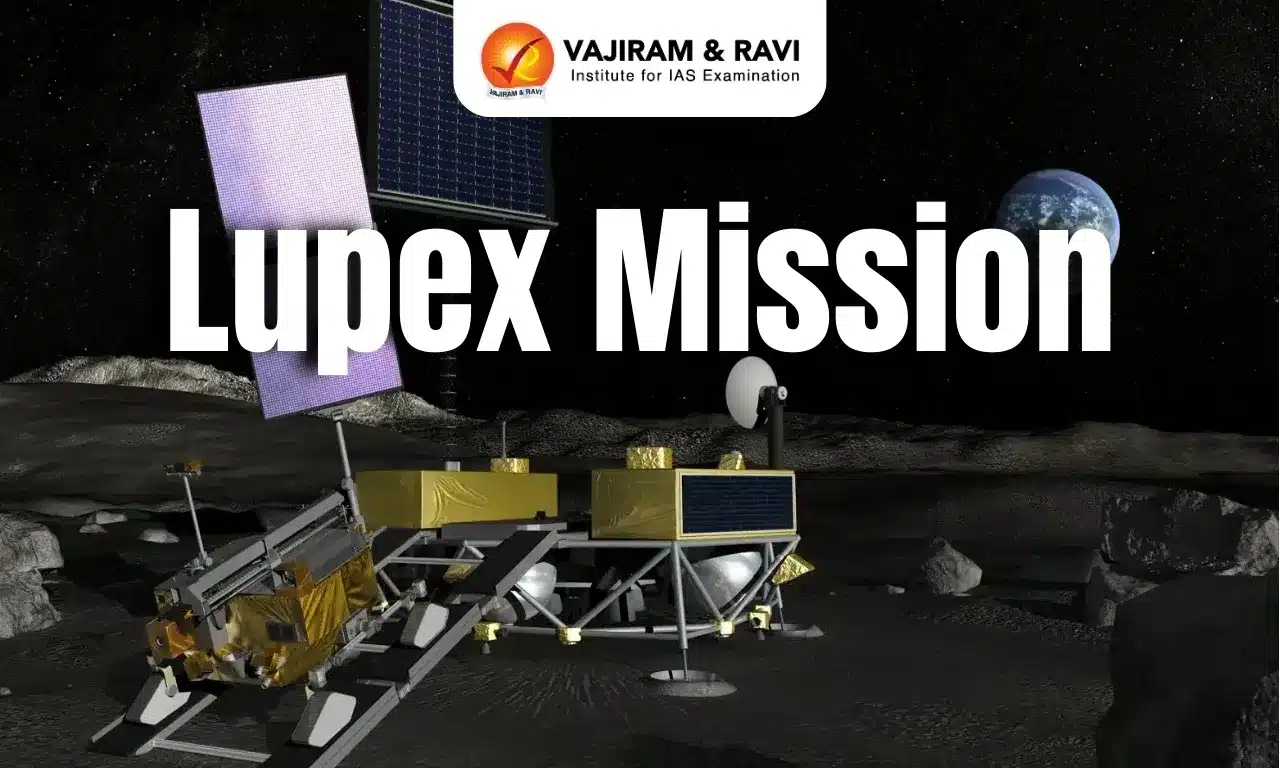
  • It is jointly developed by ISRO and Japan Aerospace Exploration Agency (JAXA).
  • Objective: To explore the moon’s southern polar region, investigating the presence of water and other elements, potentially in the form of surface ice.
  • It aims to showcase innovative surface exploration technologies. The special focus is on vehicular transport and lunar night survival.
  • It features both a lander and a rover.
  • JAXA is responsible for developing and operating the rover, and ISRO for developing and operating the lander that will carry the rover.
  • The rover will drive on its own to search for areas where water is likely to be present and sample the soil by digging into the ground with a drill.
  • The plan is to acquire data by analyzing the collected samples in detail with observation equipment mounted on the rover.
  • The rover will be equipped with instruments for measuring the water content of regolith (lunar sand), drilling, and sampling, as well as with other world-first and world-leading technologies for the driving system and batteries.
  • The rover will carry not only the instruments of ISRO and JAXA but also those of the US space agency NASA and the European Space Agency (ESA).

Source: DD News

LUPEX Mission FAQs

Q1: What is the purpose of the LUPEX mission?

Ans: The LUPEX project is an initiative aimed at exploring the Moon for water and other resources and gaining expertise in exploring the surface of the Moon.

Q2: Who developed the Mission Lupex?

Ans: The LUPEX project is a collaborative lunar exploration mission by JAXA (Japan) and ISRO (India),

State Energy Efficiency Index

State Energy Efficiency Index

State Energy Efficiency Index Latest News

Recently, the Bureau of Energy Efficiency (BEE), released the State Energy Efficiency Index (SEEI) 2024.

About State Energy Efficiency Index

  • It is developed by the Bureau of Energy Efficiency (BEE) in association with the Alliance for an Energy Efficient Economy (AEEE).
  • The index assesses the energy efficiency performance of 36 States and Union Territories (UTs) for FY 2023-24, supporting data-driven monitoring, best practice sharing, and healthy competition among states.
  • This year it is the sixth edition features a new implementation-focused framework with 66 indicators covering Buildings, Industry, Municipal Services, Transport, Agriculture, DISCOMs, and Cross-Sector initiatives, reflecting evolving priorities like EV policies, star-rated buildings, and DSM strategies.
  • SEEI 2024 serves as a key policy tool for guiding state-level actions and accelerating India’s energy efficiency and climate goals.
  • States are classified into four performance categories: Front Runners (>60%), Achievers (50-60%), Contenders (30-50%), and Aspirants (<30%).

Key Highlights of the State Energy Efficiency Index Index

  • The top performers include:Maharashtra (Group 1: >15 MToE), Andhra Pradesh (Group 2: 5–15 MToE) Assam (Group 3: 1–5 MToE) Tripura (Group 4: <1 MToE)
  • The report highlights sectoral progress: 24 states have notified ECBC 2017; 10 states have MSME energy efficiency policies; 31 states have adopted electric mobility policies; and 13 states are promoting solar-powered agricultural pumps, with Kerala achieving 74% adoption
  • Additionally, all 36 States/UTs have developed State Energy Efficiency Action Plans (SEEAPs), and 31 have formed State-Level Steering Committees on Energy Transition.

Source: PIB

State Energy Efficiency Index FAQs

Q1: Who releases the state energy efficiency index?

Ans: Bureau of Energy Efficiency (BEE)

Q2: What is Bureau of Energy Efficiency?

Ans: It is a statutory body established in 2002 under the Energy Conservation Act, 2001, to promote energy efficiency and conservation across various sectors in India.

Crocothemis erythraea

Crocothemis erythraea

Crocothemis erythraea Latest News

Recently, odonatologists have reconfirmed the presence of the elusive dragonfly species, Crocothemis erythraea, in the high-elevation regions of the southern Western Ghats.

About Crocothemis erythraea

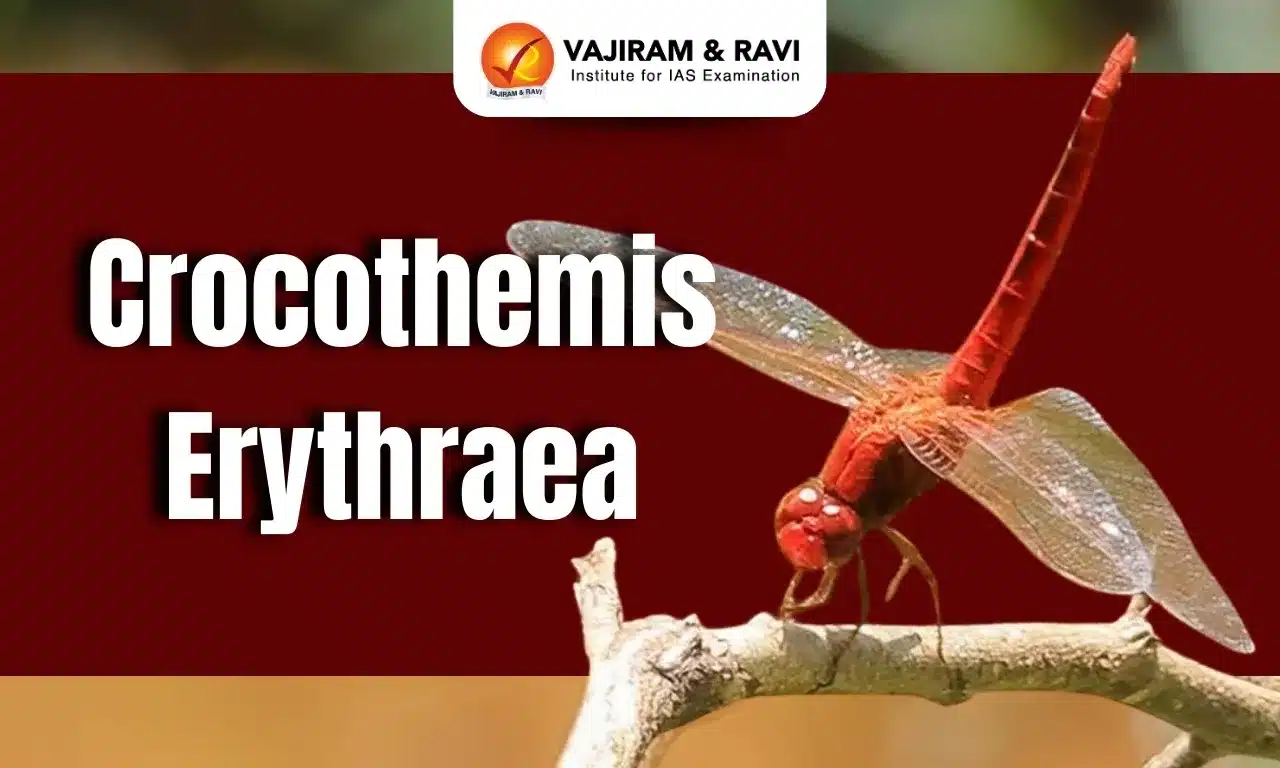
  • It is a species of dragonfly in the family Libellulidae.
  • Its common names include broad scarlet, common scarlet-darter, and scarlet darter.
  • The genus Crocothemis in India includes two known species—C. servilia and C. erythraea. While C. servilia is common across lowland areas, C. erythraea is known from high-elevation habitats in parts of Europe and Asia, including the Himalayas.
  • The molecular analysis showed that the high-elevation specimens from the Western Ghats match C. erythraea found in the Himalayas.
  • Habitat: The study confirmed that the Western Ghats hosts both the species, C. erythraea, which is restricted to cool, high-elevation habitats (>550 m), while C. servilia is common in lowland habitats (<600 m).
  • The researchers explain that C. erythraea colonised southern India during the Pleistocene Ice Age, when cooler climatic conditions allowed temperate fauna to extend their range southward.
  • As the climate warmed, these populations became stranded in montane locations like the Sholas and grasslands of Munnar and Parambikulam, where they survived in isolation.

Source: TH

Crocothemis erythraea FAQs

Q1: What is Crocothemis erythraea?

Ans: The scarlet dragonfly (Crocothemis erythraea) is a species of dragonfly in the family Libellulidae.

Q2: What do scarlet dragonflies eat?

Ans: Dragonflies eat other insects, such as flies, midges and mosquitoes.

International Monetary Fund (IMF)

International Monetary Fund (IMF)

International Monetary Fund (IMF) Latest News

Recently, former Reserve Bank of India (RBI) Governor Urjit Patel has been appointed as Executive Director at the International Monetary Fund (IMF) for a three-year tenure, representing India, Bangladesh, Sri Lanka, and Bhutan at IMF headquarters in Washington, D.C.

About International Monetary Fund (IMF)

  • The International Monetary Fund (IMF) is a global financial body aimed at strengthening international monetary cooperation and maintaining financial stability.
  • Members: It currently has 191 member nations, with Liechtenstein joining as the newest member on October 21, 2024.
  • Creation: Created in 1944 at the Bretton Woods Conference, it works through a quota system, with countries contributing funds and receiving voting power proportional to their quotas.
  • Mission: The core mission of the IMF is to foster global monetary cooperation, secure financial stability, facilitate international trade, promote high employment and sustainable economic growth, and reduce poverty worldwide.
  • Role: The IMF acts as a lender of last resort and often requires policy reforms from borrowing countries, called “structural adjustment” programs.

International Monetary Fund Governance Structure

  • Board of Governors: It is the IMF’s highest decision-making authority, comprising one governor and one alternate governor from each member country. It meets annually to decide on quota revisions, Special Drawing Rights (SDR) allocations, new memberships, or expulsion of members.
  • International Monetary and Financial Committee (IMFC): IMFC advises the Board of Governors on matters related to the management of the international monetary and financial system. It has 24 members drawn from the governors.
  • Executive Board: They are responsible for conducting the day-to-day business and work closely with the Managing Director.

Source: IE

International Monetary Fund (IMF) FAQs

Q1: What is the International Monetary Fund?

Ans: A global financial institution that promotes monetary cooperation, financial stability, trade, growth, and poverty reduction among member countries.

Q2: Does the IMF give money to people?

Ans: No, the IMF lends funds to member governments, not directly to individuals.

Q3: What is the main objective of the International Monetary Fund?

Ans: To ensure global monetary stability and provide financial support to countries facing economic crises.

Q4: Is India a member of the IMF?

Ans: Yes, India is a founding member of the IMF since 1945.

Nanjangud Rasabale Banana

Nanjangud Rasabale Banana

Nanjangud Rasabale Banana Latest News

Recently, the union Minister for Agriculture and Farmers’ Welfare has announced that the Indian Council for Agricultural Research (ICAR) will soon take up a study on protecting the Nanjangud Rasabale variety of banana from diseases.     

About Nanjangud Rasabale Banana

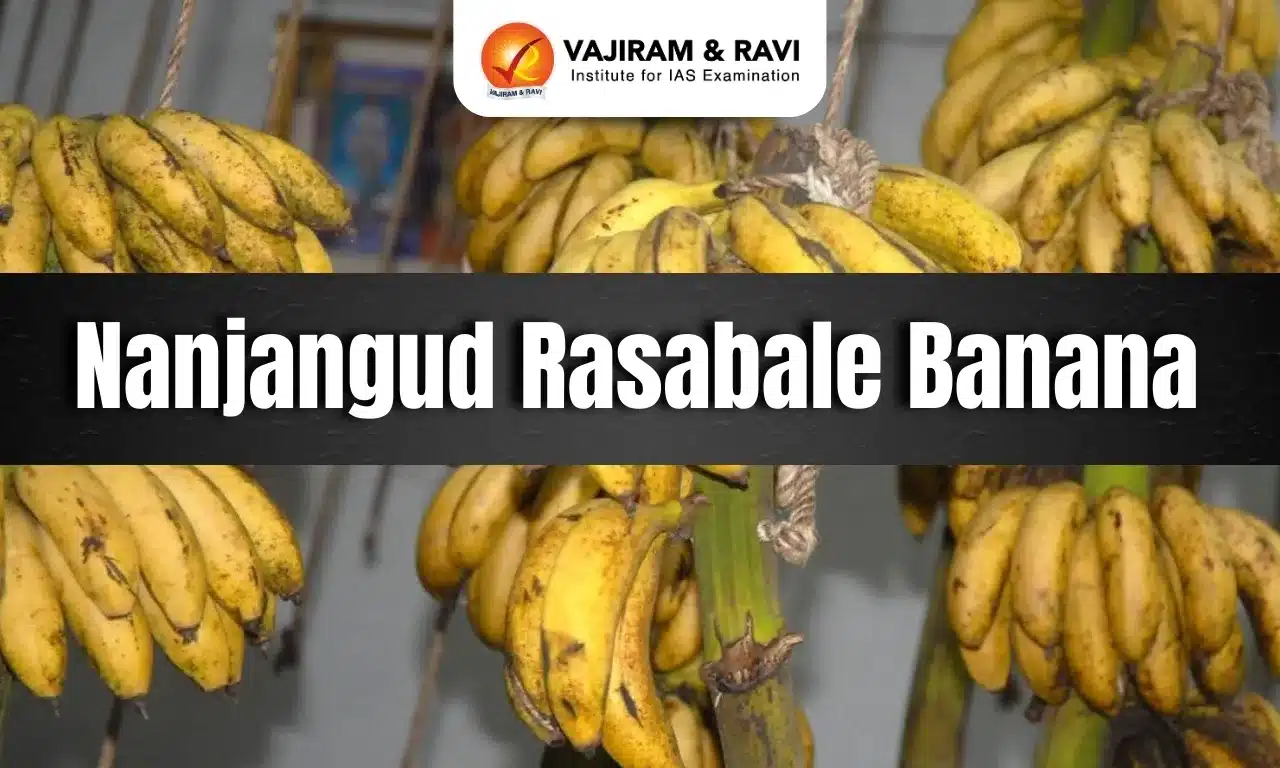
  • It is a variety of banana grown in and around the Mysore district and Chamarajanagar district of Karnataka.
  • It was awarded the Geographical Indication (GI) tag in 2006 for its thick pulp and distinct taste and aroma.
  • The taste and pulp of this banana cannot be found in any other variety and anywhere else.
  • Soil required: Black clay alluvial saline soil has given a unique aroma to this banana.
  • This banana possess medicinal properties and are believed to cure neurological ailments.
  • Threats: The Panama Wilt disease, a fungal infection caused by the Fuserium Wilt pathogen has been the bane of rasabale farmers.

Key Facts about Indian Council for Agricultural Research

  • It is an autonomous organisation under the Department of Agricultural Research and Education (DARE), Ministry of Agriculture and Farmers Welfare, Government of India. 
  • It was formerly known as the Imperial Council of Agricultural Research, it was established on 16 July 1929 as a registered society under the Societies Registration Act, 1860, in pursuance of the report of the Royal Commission on Agriculture. 
  • Functions: The Council is the apex body for coordinating, guiding, and managing research and education in agriculture, including horticulture, fisheries, and animal sciences, throughout the country. 
  • India has one of the largest agricultural systems in the world, with 113 ICAR institutes and 74 agricultural universities across the country.
  • Headquarters: New Delhi. 

Source: TH

Nanjangud Rasabale Banana FAQs

Q1: What is meant by Geographical Indication?

Ans: A geographical indication (GI) is a sign used on products that have a specific geographical origin and possess qualities or a reputation that are due to that origin.

Q2: What is the cause of Panama wilt?

Ans: Fusarium wilt of banana, popularly known as Panama disease, is a lethal fungal disease caused by the soil-borne fungus Fusarium oxysporum.

Enquire Now