Particularly Vulnerable Tribal Groups

Particularly Vulnerable Tribal Groups

Particularly Vulnerable Tribal Groups Latest News

The Ministry of Tribal Affairs requested the Registrar General and Census Commissioner of India (RGI) to consider enumerating particularly vulnerable tribal groups (PVTGs) separately in the upcoming Census.

About Particularly Vulnerable Tribal Groups

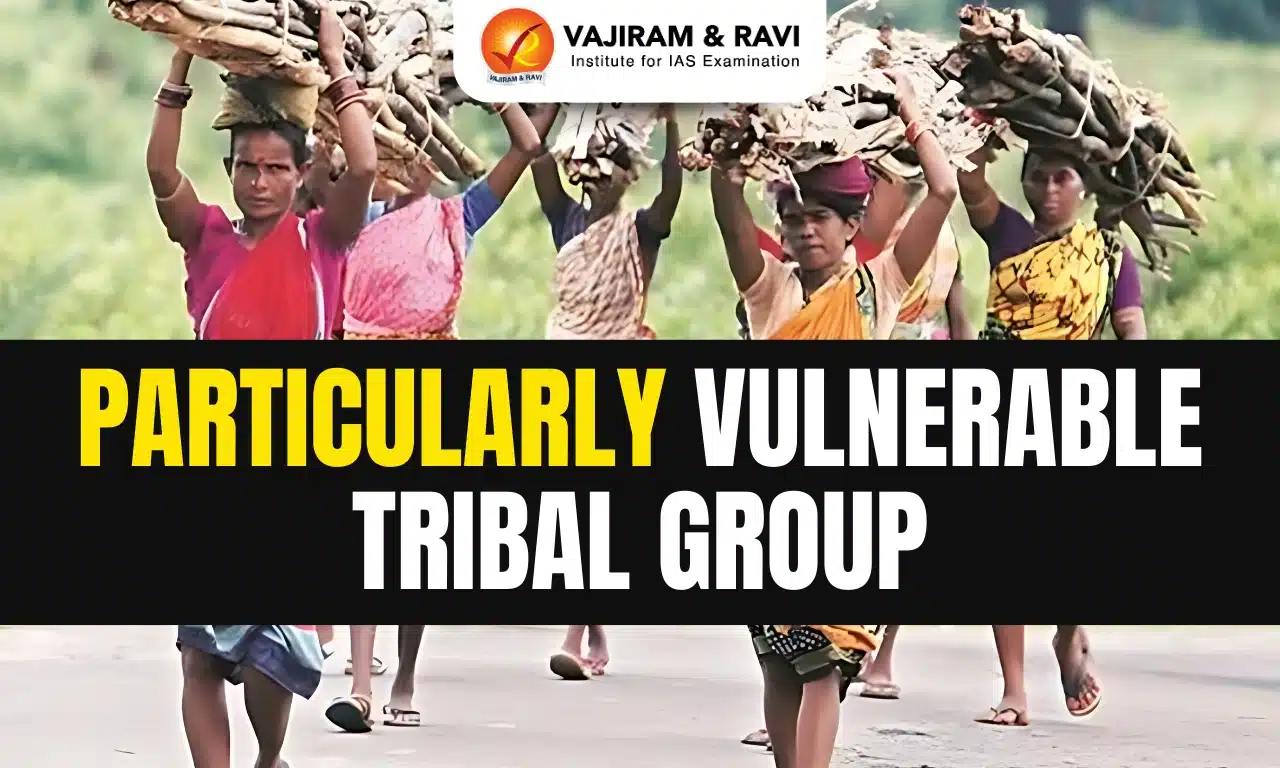
  • PVTGs are a sub-category of Scheduled Tribes (STs) and are more vulnerable among the tribal groups in India.
  • The criteria for identifying Particularly Vulnerable Tribal Groups are:
    • A declining or stagnant population,
    • Geographical isolation,
    • Use of pre-agrarian practices (such as hunting and gathering),
    • Economic backwardness and relatively low literacy
  • This category was created based on the recommendations of the Dhebar Commission (1960-61) — led by former Member of Parliament U N Dhebar.
  • At present there are 75 tribal groups considered as PVTGs and they are currently spread across 18 states, and the Union Territory of Andaman and Nicobar Islands.
  • As per the recent survey, there were an estimated 47.5 lakh PVTGs across India. Madhya Pradesh had the highest estimated population of PVTGs, followed by Maharashtra with an estimated population of 6.7 lakh, and Andhra Pradesh.
  • Livelihoods: PVTGs depend on various livelihoods such as food gathering, Non Timber Forest Produce (NTFP), hunting, livestock rearing, shifting cultivation and artisan works.
  • Welfare scheme for PVTGs
    • PM JANMAN scheme: Under this the government rolled out the Rs 24,104 crore with an aim to improve the socio-economic status, health, education, livelihoods and amenities for PVTGs in more than 200 districts.

Source: IE

Particularly Vulnerable Tribal Groups FAQs

Q1: Which is the largest tribe in India?

Ans: Bhil is the largest tribal group in India as per 2011 Census.

Q2: What is the definition of ‘tribe’ in India?

Ans: A tribe is a collection of families bearing a common name, speaking a common dialect, and occupying or professing to occupy a common territory.
Acanthamoeba

Acanthamoeba

Acanthamoeba Latest News

Recently, it is revealed that Acanthamoeba is more widespread in Kerala’s waterbodies than thought earlier.

About Acanthamoeba

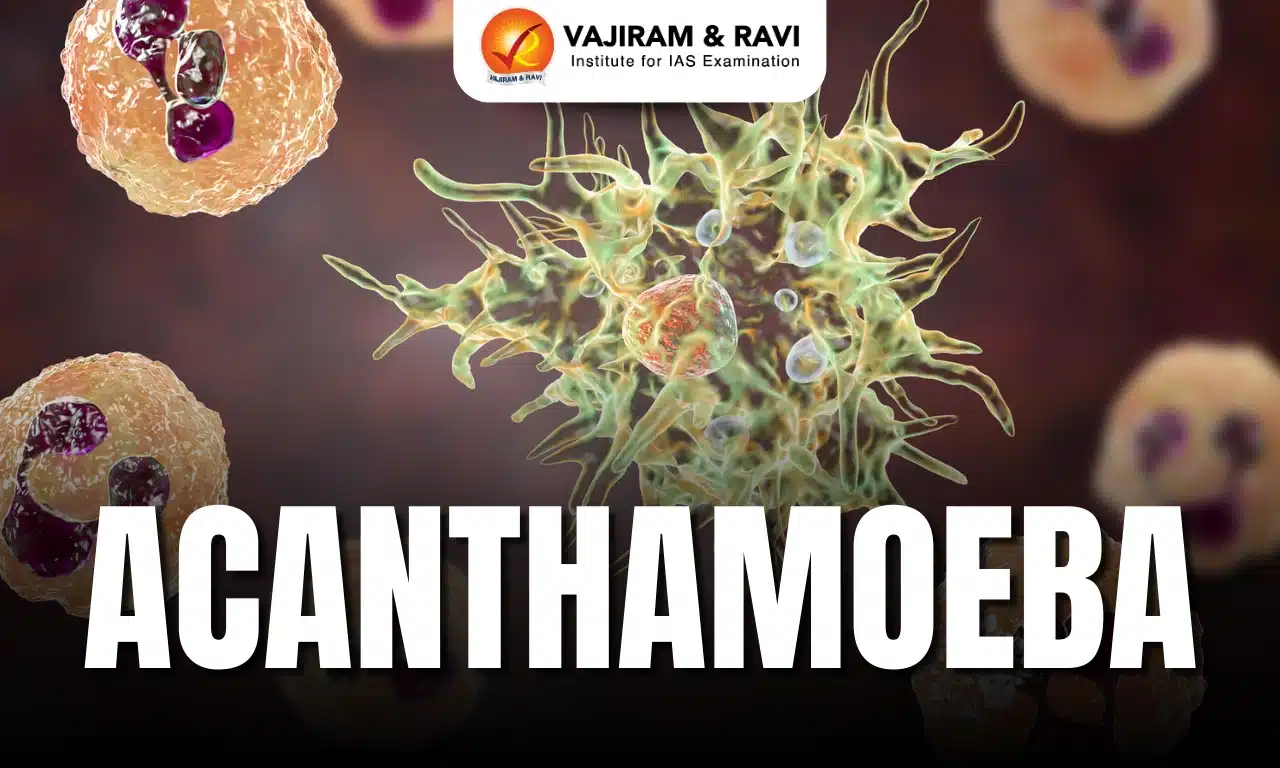
  • It is a free-living ameba, a kind of one-celled organism that lives in water, soil, and dust.
  • It can also be found in swimming pools, hot tubs, drinking water systems, humidifiers, and in heating, ventilation, and air conditioning (HVAC) systems.
  • It can cause serious infections of the brain, skin, eyes, and sinuses. 
  • It can infect parts of the body through cuts or skin wounds or from being inhaled into the lungs or nostrils. It can get into the eyes through contact lens use.

Types of Infections Caused by Acanthamoeba

  • Granulomatous amebic encephalitis (GAE), which affects the brain and is almost always fatal
  • Cutaneous acanthamoebiasis, a skin infection
  • Acanthamoeba rhinosinusitis, an infection of the nasal cavity and sinuses
  • Acanthamoeba keratitis: It is an eye infection that typically occurs in healthy people and can cause permanent vision loss.

Source: TH

Acanthamoeba FAQs

Q1: What disease does Acanthamoeba cause?

Ans: Acanthamoeba keratitis

Q2: Is Acanthamoeba a protozoa?

Ans: Acanthamoeba is an opportunistic protozoan that is widely distributed in the environment.

Debrigarh Wildlife Sanctuary

Debrigarh Wildlife Sanctuary

Debrigarh Wildlife Sanctuary Latest News

Odisha’s Debrigarh Wildlife Sanctuary is all set to be declared India’s newest tiger reserve.

About Debrigarh Wildlife Sanctuary

  • It is situated in the Bargarh district of Odisha.
  • It is located near Hirakud Dam (the longest dam in India and the longest earthen dam in the world) on the Mahanadi River.
  • It was declared a wildlife sanctuary in 1985.
  • It finds a special mention because of noted freedom fighter Veer Surendra Sai. 
  • During his rebellion against the British, his base at Barapathara was located within the sanctuary.
  • Vegetation: Most of the plant sanctuary is covered with mixed and dry deciduous forest. 
  • Flora: Major trees found here are Sal, Asana, Bija, Aanla, Dhaura, etc.
  • Fauna: 
    • Indian leopards, sloth bears, chousingha (four-horned antelope), sambar deer, gaurs (Indian bison), wild boars, and Indian wild dogs etc.
    • It is one of the most flocked wintering grounds of migratory birds that visit the sanctuary from far off places.
    • Some of the most prominent among them are the crested serpent eagle, Flower Peckers, red vented bulbul, tree pie, drongo and white eye oriental.

Source: DH

Debrigarh Wildlife Sanctuary FAQs

Q1: In which Indian state is the Debrigarh Wildlife Sanctuary located?

Ans: Odisha

Q2: Debrigarh Wildlife Sanctuary is located near which major dam?

Ans: Hirakud Dam on the Mahanadi River.

Q3: What is the total area covered by Debrigarh Wildlife Sanctuary?

Ans: 347 sq.km

Q4: Which Indian freedom fighter is historically associated with the Debrigarh region?

Ans: Veer Surendra Sai

Q5: What type of vegetation is predominantly found in Debrigarh Wildlife Sanctuary?

Ans: Mixed and dry deciduous forest

National Institutional Ranking Framework

National Institutional Ranking Framework

National Institutional Ranking Framework Latest News

Recently, the union Minister of Education released the National Institutional Ranking Framework (NIRF) 2025.

About National Institutional Ranking Framework

  • It was started by the Union Ministry of Human Resource Development (now Ministry of Education) in 2015.
  • This framework outlines a methodology to rank institutions across the country
  • Parameters of National Institutional Ranking Framework
    • Teaching, learning and resources;
    • Research and professional practice;
    • Graduation outcomes;
    • Outreach and inclusivity; and peer perception.

Key Highlights of National Institutional Ranking Framework 2025

  • This year’s rankings have been released across 17 categories – overall, SDGs institutes, universities, colleges, research institutions, engineering, management, pharmacy, medical, dental, law, architecture and planning, agriculture and allied sectors, open universities, skill universities, and state public universities.
  • Indian Institute of Technology Madras retains its 1st position in Overall Category for the seventh consecutive year.
  • Indian Institute of Science, Bengaluru tops the Universities Category for tenth consecutive.
  • IIM Ahmedabad tops in Management subject retaining its first position for sixth consecutive year.
  • All India Institute of Medical Sciences (AIIMS), New Delhi occupies the top slot in Medical for the eighth consecutive year
  • IIT Roorkee retained its 1st position in Architecture and Planning for the fifth consecutive year.
  • National Law School of India University, Bengaluru retains its first position in Law.
  • Jamia Hamdard, New Delhi tops the ranking in Pharmacy for the second consecutive year. 

Source: TH

National Institutional Ranking Framework FAQs

Q1: When was the National Institutional Ranking Framework (NIRF) launched?

Ans: It was launched in 2015 by the Ministry of Education.

Q2: Which institute secured the 1st rank in the Overall category of NIRF 2024?

Ans: IIT Madras

Q3: Which institute topped the University category in the NIRF 2024 rankings?

Ans: Indian Institute of Science, Bengaluru

Key Facts about Sudan

Sudan

Sudan Latest News

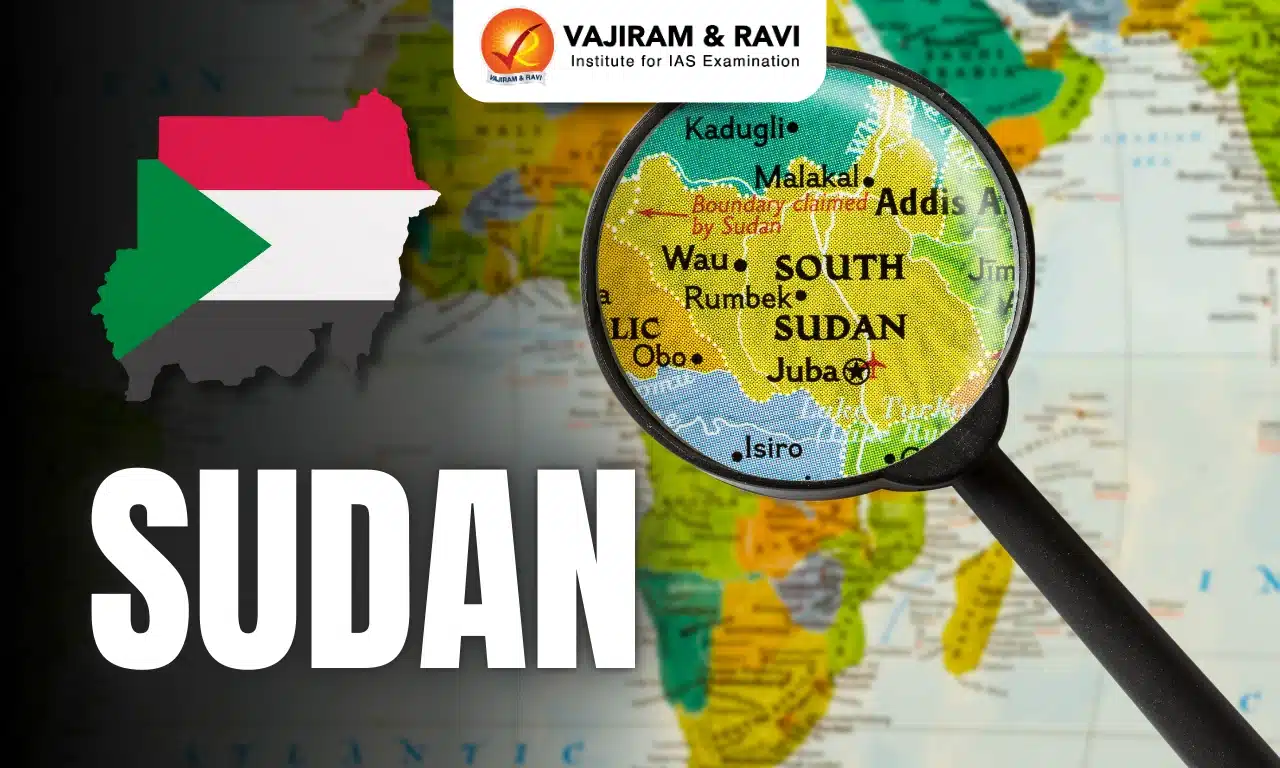
Recently, a landslide buried a remote mountain village in the Darfur region of Sudan.

About Sudan

  • It is the third largest country in Africa.
  • Bordering Countries: South Sudan, Ethiopia, Eritrea, Egypt, Libya, Chad, and Central African Republic.
  • It borders the Sahara on the north and extends southward to the forests of West Africa and the Congo River basin.
  • It also has a significant coastline along the Red Sea.
  • Relief: It is mainly composed of vast plains and plateaus that are drained by the Nile River and its tributaries.
  • Much of Sudan consists of deserts and arid grasslands with little in the way of vegetation. Massive plains and plateaus cover most of the nation.
  • Highest point: Jabal Marrah 
  • Natural Resources: Petroleum; small reserves of iron ore, copper, chromium ore, zinc, tungsten, mica, silver, gold; hydropower
  • Capital City: Khartoum, which is located roughly in the centre of the country, at the junction of the Blue Nile and White Nile rivers.

Source: TH

Sudan FAQs

Q1: What is the major river in Sudan?

Ans: Nile

Q2: Which sea borders Sudan to the northeast?

Ans: Red Sea

Enquire Now