Combined Commanders’ Conference (CCC) 2025

Combined Commanders’ Conference

Combined Commanders’ Conference Latest News

The Prime Minister will inaugurate the Combined Commanders’ Conference (CCC) 2025 in Kolkata, West Bengal.

About Combined Commanders’ Conference

  • The CCC is the apex-level brainstorming forum of the Armed Forces, bringing together the nation’s top civil and military leadership to exchange views at the conceptual and strategic levels.
  • CCC 2025 will be held in Kolkata, West Bengal, from September 15 to 17, 2025.
  • The central theme for this year’s conference is “Year of Reforms – Transforming for the Future”.
  • The CCC 2025 will focus on Reforms, Transformation & Change and Operational Preparedness. 
  • Together, these reflect the Armed Forces’ commitment to institutional reforms, deeper integration, and technological modernisation, while sustaining a high level of multi-domain operational readiness. 
  • The deliberations will seek to further strengthen the Armed Forces, which are agile and decisive in an increasingly complex geo-strategic landscape. 
  • Continuing with the tradition of inclusive engagement, the conference will feature interactive sessions with officers and personnel of various ranks from the Armed Forces, ensuring that field-level perspectives enrich the discussions at the highest level.
  • The conference will also be attended by the Defence Minister, the National Security Adviser, the Minister of State for Defence, the Chief of Defence Staff, and the Defence Secretary. 

Source: TH

Combined Commanders’ Conference FAQs

Q1: What is the Combined Commanders’ Conference (CCC)?

Ans: The CCC is the apex-level brainstorming forum of the Armed Forces, bringing together the nation’s top civil and military leadership.

Q2: Where will the Combined Commanders’ Conference (CCC) 2025 be held?

Ans: Kolkata, West Bengal

Q3: What is the theme of CCC 2025?

Ans: “Year of Reforms – Transforming for the Future”
Evia Island

Evia Island

Evia Island Latest News

A magnitude 5.2 earthquake shook central Greece recently, with its epicenter located near Athens on Evia Island.

About Evia Island

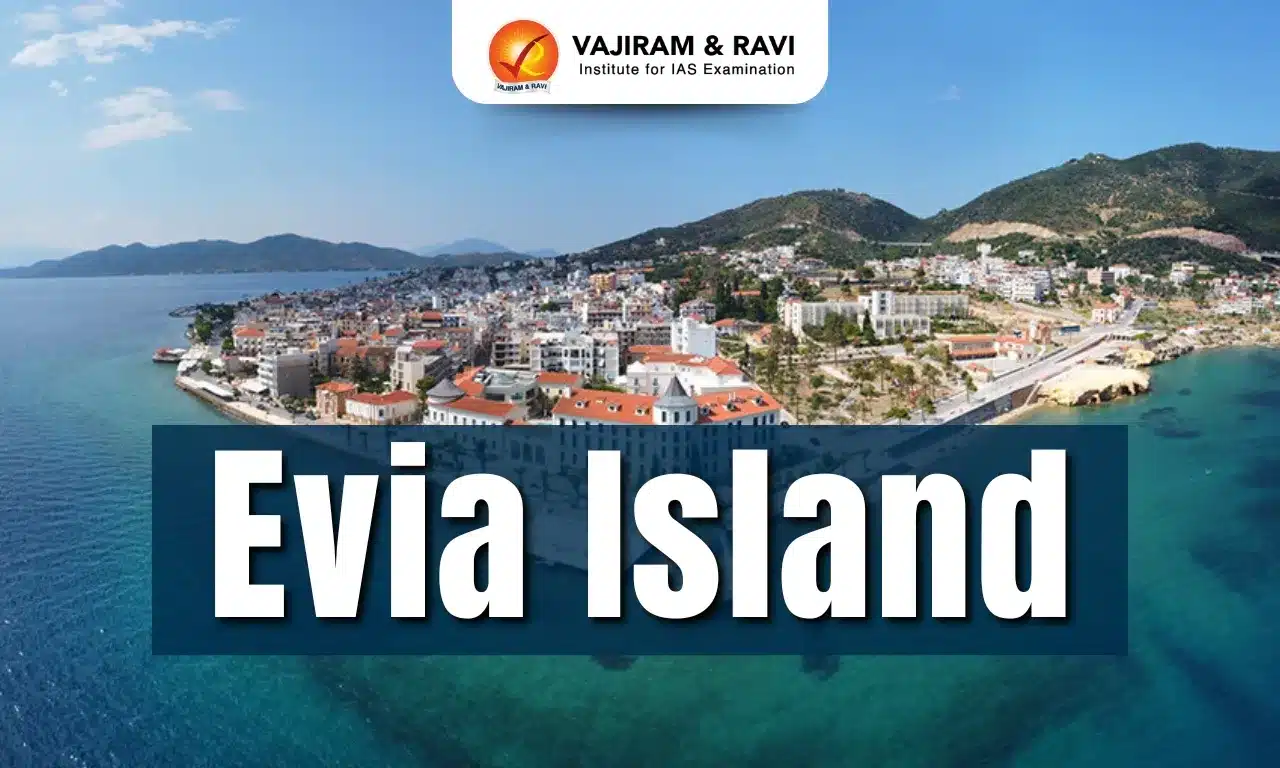
  • Evia, or Euboea, is the second largest island in Greece, second only to Crete, and third in Europe (second only to Cyprus). 
  • The area of the island is a little more than 3500 sq.km.
  • It is located in Central Greece, in the Aegean Sea.
  • The island is separated from the Greek mainland by the Euboean strait.
  • It is often referred to as a “mainland island” due to its close proximity to Athens, with many points of connection between the two.
  • Evia’s dramatic geography includes alpine mountains, lush forests, coastal wetlands, hidden canyons, and sun-soaked beaches. 
  • The main city on Evia is Halkida
    • It acts as the administrative and commercial heart of the island and is famously known for the unique phenomenon of the tidal currents in the narrow strait of Euripus, which changes direction multiple times a day. 
  • Evia's highest mountains are Dyrfi, Kandili, and Ohi.
  • The climate of Evia is Mediterranean. Winters are mild but rainy, and summers are hot with plenty of sunshine.

Source: DEVD

Evia Island FAQs

Q1: Evia Island is part of which country?

Ans: Evia is the second largest island in Greece.

Q2: Which strait separates Evia Island from the Greek mainland?

Ans: Euboean Strait

Q3: Which is the main city of Evia Island?

Ans: Halkida

Q4: What is the approximate area of Evia Island?

Ans: 3,500 sq. km

United Kingdom-India Infrastructure Financing Bridge (UKIIFB)

United Kingdom-India Infrastructure Financing Bridge

United Kingdom-India Infrastructure Financing Bridge Latest News

The U.K. India Infrastructure Financing Bridge (UKIIFB) recently marked its first anniversary by launching a report in the City of London.

About United Kingdom-India Infrastructure Financing Bridge

  • It is a collaborative initiative led jointly by NITI Aayog and the City of London. 
  • It aims to channel sustainable infrastructure investments into India, leveraging the UK's expertise in managing and structuring large-scale projects.
  • The UKIIFB, agreed as part of the UK Economic and Financial Dialogue (EFD), was operationalised with a steering committee made up of representatives from the UK government’s Treasury department, construction giants, and engineering and legal firms operating across both countries to drive forward the aim of getting mega infrastructure projects bid-ready.
  • This committee will oversee the implementation of the initiative, focusing on projects such as national highways, regional rapid transport systems, and renewable energy ventures.
  • UKIIFB Stakeholders will seek to jointly build a diverse investment and financing system that is long-term, stable, and sustainable with manageable risks.
  • It is distinctly committed to sustainable infrastructure development, prioritizing environmentally friendly projects that are aligned with the core principles of the Sustainable Development Goals.

Source: TH

United Kingdom-India Infrastructure Financing Bridge FAQs

Q1: What is the primary aim of the United Kingdom-India Infrastructure Financing Bridge (UKIIFB)?

Ans: To channel sustainable infrastructure investments into India.

Q2: Who are represented in the Steering Committee of the United Kingdom-India Infrastructure Financing Bridge (UKIIFB)?

Ans: UK Treasury, construction giants, engineering and legal firms from both countries.

Q3: Who jointly leads the United Kingdom–India Infrastructure Financing Bridge (UKIIFB)?

Ans: NITI Aayog and the City of London

Unified Real Estate (Regulation and Development) Act, 2016 (RERA) Portal

unified Real Estate Regulatory Authority (Rera) portal

Unified RERA Portal Latest News

The Minister of Housing and Urban Affairs recently launched the Unified Real Estate (Regulation and Development) Act, 2016 (RERA) portal —rera.mohua.gov.in— at the 5th meeting of the Central Advisory Council in New Delhi.

About Unified RERA Portal

  • RERA, introduced in 2016, was designed to tackle project delays and protect homebuyers. 
  • Until now, each state and union territory had its own RERA website. 
  • The primary purpose of the Unified RERA Portal is to consolidate data from various state RERA portals into a single, integrated platform—making information such as approvals, project statuses, timelines, and developer histories easily accessible to homebuyers and regulators alike. 
  • It was launched by the Ministry of Housing and Urban Affairs.
  • The portal aims to create a national database of projects, enhance transparency, and share best practices across States and Union Territories.
  • It will let both homebuyers and developers check the status of any project across India in one place.
  • The portal is also designed to deploy artificial intelligence (AI) tools to flag potentially delayed or stalled projects.
  • Key Features Include:
    • Centralised access: Buyers can view project details nationwide in one place.
    • Transparency: Developer history, project approvals, and timelines are easily accessible.
    • Standardisation: Uniform data makes it simpler to compare projects across states.
    • Grievance redressal: Complaint filing and tracking can now be streamlined.
  • Transparency and Convenience for Buyers:
    • A major highlight of the portal is easier access to verified information. 
    • Buyers can confirm whether a project has necessary approvals, track progress against timelines, and even review a developer’s compliance history. 
    • This would cut down the need for “endless follow-ups” and reduce complaints, making transactions more dependable.
  • Simplified Compliance for Developers: For developers, the portal standardises reporting requirements, making it easier to update project details and stay compliant with regulations.

Source: NOA

Unified RERA Portal FAQs

Q1: Who launched the Unified RERA Portal?

Ans: Ministry of Housing and Urban Affairs

Q2: What is the primary purpose of the Unified RERA Portal?

Ans: Consolidate data from various state RERA portals into a single, integrated platform

Q3: What benefit does the Unified RERA Portal provide for developers?

Ans: Simplified compliance and standardised reporting requirements

Nilgiri Tea

Nilgiri Tea

Nilgiri Tea Latest News

Nilgiri tea growers are facing a persistent cost price crisis of green tea leaves which is continuously haunting small growers in the region. 

About Nilgiri Tea

  • Nilgiri Tea is generally described as intensely aromatic, fragrant and flavored tea grown in the southern portion of the Western Ghats.
  • It has been named after the Nilgiris or Blue Mountains where it is grown.
  • It is mainly cultivated in Nilgiri district of Tamil Nadu and a small portion in Kerala and Karnataka.
  • It was recognized with the Geographical Indication Tag in 2008.
  • It is known for its delicate flavour and aroma, with notes of floral and citrus.
  • It is a popular choice for iced tea and is often used in blends with other teas to create unique taste profiles.

Required Climatic Conditions for Nilgiri Tea

  • Altitude: Teas are grown at elevations ranging from 1000 to 2500 metre above sea level.
  • Annual Rainfall: 150 to 230cm.
  • Soil: Well drained Laterite soil
  • It is grown throughout the year in Nilgiri and it also experiences two monsoons per year.

Issues with Nilgiri Tea

  • Pricing issue: Price for Green Tea Leaves (GTL) is dwindling these days. 
  • It is facing issues like over-reliance on Russian exports, poor quality management, adulteration and local market negligence. 

Source: TH

Nilgiri Tea FAQs

Q1: What is special about Nilgiri tea?

Ans: Nilgiri tea is known for its briskness, referring to lively fragrant flavours.

Q2: Who issues the Geographical Indication (GI) tag?

Ans: This tag is issued by the Geographical Indication Registry under the Department of Industry Promotion and Internal Trade, Ministry of Commerce and Industry.

Giant African Snail

Giant African Snail

Giant African Snail Latest News

Recently, experts warned that the Giant African Snail’s (Lissachatina fulica) presence poses serious risks to Chennai city residents.

About Giant African Snail

  • It is the common name for several large African land snail species.  The most damaging of these pests is Lissachatina fulica.
  • It is one of the world's worst invasive species.
  • It is known to eat more than 500 types of crops and ornamental plants.
  • It is native to East Africa but it has been widely introduced to other parts of the world through the pet trade, as a food resource, and by accidental introduction.
  • Habitat: It thrives in warm tropical climates with mild temperatures all year round and high humidity.
  • It is found in agricultural areas, coastal areas and wetlands, natural and planted forests, riparian zones, scrublands and shrublands, and the urban zones.
  • Food: Mature, adult snails generally feed on decaying organic matter, including garbage, fallen fruit and animal manure

Adverse Impact of Giant African Snail on Humans

  • It is a threat to animals and people because it can transmit parasites such as rat lungworm and other diseases.
  • The recent study warned that the snail is a vector for parasitic nematodes such as Angiostrongylus cantonensis and A. costaricensis, which cause eosinophilic meningoencephalitis (brain infection) and abdominal angiostrongyliasis in humans.
  • These infections often spread through ingestion of contaminated gastropods or their residues.

Source: TOI

Giant African Snail FAQs

Q1: What are Snails?

Ans: Snails are a species of mollusks that belong to the family of gastropods.

Q2: What are invasive species?

Ans: These are animals, plants, or other organisms that are introduced into places outside of their natural range, negatively impacting native biodiversity.

Apatani Tribes

Apatani Tribes

Apatani Tribe Latest News

The Apatani tribal women of Ziro Valley in Arunachal Pradesh are known for their facial tattoos and wooden nose plugs; banned in the 1970s, but still carried by only older women.

About Apatani Tribe

  • The Apatani, or Tanw, also known by Apa and Apa Tani, are a tribal group of people living in the Ziro valley in Arunachal Pradesh.
  • Language: They speak a local language called Tani and worship the sun and the moon.

Customs and Lifestyle of Apatani Tribe

  • Festivals: They have major festivals like Dree, Myoko, Yapung and Murung.
  • Dree is celebrated with prayers for a bumper harvest and prosperity of all humankind and Myoka celebrates friendship similar to modern friendship day.
  • Tattooing and Nose plug: Apatani women are known for their distinctive facial tattoos and nose plugs — a tradition that began as a means of protection against abduction.
  • The nose plugs, called Yaping Hullo, are made from wood found in the forest.
  • The tattoos, known as Tippei, are done by the elder women when an Apatani girl is about 10 years old.
  • They have been practising integrated rice-fish farming in their mountain terraces of Arunachal Pradesh since the 1960s.
  • These tribal people principally use three rice varieties: Emeo, Pyape and Mypia.

Source: TH

Apatani Tribe FAQs

Q1: What is the main festival of Apatani?

Ans: The Dree Festival

Q2: Which is the largest tribe in India?

Ans: Bhil is the largest tribal group in India as per 2011 Census.

Hilsa Fish

Hilsa Fish

Hilsa Fish Latest News

Bangladesh recently announced it has decided to export hilsa fish to India ahead of the Durga Puja festive season as a mark of “enduring Bangladesh-India friendship”.

About Hilsa Fish

  • It is a species of fish belonging to the Clupeidae family, which includes herring fish.
  • It is also called Ilish and holds an exceptional position in the culinary customs and social practices of Bengal
  • It is a fish that is highly prized because of its delicate flavour, distinct taste, and silky texture.
  • Scientific Name: Tenualosa ilisha

Hilsa Fish Habitat and Distribution 

  • It is found in rivers and estuaries in Bangladesh, India, Pakistan, Myanmar, and the Persian Gulf area.
  • Hilsa fish live in both saltwater and freshwater. 
  • They spend most of their lives in the ocean. 
  • However, when it's time to lay their eggs, they swim up into rivers. This journey is called a migration
  • They travel to rivers like the Padma River and Meghna River in Bangladesh. 
  • They also go to rivers in India, such as the Ganges River and Godavari River.
  • Bangladesh produces around 70% of the world’s ilish, making it a subject of public pride. Ilish is also the national fish of Bangladesh.
  • The Hilsa fish helps Bangladesh's economy a lot. It makes up about 12% of all the fish caught in the country. It also adds about 1% to the country's total GDP.

Hilsa Fish Appearance

  • Hilsa fish have a silvery body. 
  • They are quite flat and have a pointed head. 
  • Hilsa can grow up to about 50 cm, weighing more than 3 kg.
  • They are known for their many small bones.

Hilsa Fish Conservation Status

It is classified as 'Least Concern' under the IUCN Red List.

Source: PRINT

Hilsa Fish FAQs

Q1: What is the scientific name of Hilsa fish?

Ans: Tenualosa ilisha

Q2: Where is the largest share of Hilsa fish production found?

Ans: Bangladesh

Q3: What is the IUCN conservation status of Hilsa fish?

Ans: Least Concern

Q4: Hilsa is the national fish of which country?

Ans: Bangladesh

Phosphate Rocks

Phosphate Rocks

Phosphate Rock Latest News 

The Union environment ministry’s expert appraisal committee (EAC) has given its nod to carry out an environment impact assessment study for Birmania Rock Phosphate mine proposed in the potential Great Indian Bustard (GIB) area in Jaisalmer, Rajasthan.

Phosphate Rocks

About  Phosphate Rock

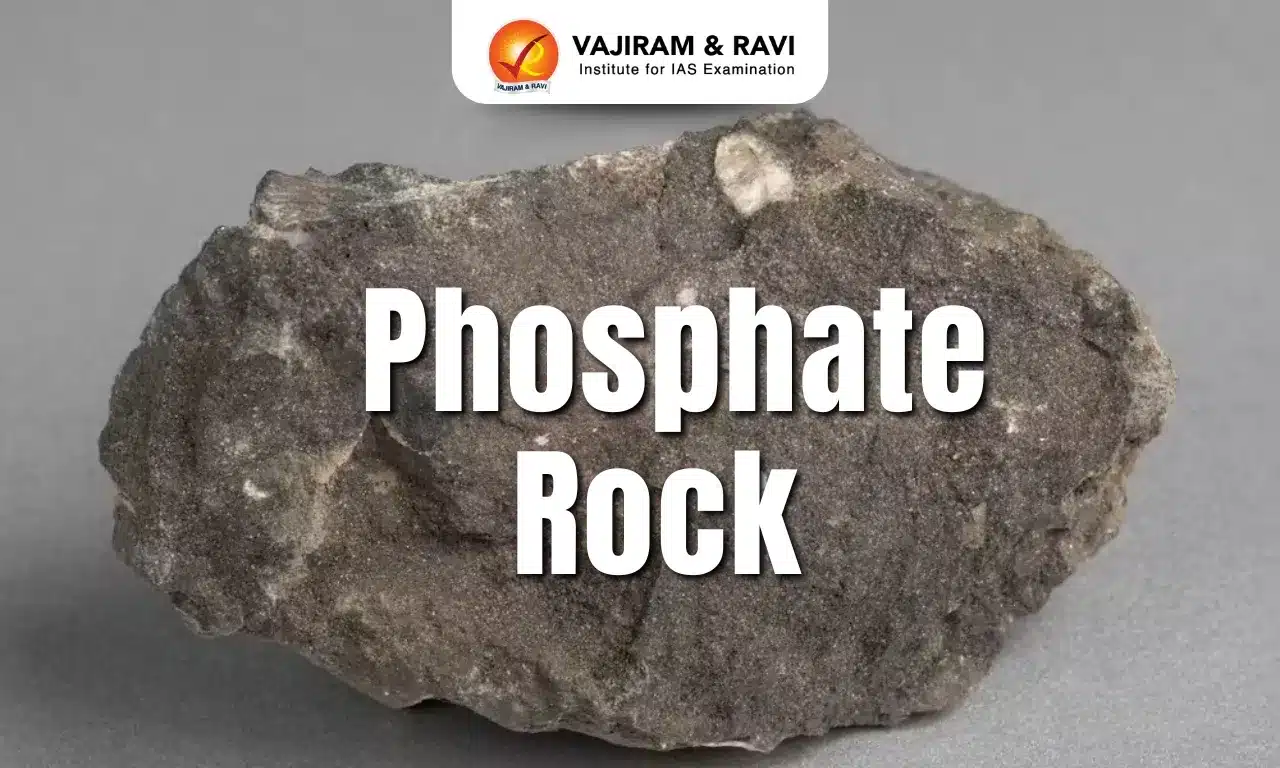
  • It is the natural source of phosphorus, an element that provides nutrients to plants for their growth and development.
  • Formation of phosphate rock: It is a sedimentary rock formed millions of years ago by the accumulation of organic matter on the ocean floor.
  • Geographical Distribution: Its reserves are found in Africa, North America, Kazakhstan, the Middle East and Oceania.
  • The world’s largest deposits are located in Morocco, which is also one of the global leaders in phosphate extraction.
  • Phosphate Rock Deposits in India: Phosphate rocks are majorly produced only from two States in India, namely Rajasthan and Madhya Pradesh.

Uses of Phosphate

  • Rock phosphate is the key raw material for DAP and NPK fertilizers. Currently, India is 90% dependent on imports for this raw material. 
  • Most of the phosphate rock mined throughout the world is used to produce phosphate fertilizer.
  • It is also used as animal feed supplements.
  • Industrial use: Elemental phosphorus and phosphoric chemicals derived from phosphate rocks find application in detergents, insecticides etc.

Source: IE

Phosphate Rock FAQs

Q1: What is phosphate rock used for?

Ans: Phosphate rock is processed to produce phosphorous, which is one of the three main nutrients most commonly used in fertilizers.

Q2: Where can one find phosphate rock?

Ans: Commonly, phosphates are deposited in very shallow, near-shore marine or low-energy environments.

Duchenne Muscular Dystrophy

Duchenne Muscular Dystrophy

Duchenne Muscular Dystrophy Latest News

The Ministry of Social Justice & Empowerment, Government of India, observes World Duchenne Muscular Dystrophy Day every year on 7th September.

About Duchenne Muscular Dystrophy

  • It is a rare genetic disorder which is characterized by progressive muscle degeneration and weakness.
  • It is caused by a genetic problem in producing dystrophin, a protein that protects muscle fibers from breaking down when exposed to enzymes.
  • It was first described by the French neurologist Guillaume Benjamin Amand Duchenne in 1860.
  • It is characterized by progressive muscle degeneration and weakness due to the alterations of a protein called dystrophin.
  • It is a multi-systemic condition, affecting many parts of the body, which results in deterioration of the skeletal, heart, and lung muscles.
  • The dystrophin gene is found on the X-chromosome, it primarily affects males, while females are typically carriers. 

Symptoms of Duchenne Muscular Dystrophy

  • It can begin as early as age 2 or 3, first affecting the proximal muscles (those close to the core of the body) and later affecting the distal limb muscles (those close to the extremities).
  • Usually, the lower external muscles are affected before the upper external muscles.
  • The affected child might have difficulty jumping, running, and walking.
  • Other symptoms include enlargement of the calves, a waddling gait, and lumbar lordosis (an inward curve of the spine).
  • Treatments: Presently available treatments are gene therapy, exon skipping, stop codon read-through and gene repair.

Source: PIB

Duchenne Muscular Dystrophy FAQ's

Q1: What is the main cause of Duchenne muscular dystrophy?

Ans: It is caused by a genetic problem in producing dystrophin, a protein that protects muscle fibers from breaking down when exposed to enzymes.

Q2: What is genetics?

Ans: Genetics is the study of how genes and how traits are passed down from one generation to the next.

Enquire Now