Adi Sanskriti Platform

Adi Sanskriti Platform

Adi Sanskriti Platform Latest News

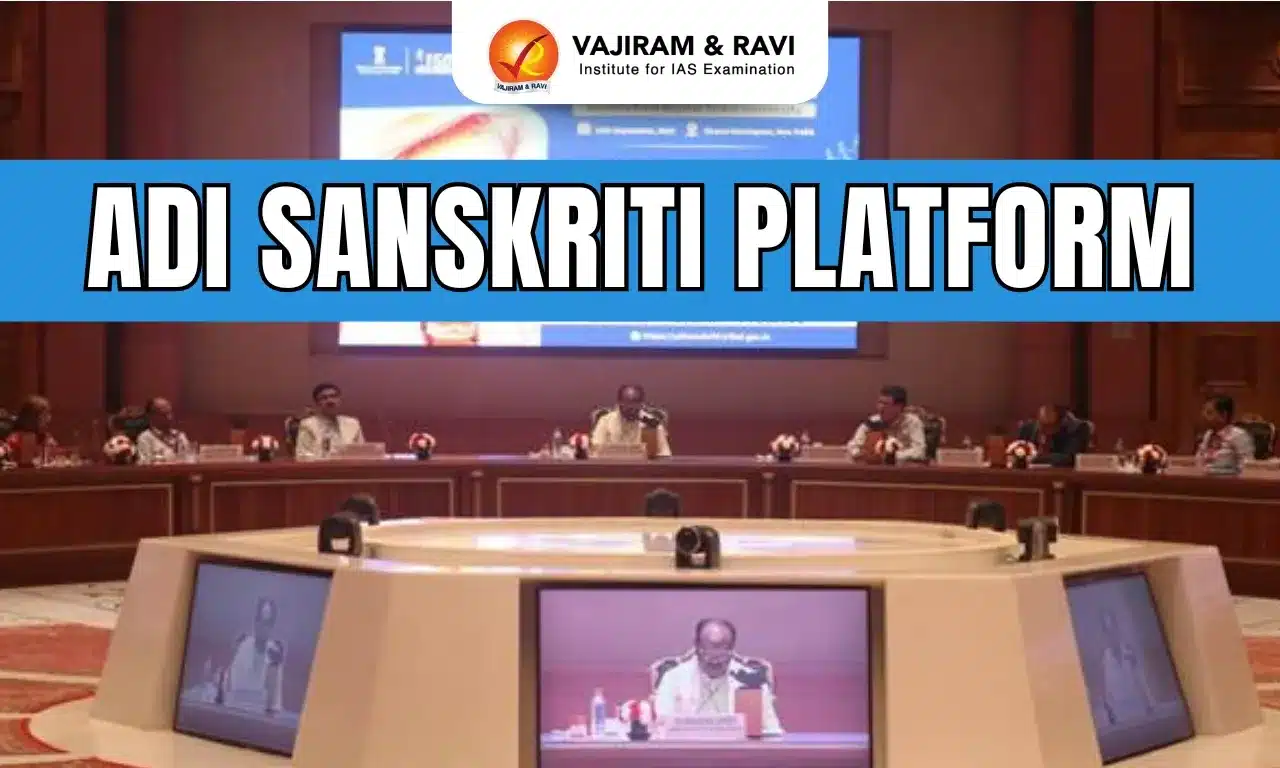
Recently, the Ministry of Tribal Affairs unveiled the Beta Version of Adi Sanskriti at Bharat Mandapam, New Delhi, during the National Conference on Adi Karmayogi Abhiyan.

About Adi Sanskriti Platform

  • It is a pioneering digital learning platform for tribal artforms, preserving heritage, enabling livelihoods, and connecting India’s tribal communities with the world,
  • Objective
    • It is envisioned as the world’s first Digital University to preserve and promote the culture and traditional knowledge of tribal communities.
    • It functions as an online marketplace for the world to access products made by tribal artisans.
  • The platform integrates three major components:
    • Adi Vishwavidyalaya (Digital Tribal Art Academy): It is currently offering 45 immersive courses on tribal dance, painting, crafts, music, and folklore.
    • Adi Sampada (Socio-Cultural Repository): It is a collection of over 5,000 curated documents across five themes, covering paintings, dance, clothing & textiles, artefacts and livelihood.
    • Adi Haat (Online marketplace): It is currently linked with TRIFED, this will evolve into a dedicated online marketplace for tribal artisans, enabling sustainable livelihoods and direct consumer access.
  • It is being built in close partnership with State Tribal Research Institutes (TRIs).
  • States involved in its first phase: TRIs from Andhra Pradesh, Assam, Bihar, Chhattisgarh, Goa, Gujarat, Kerala, Madhya Pradesh, Maharashtra, Meghalaya, Odisha, Rajasthan, Tamil Nadu, Telangana, and Uttar Pradesh.
  • These states have contributed to the documentation, content curation, and digital mapping of tribal artforms.

Source: PIB

Adi Sanskriti Platform FAQs

Q1: What is Tribal Cooperative Marketing Development Federation of India Limited?

Ans: It is an organization under the Ministry of Tribal Affairs, dedicated to the socio-economic development of tribal communities through the marketing development of tribal products.

Q2: Where is the National Tribal Research Institute situated?

Ans: New Delhi
Langkhun Festival

Langkhun Festival

Langkhun Festival Latest News

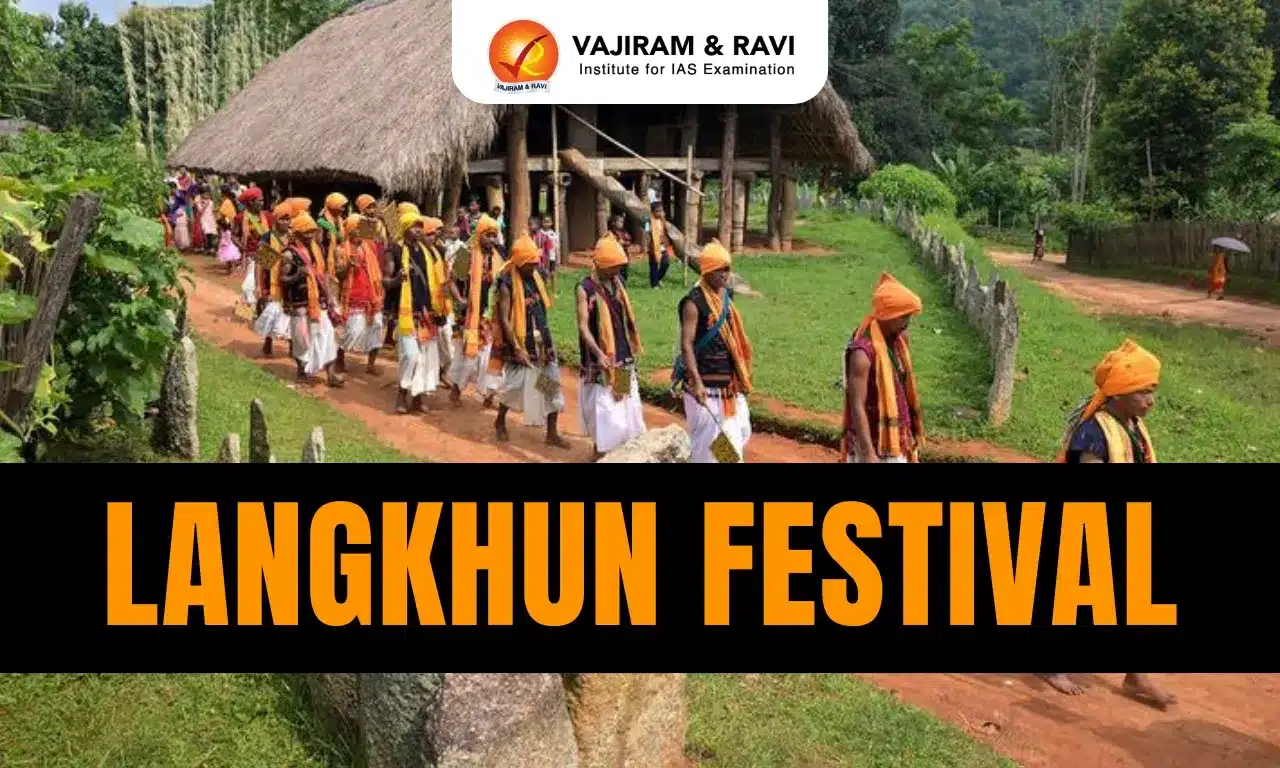
Recently, Tiwa tribesmen celebrated the Langkhun festival in Umsowai village in Karbi Anglong district of Assam.  

About Langkhun Festival

  • It is a socio-religious event celebrated by the Tiwa community in Assam.
  • During this festival the people pray for a good crop in the upcoming Rabi crop season. 
  • The members of the community make offerings and pray to the gods for a good harvest during this festival.
  • Cultural events including music and dance are also part of the event.
  • Significance: The Tiwa Langkhun festival has great cultural significance and the community prays for a good harvest

Key Facts about Tiwa Tribe

  • The Tiwa people are also called Lalung and they live in Assam and Megalahaya states in northeastern India.
  • There are Hill Tiwas and Plains Tiwas.
    • Hill Tiwas: They live in the Karbi Anglong District of Assam and in Megalahaya. They speak a Tibeto Burman language.
    • Plains Tiwas: They live in the southern bank of the Brahmaputra Valley. They speak Assamese.
  • Society: They have a matrilineal system of society where a Tiwa boy goes to a girl to marry her. This system is called “Kobea Liwa."
  • The main festivals of Tiwa tribes are: Tiwa Bihu, Jon Beel Mela, Sagramisawa, Langkhunpuja etc.

Source: TH

Langkhun Festival FAQs

Q1: What is the festival of Tiwa tribe in Assam?

Ans: The main festivals of the Tiwa ethnic groups are: Three Pisû (Bihu), Borot Kham (Borot Utsav), Kablâ Phûja.

Q2: Who are the Tiwa tribes in Assam?

Ans: The Tiwas otherwise known as the Lalungs are of the major ethnic groups in Assam.

Aspergillus Section Nigri

Aspergillus Section Nigri

Aspergillus Section Nigri Latest News

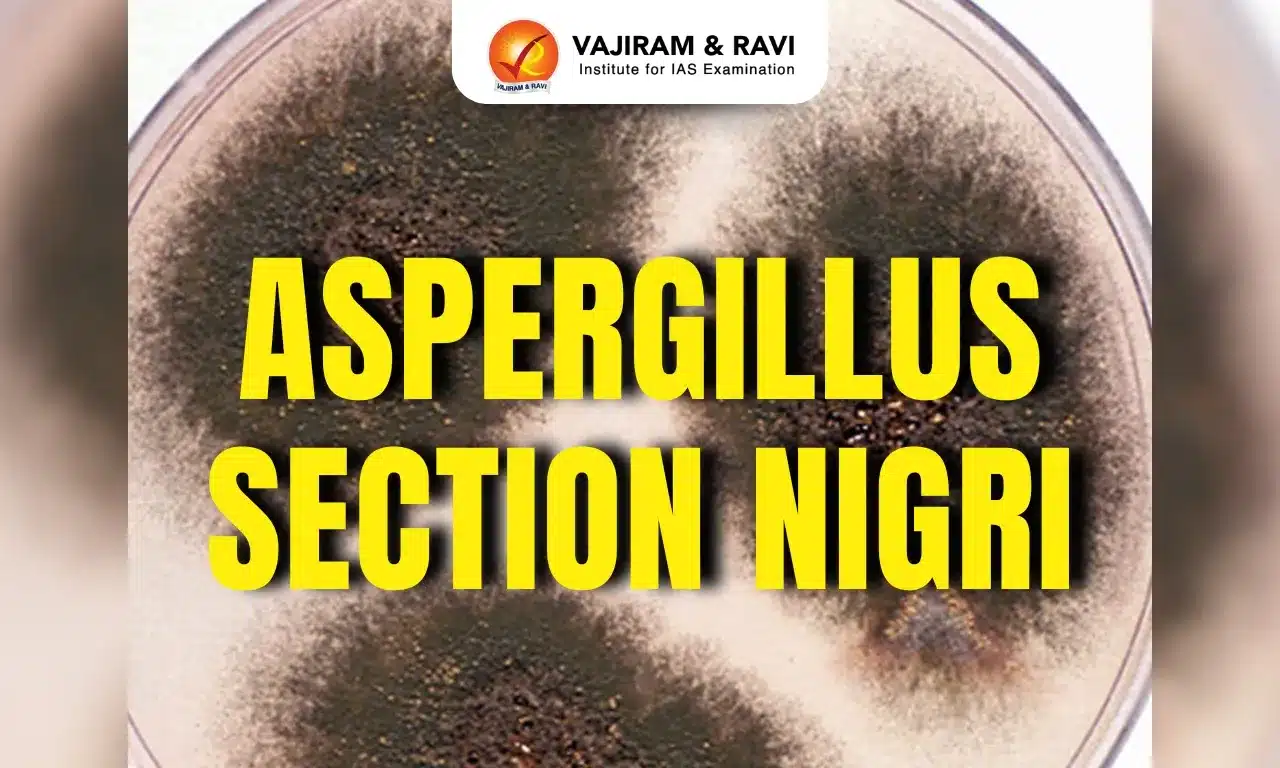
Agharkar Research Institute in Pune, an autonomous institute of the Department of Science & Technology, recently identified two novel species of Aspergillus section Nigri (commonly known as black aspergillus), Aspergillus dhakephalkarii and Aspergillus patriciawiltshireae.

About Aspergillus Section Nigri

  • Aspergillus section Nigri comprises filamentous fungi.
  • It is a taxonomic group within the genus Aspergillus, characterized by its black-pigmented conidia (spores) and diverse metabolic capabilities. 
  • Their colonies usually appear black due to pigmented conidia.
  • This section includes species that are significant in food spoilage, industrial applications, and human health, particularly in relation to mycotoxin production and opportunistic infections.
  • While primarily sourced from soil, certain members of this group have been observed in various environments such as decaying organic material and on the surfaces of plants, contributing to food spoilage and diseases in maize, onions, grapes, and peanuts. 
  • Strains of Aspergillus section Nigri can colonize maize and small grains (which include wheat, triticale, spelt, etc.) during pre-harvest, harvest, or post-harvest storage phases. 
  • Their ability to colonize diverse substrates underscores the importance of understanding their taxonomy, ecology, and potential impacts on agricultural, and food safety.
  • Some strains of Aspergillus niger are known to secrete ochratoxins –mycotoxins which can give rise to nephrotoxicity and renal tumours in a variety of animal species and are potentially hazardous to human health through their consumption. 
  • A. niger is one of the most widely used fungi in biotechnology.
    • Production of citric acid, gluconic acid, and various enzymes (amylases, proteases, and cellulases).
    • Used in food processing, pharmaceuticals, and bioengineering.

Source: DDN

Aspergillus Section Nigri FAQs

Q1: What is Aspergillus section Nigri?

Ans: Aspergillus section Nigri comprises filamentous fungi.

Q2: Why the colonies of fungi belonging to Aspergillus section Nigri appear black?

Ans: Their colonies usually appear black due to pigmented conidia.

Q3: What is the primary ecological source of Aspergillus section Nigri fungi?

Ans: Soil

Permafrost

Permafrost

Permafrost Latest News

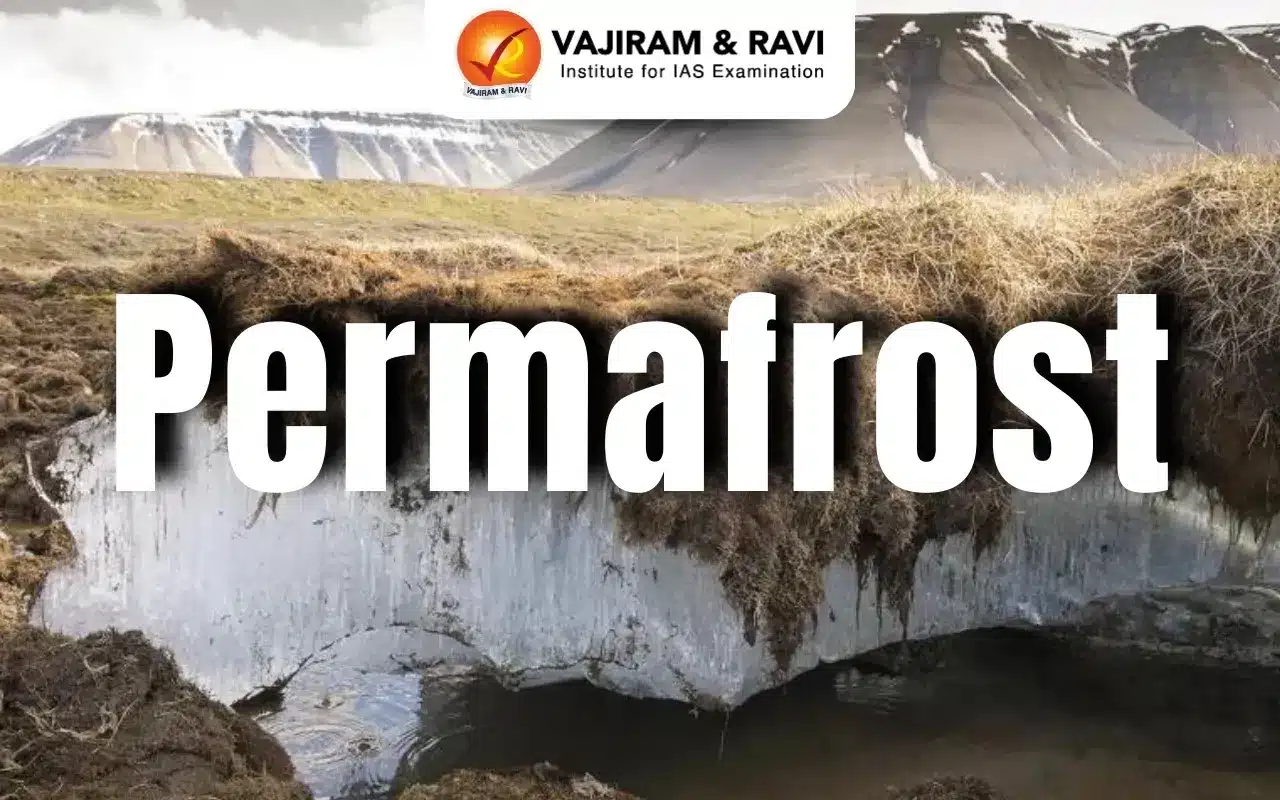
In a groundbreaking discovery in Siberia, scientists recently uncovered a 44,000-year-old wolf, nearly perfectly preserved in permafrost.

About Permafrost

  • Permafrost is any ground that remains completely frozen—32°F (0°C) or colder—for at least two years straight. 
  • Where are they found?
    • These permanently frozen grounds are most common in regions with high mountains and in Earth’s higher latitudesnear the North and South Poles.
    • Permafrost can be found on land and below the ocean floor. 
    • Permafrost thickness can range from one meter (about three feet) to more than 1,000 meters (about 3,281 feet), covering entire regions, such as the Arctic tundra, or a single, isolated spot, such as a mountaintop of alpine permafrost.
    • Permafrost covers large regions of the Earth. Almost a quarter of the land area in the Northern Hemisphere has permafrost underneath. 
    • While two years is the minimum for permafrost consideration, some regions have had frozen ground for hundreds of thousands of years. 
    • Scientists discovered the oldest known permafrost in Siberia, which has been frozen for the past 650,000 years. 

What Is Permafrost Made Of?

  • Permafrost is made of a combination of soil, rocks, and sand that are held together by ice. 
  • The soil and ice in permafrost stay frozen all year long.
  • Although the ground is frozen, permafrost regions are not always covered in snow.
  • Near the surface, permafrost soils also contain large quantities of organic carbon—a material leftover from dead plants that couldn’t decompose, or rot away, due to the cold.
  • Lower permafrost layers contain soils made mostly of minerals.
  • A layer of soil on top of permafrost does not stay frozen all year. This layer, called the active layer,thaws during the warm summer months and freezes again in the fall. 
  • In colder regions, the ground rarely thaws—even in the summer. There, the active layer is very thin—only 4 to 6 inches (10 to 15 centimeters). In warmer permafrost regions, the active layer can be several meters thick.
  • A thawing permafrost layer can lead to severe impacts on people and the environment. 
    • For instance, as ice-filled permafrost thaws, it can turn into a muddy slurry that cannot support the weight of the soil and vegetation above it. 
    • Infrastructure such as roads, buildings, and pipes could be damaged as permafrost thaws.
    • Additionally, organic matter (like the remains of plants) currently frozen in the permafrost will start to decompose when the ground thaws, resulting in the emission of methane and carbon dioxide into the atmosphere. This contributes to further global climate change.

Source: IDR

Permafrost FAQs

Q1: What is a Permafrost?

Ans: Permafrost is any ground that remains completely frozen—32°F (0°C) or colder—for at least two years straight.

Q2: What country has the most permafrost?

Ans: Russia

Q3: What is permafrost made of?

Ans: Permafrost is made of a combination of soil, rocks, and sand that are held together by ice.

Q4: Approximately what fraction of the Northern Hemisphere’s land area has permafrost underneath?

Ans: One-quarter

National Cooperative Exports Limited

National Cooperative Exports Limited

National Co-operative Exports Limited Latest News

Recently, the National Co-operative Exports Limited (NCEL) and the Agricultural and Processed Food Products Export Development Authority (APEDA) signed a Memorandum of Understanding (MoU) which is aimed at elevating India’s cooperative-led agricultural export.

About National Co-operative Exports Limited

  • It is set up by the Ministry of Cooperation under the Multi-State Cooperative Societies (MSCS) Act, 2002.
  • It is an umbrella organization to give thrust to exports from the cooperative sector.
  • Aim: It aims to enhance the global competitiveness of cooperative-produced goods and services.
  • Promoters of NCEL: Major cooperative institutions namely; AMUL (GCMMF), IFFCO, KRIBHCO, NAFED, and NCDC.
  • Member eligibility: All cooperative societies from the level of primary to apex that are interested in exports are eligible to become members. 
  • Headquarters: New Delhi, India.

Functions of National Co-operative Exports Limited

  • It promotes exports through various activities including procurement, storage, processing, marketing, branding, labelling, packaging, certification, research & development, and trading of all types of goods and services produced by cooperative societies.
  • It also helps in arranging finance, provide technical guidance, help in training and capacity building, develop and maintain market intelligence systems.
  • It focuses on exporting the surpluses available in the Indian cooperative sector by accessing wider markets beyond the geographical contours of the country.

Source: PIB

National Co-operative Exports Limited FAQs

Q1: Who are the promoters of NCEL?

Ans: The NCEL is jointly promoted by four leading co-operatives viz. GCMMF, IFFCO, KRIBHCO and NAFED; and statutory corporation NCDC.

Q2: When was the National Cooperative Exports Limited established?

Ans: 25th of January, 2023

Hellfire Missile

Hellfire Missile

Hellfire Missile Latest News

A never-before-seen video has left Washington in disbelief after it appeared to show a US Hellfire missile bouncing harmlessly off an unidentified flying object (UFO) off the coast of Yemen.

About Hellfire Missile

  • It is an air-to-ground, laser-guided, subsonic tactical missile with significant anti-tank capacity. 
  • It can also be used as an air-to-air weapon against helicopters or slow-moving fixed-wing aircraft.
  • It is used by the United States military as well as 30 US allies.
  • The United States began developing the AGM-114 Hellfire in 1972 to address the Army’s requirement for a helicopter-launched antitank missile to counter Soviet armor formations.
  • The Air-to-Ground (AGM)-114 provides precision striking power against tanks, structures, bunkers, and helicopters. 
  • The Hellfire missile is capable of defeating any known tank in the world today. 
  • It is the missile of choice for several kinds of unmanned aerial vehicles (UAVs), such as the MQ-1B Predator, MQ-9 Reaper, and MQ-1C Grey Eagle.

Hellfire Missile Features

  • AGM-114 missiles measure between 1.63-1.75 m in length, 0.178 m in diameter, and weigh 45-48.5 kg. 
  • They have a range of 7-11 km while carrying a payload of 8-11 kg. 
  • The missile flies at subsonic speeds to a maximum of Mach 1.3 (450 m/s).
  • It is propelled by a single-stage solid-propellant solid-fuel rocket motor. 
  • The missile can be guided towards the objective either from inside the aircraft or by lasers outside the aircraft.
  • The AGM-114R multipurpose missile is the latest in the Hellfire II missile range.
    • Also known as the Hellfire Romeo, the missile integrates the capabilities of all previous Hellfire II variants.
    • It can be launched from several different kinds of fixed-wing aircraft and helicopters, surface ships, and military ground vehicles.
    • It uses a semi-active laser guidance system and an integrated blast fragmentation sleeve warhead to engage targets that previously needed several Hellfire variants to destroy.

Source: HT

Hellfire Missile FAQs

Q1: The Hellfire missile was developed by which country?

Ans: It is an air-to-ground, laser-guided, subsonic tactical missile with significant anti-tank capacity.

Q2: What is the range of the Hellfire missile?

Ans: 7–11 km

Q3: What type of propulsion system does the Hellfire missile use?

Ans: Single-stage solid-propellant rocket motor.

Vembanad Lake

Vembanad Lake

Vembanad Lake Latest News

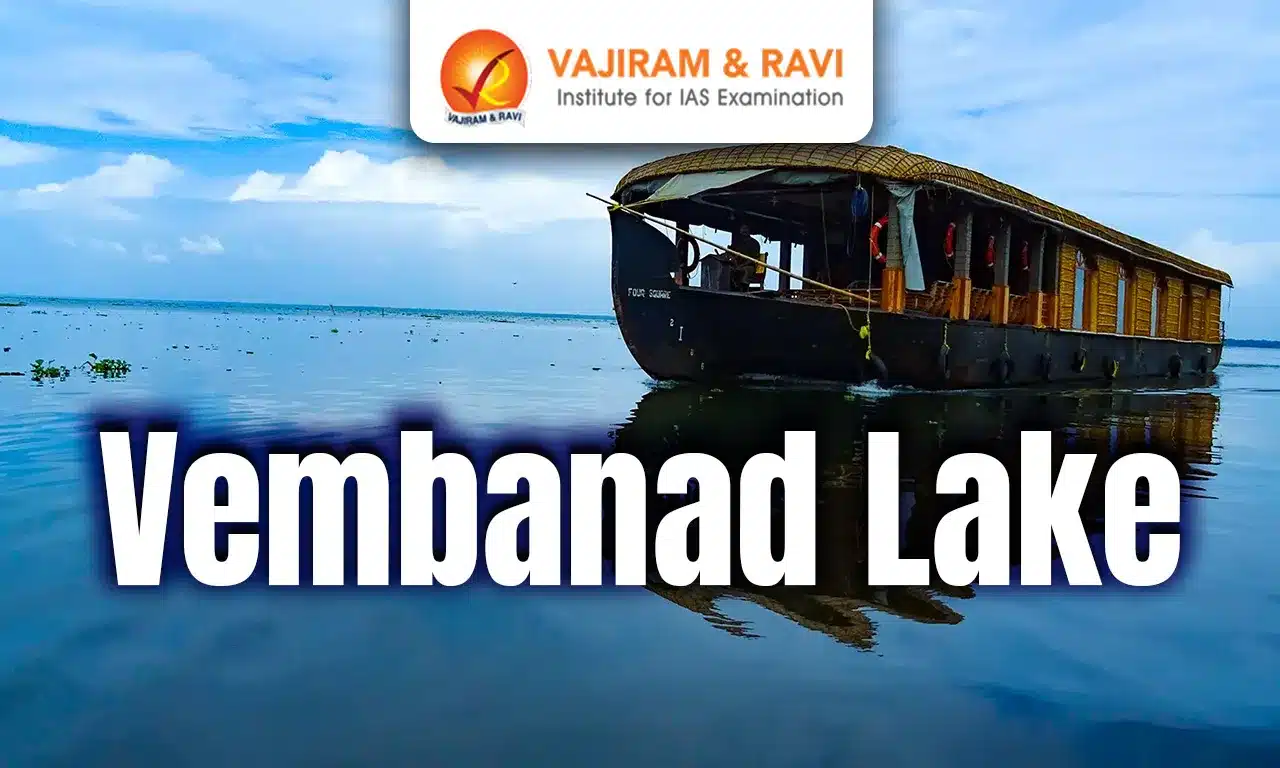
Recently, it is observed that unchecked tourism, luxury houseboats, and decades of encroachment are pushing Vembanad Lake into ecological crisis.

About Vembanad Lake

  • Vemband is the largest lake in Kerala and the longest Lake in India.
  • Other names: It is also known as Vembanad Kayal, Vembanad Kol, Punnamada Lake (in Kuttanad) and Kochi Lake (in Kochi).
  • Source: The lake has its source in four rivers, Meenachil, Achankovil, Pampa and Manimala.
  • It is separated from the Arabian Sea by a narrow barrier island and is a popular backwater stretch in Kerala.
  • Famous Boat race in Lake: Vallam Kali (i.e Nehru Trophy Boat Race) is a Snake Boat Race held every year in the month of August in Vembanad Lake.
  • In 2002, it was included in the list of wetlands of international importance, as defined by the Ramsar Convention.
  • The Government of India has identified this lake under the National Wetlands Conservation Programme.
  • The Kumarakom Bird Sanctuary is located on the east coast of the lake.

Source: DTE

Vembanad Lake FAQs

Q1: Where is Vembanad Lake located?

Ans: Vembanad Lake is situated in the state of Kerala and is the longest lake in India and the largest in the state.

Q2: Which major rivers drain into Vembanad Lake?

Ans: The Meenachil, Pamba, Manimala, and Achankovilrivers drain into Vembanad Lake.

Reunion Island

Reunion Island

Reunion Island Latest News

Ships of the Indian Navy’s first training squadron (1TS), INS Tir and ICGS Sarathi, arrived at Réunion Island, while INS Shardul reached Port Louis, Mauritius, recently, as part of their long-range training deployment in the southwest Indian Ocean Region.

About Reunion Island

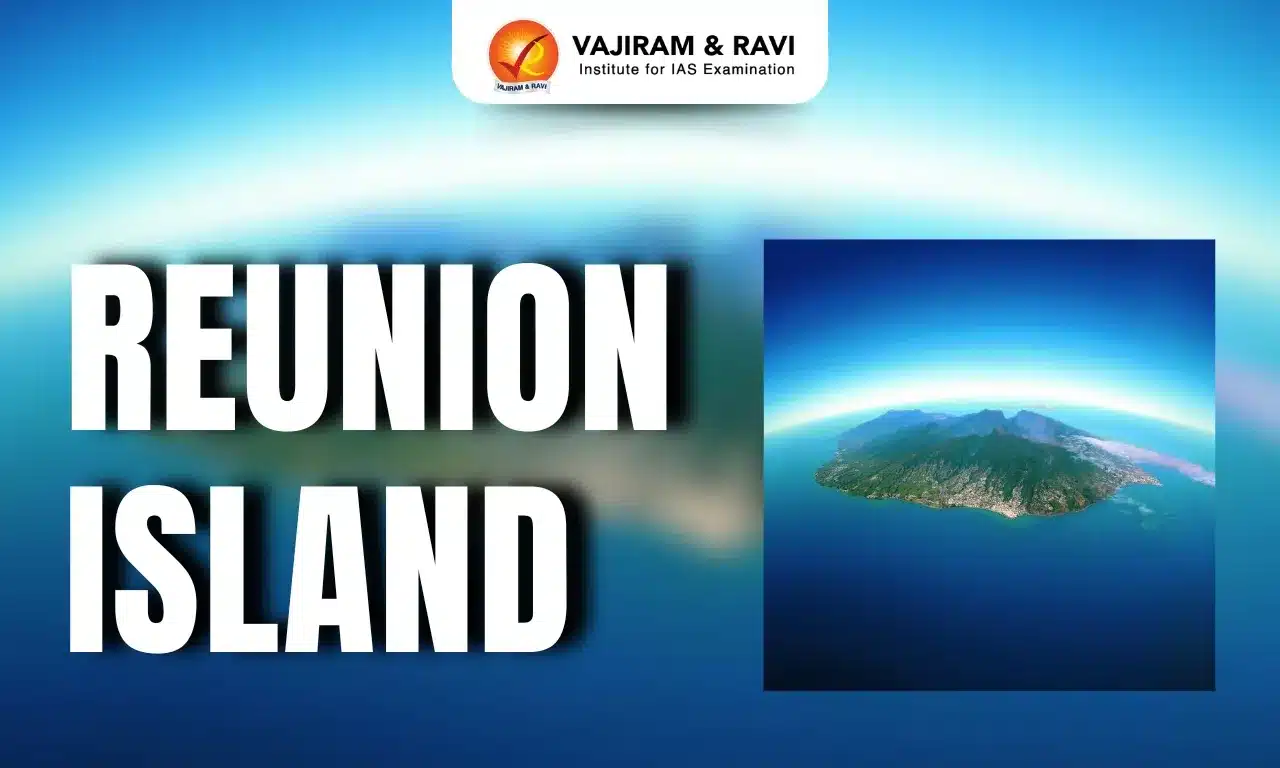
  • It is a French island in the Western Indian Ocean.
  • It lies about 680 km east of Madagascar and 180 km southwest of Mauritius.
  • It covers an area of 2,511 sq. km.
  • It is almost elliptical in shape, about 40 miles (65 km) long and 30 miles (50 km) wide. 
  • With Mauritius and Rodrigues Islands, they form the Mascarene Archipelago. 
  • Of volcanic origin, Réunion consists mostly of rugged mountains in an advanced state of dissection by short torrential rivers. 
  • The Marsouins and Galet Rivers are the two largest in the territory. 
  • It is home to the highest peak in the Indian Ocean, the Piton des Neiges, and one of the most active volcanoes on the planet, the Piton de la Fournaise. 
  • The capital is Saint-Denis, on the northern coast.
  • Réunion’s coast has no good natural harbours.
  • It has a tropical climate.
  • People:
    • Réunion was first settled in the 17th century by colonists from France.
    • Slave labourers were brought in from East Africa to work on plantations, and later Malays, Annamites, Chinese, and Malabar Indians were imported as indentured labourers.
    • Today the greatest proportion of the population is of mixed descent (African, European, and South Asian). 
  • As a French overseas territory, it has the same political status as other departments in mainland France. It is a key French military base for the Indian Ocean region.
  • Languages: French, plus Reunion Creole
  • Its economy is based largely on the export of sugar. Other products include meat and milk products, rum, molasses, tobacco, geranium essence, and vanilla.

Source: TH

Reunion Island FAQs

Q1: Réunion Island is part of which country?

Ans: It is a French island in the Western Indian Ocean.

Q2: What is the capital of Réunion Island?

Ans: The capital is Saint-Denis, on the northern coast.

Q3: What languages are spoken in Réunion Island?

Ans: French and Réunion Creole

Melioidosis

Melioidosis

Melioidosis Latest News

Recently, health authorities have confirmed melioidosis in a patient from Turakapalem village in Andhra Pradesh.

About Melioidosis

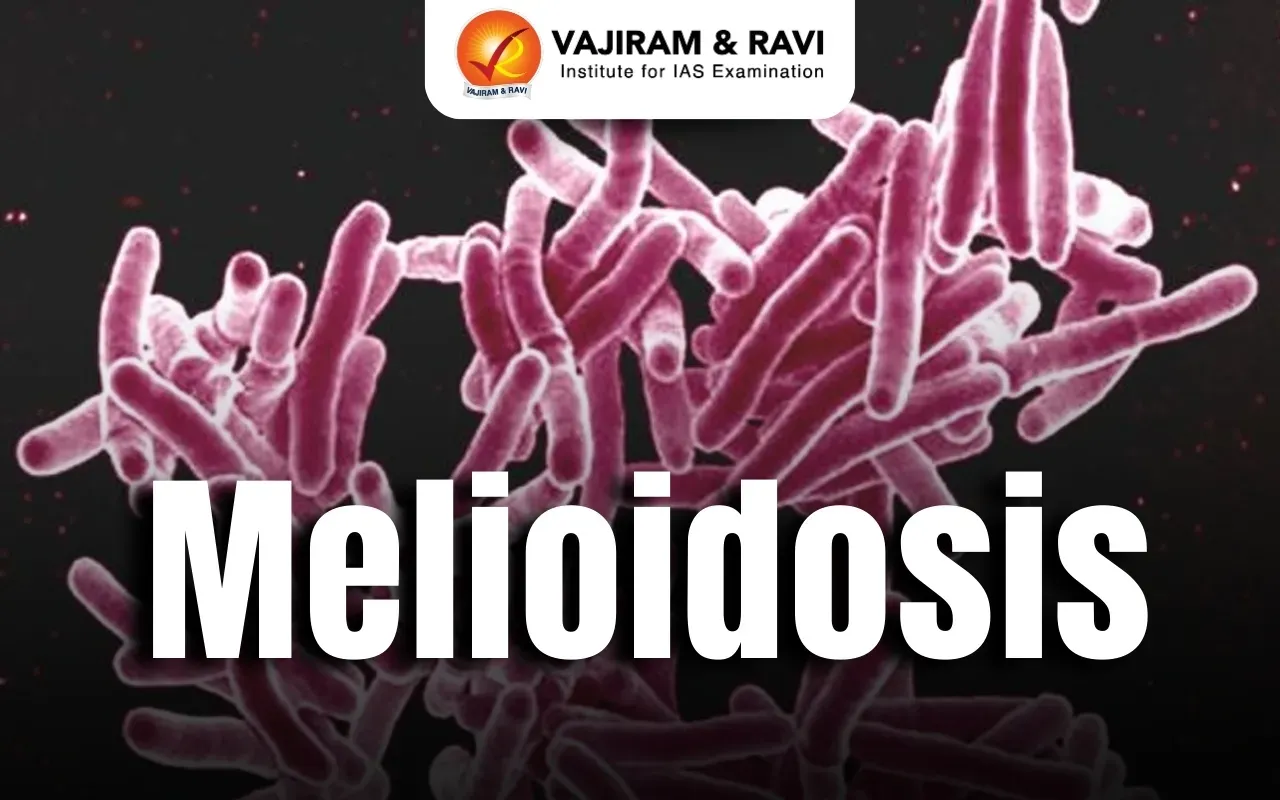
  • It is caused by an infectious disease caused by the environmental Gram-negative bacterium Burkholderia pseudomallei. 
  • It is seasonal, with 75–85% of cases occurring during the rainy season.
  • It has a high case fatality rate (CFR) ranging from 16% to 50% in known endemic regions.
  • It is an infectious disease endemic in Southeast Asia, northern Australia, much of the Indian subcontinent, southern China, Hong Kong, and Taiwan.
  • It is common in people living with: Diabetes, Alcohol use disorder, Chronic kidney disease Chronic lung disease (like cystic fibrosis or COPD).
  • Symptoms: Fever, headache, trouble breathing and Stomach or chest pain etc.

Transmission of Melioidosis

  • Touching contaminated soil with the hands or feet, especially if there are small cuts in the skin.
  • Drinking contaminated water that has not been chlorinated
  • Breathing in contaminated dust or water droplets
  • Exposure to severe weather events such as tropical monsoon storms, cyclones, hurricanes and typhoons.
  • Treatment: At present, there is no vaccine available for melioidosis.

Source: DTE

Melioidosis FAQs

Q1: What is another name for melioidosis?

Ans: Whitmore's disease

Q2: Is melioidosis transmitted human to human?

Ans: It's very rare for people to get the disease from another person.

Enquire Now