All India Debt and Investment Survey (AIDIS) & Situation Assessment Survey

All India Debt and Investment Survey

All India Debt and Investment Survey (AIDIS) & Situation Assessment Survey Latest News

The All India Debt and Investment Survey (AIDIS) and the Situation Assessment Survey (SAS) of Agricultural Households are scheduled to be conducted from July 2026 to June 2027.  

About All India Debt and Investment Survey (AIDIS)

  • The AIDIS is one of India’s most significant surveys on household finance.
  • Previous AIDIS Surveys
    • Its origins go back to the All India Rural Credit Survey (1951-52), later expanded to cover both debt and investment in 1961-62.
    • Since then, the NSO has conducted AIDIS roughly once every decade, most recently in the 77th Round (2019) at the request of the Reserve Bank of India (RBI).
    • The survey provides critical data on household indebtedness and asset ownership across both rural and urban areas.
  • Significance of the Survey: Its findings are instrumental in shaping national accounts, assessing inequality in asset distribution, understanding credit markets, and informing policies of the RBI, MoSPI, and other government institutions.
  • It is conducted by the National Statistics Office (NSO), under the Ministry of Statistics and Programme Implementation (MoSPI).

About Situation Assessment Survey (SAS) of Agricultural Households

  • The SAS of Agricultural Households, first launched in 2003.
  • It is designed to assess the economic conditions of farming communities.
  • It was expanded in 2013 to cover all agricultural households and further strengthened in the 2019 round.
  • It now provides comprehensive insights into the livelihoods of agricultural households.
  • The survey covers Household income and expenditure, Indebtedness and access to credit, Land and livestock ownership, Crop and livestock production, and use of technology and Access to government schemes and crop insurance. Farming practices
  • Significance of Survey: The Ministry of Agriculture and Farmers Welfare, NITI Aayog, researchers, and financial institutions utilise the survey findings to shape policies and programmes aimed at agriculture and rural development. 

Source: PIB

All India Debt and Investment Survey (AIDIS) & Situation Assessment Survey FAQs

Q1: Where is the headquarter of the National Statistical Office?

Ans: New Delhi

Q2: What are the responsibilities of the NSO?

Ans: The National Statistics Office (NSO) is responsible for collecting, compiling, classifying, producing, publishing and disseminating general-purpose statistics.


National Forest Martyrs Day 2025

National Forest Martyrs Day

National Forest Martyrs Day Latest News

Tributes were paid to Forest Department personnel who died while engaged in conservation works during the National Forest Martyrs Day, observed recently.

About National Forest Martyrs Day

  • It is observed annually on September 11th in India to honor the sacrifices of those who have laid down their lives in defense of the country’s forests and wildlife.
  • The day honours protective environmentalists and personnel of the forest who have experienced certain risks in the process of conservation of natural resources.

National Forest Martyrs Day History

  • The day goes back to the memory of the Khejarli Massacre, which took place in 1730 in the Marwar Kingdom. 
  • The then Maharaja Abhai Singh demanded Khejri trees from the Bishnoi village of Khejarli to be cut down to provide timber for his new palace.
  • However, his action was resisted by the Bishnoi community, which has always been very sensitive towards the natural community.
  • Villagers under the leadership of Amrita Devi Bishnoi protested by hugging trees to safeguard them. 
  • Unfortunately, Devi and many other members of the village were slain while defending the trees. 
  • It was estimated that 363 of them died while protesting.
  • Their legacy inspired later conservation movements, including the Chipko Movement, shaping India’s environmental ethos.In recognition of this sacrifice, the Ministry of Environment, Forest and Climate Change of India declared September 11 as the National Forest Martyrs Day in 2013.

Significance of the National Forest Martyrs Day

  • It is a tribute to all those who defended nature against exploitation, from illegal logging to poaching. 
  • It underscores that forests are not just resources; they are lifelines that regulate the climate, purify air and water, and support biodiversity.
  • The day is marked by memorial services, tree plantation drives, awareness campaigns, and educational events organised by the Ministry of Environment, state forest departments, and schools. 
  • Communities come together to honour martyrs and spread awareness about eco-conscious living.

Source: TH

National Forest Martyrs Day FAQs

Q1: National Forest Martyrs Day is observed every year in India on which date?

Ans: It is observed annually on September 11th.

Q2: The historical roots of National Forest Martyrs Day are linked to which event?

Ans: Khejarli Massacre of 1730

Q3: Who led the villagers of Khejarli in protesting against the felling of Khejri trees in 1730?

Ans: Amrita Devi Bishnoi

Q4: The National Forest Martyrs Day was officially declared in which year by the Ministry of Environment, Forest and Climate Change?

Ans: 2013

Fast Track Immigration-Trusted Traveller Programme

Fast Track Immigration-Trusted Traveller Programme

Fast Track Immigration-Trusted Traveller Programme Latest News

Recently, the Union Home Minister launched the Fast Track Immigration-Trusted Traveller Programme (FTI-TTP) at 5 more airports.

About Fast Track Immigration-Trusted Traveller Programme

  • It is an initiative to speed up the Immigration clearance process for eligible persons from the following categories: Indian Nationals and Foreign Nationals holding OCI Cards.
  • It was first launched at Delhi’s IGI Airport in 2024.
  • Purpose: It has been introduced with the purpose of facilitating international mobility with faster, smoother and secure immigration clearances.

FTI-TTP Enrollment Process

  • The FTI-TTP has been implemented through an online portal, https://ftittp.mha.gov.in.
  • To enroll in this program, applicants must register online on the portal by filling in their details and uploading the required documents.
  • The biometrics of registered applicants are collected at the Foreigners Regional Registration Office (FRRO) or while passing through the airport.
  • Immigration Clearance Process
    • Boarding Pass Scan: Registered travellers scan their boarding pass at the e-gates to retrieve flight details.
    • Passport Scan: The passport is scanned to confirm the traveller’s identity.
    • Biometric Authentication: Biometrics is authenticated at the e-gates.
    • Automated Clearance: Once verified, the e-gate opens, completing the immigration process automatically.
    • Validity of Registration: It is valid until the passport’s expiry or five years, whichever comes first, with an option for renewal.
    • Till now, this facility has been started at 13 airports across the country.
    • Nodal agency: The Bureau of Immigration, under the Ministry of Home Affairs, is the nodal agency responsible for implementing the programme.

Source: TH

Fast Track Immigration-Trusted Traveller Programme FAQs

Q1: What is the fast track immigration trusted traveller program?

Ans: The program aims to facilitate international mobility with faster, smoother and secure immigration clearance.

Q2: How long is the validity of FTI-TTP?

Ans: The program's validity is for five years or until the expiration of the passport, whichever is earlier.

Cyrtodactylus Vanarakshaka

Cyrtodactylus Vanarakshaka

Cyrtodactylus Vanarakshaka Latest News

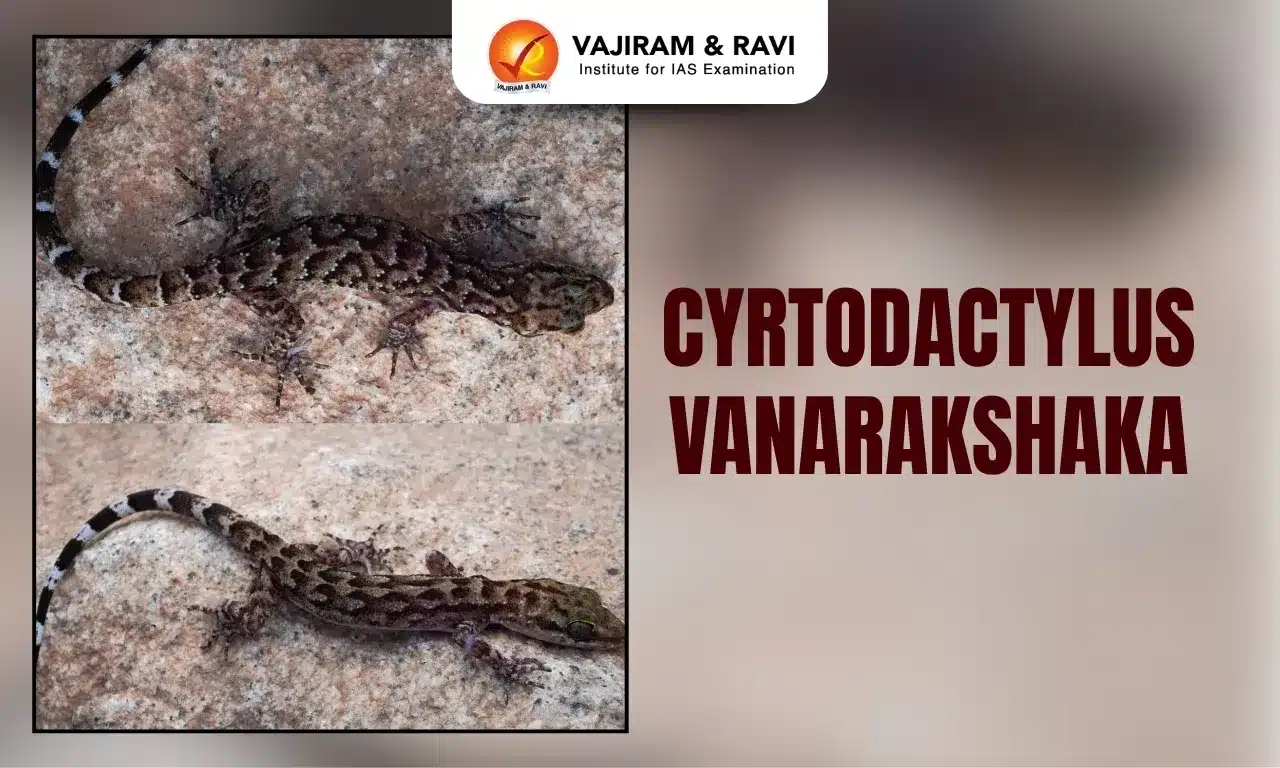
Recently, a new species of bent-toed gecko, recorded from the montane forests of central Assam.

About Cyrtodactylus Vanarakshaka

  • It is a bent-toed gecko belonging to the Cyrtodactylus khasiensis group.
  • It was spotted from the forested slopes of Dima Hasao’s Jatinga, a unique ecological transition zone within the Barail Hills.
  • It has been named after the Assam Forest Department.
  • The word “vanarakshaka,” derived from the Sanskrit words “vana” (forest) and “rakshaka” (protector), refers to the Assam Forest Department.
  • The species is known for high levels of endemism and restricted distributions.
  • This finding has increased the number of Cyrtodactylus species known from Assam to five.     

What is Gecko?

  • These are reptiles and are found on all the continents except Antarctica.
  • These colorful lizards have adapted to habitats from rainforests, to deserts, to cold mountain slopes.
  • These are mostly small, usually nocturnal reptiles.
  • Geckos are spread across six families: Carphodactylidae, Diplodactylidae, Eublepharidae, Gekkonidae, Phyllodactylidae, and Sphaerodactylidae

Source: TH

Cyrtodactylus Vanarakshaka FAQs

Q1: In which state barail hills are located?

Ans: Assam

Q2: What do bent toed geckos eat?

Ans: They will eat snails as a regular source of calcium.

Decentralised Finance (DeFi)

Decentralised Finance

Decentralised Finance Latest News

There has been heightened concern in recent days about the misuse of Decentralised Finance (DeFi) for illicit activities, notably by terrorist groups seeking to raise finances, build infrastructure, or expand their networks.

About Decentralised Finance

  • DeFi is an emerging financial system using blockchain and cryptocurrencies to enable direct transactions between individuals and businesses
  • DeFi platforms use a combination of existing blockchains, stablecoins, software, and hardware.
  • It offers financial products and services enabling saving, investing, lending, remittance, insurance contracts, etc., without the intermediation of traditional financial institutions like banking. 
  • The transactions take place through smart contracts, open protocols, and decentralised applications (D-Apps), allowing direct peer-to-peer transactions without intermediation. 
  • A digital wallet, when integrated with DeFi, serves as a gateway, bypassing the banking network. 
    • Access to the DeFi service does not warrant the opening of an account or identity verification. 
    • A customer can register with a password and create several crypto wallets.
    • Most wallets do not ask for an address, phone number, or email verification, and one can use different DeFi exchanges or DeFi lending and borrowing platforms.
  • This system eliminates intermediaries like banks and other financial service companies. These companies charge businesses and customers for using their services, which are necessary in the current system.
  • By eliminating intermediaries, DeFi aims to reduce costs and speed up processes. 
  • Unlike centralized financial institutions such as banks, exchanges or brokerage firms, DeFi systems provide uncensored access for everyone.
  • In a DeFi system, individual traders can easily store and transfer funds in a digital wallet, which is directly accessible at any time, with no intermediary.
  • Overall, DeFi offers users more control over their money. Financial assets can be transferred or purchased in a matter of seconds or minutes.

Source: DH

Decentralised Finance FAQs

Q1: What is Decentralised Finance (DeFi)?

Ans: DeFi is an emerging financial system using blockchain and cryptocurrencies to enable direct transactions between individuals and businesses.

Q2: Which technology form the backbone of Decentralised Finance (DeFi)?

Ans: Blockchain and cryptocurrencies

Q3: What role does a digital wallet play in DeFi?

Ans: It serves as a gateway to DeFi, bypassing the banking network.

Q4: What financial services can DeFi platforms provide?

Ans: It offers financial products and services enabling saving, investing, lending, remittance, insurance contracts, etc.

Isobutanol

Isobutanol

Isobutanol Latest News

The Automotive Research Association of India (ARAI) is working to explore the possibility of blending 10% isobutanol with diesel, Union Minister for Transport said recently.

About Isobutanol

  • Isobutanol , also called isobutyl alcohol, is an alcohol with the chemical formula C₄H₁₀O and one of the four isomers of butanol.
  • It is a clear, colorless liquid with a characteristic odor. 
  • It is only moderately soluble in water.
  • It is very flammable and has a flash point that is only slightly above normal room temperatures. 
  • Its vapors are heavier than air and can spread unnoticed along the ground. 
  • Skin contact, ingestion, and inhalation of isobutanol can be harmful to health. 
  • The compound causes skin irritation and severe eye damage, including loss of vision. 

Isobutanol Applications

  • It is used as a solvent in the flavor, fragrance, pharmaceutical, and pesticide industries and as a chemical manufacturing ingredient for products such as lacquer, paint strippers, paint primer, and craft paints.
  • It is an approved food additive and is also naturally occurring in some foods and many alcoholic beverages. 
  • Isobutanol may also be used as a biofuel because, like ethanol, it can be manufactured from plants. It can be made from ethanol using fermentation processes.
  • It possesses some favorable properties that make it an attractive fuel for internal combustion engines. 
    • For instance, when compared to ethanol, isobutanol features a higher heating value.
    • Isobutanol is less corrosive than ethanol and is much less hygroscopic, which enables it to be transported using the existing fuel infrastructure.
    • Moreover, its addition to gasoline does not distort the fuel blend’s vapor pressure to the same extent as ethanol does. All of this while having a high octane rating.

Source: TH

Isobutanol FAQs

Q1: What is the chemical formula of isobutanol?

Ans: C₄H₁₀O

Q2: What is the physical appearance of isobutanol?

Ans: It is a clear, colorless liquid with a characteristic odor.

Q3: How soluble is isobutanol in water?

Ans: It is only moderately soluble in water.

Q4: Is isobutanol flammable?

Ans: Isobutanol is very flammable and has a flash point that is only slightly above normal room temperatures.

Q5: Can isobutanol be used as a biofuel?

Ans: Isobutanol may also be used as a biofuel because, like ethanol, it can be manufactured from plants.

Perpetual Bonds

Perpetual Bonds

Perpetual Bonds Latest News

Indian Renewable Energy Development Agency Ltd (IREDA) recently said it has raised ₹453 crore at 7.70% per annum through its second issue of Perpetual Bonds, a step that strengthens its capital base for financing green energy projects.

About Perpetual Bonds

  • It is a fixed-income security that has no maturity date and theoretically pays interest forever. 
  • The perpetual bond means the issuer is under no obligation to redeem the principal amount at any point. 
  • Also known as "perps" or "consol bonds," these instruments represent a permanent source of capital for the issuer. 
  • It represents one of the purest forms of debt that closely resembles equity in certain aspects. 
  • With these bonds, investors do not receive the principal amount back unless the issuer opts to call the bond.
    • This action involves returning the principal and discontinuing interest payments to bondholders.
    • This call feature provides issuers with the flexibility to refinance if market conditions become favourable. 
    • Most modern perpetual bonds include call provisions that allow issuers to redeem them after a specified period, typically 5 to 10 years from issuance.
  • To compensate for the indefinite tenure and higher risk, perpetual bonds generally offer higher interest rates.
  • If the issuer goes bankrupt, perpetual bondholders get paid after other creditors but before shareholders, placing them in a middle priority tier.
  • Perpetual bonds are highly sensitive to changes in interest rates, which can cause significant fluctuations in their market price.
  • In India, banks are the primary entities that issue perpetual bonds to meet their capital requirements. 
  • Even though perpetual bonds do not provide principal repayment to investors, they can be an attractive investment option for individuals aiming to generate a stable income for a long period of time.
  • From an accounting perspective, perpetual bonds often receive equity-like treatment on balance sheets, making them attractive for organisations looking to strengthen their capital structure without diluting existing shareholders' ownership.

Source: TH

Perpetual Bonds FAQs

Q1: What is a perpetual bond?

Ans: It is a fixed-income security that has no maturity date and theoretically pays interest forever.

Q2: Why do perpetual bonds generally offer higher interest rates?

Ans: To compensate for the indefinite tenure and higher risk, perpetual bonds generally offer higher interest rates.

Q3: In the case of bankruptcy, when are perpetual bondholders repaid?

Ans: If the issuer goes bankrupt, perpetual bondholders get paid after other creditors but before shareholders, placing them in a middle priority tier.

Q4: Which entities primarily issue perpetual bonds in India?

Ans: In India, banks are the primary entities that issue perpetual bonds to meet their capital requirements.

Biodiversity Heritage Site

Biodiversity Heritage Site

Biodiversity Heritage Sites Latest News

The government recently declared 8.6 acres of green cover at Cantonment Railway Colony as a biodiversity heritage site — the second in Bengaluru after Gandhi Krishi Vigyan Kendra (GKVK).

About Biodiversity Heritage Sites

  • BHS are rich biodiversity areas and are important components of local ecosystems which are being conserved and managed by the society.
  • BHS are unique ecosystems having rich biodiversity comprising any one or more of the following components:
    • Richness of wild as well as domesticated species or intra-specific categories.
    • High endemism.
    • Presence of rare and threatened species, keystone species, and species of evolutionary significance.
    • Wild ancestors of domestic/cultivated species or their varieties.
    • Past pre-eminence of biological components represented by fossil beds and having significant cultural, ethical or aesthetic values and are important for the maintenance of cultural diversity, with or without a long history of human association with them.
  • They may spread over terrestrial, aquatic, coastal and inland and marine ecosystems having rich biodiversity. 
  • Under Section-37 of the Biological Diversity Act, 2002, the State Government, in consultation with local bodies, may notify areas of biodiversity importance as BHS.
  • State Governments are empowered to frame schemes for compensating or rehabilitating any person or section of people economically affected by such notification.
  • The State Government, in consultation with the Central Government, may frame rules for the management and conservation of BHS.
  • The creation of BHS may not put any restriction on the prevailing practices and usages of the local communities other than those voluntarily decided by them. 
  • The purpose of declaring BHS is to enhance the quality of life of the local communities through the conservation of such sites.
  • In 2007, the Nallur Tamarind Grove in Bengaluru, Karnataka, was designated as India’s first BHS.

Source: TOI

Biodiversity Heritage Sites FAQs

Q1: Under which Act are Biodiversity Heritage Sites (BHS) notified in India?

Ans: Biological Diversity Act, 2002

Q2: Who has the power to notify areas as Biodiversity Heritage Sites?

Ans: State Government in consultation with local bodies

Q3: Which institution or authority may frame rules for the management and conservation of Biodiversity Heritage Sites?

Ans: The State Government, in consultation with the Central Government, may frame rules for the management and conservation of BHS.

AdFalciVax Vaccine

AdFalciVax Vaccine

AdFalciVax Vaccine Latest News

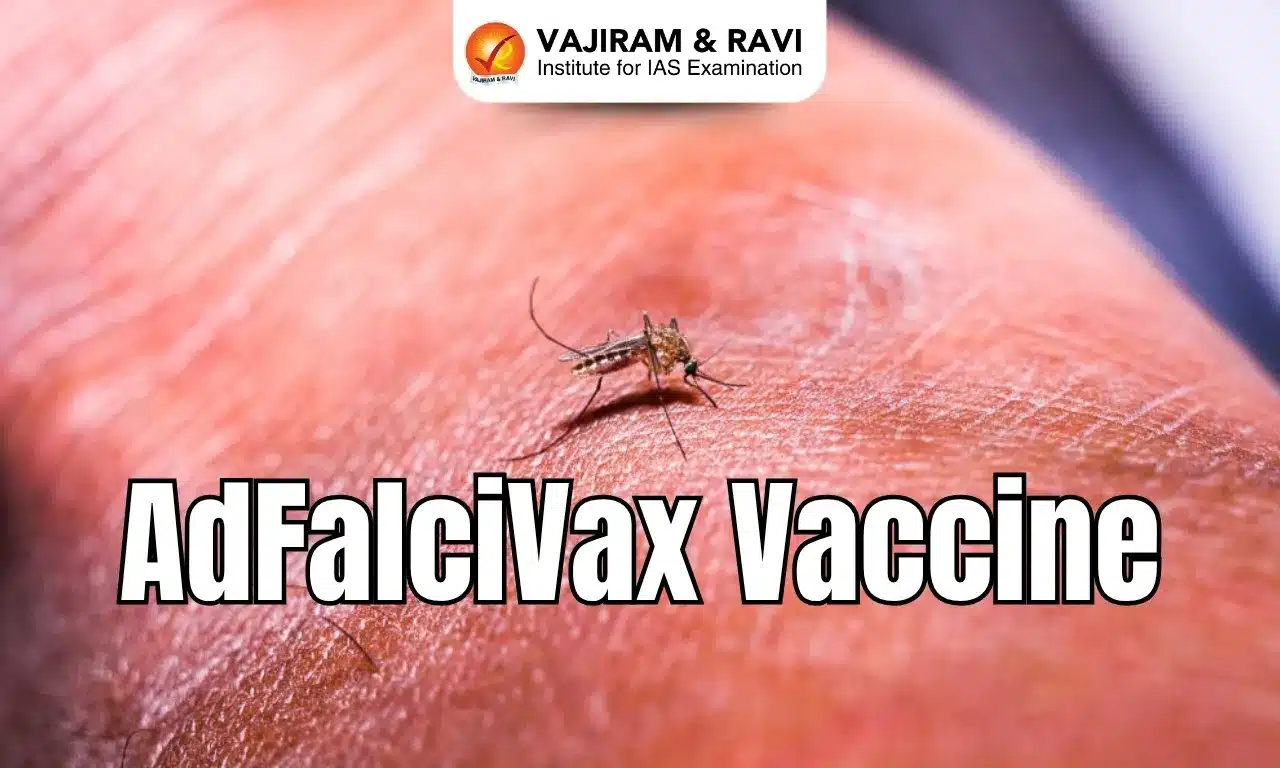
Recently, the Indian Council of Medical Research (ICMR) has granted non-exclusive rights for its multi-stage malaria vaccine, AdFalciVax, to five pharmaceutical companies.

About AdFalciVax Vaccine

  • It is India’s first indigenous multi-stage malaria recombinant vaccine developed by the Regional Medical Research Centre (RMRC), Bhubaneswar, under the ICMR.

Key Feature of the Vaccine

  • The vaccine is designed to prevent Plasmodium falciparum infection in individuals and reduce community transmission.
  • Plasmodium falciparum is the deadliest malaria parasite, difficult to control and responsible for widespread devastation
  • AdFalciVax targets the parasite before it enters the bloodstream, stopping the infection at the transmission stage
  • The vaccine uses Lactococcus lactis, a genetically engineered food-grade bacterial host, as its core technology
  • It delivers a dual-antigen approach combining: PfCSP (Plasmodium falciparum circumsporozoite protein) to prevent infection and Pfs230 and Pfs48/45 fusion proteins to block transmission from humans to mosquitoes
  • This dual-antigen approach makes AdFalciVax a multi-functional vaccine, aimed at both protecting individuals and halting the spread of malaria.
  • Pre-clinical validation was carried out in collaboration with  ICMR–National Institute of Malaria Research (ICMR-NIMR)and National Institute of Immunology (NII), Delhi, under the Department of Biotechnology.

Source: BS

AdFalciVax Vaccine FAQs

Q1: What is the Indian Council of Medical Research (ICMR)?

Ans: The Indian Council of Medical Research (ICMR), New Delhi is the apex body in India for the formulation, coordination, and promotion of biomedical research. It is one of the oldest medical research bodies in the world. Its vision is to translate their research into action for improving the health of the population.

Q2: What is the latest approved vaccine for malaria?

Ans: As of October 2023, both the RTS,S/AS01 and R21/Matrix-M vaccines are recommended by WHO to prevent malaria in children

Scarborough Shoal

Scarborough Shoal

Scarborough Shoal Latest News

The Philippines has reacted strongly to China's announcement of establishing a nature reserve in the South China Sea at the disputed Scarborough Shoal.   

About Scarborough Shoal

  • It is a disputed atoll in the South China Sea, claimed by both China and the Philippines as part of their territory.    
  • It is located some 220 kilometers west of the Philippines’ Island of Luzon.
  • It is the largest atoll in the South China Sea, submerged at high tide with few rocks above sea level.
  • What is the Dispute?
    • China’s claim: China, which now refers to the shoal as Huangyan Island, makes a historical claim to the area, stating that they can trace their ownership of the area back to the Yuan Dynasty of the 1200s.
    • Philippines claim: The Philippines claim the area on the basis of geography, as it is much closer to the Philippines’ main island of Luzon, which contains the capital, Manila, but lies over 500 miles from China.
    • It is considered within the Philippines’ 200-nautical mile exclusive economic zone, based on the 1982 United Nations Convention on the Law of the Sea (UNCLOS).
  • Commercial Significance: The deep waters around the shoal make it a productive fishing area, rich in marine life, and the lagoon also contains many commercially valuable shellfish and sea cucumbers.

Source: Reuters

Scarborough Shoal FAQs

Q1: What country owns Scarborough Shoal?

Ans: It is a disputed territory in the South China Sea, claimed by both China and the Philippines.

Q2: Where is Scarborough Shoal located?

Ans: South China Sea

Enquire Now