INS Aravali

INS Aravali

INS Aravali Latest News

Recently, the Indian Navy commissioned its latest Naval Base, INS Aravali, at Gurugram.

About INS Aravali

  • It is named after the Aravali mountain range.
  • It is designed to strengthen the Navy’s information and communication infrastructure.
  • It is located at Gurugram, Haryana.
  • Motto: It is guided by the motto ‘Maritime Security through Collaboration’.
  • It is designed to support naval information and communication centres that are critical to India’s maritime security, command and control operations, and Maritime Domain Awareness (MDA).
  • It embodies a spirit of cooperation with other naval units, MDA centres, and allied stakeholders.
  • It marks a strategic step forward in the Navy’s efforts to enhance situational awareness and inter-agency coordination across India’s maritime domain.
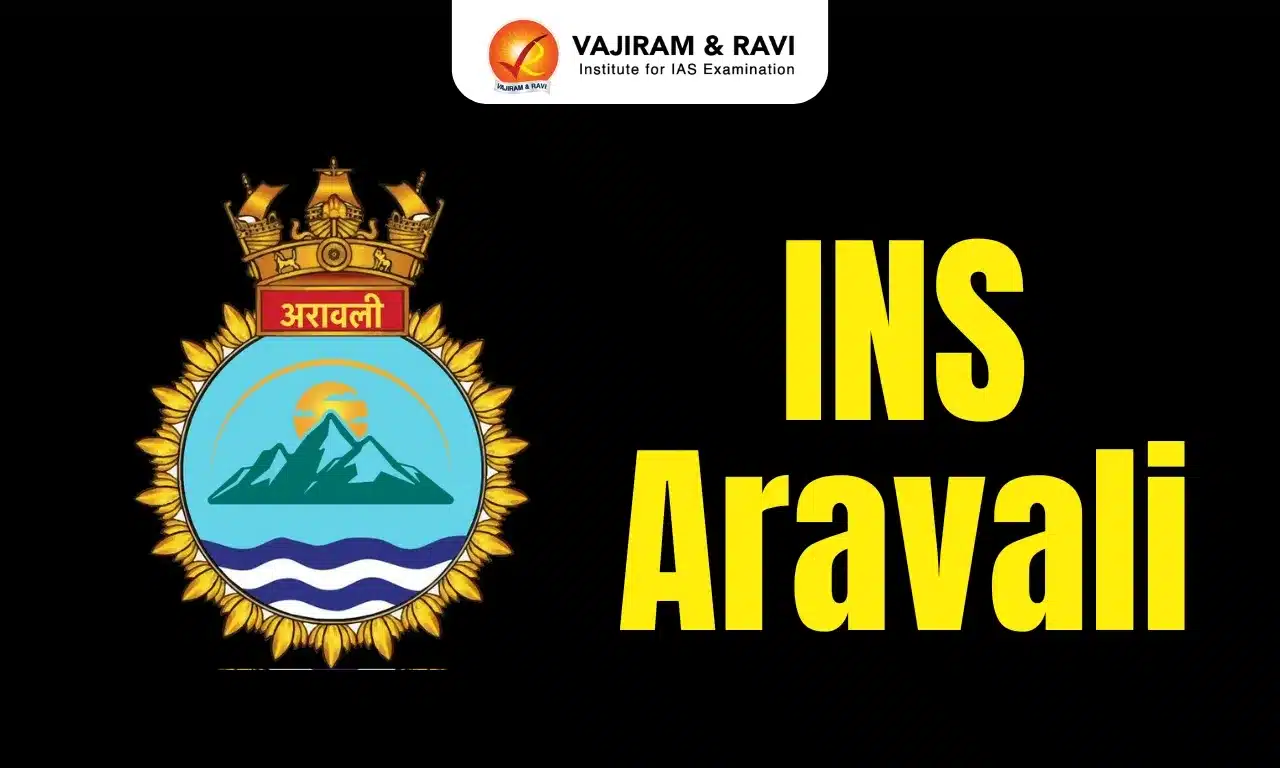
  • The emblem reflects the base’s commitment to safeguarding India’s maritime interests through constant readiness and innovation.
  • It also fulfill the India’s collaborative vision of MAHASAGAR, or Mutual and Holistic Advancement for Security and Growth Across Regions.
  • Symbolism of the crest: It features a central mountain symbol, representing the steadfast strength of the Aravali range, and a rising sun, signifying eternal vigilance, resilience, and the dawn of advanced technological capabilities in communications and domain awareness.
  • Strategic Role: It would strengthen India's role as the Preferred Security Partner in the Indian Ocean Region.

Source: TH

INS Aravali FAQs

Q1: What is INS Aravali?

Ans: It is named after the Aravali mountain range, is designed to strengthen the Navy's information and communication infrastructure.

Q2: When was the MAHASAGAR initiative launched?

Ans: MAHASAGAR Vision (Mutual and Holistic Advancement for Security and Growth across Regions) for the Global South was launched in 2025.

Murikooti Pacha

Murikooti Pacha

Murikooti Pacha Latest News

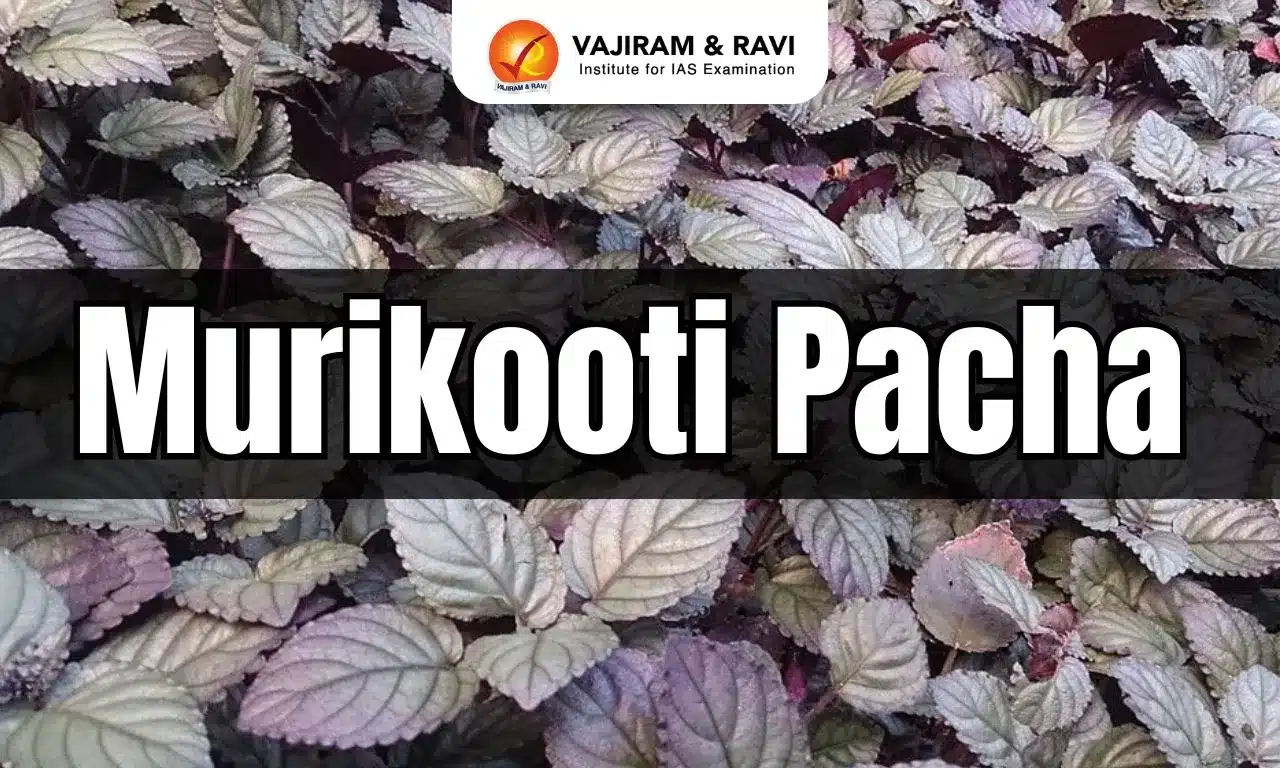
Researchers at the Jawaharlal Nehru Tropical Botanic Garden & Research Institute (JNTBGRI), Palode, have tapped into the wound-healing properties of the red ivy plant, known locally as “murikooti pacha”.

About Murikooti Pacha

  • Murikooti Pacha or Red Ivy plant (Strobilanthes alternate), belongs to the Acanthaceae family.
  • Other names: Red Flame Ivy, Purple Waffle Plant.

Habitat & Distribution of Murikooti Pacha

  • It is native to tropical Asia, particularly Java.
  • It is widely cultivated in India, Indonesia, China, and Japan.
  • It thrives in moist, shaded environments and is commonly found in gardens and as ground cover. ​

Applications of Murikooti Pacha

  • Traditional practitioners use its leaf paste applied to fresh wounds, cuts, ulcers, and inflamed areas to promote healing and reduce inflammation.
  • Also its leaf extracts are used traditionally to treat anemia, gallstones, prolonged menstruation, hemorrhoids, and diabetes. ​

Key Features of Wound-Healing Pad

  • The key ingredient in the multi-layered wound pad developed by the scientists is the acteoside molecule derived from the red ivy plant, which has high efficacy even at lower concentrations of 0.2%.
  • It has been designed with a specially engineered electro-spun nanofiber layer, made from biodegradable and non-toxic polymers and is incredibly thin.
  • Acteoside is a natural compound found in many plants and its pharmacological activities and therapeutic potential is well-known. This is the first time acteoside has been linked to the red ivy plant.
  • Along with acteoside, it also incorporates the antibiotic neomycin sulfate, blended with FDA-approved polymers.

Source: TH

Murikooti Pacha FAQ's

Q1: What is the use of murikootti for skin?

Ans: It is used as a folklore medicine for wound healing.

Q2: What is the main cause of anemia?

Ans: Iron deficiency, blood loss, or damaged red blood cells to issues with red blood cell production.

Border Wing Home Guards

Border Wing Home Guards

Border Wing Home Guards Latest News

The Union Ministry of Home Affairs (MHA) is contemplating a plan to raise Border Wing Home Guards (BWHG) along the border with China, similar to the guards on the India-Pakistan border.

About Border Wing Home Guards

  • It acts as ancillaries to the Army and other border forces during emergencies.
  • Home Guards are raised under the Home Guards Act and Rules of the States/Union Territories.
  • There are seven States authorised to have BWHGs: Meghalaya, Tripura, Assam, West Bengal, Punjab, Rajasthan, and Gujarat.
    • Rajasthan is the only State which has BWHGs in the present times.
    • They perform the responsibilities of a Constable and are usually enlisted for three to four years.
    • 25% cost of training and financial support is borne by the Government of India.
  • Who are recruited?: They are recruited from amongst all classes of people and walks of life, who give their spare time to the organisation for betterment of the community.

Role of Home Guards

  • They work in conjunction with the army in guarding the vital Installations, the vital points and the vulnerable areas during break out of hostilities on the International Border.
  • It works as an auxiliary Force to the Police in maintenance of internal security situations, help the community in any kind of emergency such as an air-raid, fire, cyclone, earthquake, epidemic etc.
  • They help in maintenance of essential services, promote communal harmony and assist the administration in protecting weaker sections.

Source: TH

Border Wing Home Guards FAQs

Q1: What is the duty of a Home Guard?

Ans: The role of Home Guards is to serve as an auxiliary Force to the Police in maintenance of internal security situations, help the community in any kind of emergency.

Q2: Under which act Home Guards are raised?

Ans: Home Guards are raised under the Home Guards Act and Rules of the Central Government.

Doctrine of Contributory Negligence

Doctrine of Contributory Negligence

Doctrine of Contributory Negligence Latest News

The Andhra Pradesh High Court recently held that the doctrine of contributory negligence does not apply to criminal actions, and a driver who commits an accident by driving rashly and negligently, which leads to the death of a person, is liable under Section 304A of IPC, even if there has been a degree of negligence on part of the victim.

About Doctrine of Contributory Negligence

  • It operates on the principle that individuals have a duty to exercise reasonable care for their own safety and well-being. 
  • When someone fails to meet this duty and their actions or omissions contribute to their own injury or damages, they may be considered partially at fault for the harm suffered. 
  • Contributory negligence occurs when the plaintiff, through their own lack of care, contributes to the damage resulting from the defendant's negligence or wrongful conduct.
  • The concept of Contributory negligence is based on the principles of “Volenti non-fit injuria”. 
    • The maxim means that the injury has suffered voluntarily and the defendant is not fully liable.  
  • It serves as a defence wherein the defendant must demonstrate that the plaintiff's failure to exercise reasonable care for their safety played a role in the harm suffered.
    • For instance, if A, while travelling on the wrong side of the road, is struck by a vehicle driven recklessly by B coming from the opposite direction, A may be met with the defence of contributory negligence.
  • The application of contributory negligence principles allows courts to assess the relative fault of each party and determine the appropriate allocation of liability and damages in such cases.
  • But if both the plaintiff and the defendant take due care and all the measures to avoid the accident or the injury, then the plaintiff cannot sue the defendant for that.
  • The Burden of Proof: The burden of proof is on the defendant to prove that the plaintiff is equally liable for the act and the plaintiff was not careful, due to which he suffered injuries.
  • The defence of contributory negligence is not available when it is proved that the defendant has the duty to take full care and he is legally bound to take full care and diligence. So, if any injury is caused to the plaintiff, then the defendant will be held liable.
    • For example- A and B were travelling in a bus, and A, in order to show something to B, pointed his hand outside the window, and the window suddenly got open, and A was injured. Although it was A’s duty to not take out his hands from the window, the staff and the crew were liable, as it was their duty to check all the windows and the doors.
  • While India does not have a specific statute codifying contributory negligence, courts often consider principles of fairness and equity in determining liability and apportioning damages.
  • In India, the concept of comparative negligence is applied, where damages are allocated based on the comparative fault of each party involved and judges exercise discretion based on the facts and circumstances of each case.

Source: LL

Doctrine of Contributory Negligence FAQs

Q1: The doctrine of contributory negligence is based on which legal maxim?

Ans: Volenti non-fit injuria

Q2: What does contributory negligence mean in law?

Ans: The plaintiff contributes to their own harm due to lack of care.

Q3: When is the defence of contributory negligence not available to the defendant?

Ans: When the defendant owed a full duty of care and failed to exercise it.

Scarlet Dragonfly

Scarlet Dragonfly

Scarlet Dragonfly Latest News

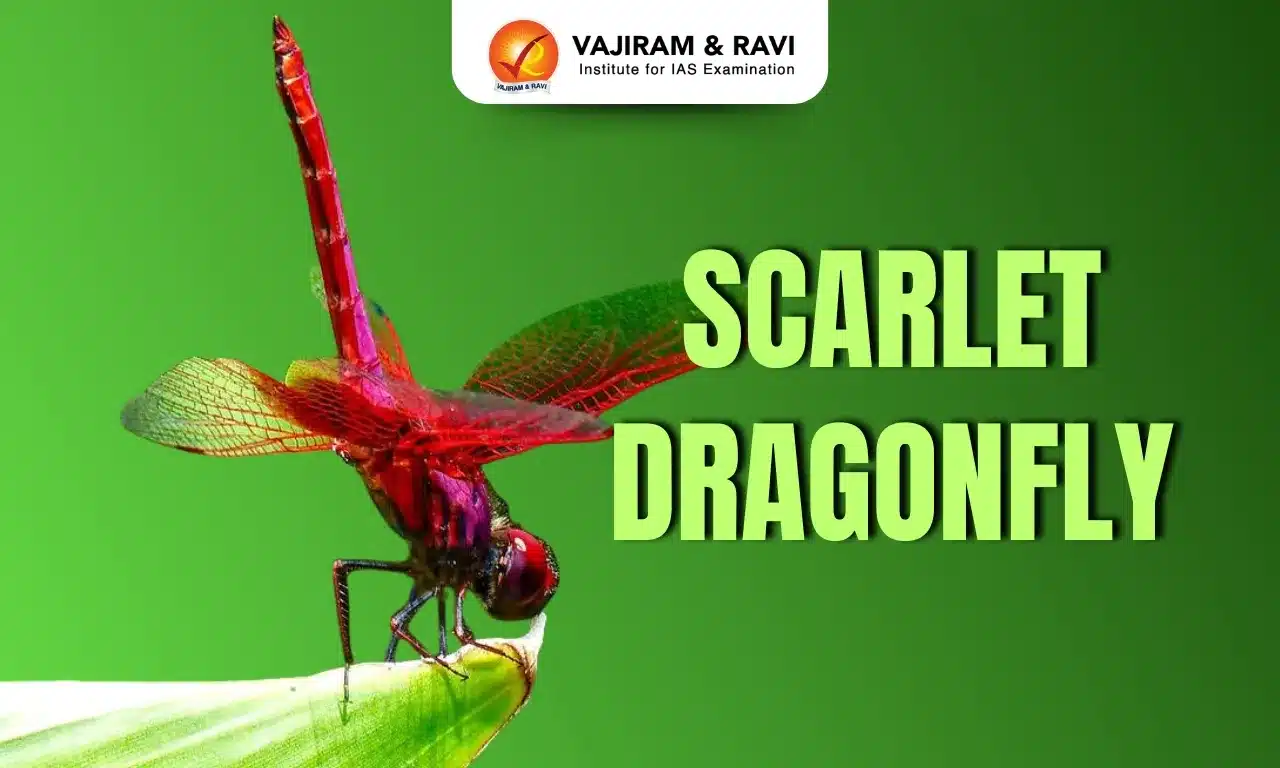
In a recent discovery, a rare scarlet dragonfly has been spotted in the valleys of Munnar, somewhere in Kerala’s Western Ghats.

About Scarlet Dragonfly

  • It is a species of dragonfly in the family Libellulidae.
  • Scientific Name: Crocothemis erythraea
  • Its common names include broad scarlet, common scarlet-darter, and scarlet darter.

Scarlet Dragonfly Distribution

  • It is a common species in southern Europe and throughout Africa. 
  • It also occurs across western Asia as far as southern China.
  • Sometimes, these dragonflies travel far from their usual homes.

Scarlet Dragonfly Habitat 

  • Scarlet dragonflies like to live near water. 
  • They can be found near many types of water, like rivers, streams, and ponds. 
  • They prefer sunny spots, not places that are too shady.

Scarlet Dragonfly Features

  • It can reach a length of 33–44 millimetres (1.3–1.7 in). 
  • These dragonflies have a flattened and rather broad abdomen.
  • The adult male scarlet dragonfly has a bright scarlet red, widened abdomen, with small amber patches at the bases of the hindwings.
  • Also the veins on the leading edges of the wings are red. 
  • Females and immatures are yellow-brown and have a conspicuous pale stripe along the top of the thorax.

Scarlet Dragonfly Conservation Status

It is classified as 'Least Concern' under the IUCN Red List.

Source: TOI

Scarlet Dragonfly FAQs

Q1: To which family does the scarlet dragonfly belong?

Ans: It is a species of dragonfly in the family Libellulidae.

Q2: What is the distinguishing feature of adult male scarlet dragonflies?

Ans: The adult male scarlet dragonfly has a bright scarlet red, widened abdomen, with small amber patches at the bases of the hindwings.

Q3: What is the IUCN conservation status of the scarlet dragonfly?

Ans: Least Concern

Sarcoidosis

Sarcoidosis

Sarcoidosis Latest News

A peer-reviewed study published recently provides an in-depth analysis of sarcoidosis, highlighting its variable course and the factors that influence disease severity.

About Sarcoidosis

  • Sarcoidosis is a condition that causes your immune system to overreact and make lumps or nodules called granulomas. 
  • A granuloma is an area of inflammation caused by your immune system. 
  • It’s made up of a cluster of white blood cells that have been “walled off” from the rest of your body to try to protect you from something your immune system thought was harmful. 
  • Granulomas are surrounded by fibrous (dense) tissue, which makes them feel hard and lumpy.
  • Granulomas can be found almost anywhere in your body, but they’re most commonly found in your lungs or lymph nodes. 
  • They also can occur in the eyes, skin, heart, and other organs.

Sarcoidosis Cause

  • Experts don't know the exact cause of sarcoidosis, but it's likely a mix of genetic and environmental factors. 
  • Some people appear to have gene changes that make them more likely to develop sarcoidosis. 
  • The condition may then be triggered by bacteria, viruses, dust, or chemicals. 
  • Their immune system overreacts to the trigger, causing inflammation that forms granulomas.

Sarcoidosis Symptoms

  • Depending on location and size, granulomas can cause mild to severe symptoms or no symptoms at all. 
  • Symptoms include cough, shortness of breath, tender sores on your shins, eye pain, and redness. 
  • Many cases go away on their own or with treatment, but sometimes it becomes a chronic condition.
  • In some cases, they can turn into fibrosis, causing permanent lung scarring.

Sarcoidosis Treatment

  • There is no cure for sarcoidosis, but most people do not need treatment. 
  • Sarcoidosis may go away on its own. 
  • Other people need treatment to lessen their body's immune system response.
  • Sometimes sarcoidosis can last for years and may cause organ damage.

Source: TOI

Sarcoidosis FAQs

Q1: What is sarcoidosis?

Ans: Sarcoidosis is a condition that causes your immune system to overreact and make lumps or nodules called granulomas.

Q2: What are the main causes of sarcoidosis?

Ans: Experts don't know the exact cause of sarcoidosis, but it's likely a mix of genetic and environmental factors.

Q3: Sarcoidosis most commonly affects which organs?

Ans: Lungs and lymph nodes

Q4: In chronic cases, granulomas in sarcoidosis may develop into what?

Ans: Fibrosis (lung scarring)

Cicada

Cicadas

Cicadas Latest News

Scientists with the Botanical Survey of India (MoEF&CC), Southern Regional Centre, Coimbatore, said that resurgence of cicadas in Silent Valley is a telling sign of ecological upheaval.   

About Cicadas

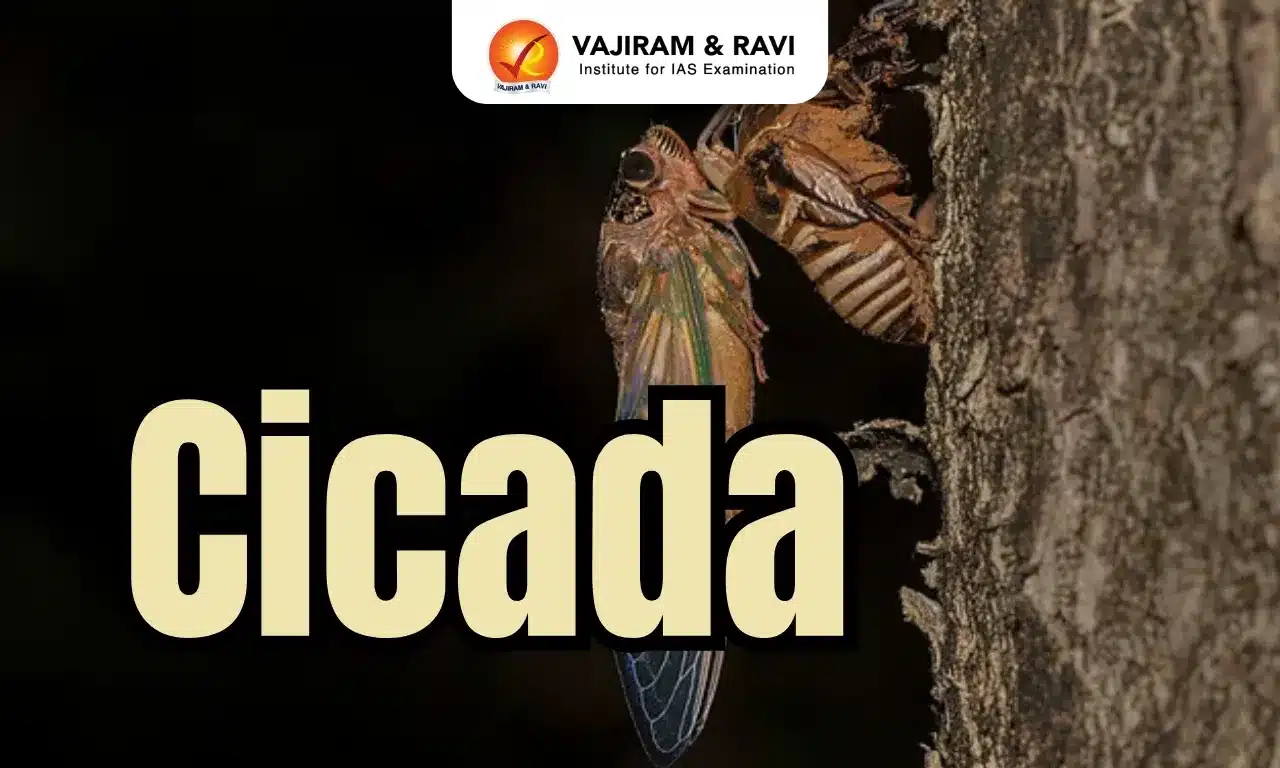
  • Cicadas are hemipteran insects known for their loud, complex and species-specific acoustic signals or songs.
  • A cicada will have the best chance of survival if it can emerge from the ground when its predators are lying dormant. 
  • Cicadas are insects that spend most of their lives underground and emerge from the soil mainly to mate. 
  • Habitat: Most cicadas are canopy dwellers and are found in natural forests with large trees.
  • Types: Scientists divide the over 3,000 cicada species into two groups: annual and periodical.
    • Annual cicadas: They emerge from the ground at different times each summer.
    • They’re usually dark with greenish markings.
    • These insects avoid predators by camouflaging themselves in the trees and flying from hungry birds and moles.
    • Periodical cicadas: Only seven species of cicadas are in the periodical cicadas.
    • These bugs all emerge from the ground at the same time(Summer).
    • These groups appear after a dormant period of either 13 or 17 years.
  • Ecological Significance: They prune mature trees, aerate the soil, and once they die, their bodies serve as an important source of nitrogen for growing trees.

Source: DTE

Cicadas FAQs

Q1: What is a cicada?

Ans: Cicadas are large, plant-feeding insects known for their loud, shrill noise and discarded shells (called exoskeletons) that cling to trees and other vegetation.

Q2: What are the insect pests of hemipterans?

Ans: Most notable of the phytophagous hemipterans are aphids, plant bugs, stink bugs, psyllids and whiteflies.

Tipeshwar Wildlife Sanctuary

Tipeshwar Wildlife Sanctuary

Tipeshwar Wildlife Sanctuary Latest News

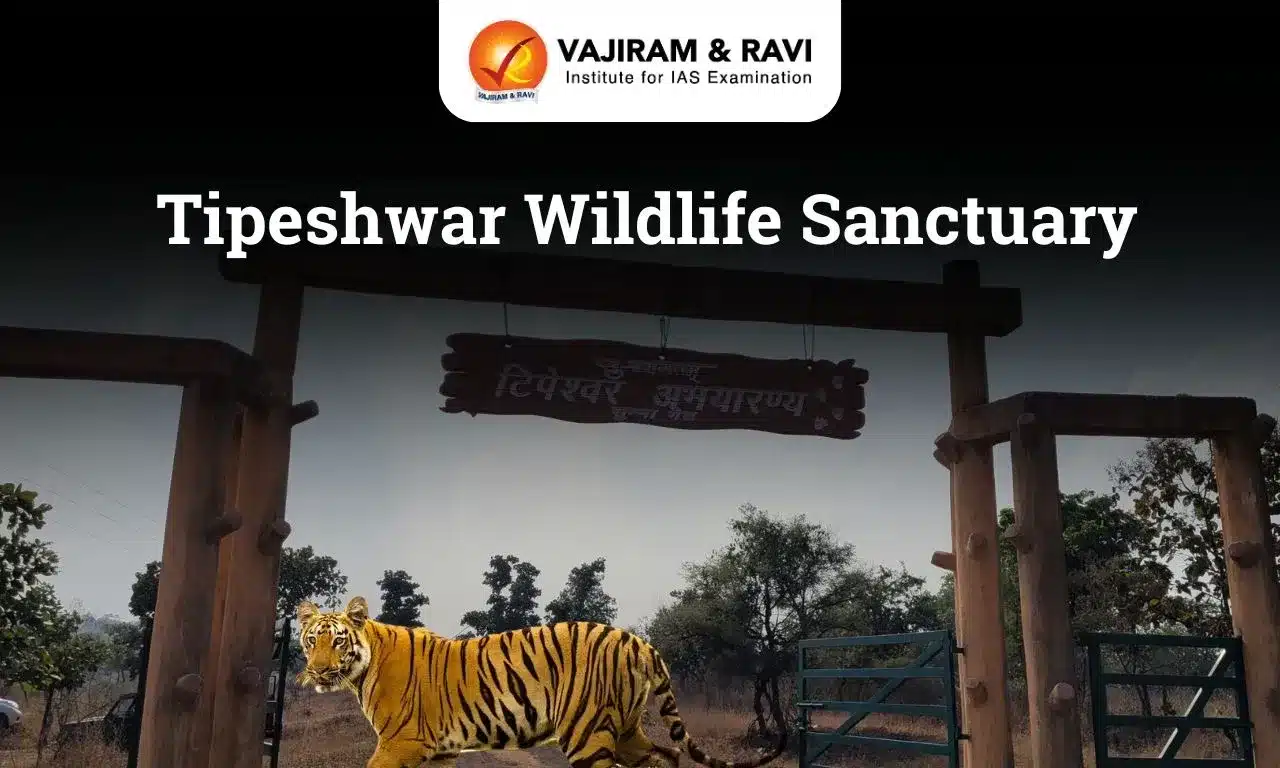
Recently, a Forest Department team conducting a routine patrol at Tipeshwar Wildlife Sanctuary (TWS) discovered a poached pangolin.

About Tipeshwar Wildlife Sanctuary

  • Location: It is located in the district of Yavatmal, Maharashtra.
  • Spanning across 148.63 sq.km., the sanctuary derives its name from the nearby 'Goddess Tipai' shrine located in the Tipeshwar village.
  • Mainly, the sanctuary sprawls amongst the Patanbori and Parwa Ranges of the Pandarkawad Forest Division.
  • Four rivers—Purna, Krishna, Bhima, and Tapti—flow gracefully through the sanctuary, earning it the poetic title “Green Oasis of Eastern Maharashtra.”
  • The land here is rich with basaltic soil, a remnant of ancient volcanic activity.
  • The sanctuary is home to several villages whose inhabitants rely on the forest for their daily livelihoods.
  • Vegetation
    • The place is quite hilly and undulating and thus has different types of vegetation cover that varies with the altitude. 
    • The major forest type here is the ‘Southern Tropical Dry Deciduous Forests’.
  • Flora
    • The forests of Tipeshwar are dominated by teak, which forms about 60% of the canopy, alongside other tree species like Ain, Bija, and Dhawda. 
    • The undergrowth features a variety of grasses, bamboo groves, and medicinal plants.
  • Fauna: The place shelters a wide array of animals that include Hyena, Chital, Black buck, Sambar, Jackal, Wild boar, Peacock, Monkey, Blue bull, Wild cat, Bear and many more.

Source: TOI

Tipeshwar Wildlife Sanctuary FAQ's

Q1: In which Indian state is Tipeshwar Wildlife Sanctuary located?

Ans: Maharashtra

Q2: Tipeshwar Wildlife Sanctuary mainly sprawls across which forest ranges?

Ans: Patanbori and Parwa Ranges of the Pandarkawad Forest Division.

Q3: Which rivers flow through the Tipeshwar Wildlife Sanctuary?

Ans: Four rivers—Purna, Krishna, Bhima, and Tapti—flow gracefully through the sanctuary.

Q4: Which type of forest is dominant in Tipeshwar Wildlife Sanctuary?

Ans: Southern Tropical Dry Deciduous Forests’

Sahyadri Tiger Reserve

Sahyadri Tiger Reserve

Sahyadri Tiger Reserve Latest News

Recently, the Union Environment Ministry has approved the capture of eight tigers from the Tadoba-Andhari and Pench reserves for their translocation to the Sahyadri Tiger Reserve in western Maharashtra.

About Sahyadri Tiger Reserve

  • It is located in the Sahyadri Ranges of the Western Ghats in Maharashtra.
  • It is the first Tiger Reserve of Western Maharashtra and the fourth Tiger Reserve of the State spreading over two Protected Areas of Koyana Sanctuary (KWLS) and Chandoli National Park (CNP).
  • The central portion of Sahyadri Tiger Reserve is occupied by the “Shivsagar” reservoir of the Koyana River and the “Vasant Sagar” reservoir of the Warana River.
  • Terrain: The total area of STR is undulating, with steep escarpments along the western boundary.
  • The most distinct feature is the presence of numerous barren rocky and lateritic plateaus, locally called “Sadas”, with less perennial vegetation and overhanging cliffs on the edges, along with numerous fallen boulders with dense thorny bushes.
  • Vegetation: The forest cover here is that of moist evergreen, semi-evergreen, moist, and dry deciduous vegetation.
  • It is the only place where climax and near-climax vegetation are plentiful and prospects of adverse anthropogenic influence in the future are minimal.

Flora and Fauna of Sahyadri Tiger Reserve

  • There are many medicinal and fruit-bearing trees along with the commercial hard wood trees in the reserve.
  • The most common floral species found here are Anjani (Memecylon umbellatum), Jambhul (Syzygium cumini), and Pisa (Actinodaphaone Angustifolia). 
  • The main carnivores are the tiger, leopard, and some lesser cats along with the wolf, jackal, and wild dog.
  • The large herbivores are several deer species like Barking Deer, Sambar etc.

Source: IE

Sahyadri Tiger Reserve FAQs

Q1: Which river is located in Sahyadri Tiger Reserve?

Ans: The central portion of Sahyadri Tiger Reserve is occupied by "Shivsagar" reservoir of Koyana River and "Vasant Sagar" reservoir of Warana River.In which state is Sahyadri Tiger Reserve?

Q2: In which state is Sahyadri Tiger Reserve?

Ans: Maharashtra

Congo River

Congo River

Congo River Latest News

Over 107 people have died following a whaleboat fire on the Congo River recently.

About Congo River

  • The Congo River, or Zaire River, is a river in west-central Africa. 
  • With a length of 2,900 miles (4,700 km), it is the continent’s second longest river, after the Nile.
  • It is also the world’s second-largest river by discharge volume after the Amazon River.
  • It is also the world’s deepest river, with a maximum depth of 720 feet (220m), too deep for light to penetrate.
  • It is the only major river that crosses the Equator twice.
  • Course:
    • Origin: It rises in the highlands of northeastern Zambia between Lakes Tanganyika and Nyasa (Malawi) as the Chambeshi River at an elevation of 5,760 feet (1,760 metres) above sea level.
    • Its course then takes the form of a giant counterclockwise arc, flowing to the northwest, west, and southwest before draining into the Atlantic Ocean at Banana (Banane) in the Democratic Republic of the Congo.
    • It also empties water and sediment into one of the largest carbon sinks in the world, the Congo Plume in the Atlantic.
    • The riverbed continues offshore with an 800 km-long submarine canyon that reaches a depth of 1,220 m.
    • The Congo River system runs through the Republic of the Congo, the Democratic Republic of the Congo, the Central African Republic, western Zambia, northern Angola, and parts of Cameroon and Tanzania.
  • Its drainage basin covers an area of 1,335,000 square miles (3,457,000 square km). It’s the world’s second-largest river basin, after the Amazon River Basin.
  • The basin is bordered by the Sahara Desert to the north, the Atlantic Ocean to the south and west, and the East African lakes region to the east.
  • Because the river’s many large tributaries (including the Lomami, Kasai, Lulonga, Ubangi, Aruwimi, Itimbiri, and Mongala rivers) drain areas with rainy seasons that alternate on either side of the equator, the Congo has a fairly constant flow of water throughout the year. 
  • The mix of equatorial climate and massive water source provided by the river provides the perfect ingredients for the second-largest tropical rainforest in the world, the Congo Basin rainforest.
  • The Congo is easily navigable for most of its length, and much of the trade of Central Africa passes along it.

Source: DEVD

Congo River FAQs

Q1: Which is the second longest river in Africa after the Nile?

Ans: Congo River

Q2: What is the total length of the Congo River?

Ans: 2,900 miles (4,700 km)

Q3: The Congo River empties water and sediment into which water body?

Ans: Atlantic Ocean

Q4: Which desert borders the Congo Basin to the north?

Ans: The basin is bordered by the Sahara Desert to the north.

Enquire Now