Khoe-San

Khoe-San

Khoe-San Latest News

Recently, a new genetic study published in the Cell Press journal reveals that European colonisation strongly altered the genetic ancestry of the indigenous Khoe-San peoples of southern Africa.

About Khoe-San

  • Khoe-San is a collective term for the indigenous peoples of southern Africa, encompassing:
    • San (Bushmen): Hunter-gatherers.
    • Khoekhoe (Khoi): Cattle, goat, and sheep pastoralists.
  • They represent one of the earliest divergent human lineages, with exceptionally high genetic diversity.
  • The research highlights sex-biased migration, where European male settlers displaced Khoe-San men, while Khoe-San women contributed significantly to present-day genetic lineages.
  • The study also shows the impact of the slave trade, where enslaved women from South Asia, Southeast Asia, Eastern Africa, and Madagascar were brought to the Cape by the Dutch East India Company (VOC).

Historical Interactions

  • ~2,000 years ago: Eastern African pastoralists and Bantu-speaking agro-pastoralists arrived, influencing and displacing many Khoe-San groups.
  • Last 1,500 years: Bantu-speaking groups largely replaced or assimilated Khoe-San populations in eastern South Africa.
  • 1652 onwards: Dutch East India Company (VOC) established Cape Town; European settlers arrived in waves over 250 years.
  • Slave Trade (1652–1808): VOC enslaved ~63,000 people from Africa and Asia, mostly women, reshaping genetic ancestry.
  • Indigenous Khoe-San were also recruited as labourers.

Source: DTE

Khoe-San FAQs

Q1: Who are the Khoe-San?

Ans: The Khoe-San are indigenous peoples of southern Africa, comprising San (hunter-gatherers) and Khoekhoe (pastoralists), known for their high genetic diversity and status as one of the earliest human lineages.

Q2: Why are Khoe-San significant in human history?

Ans: They represent the earliest divergence among human populations, making them crucial for understanding human origins, genetic diversity, and early migration patterns.


BRICS

BRICS

BRICS Latest News

The Indian Prime Minister recently met the Russian Deputy Prime Minister to discuss establishing a BRICS Grain Exchange to enhance agricultural trade among member countries.

About BRICS

  • The acronym ‘BRIC’ was coined by Jim O’Neill (Goldman Sachs economist) in 2001 to denote four emerging economies – Brazil, Russia, India, and China.
  • BRIC held its first meeting in 2006 during the G8 Outreach Summit and its first standalone summit in Russia in 2009.
  • With the inclusion of South Africa in 2010, BRIC became BRICS.
  • In 2024, Iran, Egypt, the UAE, and Ethiopia joined.
  • In 2025, Indonesia joined as a full member.
  • Saudi Arabia has not formalised its membership, while Argentina opted out despite initial plans to join.

Membership (2025)

  • Core Members (10): Brazil, Russia, India, China, South Africa, Iran, Egypt, UAE, Ethiopia, Indonesia.
  • Partner Countries (11): Belarus, Bolivia, Kazakhstan, Cuba, Nigeria, Malaysia, Thailand, Vietnam, Uganda, Uzbekistan.

Source: TH

BRICS FAQs

Q1: What is BRICS?

Ans: BRICS is an intergovernmental forum of major emerging economies, Brazil, Russia, India, China, and South Africa, expanded in 2024–25 to include Iran, UAE, Egypt, Ethiopia, and Indonesia.

Q2: When and how did BRICS come into existence?

Ans: The concept was coined in 2001 by Jim O’Neill. It became a formal grouping in 2006, held its first summit in 2009, and expanded to BRICS with South Africa’s inclusion in 2010.

Q3: What are the major institutions created by BRICS?

Ans: The New Development Bank (NDB, 2014) and Contingent Reserve Arrangement (CRA) are two flagship institutions. Other initiatives include the BRICS Grain Exchange (2025, proposed) and STI Framework Programme (2015).

Nightmare Bacteria

Nightmare Bacteria

Nightmare Bacteria Latest News

According to scientists at the US Centers for Disease Control and Prevention (CDC), drug-resistant ‘nightmare bacteria’ driven by the NDM gene are spreading faster than ever in the United States.

About Nightmare Bacteria

  • The term “nightmare bacteria” is used to describe Carbapenem-resistant Enterobacteriaceae (CRE).
  • This group of bacteria, which includes Klebsiella pneumoniae and Escherichia coli (E. coli), has developed resistance to carbapenems (a class of “last-resort” antibiotics usually reserved for severe infections).
  • The CDC calls them “nightmare” because they: Spread resistance genes easily to other bacteria. Cause deadly infections in the bloodstream, lungs, or urinary tract.
  • Do not respond to most antibiotics, making treatment difficult.

Symptoms of Nightmare Bacteria infections

  • Urinary tract infections: Feeling a burning sensation, a constant urge to urinate or ‘cloudy’ urine
  • Bloodstream infections: High fever, rapid heartbeat or very low blood pressure
  • Pneumonia or lung infection: Cough, shortness of breath or chest pain.

What is the NDM-1 gene?

  • NDM-1 (New Delhi Metallo-beta-lactamase-1) is an enzyme that makes bacteria resistant to a wide range of powerful antibiotics.
  • The gene for NDM-1 encodes beta-lactamase enzymes called carbapenemases, which makes bacteria resistant to antibiotics, including carbapenem, which is used to treat other superbugs such as methicillin-resistant Staphyloccus aureus (MRSA).

Source: FE

Nightmare Bacteria FAQs

Q1: What is a common characteristic of Nightmare Bacteria?

Ans: They are resistant to multiple antibiotics

Q2: What are Bacteria?

Ans: These are microscopic single-celled prokaryotic organisms that play a crucial role in the ecosystem and have a significant impact on human health.

Mahendragiri Hills

Mahendragiri Hills

Mahendragiri Hills Latest News

Recently, environmentalists warn of unchecked tourism projects in Odisha’s Mahendragiri hills

About Mahendragiri Hills

  • Location: It is located in the Gajapati district of Odisha in the middle of Eastern Ghats.
  • It was declared as a Biodiversity Heritage Site in 2022 due to its rich flora and fauna.
  • It is part of an almost unbroken chain of hills between the Mahanadi and the Godavari rivers.
  • It is situated amongst the Eastern Ghats at an elevation of 1,501 metres above sea level.
  • Tribal Communities: It is home to the Saora (Saura) and Kondh tribes.
  • Biodiversity: It supports 1,348 species of plants and 388 species of animals, many of them endemic and threatened.
  • Rivers: The major river in the area is the Mahendra Tanaya, originating from the hill top of Mahendragiri.
  • Vegetation: The vegetation of the region is marked with the presence of tropical dry and wet deciduous forest range.
  • The principal rock types of the hill range are granite, charnokite, khondalite with intrusive veins of chert, chalcedony, quartz of both crystalline and opec forms.
  • The site also attracts pilgrims to its Panchpandava temples.

Source: DTE

Mahendragiri Hills FAQs

Q1: Where is Mahendragiri Hills located?

Ans: Odisha

Q2: Which river originates from Mahendragiri Hills?

Ans: Mahendratanaya River

Forum for India-Pacific Islands Cooperation

Forum for India-Pacific Islands Cooperation

Forum for India-Pacific Islands Cooperation Latest News

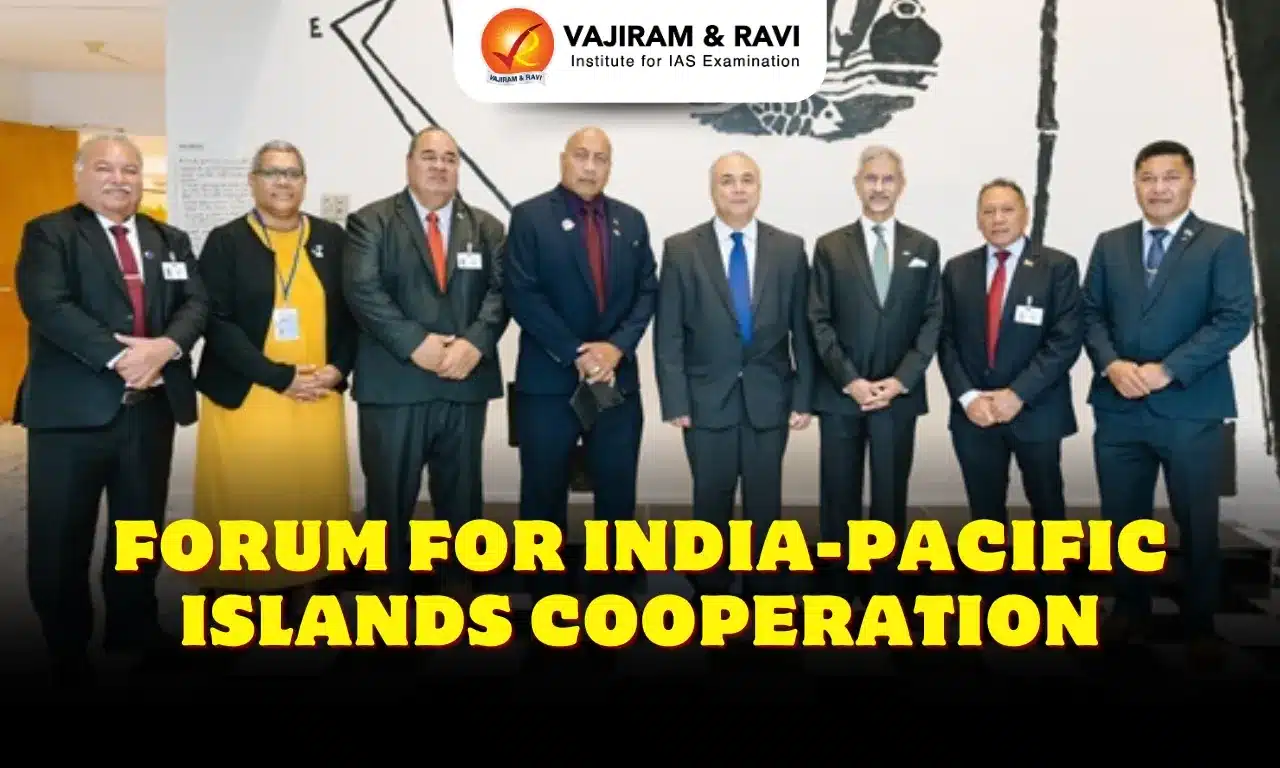
Recently, Indian External Affairs hosted a meeting of the foreign ministers of the Forum for India-Pacific Islands Cooperation (FIPIC) in New York. 

About Forum for India-Pacific Islands Cooperation

  • It is a multilateral platform established by India to enhance cooperation with the Pacific Island countries.
  • It was established in 2014 during the Prime Minister of India’s visit to Fiji
  • Member countries: FIPIC includes 14 of the island countries – Cook Islands, Fiji, Kiribati, Marshall Islands, Micronesia, Nauru, Niue, Palau, Papua New Guinea, Samoa, Solomon Islands, Tonga, Tuvalu, and Vanuatu.
  • In line with the "Act East Policy", through FIPIC, India has primarily focused its efforts on the Pacific Islands.
  • Economic Cooperation: · At this moment, total annual trade of about $300 million between the Indian and Pacific Island countries, whereas exports are around $200 million and imports are around $100 million.
  • FIPIC Summits held: Since 2014 three FIPIC summits have been held, 1st 2014 (Suva, Fiji), 2nd 2015 (Jaipur, India), 3rd 2023 (Port Moresby, Papua New Guinea).

Key Initiatives of India related to FIPIC

  • Setting up of a special USD one million fund for adapting to climate change and clean energy, establishing a trade office in India,
  • Pan Pacific Islands e-network to improve digital connectivity,
  • Visa on arrival at Indian airports for all the 14 Pacific Island countries,
  • Cooperation in space technology applications for improving the quality of life of the islands, and training to diplomats from Pacific Island countries.

Source: News On Air

Forum for India-Pacific Islands Cooperation FAQs

Q1: Where was the first FIPIC summit held?

Ans: Suva, Fiji

Q2: What is the purpose of the Pacific island Forum?

Ans: The Pacific Islands Forum brings the region together to address pressing issues and challenges, and foster collaboration and cooperation in the pursuit of shared goals.

UNEP Young Champions of the Earth Prize

UNEP Young Champions of the Earth Prize

UNEP Young Champions of the Earth Prize Latest News

Recently, three entrepreneurs from India, Kenya and the United States have been awarded the UN Environment Programme’s 2025 Young Champions of the Earth prize.

About UNEP Young Champions of the Earth Prize

  • It is the UN Environment Programme’s flagship initiative on youth engagement.
  • It was established in 2017, relaunched in 2025 in partnership with Planet A.
  • Eligibility: The annual prize recognises individuals under 30 for pioneering solutions to the planet’s most pressing environmental challenges.
  • Prize money: Each winner receives $20,000 in seed funding, mentoring and access to a global platform to scale their ideas.
  • The 2025 Young Champions of the Earth are:
    • Jinali Mody (India):  Founded Banofi Leather, which produces leather alternatives made from banana crop waste. This reduces water use, toxic waste, and CO₂ emissions.
    • Joseph Nguthiru (Kenya):  Started HyaPak company converts the invasive species hyacinth in Lake Naivasha into packaging bags and biodegradable seedling wrappers.
    • Noemi Florea (US):  She has founded Cycleau, a compact water reuse system, in consultation with dozens of marginalized communities. The company transforms greywater into drinking water.

What is the UN Environment Programme?

  • UNEP is the leading global voice on the environment founded in 1972, 
  • It has served as a neutral convener of Member States, civil society, the private sector and UN agencies to address humanity’s most pressing environmental challenges.

 Source: DTE

UNEP Young Champions of the Earth Prize FAQs

Q1: What is the UNEP Champions of the Earth award?

Ans: It is an annual awards programme to recognize outstanding environmental leaders from the public and private sectors and from civil society.

Q2: What is the highest award in UNEP?

Ans: The Champions of the Earth award

Foreign Contribution Regulation Act (FCRA)

Foreign Contribution Regulation Act

Foreign Contribution Regulation Act (FCRA) Latest News

Recently, the Union Home Ministry revoked the FCRA licence of the Students Educational and Cultural Movement of Ladakh (SECMOL), founded by climate activist Sonam Wangchuk.

About the Foreign Contribution Regulation Act (FCRA)

  • The Foreign Contribution (Regulation) Act (FCRA) was originally enacted in 1976 during the Emergency to prevent foreign influence on India’s internal affairs through financial contributions.
  • The FCRA, 2010, currently in force, regulates the acceptance and utilisation of foreign funds by individuals, associations, and companies in India.
  • Its primary objective is to ensure that foreign donations do not compromise national sovereignty, integrity, or internal security, and are used only for legitimate developmental purposes.

Amendments to FCRA

FCRA (Amendment), 2010

  • Consolidated the 1976 law.
  • Expanded coverage to associations, NGOs, and companies.
  • Strengthened the regulatory framework.

FCRA (Amendment), 2020  Key Changes

  • Ban on Transfers: Prohibits NGOs from transferring foreign contributions to other NGOs or individuals.
  • Mandatory Aadhaar: All office bearers must provide Aadhaar/passport/OCI details for registration.
  • FCRA Account: All contributions must be received only in the designated SBI branch, New Delhi.
  • Reduced Administrative Expenses: Limit cut from 50% to 20% of foreign funds.
  • Renewal of Licence: Renewal contingent on government scrutiny for fictitious entities or misuse.
  • Suspension Extension: Suspension of registration can last up to 360 days.
  • Surrender Provision: Organisations can voluntarily surrender their FCRA licence, subject to approval.
  • Bar on Public Servants: Public servants are prohibited from receiving foreign contributions.

FCRA Rules (Amendment), 2022

  • Increased the annual limit for foreign remittances from relatives abroad from ₹1 lakh to ₹10 lakh without prior intimation.
  • Simplified compliance for smaller transactions but reinforced safeguards against foreign funds that may threaten national interests.

Categories under FCRA

  • Prohibited Recipients: Candidates for elections, journalists, media houses, judges, government servants, members of legislatures, political parties, and organisations of political nature.
  • Permitted Use: NGOs, educational, cultural, economic, and social associations, provided they comply with regulations.
  • Validity: Registration valid for 5 years, renewable upon application at least 6 months before expiry.

Source: TH

Foreign Contribution Regulation Act (FCRA) FAQs

Q1: What is the FCRA?

Ans: The Foreign Contribution Regulation Act (FCRA) is a law enacted to regulate the acceptance and use of foreign contributions by individuals, NGOs, and organisations, ensuring they are used for lawful purposes without harming national interests.

Q2: Can the government cancel an FCRA licence?

Ans: Yes. The MHA can cancel or suspend an organisation’s licence if it finds violations such as misuse of funds, a threat to sovereignty, or poor compliance with FCRA provisions.

Q3: Under which Ministry does FCRA fall?

Ans: The FCRA is administered by the Ministry of Home Affairs (MHA), Government of India.

Agni-Prime Missile

Agni-Prime Missile

Agni-Prime Missile Latest News

DRDO in collaboration with the Strategic Forces Command (SFC), has carried out the successful launch of Intermediate Range Agni-Prime Missile from a Rail based Mobile launcher system.

About Agni-Prime Missile

  • Agni-P is a new generation nuclear-capable medium-range ballistic missile (MRBM).
  • Agni Prime Ballistic Missile was tested for the first time in June 2021. It is lighter than any of the previous Agni missiles.
  • Features of Agni-Prime Missile
    • It is a two-stage canisterised solid propellant ballistic missile.
    • This is a surface-to-surface ballistic missile
    • Range: 1000 to 2000 km.
    • Payload: Around 1,000 Kg (It can carry high explosive, thermobaric or nuclear warheads).
    • It incorporates upgrades such as propulsion systems, composite rocket motor casings, and advanced navigation and guidance systems.
    • Agni-Prime may be launched by train or road and stored for an extended period of time.
  • Thus far, only Russia, the US, China, and possibly North Korea had the capability of launching long range ballistic missiles from rail-based platforms.
  • Rail-based mobile launcher is a first-of-its-kind capability for India.
    • This launcher can seamlessly move across the rail network without any preconditions and offers cross-country mobility.
    • It is designed to deliver a quick reaction time, operate with reduced visibility, and is self-sustained with independent launch features
    • It also comes fitted with advanced communication systems and robust protection mechanisms, ensuring reliability even in high-threat environments.

Source: PIB

Agni-Prime Missile FAQs

Q1: Who developed the Agni-Prime missile?

Ans: Defence Research and Development Organisation

Q2: What is Agni-Prime missile?

Ans: Medium-range nuclear-capable ballistic missile

Pallikaranai Marshland

Pallikaranai Marshland

Pallikaranai Marshland Latest News

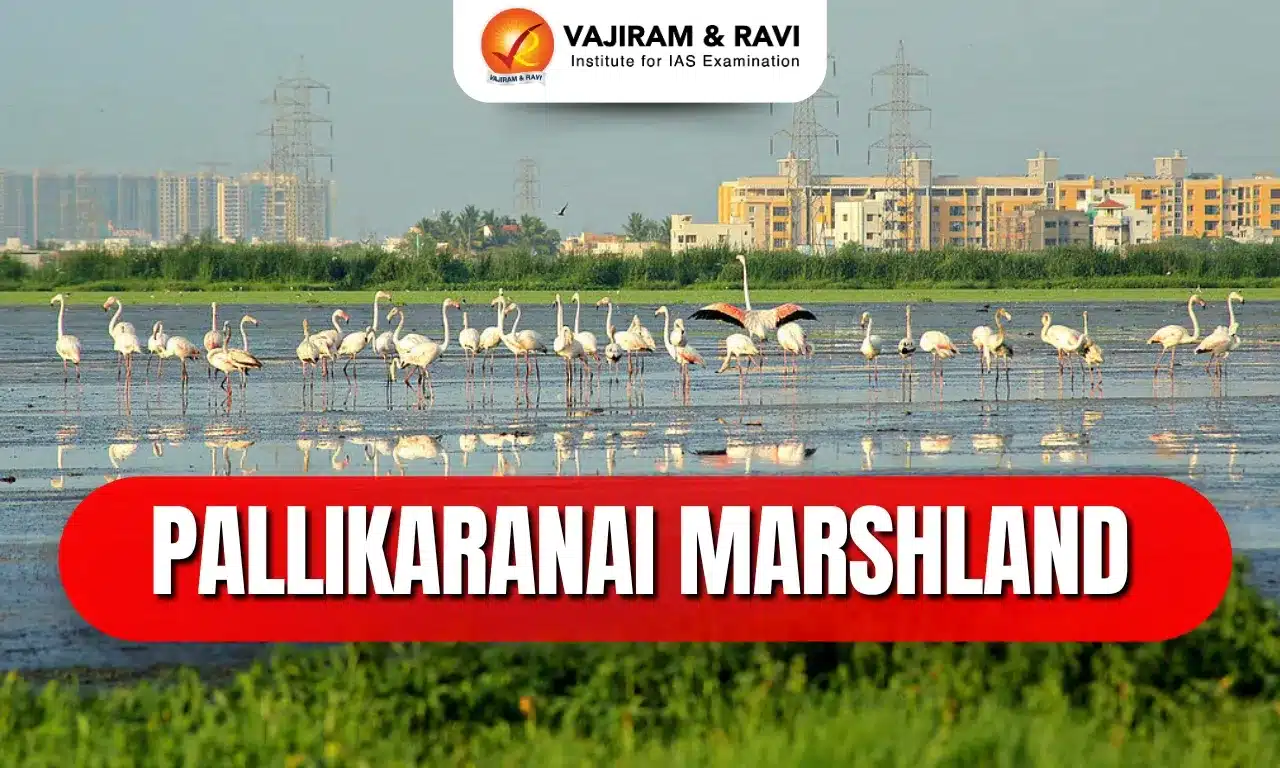
Recently, the southern bench of the National Green Tribunal has ordered a halt on all construction activity within one kilometre of the Pallikaranai Marshland until a scientific study is conducted.

About Pallikaranai Marshland

  • Location: It is a freshwater marsh and partly saline wetland situated about 20 kilometres south of the city of Chennai, Tamil Nadu.
  • It serves as an aquatic buffer of the flood-prone Chennai and Chengalpattu districts.
  • It encompasses 65 wetlands, through two outlets, viz., Okkiyam Madavu and the Kovalam Creek, and falls into the Bay of Bengal.
  • On its eastern periphery, the Marsh is flanked by the Buckingham Canal.
  • It is one of the Ramsar sites in India.
  • Fauna
    • The diverse ecosystem of the marshland supports some 115 bird species, ten mammals, 21 reptiles, ten amphibians, 46 fish, nine molluscs, five crustaceans, and seven butterfly species.
    • These include notable species such as Russell’s viper (Daboia siamensis) and birds such as the glossy ibis (Plegadis falcinellus), grey-headed lapwings (Vanellus cinereus), and Pheasant-tailed jacana (Hydrophasianus chirurgus).
  • Although tropical in bio-climate, the influence of the Bay of Bengal has been significant on the Marsh.
  • Threats: It continues to face significant anthropogenic pressures, including encroachments and sewage discharge.

Source: TH

Pallikaranai Marshland FAQs

Q1: Where is Pallikaranai Marshland located?

Ans: Tamil Nadu

Q2: What is a Ramsar site?

Ans: Ramsar Sites are wetlands of international importance designated under the Convention on Wetlands.

National Geoscience Awards 2024

National Geoscience Awards 2024

National Geoscience Awards 2024 Latest News

The President of India will confer the prestigious National Geoscience Awards (NGA) 2024 at a function to be held at the Rashtrapati Bhavan Cultural Centre, New Delhi.

About National Geoscience Awards 2024

  • The National Geoscience Award was instituted in 1966 by the Ministry of Mines, Government of India.
  • The National Geoscience Awards (formerly known as the National Mineral Awards until 2009) are among the country’s oldest and most prestigious honors in the field of geosciences.
  • Objective: To honour individuals and teams for extraordinary achievements and outstanding contributions in various fields of geosciences i.e. mineral discovery & exploration, Mining Technology & Mineral Beneficiation, fundamental/ applied geosciences.
  • Eligibility: Any citizen of India with significant contribution in any field of geosciences is eligible for the award.
  • It is awarded annually under the following three categories:
    • National Geoscience Award for Lifetime Achievement
    • National Geoscience Award
    • National Young Geoscientist Award
  • For the year 2024, 12 awards have been finalized under these three award categories, which include 09 individual and 03 team awards.

Source: PIB

National Geoscience Awards 2024 FAQ's

Q1: Who is eligible for National Geoscience Award?

Ans: Any citizen of India with significant contribution in any field of earth sciences is eligible for the Award.

Q2: Which ministry instituted the National Geoscience Award?

Ans: Ministry of Mines, Government of India

Enquire Now