Skilling for AI Readiness (SOAR) Programme

Skilling for AI Readiness (SOAR) Programme

Skilling for AI Readiness (SOAR) Programme Latest News

India is taking a major step toward building an AI-ready generation through the Skilling for AI Readiness (SOAR) programme.

About Skilling for AI Readiness (SOAR) Programme

  • It was launched by the Ministry of Skill Development and Entrepreneurship (MSDE).
  • It aims to integrate artificial intelligence learning into India’s school education and training ecosystem, preparing both students and teachers for a rapidly evolving digital world.
  • SOAR’s long-term vision is to position India as a global leader in AI by preparing its youth for AI-driven careers and entrepreneurial ventures.

Features of SOAR Programme

  • It focuses on school students from classes six to twelve and educators across India.
  • It is offering three targeted 15-hour modules for students and a 45-hour module for teachers.
  • These courses introduce foundational AI and machine learning concepts, along with data literacy and the ethical use of technology.
  • In support of this vision, the Union Budget 2025–26 has earmarked ₹500 crore to establish a Centre of Excellence in Artificial Intelligence for Education.
    • The centre will focus on developing AI-based learning tools, promoting multilingual AI resources for Indian languages, and fostering innovative classroom practices.
    • It will also strengthen AI curriculum development across technical institutions and complement existing efforts by IITs and AICTE-approved colleges that already offer advanced courses in machine learning, deep learning, and data analytics.

Source: DD News

Skilling for AI Readiness (SOAR) Programme FAQs

Q1: Which age group does the SOAR program target?

Ans: Students from Classes 6 to 12

Q2: What is the primary objective of the SOAR program launched by the Ministry of Skill Development and Entrepreneurship?

Ans: To equip students with foundational AI knowledge and practical skills

Indian Scops-Owl

Indian Pond Heron

Indian Scops-Owl Latest News

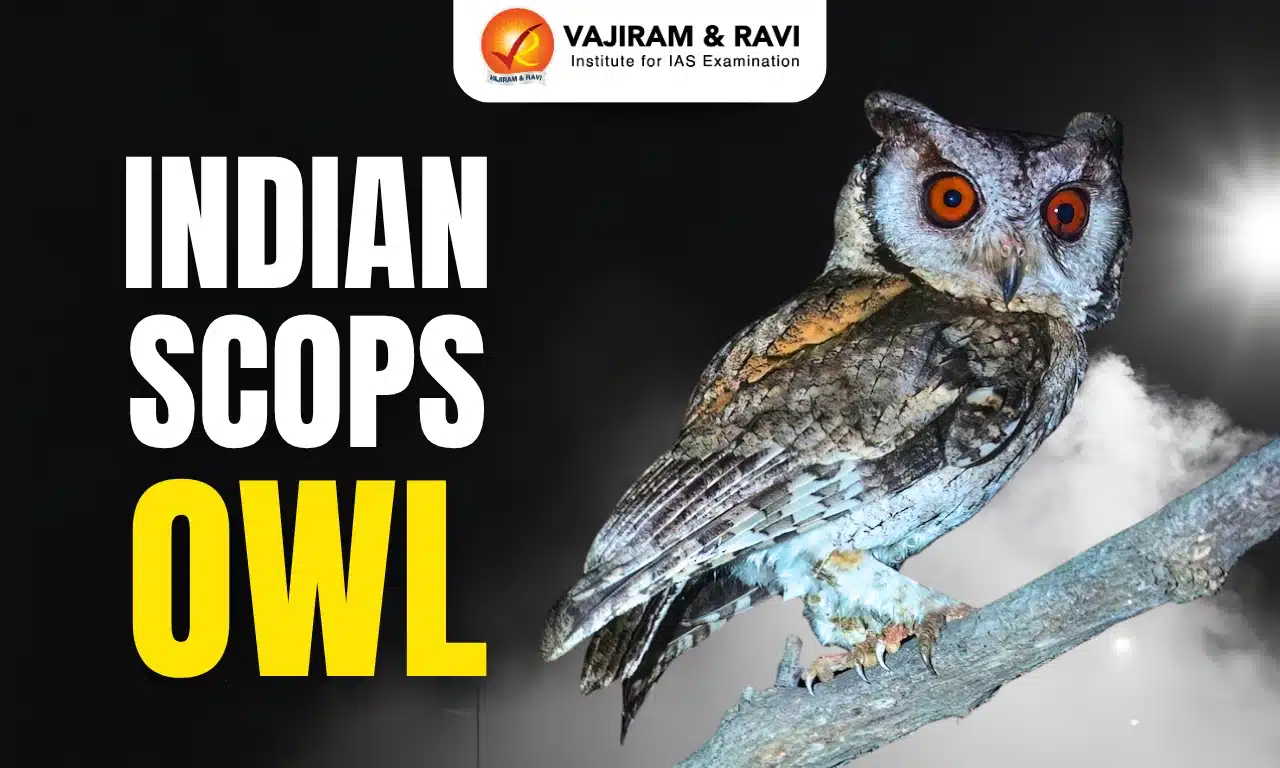
In a rare and remarkable discovery, birdwatchers recently recorded the first-ever sighting of the Indian scops owl near the Daroji Sloth Bear Sanctuary in Karnataka.

About Indian Scops-Owl

  • It is a small woodland owl species, native to the southern regions of Asia. 
  • Scientific Name: Otus bakkamoena
  • Distribution: It is found in India, Nepal, Pakistan, Sri Lanka, and Iran. 
  • Habitat:  
  • It is found in a variety of habitats, including forests, scrublands, and agricultural areas. 
  • It is a non-migratory species and tends to stay in the same area throughout the year. 

Indian Scops-Owl Features

  • It measures between 17-20 centimeters in height and has a wingspan of around 45 centimeters. 
  • Its body is stocky, with a round head and short tail.
  • It has striking physical features, including its large, bright yellow eyes with black pupils. 
  • The feathers are soft and fluffy, providing insulation against the cool night air. 
  • The overall coloration of the owl’s feathers is a mixture of browns and greys, with intricate patterns of dark and light stripes and spots.
  • A nocturnal hunter, the Indian Scops-Owl feeds predominantly on insect prey.

Indian Scops-Owl Conservation Status

It is classified as 'Least Concern' under the IUCN Red List.

Source: NIE

Indian Scops-Owl FAQs

Q1: The Indian Scops-Owl is native to which region?

Ans: It is native to the southern regions of Asia.

Q2: What are the distinctive physical features of the Indian Scops-Owl?

Ans: Large yellow eyes and brown-grey patterned feathers.

Q3: What does the Indian Scops-Owl primarily feed on?

Ans: Insects

Q4: What is the IUCN Red List conservation status of the Indian Scops-Owl?

Ans: Least Concern

Sabarimala Temple

Sabarimala Temple

Sabarimala Temple Latest News

President Droupadi Murmu recently made a historic visit to the Lord Ayyappa temple in Sabarimala, becoming the first woman head of state to offer prayers at the renowned hilltop shrine.

About Sabarimala Temple

  • Located in the Western Ghats in the Pathanamthitta District of Kerala, the Sabarimala Sree Dharma Sastha Temple is an ancient temple dedicated to Lord Ayyappa. 
    • Ayyappa, also known as Dharma Shasta, is the son of Shiva and Mohini, the feminine form of Vishnu.
  • The temple is situated on a hilltop amidst 18 hills at an altitude of 4,134 ft above sea level.
  • It is surrounded by mountains and dense forests that are a part of the Periyar Tiger Reserve.
  • It is not open throughout the year. 
  • It is one of the largest annual pilgrimage sites in the world, with an estimated 40 to 50 million pilgrims visiting the temple every year, especially during the annual Mandalam-Makaravilakku season. 
  • It is said that the pilgrims have to follow a 41-day vratham (austerity period) before going to Sabarimala.
  • It is one of the few Hindu temples in India that is open to all faiths.
  • There is a place near the temple, east of Sannidhanam (the abode of Lord Ayyappa), dedicated to Vavar (a Sufi and a close friend of Lord Ayyappa) which is called Vavaru Nada, an epitome of religious harmony.

Sabarimala Temple Architecture

  • It showcases a beautiful blend of traditional Kerala and Dravidian architectural styles. 
  • The main temple stands on a 40 feet high plateau and consists of a sanctum sanctorum with a copper-plated roof and four golden finials, two mandapams, and a flagstaff. 
  • The main staircase to the Sabarimala Temple is made up of 18 sacred steps.

Sabarimala Case

  • Women in their ‘menstruating years’ (between 10 to 50 years) were customarily prohibited from entering the temple.
  • In 2018, the Supreme Court ruled that the Sabarimala temple's exclusion of women aged 10 to 50 was unconstitutional.
  • The verdict triggered widespread protests and remains under review by a larger bench.

Source: IT

Sabarimala Temple FAQs

Q1: The Sabarimala Temple is located in which state?

Ans: Kerala

Q2: The forests surrounding the Sabarimala Temple form part of which protected area?

Ans: Periyar Tiger Reserve

Q3: What is the architectural style of the Sabarimala Temple?

Ans: It showcases a beautiful blend of traditional Kerala and Dravidian architectural styles.

Anagyrus lopezi

Anagyrus lopezi

Anagyrus lopezi Latest News

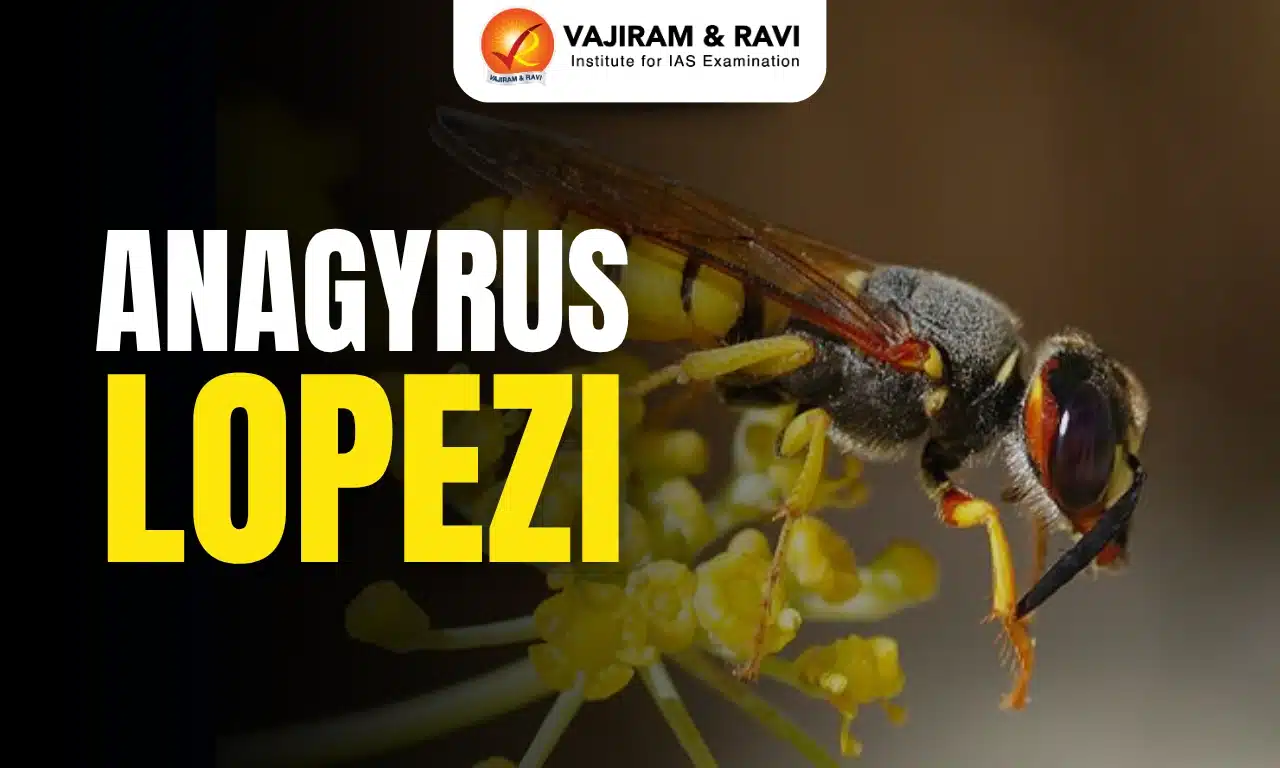
Two years after scientists from the National Bureau of Agricultural Insect Resources (NBAIR), released a tiny parasitic wasp Anagyrus lopezi into South India’s tapioca fields, the crop that once faced near devastation from an invasive pest is now thriving again.

About Anagyrus lopezi

  • It is a tiny parasitic wasp which specifically targets the cassava mealybug.
  • Working: The wasp lays its eggs inside the pest, and the developing larvae consume it from within, naturally reducing mealybug numbers without harming other crops.
  • The parasitoids spread naturally beyond the release points, up to 30–40 km, gradually bringing the mealybug population under control.
  • It was imported from the International Institute of Tropical Agriculture (IITA), Benin, West Africa.

Key Facts about Tapioca (Cassava)

  • It is a major horticulture crop cultivated in Tamil Nadu, Kerala, and Puducherry.
  • It is cultivated throughout the tropical world for its tuberous roots, from which cassava flour, breads, tapioca, a laundry starch, and an alcoholic beverage are derived. 

Climatic Conditions Required for Tapioca

  • Soil: Any well-drained soil, preferably red lateritic loamy soil.
  • Climate: It thrives best in a tropical, warm, humid climate
  • Rainfall: Well-distributed rainfall of over 100 cm per annum.
  • This crop can be cultivated upto an elevation of 1000 m.
  • All parts of cassava/tapioca – leaves, stem, tuber and rind – contain the compounds called cyanogenic glucosides (CNGs).

Source: TH

Anagyrus lopezi FAQs

Q1: What is the primary use of Anagyrus lopezi?

Ans: To control the population of a specific pest.

Q2: Which pest does Anagyrus lopezi primarily target?

Ans: Cassava mealybug

Central Asian Mammals Initiative

Central Asian Mammals Initiative

Central Asian Mammals Initiative Latest News

Representatives from a number of Central Asian countries have endorsed the Central Asian Mammals Initiative that identifies priority transboundary conservation regions important for conserving seventeen iconic mammal species of the region. 

About Central Asian Mammals Initiative

  • It was launched in 2014 at the 11th Meeting of the Conference of the Parties (COP11) to the Convention on the Conservation of Migratory Species of Wild Animals (CMS).
  • It aims to reverse the population decline of 17 migratory mammal species in 14 Central Asian countries where these species live.
  • CAMI presents a common framework to address major threats to the Central Asian migratory species.
  • It currently covers 17 species including
    • Argali sheep, Asiatic cheetah, Asiatic wild ass, Bukhara deer, Eurasian lynx, gobi bear, goitered gazelle, kiang, Mongolian gazelle, Pallas’s cat, Persian leopard, Przewalski’s horse, saiga antelope, snow leopard, urial, wild camel, and wild yak.
  • The current Programme of Work (2021-2026) for CAMI initiative was adopted by CMS COP13.

What is the Convention on the Conservation of Migratory Species?

  • It is also known as the Bonn Convention, is an environmental treaty under the aegis of the United Nations Environment Programme. 
  • It provides a global platform for the conservation and sustainable use of migratory animals and their habitats. 
  • It was signed in Bonn, Germany, on 23 June 1979.
  • It is the only global and UN-based intergovernmental organisation established exclusively for the conservation and management of terrestrial, aquatic and avian migratory species throughout their range.
  • Activities by CMS Parties may range from legally binding treaties (called Agreements) to less formal instruments, such as Memoranda of Understanding.
  • The Conference of Parties (COP) is the decision-making organ of this convention.

Source: DTE

Central Asian Mammals Initiative FAQs

Q1: What is the primary goal of the Central Asian Mammals Initiative (CAMI)?

Ans: To conserve 17 iconic mammal species in the Central Asian region

Q2: What is the significance of CAMI in conservation efforts?

Ans: It provides a common framework for addressing major threats to migratory species.

Mount Etna

Mount Etna

Mount Etna Latest News

Researchers recently analyzed changes over time in the ratio of small earthquakes to bigger ones beneath Mount Etna and found a strong correlation with the volcano's activity over the past 20 years.

About Mount Etna

  • It is an active stratovolcano located on the island of Sicily in the Mediterranean Sea. (Sicily is a part of Italy.) 
  • It lies above the convergent plate margin between the African Plate and the Eurasian Plate.
  • It is the tallest active volcano in Europe.
  • It is the highest mountain in Italy south of the Alps.
  • It is about 11,000 feet (3,350 meters) high.
  • It covers an area of 1,190 sq.km. with a basal circumference of 140 km.
  • The eruptive history of the volcano can be traced back 500,000 years, and at least 2,700 years of this activity has been documented.
  • The ancient Greeks created legends about it.
  • It is a UNESCO World Heritage Site.

Source: LS

Mount Etna FAQs

Q1: Where is Mount Etna located?

Ans: It is located on the island of Sicily in the Mediterranean Sea. (Sicily is a part of Italy.)

Q2: Mount Etna is classified as which type of volcano?

Ans: It is an active stratovolcano.

Q3: Mount Etna lies above the convergent plate margin between which two tectonic plates?

Ans: African Plate and the Eurasian Plate.

Trachoma

Trachoma

Trachoma Latest News

Recently, Fiji became the 26th country to eliminate trachoma as a public health problem.

About Trachoma

  • It is a bacterial infection caused by the bacterium Chlamydia Trachomatis which affects the eyes.
  • It is contagious; spreading through contact with the eyes, eyelids, nose or throat secretions of infected people, if left untreated it causes irreversible blindness.
  • It is found in communities who are living in poor environmental conditions.
  • Treatment: The two drugs recommended for trachoma are azithromycin and an ointment made with tetracycline.

Signs and Symptoms of Early Stages of Trachoma Include:

  • Red and irritated eyes.
  • Swollen eyelids.
  • Blurred vision.
  • Watery discharge from the eyes.
  • Discharge from the nose.

Initiatives by the World Health Organisation Regarding Trachoma

  • The World Health Organisation (WHO) has termed Trachoma as a neglected tropical disease and its estimation suggests that 150 million people worldwide are affected by Trachoma.
  • To eliminate trachoma as a public health problem, WHO recommends the SAFE strategy.

Source: WHO

Trachoma FAQs

Q1: What is Trachoma?

Ans: A bacterial infection of the eye caused by Chlamydia trachomatis

Q2: How is Trachoma transmitted?

Ans: Through direct contact with an infected person's eye or nose discharge

Storm Shadow Missile

Storm Shadow Missile

Storm Shadow Missile Latest News

Ukraine recently launched a daring strike on a Russian chemical plant in Bryansk using UK-made Storm Shadow long-range missiles, reportedly penetrating Moscow’s air defenses.

About Storm Shadow Missile

  • It is a long-range, air-launched cruise missile.
  • It was jointly developed by the United Kingdom and France.
  • The French call it SCALP.
  • Designed for stealth and precision, the SCALP is capable of operating in any weather conditions.
  • It is intended to strike high-valued stationary assets such as airbases, radar installations, communications hubs and port facilities.
  • It is also in service with the air forces of Egypt, India, Italy, Greece, Saudi Arabia, Qatar, and the United Arab Emirates (UAE).
  • It is compatible with multiple aircraft platforms.
  • India integrates SCALP with the Rafale fighter jets, which are currently operated by the Indian Air Force.

Storm Shadow Missile Features

  • It is powered by a turbojet engine, which provides it with a range exceeding 550 kilometers.
  • Weighing 1,300 kg, it carries a 450 kg conventional warhead capable of penetrating hardened bunkers.
  • It is just over five metres long and has a wingspan of three metres.
  • Flying at subsonic speeds (around Mach 0.8) and low altitudes, it uses terrain-following navigation, GPS/INS guidance, and infrared terminal homing for high accuracy. 
  • These features allow it to fly at low altitudes to evade enemy radar detection.

Source: OI

Storm Shadow Missile FAQs

Q1: What is the Storm Shadow Missile?

Ans: It is a long-range, air-launched cruise missile.

Q2: The Storm Shadow missile was jointly developed by which two countries?

Ans: It was jointly developed by the United Kingdom and France.

Q3: What is the French name for the Storm Shadow missile?

Ans: SCALP

Q4: What is the main purpose of the Storm Shadow missile?

Ans: It is intended to strike high-valued stationary assets such as airbases, radar installations, communications hubs and port facilities.

Ningol Chakouba Festival

Ningol Chakouba Festival

Ningol Chakouba Festival Latest News

Every year, the Department of Fisheries, Manipur, organises the Annual Fish Fair cum Fish Crop Competition on the day ahead of the Ningol Chakouba festival.

About Ningol Chakouba Festival

  • The festival is celebrated every year on the second day of Hiyangei month of the Meitei calendar. 
  • Ningol means ‘married woman’ and Chakouba means ‘invitation for feast’; so the festival is the one where the married women are invited to their parents’ home for a feast. 
  • The main component of the festival is the visit of married sisters to their maternal homes for grand feast and joyous reunion followed by giving away the gifts.
  • It is customary for the son of the family to extend a formal invitation to his sister for Ningol Chakkouba a week before the gathering. 
  • The festival is held today outside Manipur where Manipuris are settled.
  • The essence is to strengthen the bond of affection among the brothers and sisters, daughters and parents of a family.

History of Ningol Chakouba

  • It dates back to the time when King Nongda Lairen Pakhangba ruled in Manipur.
  • The Queen Laisana used to invite her brother Poireiton to the King’s palace for a feast once in a year. So, it was known as Piba (brother/son) Chakouba rather than Ningol Chakouba.
  • The tradition changed during the time of King Chadrakirti Singh (1831-1886) in the 19th century. He invited his sisters for the feast as it was difficult for him to visit their places in one day.
  • Thus, the tradition changed to Ningol Chakouba since then and continued to become an integral part of Manipur’s rich culture and heritage.

Source: News On Air

Ningol Chakouba Festival FAQs

Q1: Where is the Ningol Chakouba Festival primarily celebrated?

Ans: Manipur

Q2: What is the significance of Ningol Chakouba?

Ans: Strengthening the bond between married women and their paternal families.

Kali Tiger Reserve

Kali Tiger Reserve

Kali Tiger Reserve Latest News

The foresters at Kali Tiger Reserve near Dandeli in the Uttara Kannada district in Karnataka were up for a surprise when they sighted and recorded the presence of a striped hyena (locally called katte kiruba).

About Kali Tiger Reserve

  • It is situated in the Uttara Kannada district of Karnataka.
  • It covers an area of 834.16 sq.km.
  • It is composed of Dandeli Wildlife Sanctuary and Anshi National Park. 
    • These two protected areas are contiguous to each other and form a single tract of the protected area located in the biologically sensitive Western Ghats. 
  • River: The Kali River, which forms the major source of water for Uttara Kannada, flows through the tiger reserve, and hence the name.
  • Vegetation: It is a blend of semi-evergreen and moist deciduous forests, interspersed with patches of bamboo and grasslands.
  • Flora: The reserve is rich in plant diversity, featuring species like teak, silver oak, eucalyptus, and various medicinal plants.
  • Fauna: 
    • Animals found in the Tiger Reserve include Tiger, Leopard, Elephant, Bison, Wild dog, Sambar, Spotted deer, Sloth bear, Wild boar, Hanuman langur, Bonnet macaque, etc.
    • The area holds one of the highest populations of Great Indian Hornbills in the Western Ghats.
    • It is also home to rare black panthers.

Source:NIE

Kali Tiger Reserve FAQs

Q1: Where is the Kali Tiger Reserve located?

Ans: It is situated in the Uttara Kannada district of Karnataka.

Q2: The Kali Tiger Reserve was formed by combining which two protected areas?

Ans: It is composed of Dandeli Wildlife Sanctuary and Anshi National Park.

Q3: The Kali Tiger Reserve is part of which major mountain range?

Ans: Western Ghats

Q4: Which type of vegetation dominates the Kali Tiger Reserve?

Ans: Semi-evergreen and moist deciduous forests.

Enquire Now