Association of Southeast Asian Nations (ASEAN)

Association of Southeast Asian Nations (ASEAN)

ASEAN Latest News

The Prime Minister decided not to travel to Malaysia to attend the 47th ASEAN summit and will attend it virtually.

About ASEAN

  • It is an inter-governmental regional organisation formed to promote political, economic, and security cooperation among Southeast Asian nations.
  • Established in 1967 with the signing of the Bangkok Declaration, its founding members were Indonesia, Malaysia, the Philippines, Singapore, and Thailand.
  • ASEAN currently has 10 member countries: Indonesia, Malaysia, the Philippines, Singapore, Thailand, Brunei, Vietnam, Laos, Myanmar, and Cambodia.
  • Headquarters: Jakarta, Indonesia
  • The ASEAN Community comprises three pillars: the Political-Security Community, the Economic Community and the Socio-Cultural Community.
  • Two of its core operating principles are consensual decision-making and noninterference in the internal affairs of its members.
  • In line with ASEAN centrality, ASEAN sees itself as a platform for intergovernmental cooperation throughout the entire Asia-Pacific.

Institutional Mechanisms of ASEAN

  • The ASEAN Summit is held annually, where member states discuss regional developments and set strategic policy directions. It is chaired by a rotating presidency.
  • The ASEAN Coordinating Council (ACC) monitors the implementation of agreements and decisions, ensuring alignment across the member states.
  • The ASEAN Secretariat, located in Jakarta, acts as the administrative body supporting and facilitating ASEAN’s initiatives, coordination, and documentation.
  • The ASEAN Regional Forum (ARF) is a key platform for dialogue on political and security issues involving both member countries and external partners.
    • India joined the ARF in 1996, marking its formal inclusion in ASEAN-led security dialogue mechanisms.

Source: TH

Association of Southeast Asian Nations (ASEAN) FAQs

Q1: Which declaration led to the formation of ASEAN?

Ans: Bangkok Declaration

Q2: How many member countries does ASEAN currently have?

Ans: ASEAN currently has 10 member countries: Indonesia, Malaysia, the Philippines, Singapore, Thailand, Brunei, Vietnam, Laos, Myanmar, and Cambodia.

Q3: Where is the headquarters of ASEAN located?

Ans: Jakarta, Indonesia
Barnawapara Wildlife Sanctuary

Barnawapara Wildlife Sanctuary

Barnawapara Wildlife Sanctuary Latest News

After being declared locally extinct for about 50 years, the blackbuck has made a remarkable comeback at Barnawapara Wildlife Sanctuary in Chhattisgarh thanks to a focused five-year revival plan.

About Barnawapara Wildlife Sanctuary

  • It is located in the northern part of the Mahasamund district of Chhattisgarh.
  • It is named after the Bar and Nawapara forest villages, which are in the heart of the sanctuary. 
  • It is spread over an area of 245 sq. km.
  • The tributaries of Mahanadi are the source of water. The River Balamdehi forms the western boundary, and the Jonk River forms the northeastern boundary of the sanctuary. 
  • Flora
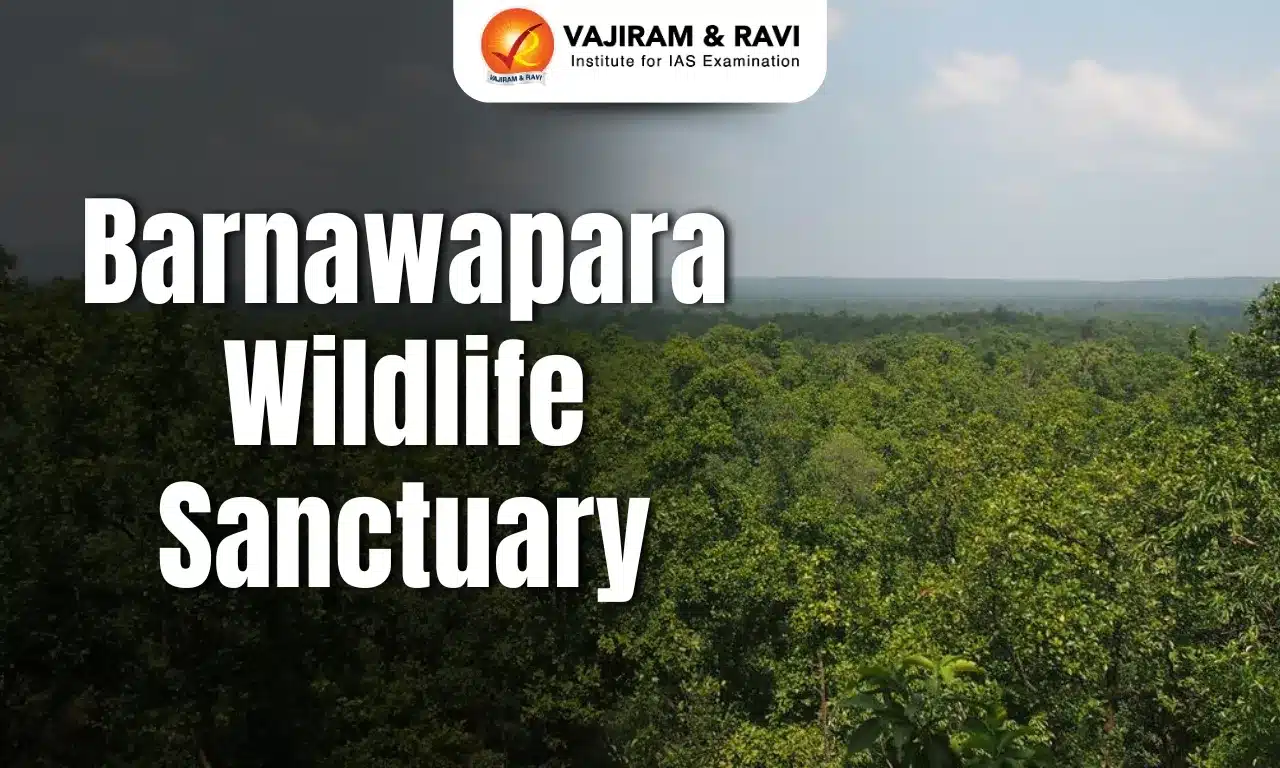
    • The flora chiefly comprises tropical dry deciduous forest, with Teak, Sal, Bamboo and Terminalia being the prominent trees. 
    • Other major plants found in the sanctuary include Semal, Mahua, Ber, and Tendu.
  • Fauna: It is home to neelgai, wild boar, tigers, leopards, Indian bison, porcupines, pythons, antelopes, sambhar and cheetal, along with 150 species of birds, including parrots, blackbucks, herons, egrets, peafowl, etc.

Source: IE

Barnawapara Wildlife Sanctuary FAQs

Q1: Barnawapara Wildlife Sanctuary is located in which state?

Ans: Chhattisgarh

Q2: Which river forms the western boundary of Barnawapara Wildlife Sanctuary?

Ans: Balamdehi River

Q3: The northeastern boundary of Barnawapara Wildlife Sanctuary is formed by which river?

Ans: Jonk River

Q4: Which type of forest vegetation is dominant in Barnawapara Wildlife Sanctuary?

Ans: Tropical dry deciduous forest

National Means Cum Merit Scholarship Scheme (NMMSS)

National Means Cum Merit Scholarship Scheme

National Means cum Merit Scholarship Scheme Latest News

The State Councils of Educational Research and Training (SCERTs) recently released the application forms for the National Means cum Merit Scholarship Scheme (NMMS) for various states.

About National Means cum Merit Scholarship Scheme

  • It is a Centrally Sponsored Scheme launched in May, 2008.
  • Objective: Award scholarships to meritorious students of economically weaker sections to arrest their dropout at class VIII and encourage them to continue the study at the secondary stage.
  • NMMSS is on the National Scholarship Portal (NSP) – a one-stop platform for scholarship schemes given to students.
  • Benefits:
    • One lakh fresh scholarships are awarded by the Ministry of Education to selected students every year for study in classes from IX to XII in recognized Government, Government-aided, and local body schools.
    • There is a quota of scholarships for different states/UTs.
    • The amount of scholarship is Rs. 12000/- per annum (Rs. 1000/- per month) per student.
    • These scholarships are disbursed directly into the bank accounts of selected students by electronic transfer.
  • Eligibility Criteria:
    • Students whose parental income from all sources is not more than Rs. 350,000/- per annum.
    • The students must have a minimum of 55% marks or an equivalent grade in the Class VII examination (relaxable by 5% for SC/ST students).
    • The students should be studying as regular students in a Government, Government-aided and local body school. 
    • The students studying in the Navodaya Vidyalaya Samiti (NVS), Kendriya Vidyalaya Sangathan (KVS), and residential schools are not eligible for the scholarships under the NMMSS.
    • There is reservation as per State Government norms.
    • Selection Test: Each State and UT conducts its own test to select students for awarding the National Means-cum-Merit Scholarship. The test is conducted at the stage of class VIII. 
  • Selection of Renewal Awardees Students:
  • The awardees should get a minimum of 60% marks in Class X for continuation of scholarship (relaxable by 5% for SC/ST candidates) in the next higher classes. 
  • For continuing the scholarship in class X and XII, the awardees should get a clear promotion from class IX to class X and from class XI to class XII in the first attempt.

Source: NDTV

National Means cum Merit Scholarship Scheme FAQs

Q1: What is the primary objective of the National Means cum Merit Scholarship Scheme (NMMSS)?

Ans: Award scholarships to meritorious students of economically weaker sections to arrest their dropout at class VIII.

Q2: How many fresh scholarships are awarded every year under the National Means cum Merit Scholarship Scheme (NMMSS)?

Ans: One lakh fresh scholarships are awarded to selected students every year.

Q3: What is the annual scholarship amount provided to each student under National Means cum Merit Scholarship Scheme (NMMSS)?

Ans: The amount of scholarship is Rs. 12000/- per annum (Rs. 1000/- per month) per student.

Q4: Students from which class onwards are eligible to receive the National Means cum Merit Scholarship Scheme (NMMSS)?

Ans: Class IX

Hyunmoo-5 Missile

Hyunmoo-5 Missile

Hyunmoo-5 Missile Latest News

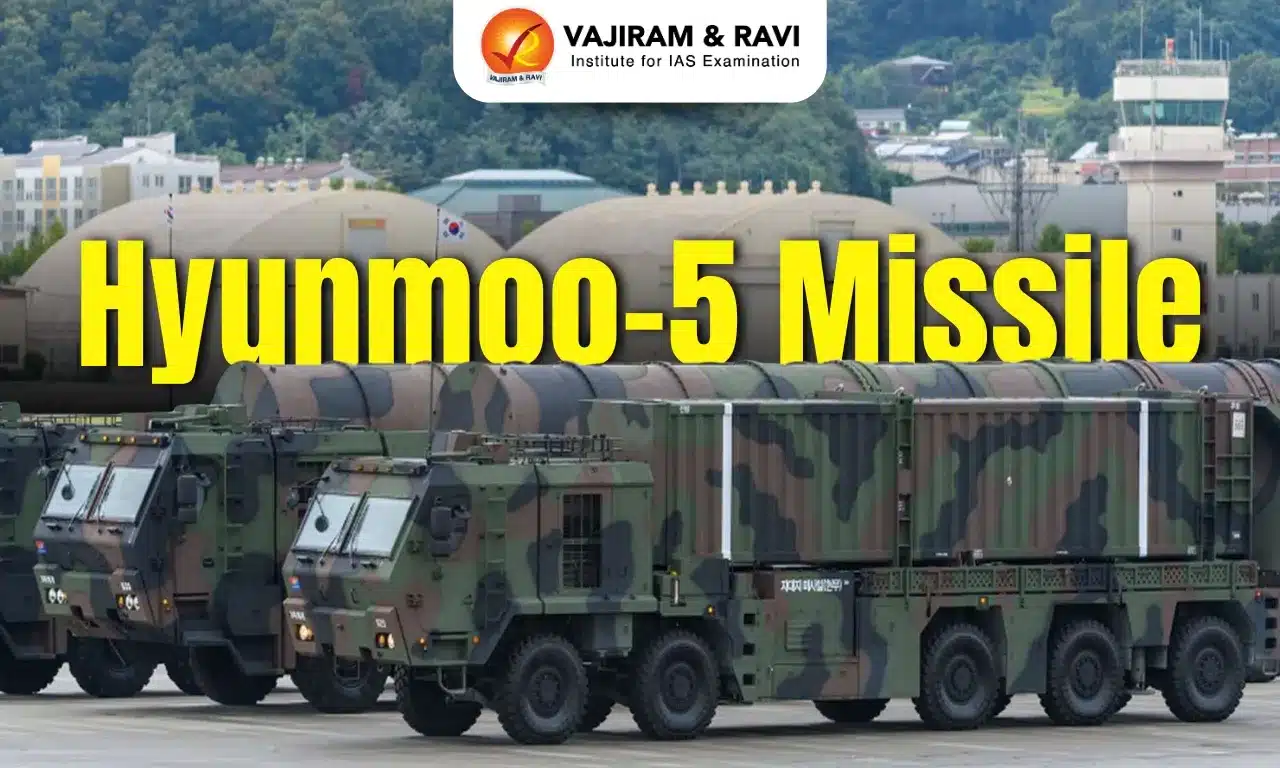
South Korea is ready to deploy its 'monster missile' Hyunmoo 5 at the end of the year marking a significant conventional arsenal upgrade against its northern counterpart in the Korean peninsula.

About Hyunmoo-5 Missile

  • It is a ballistic missile developed by South Korea. 
  • It is designed for deep penetration strikes with a massive conventional warhead capable of destroying heavily fortified underground targets.
  • It is part of South Korea’s Korean Massive Punishment and Retaliation (KMPR) framework, which is designed to deter North Korean aggression without the use of nuclear weapons.
  • It was officially unveiled in October 2024.

Hyunmoo-5 Missile Features

  • It has been dubbed as the "monster missile" for its size, Hyunmoo 5 weighs around 36 tonnes. 
  • It can carry an eight-tonne warhead.
  • Its range is set to vary from 600 km to more than 5,000 km, depending on payload.
  • Its design features a payload composed of heavy metals, optimized to destroy bunkers or command centers located at great depth.
  • It has the capability to destroy fortified underground facilities buried over 100 meters deep.
  • In its descending phase, the missile can reach speeds close to Mach 10. 
  • It is capable of being launched from a mobile platform.

Source: TOI

Hyunmoo-5 Missile FAQs

Q1: What type of missile is the Hyunmoo-5?

Ans: It is a ballistic missile.

Q2: Which country has developed the Hyunmoo-5 missile?

Ans: South Korea

Q3: What is the primary purpose of the Hyunmoo-5 missile?

Ans: To destroy heavily fortified underground targets.

Q4: What is the estimated range capability of the Hyunmoo-5 missile?

Ans: Its range is set to vary from 600 km to more than 5,000 km, depending on payload.

Intrusion Detection System

Intrusion Detection System

Intrusion Detection System Latest News

Recently, the Northeast Frontier Railway (NFR) has successfully completed trial works of the Intrusion Detection System (IDS) in four key sections.  

About Intrusion Detection System

  • The IDS initiative aims to strike a balance between operational efficiency and environmental protection.
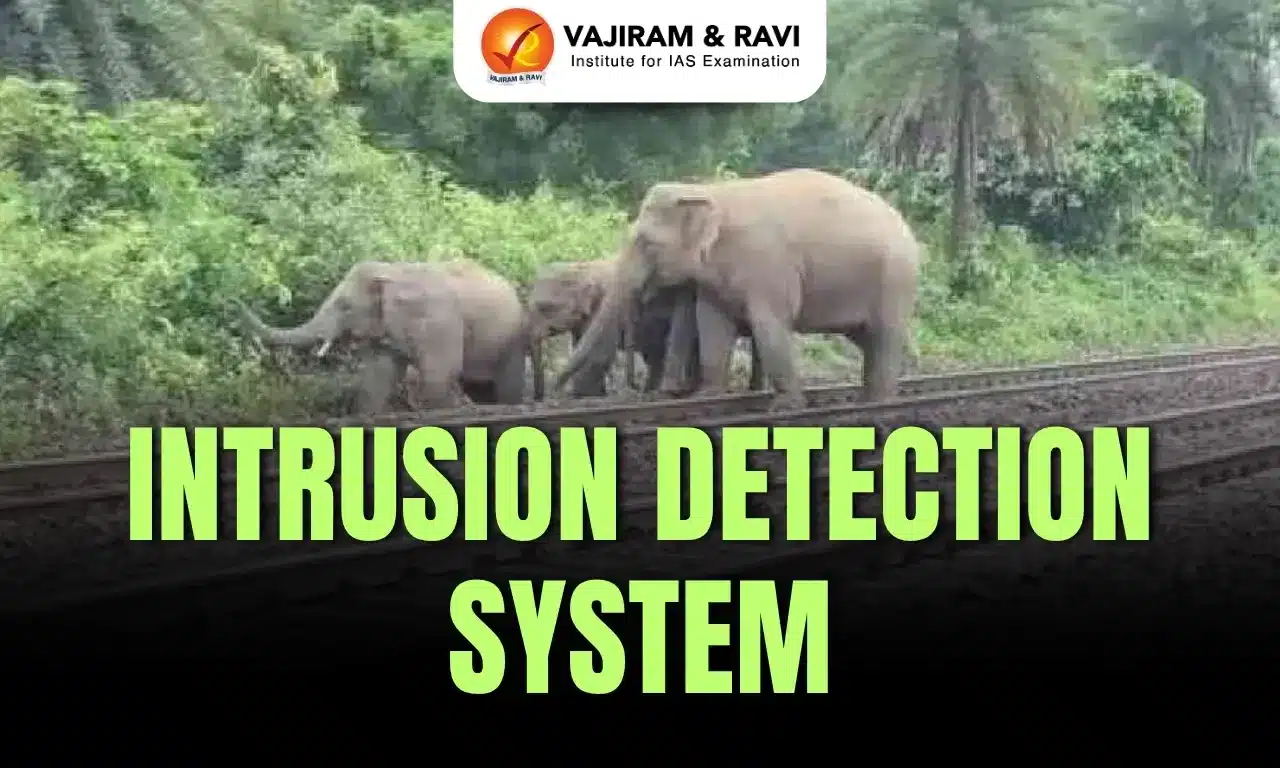
  • Objective: It is designed to protect wildlife and maintain operational efficiency, especially in areas where railway lines pass through forested and elephant-inhabited zones.
  • It runs parallel to tracks at a distance of 10 metres.
  • Launched by: This initiative has been launched by the Northeast Frontier Railway (NFR) under the Ministry of Railways.
  • Working of Intrusion Detection System
    • Technology: It uses advanced optical fibre sensing technology to detect elephant movement near railway tracks,
    • Real Time Alert: It generates real-time alerts for train drivers and control rooms to take timely preventive action.
    • When elephants come close to the railway tracks, the vibrations generated by their movement are detected by the sensor cables, which then transmit signals to the control room.

Source: IE

Intrusion Detection System FAQs

Q1: Where is the headquarters of Northeast Frontier Railway located?

Ans: Maligaon, Guwahati

Q2: What is a notable initiative taken by Northeast Frontier Railway to protect wildlife?

Ans: Plan Bee, a strategy to keep wild elephants away from railway tracks.

Sevilla Forum on Debt

Sevilla Forum on Debt

Sevilla Forum on Debt Latest News

Recently, the Sevilla Forum on Debt was launched at the 16th United Nations Conference on Trade and Development (UNCTAD16) in Geneva. 

About Sevilla Forum on Debt

  • It is a Spain-led initiative launched at the 16th United Nations Conference on Trade and Development (UNCTAD16).
  • It is supported by UNCTAD and the UN Department of Economic and Social Affairs (DESA).
  • Aim: To serve as an open and inclusive space for dialogue and action on sovereign debt reform.
  • The new forum is one of the outcomes of the Fourth International Conference on Financing for Development (FfD4) and was launched as an initiative under the Sevilla Platform for Action. 
  • It brings together all stakeholders, creditors, borrowers, international financial institutions and academia on debt sustainability, management and innovative solutions.

Key Facts about United Nations Conference on Trade and Development

  • It is the UN’s leading institution dealing with trade and development.
  • It is a permanent intergovernmental body established by the United Nations General Assembly in 1964. 
  • Functions: It provides economic and trade analysis, facilitates consensus-building and offers technical assistance to help developing countries use trade, investment, finance and technology for inclusive and sustainable development.
  • Headquarter: Geneva, Switzerland.
  • Reports published by the UNCTAD
    • Trade and Development Report
    • World Investment Report
    • The Least Developed Countries Report

Source: DTE

Sevilla Forum on Debt FAQs

Q1: What is the primary objective of the Sevilla Forum on Debt?

Ans: To tackle the mounting global debt challenges and promote sustainable development.

Q2: Which organizations supported the launch of the Sevilla Forum on Debt?

Ans: United Nations Conference on Trade and Development (UNCTAD) and UN Department of Economic and Social Affairs (DESA)

Calcium Carbide

Calcium Carbide

Calcium Carbide Latest News

More than 60 people, primarily children, were hospitalized in Bhopal following severe injuries sustained from the use of makeshift “calcium carbide guns” during Diwali celebrations.

About Calcium Carbide

  • It is a compound with the chemical formula CaC2.
  • It is commonly referred to as ‘masala’ in fruit markets.
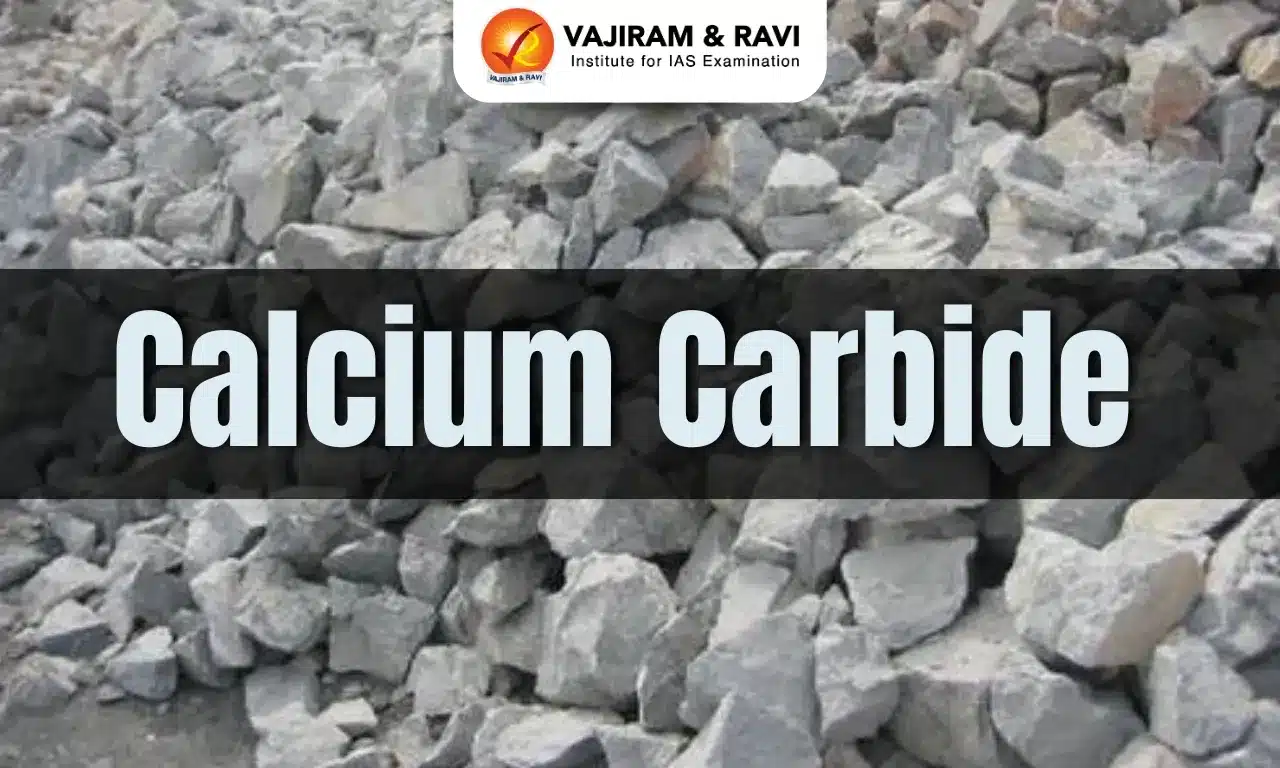
  • It is a grayish-black lump or crystalline powder with a garlic-like odor. 
  • It is manufactured by heating a lime and carbon mixture to 2000 to 2100°C (3632 to 3812°F) in an electric arc furnace.

Calcium Carbide Uses

  • It is primarily known for its use in the production of acetylene gas through hydrolysis.
  • Calcium carbide reacts vigorously with water to produce acetylene gas. Acetylene is a colourless, odourless, extremely flammable gas.
  • It is used as a reducing agent and in steel manufacturing and metal cutting.
  • Several countries use calcium carbide as an artificial ripening agent. 

Calcium Carbide Health Impacts

  • It can cause serious health issues such as dizziness, frequent thirst, irritation, weakness, difficulty in swallowing, vomiting, skin ulcers, etc.
  • Additionally, acetylene gas is equally hazardous to those handling it.
  • There are chances that calcium carbide may come in direct contact with fruits during application and leave residues of arsenic and phosphorus on fruits.
  • It is banned under the Prevention of Food Adulteration Rules, 1955, and also under the Food Safety and Standards (Prohibition and Restrictions on Sales) Regulations, 2011, made thereunder.

Source:TH

Calcium Carbide FAQs

Q1: What is the chemical formula of Calcium Carbide?

Ans: CaC₂

Q2: What happens when calcium carbide is mixed with water?

Ans: When calcium carbide is mixed with water, it reacts vigorously to produce acetylene gas (C₂H₂) and calcium hydroxide (Ca(OH)₂).

Q3: How calcium carbide is manufactured?

Ans: It is manufactured by heating a lime and carbon mixture to 2000 to 2100°C (3632 to 3812°F) in an electric arc furnace.

Fibromyalgia

Fibromyalgia

Fibromyalgia Latest News

Fibromyalgia condition is often misunderstood, but it is real and is believed to affect 2 to 3% of the population globally.     

About Fibromyalgia

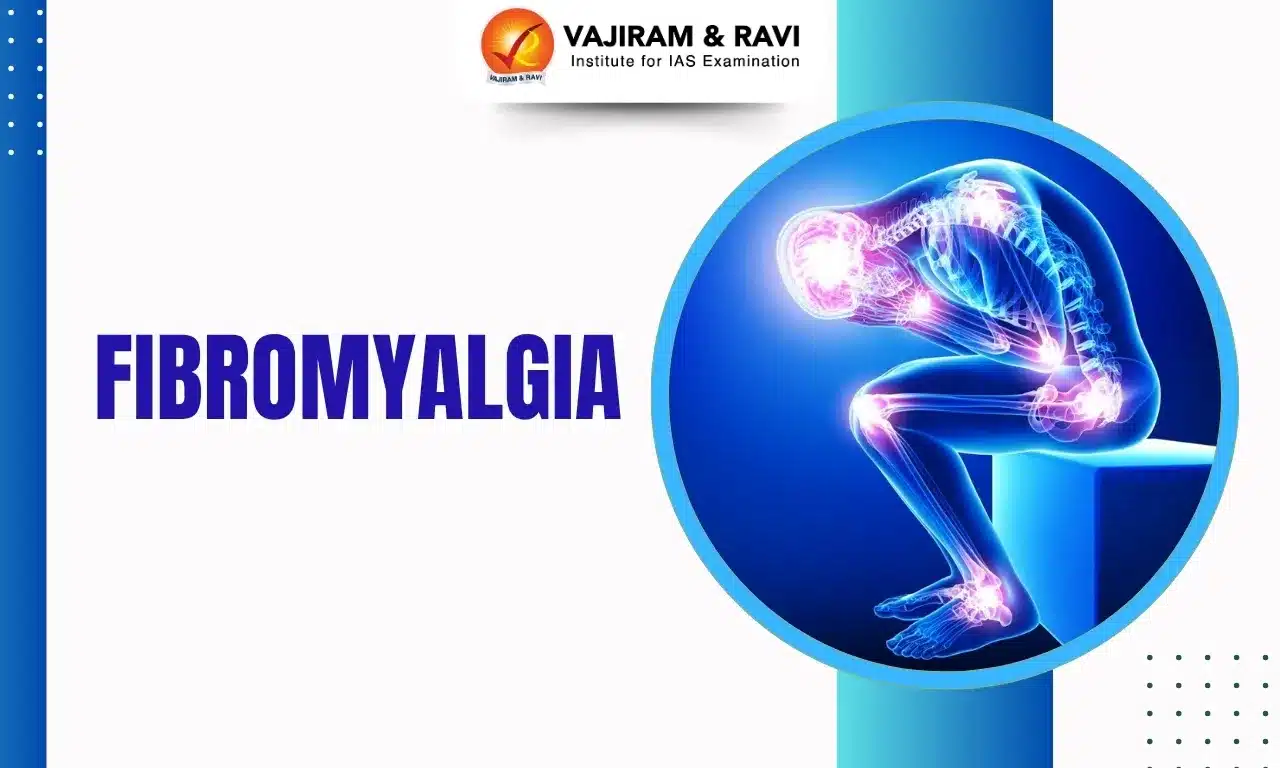
  • It is a long-term (chronic) health condition that causes pain and tenderness in the muscles and soft tissues of the body.
  • It is often accompanied by fatigue, sleep disturbances, memory issues and mood problems such as stress, anxiety and depression.
  • It causes musculoskeletal pain and fatigue

Causes for Fibromyalgia

  • The cause of fibromyalgia is not known, but studies show that people with the disorder have a heightened sensitivity to pain, so they feel pain when others do not.
  • People with fibromyalgia usually experience symptoms that come and go in periods called flare-ups.

Symptoms of fibromyalgia

  • The two most common symptoms of fibromyalgia are pain and fatigue. Other symptoms include,
  • Headaches and migraines, digestive problems such as diarrhoea and constipation, restless leg syndrome, as well as face and jaw pain such as temporomandibular jaw disorders.

Treatment of Fibromyalgia

  • While there is no cure for fibromyalgia, a variety of medications can help control symptoms.
  • Treatment typically involves a combination of exercise or other movement therapies, psychological and behavioural therapy, and medications.

Source: TH

Fibromyalgia FAQs

Q1: What is Fibromyalgia?

Ans: A neurological disorder characterized by chronic pain and fatigue.

Q2: What is the role of stress in Fibromyalgia?

Ans: It can trigger or exacerbate symptoms.

JAIMEX 2025

JAIMEX 2025

JAIMEX 2025 Latest News

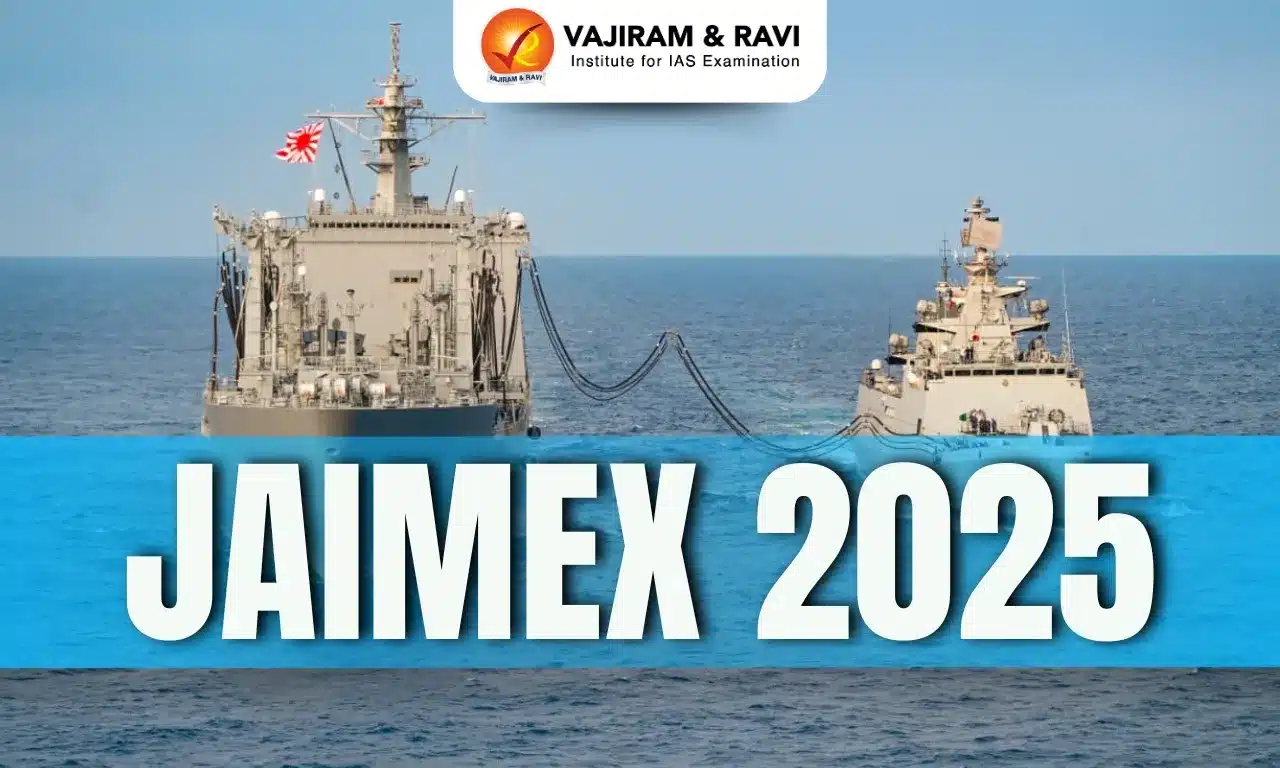
Recently, Indian Naval Ship (INS) Sahyadri participated in the Sea phase of JAIMEX-25 (Japan India Maritime Exercise).

About JAIMEX 2025

  • It is a maritime exercise between India and Japan.
  • Objective: It underscores the strong and burgeoning Navy-to-Navy interactions that underpin the ‘Special Strategic and Global Partnership’ established between India and Japan in 2014. This partnership is a crucial pillar for ensuring peace and stability in the Indo-Pacific maritime domain.
  • It involved two phases
    • Sea phase included advanced Anti-Submarine Warfare and missile defence drills, enhancing interoperability by undertaking flying operations and underway replenishment.
    • Harbour Phase at Yokosuka includes engagement in a multitude of professional and cultural exchanges, cross-deck visits, collaborative operational planning, sharing of best practices,
  • Significance: The Indian Navy and JMSDF have been at the forefront of this growing partnership with a shared vision of a free, open, and inclusive Indo-Pacific region.
  • Other bilateral exercises between India and Japan: Malabar exercise (Naval Exercise), ‘Veer Guardian’ (Air Force), and Dharma Guardian (Army). 

Key Facts about INS Sahyadri

  • It is an indigenously built Shivalik-class Guided Missile Stealth Frigate.
  • It is indigenously designed, constructed and commissioned in 2012.
  • The ship is capable of carrying Barak-1 and Shtil-1 3S90M missiles, BrahMos anti-ship missiles, anti-submarine rocket launchers.
  • The multi-role stealth frigate has participated in various operational deployments, bilateral and multilateral exercises.

Source: PIB

JAIMEX 2025 FAQs

Q1: Which country is participating in the JAIMEX-25 maritime exercise with India?

Ans: Japan

Q2: What is the primary objective of the JAIMEX-25 maritime exercise?

Ans: To enhance maritime security and interoperability.

Chrysanthemum

Chrysanthemum

Chrysanthemum Latest News

Recently, Kashmir’s first Chrysanthemum garden was opened for tourists.

About Chrysanthemum

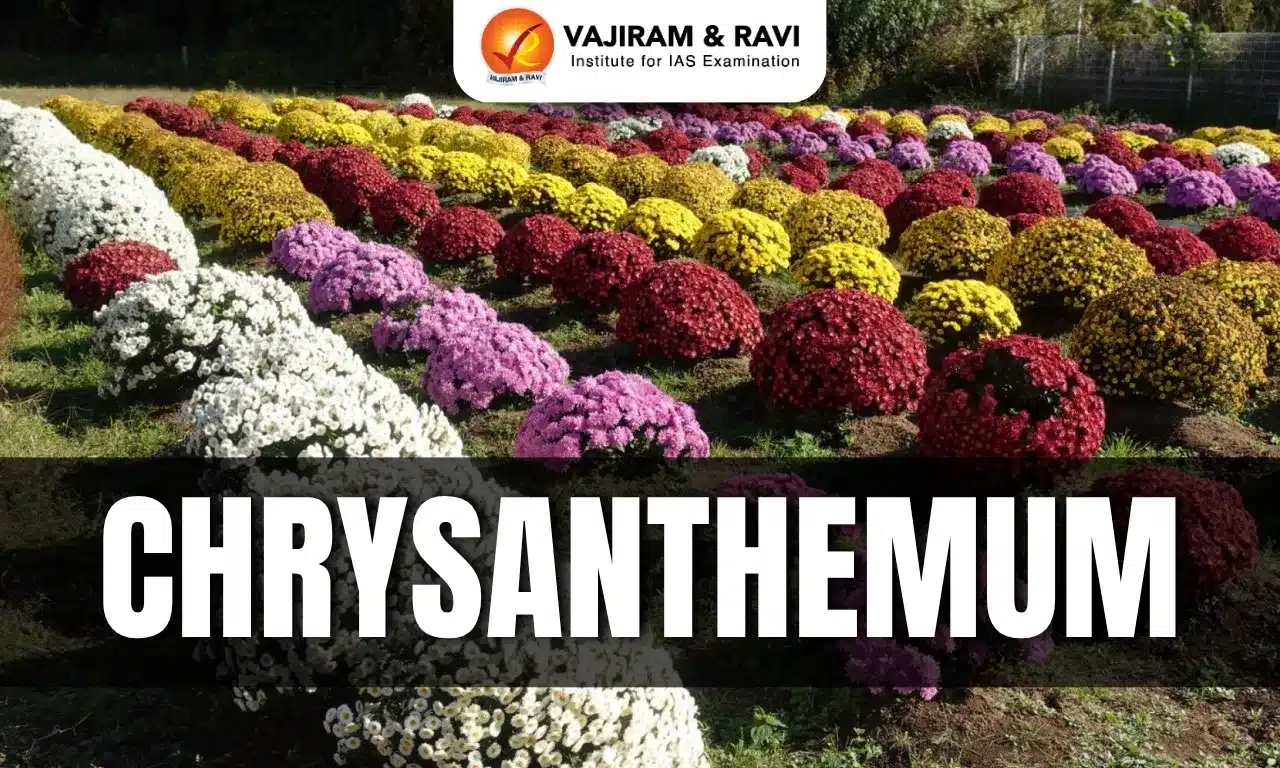
  • Chrysanthemums are a genus (Chrysanthemum) of about 30 species of perennial flowering plants in the family Asteraceae.
  • It is native to Asia and northeastern Europe.
  • Chrysanthemum is a perennial herbaceous plant that blooms in autumn.
  • Appearance: The species of Chrysanthemum grows to 50-150 cm tall, with deeply lobed leaves and large flowerheads, white, yellow or pink in the wild species. 

Required Climatic Conditions for Chrysanthemum

  • It is native primarily to subtropical and temperate areas. 
  • Climate: Tropical and subtropical climatic conditions are ideal.
  • However, the best temperature for growing chrysanthemums is 20-28 degrees for day and 15-20 degrees Celsius for night.
  • Soil: Well drained red loamy soil with pH of 6 to 7.
  • Uses: It is commonly used as an herbal treatment for hypertension and is said to help treat fevers, headaches, and inflammation.

Source: TH

Chrysanthemum FAQs

Q1: What type of plant is Chrysanthemum in terms of photoperiodism?

Ans: Short-day plant

Q2: When do Chrysanthemum typically bloom?

Ans: In late summer, fall, or early winter.

LISA Mission

LISA Mission

About LISA Mission:

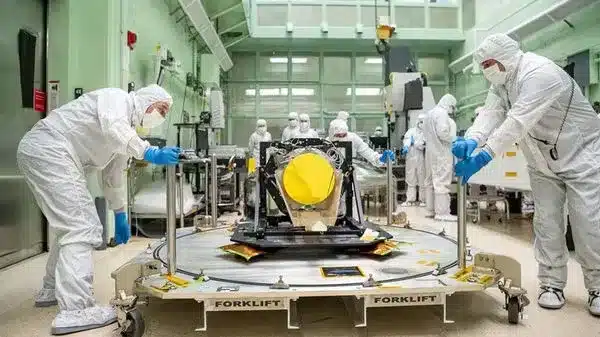
  • The Laser Interferometer Space Antenna (Lisa) mission is a collaborative effort between Nasa and the European Space Agency (ESA) set to launch in the mid-2030s.
  • The main objective of the mission is to detect and study gravitational waves by putting three spacecrafts into the Earth’s orbit and positioning them in a triangular format with 1.6 million miles on each side.
  • It will be the "first gravitational wave detector in space" and will "explore the fundamental nature of gravity and black holes". It will also probe the rate of expansion of the Universe.
    • All three spacecraft will have two telescopes each. The LISA mission will use lasers to detect gravitational waves.
    • The LISA mission will comprise three spacecraft. These three spacecraft will fly in a triangular formation behind the Earth as our planet orbits the Sun.
    • The spacecraft will sit in a heliocentric orbit, about 50 million km from Earth, with a distance of around 2.5 million km between each spacecraft.
    • LISA will detect ripples in spacetime through subtle changes in the distances between free-floating cubes nestled within each spacecraft.
    • Changes in the relative distances between these golden cubes will be tracked with extreme accuracy using laser interferometry.

Q1: What are Gravitational waves?

Gravitational waves are distortions in spacetime caused by energetic events involving dense objects with strong gravitational fields. They were first predicted by Albert Einstein's theory of general relativity. They are weak and interact minimally with matter, allowing them to penetrate cosmic distances undistorted and leaving pristine signatures on source dynamics and local spacetime structure.

News: Nasa reveals first look at six telescopes tasked with detecting gravitational waves

What is a Payment Aggregator?

What is a Payment Aggregator?

About Payment Aggregator (PA):

  • A PA (also known as a merchant aggregator) is a third-party service provider that allows merchants to accept payments from customers by integrating it into their websites or apps.
  • PAs enable their clients to accept various payment methods such as debit cards, credit cards, cardless EMIs, UPI, bank transfers, e-wallets, and e-mandates.
  • PA provides a stack of multiple payment methods to merchants so that their customers can payusing their preferred mode of payment.
  • Also, a payment aggregator does fund settlement, i.e., it moves the money from banks and other issuing entities to the merchants.
  • Similarly, they also enable disbursing payments to various stakeholders, such as partners, employees, suppliers, and authorities.
  • It allows merchants to accept bank transfers without setting up a bank-based merchant account. It means a merchant need not have a merchant account directly with the bank.
  • A PA in India is incorporated under the Companies Act 2013.
  • A PA can be a bank or a non-bank entity.
  • Since a PA handles funds, it requires a license from the RBI
  • Only non-bank PAs require unique authorization from RBI as ‘handling funds’ is considered a part of the normal banking relationships for bank PAs.
  • Examples: Amazon (Pay) India, Google India, Razorpay, Pine Labs, etc.

What is a Payment Gateway?

  • It is a software service that connects your bank account to the platform where you need to transfer your money.
  • It authorizes you to conduct an online transaction through different payment modes like net banking, credit card, debit card, UPI, or other online wallets.
  • A Payment gateway plays the role of a third party that securely transfers your money from the bank account to the merchant’s payment portal.

Payment Aggregator v/s Payment Gateway:

  • A payment gateway is a software that allows online transactions to take place, while a payment aggregator is the inclusion of all these payment gateways.
  • While a payment gateway is an intermediary, the payment aggregator is the interface where the payment gateway processes the transactions. 

Most payment aggregators own payment gateways to offer various exclusive services to their merchant customers.


Q1: What Is a Merchant Account?

A merchant account is a business bank account created and used for business purposes where companies can make and accept payments. For example, a Merchant account enables a business to accept credit or debit card payments and facilitate payment deposits through multiple other payment methods. Merchant accounts require a business to partner with an acquiring bank or a merchant account provider that facilitates an electronic payment transaction.

Source: RBI’s latest recommendations to regulate payment aggregators in offline spaces | Explained

Enquire Now