Sirkeer Malkoha

Sirkeer Malkoha

Sirkeer Malkoha Latest News

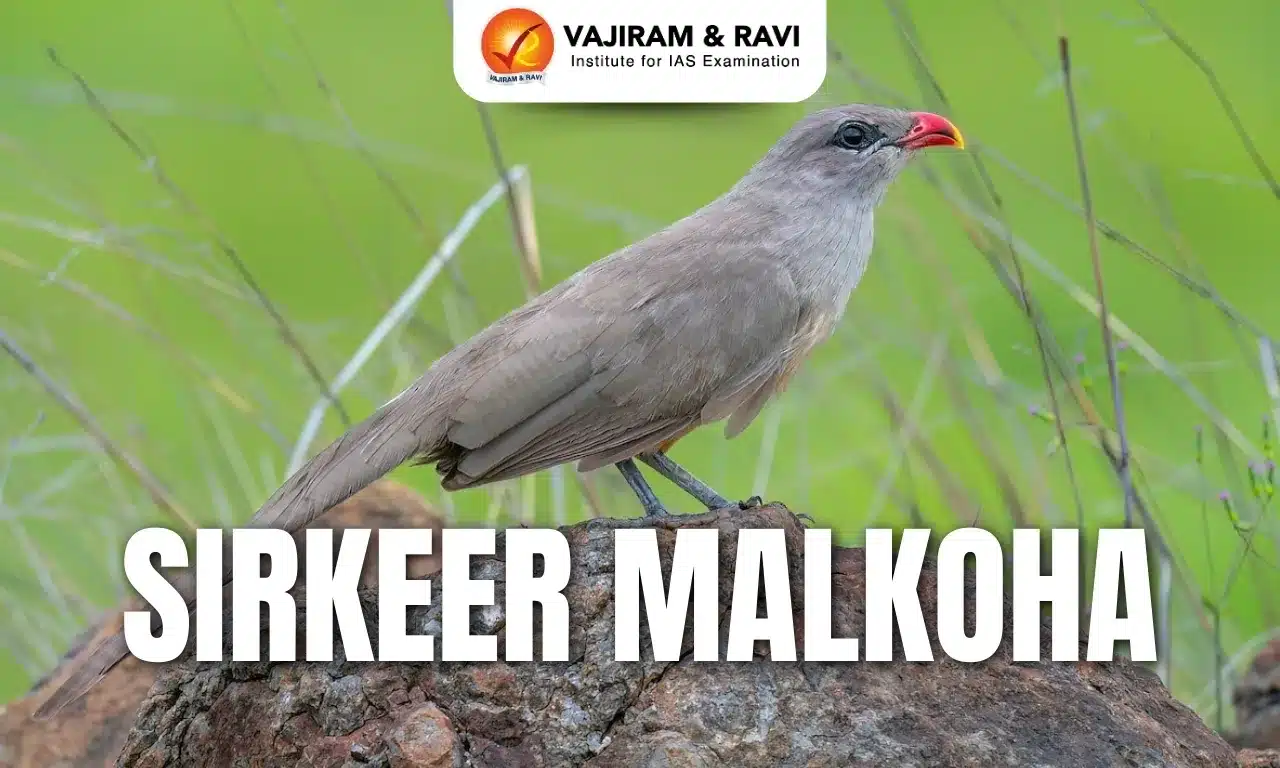
The rare Sirkeer Malkoha (Taccocua leschenaultii), a bird species typically found in Uttarakhand's plains, has been recently recorded for the first time in the Uttarkashi district.

About Sirkeer Malkoha

  • The sirkeer malkoha, or sirkeer cuckoo, is a special type of cuckoo bird.
  • Scientific Name: Taccocua leschenaultii
  • Unlike some cuckoos, it does not lay its eggs in other birds' nests.
  • Distribution: This species is widespread across the sub-Himalayan Indian subcontinent, extending into Bangladesh, Sri Lanka, and, more patchily, into Pakistan and Rajasthan.
  • Habitat: It is typically found in scrub and thin forest habitats, often favoring hilly terrain but generally residing below an altitude of about 1500 meters above sea level.

Features of Sirkeer Malkoha

  • It is about 42–44 centimetres long.
  • It is notable for its long tail and the rich olive-brown plumage adorning its upper side.
  • The underparts are typically a lighter shade, sometimes with a yellowish tinge.
  • It has a unique curved red beak with a yellow tip.
  • Its legs are grey.
  • These birds are very quiet, and male and female sirkeer malkohas look exactly alike.
  • These birds have special feet called zygodactyle feet. This means two toes point forward and two point backward. This helps them grip branches and move on the ground.
  • They eat small lizards, insects, and sometimes berries and seeds.
  • Conservation Status: IUCN Red List: Least Concern

Source: TOI

Sirkeer Malkoha FAQs

Q1: What is the primary habitat of the Sirkeer Malkoha?

Ans: Dry scrub forest and open woodland

Q2: What is distinctive about the Sirkeer Malkoha's beak?

Ans: It's curved red with a yellow tip

Q3: What is the Sirkeer Malkoha's primary food source?

Ans: Insects and small lizards

Q4: How does the Sirkeer Malkoha typically forage for food?

Ans: On the ground or in bushes

Q5: What is unique about the Sirkeer Malkoha's breeding habits?

Ans: It builds its own nest

Close Quarter Battle (CQB) Carbine

Close Quarter Battle (CQB) Carbine

Close Quarter Battle (CQB) Carbine Latest News

The Ministry of Defence recently signed defence procurement contracts worth ₹4,666 crore for the acquisition of Close Quarter Battle (CQB) Carbines for the Indian Army and Navy and Heavyweight Torpedoes for the Indian Navy.

 About Close Quarter Battle (CQB) Carbine

  • The 5.56 x 45 mm CQB Carbine is an indigenously designed, developed, and manufactured (IDDM) compact firearm.
  • It has been designed by DRDO’s Armament Research & Development Establishment (ARDE), Pune, and is being manufactured by Bharat Forge Ltd (a Pune based Indian multinational).
  • CQB carbines are compact, lightweight weapons designed specifically for urban warfare, close-range engagements and counter-terrorism operations.
  • Their reduced size compared to standard rifles offers enhanced manoeuvrability in confined spaces whilst maintaining operational effectiveness.
  • It weighs approximately 3.3 kilograms and has an effective range of 200 meters.
  • The weapon also uses a 30-round curved magazine to ensure reliable feeding during rapid fire.
  • It can fire both NATO-standard and INSAS ammunition.

Source: TH

Close Quarter Battle (CQB) Carbine FAQs

Q1: What is the primary use of a CQB Carbine?

Ans: Close quarter combat

Q2: What is a key feature of a CQB Carbine?

Ans: Short barrel and compact design

Q3: What is the primary advantage of a CQB Carbine?

Ans: Maneuverability in tight spaces

Copper

Copper

Copper Latest News

Recently, copper prices recorded a fresh all-time high in December, with the benchmark price climbing to over $12,000 per tonne on the London Metal Exchange (LME). 

About Copper

  • Copper is a naturally occurring chemical element with the symbol Cu.
  • It is a highly versatile and essential metal, and has been at the core of human development for over 10,000 years.
  • Occurrence: It is found as a free metal in nature. It also occurs in minerals like chalcocite, chalcopyrite, and bornite.

Properties of Copper

  • Physical Properties: It is known for its high conductivity, malleability, and corrosion resistance.
  • Recyclability: Copper is 100% recyclable without any loss in quality, making it an eco-friendly metal.

Major Copper Reserves in India and World

  • Rajasthan: Khetri and Jhunjhunu belt.
  • Madhya Pradesh: Malanjkhand mine, the largest open-pit copper mine in India.
  • Jharkhand: Singhbhum copper belt.
  • Major Countries with Copper Reserve: Chile, Australia, Peru and Russia

Applications of Copper

  • Electrical Industry: Used in wiring, motors, and transformers due to its high conductivity.
  • Construction: Roofing, plumbing, and heating systems utilize copper.
  • Automobile Industry: Essential for wiring, radiators, and connectors.
  • Electronics: It is used in integrated circuits and semiconductors rely heavily on copper.
  • Renewable Energy: It is crucial for wind turbines, solar panels, and electric vehicles.

Source: IE

Copper FAQs

Q1: What is the primary ore of copper?

Ans: Chalcopyrite

Q2: Which country is the largest producer of copper?

Ans: Chile

PathGennie

PathGennie

PathGennie Latest News

Recently, the Ministry of Science and Technology has developed new open-source software called PathGennie.

About PathGennie

  • It is a novel computational framework developed by scientists that can significantly accelerate the simulation of rare molecular events.
  • It is open source software developed for fast tracking of drug discovery.
  • It is aimed at fast-tracking the drug discovery process by accurately tracking molecular unbinding pathways.
  • It addresses a long-standing challenge in molecular simulations — accurately modelling how drug molecules detach from their target proteins.
    • This process, known as ligand unbinding, plays a key role in determining a drug’s “residence time”, which is often more relevant to therapeutic effectiveness than binding strength alone.
  • It predicts the potential drugs unbind from their protein targets without the artificial distortions commonly used in standard methods.
  • It mimics natural selection on a microscopic scale instead of forcing the molecule to move.

Features of PathGennie

  • It captures rare molecular events without artificial acceleration.
  • It generates multiple competitive unbinding pathways.
  • It estimates residence time of drug molecules.
  • It eliminates bias introduced by external force-based simulations

Potential Applications of PathGennie

  • It addresses problems such as chemical reactions, catalytic processes, phase transitions, or self-assembly phenomena.
  • It is also compatible with modern machine-learning techniques which ensures integration into diverse simulation pipelines.

Source: News On Air

PathGennie FAQs

Q1: Which institute developed PathGennie?

Ans: S. N. Bose National Centre for Basic Sciences

Q2: What is the primary application of PathGennie?

Ans: Simulating drug-protein interactions.

Oreshnik Missile

Oreshnik Missile

Oreshnik Missile Latest News

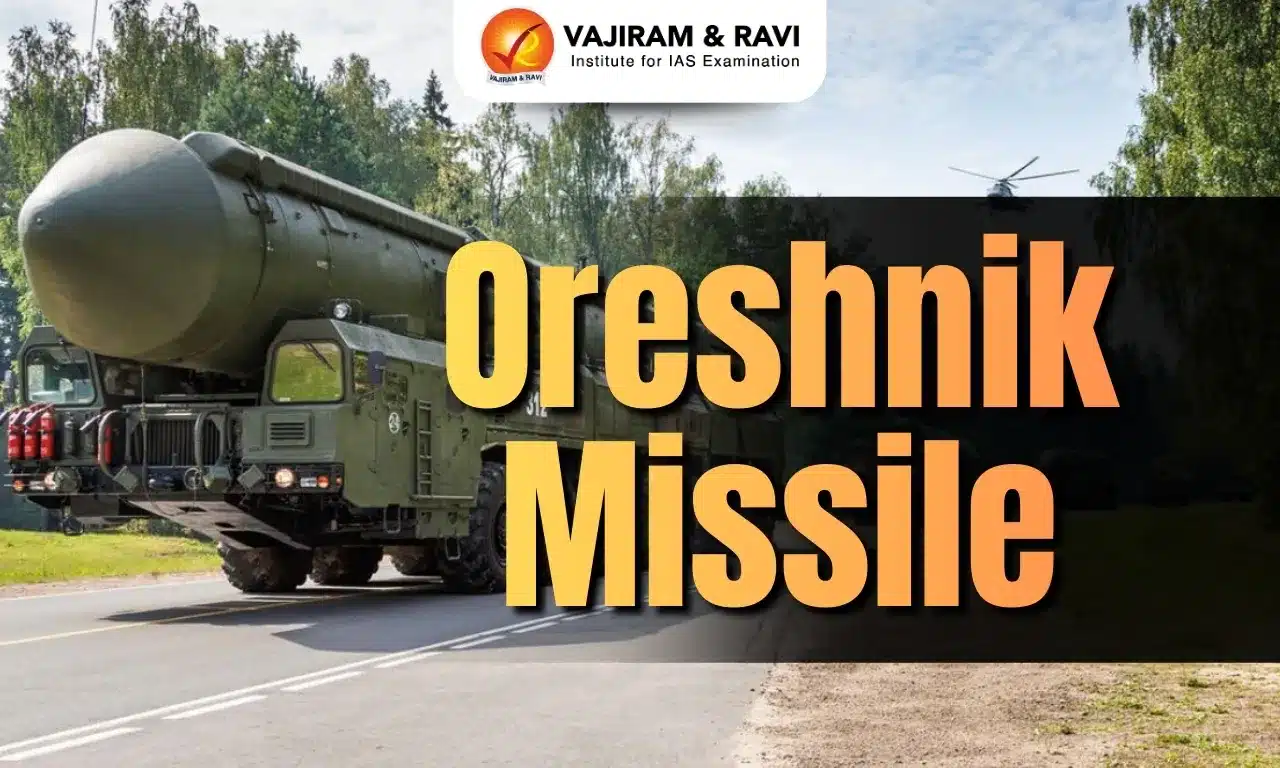
Russia recently announced that its nuclear-capable Oreshnik missiles have entered active service in Belarus, a neighbouring ally that shares borders with NATO members Poland, Lithuania, and Latvia.

About Oreshnik Missile

  • It is a Russian-made intermediate-range nuclear-capable ballistic missile.
  • It was first launched operationally on November 21, 2024, in a precision strike targeting the Pivdenmash defence-industrial facility in Dnipro, Ukraine.

Features of Oreshnik Missile

  • It is estimated to be 15 to 18.5 metres long, with a diameter of some 1.9 metres.
  • It is mounted on a mobile transporter and launcher for rapid deployment and concealment.
  • With a reported range of 5,000 kilometres (3,100 miles), the missile can strike targets across Europe and even reach the west coast of the United States.
  • Equipped with multiple independently targetable re-entry vehicles (MIRVs), the “Oreshnik” can carry six to eight warheads, conventional or nuclear, hitting multiple targets simultaneously.
  • It is a hypersonic missile, capable of reaching speeds up to Mach 10 (12,300 km/h or 7,610 mph).

Source: FP

Oreshnik Missile FAQs

Q1: What is the Oreshnik missile?

Ans: An intermediate-range ballistic missile

Q2: What is the range of the Oreshnik missile?

Ans: 2000-5000 km

Q3: What is unique about the Oreshnik missile's speed?

Ans: It travels at hypersonic speeds (Mach 10).

Nimesulide

Nimesulide

Nimesulide Latest News

The government recently prohibited the manufacturing, sale and distribution of all oral formulations containing Nimesulide above 100 mg with immediate effect.

About Nimesulide

  • First introduced in Italy in 1985, it is a non-steroidal anti-inflammatory drug (NSAID) used for its pain-relieving, anti-inflammatory, and fever-reducing effects.
  • It is commonly used to manage acute pain, musculoskeletal disorders, dental pain, and symptoms associated with conditions such as osteoarthritis and dysmenorrhea.
  • Nimesulide works by inhibiting the action of cyclooxygenase (COX), an enzyme responsible for the production of prostaglandins-chemicals that cause pain, inflammation, and fever.
  • By blocking this enzyme, Nimesulide reduces the levels of prostaglandins, thus providing relief from pain and inflammation.
  • By targeting the underlying inflammatory process rather than just masking the pain, Nimesulide helps relieve swelling, improves mobility and function in affected areas, and enhances overall comfort and quality of life.

Side Effects of Nimesulide

  • Long-term usage may harm the liver or result in significant side effects, including gastrointestinal bleeding or renal issues.
  • Apart from this, other side effects like sour stomach, dizziness, skin infection, diarrhoea, and increased liver enzymes might be observed in individuals.

Regulation of Nimesulide

  • From its early years, nimesulide attracted safety concerns and was never approved for use in countries including the United States, the UK, Canada, Australia, New Zealand, and Japan.
  • In 2008, the International Society of Drug Bulletins, a WHO-supported network, called for a global ban on nimesulide.
  • India banned the use of nimesulide in children below 12 years of age in 2011 but continued to allow its use in older patients. However, concerns have persisted.

Source: News On Air

Nimesulide FAQs

Q1: What is Nimesulide primarily used for?

Ans: Pain relief and inflammation

Q2: What type of drug is Nimesulide?

Ans: Anti-inflammatory and Analgesic

Q3: Nimesulide is a COX-2 inhibitor. What does this mean?

Ans: It selectively inhibits COX-2 enzyme.

Q4: Which organ is primarily affected by Nimesulide toxicity?

Ans: Liver

Bomb Cyclone

Bomb Cyclone

Bomb Cyclone Latest News

A powerful “bomb cyclone” barreled across the northern United States recently, triggering severe winter weather in the Midwest and the East Coast.

About Bomb Cyclone

  • It is a large midlatitude storm resulting from explosive cyclogenesis (or, informally, bombogenesis), a type of accelerated extratropical cyclone development in which surface pressure falls substantially over a 24-hour period.
  • In structure, a bomb cyclone is indistinguishable from any other intense midlatitude storm.
    • The center of the storm is a low-pressure cell (or cyclone) that draws winds near the surface inward.
  • However, a bomb cyclone is set apart by its rapid rate of intensification. The intensification required to classify as "bombogenesis" varies by latitude.
    • For example, at 60 degrees latitude, the requirement is 24 millibars in 24 hours.
    • Around 40 degrees latitude, a storm only has to intensify by 17.8 millibars in 24 hours.
  • Bomb cyclones are often associated with atmospheric rivers and typically form in winter when cold and warm air masses collide.
  • The four most active regions where extra-tropical explosive cyclogenesis occurs in the world are
    • the Northwest Pacific,
    • the North Atlantic,
    • the Southwest Pacific, and
    • the South Atlantic
  • The precipitation associated with a bomb cyclone is intense, ranging from heavy downpours to strong thunderstorms to blizzards and heavy snowfalls, along with strong winds.

Source: IE

Bomb Cyclone FAQs

Q1: What causes Bombogenesis?

Ans: Collision of cold and warm air masses

Q2: What is a Bomb Cyclone?

Ans: A rapidly intensifying storm with a pressure drop of 24 millibars in 24 hours.

Q3: What drives the strong winds in a Bomb Cyclone?

Ans: Pressure gradients

Pralay Missile

Pralay Missile

Pralay Missile Latest News

Recently, the Defence Research & Development Organisation (DRDO) carried out a salvo launch of two indigenous Pralay missiles.

About Pralay Missile

  • It is an indigenously developed short-range, surface-to-surface missile.

Features of Pralay Missile

  • It is a solid propellant quasi-ballistic missile.
  • The missile is capable of carrying multiple types of warheads against various targets.
  • Range: The missile has a range of 150-500 km and can be launched from a mobile launcher.
  • Payload capacity: It has a payload capacity of 500-1,000 kg.
  • The missile is capable of carrying conventional warheads.
  • It is equipped with guidance systems that provide a Circular Error Probable (CEP) of less than 10 meters.
  • Speed: It reaches terminal speeds of Mach 6.1 and can engage targets such as radar installations, command centers, and airstrips.
  • It has the ability to change its path after covering a certain range midair.
  • Developed by:  It has been developed by Research Centre Imarat and in collaboration with other Defence Research & Development Organisation labs.
  • Industry partners: Bharat Dynamics Limited & Bharat Electronics Limited and many other industries and MSMEs.

Source: TH

Pralay Missile FAQs

Q1: What is the range of the Pralay missile?

Ans: 150-500 km

Q2: What type of missile is Pralay?

Ans: Quasi-ballistic missile

Stingless Bees

Stingless Bees_

Stingless Bees Latest News

Amazonian stingless bees have become the first insect in the world to be granted legal rights, after two municipalities — Satipo and Nauta — in Peru passed an ordinance earlier this month.

About Stingless Bees

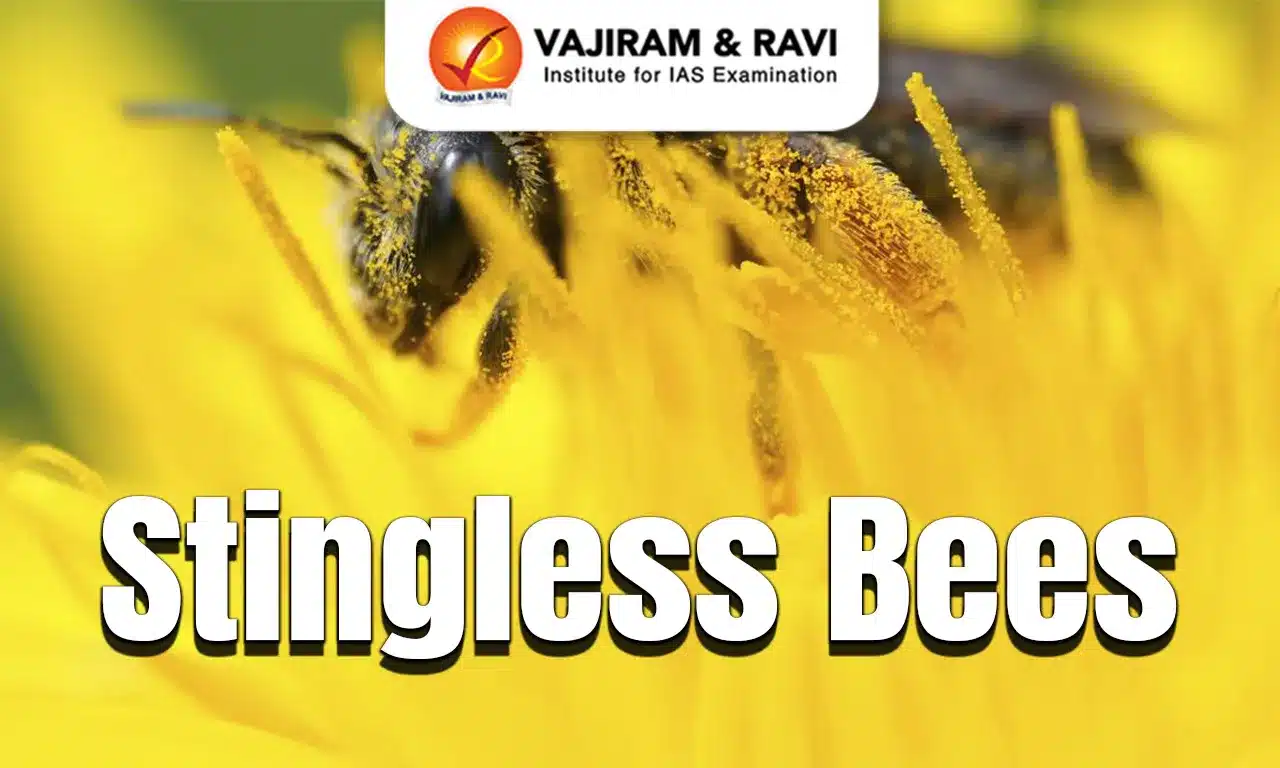
  • Stingless Bees are a class of bees which either do not have stingers or have stingers that cannot cause much pain.
  • Common genera of stingless bees: Austroplebeia, Melipona, and Tetragonula
  • They do possess stingers, but they are too small to be useful in defense. Instead of stinging, stingless bees use their mandibles to bite their attackers.
  • Stingless bees are among the planet’s oldest pollinators, with a remarkable concentration of species in the Amazon rainforest.
  • Distribution: They are found in tropical regions across the world, and about half of the 500 known species live in the Amazon.
    • Africa, Australia, Southeast Asia, and parts of the Americas are the main areas where the stingless bee is found. 
    • In India, these bees are reported primarily from the northeastern, eastern, and southern Indian States.
  • Benefits: Stingless bees can be used for pollination without fear of being stung. They are known for their popular medicinal honey and pollination potential.
  • Threats: Deforestation has reduced nesting sites, while pesticide use, climate change and competition from invasive honeybees have further weakened populations.

Source: IE

Stingless Bees FAQs

Q1: Where are Stingless Bees primarily found?

Ans: Tropical regions of the world

Q2: What is the primary role of Stingless Bees in ecosystems?

Ans: Pollination

Enquire Now