National IED Data Management System (NIDMS)

National IED Data Management System (NIDMS)

National IED Data Management System (NIDMS) Latest News

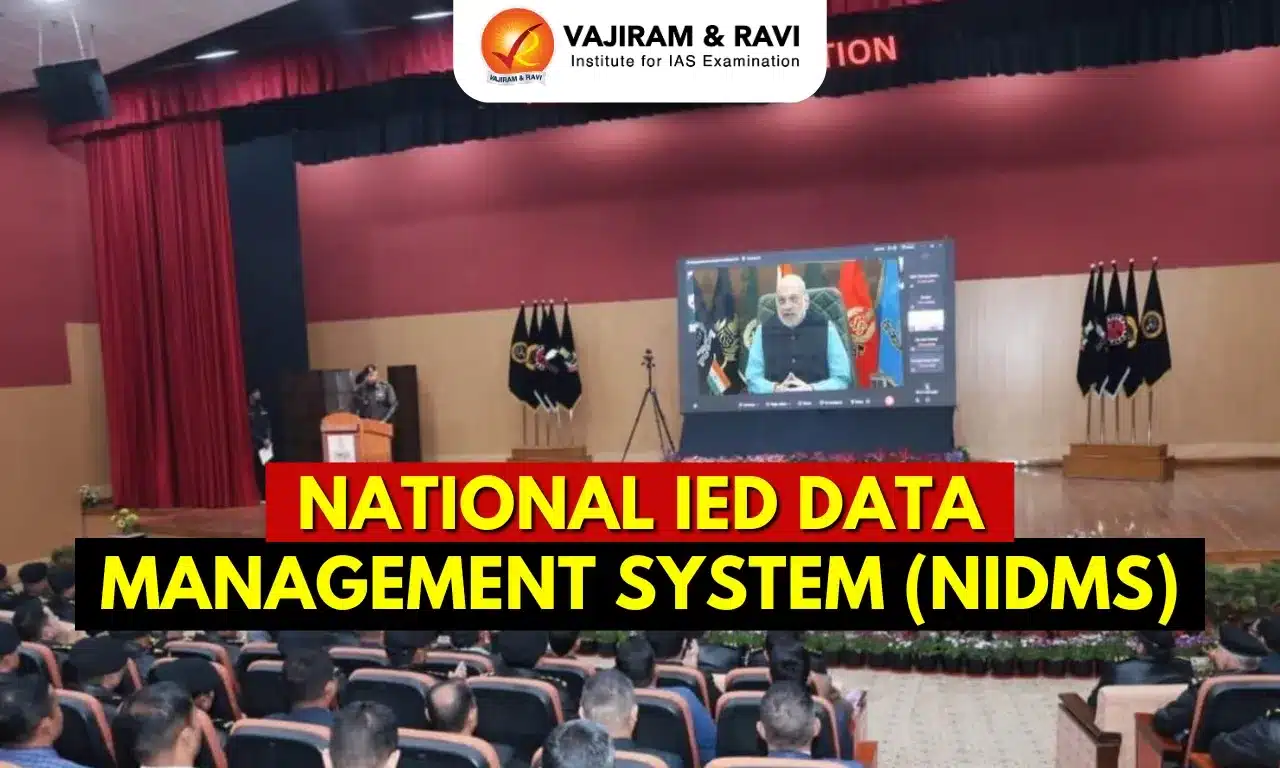
The Home and Cooperation Minister recently launched the National IED Data Management System (NIDMS), marking a significant step towards strengthening the country’s counter-IED and internal security architecture.

About National IED Data Management System (NIDMS)

  • It is a national-level digital platform developed by the National Security Guard’s (NSG) National Bomb Data Centre.
  • It will enable systematic data collection and analysis related to Improvised Explosive Devices (IEDs), enhancing the investigation process of terrorist incidents in the country. 
  • It will function as a two-way, integrated online platform accessible to the National Investigation Agency (NIA), Anti-Terrorism Squads, state police forces and all Central Armed Police Forces. 
  • Data related to any explosion or IED incident across the country can be uploaded and analysed to support investigations.
  • The platform will play a crucial role in "supporting post-blast investigations and enhancing coordination among various security and law enforcement agencies across the country.
  • NSG has maintained a comprehensive database of bomb explosions since 1999, which will now be made available to law enforcement agencies nationwide through NIDMS. 
  • The system will help analyse patterns of attacks, modus operandi and types of explosives used, and assist in establishing linkages between incidents.
  • This platform will strengthen the process of collecting, standardizing, integrating, and securely sharing IED-related data.

Source: NOA

National IED Data Management System (NIDMS) FAQs

Q1: What is the National IED Data Management System (NIDMS)?

Ans: It is a national-level digital platform for managing data related to Improvised Explosive Devices (IEDs).

Q2: Which organization developed the National IED Data Management System (NIDMS)?

Ans: It was developed by the National Security Guard’s (NSG) National Bomb Data Centre.

Q3: What is the main purpose of National IED Data Management System (NIDMS)?

Ans: To enable systematic collection and analysis of IED-related data to enhance investigation of terrorist incidents.

Q4: What kind of analysis can National IED Data Management System (NIDMS) perform on IED incidents?

Ans: Analysis of attack patterns, modus operandi, and types of explosives used.
Two New Frog Species

Two New Frog Species

Two New Frog Species Latest News

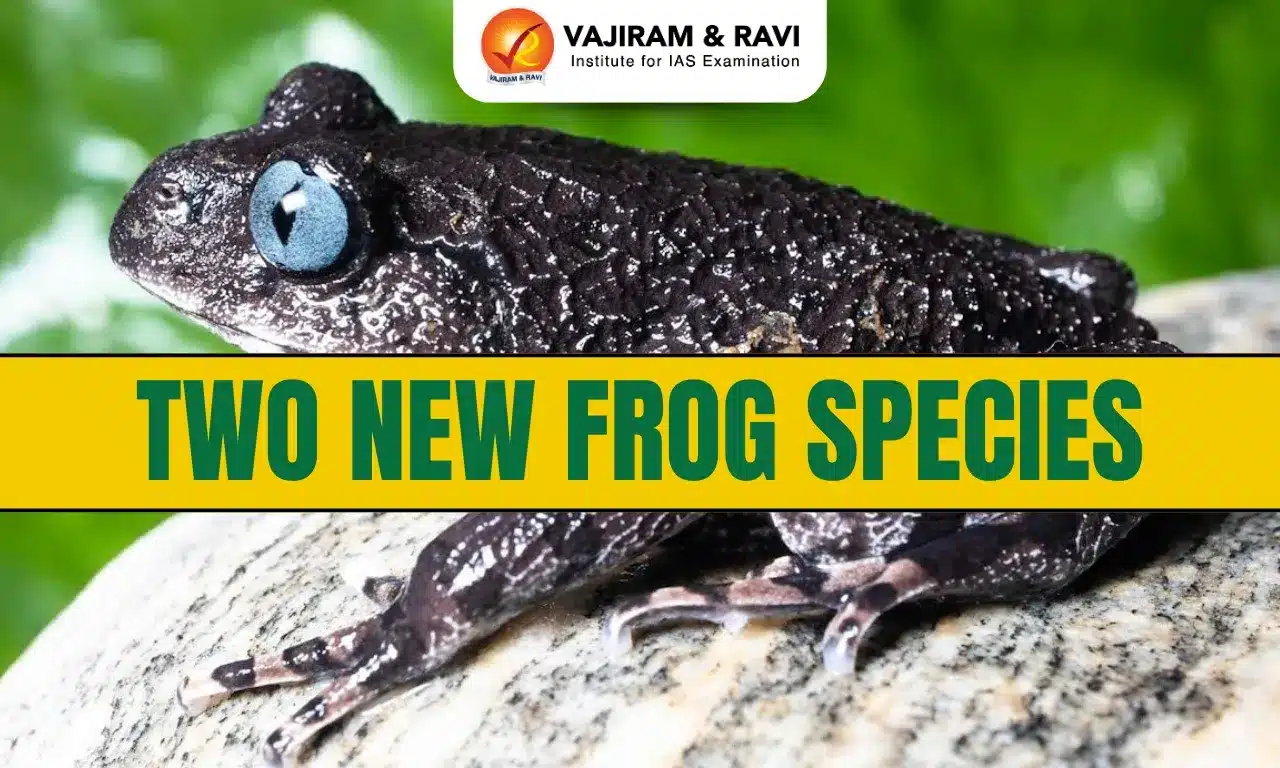
A team of scientists led by ‘Frogman of India’ S. D. Biju recently discovered two new frog species named Soman’s Slender Arm Frog (Leptobrachium somani) and Mechuka Slender Arm Frog (Leptobrachium mechuka) from the remote mountain habitats of Arunachal Pradesh.

About Soman’s Slender Arm Frog (Leptobrachium somani)

  • It is a new slender-armed frog species.
  • It was discovered at Tiwarigaon in Arunachal Pradesh.
  • It has been named in honour of the late journalist E. Somanath, recognising his lifelong commitment to environmental journalism.
  • This small frog measures about 55 mm in length. 
  • It has a greyish-brown body with irregular light-grey markings and distinctive silver-grey to light-blue eyes. 
  • An evergreen forest species, males are typically found calling from the banks of fast- or slow-flowing streams. 

About Mechuka Slender Arm Frog (Leptobrachium mechuka)

  • It is a new slender-armed frog species.
  • It is named after Mechuka, the town in Arunachal Pradesh where it was first collected. 
  • Measuring about 60 mm, this species occurs in evergreen forests and adjoining grasslands.
  • It has a uniformly brown body with a reddish tinge and striking silvery-white eyes.

Source: NIE

Two New Frog Species FAQs

Q1: Where was Soman’s Slender Arm Frog discovered?

Ans: It was discovered at Tiwarigaon in Arunachal Pradesh.

Q2: What is the body coloration of Soman’s Slender Arm Frog?

Ans: It has a greyish-brown body with irregular light-grey markings.

Q3: What is Mechuka Slender Arm Frog (Leptobrachium mechuka)?

Ans: What is the body coloration of Mechuka Slender Arm Frog?

United Nations Department of Economic and Social Affairs (UN DESA)

United Nations Department of Economic and Social Affairs (UN DESA)

United Nations Department of Economic and Social Affairs (UN DESA) Latest News

India is expected to grow by 7.4 per cent in the current financial year, driven by consumption and public investment, the United Nations Department of Economic and Social Affairs (UNDESA) said in a report recently.

About United Nations Department of Economic and Social Affairs (UN DESA)

  • Rooted in the United Nations Charter and guided by the transformative 2030 Agenda for Sustainable Development, the UN DESA upholds the development pillar of the United Nations.
  • It is based at UN Headquarters in New York, United States.
  • Its Divisions and Offices work together towards a common goal to promote the social, economic, and environmental dimensions of sustainable development.
  • Its work addresses a range of cross-cutting issues that affect peoples’ lives and livelihoods. 
  • From poverty reduction to governance to finance to the environment, UN DESA’s work is about human progress for all, especially the most vulnerable.
  • UN DESA’s work programme can be categorized into three areas: norm-setting, analysis, and capacity-building.
  • What is UN DESA doing?
    • Facilitates the negotiations of Members States in many intergovernmental bodies to address ongoing or emerging global challenges;
    • Provides substantive support to intergovernmental processes on development issues in the General Assembly and the Economic and Social Council;
    • Advises interested Governments on the ways and means of translating policy frameworks developed in the UN conferences and summits into programmes at the country level;
    • Collaborate closely with its partners at regional and country levels in helping countries to formulate and implement development strategies;
    • Compiles, generates, and analyses a wide range of economic, social, and environmental data and information on which member states of the United Nations draw.
  • Reports Published by UN DESA:
    • World Economic Situation and Prospects Report
    • World Social Report
    • Sustainable Development Goals Report

Source: NOA

United Nations Department of Economic and Social Affairs (UN DESA) FAQs

Q1: What does UN DESA stand for?

Ans: United Nations Department of Economic and Social Affairs.

Q2: Where is the United Nations Department of Economic and Social Affairs (UN DESA) based at?

Ans: At the United Nations Headquarters in New York, United States.

Q3: What is the common goal of United Nations Department of Economic and Social Affairs (UN DESA) divisions and offices?

Ans: To promote the social, economic, and environmental dimensions of sustainable development.

Grey Slender Loris

Grey Slender Loris

Grey Slender Loris Latest News

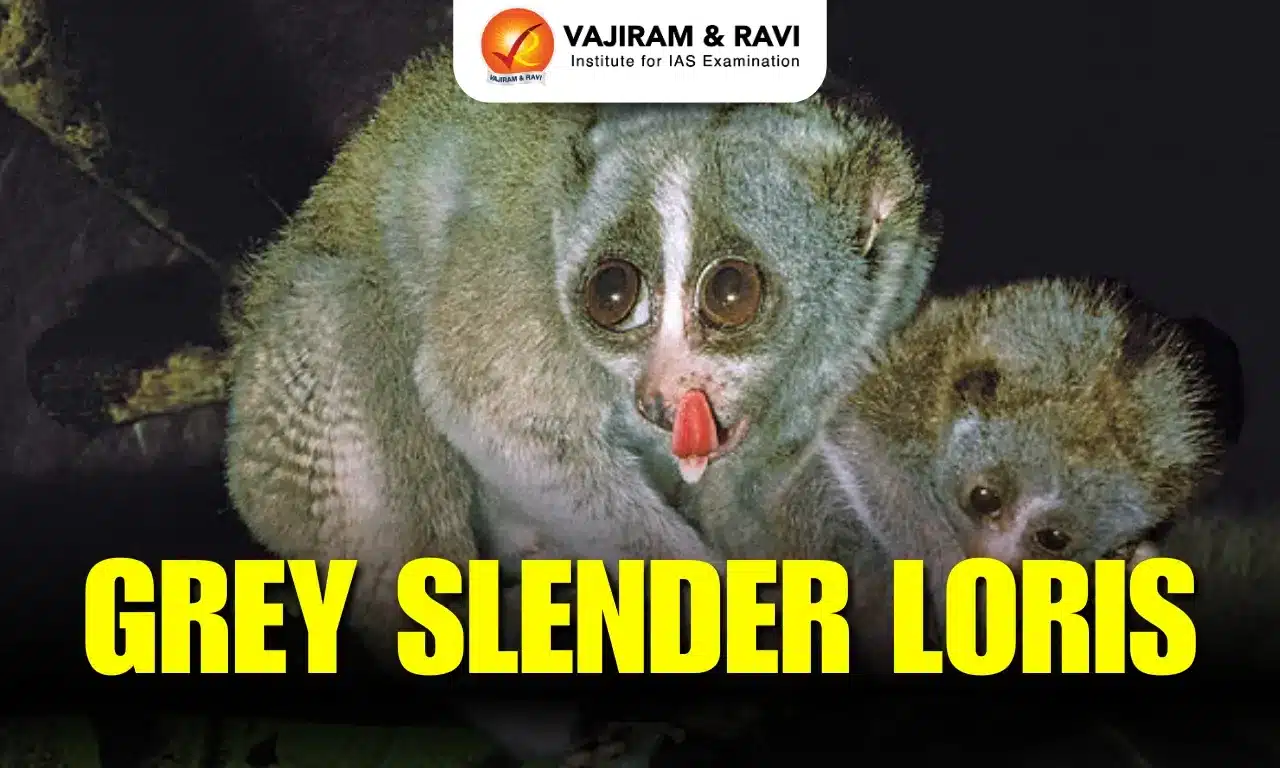
Recently, Kerala and Tamil Nadu have begun efforts to restore habitats and strengthen monitoring of the grey slender loris.

About Grey Slender Loris

  • The gray slender loris (Loris lydekkerianus ) is a species of primate in the family Loridae.
  • They are prosimians—which means they are part of the oldest and most primitive group of primates
  • Habitat: It is found in tropical primary and secondary rainforests, dry semi-deciduous forests, scrub, swamp, acacia, bamboo, edge, and montane cloud forest.
  • Distribution: It is mainly found in southern India (mainly in Karnataka, Kerala and Tamil Nadu) and Sri Lanka.

Characteristics of Grey Slender Loris

  • It is a nocturnal hunter.
  • It has no tail, its flexible spine and long limbs help it cross the canopy with agility.
  • It has opposable thumbs which allow it to cling motionless for long periods.
  • It has large, forward-facing eyes with extraordinary night vision.
  • Communication: Gray slender lorises communicate using vocalizations and scent marking.
  • Diet: It is almost entirely insectivorous, and more than half of its diet is composed of ants and termites. 
  • Threats: Illegal pet trade, hunting for body parts and roadside captures.

Conservation Status of Grey Slender Loris

  • IUCN Red List: Near threatened
  • CITES: Appendix II
  • Wildlife Protection Act, 1972: Schedule I

Source: DTE

Grey Slender Loris FAQs

Q1: What is the primary habitat of the Grey Slender Loris?

Ans: Tropical forests and scrublands

Q2: What is the conservation status of the Grey Slender Loris?

Ans: Near threatened

Ratapani Tiger Reserve

Ratapani Tiger Reserve

Ratapani Tiger Reserve Latest News

Madhya Pradesh Chief Minister recently announced that the newly designated Ratapani Tiger Reserve will be named after the renowned archaeologist and Padma Shri awardee Dr Vishnu Shridhar Wakankar.

About Ratapani Tiger Reserve

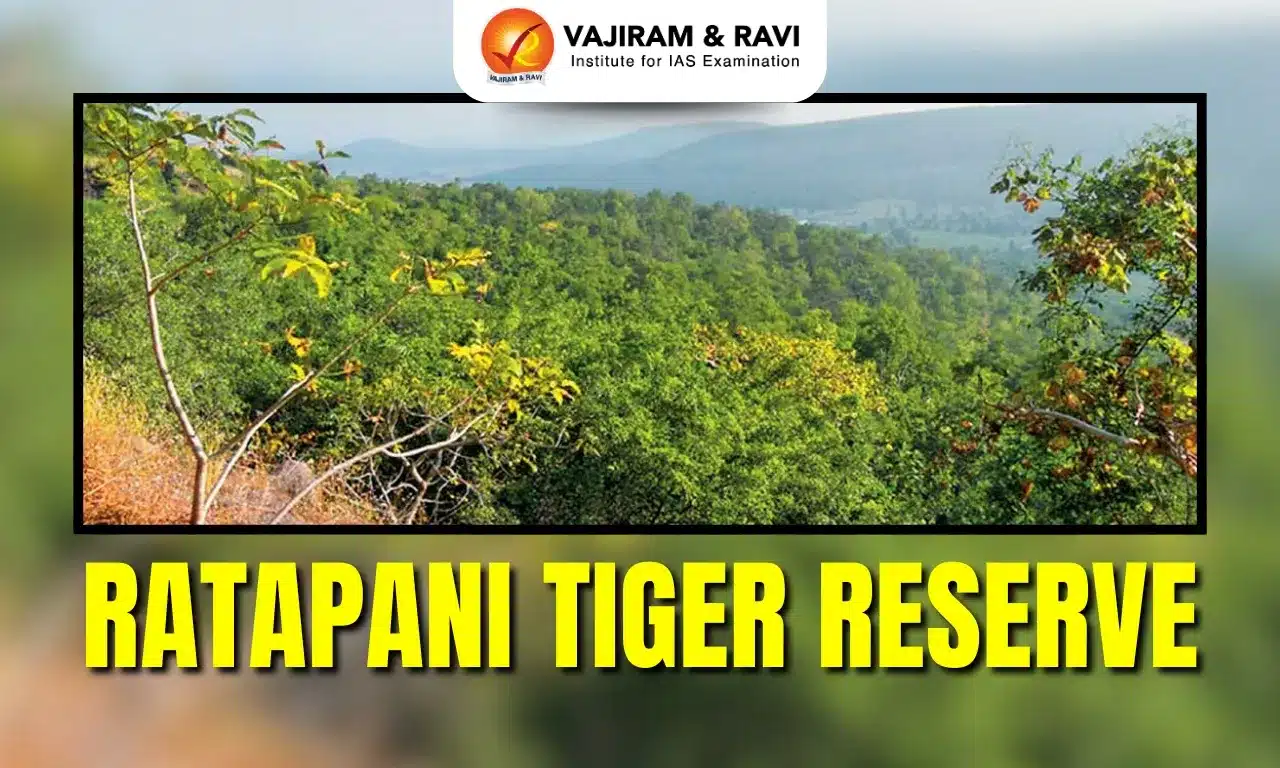
  • It is situated in the Raisen and Sehore districts of Madhya Pradesh.
  • This forest is spread over hills of the Vindhya ranges.
  • It is spread over an area of 1,271 sq.km.
  • It runs parallel on the northern side of the Narmada River. The Kolar River forms the western boundary of the reserve. 
  • Two large reservoirs, namely Barna Reservoir and Ratapani Dam (Barrusot Lake) are among the major water bodies adjacent to or inside the reserve.
  • The landscape is undulating, with hills, plateaus, valleys, and plains. 
  • The reserve has Bhimbetka, a group of rock shelters and rock paintings, which is one of the ” World Heritage Sites ” declared by UNESCO.
  • It also encompasses many other historical and religious destinations like Ginnourgarh Fort, POW camp, Keri Mahadeo, Ratapani Dam, Jholiyapur Dam, etc.
  • Flora: The forest of Ratapani is a dry deciduous and moist deciduous type, with teak (Tectona grandis) as the main tree species. About 55% of the area is covered by teak.
  • Fauna
    • The regal striped cat is the apex predator, and estimates suggest that 40 tigers roam these forests. 
    • Chinkara, an endangered species, is also found in the reserve.
    • It is also home to animals like the Panther, Hyena, Jackal, Indian Fox, Wild Dog, Jungle Cat, Small Indian Civet, Blue Bull, Chinkara, Black Buck, Chausingha, Spotted Deer, Barking Deer, etc.

Source: HANS

Ratapani Tiger Reserve FAQs

Q1: Where is Ratapani Tiger Reserve located?

Ans: It is located in the Raisen and Sehore districts of Madhya Pradesh.

Q2: Which mountain range does Ratapani Tiger Reserve lie in?

Ans: It lies in the hills of the Vindhya ranges.

Q3: Along which major river does Ratapani Tiger Reserve run parallel?

Ans: It runs parallel to the northern side of the Narmada River.

Q4: Which river forms the western boundary of Ratapani Tiger Reserve?

Ans: The Kolar River forms the western boundary.

Q5: Which UNESCO World Heritage Site is located within Ratapani Tiger Reserve?

Ans: Bhimbetka rock shelters and rock paintings.

Creator’s Corner Platform

Creator's Corner Platform

Creator's Corner Platform Latest News

Recently, Prasar Bharati launched ‘Creator’s Corner’ on DD News to empower digital creators nationwide.

About Creator's Corner Platform

  • It was launched by the Prasar Bharati.
  • It is a dedicated platform for showcasing content created by digital creators from across the country on DD News.
  • Aim: To promote the digital economy by encouraging the creation of quality content and expanding its reach through a partnership between Prasar Bharati and individual content creators.
  • It will feature content on a wide range of themes including;
    • News and Current Affairs, Culture, Travel, Cuisine, Art and Literature, Music and Dance, Health and Wellness, Education, Science and Technology, inspiring stories, Environment and Sustainable Development, and Entertainment
  • The programme will be telecasted from Monday to Friday on DD News.
  • This initiative would operate on a revenue-sharing model with 90 per cent of the revenue generated from the programming to be given to content creators, with Prasar Bharti retaining 10 per cent.
  • Significance: This initiative represents a mutually beneficial partnership, providing digital creators a credible platform and the extensive reach of Prasar Bharati/DD News to showcase their work.

Key Facts about Prasar Bharati

  • It is the Public Service Broadcaster of the country.
  • It is a statutory autonomous body established in 1997 under the Prasar Bharati Act.
  • Objective: To conduct public broadcasting services intended to inform and entertain the public.
  • It comprises the Doordarshan Television Network and All India Radio, which were earlier media units of the Ministry of Information and Broadcasting.
  • Headquarter: New Delhi

 Source: PIB

Creator's Corner Platform FAQs

Q1: What is the main objective of Creator's Corner Platform?

Ans: To boost the creator's economy and provide a platform for digital creators

Q2: Who launched the Creator's Corner Platform?

Ans: Prasar Bharati

PANKHUDI Portal

PANKHUDI Portal

PANKHUDI Portal Latest News

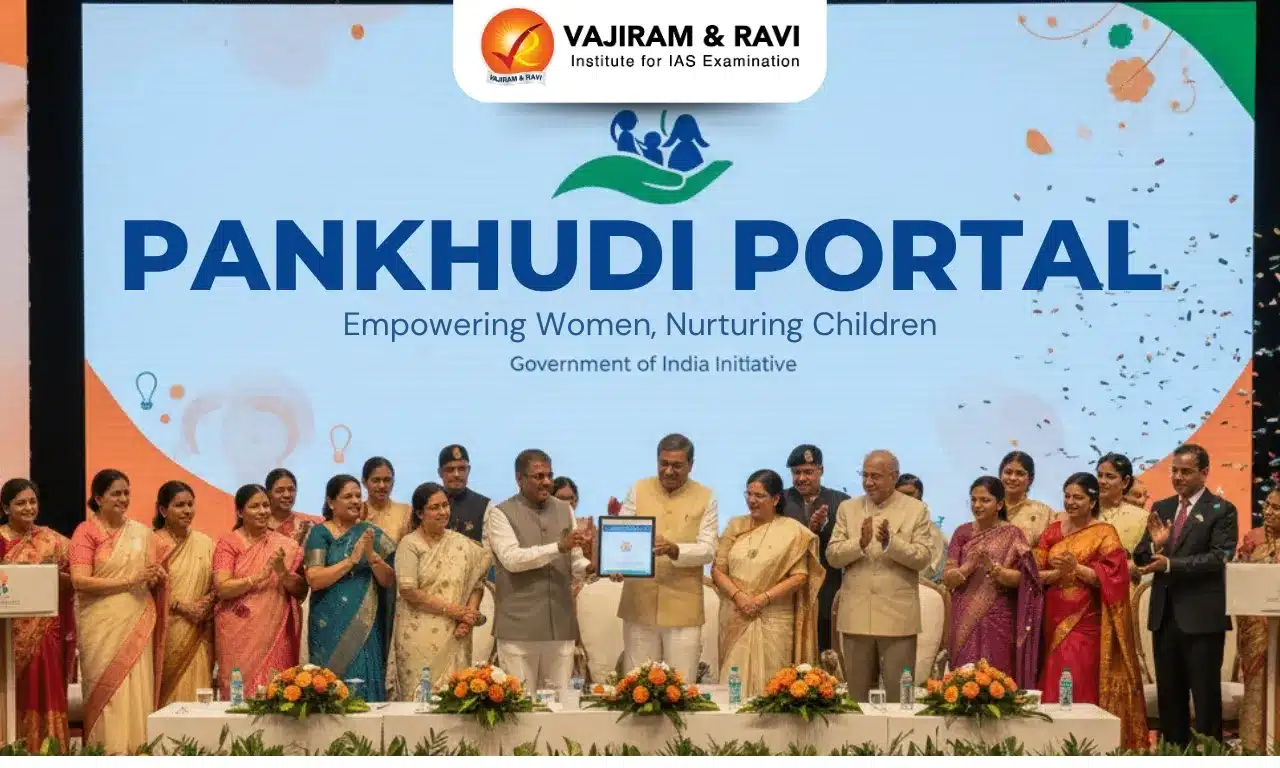
Recently, the Ministry of Women and Child Development launched the PANKHUDI portal.

About PANKHUDI Portal

  • It is launched by the Ministry of Women and Child Development.
  • It is an integrated Corporate Social Responsibility (CSR) and partnership facilitation digital portal.
  • Aim: It is aimed at strengthening coordination, transparency, and structured stakeholder participation in initiatives for women and child development.

Key Features of PANKHUDI Portal

  • Single-window digital platform: It works as a single-window digital platform, Non-Resident Indians (NRIs), Non-Governmental Organisations (NGOs), Corporate Social Responsibility (CSR) contributors, corporate entities, and government agencies.
  • Key Thematic Areas: Nutrition, health, Early Childhood Care and Education (ECCE), child welfare, protection and rehabilitation, and women’s safety and empowerment.
  • Supports Flagship Missions: It supports and strengthens the implementation of flagship missions—Mission Saksham Anganwadi & Poshan 2.0, Mission Vatsalya, and Mission Shakti.
  • Transparency: Contributors register on the portal, identify initiatives, submit proposals, and track the status of their contributions through clearly defined approval workflows.
  • Non- Cash Financial Transactions: All contributions through the portal are accepted only through non-cash modes.
  • Significance: It marks a significant step towards leveraging digital solutions for inclusive, collaborative, and outcome-oriented development of women and children across India.

Source: PIB

PANKHUDI Portal FAQs

Q1: What is PANKHUDI Portal primarily related to?

Ans: Women and Child Development

Q2: Who launched the PANKHUDI Portal?

Ans: Ministry of Women and Child Development

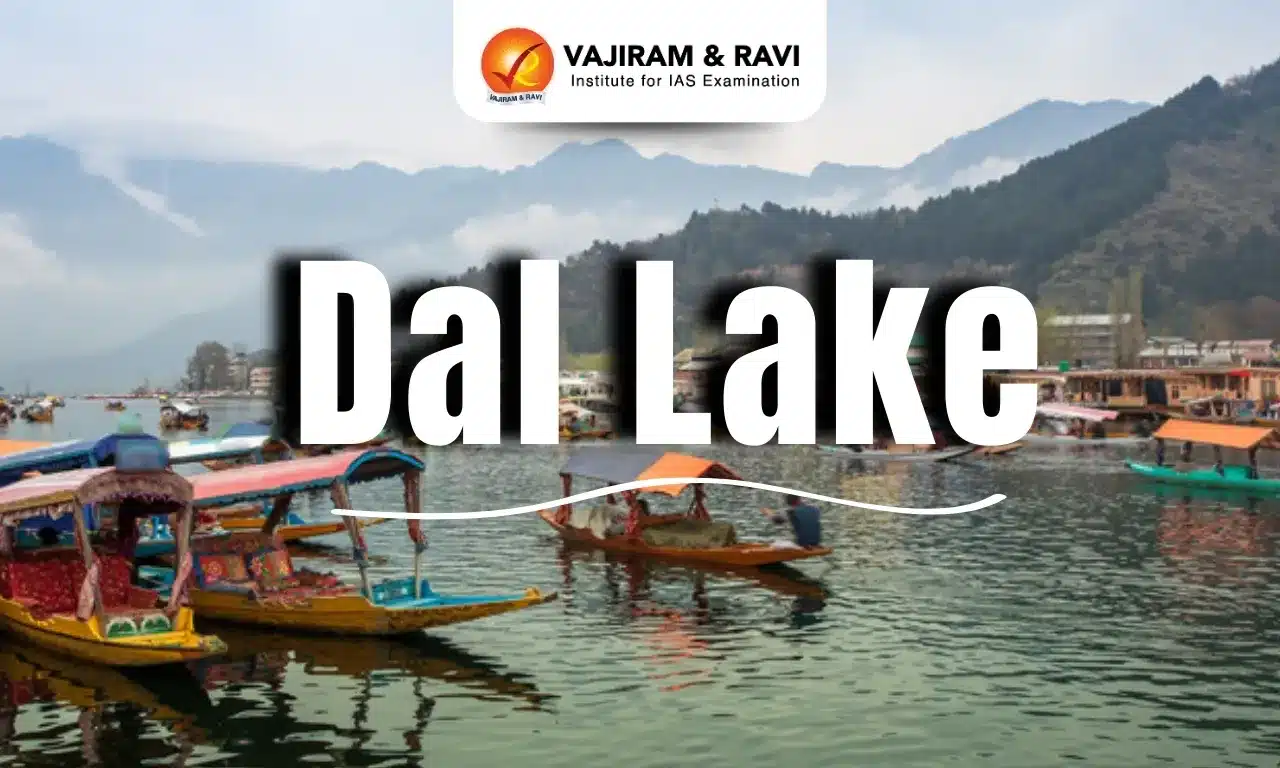
Dal Lake

Dal Lake

Dal Lake Latest News

Parts of the Dal Lake in Srinagar froze recently as the city recorded its coldest night of the winter, with temperatures plunging well below the freezing point across the Kashmir Valley.

About Dal Lake

  • It is a mid-altitude urban freshwater lake located in Srinagar, Jammu and Kashmir.
  • It is surrounded by the Pir Panjal mountains.
  • It is integral to tourism and recreation in Kashmir and is named the “Jewel in the crown of Kashmir” or “Srinagar’s Jewel”.
  • It covers an area of about 18 to 22 sq.km.
  • It is one of the world’s largest natural lakes and also known as the Lake of Flowers.
  • The lake gets its water mainly from the Telbal stream. This stream flows from the Jhelum River. 
  • During the winter season, the temperature sometimes reaches −11°C (12°F), freezing the lake.
  • The wetland is divided by causeways into four basins: Gagribal, Lokut Dal, Bod Dal, and Nagin (although Nagin is also considered an independent lake).
  • Lokut-dal and Bod-dal each have an island in the centre, known as Rup Lank (or Char Chinari) and Sona Lank, respectively.
  • The floating gardens, locally known as "Rad," are a spectacular highlight of the lake.
    • These are patches of land that float on the water. Farmers grow vegetables and flowers on them.
  • Dal Lake is also popular for the floating market, where vendors have their own Shikaras/wooden boats and approach tourists.
  • The shoreline of the lake is encompassed by a boulevard lined with Mughal-era gardens, parks, houseboats, and hotels. 
  • Mughal Gardens:
    • Nishat Bagh: This is known as the "Garden of Joy." It is a terraced garden with fountains.
    • Shalimar Bagh: This garden is called the "Abode of Love." It was built by Emperor Jahangir.
    • Chashma Shahi: This garden is famous for its natural spring.

Source: TELE

Dal Lake FAQs

Q1: Where is Dal Lake located?

Ans: Dal Lake is located in Srinagar, Jammu and Kashmir.

Q2: What type of lake is Dal Lake?

Ans: It is a mid-altitude urban freshwater lake.

Q3: What popular titles are given to Dal Lake?

Ans: It is called the “Jewel in the crown of Kashmir” and “Srinagar’s Jewel.”

Q4: What are the floating gardens of Dal Lake locally called?

Ans: They are locally known as “Rad.”

Q5: What is the floating market of Dal Lake known for?

Ans: Vendors sell goods from their own Shikaras (wooden boats).

Scramjet Engine

Scramjet Engine

Scramjet Engine Latest News

Recently, the Defence Research and Development Organisation (DRDO) conducted successful ground testing of full scale actively cooled long duration Scramjet Engine for Hypersonic Missile Programme.

About Scramjet Engine

  • A Scramjet (Supersonic Combustion Ramjet) is an air-breathing engine designed to operate efficiently at hypersonic speeds (Mach 5 and above).
  • It does not use rotating compressors, relying instead on the vehicle’s high speed to compress air.
  • Scramjets enable supersonic combustion, making them suitable for Hypersonic Cruise Missiles (HCMs).
  • It carries liquid Hydrogen as fuel and liquid Oxygen for combustion (oxidiser) to generate thrust.
  • India is the fourth country to demonstrate the flight testing of a Scramjet Engine.

Working Principle of Scramjet Engine

  • Air intake: Vehicle must already be flying at supersonic speeds (Mach 3+).
  • Compression: High-speed movement compresses the incoming air.
  • Combustion: Hydrogen fuel is injected and ignited while air remains supersonic.
  • Thrust Generation: Expanding gases create thrust (based on Newton’s Third Law).
  • Scramjets need rocket-assisted takeoff as they can’t generate thrust at zero speed.
  • The fuel efficiency of the scramjets tends to be significantly better than that of traditional turbojets and ramjets.

What are Hypersonic Missiles?

  • It refers to one which travels faster than Mach 5, or five times the speed of sound (330 m/s).
  • There are two types: 
    • Hypersonic Glide vehicles (HGV):These are launched from a rocket, similar to regular ballistic missiles, before gliding to a target.
    • Hypersonic Cruise Missiles: They are powered throughout their flight via air-breathing engines called Scramjets, after acquiring their target.

Source: PIB

Scramjet Engine FAQs

Q1: At what speed range do Scramjet engines typically operate?

Ans: Hypersonic (Mach 5+)

Q2: What is a unique feaure of Scramjet engines?

Ans: They have no moving parts in Scramjet.

Enquire Now