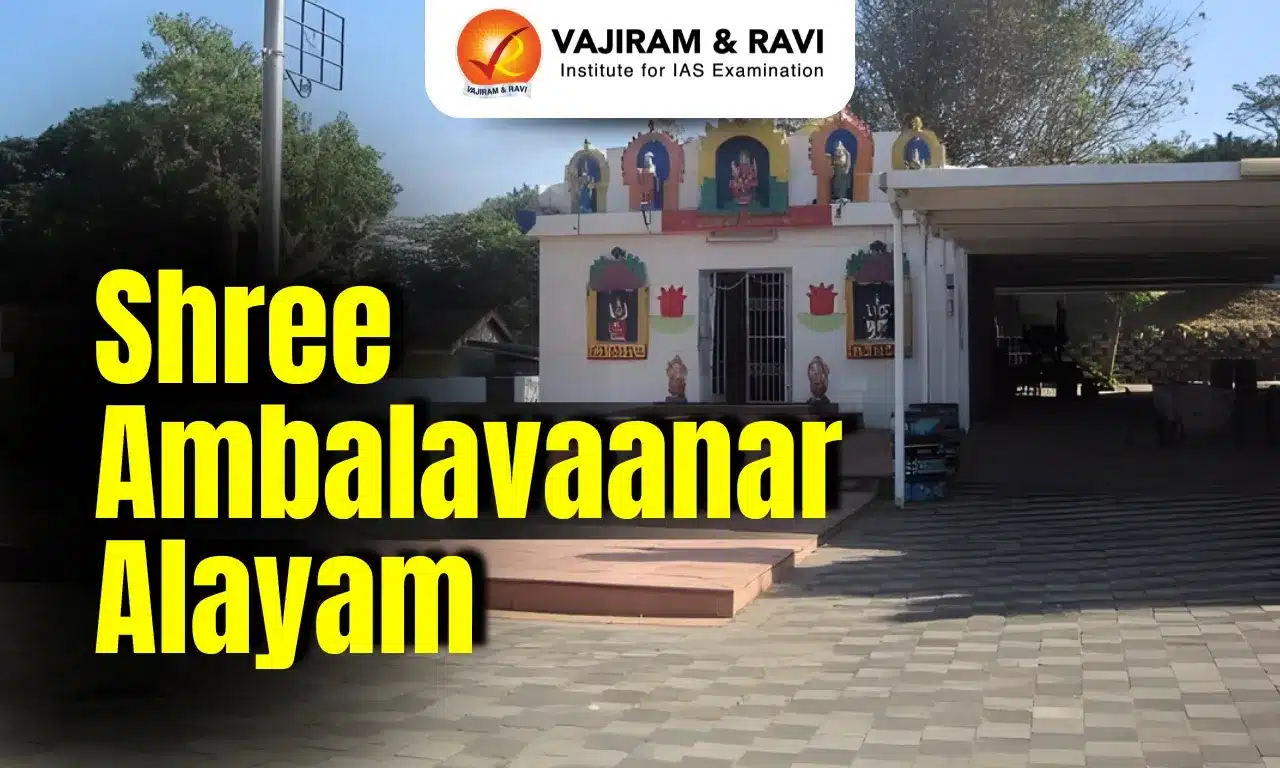
Umbilo Shree Ambalavaanar Alayam

Shree Ambalavaanar Alayam

Umbilo Shree Ambalavaanar Alayam Latest News

The 151-year-old Umbilo Shree Ambalavaanar Alayam temple in Durban, a national monument, faces potential discontinuation of civic services due to a pending bill amid fraud allegations.

About Umbilo Shree Ambalavaanar Alayam

  • It is a Hindu temple located in Durban, South Africa.
  • Built in 1875, it was established by indentured labourers who arrived in Durban from India. 
  • It is the oldest Hindu temple on the African continent.
  • It is also known as the Cato Manor Second River Temple and is situated on a hill amongst lush vegetation in Cato Manor. 
  • The temple complex is home to three deities - the first temple, dedicated to Lord Shiva, is known as Ambalavaanar; the second in honour of the 'mother', is known as Sri Draupadi Alayam; and the third is the Phutu (Phutuvan) Temple.
  • The temple's architecture reflects traditional South Indian design, featuring intricate carvings and vibrant colors. 
  • Over the years, the temple has been known as 'the temple that refused to die' because of the many challenges it faced.
  • It was declared a National Heritage Site in 1980 by the apartheid-era National Monuments Council.

Source: DEVD

Umbilo Shree Ambalavaanar Alayam FAQs

Q1: What is Umbilo Shree Ambalavaanar Alayam?

Ans: It is a Hindu temple located in Durban, South Africa.

Q2: In which year was Umbilo Shree Ambalavaanar Alayam built?

Ans: It was built in 1875.

Q3: Who established Umbilo Shree Ambalavaanar Alayam?

Ans: Indentured labourers who arrived in Durban from India.

Q4: By what other name is Umbilo Shree Ambalavaanar Alayam known?

Ans: The Cato Manor Second River Temple.

Q5: Which architectural tradition does Umbilo Shree Ambalavaanar Alayam follow?

Ans: Traditional South Indian temple architecture.
Key Facts about United Arab Emirates

Key Facts about United Arab Emirates

United Arab Emirates Latest News

The President of the United Arab Emirates Sheikh Mohamed bin Zayed Al Nahyan is visiting India and will hold official talks with the Prime Minister of India.

About United Arab Emirates

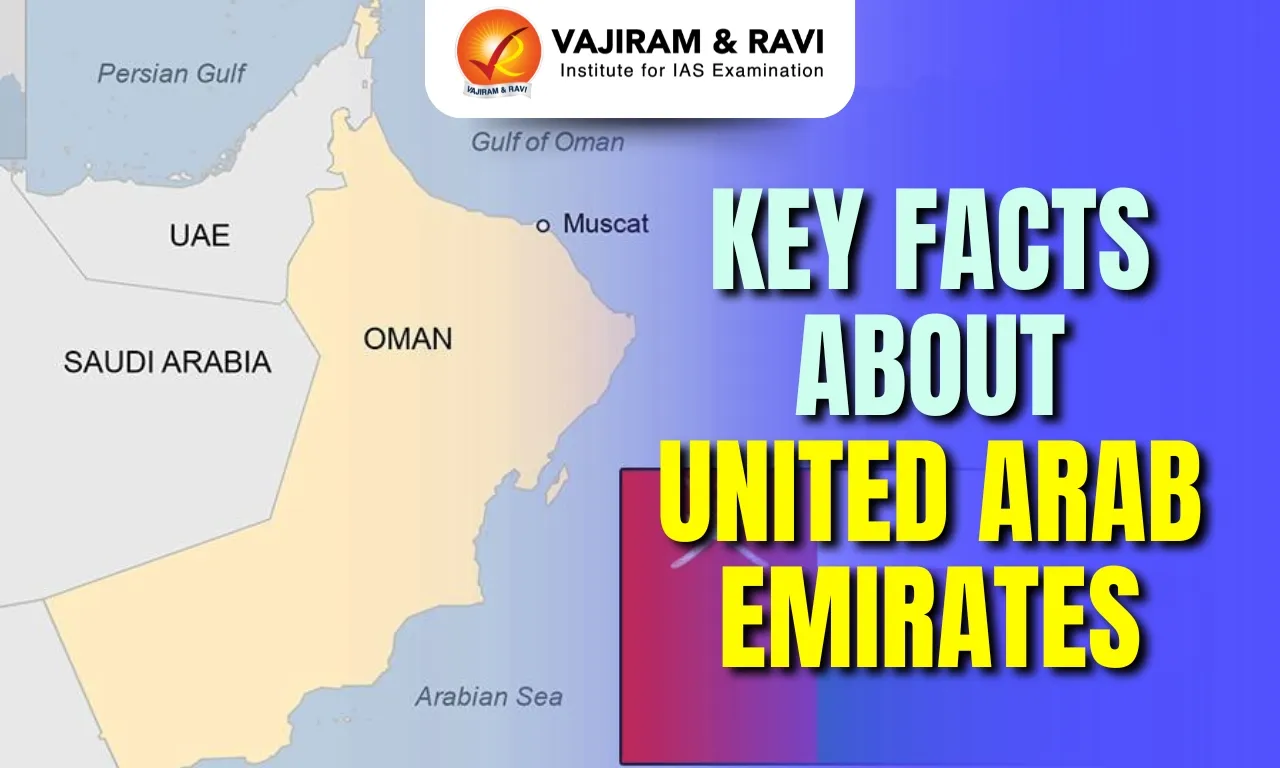
  • Location: It is a Middle East country that is located on the north east edge of the Arabian Peninsula.
  • Bordering Countries: It is bordered by Saudi Arabia in the south and west; and Oman in the east.
  • Maritime Boundary: Gulf of Oman (East), Persian Gulf (North).
  • Capital City: Abu Dhabi

Geographical Features of United Arab Emirates 

  • Terrain: The emirates comprise a mixed environment of rocky desert, coastal plains and wetlands, and waterless mountains. 
  • Climate: The climate is hot and humid along the coast and is hotter still, but dry, in the interior. 
  • Highest point: Jabal Bil 'Ays 1,905 m Mountain
  • Major Ports: Port Rāshid and Port Jebel Ali
  • Natural Resources: It mainly consists of petroleum and natural gas.
  • Tropic of Cancer passes through UAE, specifically Abu Dhabi emirate. 

Source: TH

United Arab Emirates FAQs

Q1: What is the capital city of the United Arab Emirates?

Ans: Abu Dhabi

Q2: What is the official language of the UAE?

Ans: Arabic

Indian Bison

Indian Bison

Indian Bison Latest News

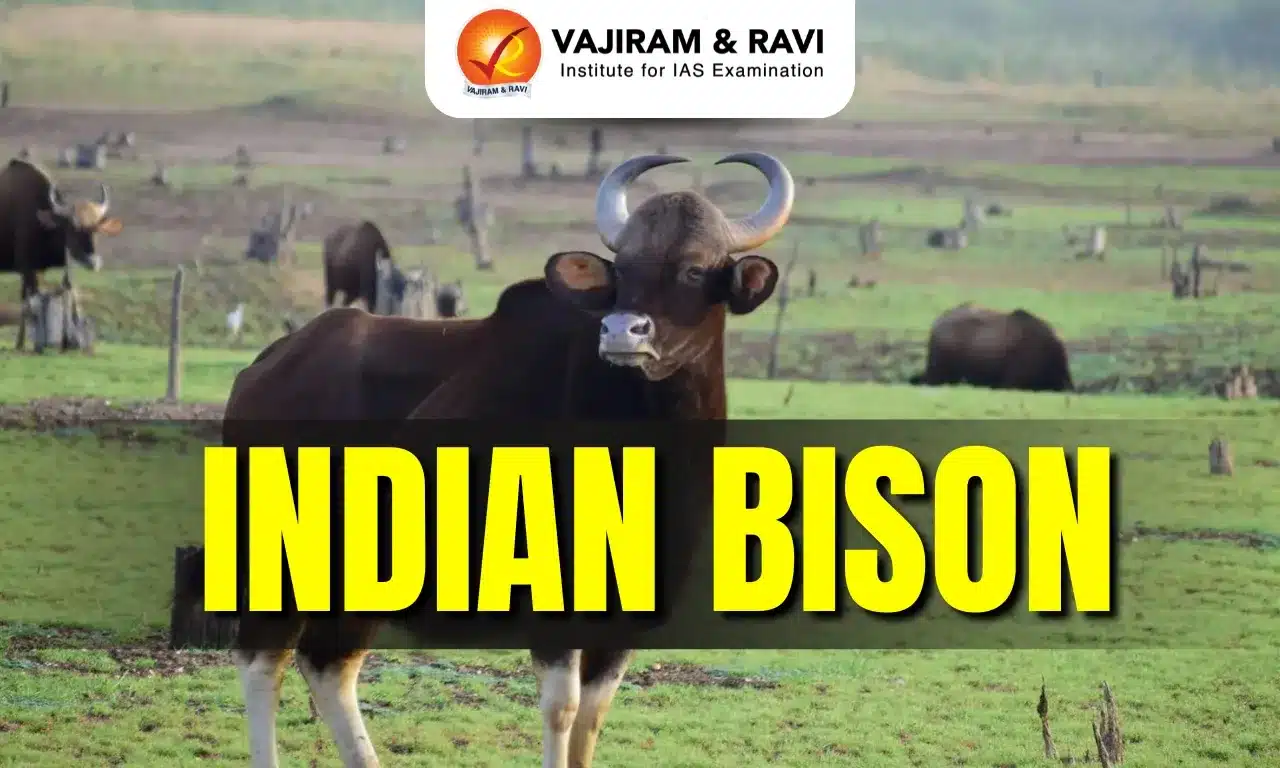
Recently, the Indian bison population in Debrigarh wildlife sanctuary has recorded a robust jump of 189 individuals within a year, taking the total head count to 848.

About Indian Bison

  • It is the largest species among the wild cattle and the Bovidae.
  • Distribution:  These are indigenous to the South and Southeast parts of Asia.
  • Habitat: Gaurs are primarily found in evergreen and semi-evergreen forests along with moist deciduous forests with open grasslands.
  • They prefer hilly-terrains below an altitude of 1,500-1,800 m with large and undisturbed forest tracts and abundant water.
  • Conservation Status of Indian Bison
  • Ecological Significance: It plays a vital role in maintaining ecological balance in forests besides serving as important prey species for tigers.
  • They also help shape vegetation dynamics and contribute to seed dispersal.
  • Threats: Loss of habitat throughout most of their range. Another serious concern is susceptibility to domestic cattle diseases like rinderpest, hoof, or mouth disease.

Key Facts about Debrigarh wildlife Sanctuary

  • Location: It is situated in the Bargarh district of Odisha.
  • It is located near Hirakud Dam (the longest dam in India and the longest earthen dam in the world) on the Mahanadi River.
  • Vegetation: Most of the plant sanctuary is covered with mixed and dry deciduous forest.
  • Flora: Major trees found here are Sal, Asana, Bija, Aanla, Dhaura, etc..
  • Fauna: Indian leopards, sloth bears, chousingha (four-horned antelope), sambar deer, gaurs (Indian bison).

Source: NIE

Indian Bison FAQs

Q1: Where is the Indian Bison primarily found?

Ans: India and Southeast Asia

Q2: What is the conservation status of Indian Bison?

Ans: Vulnerable

Brandt’s Hedgehog

Brandt’s Hedgehog

Brandt’s Hedgehog Latest News

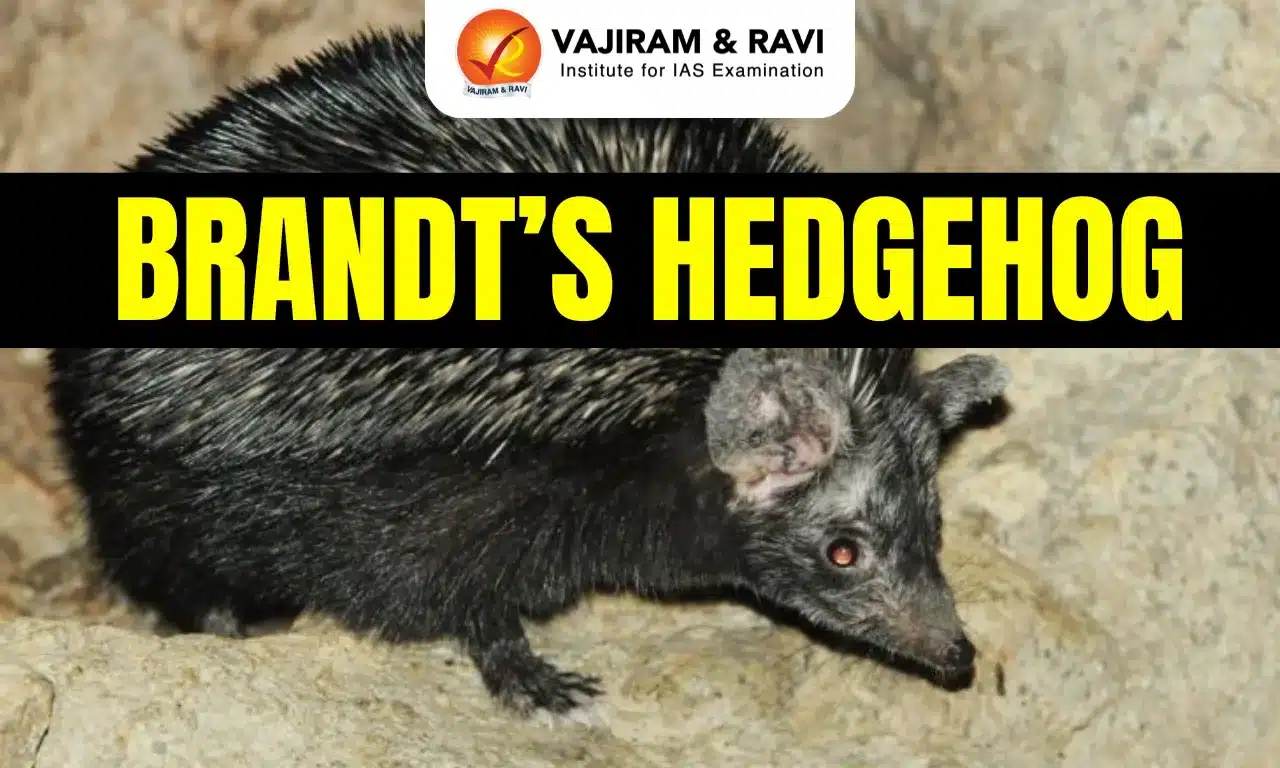
A new species of hedgehog, Brandt’s hedgehog, not so far found in India, has been recently discovered in Jammu and Kashmir, DNA analysis and morphological studies reveal.

About Brandt’s Hedgehog

  • It is a species of desert hedgehog.
  • Scientific Name: Paraechinus hypomelas

Brandt’s Hedgehog Distribution

It is native to parts of the Middle East and Central Asia, with a range that includes Iran, Afghanistan, Pakistan, and parts of Turkmenistan.

Brandt’s Hedgehog Habitat  

  • It inhabits arid and semi-arid regions, including rocky deserts, scrublands, and dry mountain slopes. 
  • The species is adapted to environments with sparse vegetation, loose or stony soils, and extreme temperature fluctuations between day and night. 
  • It is often associated with areas that provide natural shelter, such as rock crevices, abandoned burrows, or dense shrubs. 
  • It is still capable of digging dens when absolutely needed. It hibernates during colder weather.

Brandt’s Hedgehog Features

  • It is about 9-12 inches long and weighs around 500-900 grams. 
  • It has a black brownish face with a few white hairs interspersed on the forehead. 
  • They have large ears with a narrow base. 
  • Both the dorsal and ventral surfaces as well as the limbs are usually blackish brown. 
  • It has five short-nailed toes on each of its two front paws. 
  • Its back paws have four toes each with nails that constantly grow long. 
  • It is a faster runner due to lighter needle protection. 
  • It is predominantly nocturnal.

Brandt’s Hedgehog Conservation Status

It is classified as 'Least concern' under the IUCN Red List.

Source: HT

Brandt’s Hedgehog FAQs

Q1: What is Brandt’s Hedgehog?

Ans: It is a species of desert hedgehog.

Q2: Which regions are part of the natural distribution of Brandt’s Hedgehog?

Ans: The Middle East and Central Asia, including Iran, Afghanistan, Pakistan, and parts of Turkmenistan.

Q3: What type of habitat does Brandt’s Hedgehog prefer?

Ans: Arid and semi-arid regions such as rocky deserts, scrublands, and dry mountain slopes.

Q4: What is the IUCN Red List conservation status of Brandt’s Hedgehog?

Ans: Least Concern.

Soft Matter

Soft Matter

Soft Matter Latest News

Every morning, as you use either your toothpaste or shampoo, you engage with soft matter, materials that flow like liquids under force but hold their shape at rest.

About Soft Matter

  • Soft matter, or soft materials, is a sub-field of “condensed matter”, referring to a variety of materials that can be easily deformed or structurally altered by thermal fluctuations or nominal external stress. 
  • Soft materials include colloids, polymers, foams, gels, liquid crystals, and many biomaterials
  • They exhibit many useful and appealing properties, which account for their ubiquity in everyday life, finding use in a diverse range of applications in industry including, food, medical, automotive, construction, transportation, electronics, and manufacturing.
  • Everyday examples include curd, toothpaste, shampoo, soap bubbles, and living cells.
  • One of the important characteristics of soft matter is their physical structures in the mesoscopic scale. 
  • It is the properties and interactions of these structures that determine the overall behavior of the material. 
  • Unlike “hard materials” such as metals, ceramics, or glass, the building blocks of soft matter are held together by weak forces. 
  • As a result, soft material properties can be markedly affected as a result of small changes in temperature, applied force, time, and environment.

Source: TH

Soft Matter FAQs

Q1: What is soft matter?

Ans: It refers to a variety of materials that can be easily deformed or structurally altered by thermal fluctuations or nominal external stress.

Q2: What kind of external influences can easily deform soft materials?

Ans: Thermal fluctuations and nominal external stress.

Q3: Which types of materials are classified as soft matter?

Ans: Colloids, polymers, foams, gels, liquid crystals, and many biomaterials.

Q4: What are some everyday examples of soft matter?

Ans: Curd, toothpaste, shampoo, soap bubbles, and living cells.

Q5: How do soft materials differ from hard materials like metals or ceramics?

Ans: Soft materials are held together by weak forces and deform easily, unlike hard materials.

ICGS Sankalp

ICGS Sankalp

ICGS Sankalp Latest News

Recently, Indian Coast Guard Ship (ICGS) Sankalp visited Port Louis in Mauritius as part of overseas deployment in the Indian Ocean Region.

About ICGS Sankalp

  • ICGS Sankalp is an offshore patrol vessel which was commissioned in 2008.
  • The vessel is indigenously built by the Goa Shipyard Limited.
  • It is equipped with state-of-the-art navigation and communication equipment.
  • Functions: It is designed primarily for extended maritime surveillance, exclusive economic zone (EEZ) protection, search and rescue operations, and enforcement of maritime laws within India's vast oceanic domains.

Features of ICGS Sankalp

  • The ship is 105-meter-long with an endurance of 6,500 nautical miles.
  • Capacity: It has displacement capacity of approximately 2,325 tonnes at full load.
  • It consists of HAL Chetak rotary-wing aircraft for enhanced aerial surveillance and SAR.
  • Armaments: It is equipped with primary armament consisting of two 30 mm CRN-91 twin-barrel naval guns, designed for surface engagement and controlled by an integrated fire control system.
  • It is also fitted with davits to deploy up to five high-speed interceptor boats.

Source: DD News

ICGS Sankalp FAQs

Q1: What is ICGS Sankalp?

Ans: An offshore patrol vessel of the Indian Coast Guard

Q2: What is the primary role of ICGS Sankalp?

Ans: Maritime surveillance and patrol

Chips to Start-Up Programme

Chips to Start-up Programme

Chips to Start-Up Programme Latest News

The Chips to Start-up Programme has delivered measurable outcomes across capacity building, infrastructure access, and hands-on chip design enablement.

About Chips to Start-Up Programme

  • It is an umbrella capacity-building initiative launched by the Ministry of Electronics and Information Technology (MeitY) in 2022.
  • Funding and Tenure: Total outlay of ₹250 crore over five years.
  • Target: It targets the development of 85,000 industry-ready professionals across undergraduate, postgraduate, and doctoral levels.
  • It aims to catalyse the incubation of 25 start-ups and enable 10 technology transfers.

Features of Chips to Start-Up Programme

  • It seeks to provide access to SMART lab facilities, train one lakh students, generate 50 patents, and support at least 2,000 focused research publications. 
  • It supports innovation, enhances employability, and enables academic institutions to play a more active role in India’s semiconductor value chain.
  • Programme Approach and Implementation
    • The C2S Programme adopts a comprehensive approach, providing students with hands-on experience in chip design, fabrication, and testing.
    • It is achieved through regular training sessions in collaboration with industry partners, combined with mentorship and practical support.
      • Students gain access to advanced chip design tools, fabrication facilities, and testing resources, including state-of-the-art EDA software and semiconductor foundries.
      • These opportunities also include implementing R&D projects under the C2S Programme to develop working prototypes of Application-Specific Integrated Circuit (ASICs), Systems-on-Chip (SoCs), and Intellectual Property (IP) Core designs.

Source: PIB

Chips to Start-Up Programme FAQs

Q1: What is the nodal agency for implementing the C2S Programme?

Ans: C-DAC (Centre for Development of Advanced Computing)

Q2: Which ministry launched the Chips to Start-up (C2S) Programme?

Ans: Ministry of Electronics and Information Technology

Indiaphonte Bijoyi

Indiaphonte Bijoyi

Indiaphonte Bijoyi Latest News

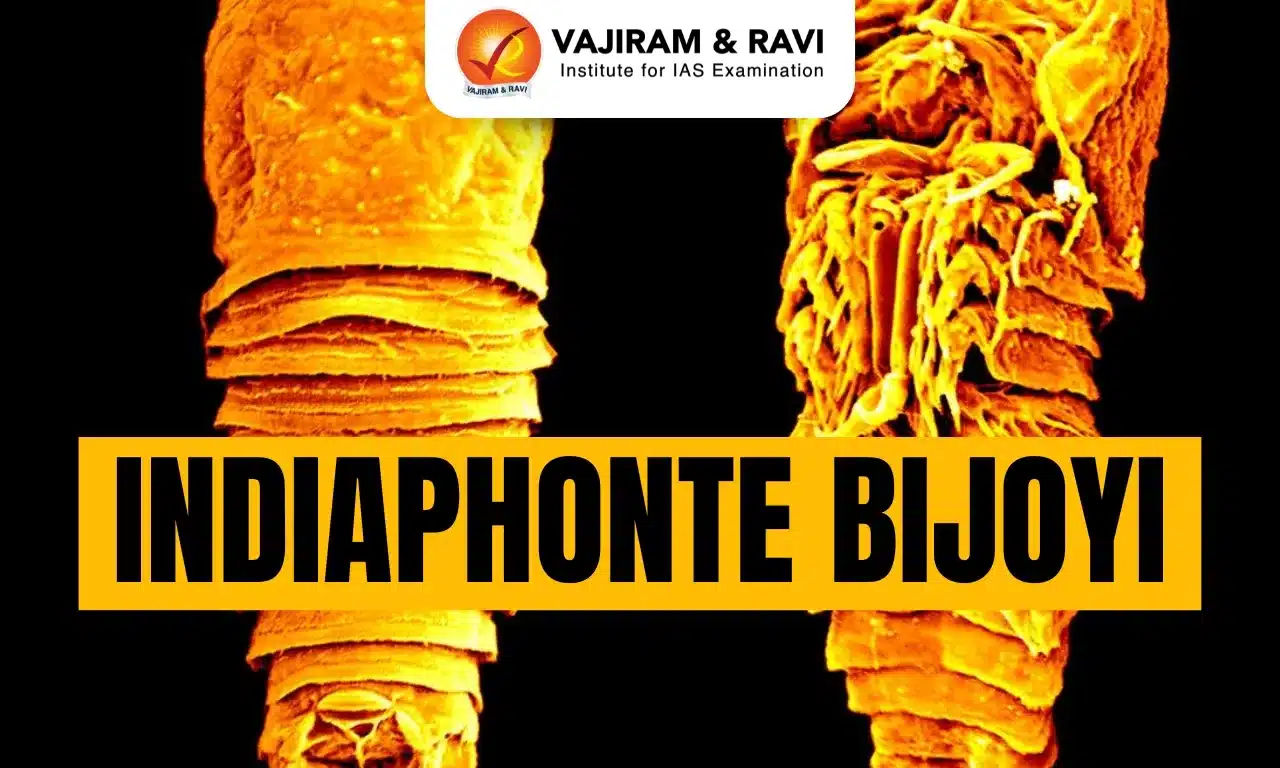
Recently, a microscopic crustacean was discovered in Kavaratti which has been named Indiaphonte bijoyi, with the generic name Indiaphonte.

About Indiaphonte Bijoyi

  • It is a tiny crustacean discovered from the Kavaratti lagoon in the Lakshadweep islands.
  • It belongs to the family Laophontidae within the Copepoda class.
  • Habitat: It lives in sediments in aquatic environments.

Characteristics of Indiaphonte Bijoyi

  • It has a semi-cylindrical, depressed body that is wider in the middle and tapering towards the posterior.
  • It also has antennae-like appendages at the front.
  • The females are slightly larger than the males.
  • It is essentially Meiofauna, tiny invertebrate animals less than 1 millimetre in size.

Key Facts about Laophontidae

  • It is the most diverse family with 350 species across 77 genera within the order Harpacticoida. 
  • They are microscopic in size and play a vital role in maintaining the health of marine and freshwater ecosystems.
  • Ecological Role
    • They are sensitive to pollution, oil spills, heavy metals, and climate change and are considered reliable bio-indicators of environmental change.
    • They are widely used in aquaculture and fisheries, especially as live feed for fish larvae.
    • They produce and convert omega-3 fatty acids such as Eicosapentaenoic Acid (EPA) and Docosahexaenoic Acid (DHA) that are essential for the growth of fish and shellfish and contribute significantly to human nutritional security.

Source: TH

Indiaphonte Bijoyi FAQs

Q1: Indiaphonte bijoyi belongs to which family?

Ans: Laophontidae

Q2: Where was Indiaphonte bijoyi discovered?

Ans: Kavaratti lagoon, Lakshadweep islands

Bor Tiger Reserve

Bor Tiger Reserve

Bor Tiger Reserve Latest News

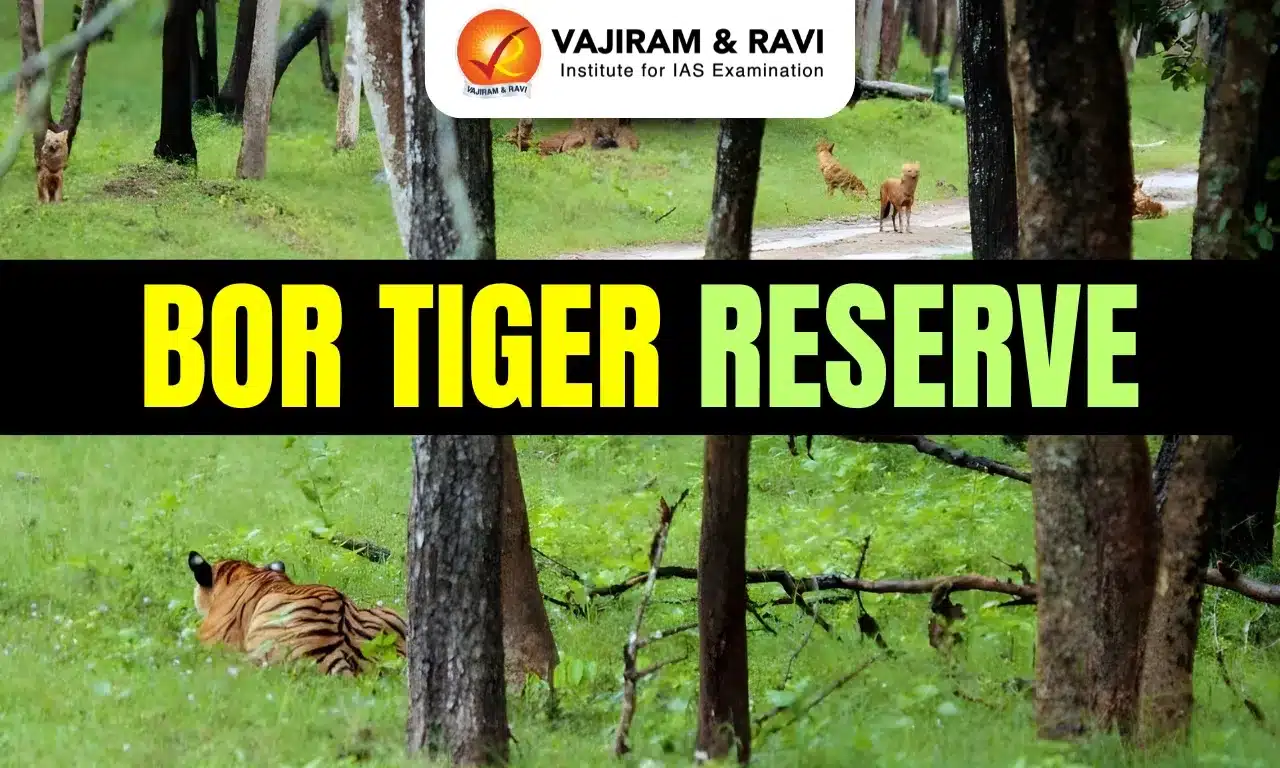
Two new safari gates at the Bor Tiger Project were inaugurated recently.

About Bor Tiger Reserve

  • It is located in the Wardha District of Maharashtra
  • It is the smallest tiger reserve in India by area.
  • It covers an area of 138.12 sq.km., which includes the drainage basin of the Bor Dam.
  • It is centrally located among several other Bengal tiger habitats.
    • Towards the northeast lies the Pench Tiger Reserve, towards the east is the Nagzira Navegaon Tiger Reserve, and to the southeast is the Karhandla Wildlife Sanctuary.
    • The Tadoba Andhari Tiger Reserve is located to the southeast, the Melghat Tiger Reserve stands to the west, and the Satpura Tiger Reserve lies to the northwest.
  • Vegetation: The area is populated by the Dry Deciduous Forest type.
  • Flora: Teak, tendu, bamboo, tarot, and gokhru are some of the abundant species.
  • Fauna
    • Apart from tigers, the reserve is home to several other mammals like leopards, sloth bears, sambar deer, Indian bison (gaur), chital, wild boars, and more.
    • It has recorded diversity of just under 200 avian species, with migratory waterfowl such as the tufted duck, northern shovelers, as well as the elegant fish specialist, the osprey. 
    • Commonly seen resident species include the Indian peafowl, black-hooded oriole, and Indian paradise flycatcher.

Source: TOI

Bor Tiger Reserve FAQs

Q1: Where is Bor Tiger Reserve located?

Ans: In the Wardha District of Maharashtra.

Q2: What distinction does Bor Tiger Reserve hold among India’s tiger reserves?

Ans: It is the smallest tiger reserve in India by area.

Q3: Which tiger reserve lies to the northeast of Bor Tiger Reserve?

Ans: Pench Tiger Reserve.

Q4: What type of forest vegetation dominates Bor Tiger Reserve?

Ans: Dry Deciduous Forest.

Guillain-Barre Syndrome

What is Guillain-Barre Syndrome?

Guillain-Barré Syndrome (GBS) Latest News

A Guillain-Barré Syndrome (GBS) outbreak has hit Madhya Pradesh’s Neemuch district recently, with two deaths reported in Manasa town.

About Guillain-Barré Syndrome (GBS)

  • It is a rare neurological disorder in which a person’s immune system mistakenly attacks part of their peripheral nervous system.
  • This is the part of the nervous system outside the brain and spinal cord. 
  • It controls muscle movement, pain signals, and temperature and touch sensations.
  • Since the body's own immune system does the damage, GBS is called an autoimmune disease.
  • GBS is also called acute inflammatory demyelinating polyradiculoneuropathy (AIDP).
  • It can occur at any age, but it most commonly affects people between 30 and 50.

Guillain-Barré Syndrome (GBS) Causes

  • The exact cause of the disease remains unclear, but it is often observed following a viral or bacterial infection, vaccination, or major surgery.
  • At such times, the immune system becomes hyperactive, leading to this rare condition.

Guillain-Barré Syndrome (GBS) Symptoms

  • Patients often begin with an unknown fever, followed by weakness and other nervous system-related symptoms. 
  • It can increase in intensity over a period of hours, days, or weeks until certain muscles cannot be used at all. 
  • Some cases of GBS are very mild and only marked by brief weakness. Others cause nearly devastating paralysis, leaving the person unable to breathe on their own.
  • It is potentially life-threatening. People with GBS should be treated and monitored as quickly as possible

Guillain-Barré Syndrome (GBS) Treatment

  • There’s no known cure for GBS. 
  • Several treatment options can ease symptoms and help speed recovery. 
  • Most people recover completely from GBS, but some serious illnesses can be fatal. 
  • While recovery may take up to several years, most people are able to walk again six months after symptoms first began.
  • Some people may have lasting effects, such as weakness, numbness, or fatigue.

Source: NDTV

Guillain-Barré Syndrome (GBS) FAQs

Q1: What is Guillain-Barré Syndrome (GBS)?

Ans: It is a rare neurological disorder in which the body’s immune system attacks the peripheral nervous system.

Q2: What is the other medical name for Guillain-Barré Syndrome?

Ans: Acute inflammatory demyelinating polyradiculoneuropathy (AIDP).

Q3: What are the commonly observed triggers of Guillain-Barré Syndrome?

Ans: Viral or bacterial infections, vaccination, or major surgery.

Q4: What are the initial symptoms of Guillain-Barré Syndrome?

Ans: An unknown fever followed by muscle weakness and nervous system-related symptoms.

Q5: Is there a permanent cure for Guillain-Barré Syndrome?

Ans: No, there is currently no known cure.

Enquire Now