Hemileccinum Indicum

Hemileccinum Indicum

Hemileccinum Indicum Latest News 

Researchers exploring the temperate forests of the Indian Himalayas have discovered a previously unknown species of mushroom named Hemileccinum indicum.

About Hemileccinum Indicum

  • It is a new species of mushroom.
  • It was found growing among oak trees in the Bageshwar district of Uttarakhand.
  • It marks the first time the genus Hemileccinum has been documented in India.
  • To confirm the find, the team performed a multigene molecular phylogenetic analysis, a genetic test that helps map the evolutionary tree of a species.
  • Features:
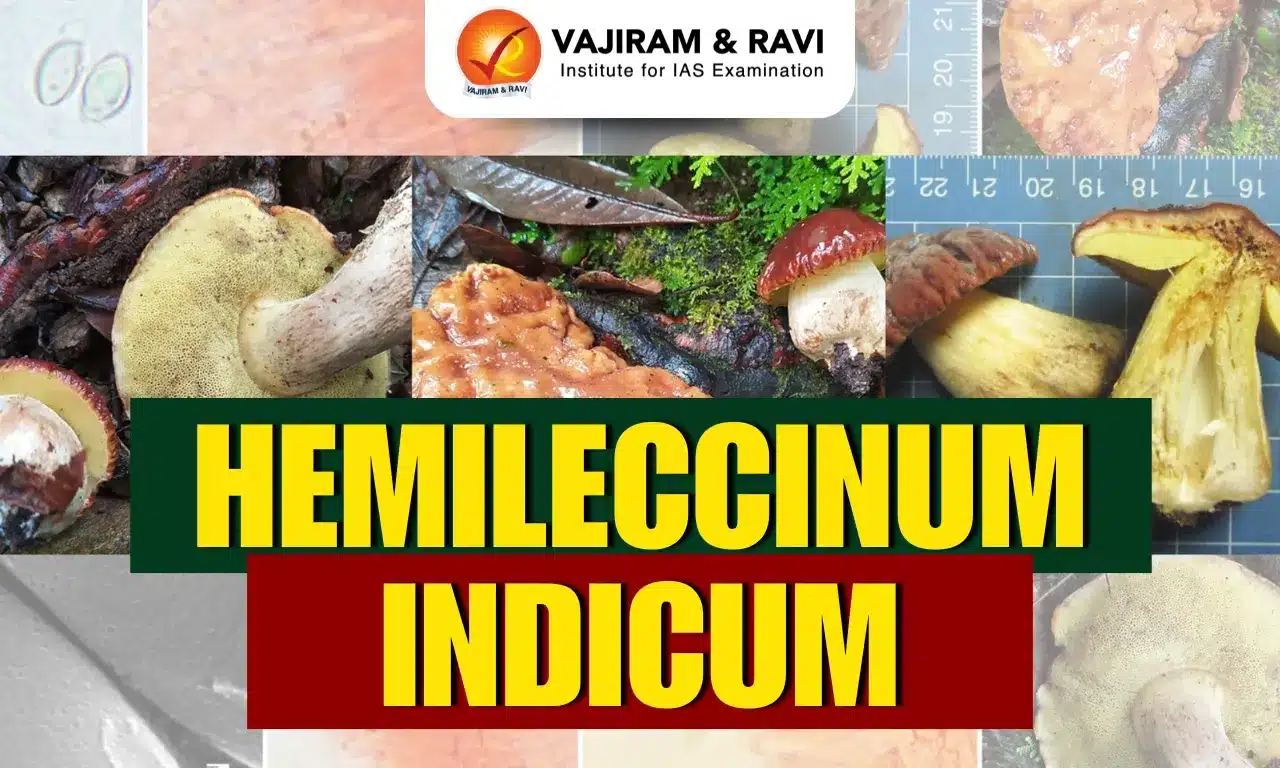
    • Physically, Hemileccinum indicum is a bolete, a type of mushroom that has pores instead of gills under its cap.
    • It features a wrinkled, violet-brown cap that fades to a leathery brown as it matures, and a pastel yellow pore surface that does not change colour when bruised.
    • It has tiny, intricate pits on its spores. 
    • These microscopic pinholes and its smooth stem surface distinguish Hemileccinum indicum from its American and Asian relatives, which often have larger, smooth spores or scaly stems.
    • Ecologically, these mushrooms are ectomycorrhizal, meaning they form a vital symbiotic partnership with the roots of trees, such as the Quercus (oak) species they were found under, helping the forest exchange nutrients and stay healthy.

Source: RM

Hemileccinum Indicum FAQs

Q1: What is Hemileccinum indicum?

Ans: It is a newly discovered species of mushroom.

Q2: Where was Hemileccinum indicum found?

Ans: It was found growing among oak trees in the Bageshwar district of Uttarakhand.

Q3: What type of mushroom is Hemileccinum indicum based on its structure?

Ans: It is a bolete mushroom with pores instead of gills under the cap.

Q4: What unique microscopic feature is observed on the spores of Hemileccinum indicum?

Ans: The spores have tiny, intricate pits or microscopic pinholes.

Strategic Asset Allocation and Risk Governance (SAARG) Committee

Strategic Asset Allocation and Risk Governance (SAARG) Committee

Strategic Asset Allocation and Risk Governance (SAARG) Committee Latest News

The PFRDA recently constituted a committee of Investment Experts for Strategic Asset Allocation and Risk Governance (SAARG) to review, recommend and modernize the investment framework under the NPS.

About Strategic Asset Allocation and Risk Governance (SAARG) Committee

  • It is a high-level committee of investment experts to review, recommend, and modernise the investment framework under the National Pension System (NPS).
  • It was constituted by the Pension Fund Regulatory and Development Authority (PFRDA).
  • Objective: Strengthening the long-term investment architecture of NPS by improving diversification, enhancing risk management practices, and expanding investment choices available to subscribers.
  • SAARG has been tasked with undertaking a comprehensive review of existing NPS investment guidelines for both government and non-government sectors. 
    • The review will include benchmarking India’s pension investment framework with leading global pension systems as well as the evolving domestic investment ecosystem.
  • The committee will examine a wide range of issues, including strategic asset allocation frameworks, introduction and review of asset classes, performance measurement systems, accountability mechanisms, asset-liability management (ALM) practices, valuation standards for alternative investments, portfolio stability and liquidity optimisation. 
    • Governance structures, intermediary architecture, and integration of sustainability considerations into investment decision-making will also fall within its scope.
  • The nine-member committee will be chaired by Shri Narayan Ramachandran, former Country Head and CEO of Morgan Stanley India, and comprises eminent experts from the fields of capital markets, asset management and securities law.
  • The committee shall have a time of 9 months to examine and submit its report to PFRDA with its recommendations.

Source: CNBC

Strategic Asset Allocation and Risk Governance (SAARG) Committee FAQs

Q1: What is the Strategic Asset Allocation and Risk Governance (SAARG) Committee?

Ans: It is a high-level committee of investment experts constituted to review, recommend, and modernise the investment framework under the National Pension System (NPS).

Q2: Which authority constituted the Strategic Asset Allocation and Risk Governance (SAARG) Committee?

Ans: The Pension Fund Regulatory and Development Authority (PFRDA).

Q3: Who chairs the Strategic Asset Allocation and Risk Governance (SAARG) Committee?

Ans: Shri Narayan Ramachandran, former Country Head and CEO of Morgan Stanley India.

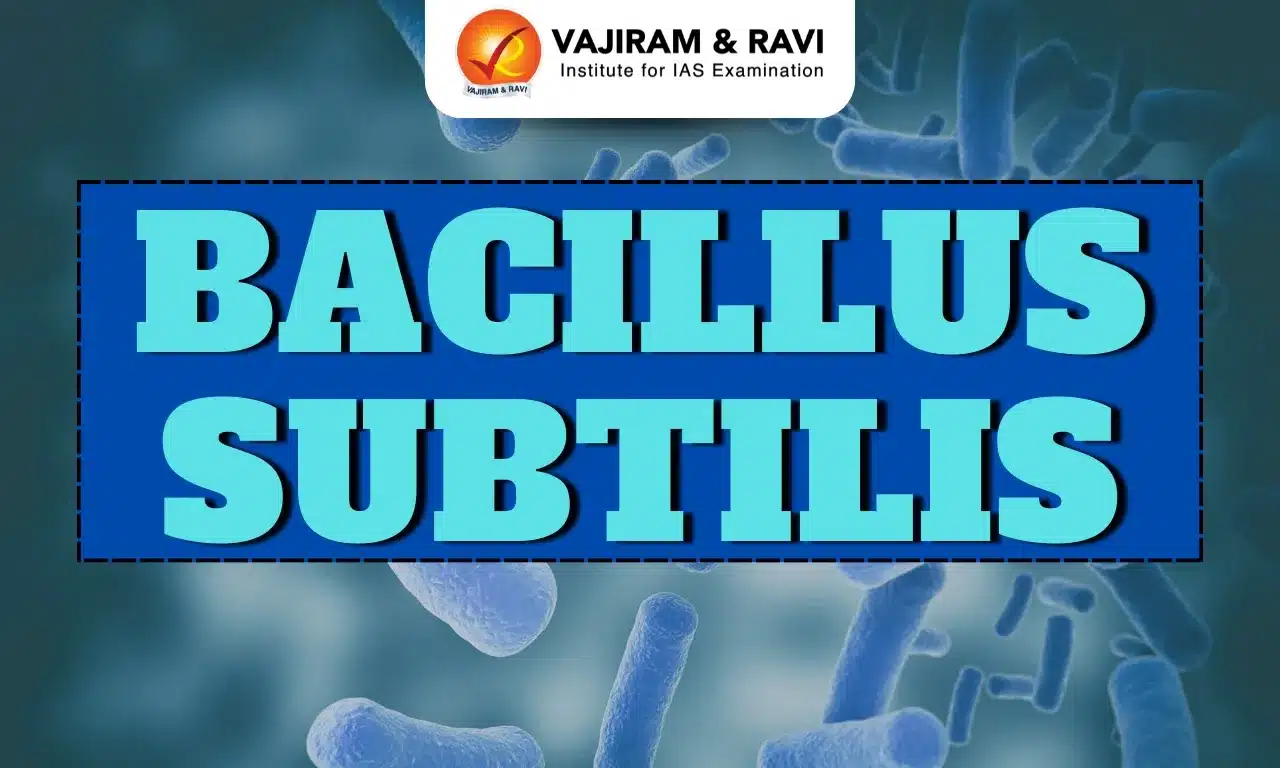
Bacillus Subtilis

Bacillus Subtilis

Bacillus Subtilis Latest News

Recently, Kerala officially declared Bacillus subtilis as ‘State microbe’.

About Bacillus Subtilis

  • Bacillus subtilis (B. subtilis) is a type of probiotic ("good" bacteria) found naturally in the human gut.
  • It's also found in fermented foods.

Characteristics of Bacillus Subtilis

  • It is a spore forming, motile, rod-shaped, Gram-positive, facultative aerobe.
  • It is mostly found in soil and vegetation with an optimal growth temperature from 25-35 degrees Celsius. 
  • B. subtilis has the ability to produce and secrete antibiotics.
  • The genomic structure of this microorganism contains five signal peptidase genes that are important for the secretion of these antibiotics. 
  • It has shown to be capable of secreting polymyxin, difficidin, subtilin, and mycobacillin.
  • It is used as a model organism for studying endospore formation in bacteria.
  • Endospores of B. subtilis can tolerate harsh environmental conditions, such as UV exposure and high temperatures.
  • Bacillus subtilis Transmission and Disease: B.subtilis is non-pathogenic but can contaminate food and be considered an opportunistic pathogen among the immuno-compromised.

Applications Bacillus Subtilis 

  • They are used on seeds, vegetables, and plants as a fungicide because of their ability to produce antibiotics. 
  • It inhabits the root system of the plant competing with disease causing organisms. Some B. subtilis strains are capable of producing toxins for insects. These strains are used by farms to protect their crops.
  • B. subtilis endopores serve as one of the models for evaluating the effectiveness of sporicides and sterilants.

Source: TH

Bacillus Subtilis FAQs

Q1: What is Bacillus subtilis commonly known as?

Ans: Hay bacterium

Q2: What is the shape of Bacillus subtilis?

Ans: Rod-shaped

Chatergala Pass

Chatergala Pass

Chatergala Pass Latest News

Recently, the Border Roads Organisation (BRO) successfully carried out a high-altitude rescue and road restoration operation under Project Sampark at Chatergala Pass.

 About Chatergala Pass

  • Location: It is situated at an altitude of 10,500 ft. in the Bhaderwah–Chatergala axis in Jammu region of Union Territory of Jammu and Kashmir.
  • It is a high mountain pass that connects Bani in the Kathua district to Bhaderwah in the Doda district. 
  • It is tucked in the Chamba-doda ranges of the greater Himalayas. 
  • Terrain: It is surrounded by alpine meadows, snow-covered peaks, and dense forest
  • Fauna: Himalayan monals, ibex, and musk deer are found here.

Key Facts about Border Roads Organisation

  • It is a road construction executive force in India that provides support to the Indian Armed Forces.
  • BRO was entirely brought under the Ministry of Defence in 2015.
  • Establishment: It was formed on 7 May 1960 to secure India’s borders and develop infrastructure in remote areas of the north and northeastern states of the country.
  • It develops and maintains road networks in India’s border areas and friendly neighboring countries.
  • The executive head of the BRO is the Director General of Border Roads (DGBR), who holds the rank of Lieutenant General. 
  • Officers and personnel from the General Reserve Engineer Force (GREF) form the parent cadre of the BRO.
  • It is also staffed by officers and troops drawn from the Indian Army’s Corps of Engineers on extra-regimental employment (on deputation).
  • BRO also employs more than two lakh (200,000) local workers in the task of ensuring employment in far-flung areas.
  • Motto: Shramena Sarvam Sadhyam (everything is achievable through hard work).

Source: PIB

Chatergala Pass FAQs

Q1: Chatergala Pass is located in which Union Territory?

Ans: Jammu and Kashmir

Q2: Which organization conducted the rescue operation at Chatergala Pass?

Ans: Border Roads Organisation

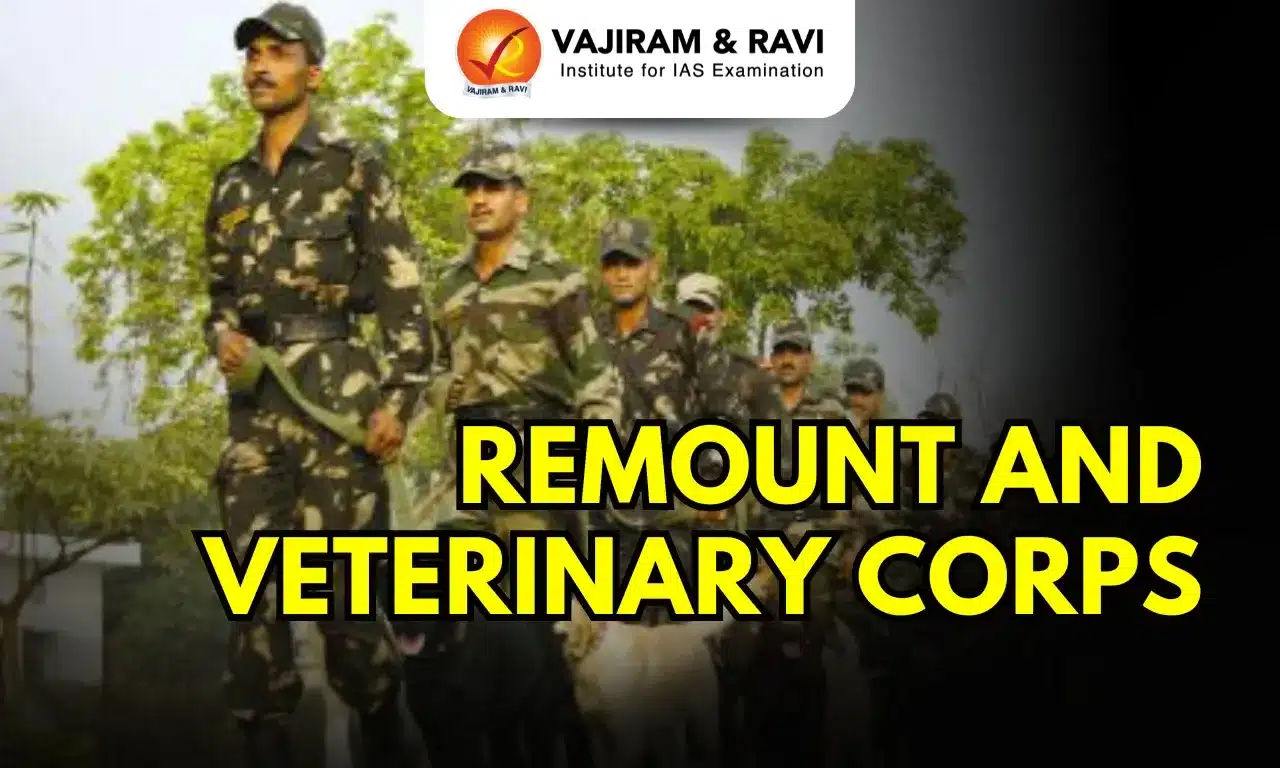
Remount and Veterinary Corps

Remount and Veterinary Corps

Remount and Veterinary Corps Latest News

Recently, during the Republic Day Parade more animals were represented the Indian Army's Remount and Veterinary Corps.

About Remount and Veterinary Corps

  • It is a specialised Corps of the Indian Army responsible for the breeding, rearing, and training of Army animals, including horses, mules and Army dogs.
  • It ensures the operational readiness of these animals for combat, reconnaissance, and logistics and also provides veterinary care and supporting counter-terrorism operations.
  • Headquarters: Meerut
  • Motto: ‘Pashu Seva Asmakam Dharma (Service to animals is our duty)’.

Historical Background of Remount and Veterinary Corps

  • The RVC is one of the oldest branches of the Indian Army, tracing its foundation to the Stud Department established in Bengal in 1779.
  • It was reorganised — from Army Veterinary Corps (India) in 1920 to Indian Remount and Veterinary Corps in 1950.
  • It was formally established as the Remount and Veterinary Corps in 1960.

Achievements of Remount and Veterinary Corps

  • It has played a vital role in all conflicts before and after Independence, including the First and Second World Wars.
  • In 1989, it was awarded the President’s Flag for its meritorious service.
  • It is also involved in strengthening military diplomacy by providing horse riding training under the NCC, veterinary assistance in remote areas, participation in United Nations missions and providing trained animals to friendly countries.

Source: IE

Remount and Veterinary Corps FAQs

Q1: What is the motto of Remount and Veterinary Corps (RVC)?

Ans: Pashu Seva Asmakam Dharma

Q2: Where is the headquarters of Remount and Veterinary Corps (RVC) located?

Ans: Meerut

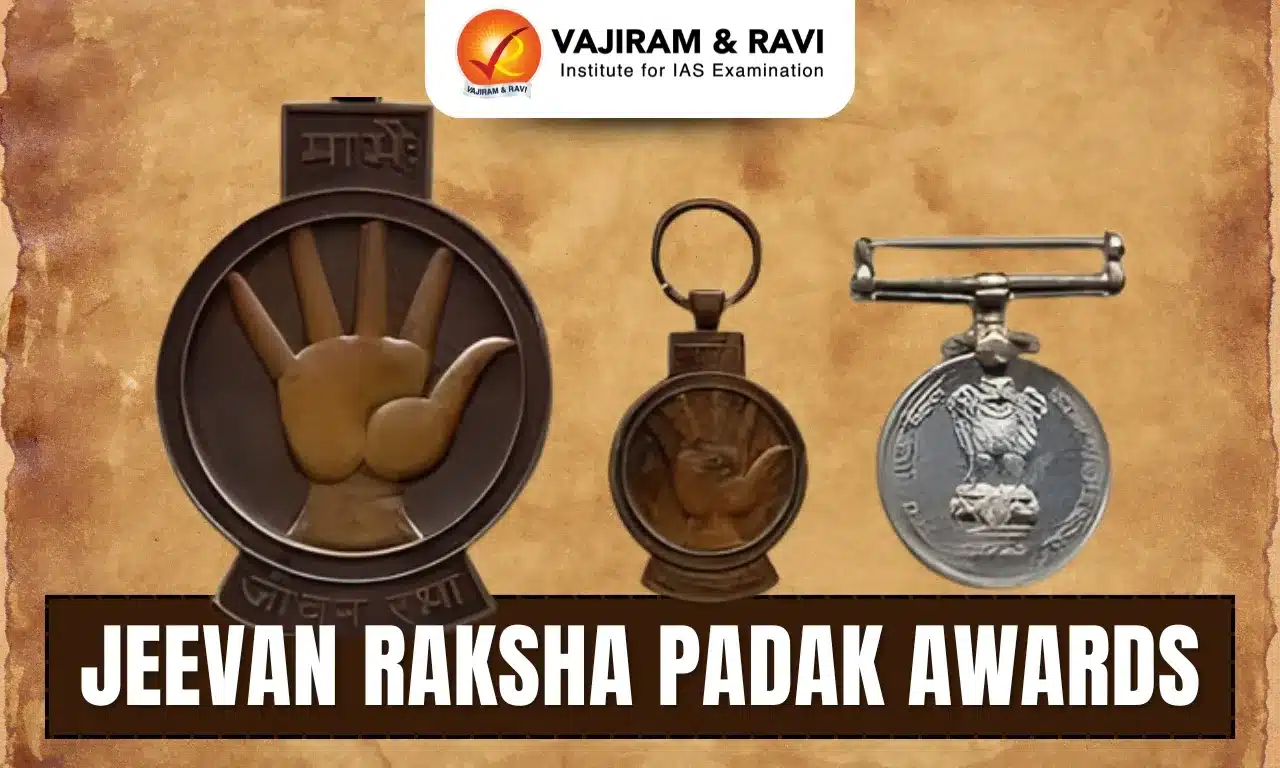
Jeevan Raksha Padak Awards

Jeevan Raksha Padak Awards

Jeevan Raksha Padak Awards Latest News

Recently, the President of India has conferred the Jeevan Raksha Padak Series of Awards-2025 to 30 persons. 

About Jeevan Raksha Padak Awards

  • It is awarded to a person for a meritorious act of human nature in saving the life of a person. 
  • The Jeevan Raksha Padak Award is given in three categories, namely,
    • Sarvottam Jeevan Raksha Padak: It is awarded for conspicuous courage in saving life under circumstances of very great danger to the life of the rescuer.
    • Uttam Jeevan Raksha Padam: It is awarded for courage and promptitude in saving life under circumstances of great danger to the life of the rescuer.
    • Jeevan Raksha Padak: It is awarded for courage and promptitude in saving life under circumstances of grave bodily injury to the rescuer.

Jeevan Raksha Padak Awards Eligibility

  • Persons of all walks of life are eligible for these awards.  The award can also be conferred posthumously.
  • It is presented to the awardees by the respective Union Ministries/Organizations/State Government to which the awardee belongs. 

Jeevan Raksha Padak Awards Features

  • Its nominations are invited annually from States/UTs and Union Ministries.
  • The recommendations of the award are considered by the Awards Committee within a period of two calendar years from the date of performance of the act.
  • Final approval is given by the Prime Minister and the President of India.
  • Award: The decoration of the award consists of a Medal, Certificate, along with a one-time monetary allowance: Sarvottam Jeevan Raksha Padak (₹2 lakh), Uttam Jeevan Raksha Padam (₹1.5 lakh) and Jeevan Raksha (₹1 lakh).
  • No other facility/benefit in terms of any concession in Railways, Airfare etc. is provided by the Government.

Source: News On Air

Jeevan Raksha Padak Awards FAQs

Q1: What is the primary purpose of Jeevan Raksha Padak Awards?

Ans: To acknowledge selfless acts of saving lives

Q2: What is the highest category of Jeevan Raksha Padak Awards?

Ans: Sarvottam Jeevan Raksha Padak

Mir Alam Tank

Mir Alam Tank

Mir Alam Tank Latest News

Nine workers and engineers working on the bridge across the Mir Alam tank were rescued by the Hyderabad Disaster Management and Asset Protection Agency (HYDRAA) after their boat malfunctioned in the middle of the lake recently.

About Mir Alam Tank

  • Mir Alam Tank, located in Hyderabad, Telangana, is a historic reservoir to the south of the Musi river. 
  • It covers an area of approximately 260 acres and has a capacity of 21 million cubic meters of water.
  • The tank is fed by several streams and springs that flow down from the nearby hills.
  • It was the primary source of drinking water for Hyderabad before the Osman Sagar and Himayat Sagar reservoirs were built by the last Nizam of Hyderabad between 1913-25.
  • The tank is adjacent to the Nehru Zoological Park.
  • History:
    • The tank was named after Mir Alam Bahadur, then the Prime Minister of Hyderabad during Asaf Jah III’s reign, the third Nizam of Hyderabad state. 
    • Mir Alam Bahadur is believed to have laid the foundation for the tank on July 20, 1804, which was then completed in a period of two years and declared open on June 8, 1806.
    • Mir Alam had led the forces of Nizam against the battle with Tipu Sultan. 
    • It is believed that Mir Alam built the lake from part of the treasure that he grabbed from Srirangapatna after defeating Tipu Sultan.
    • The tank was designed by a French engineer and features 21 semi-circular arches, making it an architectural marvel of its time.

Source: TH

Mir Alam Tank FAQs

Q1: What is Mir Alam Tank?

Ans: Mir Alam Tank is a historic reservoir located in Hyderabad, Telangana.

Q2: What role did Mir Alam Tank play in Hyderabad’s water supply?

Ans: It was the primary source of drinking water for Hyderabad before the construction of Osman Sagar and Himayat Sagar reservoirs.

Q3: After whom is Mir Alam Tank named?

Ans: It was named after Mir Alam Bahadur, then the Prime Minister of Hyderabad during Asaf Jah III’s reign, the third Nizam of Hyderabad state.

Q4: When was Mir Alam Tank completed and opened?

Ans: It was completed and declared open on June 8, 1806.

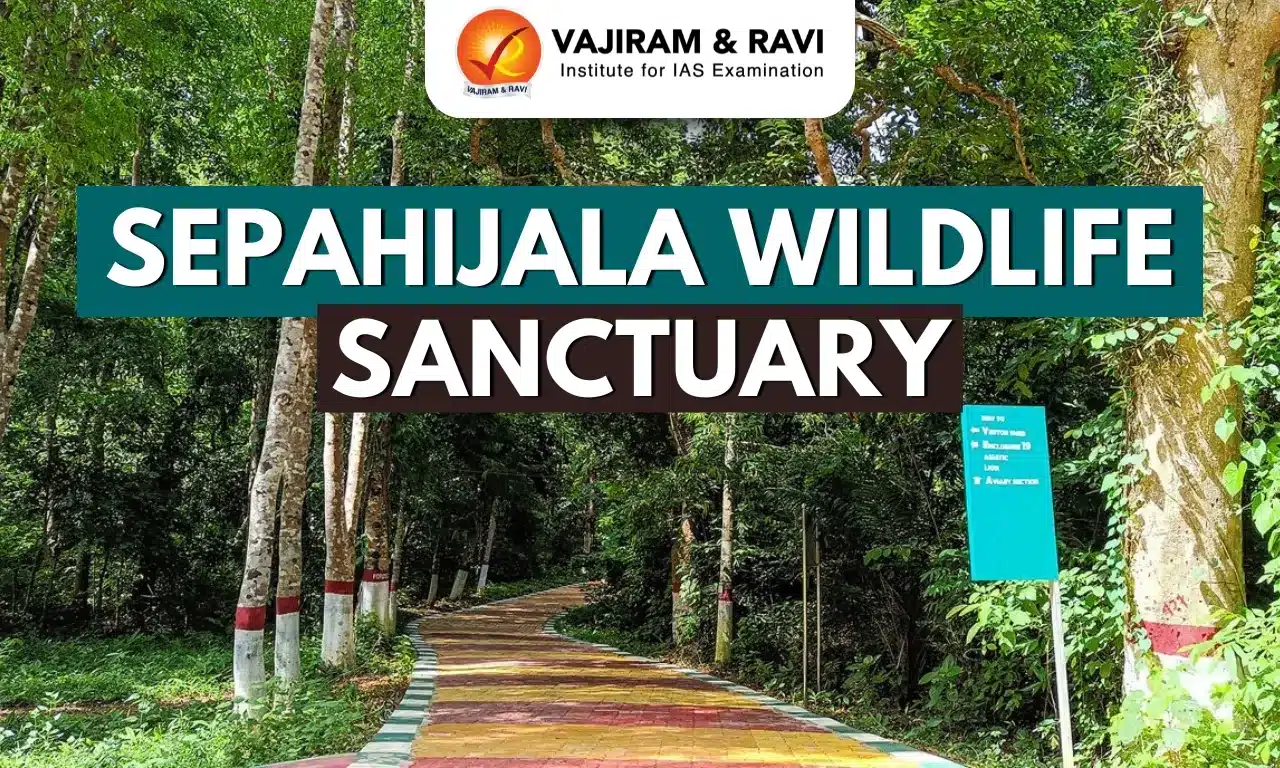
Sepahijala Wildlife Sanctuary

Sepahijala Wildlife Sanctuary

Sepahijala Wildlife Sanctuary Latest News

The Tripura Forest Minister recently announced that the state has received over Rs 57 crore for the modernization and further development of the Sepahijala Wildlife Sanctuary in the Sepahijala district.

About Sepahijala Wildlife Sanctuary

  • It is located around 25 km from Agartala, Tripura.
  • It is divided into five sections, basically to segregate the different types of animals living here.
    • They are the carnivore section, primate section, ungulate section, reptile section, and aviary section.
  • It also has two natural lakes, namely Abasarika and Amrit Sagar.
  • Clouded Leopard National Park, established in 2007, is a part of SWL.
  • Vegetation: Moist deciduous forest
  • Flora: 
    • It has 456 plant species. There are trees of Sal, Chamal, Garjan, and Kanak. 
    • The secondary species consist of Pichla, Kurcha, Awla, Bahera, Hargaja, Amlaki, Bamboos and grasses, are also found here. 
  • Fauna:
    • It is the habitat of different species of primates like the Rhesus macaque, Pigtailed macaque, Capped langur, Spectacled monkey, Slow loris and several other wild animals like Leopard, Clouded leopard, Jungle fowl, Civets, Barking, Deer, Wild pig, etc.
    • The crab-eating mongoose (which was last seen in the 1930s) has also been revived here.
    • The avian population of the sanctuary is also rich, with a variety of winged stork, Whistling teal, and the White ibis.

Source: MSN

Sepahijala Wildlife Sanctuary FAQs

Q1: Where is Sepahijala Wildlife Sanctuary located?

Ans: t is located about 25 km from Agartala in Tripura.

Q2: Which natural lakes are found within Sepahijala Wildlife Sanctuary?

Ans: Abasarika and Amrit Sagar.

Q3: Which national park forms a part of Sepahijala Wildlife Sanctuary?

Ans: Clouded Leopard National Park.

Q4: What type of forest vegetation is found in Sepahijala Wildlife Sanctuary?

Ans: Moist deciduous forest.

Indian Ocean Naval Symposium

Indian Ocean Naval Symposium

Indian Ocean Naval Symposium Latest News

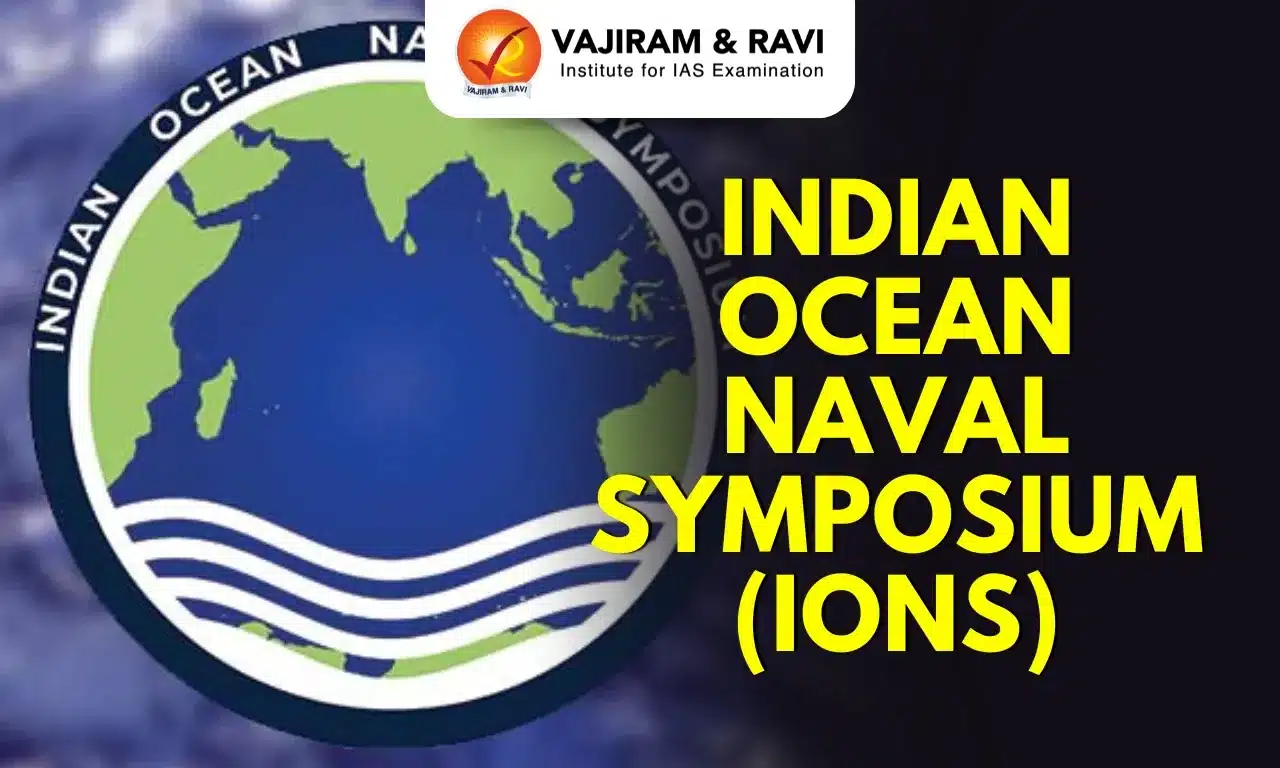
Boosting maritime engagement with Indonesia, a key member of the Indian Ocean Naval Symposium (IONS), and advancing the vision of MAHASAGAR, the Indian Navy’s First Training Squadron (1TS) departed Belawan recently, after a successful three-day port call.

About Indian Ocean Naval Symposium 

  • It is a voluntary initiative that seeks to increase maritime cooperation among navies of the littoral states of the Indian Ocean Region by providing an open and inclusive forum for discussion of regionally relevant maritime issues.
  • It promotes maritime cooperation, mutual understanding, and collaboration on issues such as maritime security and humanitarian assistance and disaster relief (HADR).
  • In the process, it endeavours to generate a flow of information between naval professionals that would lead to common understanding and possibly cooperative solutions on the way ahead.
  • It was conceived by the Indian Navy in 2008.
  • The inaugural edition of IONS was held in Feb 2008 at New Delhi, with the Indian Navy as the Chair for two years (2008–2010). 
  • IONS is structured around a rotating chairmanship, biennial conclaves of chiefs, and working groups.
  • There are 36 littoral in the Indian Ocean, which have been geographically grouped into the following four sub-regions:
    • South Asian Littorals: Bangladesh, India, Maldives, Pakistan, Seychelles, Sri Lanka, and United Kingdom (British Indian Ocean Territory)
    • West Asian Littorals: Iran, Oman, Saudi Arabia, and the United Arab Emirates
    • East African Littorals: France (Reunion), Kenya, Mauritius, Mozambique, South Africa, and Tanzania.
    • South East Asian and Australian Littorals: Australia, Indonesia, Malaysia, Myanmar, Singapore, Thailand, and Timor-Leste.
    • Observers: China, Germany, Italy, Japan, Madagascar, the Netherlands, Russia, and Spain.

Indian Ocean Naval Symposium FAQs

Q1: What is the Indian Ocean Naval Symposium (IONS)?

Ans: It is a voluntary initiative aimed at enhancing maritime cooperation among navies of littoral states in the Indian Ocean Region.

Q2: What is the primary purpose of Indian Ocean Naval Symposium (IONS)?

Ans: To provide an open and inclusive forum for discussion on regionally relevant maritime issues.

Q3: Which country’s navy conceived the Indian Ocean Naval Symposium (IONS) initiative?

Ans: The Indian Navy.

Q4: Where and when was the inaugural Indian Ocean Naval Symposium (IONS) held?

Ans: It was held in February 2008 in New Delhi.

Pygmy Hog

Pygmy Hog

Pygmy Hog Latest News

India’s pygmy hog is vanishing from its grasslands, just as it is needed the most

About Pygmy Hog

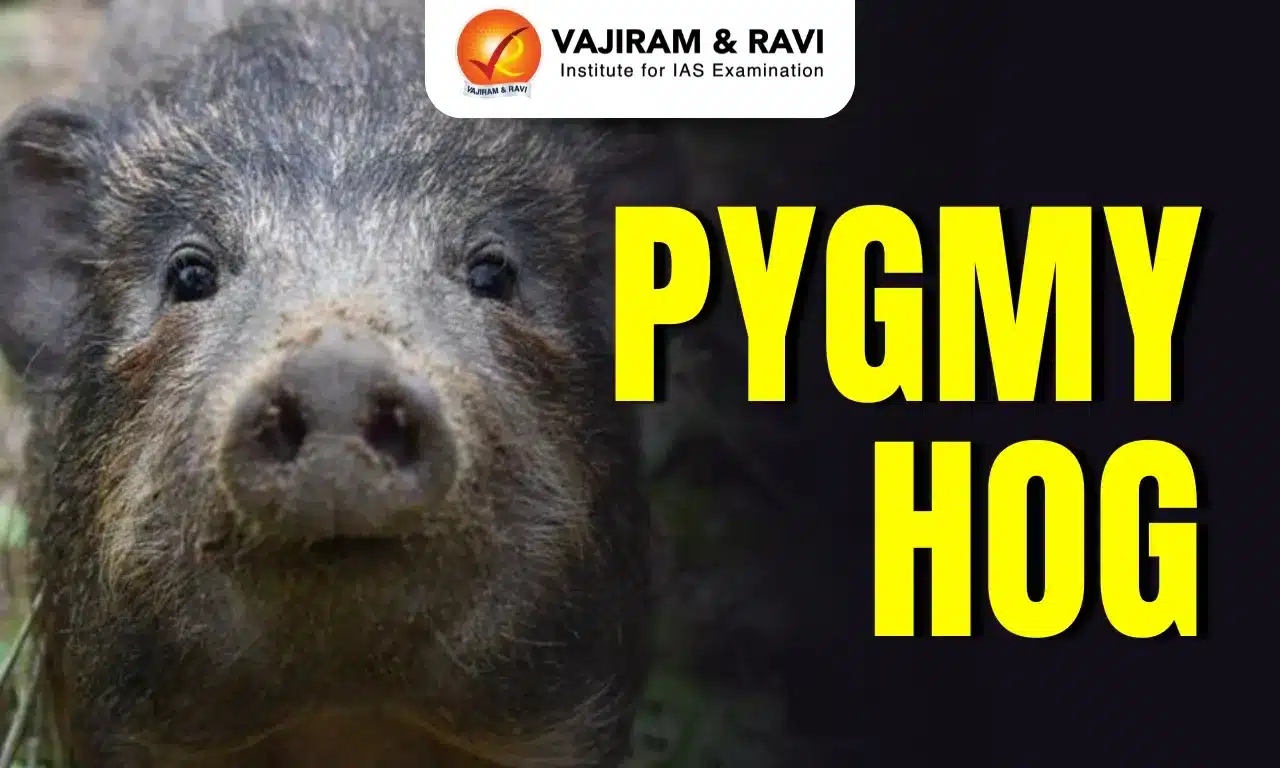
  • It is the smallest and rarest species of wild pig in the world.
  • It is one of the very few mammals that build its own home, or nest, complete with a ‘roof’.
  • It is an indicator species as its presence reflects the health of its primary habitat.
  • Habitat: It prefers undisturbed patches of grassland dominated by early succession riverine communities, typically comprising dense tall grass intermixed with a wide variety of herbs, shrubs and young trees.
  • Currently, they survive only in the grasslands of Assam’s Manas and Orang national parks.

Ecological Role of Pygmy Hog

  • Using its snout, it digs for roots, tubers, wild fruits, termites, earthworms, eggs and other food sources found in the grasslands.
  • This digging aerates the soil and enhances its quality.
  • It also helps disperse seeds through its dietary and foraging habits.

Conservation Status of Pygmy Hog

Source: DTE

Pygmy Hog FAQs

Q1: What is the conservation status of Pygmy Hog?

Ans: Critically Endangered

Q2: Where is the primary habitat of Pygmy Hog?

Ans: Manas National Park, Assam

Enquire Now