Basic Customs Duty (BCD)

Basic Customs Duty (BCD)

Basic Customs Duty Latest News

Bringing immediate relief to patients with cancer and rare diseases, Union Budget 2026-27 proposed a full exemption of basic customs duty on 17 cancer-related drugs and medicines.

About Basic Customs Duty

  • BCD is a type of tax imposed on goods imported into India. 
  • It is levied on imported items under Section 12 of the Customs Act, 1962. The tax rate is levied as per the First Schedule to Customs Tariff Act, 1975.
  • Purpose: To protect domestic industries from foreign competition, regulate trade, and generate revenue for the government. 
  • BCD is calculated as a percentage of the value of the imported goods, determined based on the customs tariff, i.e., it is fixed based on the ad-valorem. 
  • It can significantly impact the total landed cost of the imported items. 
  • BCD rates usually range from 5% to 40% and depend on the item’s category and country of origin.
  • The Central Government holds the power to exempt specific goods from tax. 
  • The calculation of BCD involves several steps:
    • Classification of Goods: Imported goods are classified under specific Harmonized System (HS) codes, which determine the applicable duty rate.
    • Assessment of Value: The value of the goods is assessed based on the transaction value, including the cost of goods, insurance, and freight (CIF).
    • Application of Duty Rate: The BCD Tax rate is applied to the assessed value to determine the duty payable. 

Other Types of Custom Duties

  • Additional Customs Duty: 
    • Additional Customs Duty, also called Special Countervailing Duty, is a tax that is applied to balance subsidies that exporting countries provide to their products
    • It helps level the playing field and ensures that domestic producers are not disadvantaged.
  • Countervailing Duty (CVD): 
    • This duty counters foreign government subsidies on exports. 
    • When foreign producers receive subsidies, they can sell at a lower price, creating unfair competition for local industries. 
    • CVD safeguards local businesses from this unfair advantage.
  • Special Additional Duty (SAD): 
    • SAD is levied on imports under the Central Excise Act and applies to the total value, including BCD and CVD. 
    • This duty shields domestic industries by offsetting the impact of low-cost imports.
  • Anti-Dumping Duty: 
    • When foreign goods are sold in India at prices below their value in the exporting country, anti-dumping duty is applied. 
    • This duty prevents unfair pricing practices that could damage domestic industries.
  • Education Cess: 
    • It is a 2% additional charge on customs duties, used to fund educational initiatives in India. 
    • Education cess basically reflects the government’s commitment to improving education standards in the country.
  • Protective Duties: 
    • These duties are designed to protect local industries from competition with cheaper imported goods. 
    • By increasing the cost of imports, protective duties make local products more appealing to consumers.
  • Safeguard Duties: 
    • Imposed under Section 8B of the Customs Tariff Act, safeguard duties are temporary measures to protect local industries from sudden increases in imports. 
    • This duty gives domestic industries time to adapt and strengthen their market position.
  • National Calamity Contingent Duty (NCCD): 
    • NCCD is applied to generate funds for responding to natural disasters and large-scale national emergencies. 
    • NCCD rate varies depending on the item and ensures quick resources are available for crisis response.

Source: TH

Basic Customs Duty FAQs

Q1: What is Basic Customs Duty (BCD)?

Ans: What is Basic Customs Duty (BCD)?

Q2: What is the primary purpose of levying Basic Customs Duty?

Ans: To protect domestic industries, regulate international trade, and generate government revenue.

Q3: How is Basic Customs Duty calculated?

Ans: BCD is calculated as a percentage of the value of imported goods, i.e., on an ad-valorem basis.

Q4: Who has the authority to exempt goods from Basic Customs Duty?

Ans: The Central Government has the power to exempt specific goods from BCD.

Q5: Is Basic Customs Duty a direct or indirect tax?

Ans: Basic Customs Duty is an indirect tax.

SHE Marts

SHE Marts

SHE Marts Latest News

The Finance Minister recently announced SHE-Mart, a new platform for women entrepreneurs.

About SHE Marts

  • SHE (Self-help Entrepreneur) Marts are planned as community-owned retail outlets that will be set up within cluster-level federations through enhanced and innovative finance instruments.
  • It aims to provide women entrepreneurs with better market access, branding opportunities, and sustainable income avenues, while strengthening grassroots institutions such as self-help groups (SHGs).
  • The proposal builds on the success of the Lakhpati Didi programme and signals a policy shift from micro-credit-led livelihoods to structured, women-owned enterprises. 
  • SHE Marts are meant to:
    • Provide permanent retail points for SHG-made goods.
    • Improve direct market access.
    • Support value-added and processed products.
    • Be backed by enhanced and innovative financing instruments.

What is the Lakhpati Didi Programme?

  • It was announced by the Prime Minister in his Independence Day speech on August 15, 2023.
  • Run by the Ministry of Rural Development, the Lakhpati Didi programme seeks to support rural women by helping members of SHGs start small businesses and earn a steady income of at least Rs 1 lakh a year. 
  • Under this scheme, women will be trained in various skills, such as plumbing, LED bulb making, drone operation and repair, and tailoring and weaving.
  • After completing the training, women will be provided with opportunities to earn income using their skills.
  • The programme aims to help them become financially independent.
  • Under the initiative, the government aims to train two crore women.

Source: PRINT

SHE Marts FAQs

Q1: What are SHE Marts?

Ans: SHE Marts are community-owned retail outlets proposed to be set up within cluster-level federations using enhanced and innovative financing instruments.

Q2: What is the primary objective of SHE Marts?

Ans: To provide women entrepreneurs with better market access, branding opportunities, and sustainable income avenues.

Q3: On which successful programme is the SHE Marts proposal based?

Ans: he Lakhpati Didi programme.

Q4: How do SHE Marts support women entrepreneurs in marketing their products?

Ans: By providing permanent retail points for goods produced by SHGs.

Mahatma Gandhi Gram Swaraj Initiative (MGGSI)

Mahatma Gandhi Gram Swaraj Initiative (MGGSI)

Mahatma Gandhi Gram Swaraj Initiative Latest News

In the Union Budget 2026-27 presented recently, the Finance Minister announced the launch of the Mahatma Gandhi Gram Swaraj Initiative aimed at strengthening Khadi, handloom, and handicrafts.

About Mahatma Gandhi Gram Swaraj Initiative

  • It was announced in the Union Budget 2026-27 to strengthen India’s traditional craft sectors.  
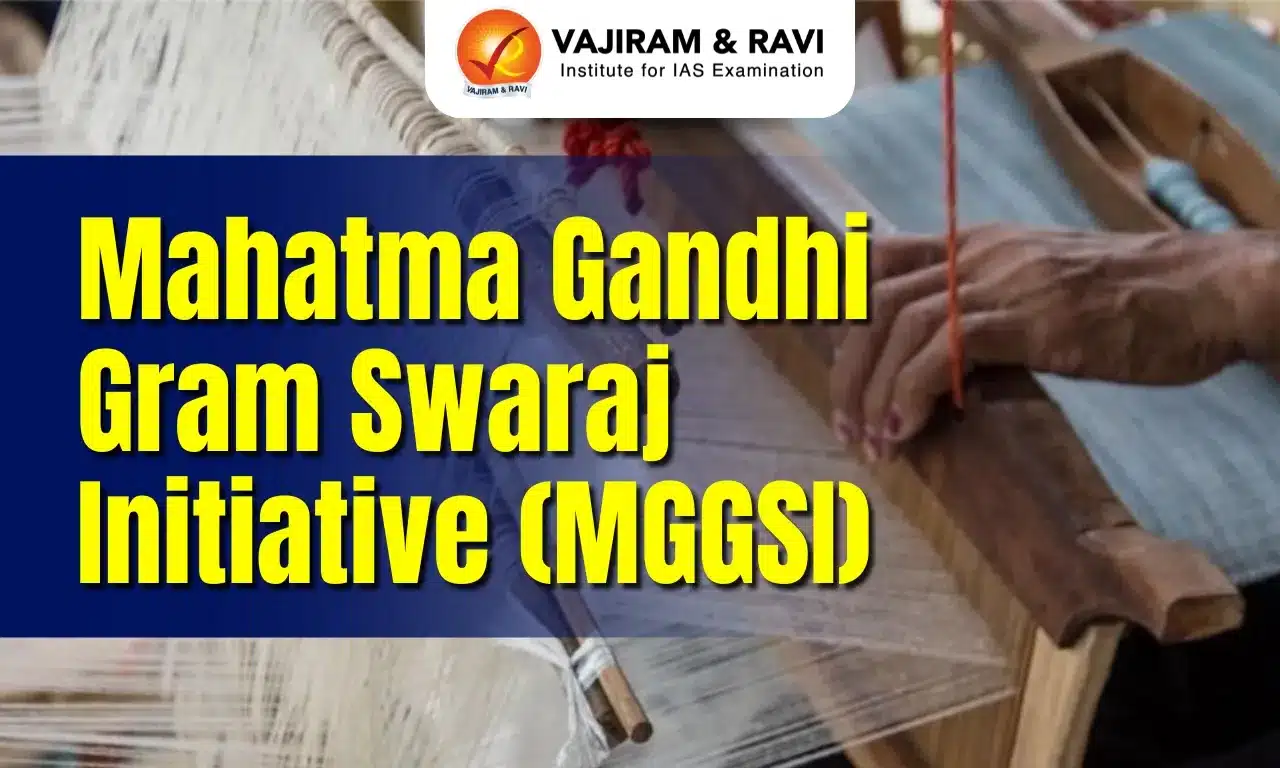
  • It is a major initiative to strengthen the khadi, handloom, and handicrafts sector by improving global market access, branding, and market linkages.
  • It is aimed at making traditional rural industries more competitive while ensuring sustainable livelihoods for artisans and weavers.
  • The programme mainly targets weavers, village industries, beneficiaries of the One District One Product (ODOP) initiative, and rural youth, and MGGSI aims to address structural challenges. 
    • These include fragmented supply chains, inconsistent quality standards, and limited market connectivity. 
  • MGGSI encourages artisans to adopt modern production methods. This would be done while preserving traditional craftsmanship. 
  • The initiative also focuses on improving market access by better branding and marketing to enable artisans to reach organised retail, export markets, and online platforms.
  • It aligns with the “Vocal for Local” philosophy and efforts to strengthen micro, small, and medium enterprises (MSMEs).
  • By reinforcing traditional industries, the initiative seeks to generate sustainable employment, reduce rural distress, and promote locally produced goods, thereby aligning with the broader vision of Atmanirbhar Bharat.

Source: IE

Mahatma Gandhi Gram Swaraj Initiative FAQs

Q1: What is the Mahatma Gandhi Gram Swaraj Initiative (MGGSI)?

Ans: MGGSI is a government initiative announced in the Union Budget 2026–27 to strengthen India’s traditional craft sectors.

Q2: Which sectors does Mahatma Gandhi Gram Swaraj Initiative (MGGSI) aim to strengthen?

Ans: The khadi, handloom, and handicrafts sectors.

Q3: Who are the primary beneficiaries of Mahatma Gandhi Gram Swaraj Initiative (MGGSI)?

Ans: Weavers, village industry workers, ODOP beneficiaries, and rural youth.
Bharat-VISTAAR

Bharat-VISTAAR

Bharat-VISTAAR Latest News

Recently, the Union Finance Minister proposed the Bharat VISTAAR tool for the agriculture sector.

About Bharat-VISTAAR

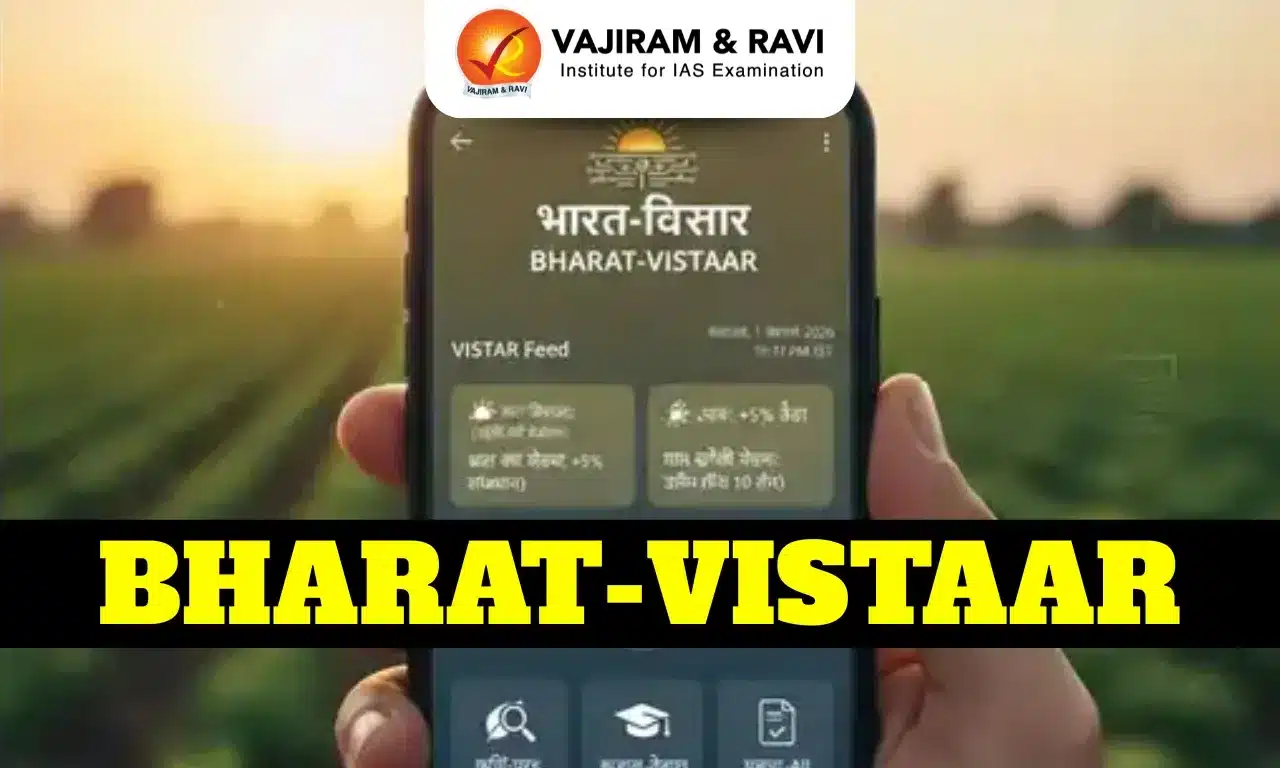
  • ‘Bharat-VISTAAR’(Virtually Integrated System to Access Agricultural Resources) is a multilingual AI tool.
  • It shall integrate the AgriStack portals and the ICAR package on agricultural practices with AI systems.
  • Significance: It will enhance farm productivity, will lead to better farmer decision making and reduce risk through customized advisory support for the farmer

What is AgriStack?

  • Agri Stack is the digital foundation being set up by the government to make it easier to bring various stakeholders together to improve agriculture in India.
  • It enables better outcomes and results for the farmers by using data and digital services. 
  • Agri Stack aims to make it easier for farmers to get easier access to cheaper credit, higher-quality farm inputs, localized and specific advice, and more informed and convenient access to markets. 
  • It also focuses on making it easier for governments to plan and implement various farmer and agriculture-focused benefit schemes.

Source: PIB

Bharat-VISTAAR FAQs

Q1: What is the primary objective of Bharat-VISTAAR?

Ans: To integrate agri-stack portals and ICAR package on farm practices with AI systems

Q2: When was Bharat-VISTAAR launched?

Ans: 2026

Biopharma SHAKTI

Biopharma SHAKTI

Biopharma SHAKTI Latest News

Recently, the Union Minister for Finance announced the launch of Biopharma Shakti initiative in budget 2026-27.

About Biopharma SHAKTI

  • ‘Biopharma SHAKTI (Strategy for Healthcare Advancement through Knowledge, Technology & Innovation)’ is designed to develop India into a global biopharmaceutical manufacturing hub.
  • This will build the ecosystem for domestic production of biologics and biosimilars. 
  • It will include a Biopharma-focused network with 3 new National Institutes of Pharmaceutical Education and Research (NIPER) and upgrading 7 existing ones.
  • It will also create a network of over 1000 accredited India Clinical Trials sites.
  • Financial Outlay & Time Period: ₹10,000 crore over the next five years
  • This initiative will catalyse investments in advanced biomanufacturing infrastructure, promote innovation and enhance India’s capabilities in high-value, next-generation therapies.
  • It will focus on building a biopharma-centric innovation and manufacturing network, responding to India's rapidly changing disease profile marked by a rising burden of non-communicable diseases such as diabetes, cancer and autoimmune disorders.

What is Biologics?

  • Biologics are complex medicines derived from living organisms.
  • Their complex manufacturing processes have traditionally limited their availability, primarily serving high-income countries.

What are Biosimilars?

  • These are highly similar versions of biologic medicines, developed through comprehensive analytical studies and rigorous preclinical and clinical trials to ensure therapeutic equivalence.
  • These products offer equally effective and safe alternatives thereby increasing market competition and reducing the costs of biologic therapies.

Source: PIB

Biopharma SHAKTI FAQs

Q1: What is the primary objective of Biopharma SHAKTI?

Ans: To develop India as a global biopharma manufacturing hub

Q2: What is the budget allocation for Biopharma SHAKTI?

Ans: ₹10,000 crore

Divyangjan Kaushal Yojana

Divyangjan Kaushal Yojana

Divyangjan Kaushal Yojana Latest News

The Union Minister of Finance announced the Divyangjan Kaushal Yojana and Divyang Sahara Yojana during the union budget 2026-2027.

About Divyangjan Kaushal Yojana

  • It is launched for persons with disabilities.
  • It is aimed at training them for “dignified livelihood opportunities”.
  • Financial Support: It has been allocated ₹200 crore for the upcoming fiscal.
  • Under this yojana “industry-relevant, customised training specific to each divyang group” will be provided for creating “dignified livelihood opportunities”
  • Sectors Covered: Information Technology, Animation, Visual Effects, Gaming, and Comics (AVGC), Hospitality, and Food and Beverages, which offer “task-oriented and process-driven roles”.

About Divyang Sahara Yojana

  • Financial Support: ₹100 crore has been allocated.
  • It supports Artificial Limbs Manufacturing Corporation of India (ALIMCO) to scale up production of high-quality assistive devices, deepen research and development and integrate advanced technologies, including artificial intelligence, into product design and services.
  • It also strengthens PM Divyasha Kendras and supports setting up of Assistive Technology Marts as modern retail-style centres where Divyangjans and senior citizens can see, try and purchase assistive products.

What is  PM Divyasha Kendra?

  • It is a unique initiative aimed at providing integrated services under one roof—including assessment, evaluation, counselling, distribution, and post-distribution care—for eligible Divyangjan (persons with disabilities) and elderly beneficiaries.
  • These centres are being established through ALIMCO (Artificial Limbs Manufacturing Corporation of India), 
    • ALIMCO is a Central Public Sector Undertaking under the Department of Empowerment of Persons with Disabilities (DEPwD).

Source: PIB

Divyangjan Kaushal Yojana FAQs

Q1: What is the primary objective of Divyangjan Kaushal Yojana?

Ans: To provide skill training and employment opportunities to persons with disabilities.

Q2: When was Divyangjan Kaushal Yojana launched?

Ans: 2026

Guru Ravidas

Guru Ravidas

Guru Ravidas Latest News

The Prime Minister recently inaugurated the Adampur Airport in Punjab and renamed it after Sri Sant Guru Ravidas Ji in a bid to honour the revered saint and social reformer on his birth anniversary.

About Guru Ravidas

  • Guru Ravidas (1377-1527 C.E.) was a renowned saint known for his contributions to the Bhakti movement.
  • His devotional songs and verses made a lasting impact upon the Bhakti Movement.
  • Guru Ravidas is also known as Raidas, Rohidas, and Ruhidas.
  • Ravidas was born in a village called Sir Gobardhanpur, near Varanasi in Uttar Pradesh, India. 
    • Today, his birthplace is a special place known as Shri Guru Ravidass Janam Asthan.
    • His birthday is celebrated as Ravidas Jayanti.
  • Ravidas is traditionally seen as a student of the bhakti-poet Ramananda. 
  • He is also thought to have lived around the same time as Kabir, another famous poet-saint.
  • He was a well-known poet. His poems, written in local languages, inspired many people.
    • 41 of his devotional songs and poems are found in the Sikh holy book, the Guru Granth Sahib. 
    • Many of his poems are also in the Panch Vani text of the Dadu Panthi tradition within Hinduism. 
  • Philosophy and Teachings:
    • The core of Guru Ravidas’s philosophy was the rejection of the caste system and the promotion of human rights and dignity. 
    • He envisioned a society called 'Beghumpura' (a city without sorrow), where there is no suffering, no fear, and no discrimination.
    • He also became a symbol of opposition to untouchability in society by the higher caste people for the lower caste people.
    • He emphasised the philosophy of spiritual freedom.
    • He abandoned the saguna (with attributes, image) forms of supreme beings and focussed on the nirguna (without attributes, abstract) form of supreme beings.
    • Meera Bai, a revered figure in Hindu spiritualism, is said to have considered Guru Ravidas as her spiritual Guru. 
  • Ravidassia religion:
    • The Guru’s teachings now form the basis of the Ravidassia religion.
    • Ravidassias believe that Guru Ravidas should be treated as a saint just like the other gurus, as he lived before the first Sikh Guru, and his teachings were studied by the Sikh Gurus.
    • The Ravidassia community adopted the Amrit Bani Guru Ravidass as its holy book and established its own symbols and rituals.

Source: IT

Guru Ravidas FAQs

Q1: Who was Guru Ravidas?

Ans: Guru Ravidas was a renowned saint known for his contributions to the Bhakti movement.

Q2: During which period did Guru Ravidas live?

Ans: Guru Ravidas lived from 1377 to 1527 C.E.

Q3: By what other names is Guru Ravidas known?

Ans: He is also known as Raidas, Rohidas, and Ruhidas.

Q4: Who is traditionally considered Guru Ravidas’s spiritual teacher?

Ans: Ramananda, the Bhakti poet-saint.

Q5: Which contemporary saint is Guru Ravidas believed to have lived alongside?

Ans: He is also thought to have lived around the same time as Kabir, another famous poet-saint.

Sovereign Gold Bonds

Sovereign Gold Bonds

Sovereign Gold Bonds Latest News

The Budget has clarified that the capital gains tax exemption on sovereign gold bonds will not apply to investors who purchase them in the secondary market and hold them to maturity.

About Sovereign Gold Bonds

  • These bonds are government securities denominated in grams of gold.
  • The SGB Scheme was first launched by the Government of India (GOI) on October 30, 2015. 
  • They are substitutes for holding physical gold. Investors have to pay the issue price, and the bonds will be redeemed upon maturity.
  • Issuance: The bond is issued by the Reserve Bank on behalf of the GOI.
  • Eligible to invest in the SGBs: The bonds will be restricted for sale to resident Indian entities, including individuals, Hindu Undivided Family (HUF), Trusts, Universities and Charitable Institutions.
  • Investment Limits in SGBs
    • The bonds are issued in denominations of one gram of gold and in multiples thereof.
    • The minimum investment in the bond shall be one gram, with a maximum subscription limit of 4 kg for individuals, 4 kg for HUFs, and 20 kg for trusts.
  • In case of joint holding, the investment limit of 4 KG will be applied to the first applicant only.
  • Term: The term of the bond will be for a period of 8 years, with an exit option in the 5th, 6th, and 7th years, to be exercised on the interest payment dates.
  • Bonds are sold through offices or branches of Nationalised Banks, Scheduled Private Banks, Scheduled Foreign Banks, designated Post Offices, Stock Holding Corporation of India Ltd. (SHCIL), and the authorised stock exchanges either directly or through their agents.

Source: THBS

Sovereign Gold Bonds FAQs

Q1: What is the primary objective of Sovereign Gold Bonds?

Ans: To reduce dependence on gold imports

Q2: Who issues Sovereign Gold Bonds?

Ans: Reserve Bank of India

Carbon Capture Utilisation and Storage

Carbon Capture Utilisation and Storage

Carbon Capture Utilisation and Storage Latest News

Recently, the Finance Minister proposed an outlay of Rs 20,000 crore over the next five years in Carbon Capture Utilisation and Storage (CCUS) technologies.

About Carbon Capture Utilisation and Storage

  • It is a suite of technologies that enable the mitigation of carbon dioxide (CO2) emissions from large point sources such as power plants, refineries and other industrial facilities, or the removal of existing CO2 from the atmosphere.
  • Working of Carbon Capture Utilisation and Storage:
  • It consists of three stages: capture, transport and storage (or usage) of CO2.
  • Capturing methods: The main methods for capturing CO2 are: post-combustion; pre-combustion; and oxy-fuel combustion.
    • Post-combustion technology: It separates CO2 from the flue gas, by using a chemical solvent for instance, after the fuel is burnt.
    • Pre-combustion methods: It involves converting the fuel into a gas mixture consisting of hydrogen and CO2 before it is burnt. 
    • Oxy-fuel Combustion: Oxy-fuel technology involves burning a fuel with almost pure oxygen to produce CO2 and steam, with the released CO2 subsequently captured.
  • CCUS can play a strategic role in global decarbonisation efforts in a number of ways. 
    • Reducing emissions in ‘hard-to-abate’ industries
    • Producing low-carbon electricity and hydrogen, this can be used to decarbonise various activities
    • Removing existing CO2 from the atmosphere

Source: IE

Carbon Capture Utilisation and Storage FAQs

Q1: What is CCUS?

Ans: A technology to reduce greenhouse gas emissions

Q2: Why is CCUS important?

Ans: It mitigates climate change by reducing CO2 emissions

Securities Transaction Tax (STT)

Securities Transaction Tax

Securities Transaction Tax (STT) Latest News

The Finance Minister recently proposed to raise the Securities Transaction Tax (STT) on both futures and options by up to 150%.

About Securities Transaction Tax (STT)

  • It is a direct tax levied on the purchase and sale of securities listed on recognised stock exchanges in India. 
  • It is levied and collected by the central government of India.
  • It is applied irrespective of the profit or loss made by you in the transaction. It is levied directly on the value of the transaction. 
  • STT operates similarly to Tax Deducted at Source (TDS) in that it is deducted at the time of the transaction itself. 
  • The tax is paid directly to the government through the stock exchanges or other intermediaries involved in the transaction.
  • Introduced through the Finance Act of 2004, STT was designed to simplify taxation on securities trading and curb tax evasion in the capital market.
  • STT is governed by the Securities Transaction Tax Act (STT Act), and STT Act has specifically listed various taxable securities transactions, i.e., transactions on which STT is leviable.
    • Taxable securities include equities, derivatives, or equity-oriented mutual funds investment units (excluding commodities and currency).
    • It also includes unlisted shares sold under an offer for sale to the public included in IPO and where such shares are subsequently listed in stock exchanges. 
    • STT is not applicable to off-market transactions or to commodity or currency transactions.
  • The rate of taxation is different for different types of securities.
  • The government has the authority to revise STT rates periodically. 

What is Futures and Options Trading?

  • Futures and options are the major types of stock derivatives trading in a share market. 
    • Derivatives are financial contracts whose value is linked to the value of an underlying asset such as shares, stock market indices, commodities, ETFs, and more.. 
    • They are complex financial instruments that are used for various purposes, including speculation, hedging and getting access to additional assets or markets.
  • Futures and Options are contracts signed by two parties for trading a stock asset at a predetermined price at a later date.
  • Futures and Options trading are different in terms of obligations imposed on individuals. 
    • Futures contracts obligate the buyer to purchase an underlying asset, while the seller must deliver it at a predetermined price and date. 
    • In options contracts, the buyer has the right, but not the obligation, to buy or sell the underlying asset at a predetermined price and date, while the seller must honour the contract if the buyer chooses to exercise their option.

Source: CNBC

Securities Transaction Tax (STT) FAQs

Q1: What is Securities Transaction Tax (STT)?

Ans: STT is a direct tax levied on the purchase and sale of securities listed on recognised stock exchanges in India.

Q2: On what basis is Securities Transaction Tax (STT) levied?

Ans: STT is levied on the value of the securities transaction, irrespective of whether the investor makes a profit or loss.

Q3: When is Securities Transaction Tax (STT) collected?

Ans: STT is deducted at the time of the transaction itself, similar to Tax Deducted at Source (TDS).

Q4: When was Securities Transaction Tax (STT) introduced in India?

Ans: STT was introduced through the Finance Act, 2004.

Q5: Is Securities Transaction Tax (STT) applicable to off-market securities transactions?

Ans: No, STT is not applicable to off-market transactions.

Persian Gulf

Persian Gulf

Persian Gulf Latest News

The Directorate General of Civil Aviation (DGCA) recently issued an urgent advisory, asking all Indian carriers to avoid flying through the West Asian and Persian Gulf airspace following escalating military tensions in the region.

About Persian Gulf

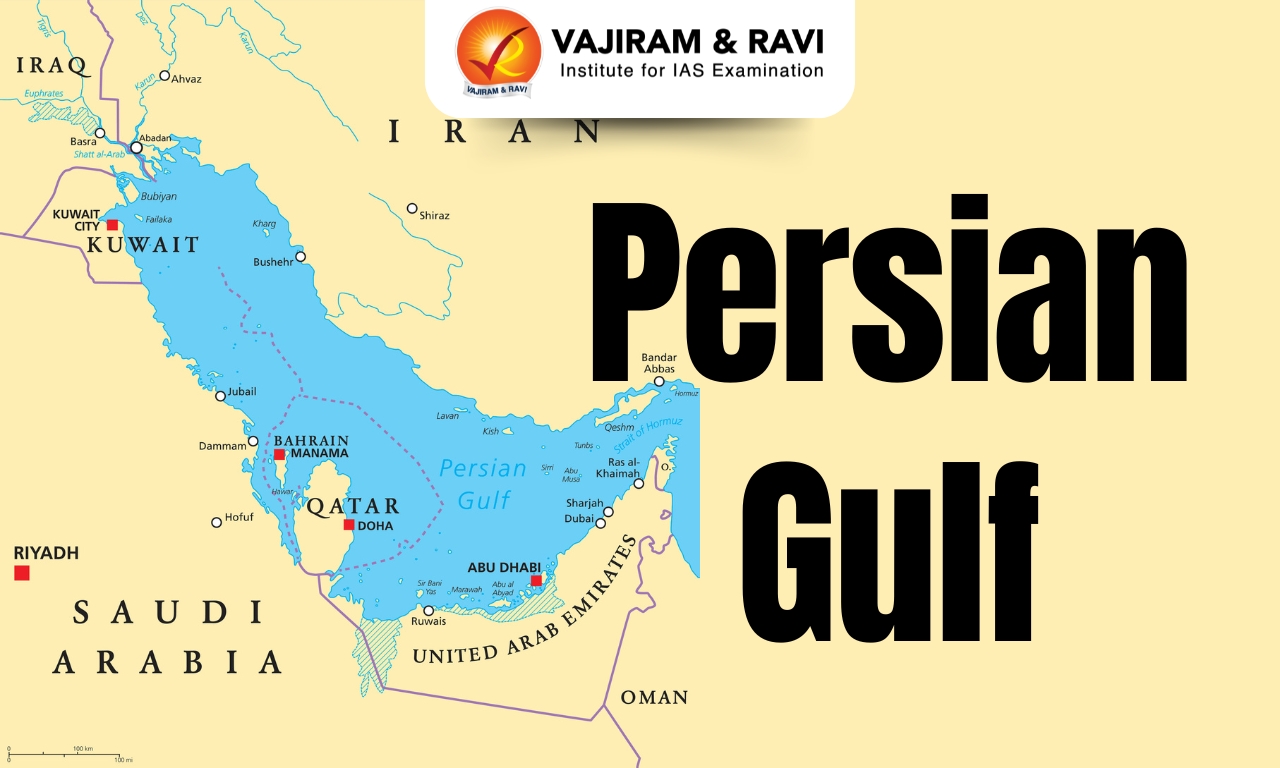
  • It is a marginal sea of the Indian Ocean.
  • It is located in Western Asia.
  • It is an extension of the Gulf of Oman and connects to the Indian Ocean via the Strait of Hormuz in the east.
  • It is also referred to as the Arabian Gulf or Gulf of Iran. 
  • It lies between the Arabian Peninsula and Iran to the southwest and northeast, respectively.
  • It is about 989 km long. Its narrowest point between two land areas is 56 km.
  • Iran borders it from the north, east and northeast, while Oman and UAE surround it from the south and southeast. 
  • It is surrounded by Qatar, Saudi Arabia and Bahrain from the southwest and west and Iraq and Kuwait from the northwest.
  • To the west, it connects to a large river delta called Shatt al-Arab. Here, the waters from two major rivers, the Euphrates and the Tigris, flow into the Gulf.
  • It has a coastline length of about 5,117 km, with Iran having the longest coastline (1,536 km).
  • Islands:
  • There are several islands in the Persian Gulf, including Bahrain, the Persian Gulf state. Bahrain comprises over 50 islands centered on Bahrain Island.
  • Qeshm Island is the largest island in the Persian Gulf, almost 2.5 times the size of Bahrain.
  • The area in and around the Persian Gulf holds the world's largest amounts of crude oil.
  • Al-Safaniya, the world's largest offshore oilfield, is located in the Persian Gulf.

Source: HT

Persian Gulf FAQs

Q1: What type of water body is the Persian Gulf?

Ans: A marginal sea of the Indian Ocean.

Q2: Between which two major landmasses is the Persian Gulf located?

Ans: The Arabian Peninsula and Iran.

Q3: Which country has the longest coastline along the Persian Gulf?

Ans: Iran

Q4: Why is the Persian Gulf economically important globally?

Ans: It holds the world’s largest reserves of crude oil.

Tomahawk Missile

Tomahawk Missile

Tomahawk Missile Latest News

The United States unleashed an array of weaponry against Iranian targets recently, including Tomahawk cruise missiles, stealth fighters, and for the first time in combat, low-cost one-way attack drones modeled after Iranian designs.

About Tomahawk Missile

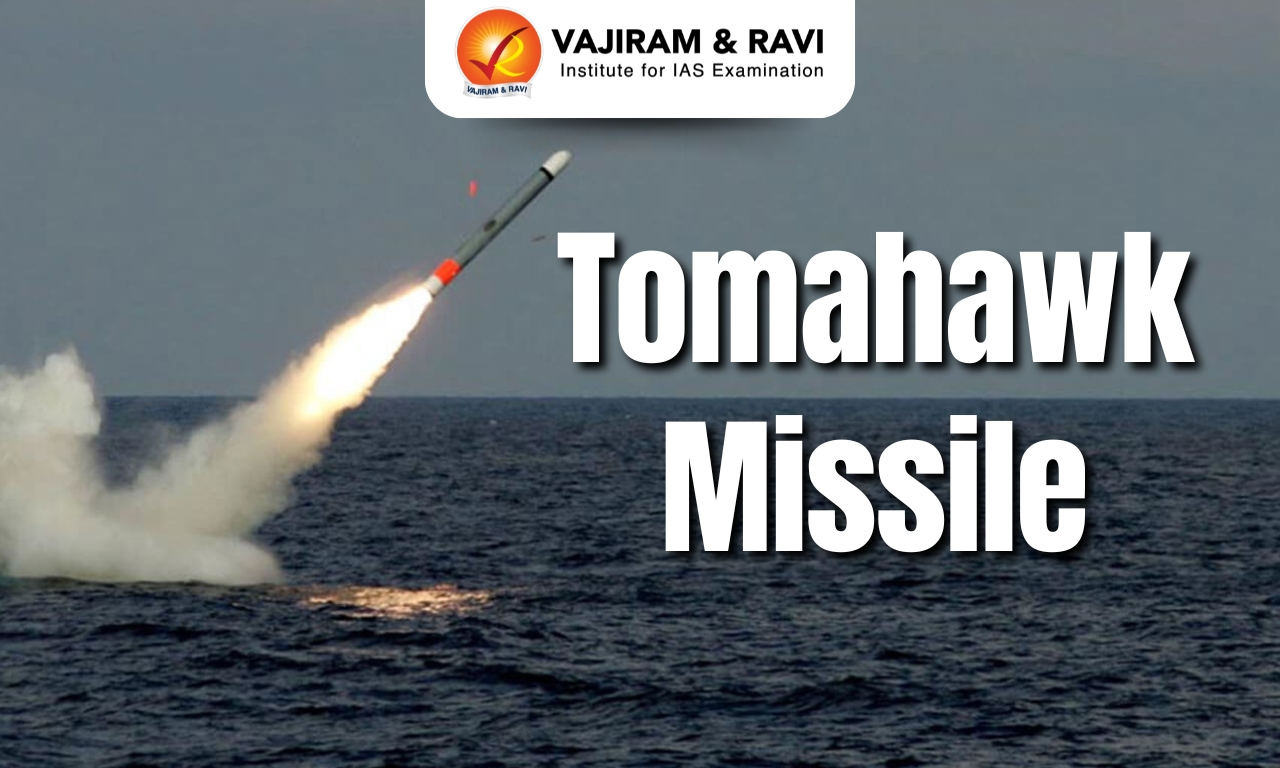
  • It is an American-made long-range subsonic cruise missile used for deep land attack warfare.
  • It is launched from ships or submarines through a Vertical Launch System.
  • The Tomahawk was first conceptualised in the early 1970s as a Cold War-era weapon.
  • Developed by General Dynamics and later Raytheon, it entered service in 1983.
  • Tomahawks were first deployed in combat during Operation Desert Storm in 1991.

Tomahawk Missile Features

  • It measures 18.3 feet in length and weighs about 3,200 pounds (4,400 with booster). 
  • It can carry a 1,000-pound conventional warhead or cluster munitions.
  • It is powered by a solid propellant during its launch phase. Thereafter, it is powered by a turbofan engine that does not emit much heat, which makes infrared detection difficult.
  • They cruise at subsonic speeds of 880 kmph and fly as low as 30-50 metres to avoid radar detection.
  • Tomahawks are guided by advanced GPS, inertial navigation, and terrain contour mapping. 
  • This makes them highly accurate-with a margin of error of just 10 meters. 
  • They are built to follow a non-linear path, reducing the chance of interception.
  • It has a range of up to approximately 2,400 km.
  • Each Tomahawk missile reportedly costs around $2 million.

Source: REUT

Tomahawk Missile FAQs

Q1: What type of missile is the Tomahawk?

Ans: A long-range subsonic cruise missile for deep land attack.

Q2: Which country developed the Tomahawk missile?

Ans: The United States.

Q3: What is the maximum range of the Tomahawk missile?

Ans: Approximately 2,400 km.

Q4: From which platforms can the Tomahawk missile be launched?

Ans: Ships and submarines.

Enquire Now