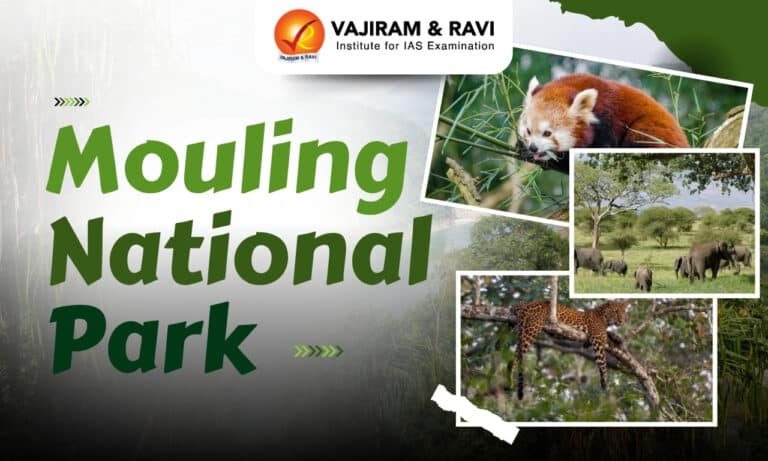
Mouling National Park is an important protected area located in the state of Arunachal Pradesh. It was established in 1986, the park is known for its rich biodiversity, dense forests, and beautiful Himalayan landscapes. It is situated in the Eastern Himalayas, one of the world’s most important biodiversity hotspots. The park provides a safe habitat to many rare and endangered species of plants and animals. Due to its remote location and difficult terrain, much of the park remains untouched, making it an important area for wildlife conservation.
Mouling National Park Location and Geography
Mouling National Park is located in the Upper Siang, East Siang, and West Siang districts of Arunachal Pradesh. It covers an area of about 483 square kilometers and forms part of the larger UNESCO-recognized Dihang-Dibang Biosphere Reserve.
The park is characterized by steep mountains, deep valleys, dense forests, and numerous rivers and streams. The altitude ranges from around 750 meters to more than 4,000 meters above sea level. Because of this wide variation in elevation, different types of ecosystems are found within the park. The Siang River and its tributaries play an important role in shaping the region’s landscape and supporting its biodiversity.
Mouling National Park Flora & Fauna
Mouling National Park is known for its rich biodiversity, supporting a wide variety of plant and animal species due to its diverse climatic conditions and altitudinal range.
Flora
- Dense tropical evergreen forests dominate the lower regions of the park.
- Subtropical and temperate forests are found at middle elevations.
- Higher altitudes support alpine vegetation and grasslands.
- Rich presence of Oak, Pine, Fir, and Rhododendron trees.
- Home to numerous species of Bamboo and Cane, which are important components of the ecosystem.
- Contains a variety of Orchids, Ferns, and Mosses.
- Supports several medicinal and aromatic plants used by local communities.
- The diverse vegetation helps maintain ecological balance and provides habitat for wildlife.
Fauna
- Provides habitat to the endangered Red Panda, one of the park’s flagship species.
- Supports large mammals such as Bengal Tiger, Leopard, and Clouded Leopard.
- Home to Asiatic Black Bear and Himalayan Musk Deer.
- Other mammals include Goral, Serow, Barking Deer, and Wild Boar.
- The park shelters the Hoolock Gibbon, India’s only ape species.
- Rich bird diversity includes Great Hornbill, Wreathed Hornbill, Himalayan Monal, and Tragopan.
- Several species of Eagles, Pheasants, Woodpeckers, and Sunbirds are also found here.
- The park supports a variety of reptiles, amphibians, snakes, lizards, frogs, and toads.
- Its diverse wildlife makes it an important conservation area in the Eastern Himalayas.
- Acts as a safe refuge for many rare, endemic, and threatened species.


Mouling National Park Significance
Mouling National Park is one of the most important protected areas in Arunachal Pradesh and plays a vital role in conserving the rich biodiversity of the Eastern Himalayas. Its diverse ecosystems, rare wildlife species, and dense forests make it an ecologically significant region for wildlife conservation and environmental protection.
- Protects the unique biodiversity of the Eastern Himalayan hotspot, one of the world’s richest ecological regions.
- Provides a safe habitat for endangered species such as the Red Panda, Clouded Leopard, and Himalayan Musk Deer.
- Conserves diverse forest ecosystems ranging from tropical evergreen forests to alpine vegetation.
- Serves as an important part of the Dihang-Dibang Biosphere Reserve, strengthening regional conservation efforts.
- Maintains ecological balance by supporting a wide variety of plant and animal species.
- Protects important watersheds and river catchment areas associated with the Siang River system.
- Helps regulate the local climate and contributes to carbon sequestration through its dense forest cover.
- Preserves several species of medicinal plants and rare Himalayan flora.
- Acts as a vital wildlife corridor, allowing the movement and genetic exchange of animal populations.
- Supports scientific research, biodiversity monitoring, and environmental studies.
- Promotes eco-tourism and environmental awareness while encouraging sustainable development.
- Helps preserve the traditional relationship between local tribal communities and forest ecosystems.
- Contributes significantly to India’s efforts in wildlife conservation and ecosystem protection.
Conservation Challenges in Mouling National Park
Despite its protected status, Mouling National Park faces several conservation challenges that threaten its rich biodiversity and fragile ecosystems.
- Poaching and illegal hunting pose a threat to several rare and endangered wildlife species.
- Habitat degradation due to human activities in surrounding areas affects wildlife populations.
- Climate change is altering temperature and rainfall patterns, impacting ecosystems and species distribution.
- Forest fires, both natural and human-induced, can damage vegetation and wildlife habitats.
- Human-wildlife conflict occurs when animals move into nearby settlements in search of food or habitat.
- Encroachment and land-use changes around the park put pressure on forest resources.
- The park’s rugged terrain and remote location make monitoring and patrolling difficult.
- Limited infrastructure can affect effective wildlife management and conservation activities.
- Illegal extraction of forest resources, including timber and medicinal plants, can disturb ecological balance.
- Invasive plant species may compete with native vegetation and reduce biodiversity.
- Developmental activities in nearby regions can lead to habitat fragmentation and disturbance.
- Lack of awareness among some local communities regarding wildlife conservation may create additional challenges.
Protection Measures in Mouling National Park
Various conservation and management initiatives have been implemented to protect the rich biodiversity of Mouling National Park. These measures focus on safeguarding wildlife, preserving natural habitats, and ensuring the sustainable management of forest resources.
- Regular anti-poaching patrols are conducted to prevent illegal hunting and wildlife trafficking.
- Strict enforcement of wildlife protection laws helps safeguard endangered species and their habitats.
- Habitat conservation programs are implemented to protect forests, grasslands, and critical wildlife areas.
- Biodiversity monitoring is carried out to track the population and health of various plant and animal species.
- Forest restoration and afforestation activities help regenerate degraded areas and improve ecosystem health.
- Protection of wildlife corridors ensures safe movement of animals between different habitats.
- Community participation is encouraged to involve local tribal communities in conservation efforts.
- Awareness and environmental education programs promote wildlife conservation and sustainable resource use.
- Scientific research and ecological studies support evidence-based conservation planning and management.
- Control of illegal extraction of forest resources helps maintain ecological balance within the park.
- Measures are taken to prevent and manage forest fires that may threaten biodiversity.
- Conservation efforts within the Dihang-Dibang Biosphere Reserve strengthen the protection of the park’s ecosystems.

 Last updated on Oct, 2026
→ UPSC 2027 Notification will be released on 13 January 2027 at upsconline.nic.in.
→ Check Nobel Prize 2026 Winners List here.
→ Download PIB PRiSM Monthly Magazine 2026 here.
→ Check UPSC Monthly Current Affairs Magazine The Recitals here.
→ Check out the latest UPSC Syllabus here.
→ Download UPSC Model Answers for Mains 2026
→ UPSC Mains Question Paper 2026 is out now for Essay & GS Paper 1, 2, 3 & 4.
→ UPSC Calendar 2027 has been released.
→ Enroll in Vajiram & Ravi’s UPSC Mains Test Series 2027 for structured answer writing practice, expert evaluation, and exam-oriented feedback.
→ Join Vajiram & Ravi’s UPSC Mentorship Program 2027 for personalized guidance, strategy planning, and one-to-one support from experienced mentors.
→ Go through the UPSC Mains Previous Year Papers to enhance your preparation.
→ UPSC has released UPSC Toppers List 2025 with the Civil Services final result on its official website.
→ Also check Best UPSC Coaching in India
Mouling National Park FAQs
Q1. Where is Mouling National Park located?+
Q2. When was Mouling National Park established?+
Q3. Why is Mouling National Park famous?+
Q4. Which biosphere reserve includes Mouling National Park?+
Q5. What is the area covered by Mouling National Park?+
Q6. Which is the most famous animal found in Mouling National Park?+
Q7. What types of forests are found in Mouling National Park?+
Q8. Which river is associated with Mouling National Park?+
Tags: geography geography notes mouling national park