Papikonda National Park

Papikonda National Park

Papikonda National Park Latest News

The adult male tiger, named ‘Explorer’, was reintroduced into the wild in the Papikonda National Park (PNP) in Andhra Pradesh as part of Operation Stripes.

About Papikonda National Park

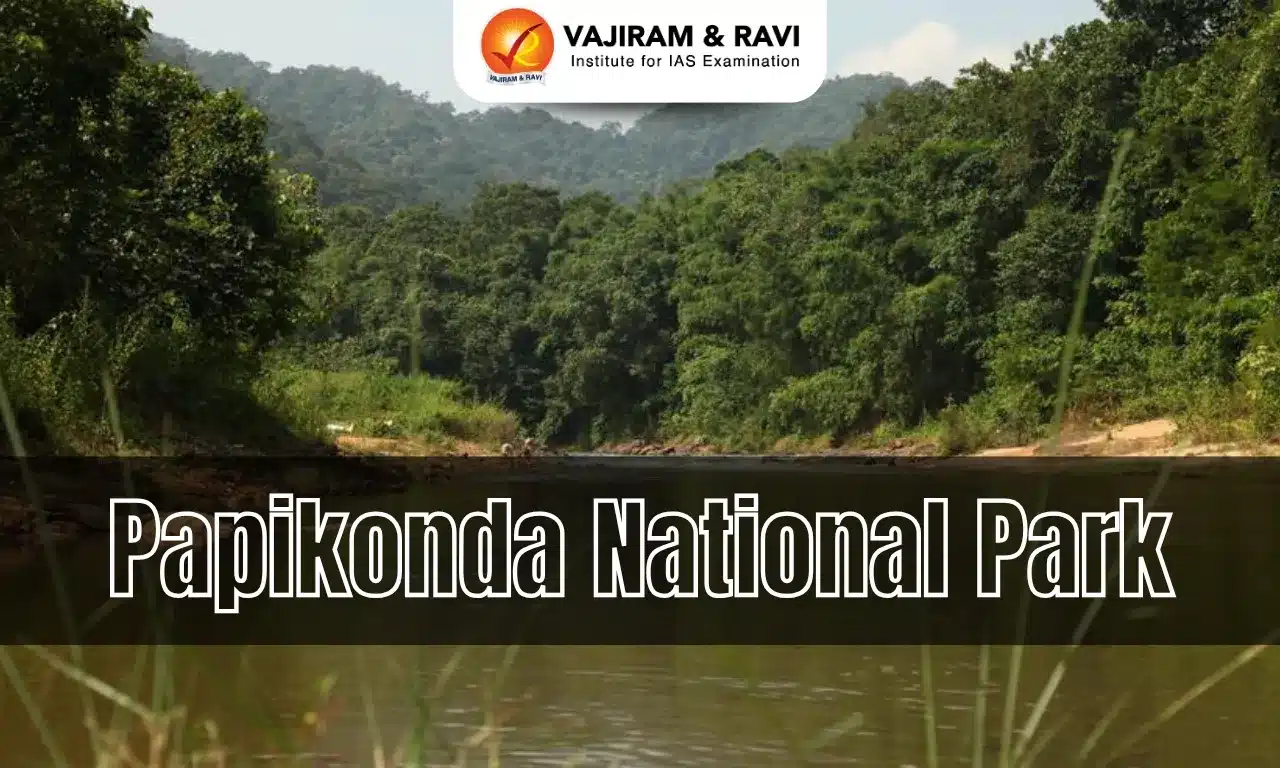
  • Location: It is located in the East Godavari and West Godavari Districts of Andhra Pradesh.
  • It lies along the banks of the Godavari River.
  • Terrain: It encompasses a rugged landscape with steep slopes, hills, and deep valleys. 
  • Mountains: There are 62 named mountains in the park. Devara Konda is the highest point. The most prominent mountain is Verala Konda.
  • It has been recognized as an Important Bird and Biodiversity Area by BirdLife International.
  • Vegetation: The park is characterized by tropical, moist deciduous forests mixed with patches of semi-evergreen and dry deciduous forests.
  • Flora: The park is home to several types of trees, including teak, rosewood, sandalwood, bamboo, eucalyptus, sal, mahua, pterocarpus, terminalia, and cassia.
  • Fauna:  Bengal tiger, Indian leopard, sloth bear, and Indian wild dog (dhole).
    • A unique dwarf breed of goat known locally as the “kanchu mekha” originates in this region.

Source: TH

Papikonda National Park FAQs

Q1: Which river flows through Papikonda National Park?

Ans: Godavari River

Q2: What is the main attraction of Papikonda National Park?

Ans: Four Horned Antelope

White-Rumped Vulture

White-Rumped Vulture

White-Rumped Vulture Latest News

Forest officials recently rescued a critically endangered White-rumped vulture found weak and grounded at Mampad near Nilambur, Kerala.

About White-Rumped Vulture

  • It is a small Old World vulture native to South and Southeast Asia.
  • Scientific name: Gyps bengalensis
  • It is also known as Indian White-backed Vulture or Oriental White-backed Vulture.
  • Like other vultures, it feeds mostly on carcasses, which it finds by soaring high in thermals and spotting other scavengers. 
  • Distribution: Pakistan, India, Bangladesh, Nepal, Bhutan, Myanmar (Burma), Thailand, Laos, Cambodia, and southern Vietnam.
  • Habitat
    • Found mostly in plains and less frequently in hilly regions
    • It can also be seen in villages and cities near to cultivation.

White-Rumped Vulture Population

  • In the 1980s, the global population was estimated at several million individuals, and it was thought to be “the most abundant large bird of prey in the world”.
  • As of 2021, the global population was estimated at less than 6,000 mature individuals.
  • The main reason for this big decline is a medicine called diclofenac
  • This medicine, used for farm animals, poisons the vultures when they eat dead animals.
  • It causes their kidneys to fail.

White-Rumped Vulture Features

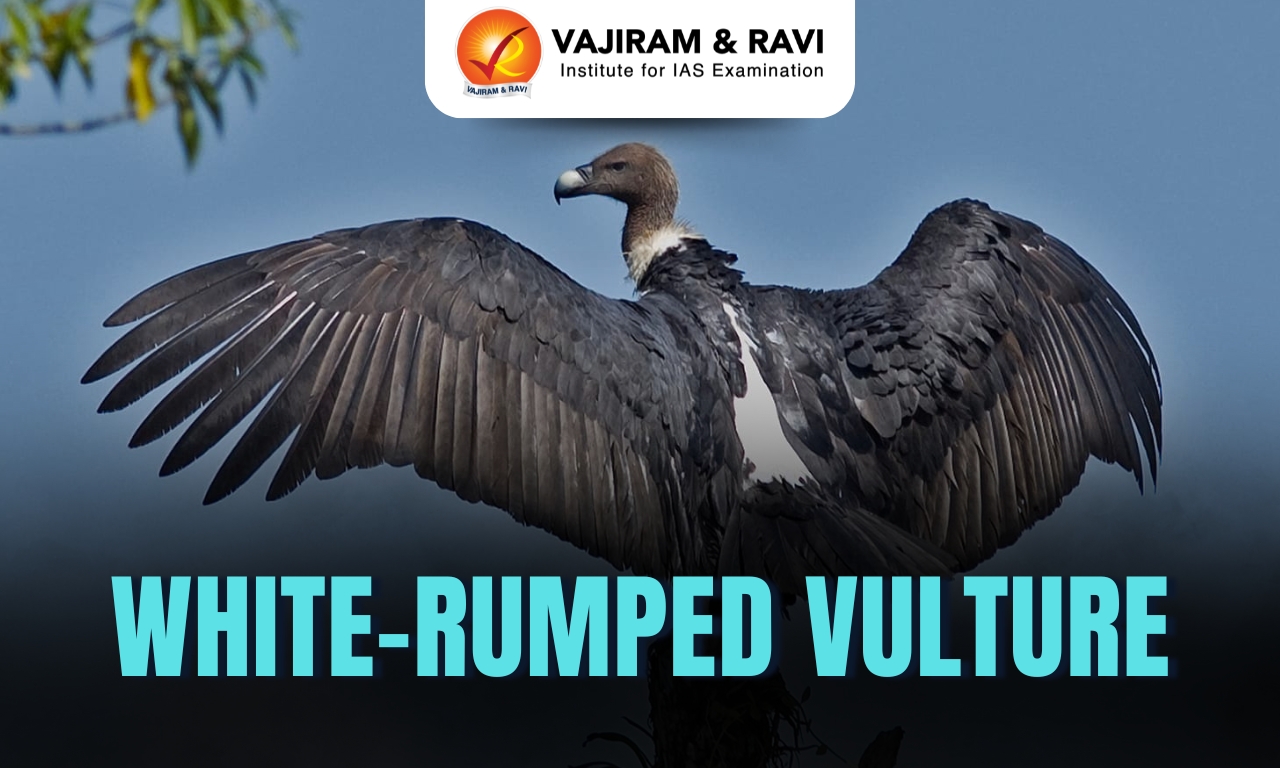
  • It has an unfeathered head and neck, very broad wings, and short tail feathers.
  • Adults are 75 to 85 cm tall, their wing span is 180 to 210 cm, and their weight ranges from 3.5 to 7.5 kg.
  • The sexes are approximately equal in size.
  • Adults are darker than juveniles, with blackish plumage, a white neck-ruff, and a white patch of feathers on the lower back and upper tail, from which their common name is derived.
  • There is a pale grey patch on the upper surface of the wings, visible when the wings are folded. The undersides of the wings are a dark slate to brownish color.

White-Rumped Vulture Conservation Status

It is classified as 'Critically Endangered' under the IUCN Red List.

Source: TH


White-Rumped Vulture FAQs

Q1: In which regions is the White-Rumped Vulture native?

Ans: It is native to South and Southeast Asia.

Q2: What are the other common names of the White-Rumped Vulture?

Ans: It is also known as the Indian White-backed Vulture or Oriental White-backed Vulture.

Q3: What type of habitat does the White-Rumped Vulture prefer?

Ans: It is mostly found in plains and less frequently in hilly regions, and can also be seen near villages and cultivated areas.

Q4: What is the conservation status of the White-Rumped Vulture according to the IUCN Red List?

Ans: It is listed as Critically Endangered.

Chincha Kingdom

Chincha Kingdom

Chincha Kingdom Latest News

New archaeological evidence reveals that seabird guano – nutrient-rich bird droppings - may have been a major factor in the rise of Peru’s precolonial Chincha Kingdom.

About Chincha Kingdom

  • The 'Chincha Kingdom,' which was established in the coastal region of modern-day Peru, was a powerful ancient state that flourished before the rise of the Inca Empire.
  • It ruled the Chincha Valley, about 130 miles south of Lima (capital of Peru).
  • The Chincha Kingdom and its culture were very strong between 900 CE and 1450 CE.  This time is known as the Late Intermediate Period in pre-Columbian Peru.
  • It was a large-scale society comprising an estimated 100,000 people. 
  • It was organised into specialist communities such as fisherfolk, farmers, and merchants
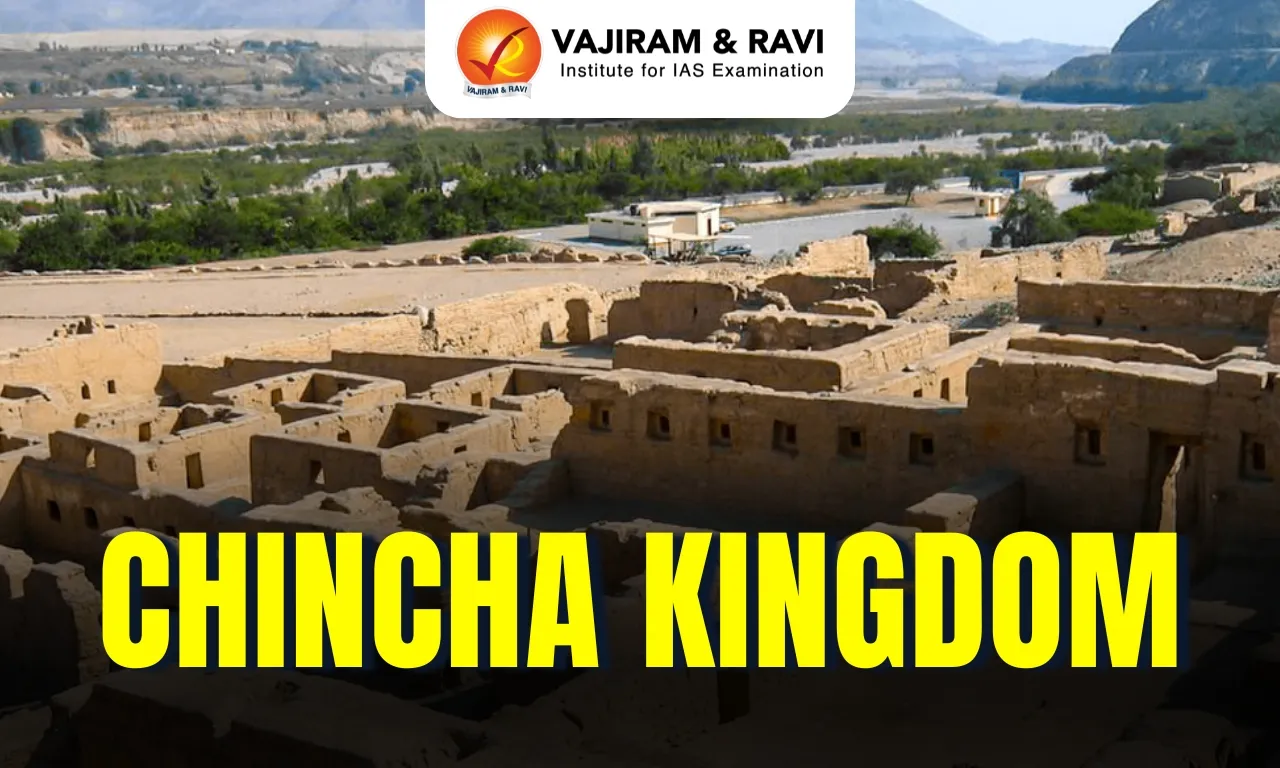
  • The Chinchas did not build enormous cities but left important marks in their religious and administrative constructions. 
  • Their temples, palaces, and fortresses were built mainly with adobe, a technique they mastered skillfully. 
  • They applied stucco to decorate walls, shaping figures of fish heads, gannets, and seabirds. 
  • The dwellings of most of their inhabitants were built around these enclosures, made with mats and reeds.
  • An important old ruin linked to the Chincha is La Centinela, found near the city of Chincha Alta.
  • Decline:
    • Conquered by the Inca Empire around 1476 CE.
    • Later affected by Spanish conquest in the 16th century.
      The population drastically declined due to diseases and colonization.
  • A new analysis suggests that the secret to the Chincha Kingdom's prosperity was seabird droppings (guano). 
    • The analysis indicates that the nutrient-rich droppings, high in nitrogen, acted as a fertilizer, increasing corn yields and significantly contributing to the economic development of the time.

Source: EA


Chincha Kingdom FAQs

Q1: Where was the Chincha Kingdom established?

Ans: It was established in the coastal region of modern-day Peru.

Q2: During which period did the Chincha Kingdom flourish?

Ans: It flourished between 900 CE and 1450 CE.

Q3: How was Chincha society organized?

Ans: It was organized into specialist communities such as fisherfolk, farmers, and merchants.

Q4: What is an important archaeological ruin linked to the Chincha Kingdom?

Ans: La Centinela is an important ruin linked to the Chincha Kingdom.

Q5: Why did the population of the Chincha Kingdom drastically decline?

Ans: The population declined due to diseases and colonization.

Semaglutide

Semaglutide

Semaglutide Latest News

Hyderabad-based Natco Pharma recently received approval from the Central Drugs Standard Control Organisation (CDSCO) to manufacture and market generic semaglutide injection in India.

About Semaglutide

  • It belongs to a class of medications known as glucagon-like peptide-1 receptor agonists, or GLP-1 RAs. 
  • It mimics the GLP-1 hormone, released in the gut in response to eating.
  • One role of GLP-1 is to prompt the body to produce more insulin, which reduces blood sugar (glucose).
  • For that reason, semaglutide is used for the following:
    • to control blood sugar levels in certain patients with type 2 diabetes (a condition in which blood sugar is too high because the body does not make or use insulin normally).
    • to reduce the risk of a heart attack, stroke, or death in adults with type 2 diabetes and heart and blood vessel disease.
    • to reduce the risk of a heart attack, stroke, or death in adults who are obese or overweight and have heart and blood vessel disease.
    • to reduce the risk of worsening of kidney disease and death in certain adults with type 2 diabetes and kidney disease
    • to assist with weight loss in certain people who are obese or overweight and have weight-related medical problems.

Source: CN


Semaglutide FAQs

Q1: What class of medications does semaglutide belong to?

Ans: Semaglutide belongs to the class of medications known as glucagon-like peptide-1 receptor agonists (GLP-1 RAs).

Q2: What hormone does semaglutide mimic in the body?

Ans: Semaglutide mimics the GLP-1 hormone, which is released in the gut in response to eating.

Q3: When is the GLP-1 hormone released in the body?

Ans: GLP-1 is released in the gut in response to eating food.

Q4: How does semaglutide help reduce blood sugar levels?

Ans: Semaglutide increases insulin production, which reduces blood sugar (glucose) levels.

Enquire Now