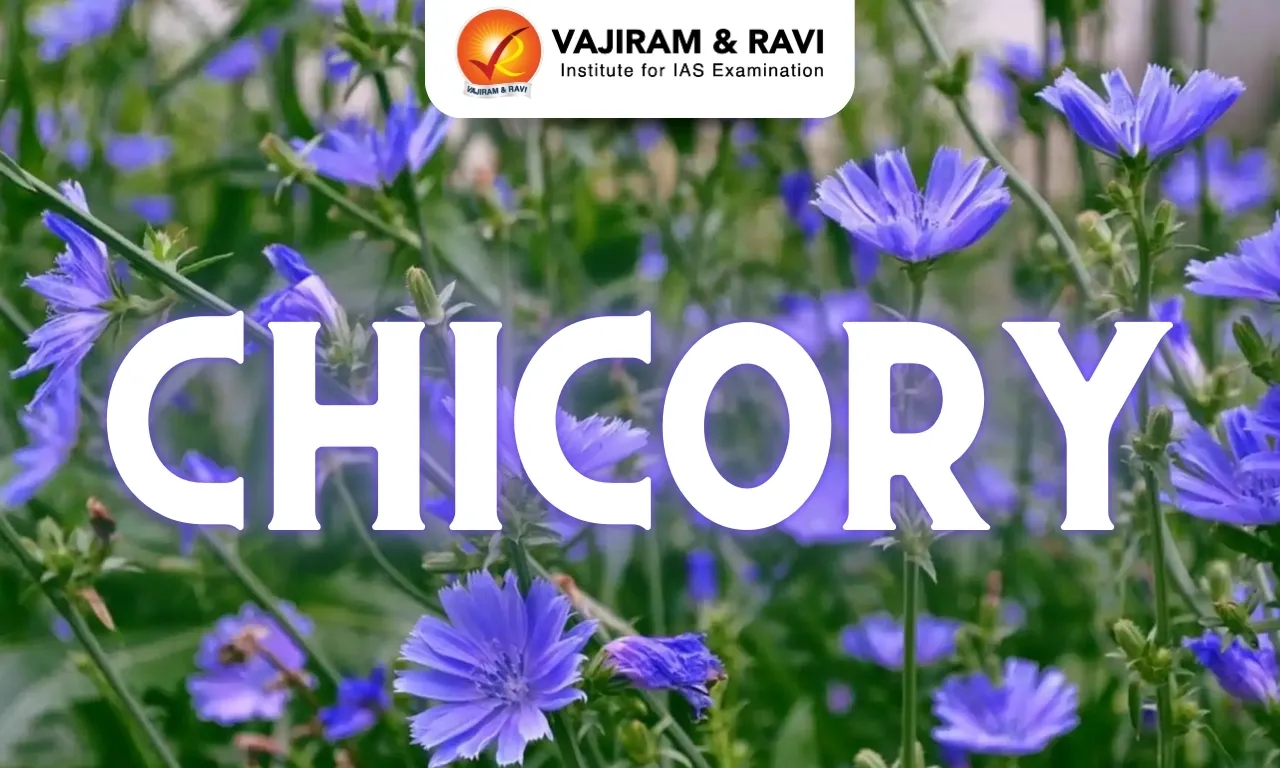
Chicory

Chicory

Chicory Latest News

Recently, FSSAI gave an advisory related to Chicory, whose content must be prominently displayed on front of coffee powder packs from 1 July.

About Chicory

  • Chicory (Cichorium intybus) is a plant belonging to the Asteraceae family.
  • It is a perennial plant mainly cultivated in temperate regions worldwide.
  • There are several varieties of the chicory plant, known differently globally due to its numerous medicinal, culinary, and nutritional qualities.
  • It is a local wild edible, and the leaves, flowers and root can all be used in culinary creations.
  • Additive in Coffee: Chicory is a popular additive that provides a darker colour and an earthy taste to the beverage.
    • It is naturally caffeine-free and significantly less expensive than high-quality coffee.
  • Nutritional Value: Most parts of the plant contain nutrients ranging within carbohydrates, proteins, vitamins, minerals, soluble fiber, trace elements, and bioactive phenolic compounds.
  • Uses: It is used as forage for livestock, as folklore remedies, or as a vegetable addition in human diets.

Source: LM

Chicory FAQs

Q1: Which part of Chicory is often used as a coffee substitute?

Ans: Roots

Q2: What is Chicory rich in?

Ans: Bioactive phenolic compounds and nutrients
SUJVIKA Portal

SUJVIKA Portal

SUJVIKA Portal Latest News

Recently, the Union Minister of Science & Technology launched the SUJVIKA Portal during the 40th foundation day of the Department of Biotechnology.

About SUJVIKA Portal

  • It is an AI driven Biotech Product Data Portal.
  • It is developed in collaboration with Industry partners ABLE.
  • SUJVIKA is a Trade Statistics Digital Intelligence Platform that presents authenticated biotechnology product import data in a structured and accessible format.

Features of SUJVIKA Portal

  • The portal provides sector-wise insights into biochemical products, industrial enzymes, and other biotechnology imports.
  • It enables researchers, startups, and industry to identify high-value and high-volume imports, assess import dependency and prioritise indigenisation and R&D efforts.
  • The portal also supports evidence-based planning and promotes public–private partnerships for strengthening domestic biomanufacturing.

Key Facts about Department of Biotechnology

  • It was set up in 1986.
  • It acts as a nodal agency supporting research and its applications in the Life Sciences and promotes & accelerates the pace of development and large-scale use of biotechnology in the country.
  • DBT also supports Research and Development innovations and manufacturing in advanced Biofuels as well as ‘Waste to Energy’ technologies.

Source: PIB

SUJVIKA Portal FAQs

Q1: What is SUJVIKA Portal?

Ans: An AI-driven biotech product data portal

Q2: What is the purpose of SUJVIKA Portal?

Ans: To provide data on biotechnology imports and support research

Exercise Dharma Guardian

Exercise Dharma Guardian

Exercise Dharma Guardian Latest News

Recently, the Exercise 'DHARMA GUARDIAN' commenced at the Foreign Training Node, Chaubattia in Uttarakhand.

About Exercise Dharma Guardian

  • It is the annual joint military exercise between the Indian Army and Japan.
  • Aim: The aim of Exercise 'DHARMA GUARDIAN' is to strengthen military collaboration and enhance combined capabilities to undertake joint operations in a semi-urban environment.
  • The exercise is held alternately in India and Japan and remains a key pillar of defence cooperation between the two nations.
  • It is the 7th edition of the annual Joint Military Exercise.
  • Key tactical activities during the exercise include
    • Establishing a Temporary Operating Base
    • Developing an Intelligence, Surveillance and Reconnaissance (ISR) grid
    • Setting up Mobile Vehicle Check Posts
    • Conducting Cordon and Search Operations in hostile environment
    • Executing Heliborne Operations
    • Undertaking House Intervention Drills

What are Other Exercises between India and Japan?

  • Malabar: India and Japan with the United States and Australia participate in the naval war gaming exercise named Malabar.
  • JIMEX (Naval)
  • SHINYUU Maitri (Air Force).

Source: PIB

Exercise Dharma Guardian FAQs

Q1: What is Exercise Dharma Guardian?

Ans: A joint military exercise between India and Japan

Q2: Where was Exercise Dharma Guardian held?

Ans: Both India and Japan (alternating locations)

Capsid

Capsid

Capsid Latest News

A new study found that to escape the drug Lenacapavir, HIV must damage its own capsid, reaffirming that the viral capsid is an effective target for antiviral therapy.

About Capsid

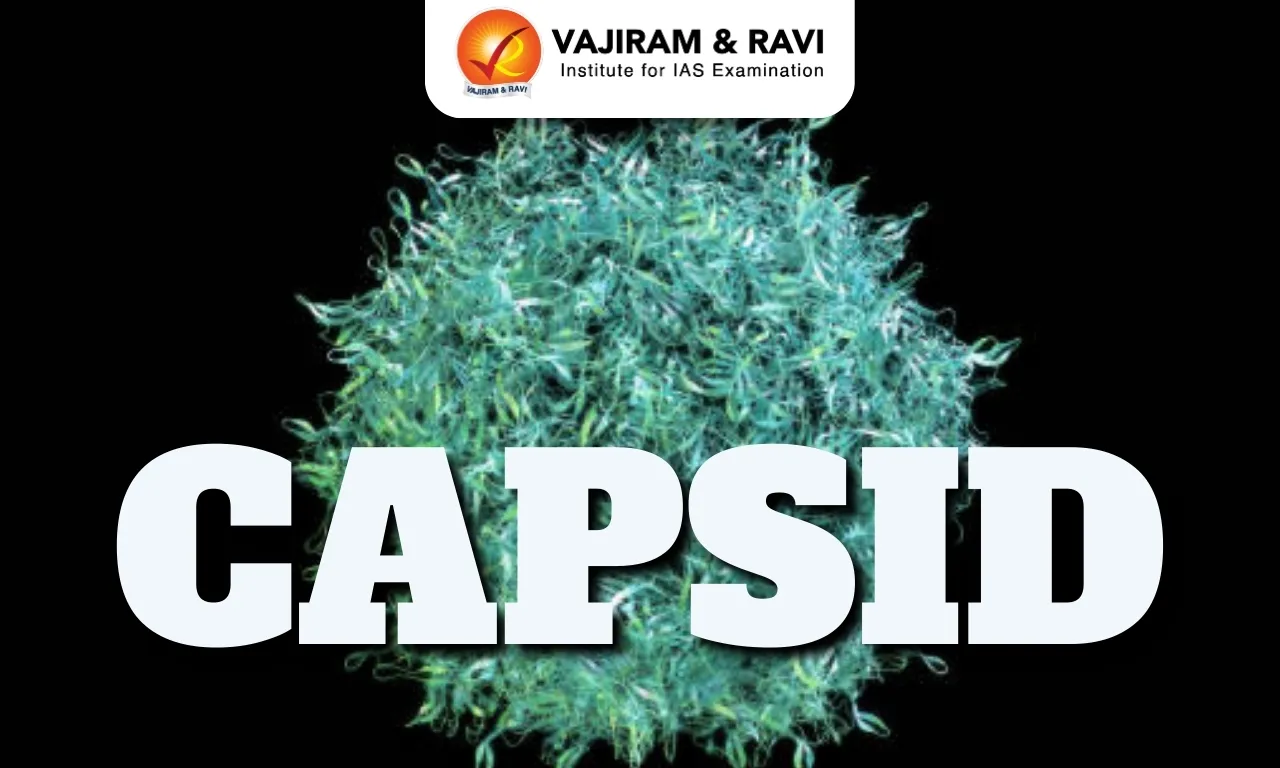
  • A capsid is a three-dimensional proteinaceous capsular shell around a virus that encloses the viral genetic material. 
  • It is located just below the viral envelope.
  • The capsid is made of several repeating finite numbers of protein subunits known as capsomeres or protomers. 
  • The capsomeres of the protein coat can be associated with or may be closely related to the viral genetic material or nucleic acid. 
  • The complexity of the capsid is dictated by the virus’s own genetic material. The more complex the genome, the more intricate the protein shell must be. 
  • Some complex viruses have capsids with non-protein components like lipids, or in certain viruses, the capsid is further enclosed in a glycoprotein layer; such capsids are known as enveloped capsids.
  • The viral capsid is in the nanometer (nm) size range and possesses complex and unique mechanical properties.
  • It serves multiple functions, namely, encapsulating and protecting viral genetic material and transferring of genetic material to the required place in the new host. 
  • For serving all these functions, the capsid needs highly specific mechanistic and functional flexibility as well as strength.

Source: TH

Capsid FAQs

Q1: What is a capsid?

Ans: A capsid is a three-dimensional protein shell that surrounds and encloses a virus’s genetic material.

Q2: What is the capsid made of?

Ans: It is made of repeating protein subunits called capsomeres or protomers.

Q3: What are the main functions of a capsid?

Ans: To protect viral genetic material and help transfer it into a new host cell.

Key Facts about Kenya

Kenya

Kenya Latest News

Recently, the 1st Joint Working Group (JWG) meeting on Agriculture was held between India and Kenya in virtual mode. 

About Kenya

  • Location: It is located in Eastern Africa.
  • Bordering Countries: It is bordered with Somalia (North East), Ethiopia (North), South Sudan (North West), Uganda (West), Tanzania (South).
  • Maritime Border: It has a coastline on the Indian Ocean to the southeast.
  • Capital City: Nairobi
  • Nairobi hosts UNEP (United Nations Environment Programme) and UN-HABITAT headquarters.

Geographical Features of Kenya

  • It is almost bisected by the Equator.
  • Major lakes: Lake Victoria (shared with Uganda & Tanzania), Lake Turkana.
  • Rivers: Athi/Galana, Tana (Longest river of Kenya), Mara.
  • Mountain Ranges: Aberdare, Mau Escarpment.
  • Highest Peak: Mount Kenya (second highest in Africa after Kilimanjaro).
  • Island: Lamu Island, part of the Lamu Archipelago in the Indian Ocean, is noteworthy. 
  • Natural Resources: Lead, zircon, iron, titanium, mica, chaum, oil, coal, diatomite, gypsum.
  • Famous Tribes: San Bushmen, Samburu, Maasai.
  • Masai Mara National Reserve: It is located in south west Kenya and is a vast scenic expanse of gently rolling African savannah plains.

Source: PIB

Kenya FAQs

Q1: What is the capital of Kenya?

Ans: Nairobi

Q2: Kenya is known for?

Ans: Maasai Mara National Reserve and Mount Kilimanjaro

Periyar Tiger Reserve

Periyar Tiger Reserve

Periyar Tiger Reserve Latest News

Recently, the Periyar Tiger Reserve has initiated Phase III of All India Tiger Estimation 2025-26, aimed at assessing the tiger population across the country.

About Periyar Tiger Reserve

  • Location: It is located in the Idukki district of Kerala.
  • It is named after the Periyar River.
  • It is set high at Cardamom Hills and Pandalam Hills of the Western Ghats, adjacent to the border with Tamil Nadu.
    • It surrounds the Periyar Lake, which was created in 1895 by building a dam across the Periyar River.
  • Terrain: The terrain is hilly and undulating with a maximum altitude of 2016 m. The highest peak is Kottamala (2016 m).
  • Rivers: Two major rivers namely Periyar and Pamba drain the area.
  • Dams: Mullaperiyar Dam is located within the PTR. 
  • Tribes: It is home to many tribal communities, including the Mannans and the Palians.
  • Vegetation: It mainly comprises tropical evergreen forests, semi- evergreen forests, moist deciduous forests, transitional fringe evergreen forests, grasslands, and eucalyptus plantations.
  • Flora: Teak, mangoes, rosewood, jamun, jacarandas, terminalias, tamarind, royal ponciana, bamboo, etc.
  • Fauna: Elephants, Wild Pigs, Mouse Deer, Barking Deer, and Tiger.
    • The major four species of primates are also found at Periyar – the rare lion-tailed macaque, the Nilgiri Langur, Gee’s Golden Langur, Common Langur, and Bonnet Macaque.
    • It is also being considered as the habitat of the elusive Nilgiri Tahr.

Source: TH

Periyar Tiger Reserve FAQs

Q1: Where is Periyar Tiger Reserve located?

Ans: Kerala

Q2: Periyar Tiger Reserve is part of which hill range?

Ans: Western Ghats

CM-302 Missile

CM-302 Missile

CM-302 Missile Latest News

Reports are emerging that Iran is close to finalizing a deal with China to buy CM-302 supersonic anti-ship missiles.

About CM-302 Missile

  • It is a supersonic anti-ship cruise missile developed by China.
  • It is an export version of the YJ-12 missile used by the Chinese Navy. 
  • It is intended to strike large naval vessels and other maritime targets.

CM-302 Missile Features

  • The missile is almost 7 m long, with a body diameter of 0.7 m and a launch weight of 2000-2500 kg. 
  • It is equipped with a liquid direct-flow air-breathing jet engine and four air intakes. 
  • The missile travels at sustained supersonic speeds, reportedly around Mach 2.5–3 or higher, making it very hard and challenging to intercept once launched.
  • It has a range of about 290 km.
  • It is equipped with a conventional high-explosive warhead weighing approximately 250 kg.
  • It can be launched from both ships and ground-based launchers. 
  • The CM-302 approaches its target at extremely low altitudes. 
  • The guidance system of the missile combines inertial navigation with China’s BeiDou satellite navigation for mid-course guidance, along with an active radar seeker for terminal homing.
  • It has a high hit probability, nearly 90 percent, owing to its sea-skimming flight profile and advanced guidance suite.

Source: OI

CM-302 Missile FAQs

Q1: What is the CM-302 Missile?

Ans: It is a supersonic anti-ship cruise missile developed by China.

Q2: What is the primary role of the CM-302 missile?

Ans: It is designed to strike large naval vessels and other maritime targets.

Q3: What is the operational range of the CM-302?

Ans: It has a range of about 290 km.

Q4: What type of warhead does the CM-302 carry?

Ans: It carries a conventional high-explosive warhead weighing about 250 kg.

Tsomgo Lake

Tsomgo Lake

Tsomgo Lake Latest News

Over 2,700 tourists stranded due to heavy snowfall near Tsomgo Lake in East Sikkim were rescued recently.

About Tsomgo Lake

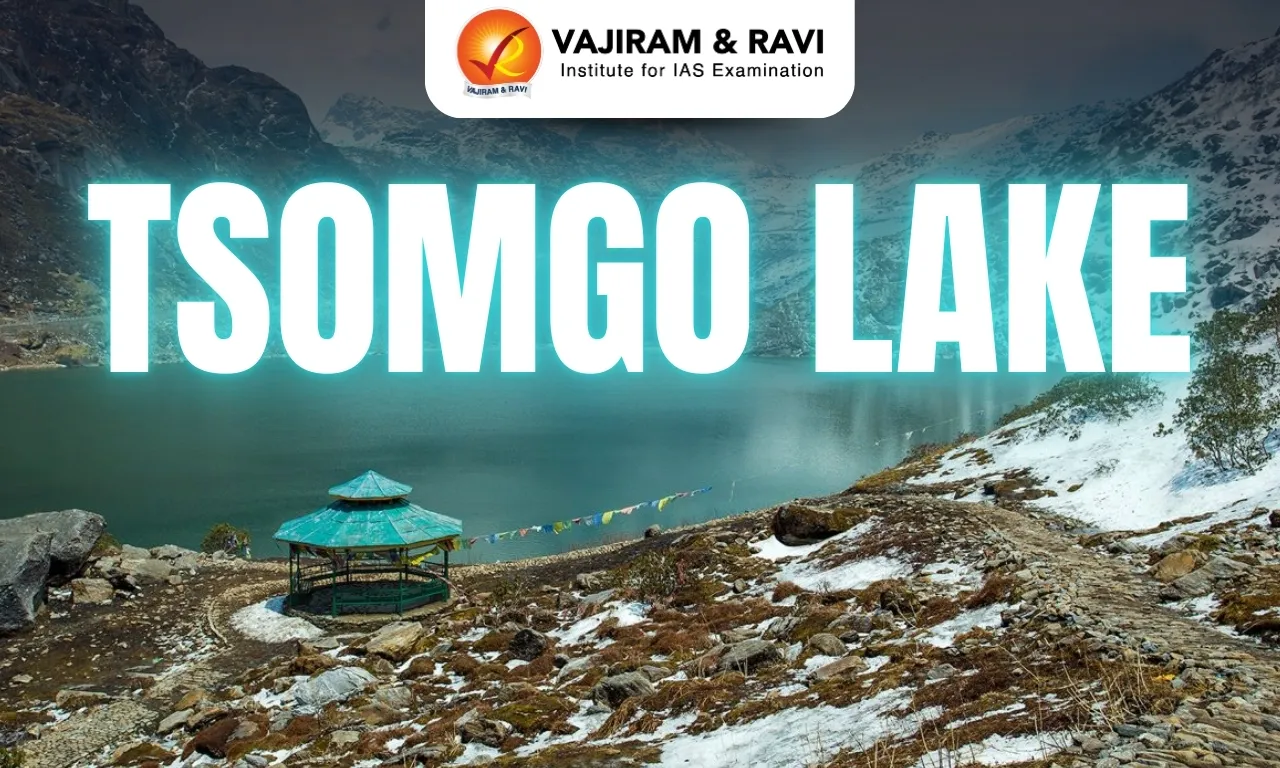
  • Tsomgo Lake, also known as Tsongmo Lake or Changu Lake, is a glacial lake located in East Sikkim.
  • The lake derives its water from the melting snow of the mountains surrounding the lake.
  • Located at an elevation of 3,753 m (12,313 ft), the lake remains frozen during the winter season. 
  • After the winter season ends in the middle of May, the periphery of the lake has scenic blooms of flower species of rhododendrons (the state tree of Sikkim), primulas, blue and yellow poppies, irises, and so forth. 
    • Also seen in the precincts of the lake are several species of birds, including Brahminy ducks. 
    • Wildlife seen includes the red panda.
  • The lake surface reflects different colours with the change of seasons and is held in great reverence by the local Sikkimese people.
  • Buddhist monks prognosticated after studying the changing colours of the lake.

Source: TH

Tsomgo Lake FAQs

Q1: Where is Tsomgo Lake located?

Ans: It is located in East Sikkim, India.

Q2: What type of lake is Tsomgo Lake?

Ans: It is a glacial lake.

Q3: What happens to Tsomgo Lake during winter?

Ans: The lake remains frozen during the winter season.

Q4: How does the lake’s appearance change with seasons?

Ans: The surface reflects different colours depending on the season.

Human Papillomavirus (HPV)

Human Papillomavirus

Human Papillomavirus (HPV) Latest News

The Union Health Ministry is set to launch a nationwide Human Papillomavirus (HPV) vaccination programme targeting girls aged 14 years.

About Human Papillomavirus (HPV)

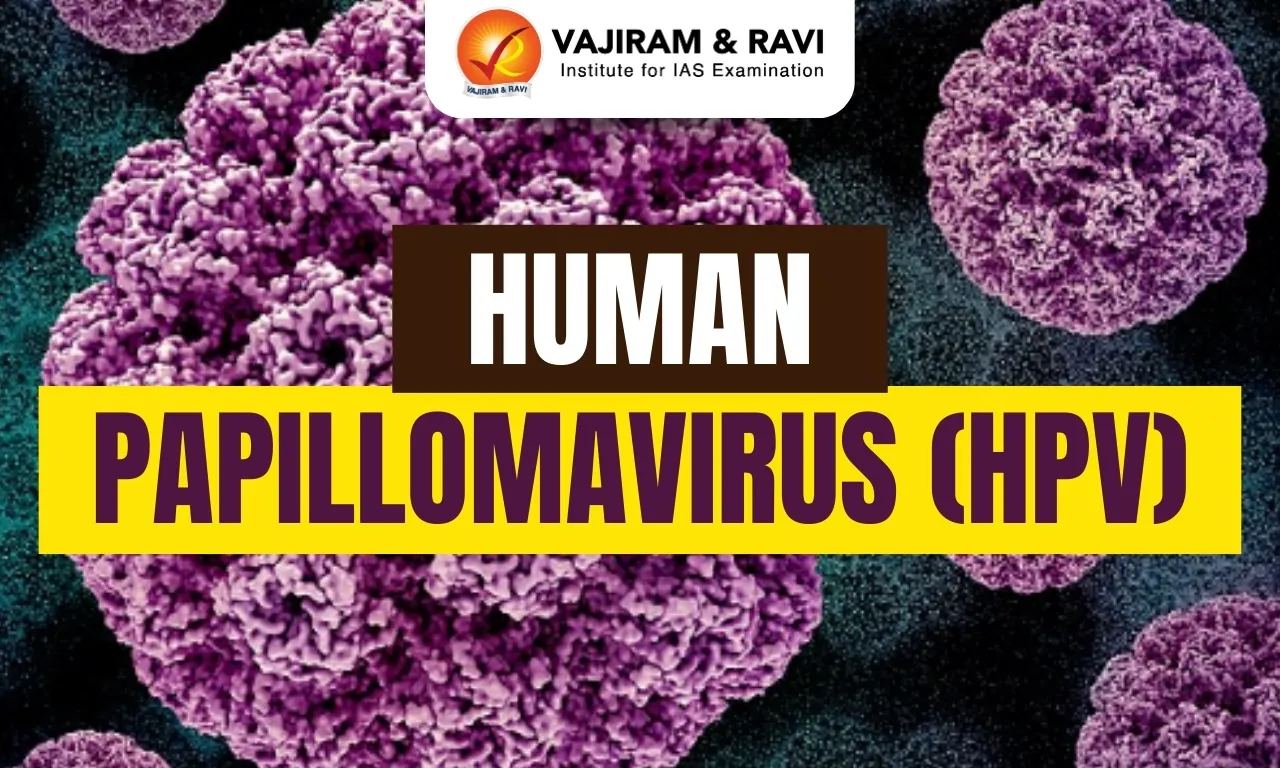
  • HPV is the most common sexually transmitted infection (STI), and there are more than 100 types of HPV. Most do not cause health problems.
  • However, some types of HPV infection cause skin growths called warts, and some types of HPV infection can cause cancer.
  • More than 95% of cervical cancer is caused by the HPV virus.
  • Transmission:
    • The virus that causes HPV infection is transmitted through skin-to-skin contact. 
    • Most people get a genital HPV infection through direct sexual contact, including vaginal, anal, and oral sex.
  • About 80% of people – both men and women – will get an HPV infection at some point in their lives. 
  • Most people with HPV don’t know they’re infected and never develop symptoms. 
  • The body most often clears the virus before it causes any health problems. 
  • But for some, the infection persists and can lead to precancerous changes.
  • Symptoms may include warts on the genitals or anus or cancerous growths in the mouth or throat. 
  • Treatment: 
    • There’s no cure for HPV. 
    • HPV vaccination is the most effective way to prevent HPV-related cancers.

HPV Vaccination

  • The HPV vaccine is a series of shots that can protect you from an HPV infection. 
  • It prevents HPV infections that can progress to cancer or genital warts.
  • The HPV vaccination is more efficacious if given between the age group of 9-26 years.
  • Once a person gets HPV, the vaccine may not be as effective.
  • The HPV vaccine isn’t given during pregnancy.

Source: TH

Human Papillomavirus (HPV) FAQs

Q1: What is Human Papillomavirus (HPV)?

Ans: HPV is the most common sexually transmitted infection (STI) with more than 100 different types.

Q2: What conditions can certain types of Human Papillomavirus (HPV) cause?

Ans: Some types cause warts, while others can lead to cancers.

Q3: How is Human Papillomavirus (HPV) transmitted?

Ans: HPV spreads through skin-to-skin contact.

Q4: What is the most effective way to prevent HPV-related cancers?

Ans: HPV vaccination is the most effective prevention method.

Jeju Island

Jeju Island

Jeju Island Latest News

The Embassy of India in Seoul recently issued an advisory today addressing Indian nationals travelling to Jeju Island under the visa waiver scheme.

About Jeju Island

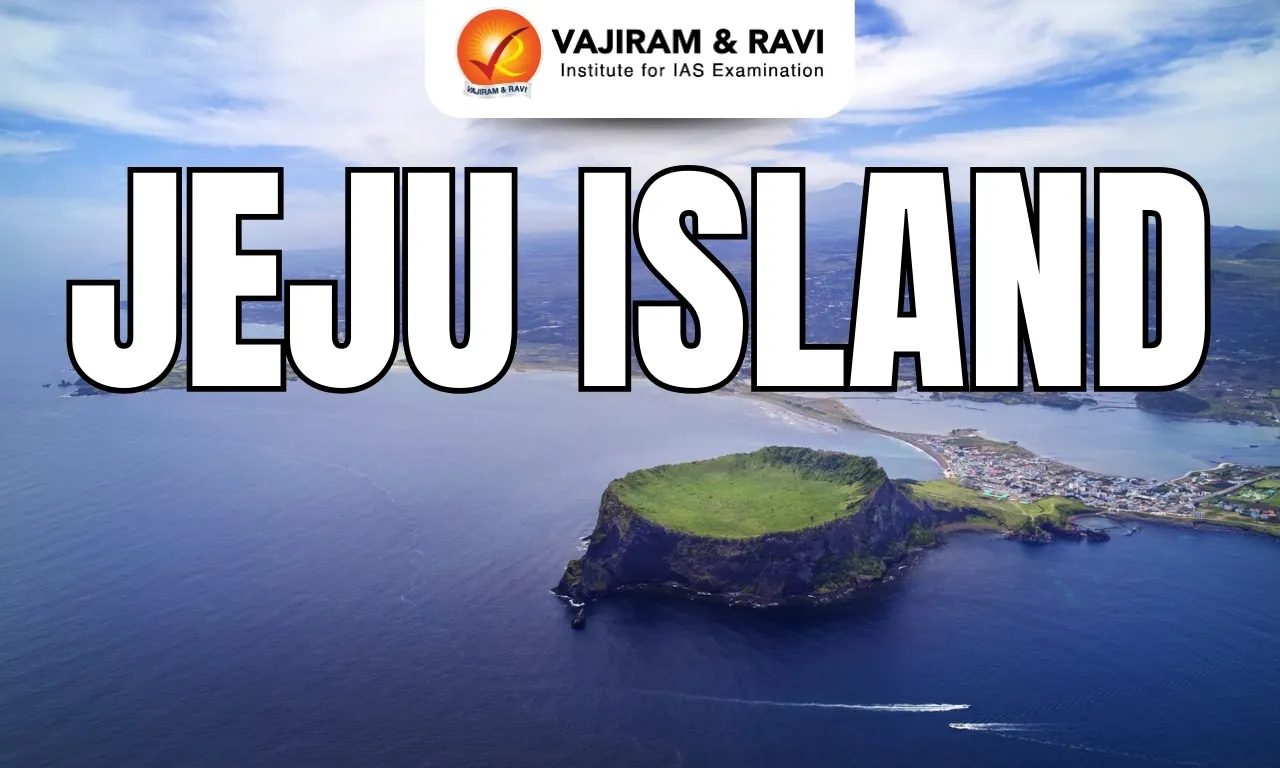
  • It is a volcanic island off the coast of South Korea.
  • It is a special autonomous province of South Korea. 
  • Oval in shape, it is Korea’s largest and southernmost island.
  • The provincial capital is the city of Jeju.
  • The island was created entirely from volcanic eruptions approximately 2 million years ago.
  • It is composed of a core of volcanic material that rises symmetrically to the crest of Mount Hallasan (6,398 feet [1,950 meters]), which has a lake in its crater.
    • Mount Hallasan is the tallest mountain in South Korea and a dormant volcano.
    • 360 satellite volcanoes are around the main volcano.
  • The island’s lava tubes and certain other volcanic formations (including Mount Hallasan) were collectively designated a UNESCO World Heritage site in 2007. 
  • Jeju is bathed in warm currents, and its oceanic climate supports some subtropical plants.

Source: NDTV

Jeju Island FAQs

Q1: Where is Jeju Island located?

Ans: It is a volcanic island off the coast of South Korea.

Q2: How was Jeju Island formed?

Ans: It was created entirely by volcanic eruptions about 2 million years ago.

Q3: What is the administrative status of Jeju Island?

Ans: It is a special autonomous province of South Korea.

Q4: What is the shape and significance of Jeju Island?

Ans: It is oval-shaped and is Korea’s largest and southernmost island.

Q5: What is the main geological feature at the center of the island?

Ans: A core of volcanic material that rises symmetrically to the crest of Mount Hallasan.

Enquire Now