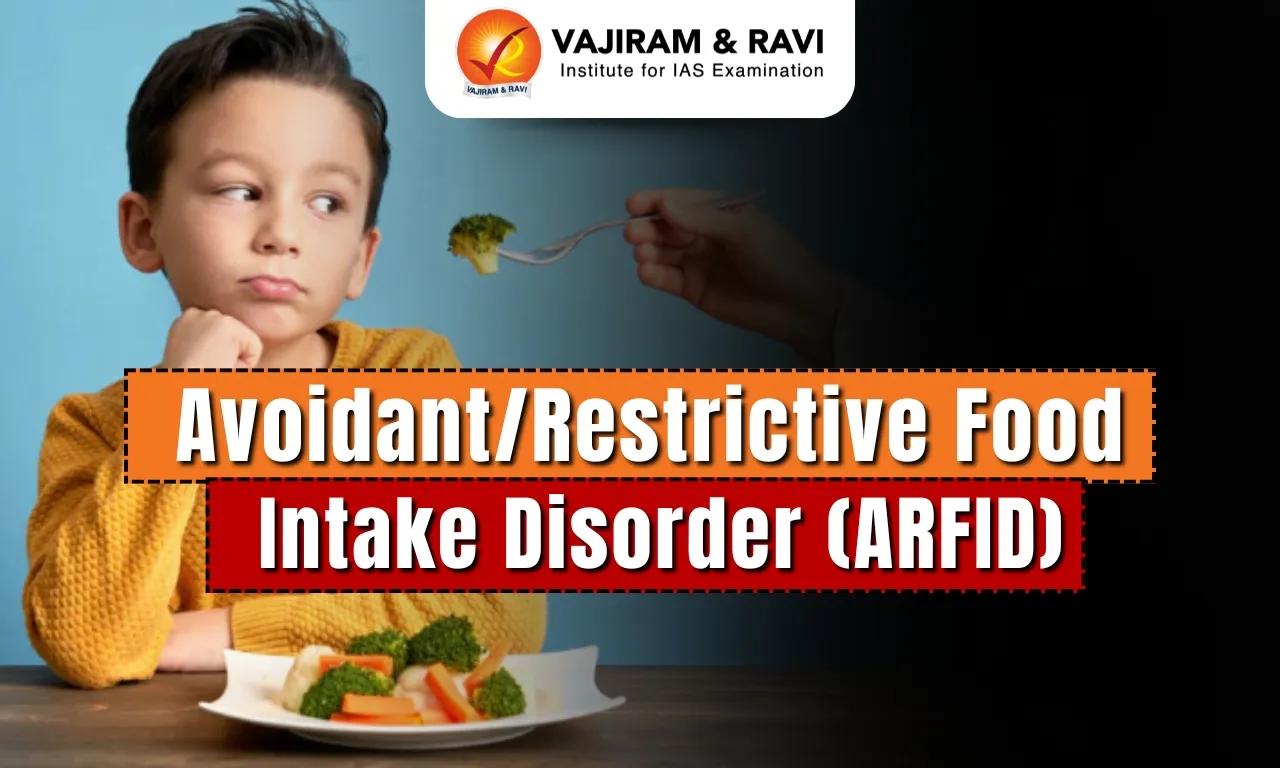
Avoidant/Restrictive Food Intake Disorder (ARFID) Latest News
ARFID is a genuine health issue—not stubbornness, attention-seeking or a passing problem—and with proper support, individuals can recover, live healthy and confident lives, and maintain a good relationship with food.
About Avoidant/Restrictive Food Intake Disorder (ARFID)
- It is a mental health condition that causes you to limit the amount and type of food you eat.
- It isn’t the result of a distorted self-image or an attempt to lose body weight, which is common among other eating disorders.
- The eating problems seen in ARFID stem from other factors, such as:
- Aversions to certain food groups or textures of foods
- Lack of appetite
- Preferences for specific colors of foods
- Fears of vomiting or choking after eating
- Although ARFID can occur at any age, it most commonly develops during infancy or early childhood and may persist into adulthood. In children, ARFID occurs more frequently in males than females.
- People with ARFID often have anxiety disorders, neurodevelopmental disorders such as autism spectrum disorder and attention-deficit/hyperactivity disorder (ADHD), and developmental and/or intellectual disabilities.
- Additionally, there is likely a genetic component, as ARFID commonly runs in families.
- As well as being selective about food, someone with ARFID might not eat (consume) enough calories to grow and develop.
- In children, this may cause stalled weight gain, weight loss, or even stalled vertical growth (growing taller).
- It may lead to life-threatening complications if left untreated.
- The main treatment is cognitive behavioral therapy.
Source: TH
Avoidant/Restrictive Food Intake Disorder (ARFID) FAQs
Q1: What is Avoidant/Restrictive Food Intake Disorder (ARFID)?
Ans: A mental health condition in which a person limits the amount or types of food they eat.
Q2: Is ARFID caused by concerns about body weight or body image?
Ans: No, it is not related to distorted body image or attempts to lose weight.
Q3: What is a common reason for food avoidance in ARFID?
Ans: Aversion to certain food textures, tastes, or food groups.
Q4: At what stage of life does ARFID most commonly develop?
Ans: Infancy or early childhood.
Q5: What growth-related problem can ARFID cause in children?
Ans: Stalled weight gain, weight loss, or slowed height growth.