Deinococcus radiodurans

What is Deinococcus radiodurans

Deinococcus radiodurans Latest News

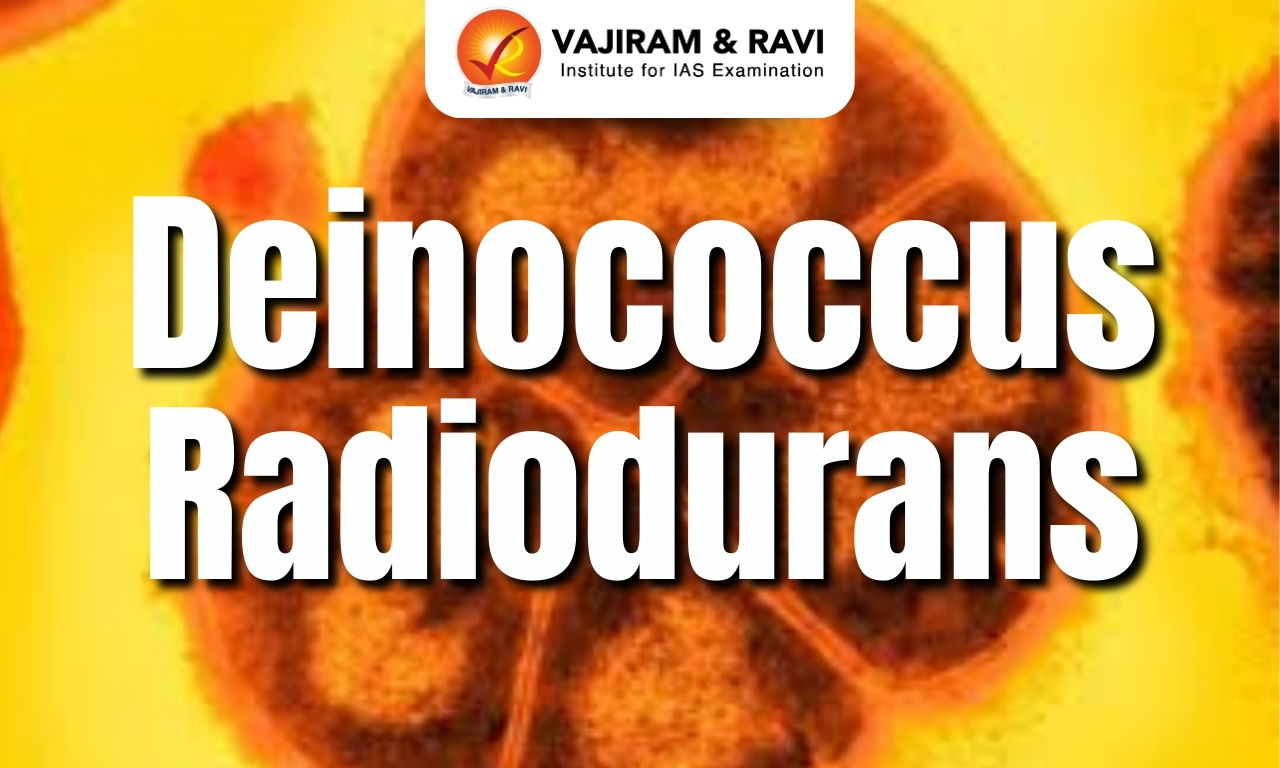
Researchers recently found that the bacteria Deinococcus radiodurans, famous for being able to survive extreme radiation and dryness, can also survive the intense pressures of being blasted off of a planet’s surface: 14,000-24,000 earth atmospheres.

About Deinococcus radiodurans

  • It is a bacterium best known for its extreme resistance to the lethal effects of ionizing radiation.
  • This bacterium is gram-positive (which means it has a certain kind of cell wall), doesn't move on its own (it's nonmotile), and has a reddish color. 
  • It was first found in 1956 in canned meat that had been treated with radiation to kill germs. 
  • Dubbed “Conan the Bacterium” for its extraordinary ability to tolerate the harshest of conditions, D. radiodurans can withstand radiation doses thousands of times higher than what would kill a human.
  • It is known as the most radiation-resistant organism on Earth.
  • The secret behind this impressive resistance is the presence of a collection of simple metabolites, which combine with manganese to form a powerful antioxidant that is more resistant to radiation. 
  • D. radiodurans has special ways to fix its own DNA if it gets damaged. An enzyme called thioredoxin reductase helps its cells fix broken DNA strands.
    • It can also get rid of damaged DNA parts and has extra copies of its important genes. 
    • This helps it recover from being very dry (called desiccation) or from not having enough food (called starvation).
  • It can live through extreme cold, dehydration, vacuum, and even acid.

Source: TH

Deinococcus radiodurans FAQs

Q1: What is Deinococcus radiodurans?

Ans: It is a bacterium best known for its extreme resistance to the lethal effects of ionizing radiation.

Q2: Is Deinococcus radiodurans gram-positive or gram-negative?

Ans: It is gram-positive.

Q3: What colour is Deinococcus radiodurans?

Ans: It has a reddish colour.

Q4: What helps Deinococcus radiodurans resist radiation damage?

Ans: Simple metabolites combined with manganese forming a powerful antioxidant.

Blue Sparrow Missile

What is the Blue Sparrow Missile

Blue Sparrow Missile Latest News

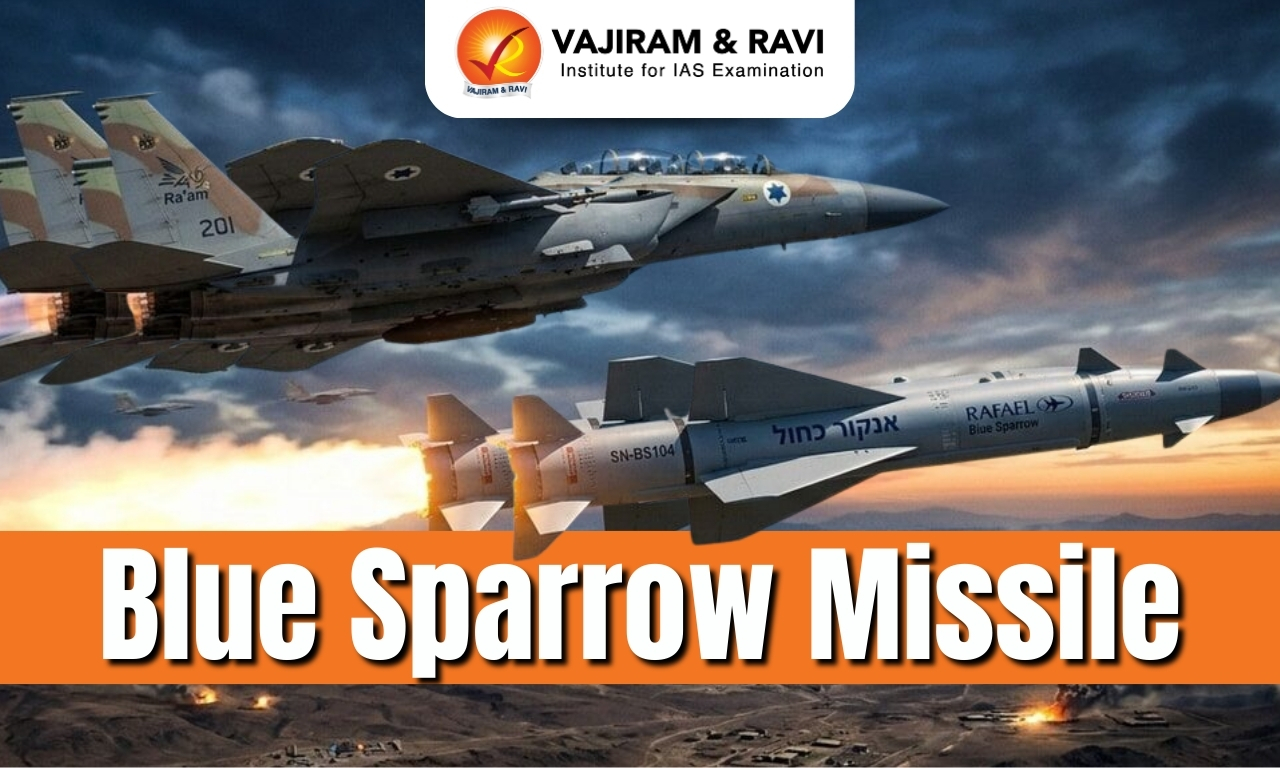
Israel reportedly used the Blue Sparrow missile to kill Ayatollah Ali Khamenei in Tehran recently.

About Blue Sparrow Missile

  • It is part of a family of three air-launched ballistic missiles, which also includes the Black Sparrow and the Silver Sparrow.
  • They are developed by Rafael Advanced Defense Systems, an Israeli defense technology company.
  • They were built as practice targets for Israel's Arrow missile defence system
  • Over time, however, the Blue Sparrow was adapted into an offensive air-to-surface weapon. 

Blue Sparrow Missile Features

  • The missile measures 6.5 metres in length and weighs about 1.9 tonnes. 
  • It is typically launched from fighter aircraft, including Israeli F-15 jets, whose booster rockets propel the missile to high altitude before it begins its descent.
  • It has a range of roughly 1,995 km. 
  • Unlike many conventional munitions, it follows a quasi-ballistic trajectory. 
  • After launch, the missile ascends rapidly, leaving the Earth's atmosphere before re-entering and descending toward its target.
  • This ability to exit and re-enter the atmosphere complicates interception by air defence systems.

Source: IT

Blue Sparrow Missile FAQs

Q1: What is the Blue Sparrow missile?

Ans: It is an air-launched ballistic missile.

Q2: Which country developed the Blue Sparrow Missile?

Ans: Israel

Q3: What is the approximate range of the Blue Sparrow missile?

Ans: Around 1,995 km.

Q4: What type of trajectory does the Blue Sparrow missile follow?

Ans: A quasi-ballistic trajectory.

Q5: Why is the Blue Sparrow missile difficult to intercept?

Ans: Because it leaves and re-enters the atmosphere, complicating interception by air-defence systems.

Syphilis

Syphilis

Syphilis Latest News

The World Health Organization (WHO) has certified Denmark for the elimination of mother-to-child transmission (EMTCT) of HIV and syphilis.

About Syphilis

  • It is a preventable and curable bacterial sexually transmitted infection (STI).
  • Cause: It is caused by the bacteria, Treponema pallidum.
  • Transmission
    • People usually get syphilis from sexual contact with someone who has it.
    • People get it if any part of their body touches the sore or rash of someone with syphilis.
    • It can also pass from mother to baby during pregnancy, childbirth, and sometimes through breastfeeding.

Symptoms of Syphilis

  • Syphilis develops in stages. 
  • The disease starts as a sore that’s often painless and typically appears on the genitals, rectum, or mouth.
  • Sometimes it causes swelling in nearby lymph nodes.
  • Many people do not notice symptoms for years. Symptoms can go away and come back.
  • Without treatment, syphilis can damage the heart, brain, or other organs.
  • Syphilis in pregnancy, when not treated, treated late, or treated with the incorrect antibiotic, results in 50−80% of cases with adverse birth outcomes.

Treatment of Syphilis

  • It is easy to cure with antibiotics, especially during the early stages.
  • Penicillin is the most commonly used medication for syphilis.

Source: NDTV

Syphilis FAQs

Q1: What is the causative agent of Syphilis?

Ans: Treponema pallidum

Q2: What is the preferred treatment for Syphilis?

Ans: Penicillin G

New Species of Fruit Flies

New Species of Fruit Flies

Fruit Flies Latest News

Entomologists recently identified two new species of fruit flies named Acidoxantha paratotoflava and Hemilea suneriae during a research expedition in the Himalayan foothills.

About Acidoxantha paratotoflava and Hemilea suneriae

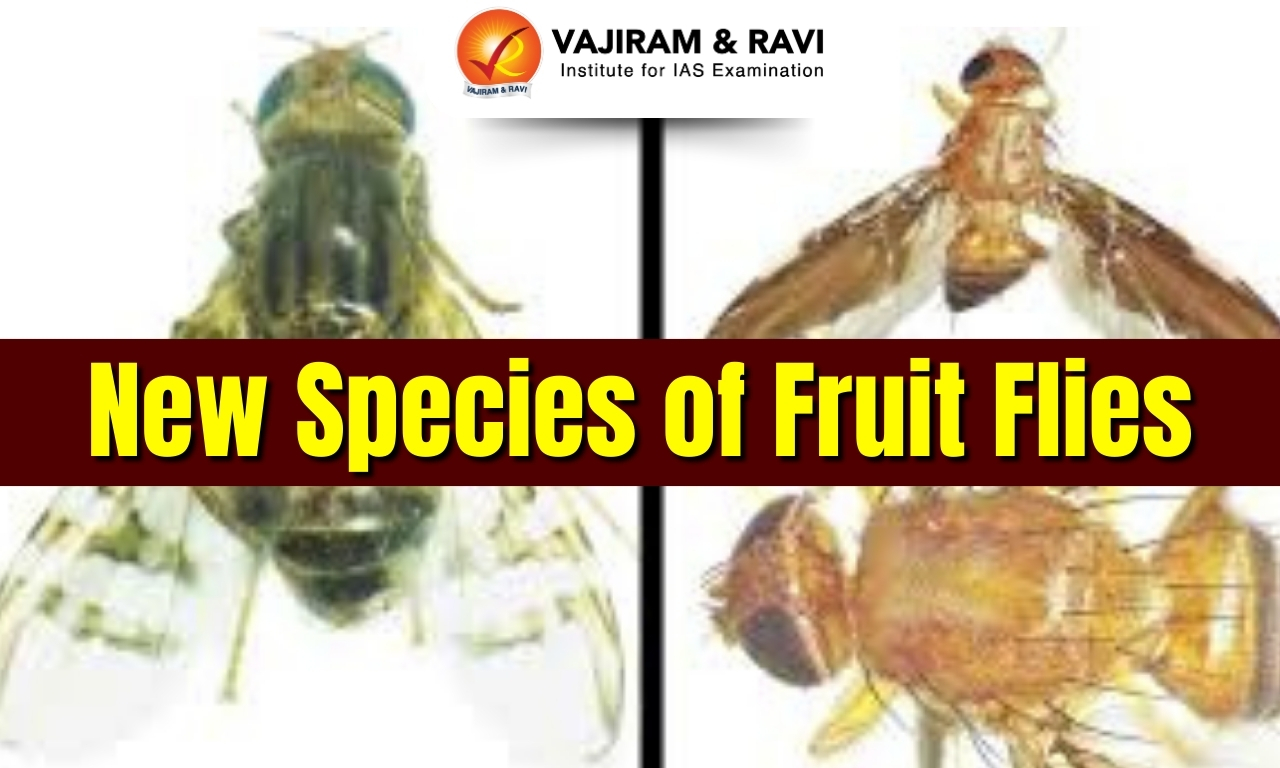
  • They are two new species of fruit flies.
  • They were identified from the Solan region of Himachal Pradesh.
  • Acidoxantha paratotoflava:
    • It is a medium-sized, greenish-yellow fly. 
    • It is distinguished from its closest relatives by having four distinct black stripes on its thorax and larger black spots on its abdomen. 
    • It has unique "hook-like" structures in the male’s anatomy. 
    • Its name, paratotoflava, was chosen because of its striking resemblance to another known fly, A. totoflava, which the researchers now believe may have been misidentified in India in the past.
  • Hemilea suneriae:
    • It is a reddish-brown fly covered in prominent black dots.
    • It has a unique wing pattern, which features a single clear "window" (hyaline indentation) in an otherwise dark area, whereas its closest relatives usually have two. 

Other Findings

  • The study marked a major milestone by recording the genus Rhagoletis in India for the first time. 
    • This group of flies is known worldwide for affecting fruit crops, yet it had remained undetected in India until this investigation. 
  • Additionally, the researchers finally solved a century-old mystery by capturing and describing the male of Euphranta nigripeda, a species where only the female had been known to science since 1913.

Source: RM

New Species of Fruit Flies FAQs

Q1: What are Acidoxantha paratotoflava and Hemilea suneriae?

Ans: They are two newly identified species of fruit flies.

Q2: Where were Acidoxantha paratotoflava and Hemilea suneriae discovered?

Ans: In Solan, located in Himachal Pradesh.

Q3: What is the colour of Acidoxantha paratotoflava?

Ans: It is greenish-yellow in colour.

Q4: What is the colour of Hemilea suneriae?

Ans: It is reddish-brown with prominent black dots.

Qeshm Island

Key Facts about Qeshm Island

Qeshm Island Latest News

Iran's Foreign Minister recently accused the United States of attacking a desalination plant on Qeshm Island, saying it had set a precedent.

About Qeshm Island

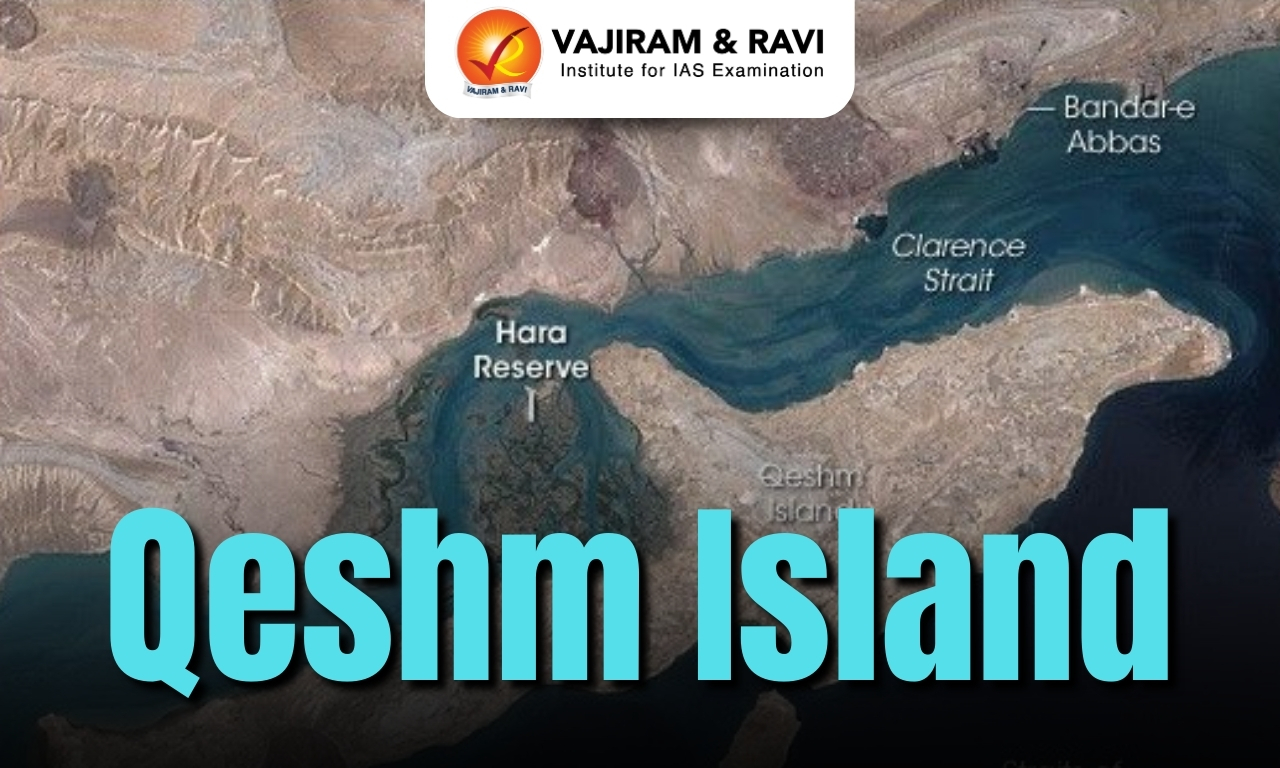
  • It is the largest island in the Persian Gulf near the Straits of Hormoz. 
  • It belongs to Iran. 
  • The Arabic name means “long island.”
  • It lies parallel to the Iranian coast, from which it is separated by the Clarence Strait.
  • It lies close to the mainland cities of Bandar Abbas and Hormozgan Province.
  • It covers an area of ​​1491 sq.km., which is 2.5 times the second largest island in the Persian Gulf, Bahrain.
  • It has an irregular outline and a generally rocky coast except for sandy bays and mud flats fringing the northwest.
  • Irregular table-topped hills almost cover Qeshm.
  • It has a hot and arid climate, typical of the Persian Gulf region.
  • The island comprises 59 towns and villages with a population of about 120,000.

Source: NDTV

Qeshm Island FAQs

Q1: Where is the Qeshm Island located?

Ans: It is the largest island in the Persian Gulf near the Straits of Hormoz.

Q2: To which country does Qeshm Island belong?

Ans: Iran.

Q3: Which strait separates Qeshm Island from the Iranian mainland?

Ans: The Clarence Strait.

Q4: What type of coastline does Qeshm Island mainly have?

Ans: A generally rocky coastline, with sandy bays and mud flats in the northwest.

Koala

Koala

Koala Latest News

A rapid koala rebound in southeastern Australia is also boosting their genetic variation, showing one way out of an extinction death spiral.

About Koala

  • It is an iconic Australian animal. 
  • Often called the koala “bear,” this tree-climbing animal is a marsupial—a mammal with a pouch for the development of offspring.
  • Scientific Name: Phascolarctos cinereus
  • It is the only extant representative of the family Phascolarctidae, and its closest living relatives are the wombats.

Koala Habitat and Distribution

  • The koalas live in eastern Australia and range from northern Queensland to southwestern Victoria. 
  • Koalas are arboreal, remaining mostly in the branches of the eucalyptus trees, where they are able to feed and stay out of reach of their predators. 
  • The koala is confined to eucalyptus forests below 600 m.

Koala Features

  • It is about 60 to 85 cm long and weighs up to 14 kg in the southern part of its range (Victoria and South Australia) but only about half that in subtropical Queensland to the north.
  • In both areas, they exhibit sexual dimorphism, with the males being larger. 
  • Virtually tailless, the body is stout and gray, with a pale yellow or cream-coloured chest and mottling on the rump. 
  • The broad face has a wide, rounded, leathery nose, small yellow eyes, and big fluffy ears.
  • The feet are strong and clawed.
  • They are slow-moving and sleep up to 18 hours a day.

Koala Conservation Status

It is classified as 'Vulnerable' under the IUCN Red List.

Source: SCI

Koala FAQs

Q1: What is koala?

Ans: It is an iconic Australian animal.

Q2: What type of habitat do koalas primarily live in?

Ans: Eucalyptus forests.

Q3: Are koalas arboreal or terrestrial animals?

Ans: Koalas are arboreal, meaning they live mainly in trees.

Q4: What is the conservation status of the koala according to the IUCN Red List?

Ans: Vulnerable.

THAAD Missile System

THAAD Missile System

THAAD Missile System Latest News

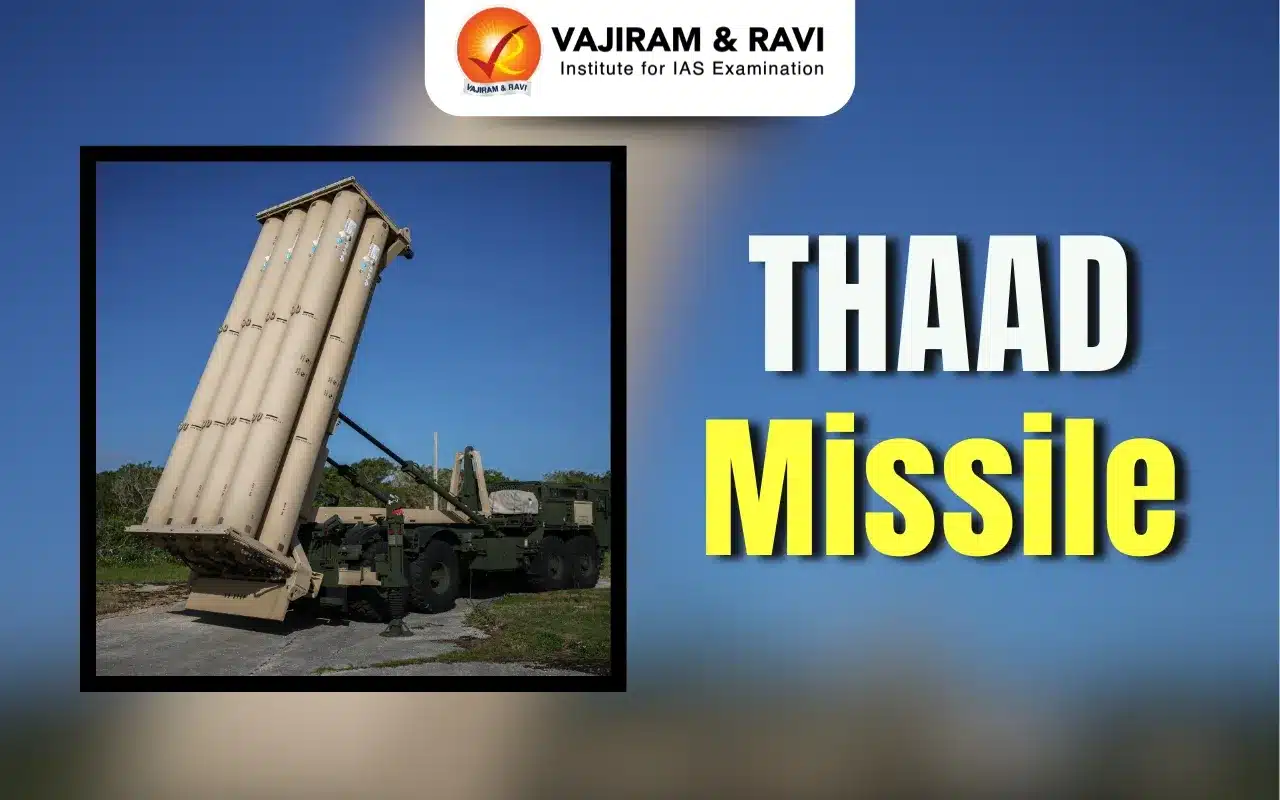
Recently, Iran has destroyed a key Terminal High Altitude Area Defence (THAAD) radar system used by the US to detect and intercept ballistic missiles in the Middle East.

About THAAD Missile System

  • The Terminal High Altitude Area Defence (THAAD) system is one of the most advanced missile defence platforms.
  • It is developed by the United States to counter ballistic missile threats.

Key Features of THAAD Missile System

  • It is designed to intercept missiles during the final stage of their flight,
  • THAAD can destroy incoming threats both inside and outside Earth’s atmosphere, providing a critical defensive layer against short-medium-and limited intermediate-range ballistic missiles. 
  •  THAAD uses “hit-to-kill” technology. 
    • This means its interceptor missiles destroy incoming targets by directly colliding with them at extremely high speeds, relying on kinetic energy rather than an explosive blast.
  • THAAD can engage ballistic missile targets at ranges of roughly 150–200 kilometres.
  • The THAAD weapon system is a major element of the broader Ballistic Missile Defence System (BMDS) architecture.
  • Key components includes
    • Interceptors that destroy incoming missiles through kinetic impact;
    • Truck-mounted launchers used to deploy the interceptors;
    • Powerful AN/TPY-2 radar, which detects and tracks missile threats at a long range;
    • A tactical fire control and communications unit that coordinates targeting and engagement; and additional logistics and support equipment.
    • A typical THAAD battery includes around 90 personnel, six launchers, and 48 interceptors, with each launcher carrying eight missiles.

Source: TH

THAAD Missile System FAQs

Q1: What does THAAD stand for?

Ans: Terminal High Altitude Area Defense

Q2: What is the primary purpose of the THAAD System?

Ans: To defend against long-range ballistic missiles

Enquire Now