Raisen Fort

Raisen Fort

Raisen Fort Latest News

Police in Madhya Pradesh’s Raisen district recently arrested four youths after a video showing cannon firing from the hilltop ASI-protected Raisen Fort and alleged slogans referring to war-prone countries surfaced on social media.

About Raisen Fort

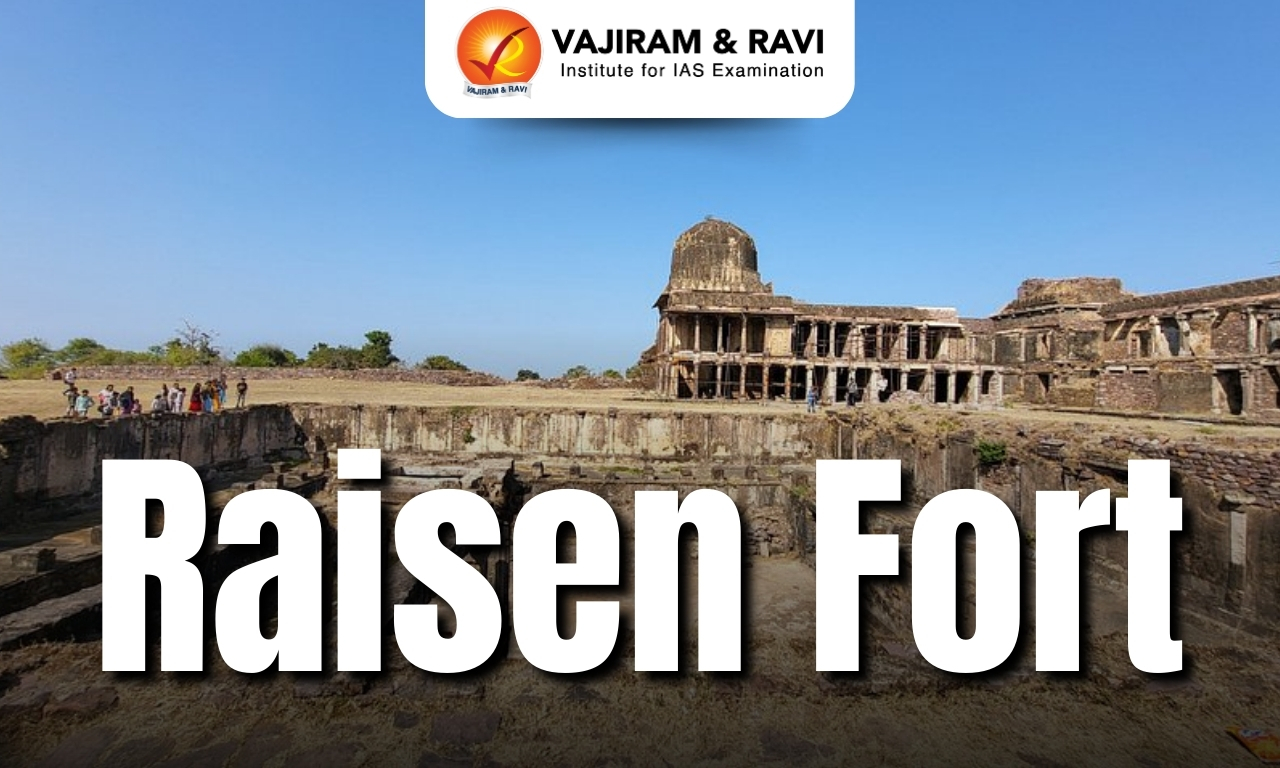
  • Located on a sandstone hill in Raisen town, it is one of the most prominent forts in Madhya Pradesh.
  • It is located approximately 40 km from Bhopal.
  • Built in the 11th century, the Raisen Fort has witnessed the rule of:
    • Local Hindu chieftains
    • Sultans of Mandu
    • Mughals under Akbar (Raisen was a Sarkar headquarters in the Ujjain Subah)
    • Nawabs of Bhopal, including Fiaz Mohammad Khan, who occupied the fort around 1760 and was later acknowledged by Emperor Alamgir II as Faujdar of Raisen.

Raisen Fort Features

  • The fort represents medieval Indian hilltop military architecture and offers panoramic views of the surrounding countryside.
  • It spans over nearly 800 acres, making it one of the largest forts in Central India.
  • The fort has a massive stone wall pierced with nine gateways.
  • Adorned with a large courtyard and a beautiful pool in the middle, the Raisen Fort has four palaces, namely Badal Mahal, Rohini Mahal, Itradaan Mahal & Hawa Mahal, within its boundaries.
  • It also houses a temple dedicated to Lord Shiva and a shrine dedicated to Muslim saint Hazrat Peer Fatehullah Shah Baba, making it a unique blend of Hindu and Islamic heritage.
  • The fort also had a well-maintained water management and conservation system with more than 40 wells.
  • It also abounds in rock shelters with paintings created by the cave dwellers.

Source: TOI

Raisen Fort FAQs

Q1: Where is Raisen Fort located?

Ans: In Raisen, in Madhya Pradesh.

Q2: In which century was Raisen Fort built?

Ans: In the 11th century.

Q3: Which rulers controlled Raisen Fort before the Mughals?

Ans: Local Hindu chieftains and the Sultans of Mandu.

Q4: Which palaces are located within Raisen Fort?

Ans: Badal Mahal, Rohini Mahal, Itradaan Mahal, and Hawa Mahal.

Q5: Which Muslim saint’s shrine is located within Raisen Fort?

Ans: Hazrat Peer Fatehullah Shah Baba.
Kharg Island

Kharg Island

Kharg Island Latest News

The United States is considering seizing Iran's Kharg Island to choke off the regime’s oil revenues, a US official has suggested.

About Kharg Island

  • It is a small coral island in Iran in the northern Persian Gulf.
  • It lies about 30 Km from the Iranian mainland.
  • Its area is 25 sq.km., its length is 8 km, and its width is 4.5 km.
  • This rocky limestone island is unique because it is one of the few islands in the Persian Gulf with freshwater, which has collected within the porous limestone.
  • The island experiences hot and humid summers, and its highest point, Mount Didehban, stands at 87 meters above sea level.
  • The discovery of an offshore oil field in the waters around Kharg in the early 1960s stimulated the development of the island as a site for major petroleum and petrochemical installations. 
  • Connection by pipelines to the underwater oil fields, as well as to the oil fields in Khuzistan province, transformed Kharg into Iran's largest oil-loading terminal by the early 1970s. 
  • During the Iran–Iraq war (1980–1988), Kharg repeatedly was bombed, and its oil facilities suffered extensive damage, but they were reconstructed in the early 1990s.
  • It facilitates as much as 90 percent of the country's oil exports and is vital for Iran's economy.
  • It boasts a massive storage capacity of 28 million barrels and loading infrastructure capable of handling VLCCs and ULCCs.
  • It has a loading capacity of about 7 million barrels per day. It can load eight to nine supertankers simultaneously.
  • Its strategic significance lies in its proximity to the Strait of Hormuz, a crucial global oil passage.

Source: TELE

Kharg Island FAQs

Q1: Where is Kharg Island located?

Ans: It is a small coral island in Iran in the northern Persian Gulf.

Q2: Why is Kharg Island unique among many Persian Gulf islands?

Ans: It is one of the few islands in the Persian Gulf with freshwater, which has collected within the porous limestone.

Q3: What is the importance of Kharg Island to Iran's economy?

Ans: It facilitates as much as 90 percent of the Iran's oil exports.

Q4: What is the oil storage capacity of Kharg Island?

Ans: Around 28 million barrels.

Stenothoe lowryi

Stenothoe lowryi

Stenothoe lowryi Latest News

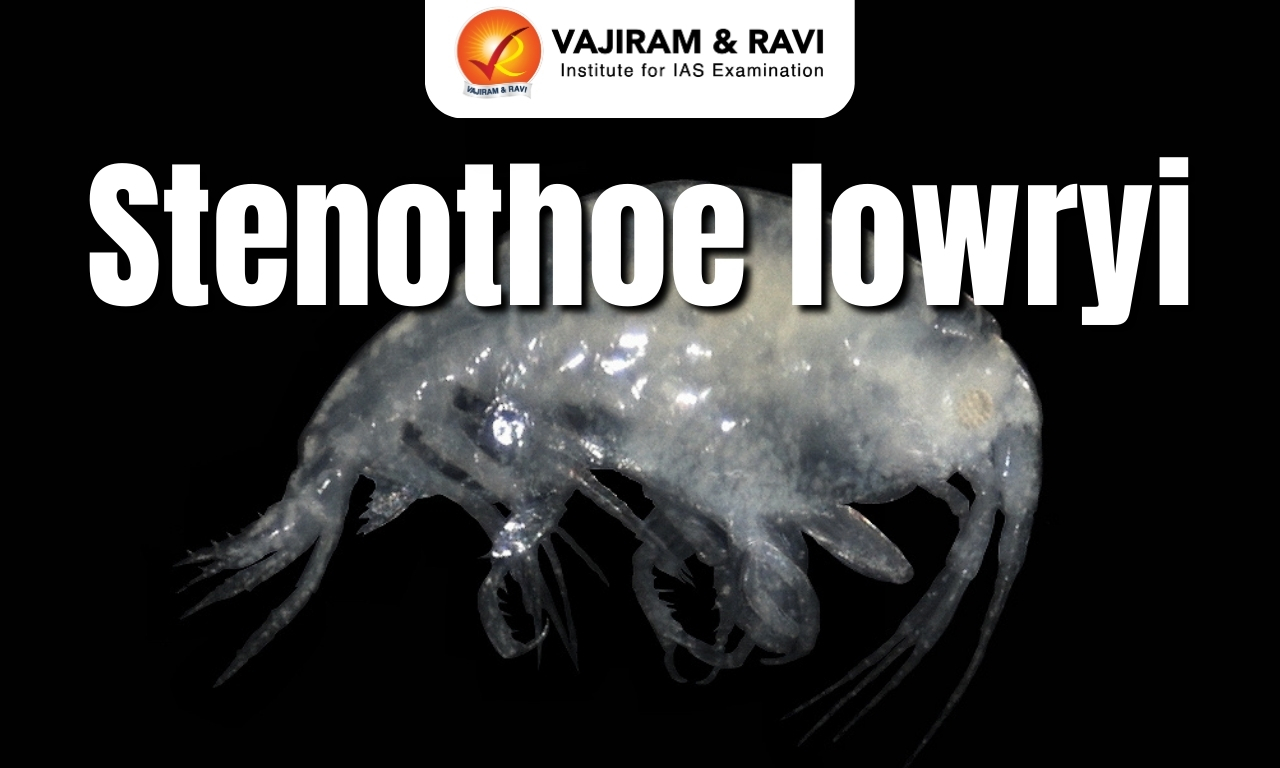
For the first time, a rare marine amphipod, a shrimp-like species, named Stenothoe lowryi was found in Indian water at Arjyapalli in Ganjam district by marine science researchers of Berhampur University.

About Stenothoe lowryi

  • It is a rare marine amphipod.
  • This shrimp-like crustacean, previously known only from Malaysian shores, was detected for the first time in India during a targeted survey at Aryjapalli Beach in Odisha's Ganjam district. 
  • It belongs to the family Stenothoidae within the order Amphipoda. 
  • It stands out with its approximate 5.5 mm body size, prominent large claws (gnathopods), and affinity for rocky intertidal habitats. 
  • These claws likely aid in gripping substrates and prey, facilitating their scavenging lifestyle.
  • It is distinguished by unique morphological traits such as specific antennal structures and pereopod (walking leg) configurations.
  • Although little is currently known about its ecological role, it is believed to contribute significantly to the marine food web.

What are Amphipods?

  • They are a type of small crustacean. 
  • They are members of the invertebrate order Amphipoda,  inhabiting all parts of the sea, lakes, rivers, sand beaches, caves, and moist (warm) habitats on many tropical islands.
  • They are related to crabs, lobsters, and shrimp. 
  • The name ‘amphipoda’ means “different-footed.” 
    • This is because they have many different kinds of legs. 
    • Unlike some other crustaceans, their legs are not all the same.
  • There are over 7,000 known species of amphipods. Most of them belong to a group called Gammaridea.
  • Amphipods can be very tiny, about 0.1 centimeters (0.04 inches) long. But some can grow quite large, up to 34 centimeters (13 inches).
  • They typically have an elongated body with a distinct head, a pereon (thorax) of 7 segments, and a six-segmented pleon (abdomen).
  • Most amphipods eat tiny bits of dead plants and animals. Some are also scavengers, eating what they find.

Source: TOI

Stenothoe lowryi FAQs

Q1: What is Stenothoe lowryi?

Ans: It is a rare marine amphipod crustacean.

Q2: Where was Stenothoe lowryi first detected in India?

Ans: Aryjapalli Beach in Odisha's Ganjam district.

Q3: Before being found in India, from which country was Stenothoe lowryi previously known?

Ans: Malaysia

Q4: What distinctive physical feature does Stenothoe lowryi possess?

Ans: Large claws (gnathopods).

Q5: In which type of habitat is Stenothoe lowryi commonly found?

Ans: Rocky intertidal habitats.

Kheybar Shekan Missile

Kheybar Shekan Missile

Kheybar Shekan Missile Latest News

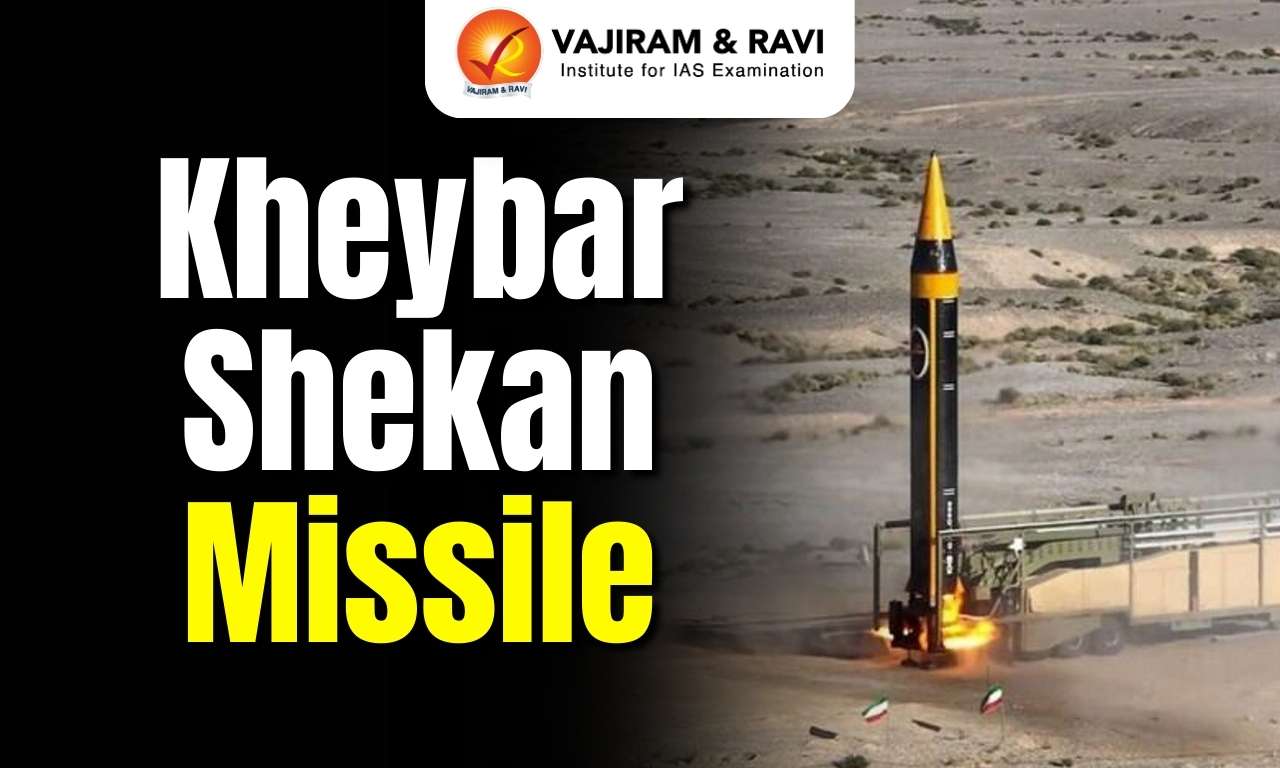
Iran’s IRGC claimed it targeted Israeli PM Benjamin Netanyahu’s office and an air force command centre using Kheybar Shekan missiles recently.

About Kheybar Shekan Missile

  • It is Iran’s latest long-range solid-fuel ballistic missile. 
  • The name means “breaker of Khayber” in Arabic, a reference to the Battle of Khayber in Arab history. 
  • It is the fourth generation of the Khorramshahr missile family.

Kheybar Shekan Missile Features

  • The missile is approximately 4 meters long and weighs 1,500 kilograms. 
  • It has a range of 1,450 kilometers.
  • It is powered by a locally developed 'Arond' engine integrated within its fuel tank to minimise length and enhance camouflage.
  • It uses solid fuel. This allows for faster launch preparation, easier storage, and better concealment, key advantages in modern missile warfare.
  • It can be launched from a mobile platform and is ready in less than 15 minutes. 
  • The missile operates in three phases: takeoff, mid-flight guidance with rear engines, and a final descent guided by precision engines.
  • It features a satellite guidance system and a maneuverable warhead, allowing it to strike with high precision.
  • Its speed is said to reach 19,500 km/h in the atmosphere and 9,800 km/h outside it, roughly Mach 12. 
  • Due to this speed, it can make interception difficult even for advanced air defence systems.
  • Its aerodynamic design reduces air drag, helping it evade radar detection.

Source: WION

Kheybar Shekan Missile FAQs

Q1: What is the Kheybar Shekan missile?

Ans: It is a long-range solid-fuel ballistic missile.

Q2: Which country developed the Kheybar Shekan missile?

Ans: Iran

Q3: The Kheybar Shekan missile belongs to which missile family?

Ans: The Khorramshahr missile family.

Q4: What is the range of the Kheybar Shekan missile?

Ans: Approximately 1,450 kilometres.

White Phosphorus

White Phosphorus

White Phosphorus Latest News

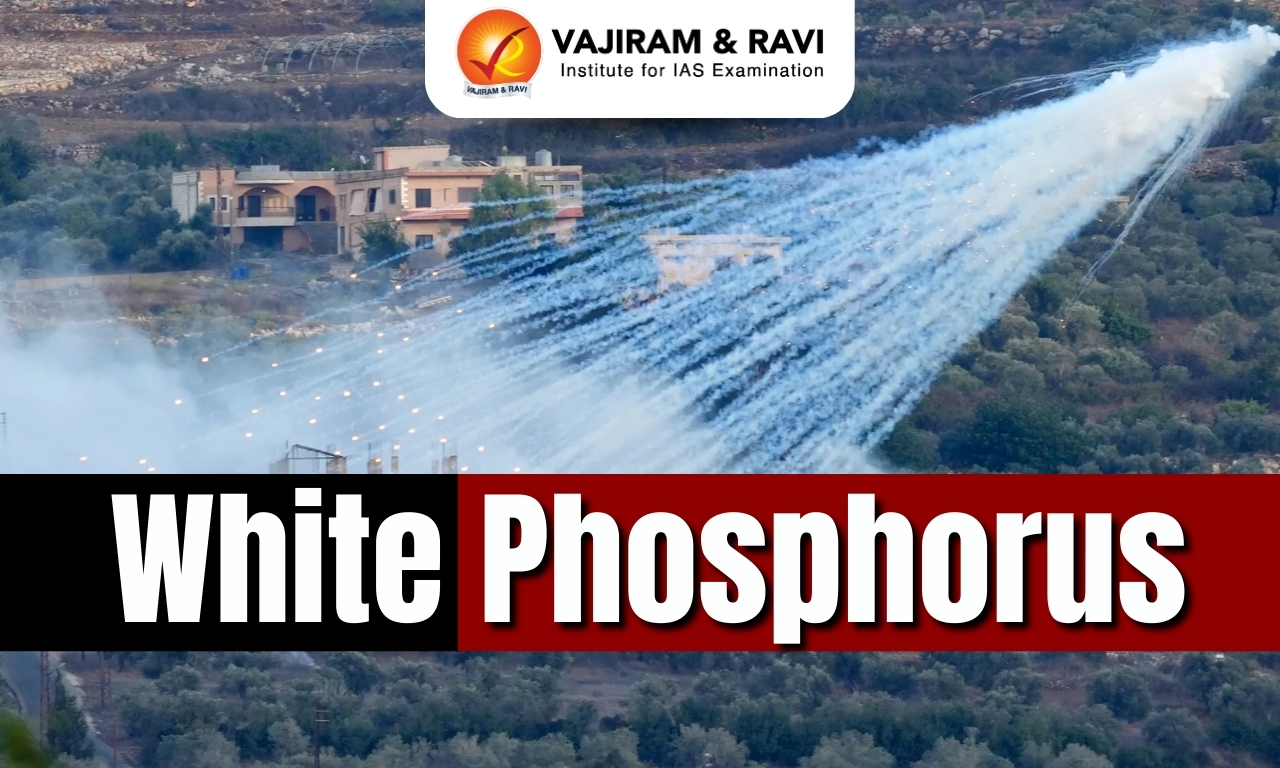
Recently, the Human Rights Watch  accused Israel of "unlawfully" using white phosphorus over residential parts of a southern Lebanese town.

About White Phosphorus 

  • White (sometimes called yellow) phosphorus is a white to yellow waxy solid with a garlic like odour.
  • Properties: It ignites spontaneously in air at temperatures above 30 °C and continues to burn until it is fully oxidized or until deprived of oxygen.

Applications of  White phosphorus

  • It is often used by militaries to illuminate battlefields, to generate a smokescreen and as an incendiary.
  • It is used for military purposes in grenades and artillery shells to produce illumination, to generate a smokescreen and as an incendiary.
  • Its major industrial uses are in the production of phosphoric acid, phosphates and other compounds.
  • Phosphates are used to manufacture a range of products including fertilizers and detergents. Phosphorus has been used as a rodenticide and in fireworks.

Impact of White phosphorus on Humans

  • It is harmful to humans by all routes of exposure.
  • The smoke from burning phosphorus is also harmful to the eyes and respiratory tract due to the presence of phosphoric acids and phosphine.
  • It can cause deep and severe burns, penetrating even through bone.

Source: TH

White Phosphorus FAQs

Q1: What is a major concern with White Phosphorus use in warfare?

Ans: It causes severe burns and environmental harm

Q2: What is White Phosphorus primarily used for?

Ans: Incendiary weapons

Human Metapneumovirus

Human Metapneumovirus (HMPV)

Human Metapneumovirus (HMPV) Latest News

The highly contagious human metapneumovirus (HMPV) is spreading rapidly across the West Coast of the United States, becoming a major cause of concern for the authorities.

About Human Metapneumovirus (HMPV)

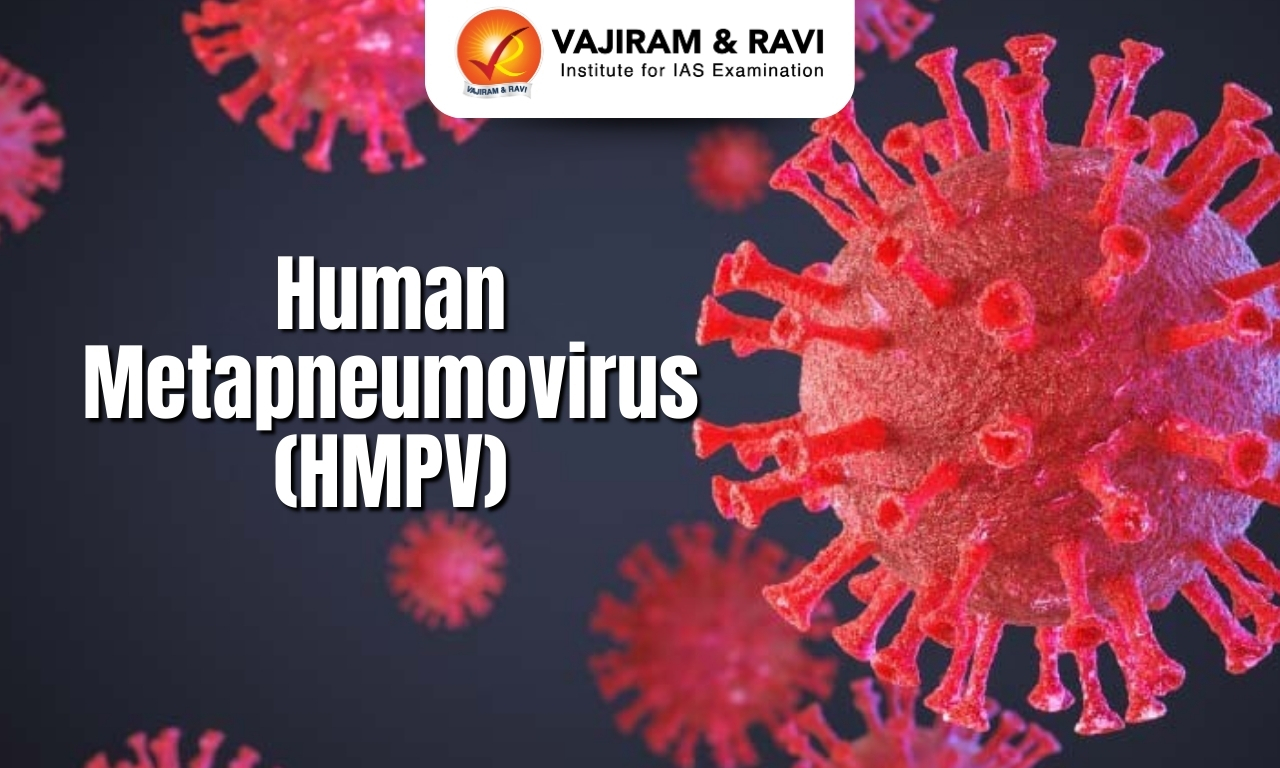
  • It is a respiratory virus belonging to the Pneumoviridae family, which also includes the Respiratory Syncytial Virus (RSV).
  • It causes symptoms similar to the common cold.
  • Researchers estimate that about 10% to 12% of respiratory illnesses in children are caused by HMPV.

Human Metapneumovirus (HMPV) Transmission

  • The virus is highly contagious. HMPV most likely spreads from an infected person to others through:
    • the air by coughing and sneezing
    • close personal contact, such as touching or shaking hands
    • touching objects or surfaces that have the viruses on them, then touching the mouth, nose, or eyes

Human Metapneumovirus (HMPV) Symptoms

    • Symptoms commonly associated with HMPV include cough, fever, nasal congestion, and shortness of breath. 
    • In some people, these symptoms may progress to bronchitis or pneumonia. 
    • The symptoms of HMPV can be similar to symptoms from other viruses that cause upper and lower respiratory infections.
    • The majority of the cases are mild, but people with the highest risk of severe illness include young children, older adults, and those who are immunocompromised. 

Human Metapneumovirus (HMPV) Treatment

  • There is no vaccine, and there is no specific antiviral to treat HMPV. 
  • Treatment primarily aims at managing symptoms and preventing complications.

Human Metapneumovirus (HMPV) FAQs

Q1: What is Human Metapneumovirus (HMPV)?

Ans: It is a respiratory virus that causes infections similar to the common cold.

Q2: How does Human Metapneumovirus mainly spread?

Ans: Through respiratory droplets, close personal contact, and contaminated surfaces.

Q3: What are the common symptoms of HMPV infection?

Ans: Cough, fever, nasal congestion, and shortness of breath.

Q4: s there a vaccine currently available for Human Metapneumovirus?

Ans: No, there is no vaccine available.

Q5: Is there a specific antiviral treatment for Human Metapneumovirus?

Ans: No, there is no specific antiviral treatment.

Narcotics Control Bureau

Narcotics Control Bureau

Narcotics Control Bureau Latest News

Recently, the Narcotics Control Bureau (NCB) has dismantled a pan-India drug distribution network operating under the name Team Kalki. 

About Narcotics Control Bureau

  • It is the nodal drug law enforcement and intelligence agency under the Ministry of Home Affairs, Government of India.
  • It was constituted on 14th November, 1985, under the provisions of the Narcotic Drugs and Psychotropic Substances Act, 1985 (NDPS Act).
  • Headquarters: New Delhi

Functions of Narcotics Control Bureau

  • Coordination among various Central and State Agencies engaged in drug law enforcement;
  • Assisting States in enhancing their drug law enforcement effort;
  • Collection and dissemination of intelligence;
  • Analysis of seizure data, study of trends and modus operandi;
  • Preparation of National Drug Enforcement Statistics;
  • Liaison with International agencies such as UNDCP, INCB, INTERPOL, Customs Cooperation Council, RILO etc;
  • National contact point for intelligence and investigations
  • It also functions as an enforcement agency through its zonal offices.
    • The zonal offices collect and analyse data related to seizures of narcotic drugs and psychotropic substances, study trends, modus operandi, collect and disseminate intelligence, and work in close cooperation with the Customs, State Police, and other law enforcement agencies.

Source: News on Air

Narcotics Control Bureau FAQs

Q1: Under which ministry does the Narcotics Control Bureau (NCB) operate?

Ans: Ministry of Home Affairs

Q2: What is the primary function of the NCB?

Ans: To control and combat drug trafficking

BharatNet Project

BharatNet Project

BharatNet Project Latest News

Recently, the government said that through BharatNet project India expanded its optical fibre networks, 5G services and digital public infrastructure to more than 2.15 lakh Gram Panchayats.

About BharatNet Project

  • It is a project of the Government of India aimed at providing broadband connectivity to all Gram Panchayats (GPs) in the country.
  • Objective: The primary objective is to provide unrestricted access to broadband connectivity to all the telecom service providers.
    • This enables access providers like mobile operators, Internet Service Providers (ISPs), Cable TV operators, and content providers to launch various services such as e-health, e-education, and e-governance in rural and remote India. 
  • Phases of BharatNet Project
    • Phase I: Focused on laying optical fibre cables to connect 1 lakh Gram Panchayats by utilising existing infrastructure. This phase was completed in December 2017
    • Phase II(ongoing): Expanded coverage to an additional 1.5 lakh Gram Panchayats using optical fibre, radio, and satellite technologies.
    • Phase III (ongoing): Aims at future-proofing the network by integrating 5G technologies, increasing bandwidth capacity, and ensuring robust last-mile connectivity.
  • Funding: It is primarily funded through the Digital Bharat Nidhi (DBN), which is a fund that replaced the Universal Service Obligation Fund (USOF).
  • Implementation: It is being executed by a Special Purpose Vehicle (SPV) namely Bharat Broadband Network Limited (BBNL).

Source: DD News

BharatNet Project FAQs

Q1: What is the primary objective of the BharatNet Project?

Ans: To provide broadband connectivity to rural areas

Q2: What is the target for BharatNet Phase-I?

Ans: Connecting 2.5 lakh Gram Panchayats

ASMITA Initiative

ASMITA Initiative

ASMITA Initiative Latest News

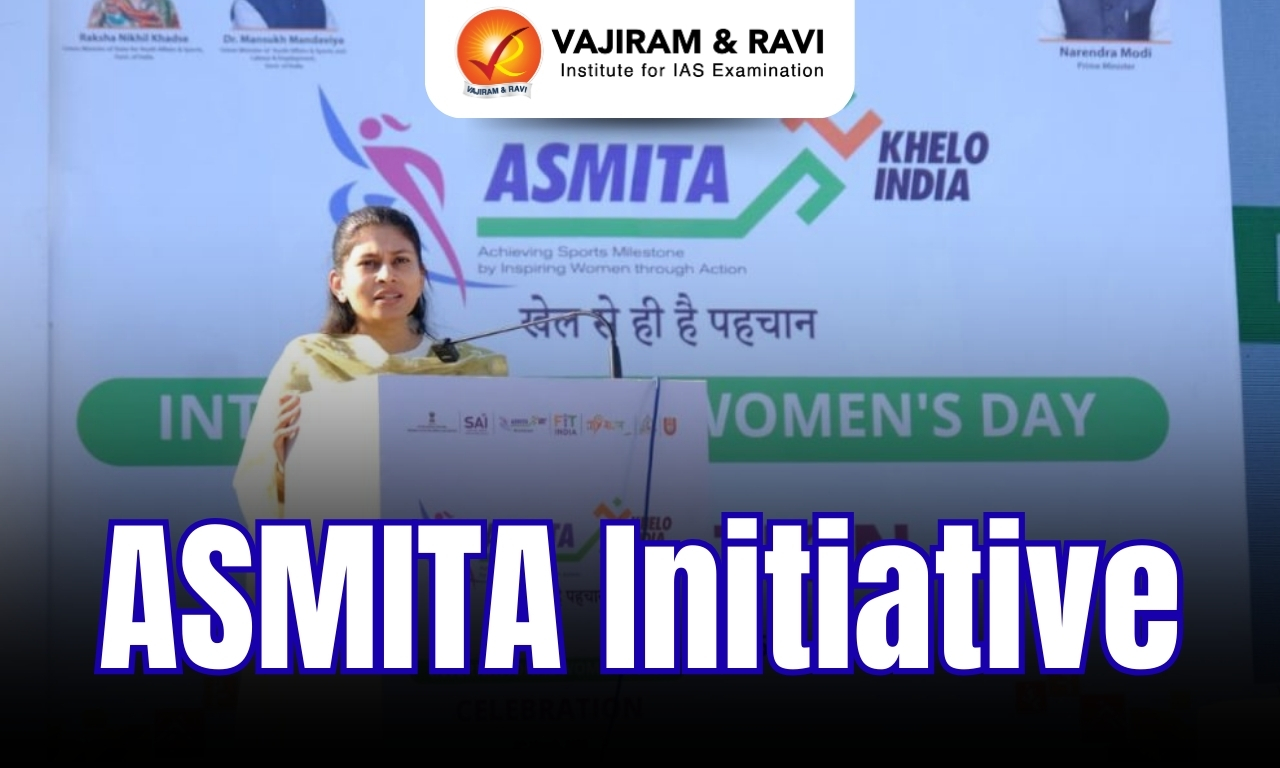
Recently, the Minister of State for Youth Affairs & Sports launched the nationwide athletics league at 250 locations across the subcontinent under the ASMITA (Achieving Sports Milestone by Inspiring Women Through Action) programme. 

About ASMITA Initiative

  • It was started in 2021.
  • It is part of Khelo India’s gender-neutral mission to promote sports among women through leagues and competitions.
    • ASMITA leagues not only aim to increase the participation of women in sports but also to utilize the leagues as a platform for the identification of new talent across the length and breadth of India.
  • Objective: Inclusive and grassroots-driven sports development.
  • The Khelo India ASMITA league is a core component of the ‘Khelo Bharat Niti,’ promoting sports for nation-building and women’s empowerment.
  • The Sports Authority of India (SAI) supports National Sports Federations in conducting Khelo India women’s leagues across multiple age groups at both zonal and national levels.
  • Till now, the ASMITA League has witnessed participation of almost 3 lakh women in 33 disciplines across 2600 leagues.
  • Nodal Ministry: Ministry of Youth Affairs and Sports.

Key Facts about Khelo India

  • It is a flagship Central Sector Scheme of the Ministry of Youth Affairs & Sports, Government of India.
  • It is aimed at promoting mass participation and sporting excellence.
  • Khelo India Games have been declared an ‘Event of National Importance’ in 2020 under the Sports Broadcasting Signals Act, 2007.

Source: DD News

ASMITA Initiative FAQs

Q1: Which ministry launched the ASMITA initiative?

Ans: Ministry of Youth Affairs and Sports

Q2: What is the primary objective of the ASMITA programme?

Ans: To empower female athletes across India

Proba-3 Mission

Proba-3 Mission

Proba-3 Mission Latest News

Recently, the European Space Agency (Esa) has lost contact with one of the two spacecraft powering its Proba-3 mission.

About Proba-3 Mission

  • It is the European Space Agency’s (ESA) first mission dedicated to precision formation flying.
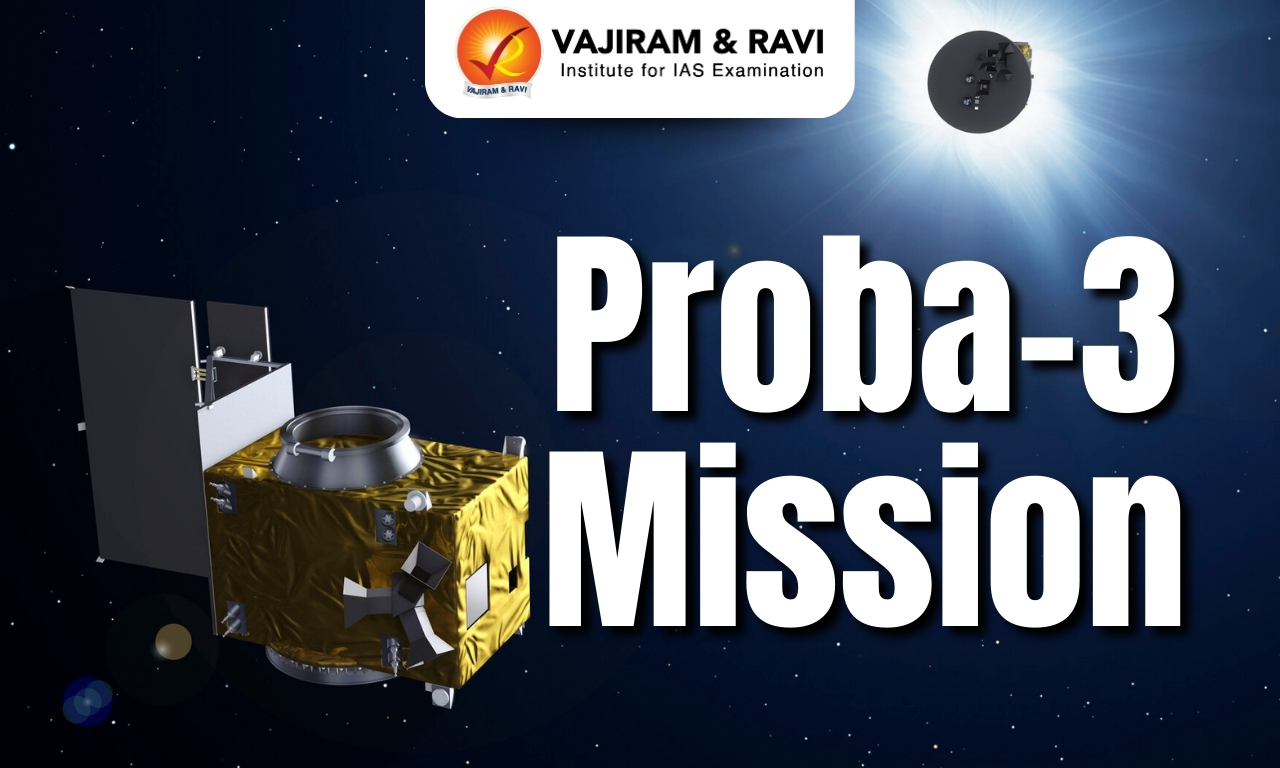
  • It is the innovative mission which will demonstrate precision formation flying between two satellites to create an artificial eclipse, revealing new views of the Sun’s faint corona.
  • Objective: To create an artificial eclipse by precisely coordinating two independent satellites. This capability will enable scientists to observe the Sun’s corona, a region typically obscured by the intense brightness of the Sun. 
  • It consists of two small satellites — a Coronagraph spacecraft and a solar-disc-shaped Occulter spacecraft.
  • Working
    • By flying in tight formation about 150 metres apart, the Occulter will precisely cast its shadow onto the Coronagraph’s telescope, blocking the Sun’s direct light.
    • This will allow the Coronagraph to image the faint solar corona in visible, ultraviolet and polarised light for many hours at a time.
    • It will provide new insights into the origins of coronal mass ejections (CMEs) — eruptions of solar material that can disrupt satellites and power grids on Earth.
    • The mission will also measure total solar irradiance, tracking changes in the Sun’s energy output that may influence Earth’s climate.

Source: IT

Proba-3 Mission FAQs

Q1: What is the primary objective of the Proba-3 Mission?

Ans: To demonstrate precise formation flying in space

Q2: Which space agency is leading the Proba-3 Mission?

Ans: European Space Agency

Enquire Now