Antariksh Venture Capital Fund

Antariksh Venture Capital Fund

Antariksh Venture Capital Fund Latest News

Recently, the Union Minister said that India’s dedicated Antariksh venture capital fund for the space sector has progressed steadily, with investment in selected startups expected to begin from the first quarter of FY2027.

About Antariksh Venture Capital Fund

  • It is a close ended fund registered with the Securities and Exchange Board of India (SEBI) as a Category II Alternative Investment Fund (AIF).
  • It is a SEBI registered Alternative Investment Fund.
  • Key Investor: Indian National Space Promotion and Authorization Centre (IN-SPACe), Department of Space, Government of India.
  • The Fund is sponsored by SIDBI Venture Capital Limited.
  • The Fund’s investment objective:  To provide much-needed capital to companies in the space sector at various stages of development as well as support the scaling of operations and the commercialization of new technologies, empowering the companies to contribute to India’s broader space ambitions.
  • It is looking to invest exclusively in Indian companies operating in the Space sector with Technology Readiness Level (TRL) of 4 and above.

Key Facts about Indian National Space Promotion and Authorization Centre

  • It is a single-window, independent, nodal agency that functions as an autonomous agency in the Department of Space (DOS). 
  • It is formed following the Space sector reforms to enable and facilitate the participation of private players.
  • Functions
    • It is responsible to promote, enable, authorize and supervise various space activities of non-governmental entities (NGEs) including building launch vehicles & satellites and providing space-based services; sharing space infrastructure and premises under the control of DOS/ISRO; and establishing of new space infrastructure and facilities.
    • The agency acts as an interface between ISRO and NGEs and assesses how to utilize India’s space resources better and increase space-based activities. 
    • Three Directorates viz., Promotion Directorate (PD), Technical Directorate (TD) and Program Management and Authorization Directorate (PMAD) are carrying out the functions of IN-SPACe.

Source: PIB

Antariksh Venture Capital Fund FAQs

Q1: What is the primary focus of Antariksh Venture Capital Fund?

Ans: Spacetech startups

Q2: Who is the investment manager of Antariksh Venture Capital Fund?

Ans: SIDBI Venture Capital Limited
Rebate of State and Central Taxes and Levies (RoSCTL) Scheme

Rebate of State and Central Taxes and Levies (RoSCTL) Scheme

Rebate of State and Central Taxes and Levies (RoSCTL) Scheme Latest News

Recently, the Ministry of Textiles has extended the Rebate of State and Central Taxes and Levies (RoSCTL) Scheme for exports of apparel/garments and made-ups up to 30th September 2026.

About Rebate of State and Central Taxes and Levies (RoSCTL) Scheme

  • It is operational from 7th March 2019.
  • It aims to reimburse all embedded State and Central Taxes/Levies for exports of manufactured goods and garments.
  • It has been established as a successor for the old “Rebate of State Levies (RoSL) Scheme.
    • The difference between RoSL & RoSCTL Scheme is that under the RoSL Scheme, there was no benefit on the central tax and Levies. But in the RoSCTL scheme, the exporter will get rebate of both State and Central tax and Levies.
  • Objective: To compensate for the State and Central Taxes and Levies in addition to the Duty Drawback Scheme on export of apparel/ garments and Made-ups by way of rebate.

Features of RoSCTL Scheme

  • The rebate under the Scheme shall be in the form of duty credit scrips.
  • The scrips shall be issued electronically on the Customs system.
  • The duty credit scrips shall be used for payment of Basic Customs Duty on import of goods. These scrips shall be freely transferable.
  • The duty credit available in an e-scrip shall be transferred at a time for the entire amount in the said e-scrip to another person and transfer of the duty credit in part shall not be permitted.
  • Validity of e-scrip: The period of validity of the e-scrip, of one year from its creation, shall not change on account of transfer of the e-scrip.
  • Eligibility: All exporters of garments/Apparel and made-ups manufactured in India are eligible to take benefit under this scheme, except entities/ IECs under the Denied Entity List of the Directorate General of Foreign Trade (DGFT).
  • Implementing agency: It is implemented by the Department of Revenue, Ministry of Finance.

Source: PIB

Rebate of State and Central Taxes and Levies (RoSCTL) Scheme FAQs

Q1: Which products are covered under the RoSCTL Scheme?

Ans: Apparel and made-ups

Q2: What is the primary objective of the RoSCTL Scheme?

Ans: To refund embedded state and central taxes on apparel and made-up exports

Samrat Samprati

Samrat Samprati

Samrat Samprati Latest News

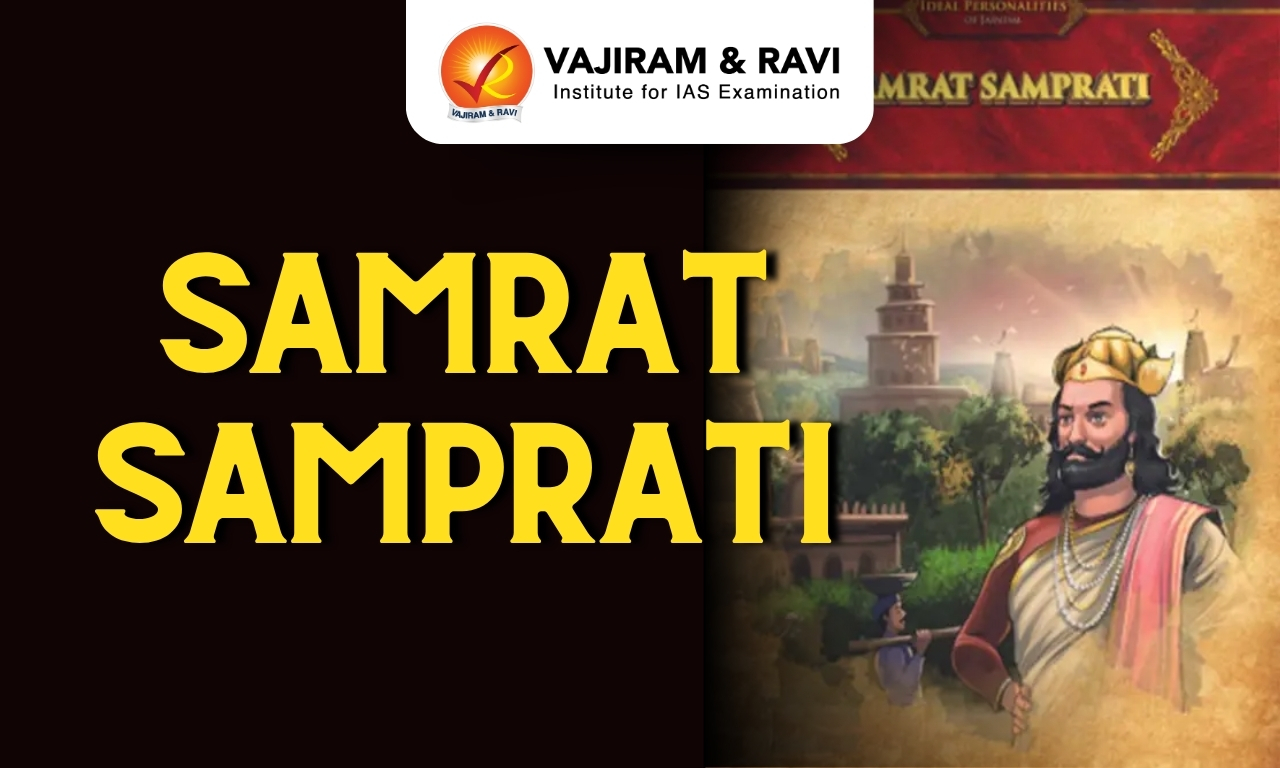
Recently, the Prime Minister of India inaugurated the Samrat Samprati Museum in Gujarat.

About Samrat Samprati

  • Samrat Samprati (224-215 BC) was a Mauryan ruler.
  • He was the grandson of Samrat Ashoka.
  • Other Names: He was known as Indrapalit, Sangat and Vigatashok.
  • He was known for propagating Jainism and the principle of non-violence.
  • His life is described in Jain scripture like ‘Sampratikatha’, ‘Parishistaparva’, and ‘Prabhavakcharita’.
  • King Samprati had established centres of Jain culture in Iran and in Arab countries. 
  • It is said that Samprati, also known as 'Jain Ashoka', built thousands of Jain temples in western and southern India.

Key Facts about Jainism

  • Jainism is a sramanic religion. Sramana' is a Sanskrit word that denotes an ascetic or monk.
  • Jainism is one of the religions whose origin can be traced back to the twenty four teachers (tirthankaras - ones who establishes a path or ford), through whom their faith is believed to have been handed down.
  • The 24th Tirthankara was Vardhamana Mahavira.
  • Jainism mainly aims at the attainment of liberation. It can be attained through three principles required to be observed to attain Moksha/Nirvana
    • Samyakdarshana: Right Faith 
    • Samyakjnana: Right Knowledge 
    • Samyakcharita: Right Action 
  • The five doctrines of Jainism (five vows), known as Panchamahavratas, are for the monks.
    • Ahimsa: do not commit violence
    • Satya: do not tell a lie
    • Asteya: do not steal
    • Aparigraha: do not hoard
    • Brahmacharya: observe continence.

Source: TH

Samrat Samprati FAQs

Q1: Who was Samrat Samprati?

Ans: A Mauryan emperor

Q2: Who was Samrat Samprati's father?

Ans: Kunala

YUVIKA Programme

YUVIKA Programme

YUVIKA Programme Latest News

Recently, the Union Minister of State (Independent Charge) for Science & Technology highlighted the Government’s sustained efforts to nurture scientific temper among the youth, stating that the Yuva Vigyani Karyakram (YUVIKA).

About YUVIKA Programme

  •  YUva VIgyani KAryakram (YUVIKA) is a learning and awareness creating programme of the ISRO.
  • It imparts basic knowledge on Space Technology, Space Science, and Space Applications to younger students with a preference to rural areas. 
  • The programme is aimed at creating awareness about the emerging trends in science and technology amongst the youngsters, who are the future building blocks of our nation.
  • It is also expected to encourage more students to pursue Science, Technology, Engineering and Mathematics (STEM) based research /career.
  • Eligibility
    • Those who have finished class 8 and are currently studying in class 9 can apply for the programme.
    • Three students from each state/Union Territory will participate in this programme every year, covering CBSE, ICSE, and state-board syllabus.
    • The selection is based on 8th Standard academic performance and extracurricular activities.
    • Students belonging to the rural area have been given special weightage in the selection criteria.
    • In case there is a tie between the selected candidates, the younger candidates will be given priority.
  • This programme involves
    • It is a two-week residential programme offered by ISRO.
    • It will include invited talks, experience sharing by eminent scientists, facility and lab visits, exclusive sessions for discussions with experts and practical and feedback sessions.

Source: PIB

YUVIKA Programme FAQs

Q1: Where is YUVIKA Programme conducted?

Ans: At various ISRO centers across India

Q2: What is the duration of YUVIKA Programme?

Ans: 2 weeks

Rice’s Whale

Rice's Whale

Rice's Whale Latest News

Scientists fear that the USA administration's plan to expand oil drilling in the Gulf of Mexico will  push Rice's Whales to extinction.

About Rice's Whale

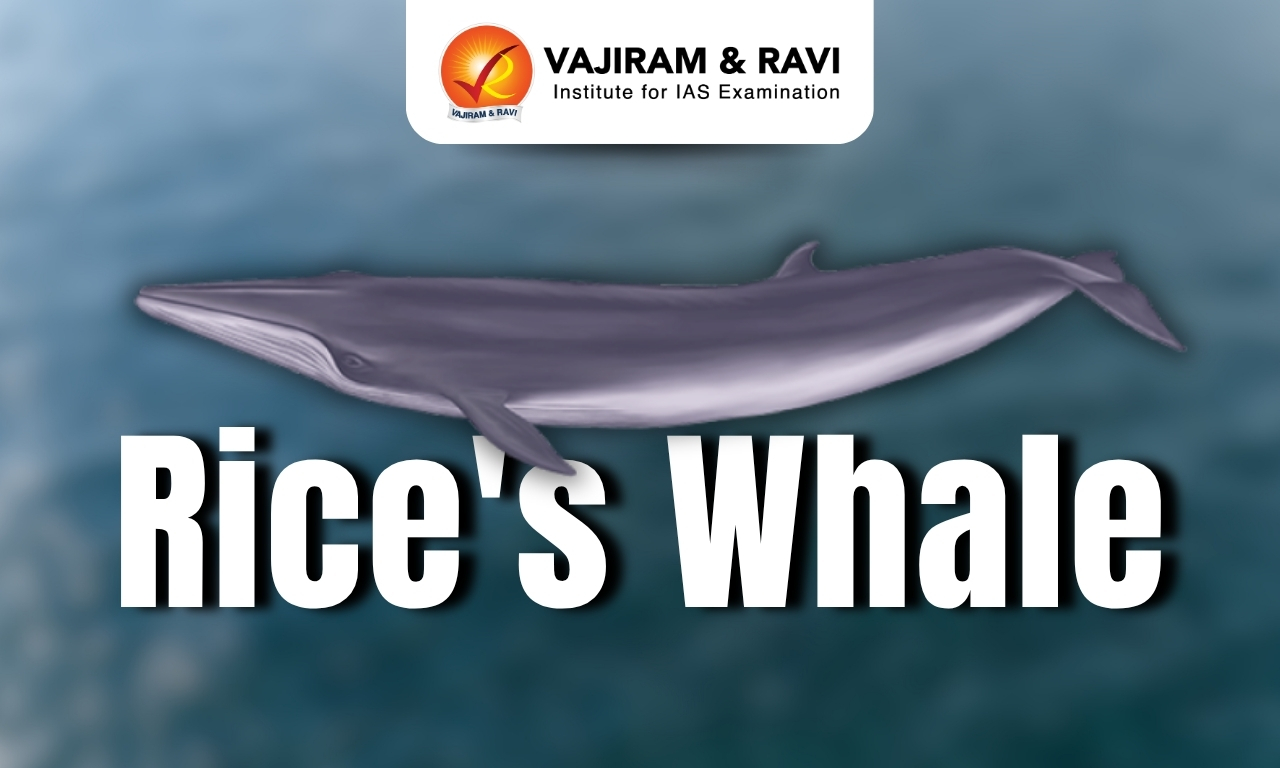
  • Rice's whales are members of the baleen whale family Balaenopteridae.
  • These are most closely related to Bryde’s whales.
  • In 2021, the Rice’s whale was recognized as a new species, evolutionarily distinct from other Bryde’s whales around the world.
  • Appearance
    • They have three prominent ridges in front of their blowhole. Their body is sleek, and their pectoral fins are slender and pointed.
    • Rice's whales are uniformly dark gray on top with a pale to pink belly.
    • It is a medium-sized whale sighted year-round in the northern Gulf of America (Previously known as Gulf of Mexico), with most sightings concentrated in 100-400 meter (m) depths of the northeastern 
  • Distribution: It is the only whale species that lives year-round in the Gulf of America.
  • Diet: They are mainly dependent on silver-rag driftfish.
  • Reproduction: Rice's whales are likely able to reproduce every 2 to 3 years, reaching sexual maturity at age nine.
  • Threats: Vessel strikes, noise pollution, oil spills, and climate change.
  • Conservation Status
    • IUCN Red List: Critically Endangered

Source: TH

Rice's Whale FAQs

Q1: Where is Rice's Whale primarily found?

Ans: Gulf of Mexico

Q2: What is another name for Rice's Whale?

Ans: Gulf of Mexico whale

Algeria

Algeria

Algeria Latest News

Recently, the 7th round of Foreign Office Consultations between India and Algeria was held in Algiers.

About Algeria

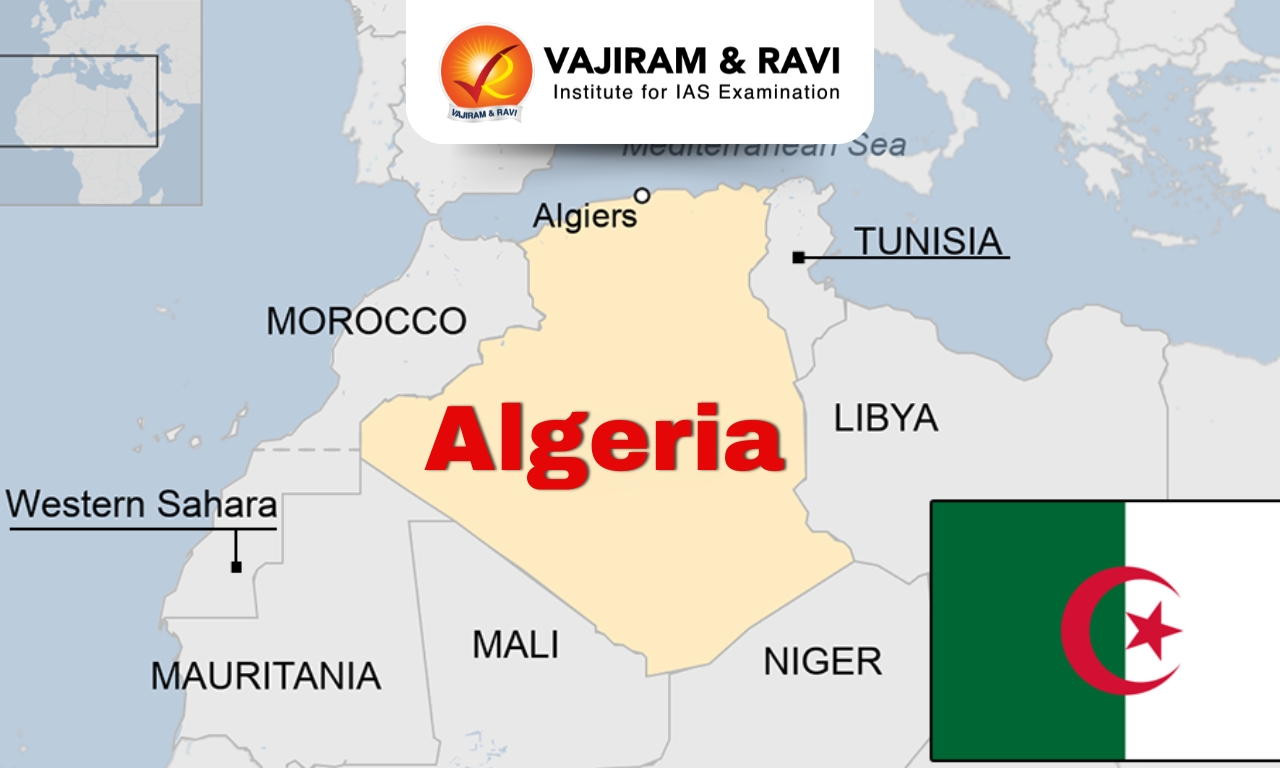
  • Location: It is located in the Maghreb region of North Africa.
  • Bordering countries: It is bordered by seven countries namely Tunisia, Libya, and Niger to the northeast, east, and southeast respectively; Mali, Mauritania, and Western Sahara lie to the southwest. Morocco borders to the west.
  • Maritime Border: It has a coastline on the Mediterranean Sea to the north.  
  • Capital City: Algiers

Geographical Features of Algeria

  • Climate: It mainly consists of Mediterranean climate, with warm, dry summers and mild, rainy winters.
  • Major Rivers: Djedi River and Chelif River 
  • Highest Point: Mount Tahat
  • Mountain Ranges: Mountain ranges in Algeria include the Atlas mountains, the Saharan Atlas, the Tell Atlas, the Hoggar Mountains, and the Tassili n' Ajjer mountains.
  • Natural Resources:  It has abundant natural resources including oil, gas, solar energy, iron, zinc, lead, silicon, and helium.

Source: News On Air

Algeria FAQs

Q1: What is the official language of Algeria?

Ans: Arabic

Q2: What is the capital of Algeria?

Ans: Algiers

Snowy Owl

Snowy Owl

Snowy Owl Latest News

Recently, the snowy owl has been designated for international protection by the U.N. Convention on the Conservation of Migratory Species of Wild Animals.

About Snowy Owl

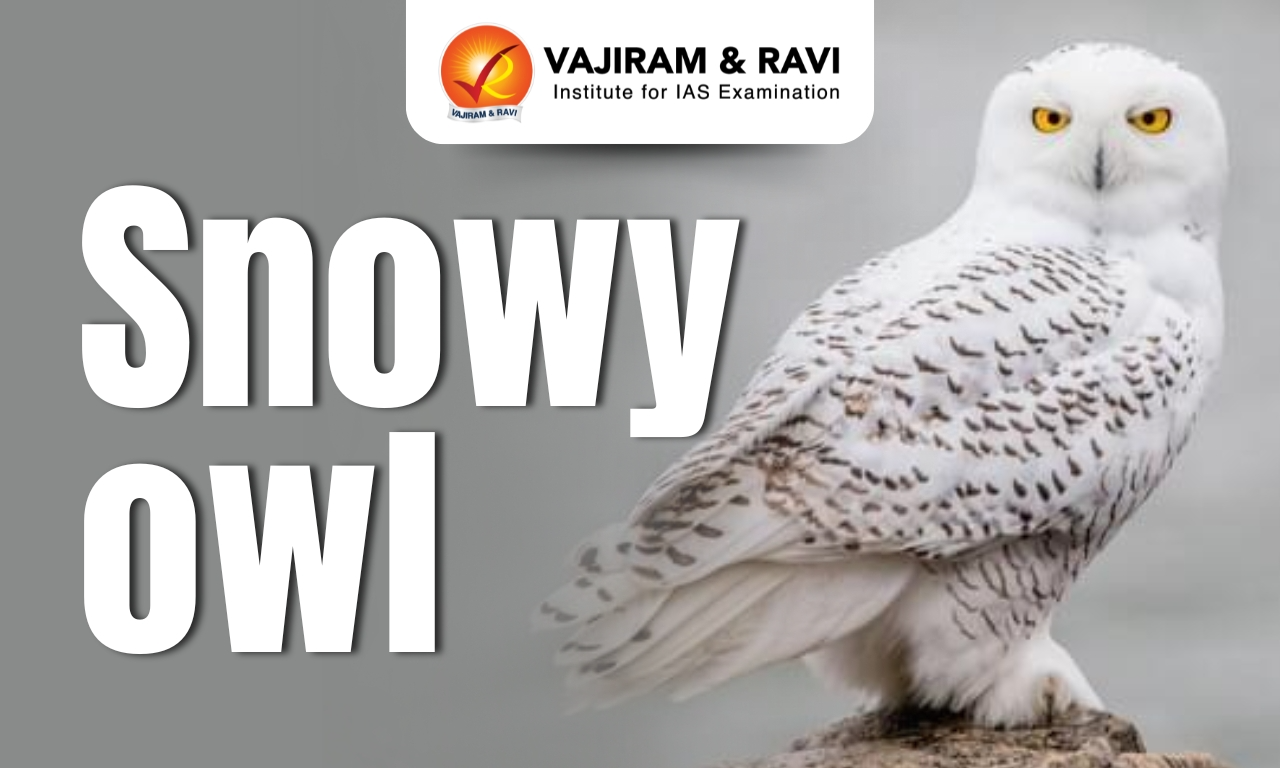
  • The Snowy owl (Bubo scandiacus) is a large, white owl of the true owl family.
  • Habitat: It mainly lives in the Arctic in open, treeless areas called tundra.
  • It can also be found in coastal dunes and prairies, open moorland, meadows, marshes, and agricultural areas
  • Distribution: It is native to Arctic regions in North America and Eurasia.

Characteristics of Snowy Owl

  • Unlike many other owls, Snowy owls are not nocturnal, and can be seen hunting any time of the day or night.
  • It is a nomadic bird, rarely breeding at the same locations or with the same mates on an annual basis and often not breeding at all if the prey is unavailable.
  • Diet: These are carnivores and feed on a wide variety of small mammals such as lemmings, meadow voles etc.
  • They use a ‘wallop’ hunting method - swooping down and snatching prey with their strong talons
  • Conservation Status
    • IUCN Red List: Vulnerable

Source: KSN

Snowy Owl FAQs

Q1: What is a distinctive feature of Snowy Owls?

Ans: White feathers with dark markings

Q2: Where do Snowy Owls primarily breed?

Ans: Arctic tundra

Acute Lymphoblastic Leukaemia

Acute Lymphoblastic Leukaemia

Acute Lymphoblastic Leukaemia  Latest News

The multi-institutional study of 830 adult ALL patients treated at eight academic centres found that about one in 10 adults diagnosed with Acute lymphoblastic leukaemia (ALL ) had a mutation in TP53.

About Acute Lymphoblastic Leukaemia

  • Acute lymphoblastic leukaemia or acute lymphocytic leukaemia is a type of blood cancer that affects the white blood cells and bone marrow.
  • It is a fast-growing cancer. It is the most common type of paediatric cancer.
  • Symptoms: Bleeding from the gums, Bone pain,Fever, Frequent infections and Frequent or severe nosebleeds etc.
  • Causes: It occurs when a bone marrow cell develops changes (mutations) in its genetic material or DNA. 
  • Types of Acute Lymphoblastic Leukaemia: The World Health Organization classifies acute lymphoblastic leukemia into two main groups:
    • B-cell lymphoblastic leukemia/lymphoma: Starts in immature cells that ordinarily develop into B-cell lymphocytes. B-cell ALL is the most common subtype.
    • T-cell lymphoblastic leukemia: Starts in immature cells that ordinarily develop into T-cell lymphocytes. T-cell ALL is less common.
  • Treatment: It may include chemotherapy or targeted drugs that specifically kill cancer cells.

Source: TH

Acute Lymphoblastic Leukaemia FAQs

Q1: Which age group is most commonly affected by ALL?

Ans: Children

Q2: What type of cancer is Acute Lymphoblastic Leukaemia?

Ans: Cancer affecting lymphoid cells

E20 Fuel

E20 Fuel

E20 Fuel Latest News

The Central government has implemented a new fuel mandate for petrol pumps to supply E20 fuel with a minimum octane rating of 95 RON.

About E20 Fuel

  • It is a blend of 20 per cent ethanol and 80 per cent petrol.
  • Ethanol is a biofuel derived from crops such as sugarcane, maize, and grains.
  • Advantages: It offers a higher octane rating and potentially cleaner combustion, making it a more advanced alternative.
  • While regular petrol in India typically has an octane rating of around 91 to 92 RON, E20 fuel comes with a minimum rating of 95 RON.
  • This higher octane helps in smoother combustion.

What is Ethanol?

  • Ethanol, also known as ethyl alcohol, is a type of alcohol that is commonly used in various applications. 
  • Properties: It is a clear, colourless liquid with a characteristic odour and taste. 
  • Ethanol has the chemical formula C2H5OH and is composed of carbon, hydrogen, and oxygen atoms. 
  • Pure ethanol is nontoxic and biodegradable, and if spilled, they break down into harmless substances. 
  • However, fuel ethanol contains denaturants to make fuel ethanol undrinkable.
  • How is ethanol sourced?
    • Ethanol can be produced from various sources, but it is often derived from renewable resources such as crops like corn, sugarcane, barley, and wheat.
    • It can also be produced from cellulosic materials like agricultural residues and wood.

Source: LM

E20 Fuel FAQs

Q1: What does E20 fuel contain?

Ans: 20% ethanol + 80% petrol

Q2: What is the aim of promoting E20 fuel?

Ans: Reduce dependence on fossil fuels

Ammonium Nitrate

Ammonium Nitrate

Ammonium Nitrate Latest News

Recently, a leasing agreement was signed between Bharat Coal Gasification and Chemicals Limited (BCGCL) and Mahanadi Coalfields Limited (MCL) for the upcoming Coal to Ammonium Nitrate Project at Lakhanpur, Odisha. 

About Ammonium Nitrate

  • Ammonium nitrate (NH4NO3) is a crystal-like white solid which is made in large industrial quantities. 
  • It is a salt of ammonia and nitric acid.
  • Properties of Ammonium Nitrate:
    • It has a melting point of 170°C. 
    • It is highly soluble in water; heating of the water solution decomposes the salt to nitrous oxide (laughing gas). 
  • Applications
    • It is commonly used in agriculture as a high-nitrogen fertilizer, and it has also been used as an oxidizing agent in explosives.
    • It is one of the base ingredients used in the manufacture of commercial explosives.
    • It is the main component of slurry explosives used for mining.
  • Legal Controls on Ammonium Nitrate in India
    • Under rules introduced in 2012 and updated in 2021, any mixture containing over 45% ammonium nitrate is legally classified as an explosive.
    • A District Magistrate may permit possession of up to 30 metric tonnes, while larger quantities need approval from the Petroleum and Explosives Safety Organisation (PESO). 
    • PESO issues licences for the manufacture, storage, transport, and use of large quantities of ammonium nitrate.

Source: PIB

Ammonium Nitrate FAQs

Q1: What is a major hazard associated with Ammonium Nitrate?

Ans: Explosiveness

Q2: What is the chemical formula of Ammonium Nitrate?

Ans: NH4NO3

Enquire Now