Multi-Hazard Early Warning Decision Support System Latest News
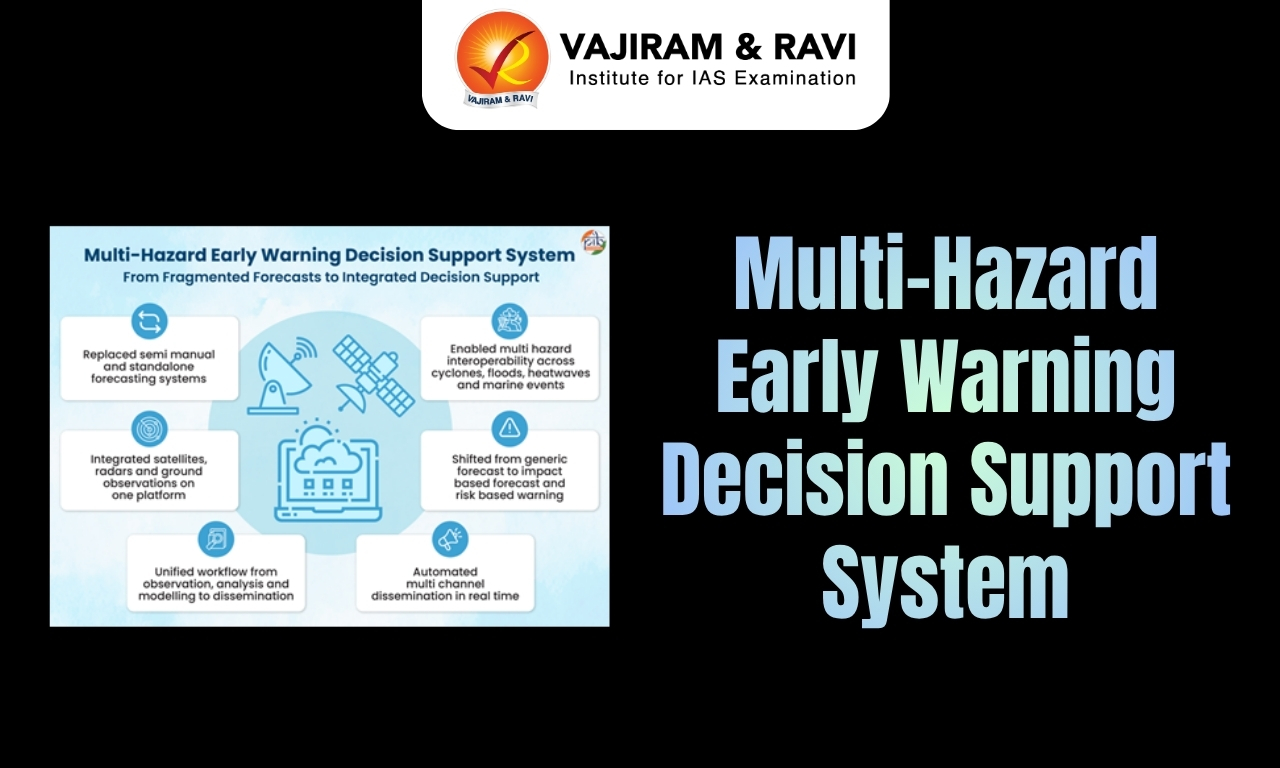
The Multi-Hazard Early Warning Decision Support System represents a decisive transformation in India’s approach to weather forecasting and disaster risk reduction.
About Multi-Hazard Early Warning Decision Support System
- It is an advanced digital forecasting platform developed by the Indian Meteorological Department (IMD) using open-source technology and in-house expertise.
- It is a digital transformation initiative under Mission Mausam.
- It was officially launched in January 2024.
- It operates in real time using tools such as Geographic Information System (GIS) maps, enabling forecasters to quickly collect, analyse, and disseminate weather information in a clear and user-friendly manner.
- Nodal Ministry: Ministry of Earth Sciences (MoES)
Features of Multi-Hazard Early Warning Decision Support System
- Automated Weather Data Processing: Over 90% of weather data collection, quality checks, and integration are automated, enabling faster detection of weather systems and their possible impacts.
- Better Use of Forecast Models: More than 95% of numerical weather prediction model inputs are now used in forecasting, improving risk assessment for different weather hazards.
- Re-engineered Forecasting System: The entire forecasting and warning generation process has been re-engineered, enabling real-time alerts and faster decision-making.
- Longer Forecast Lead Time: Forecast lead time has increased from 5 days to 7 days, allowing authorities and communities to prepare in advance.
- Faster Forecast Preparation: The time required to prepare forecasts has reduced by about 3 hours from 6 hours, enabling quicker dissemination of warnings.
Source: PIB
Multi-Hazard Early Warning Decision Support System FAQs
Q1: Why are Multi-Hazard Early Warning Systems important?
Ans: They reduce disaster risk and impacts
Q2: What type of hazards does a Multi-Hazard Early Warning System cover?
Ans: Multiple hazards like floods, cyclones, and earthquakes