United Nations Development Partnership Fund

United Nations Development Partnership Fund

United Nations Development Partnership Fund Latest News

Recently, the Indian Permanent Mission to New York with the board of directors of the United Nations Development Partnership Fund reviewed the whole gamut of the fund's operations.

About United Nations Development Partnership Fund

  • It was established in 2017, with $150 million, led by the Government of India.
  • The Fund supports Southern-owned and -led, demand-driven and transformational sustainable development projects across the developing world.
  • It focuses on least developed countries and Small Island developing States.
  • United Nations agencies implement the Fund projects in close collaboration with partnering Governments.
  • The fund is a notable example of South-South cooperation with the system.
  • Its thematic reach spans all 17 SDGs, with several initiatives addressing more than one Goal.
  • These include climate resilience, environmental sustainability, renewable energy, gender equality, health and pandemic response, education and skills, livelihoods, infrastructure, water and sanitation, and agricultural development.
  • Under this, the Commonwealth Window of this Fund aims to catalyze the achievement of the Sustainable Development Goals (SDGs) in the developing countries of the Commonwealth of Nations.
    • Commonwealth of Nations is a voluntary association of independent and equal sovereign States composed mainly of former territories of the British Empire, including India.
  • It is managed by the United Nations Office for South-South Cooperation (UNOSSC).

Source: ET

United Nations Development Partnership Fund FAQs

Q1: What is the primary objective of the UN Development Partnership Fund?

Ans: To support sustainable development in developing countries

Q2: Who can access the UN Development Partnership Fund?

Ans: Governments, NGOs, and private sector entities
Sādhana Saptah Initiative

Sādhana Saptah Initiative

Sādhana Saptah Initiative Latest News

Sādhana Saptah 2026 initiative represents a significant step towards building a future ready civil services system in India. 

About Sādhana Saptah Initiative

  • It is an initiative under Mission Karmayogi, also known as the National Programme for Civil Services Capacity Building
  • The Strengthening Adaptive Development and Humane Aptitude for National Advancement (Sādhana) Saptah aims to foster skills necessary for citizen centric governance. 
  • It is organised by the Department of Personnel and Training, Capacity Building Commission and Karmayogi Bharat.
  • The initiative brings together Central Ministries, States and Union Territories, and training institutions on a common platform to promote responsive and citizen centric governance. 
  • It is structured around three Sutras: Technology, Tradition and Tangible Outcomes, with a focus on building skills required for achieving the vision of Viksit Bharat 2047.
  • It provides multiple learning opportunities through curated courses on the iGOT Karmayogi platform, Samuhik Charcha sessions, thematic webinars and hands-on workshops conducted by training institutions.
  • These activities focus on competencies such as leadership, communication, data analysis, project management and digital governance.

Source: PIB

Sādhana Saptah FAQs

Q1: What are the 'Three Sutras' of Sādhana Saptah 2026?

Ans: Technology, Tradition, and Tangible Outcomes

Q2: What is the primary objective of Sādhana Saptah 2026?

Ans: To strengthen governance capability across Ministries and States

Yuva Sangam

Yuva Sangam

Yuva Sangam Latest News

Recently, registrations for institution-led exposure tours across paired regions under Yuva Sangam Phase-VI were held.

About Yuva Sangam

  • Yuva Sangam is a youth exchange programme that brings young people from different parts of the country together.
  • Focus: It is designed for those aged 18–30 years, including students, National Service Scheme and Nehru Yuva Kendra Sangathan volunteers, and young professionals.
  • It is anchored by the Ministry of Education and implemented through Higher Education Institutions.
  • It creates a structured platform for youth engagement across regions.
  • It was launched under the Government of India’s Ek Bharat Shreshtha Bharat (EBSB) initiative.
  • It supports the experiential learning approach of the National Education Policy 2020, where learning extends beyond classrooms into real-world contexts.
  • The programme is structured around the five thematic pillars — the 5 Ps: 
    • Paryatan (Tourism), Parampara (Traditions & Culture), Pragati (Development & Governance), Paraspar Sampark (People-to-People Connect), and Prodyogiki (Technology & Innovation)

Source: PIB

Yuva Sangam FAQs

Q1: What is the aim of Yuva Sangam?

Ans: It aims to build deeper emotional bonds among young citizens across the country .

Q2: Which ministry launched Yuva Sangam?

Ans: Ministry of Education

Jiyo Parsi Scheme

Jiyo Parsi Scheme

Jiyo Parsi Scheme Latest News

The Universal Parsi Registration Drive special facilitation camp, organised by the Ministry of Minority Affairs and around 300 fresh registrations were completed on the Jiyo Parsi portal of  Jiyo Parsi Scheme.

About Jiyo Parsi Scheme

  • Jiyo Parsi is a flagship Central Sector Scheme of the Government of India aimed at arresting the declining population of the Parsi community.
  • It was launched in 2013-14 and seeks to stabilise and increase the Parsi population through structured interventions and scientific support.
  • The scheme provides:
    • Medical Assistance for fertility treatment and pregnancy-related care
    • Health of Community support including financial assistance for childcare and care of dependent elderly
    • Advocacy initiatives such as counselling, awareness campaigns, and outreach programmes
  • The Scheme will be implemented through the State Governments with the assistance of respective Parsi Institutions. 
  • Eligible Parsi couples would be provided financial assistance under the various components of the schemes through Direct Benefit Transfer (DBT) mode.
  • The State Governments would get the necessary verification, including biometric authentication of all beneficiaries done.
  • Nodal Ministry: Ministry of Minority Affairs

Source: PIB

Jiyo Parsi Scheme FAQs

Q1: Which ministry launched Jiyo Parsi Scheme?

Ans: Ministry of Minority Affairs

Q2: What is the primary objective of Jiyo Parsi Scheme?

Ans: To reverse the declining trend of Parsi population

Project Chetak

Project Chetak

Project Chetak Latest News

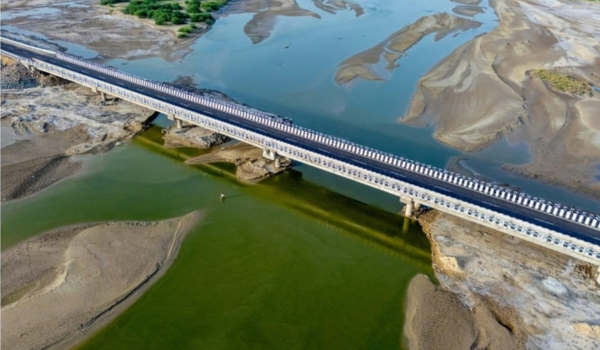
Recently, 47th Raising Day of Project Chetak was celebrated at Bikaner, Rajasthan by the Border Roads Organisation (BRO). 

About Project Chetak

  • It was raised in 1980 in the strategically important western sector of India.
  • It has played a vital role in developing and maintaining infrastructure in Rajasthan, Punjab, and the northern parts of Gujarat.
  • The project has played a vital role in connecting border areas and contributing to national security and regional development, it said.​
  • It is one of the largest BRO projects in terms of geographical area, covering more than 4,000 km of road network and 214 km of ditch-cum-bund.​
  • It supports the defence forces by maintaining key feeder roads towards the International Border with continuous efforts underway to upgrade them to National Highway Double Lane specifications, said the statement.​
  • Motto: ‘Chetak ka Prayas, Desh ka Vikas’

Key Facts about Border Roads Organisation

  • It is a road construction executive force in India that provides support to the Indian Armed Forces.
  • BRO was entirely brought under the Ministry of Defence in 2015.
  • Establishment: It was formed on 7 May 1960 to secure India’s borders and develop infrastructure in remote areas of the north and northeastern states of the country.
  • It develops and maintains road networks in India’s border areas and friendly neighboring countries.
  • BRO specialises in constructing and maintaining Roads, Bridges, Tunnels, Airfields and Marine Works across some of the world’s most challenging terrains.
  • Motto: Shramena Sarvam Sadhyam (everything is achievable through hard work).

Source: PIB

Project Chetak FAQs

Q1: What is Project Chetak?

Ans: It was raised in 1980 in the strategically important western sector of India.

Q2: What is Border Roads Organisation?

Ans: It is a road construction executive force in India that provides support to the Indian Armed Forces.

Barnawapara Wildlife Sanctuary

Barnawapara Wildlife Sanctuary

Barnawapara Wildlife Sanctuary Latest News

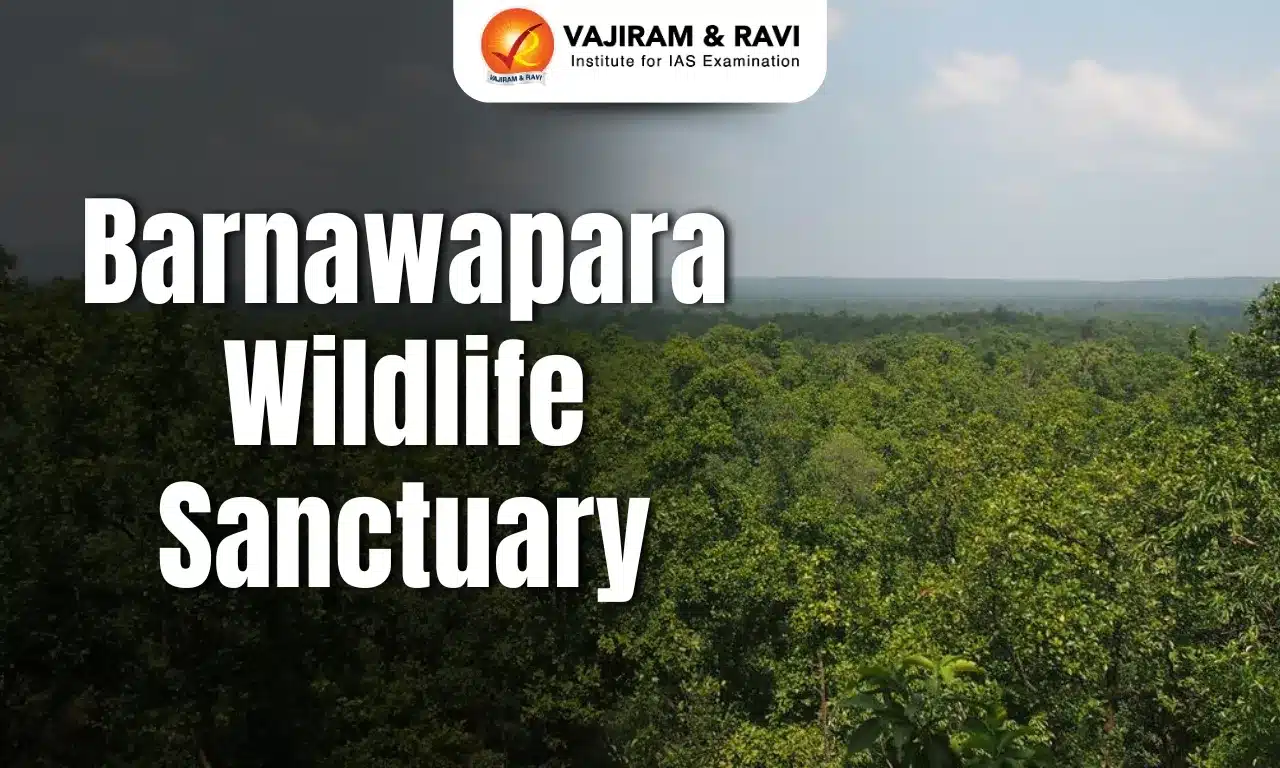
Recently, Blackbucks were reintroduced into their natural habitat at Rampur grassland in Barnawapara Wildlife Sanctuary.

About Barnawapara Wildlife Sanctuary

  • Location: It is located in the northern part of the Mahasamund district of Chhattisgarh.
  • It is named after the Bar and Nawapara forest villages, which are in the heart of the sanctuary. 
  • It is spread over an area of 245 sq. km.
  • The tributaries of Mahanadi are the source of water. The River Balamdehi forms the western boundary, and the Jonk River forms the northeastern boundary of the sanctuary. 
  • Vegetation: It mainly consists of tropical dry deciduous forest.
  • Flora: The flora chiefly comprises Teak, Sal, Bamboo and Terminalia being the prominent trees. 
    • Other major plants found in the sanctuary include Semal, Mahua, Ber, and Tendu.
  • Fauna: It is home to neelgai, wild boar, tigers, leopards, Indian bison, porcupines, pythons, antelopes, sambhar and cheetal, along with 150 species of birds, including parrots, blackbucks, herons, egrets, peafowl, etc.

Source: TOI

Barnawapara Wildlife Sanctuary FAQs

Q1: Where is Barnawapara Wildlife Sanctuary located?

Ans: Chhattisgarh

Q2: What type of forest is Barnawapara Wildlife Sanctuary?

Ans: Tropical deciduous forest

FAO Food Price Index

FAO Food Price Index

FAO Food Price Index Latest News

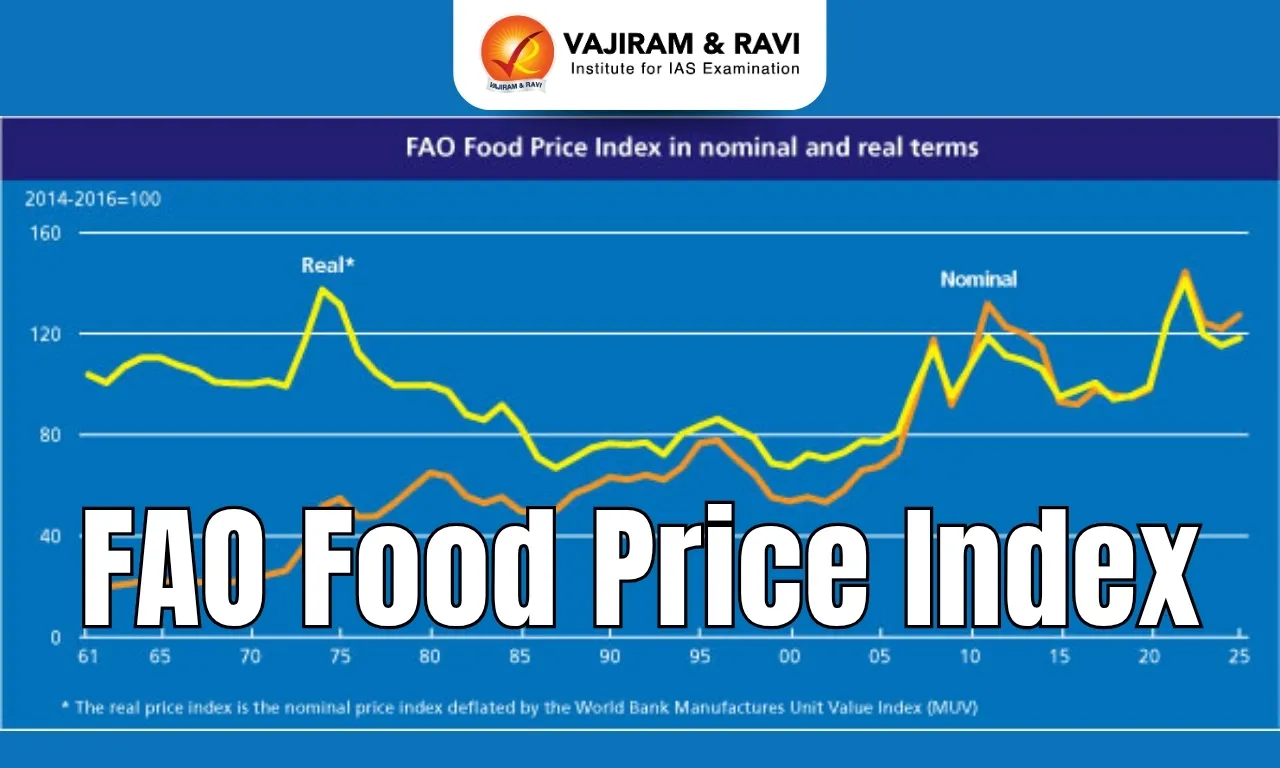
Food and Agriculture Organization (FAO) Food Price Index rose in March 2026, largely due to higher energy costs linked to the escalating conflict in the Middle East

About FAO Food Price Index

  • It is a measure of the monthly change in international prices of a basket of food commodities. 
  • It consists of the average of five commodity group price indices (cereal, vegetable, dairy, meat and sugar), weighted with the average export shares.
  • Base year: 2014-16.

What is the Food and Agriculture Organization?

  • It is a specialized agency of the United Nations that leads international efforts to defeat hunger and improve nutrition and food security.
  • Its goal is to achieve food security for all and make sure that people have regular access to enough high-quality food to lead active, healthy lives.
  • Members: It consists of 195 members – 194 countries and the European Union, FAO works in over 130 countries worldwide.
  • Its sister bodies are the World Food Programme (WFP) and the International Fund for Agricultural Development (IFAD).
  • Reports published by the FAO: The State of the World’s Forests (SOFO), The State of World Fisheries and Aquaculture (SOFIA), The State of Agricultural Commodity Markets (SOCO), The State of Food Security and Nutrition in the World (SOFI).
  • Headquarter: Rome (Italy)

Source: DD News

FAO Food Price Index FAQs

Q1: What is the FAO Food Price Index?

Ans: A measure of monthly change in international food prices

Q2: What is the base period for calculating the FAO Food Price Index?

Ans: 2014-16

Coal Gasification Incentive Scheme

Coal Gasification Incentive Scheme

Coal Gasification Incentive Scheme Latest News

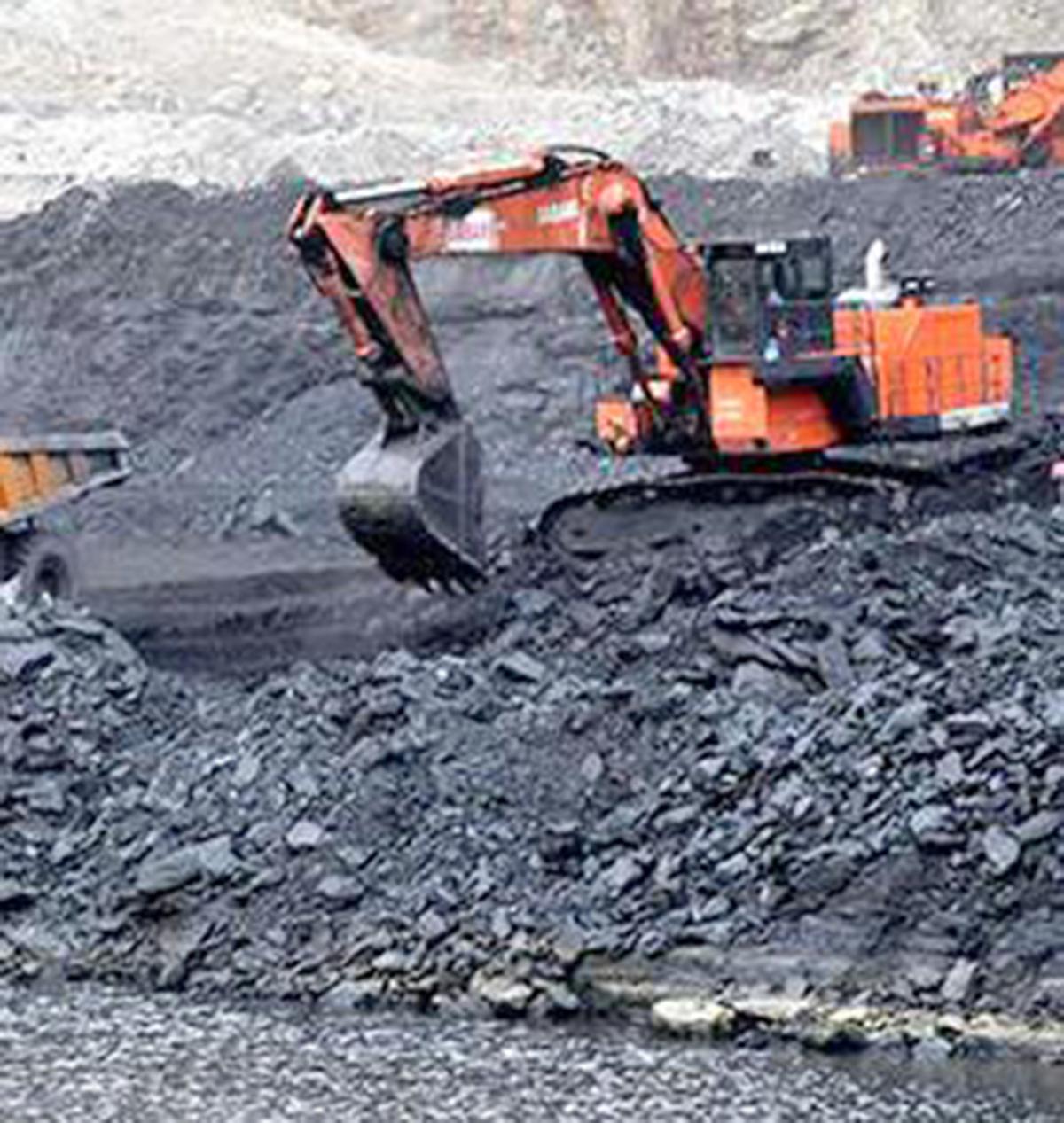
Recently, the Union Minister unveiled India’s roadmap to reduce dependency on imported petroleum, ammonia, and fertilizers, highlighting the ₹8,500 crore coal gasification incentive scheme.

About Coal Gasification Incentive Scheme

  • It was approved on January 24, 2024, for promotion of coal and lignite gasification projects for PSUs and private sector with an outlay of ₹ 8,500 crore.
  • It aims to achieve 100 million tonnes of coal gasification by 2030, leveraging India’s abundant domestic coal reserves to promote sustainable industrial development.
  • It encourages participation from both public and private sector players to establish coal gasification projects across the country.
  • This initiative is a key component of India’s clean coal transition strategy.
  • Significance: It is expected to reduce environmental impact, enhance energy security, and drive economic growth through technological innovation and infrastructure development.
  • Category of Projects
    • Category I: PSU-led projects
    • Category II: Private and PSU projects
    • Category III: Demonstration and small-scale projects

What is Coal Gasification?

  • It is a thermo-chemical process that converts coal into syngas,
  • A synthetic gas composed mainly of carbon monoxide (CO), hydrogen (H₂), carbon dioxide (CO₂), methane (CH₄), and water vapour (H₂O).
  • Coal is reacted at high temperatures (1000–1400°C) with a controlled amount of oxygen and steam, producing syngas.
  • Process of Coal Gasification
    • Preparation: Coal is finely crushed to increase surface area.
    • Gasification reactor: The powdered coal is fed into a reactor with limited oxygen/air and steam.
    • Chemical reactions: Coal breaks down into syngas components due to partial oxidation.
    • Gas cleaning: Impurities like tar, sulfur, and dust are removed from raw syngas.

Source: ET

Coal Gasification Incentive Scheme FAQs

Q1: What is the target for coal gasification by 2030 under this scheme?

Ans: 100 million tonnes

Q2: What is the primary objective of the Coal Gasification Incentive Scheme?

Ans: To reduce dependence on imported petroleum and fertilizers

Appemidi Mango

Appemidi Mango

Appemidi Mango Latest News

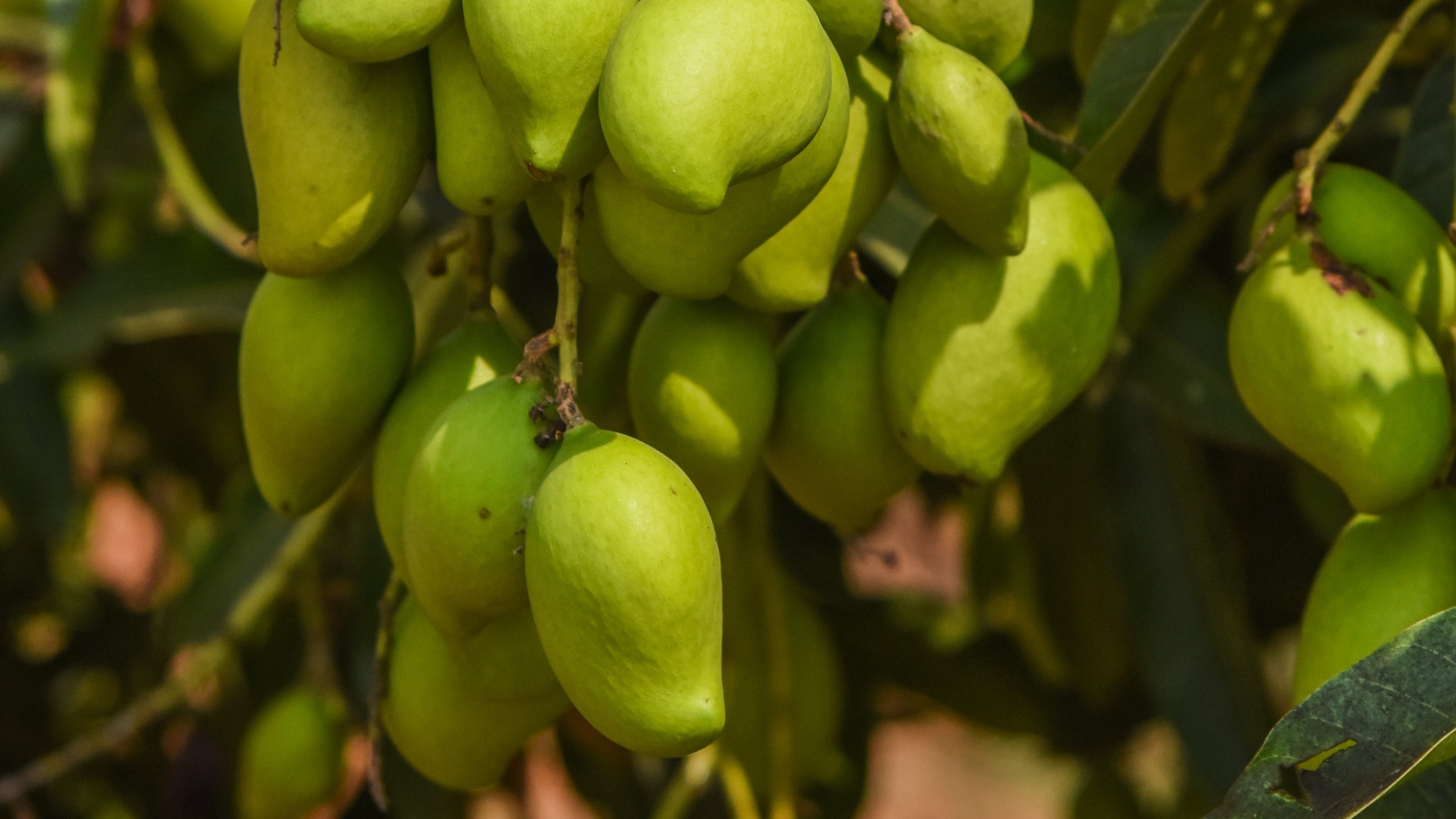
Appemidi mango  (tender mango in Kannada) is facing the threat of climate change and experts are stressing the need for in-situ conservation of the natural trees in the Aghanashini valley of Karnataka.

About Appemidi Mango

  • It is found exclusively in the Uttara Kannada and Shivamogga districts of Karnataka.
  • It is small and tender; it is regarded as the king among raw mango varieties.
  • It is highly sought after by the South Asian pickle industry.
  • These mangoes are pulpy, known for their distinctive aroma and long long shelf life.
  • It has received GI (geographical indication) tag in 2009 in recognition of its culinary and cultural heritage,
  • Uses: It is a traditional pickling variety of mango from Karnataka.

Key Facts about Geographical Indication (GI) Tag

  • It is a sign used on products that have a specific geographical origin and possess qualities or a reputation that are due to that origin.
  • This is typically used for agricultural products, foodstuffs, wine and spirit drinks, handicrafts and industrial products.
  • The Geographical Indications of Goods (Registration and Protection) Act, 1999 seeks to provide for the registration and better protection of geographical indications relating to goods in India.
  • GI tag is valid for 10 years following which it can be renewed.

Source: DH

Appemidi Mango FAQs

Q1: Where is Appemidi Mango primarily grown?

Ans: Karnataka

Q2: What is Appemidi Mango known for?

Ans: Its unique sour taste and use in culinary preparations

Bengal Florican

Bengal Florican

Bengal Florican Latest News

Fewer than 1,000 Bengal floricans remain worldwide, with small, fragmented populations restricted to remnant alluvial grasslands. 

About Bengal Florican

  • It is a grassland indicator species.
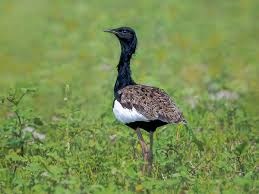
  • Habitat: It is a bustard mostly found in the seasonally inundated alluvial grasslands of the Gangetic-Brahmaputra plains.
  • Distribution: It is distributed in the states of Uttar Pradesh, Assam and Arunachal Pradesh in India, in the terai of Nepal and in Bangladesh.
    • Key strongholds in India are Dudhwa National Park in Uttar Pradesh and several sites across Assam—Manas, Kaziranga, Orang, and Dibru-Saikhowa National Parks.
  • The male bird shows black plumage, with a crest and elongated display feathers that are raised during courtship, and white wing patches become visible in flight.
  • It makes vertical leaps, wing movements and vocalisations along with other males, a behaviour known as “lekking”, to establish territories and attract females.
  • It shows reverse sexual dimorphism and colour dichromatism (male and female are differently coloured).
  • Diet: They are omnivorous birds. They eat various insects, fruits, seeds, and flowers and also feed on small snakes and lizards.
  • Threats: Land conversion, expansion of agriculture, annual grassland burning, overgrazing, encroachment, change of river course, fragmentation from infrastructure development, invasive plant species and fire mismanagement have altered their habitat.
  • Conservation Status
    • IUCN: Critically Endangered
    • Wild Life Protection Act 1972: Schedule I 

Source: DTE

Bengal Florican FAQs

Q1: What is unique about male Bengal Floricans?

Ans: Their elaborate courtship displayWhich conservation effort is crucial for Ben

Q2: Where is Bengal Florican primarily found?

Ans: Grasslands of India and Nepal

Enquire Now