Exercise Cyclone 2026

Exercise Cyclone 2026

Exercise Cyclone 2026 Latest News

Recently, the Indian Army contingent has departed for Egypt to participate in the Exercise, Cyclone – IV to be held in Anshas, Egypt.

About Exercise Cyclone 2026

  • It is a joint special force exercise held between India – Egypt.
  • It is the fourth edition of this exercise.
  • It is an annual event conducted alternatively in India and Egypt. 
  • Participating Forces: The Indian contingent, comprising 25 personnel from Special Forces units, will train alongside their Egyptian counterparts in a realistic operational environment.
  • Aim: It aims to enhance joint mission planning capabilities and improve interoperability through the exchange of best practices in special operations.
  • The participating troops will undertake a series of training activities focused on special operational tactics, techniques and procedures in desert and semi-desert terrain.
  • The joint exercise will also facilitate mutual exchange of professional expertise and provide an opportunity to strengthen bonds of camaraderie.

Source: PIB

Exercise Cyclone 2026 FAQs

Q1: What is Exercise Cyclone?

Ans: A joint special forces exercise between India and Egypt

Q2: Where was the 3rd edition of Exercise Cyclone held?

Ans: Mahajan Field Firing Range, Rajasthan, India
Makhana

Makhana

Makhana Latest News

The exports of makhana (fox nuts) have been adversely affected by the ongoing West Asia war, owing to a huge drop in the demand and prices of the commodities.

About Makhana

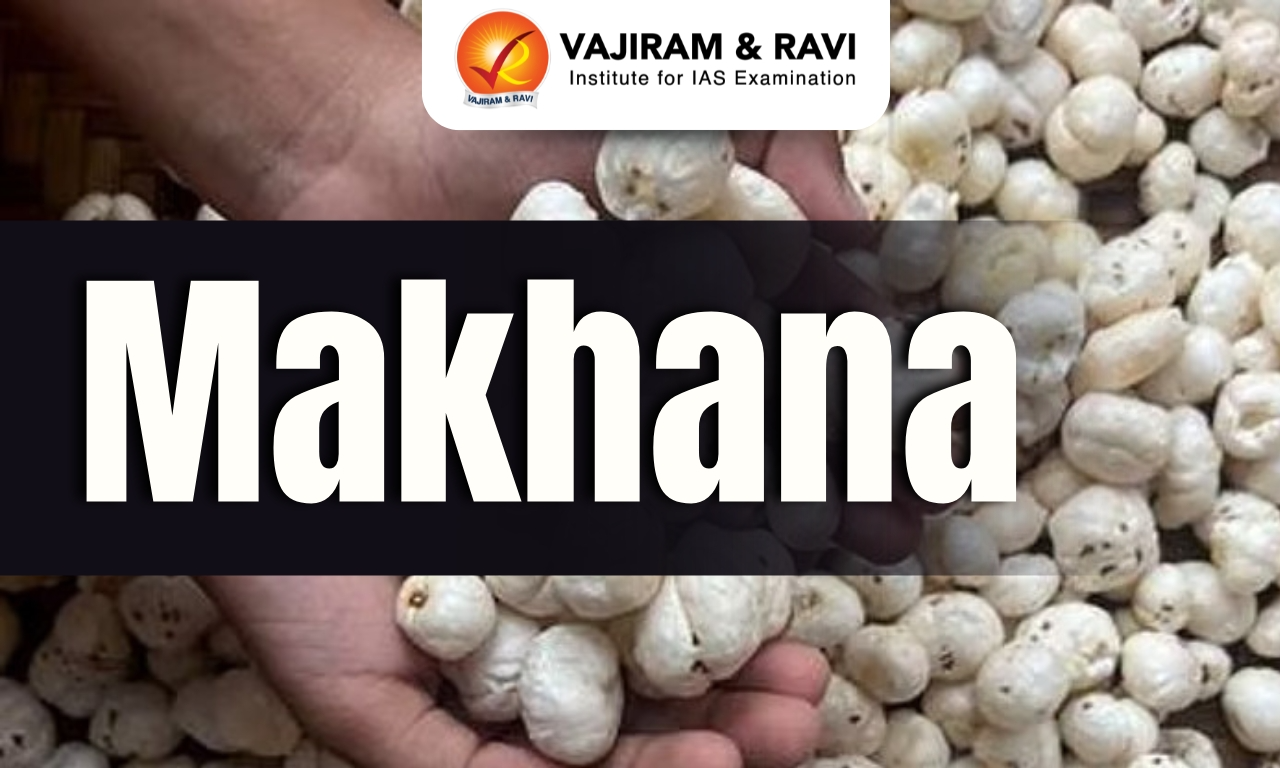
  • It is also known as Foxnut, is the dried edible seed of the prickly water lily or gorgon plant (Euryale ferox). 
  • The edible part of the Makhana plant consists of small, round seeds that have an outer layer ranging from black to brown. This has led to it being referred to as the ‘Black Diamond.’
  • Makhana plant is considered as native of South-East Asia and China, but distributed to almost every part of the world.
  • Required climatic conditions
    • It is grown in stagnant perennial water bodies like ponds, land depressions, oxbow lakes, swamps and ditches.
    • It is a plant of tropical and subtropical climate.
    • Temperature: 200C to 350 C
    • Annual rainfall: 100 cm to 250 cm
    • Soil: Smooth loamy soil
  • In India it is mainly distributed in the states of Bihar, West Bengal, Manipur, Tripura, Assam, Jammu & Kashmir, Odisha, Rajasthan, Madhya Pradesh & Uttar Pradesh.
    • Bihar in India is the leading state in its production and processing.
  • It is a product approved under the Union government’s One District One Product scheme.

Benefits of Makhana

  • It is a kind of hydrophyte used both as drug and food which exhibits much application and development prospects in the fields of medicine, food and economy.
  • Makhana possessed high nutritional value and many medical and health protection effects.

Source: NIE

Makhana FAQs

Q1: Which state is the primary producer of Makhana in India?

Ans: Bihar

Q2: What is the scientific name of Makhana?

Ans: Euryale ferox

Food Safety and Standards Authority of India

Food Safety and Standards Authority of India

Food Safety and Standards Authority of India Latest News

Recently, official sources said that the Food Safety and Standards Authority of India (FSSAI) has conducted nearly 4 lakh inspections across food establishments in 2025-26.

About Food Safety and Standards Authority of India

  • It has been established under the Food Safety and Standards Act, 2006.
  • Mandate: FSSAI is responsible for setting food standards, regulating the manufacture, storage, distribution, sale, and import of food, and ensuring the availability of safe and wholesome food for human consumption. 
  • Nodal Ministry: Ministry of Health and Family Welfare, Government of India.

Functions of Food Safety and Standards Authority of India

  • Standards Development: It formulates standards for various food products, ensuring they are safe for consumption.
  • Food Safety Management Systems: It provides guidelines for businesses to implement effective food safety management practices.
  • Licensing and Registration: FSSAI manages the licensing process for food businesses, ensuring they comply with food safety regulations.
  • Surveillance and Monitoring: Regular inspections and audits are conducted to assess compliance with food safety standards.
  • Consumer Awareness: Initiatives to educate the public about food safety, hygiene, and nutrition are a key focus area.
  • Accreditation: The FSSAI is also responsible for the accreditation of food testing laboratories throughout India.

Source: DD News

Food Safety and Standards Authority of India FAQs

Q1: What is the primary objective of FSSAI?

Ans: To ensure food safety and standards

Q2: Under which ministry does FSSAI operate?

Ans: Ministry of Health and Family Welfare

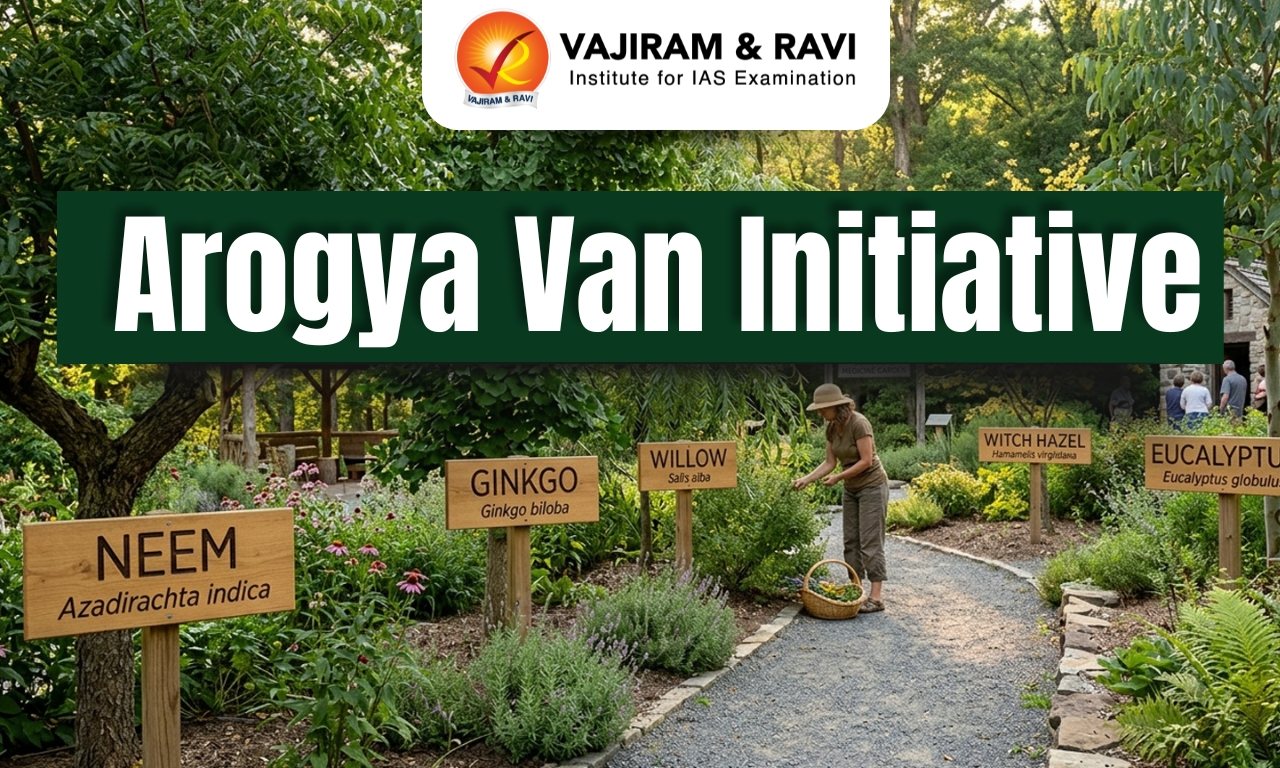
Arogya Van Initiative

Arogya Van Initiative

Arogya Van Initiative Latest News

Recently, the National Highways Authority of India (NHAI) has announced a new initiative called ‘Arogya Van.

About Arogya Van Initiative

  • It is a new initiative to develop thematic medicinal tree plantations on vacant land parcels along the National Highways.
  • It aims to enrich biodiversity along the National Highways by introducing medicinal tree species that support pollinators, birds and microfauna, thereby strengthening ecosystem resilience.
    • In the first phase an action plan has been formulated covering 17 land parcels along different National Highway projects in the states of Madhya Pradesh, Haryana, Delhi-NCR, Andhra Pradesh, Gujarat, Karnataka, Odisha, Tamil Nadu, Rajasthan, Maharashtra and Chhattisgarh.  
  • Under this tree species with established medicinal properties have been identified and will be planted at land parcels as per suitability to the respective agro-climatic zones.
  • Priority: Priority will be given to land parcels near toll plazas, wayside amenities, interchanges, cloverleaf junctions and other prominent stretches along National Highways
  • Nodal Ministry: Ministry of Road Transport & Highways

Source: PIB

Arogya Van Initiative FAQ's

Q1: What is the Arogya Van Initiative?

Ans: A thematic plantation of medicinal trees along national highways

Q2: Which organization launched the Arogya Van Initiative?

Ans: National Highways Authority of India

Cornstarch

Cornstarch

Cornstarch Latest News

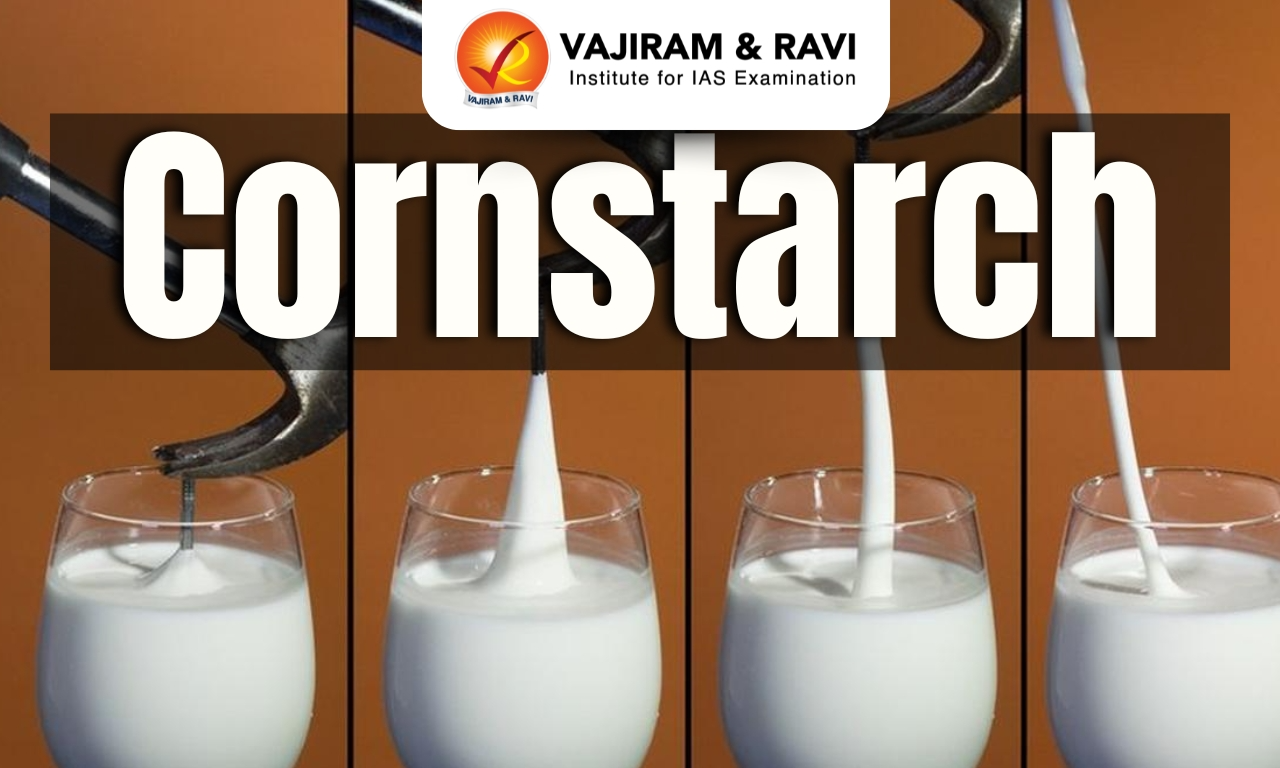
Recently, researchers reported that at an extreme speed, the cornstarch mixture behaves like a liquid first before becoming tougher.

About Cornstarch

  • It is a substance produced through wet milling of corn (Zea mays).
  • Wet milling separates the components of corn kernels, which consist primarily of protein, fibre, starch, and oil.
  • Once separated, the starch is dried, forming a white powder called cornstarch.
  • Cornstarch is high in carbohydrates but lacking in vitamins, protein, fibre, and minerals, making it one of the least nutritionally dense components of corn.

Applications of Cornstarch

  • It absorbs moisture, however, making it useful as a thickener and anticaking agent in food products.
  •  It is used in certain oral medications, where it facilitates the disintegration of capsules and tablets.
  • It may be used as a substitute for wheat flour in gluten-free foods and as a substitute for baby powder.
  • It is used in food processing, papermaking, and the production of industrial adhesives; it is also a component of many cosmetics and oral pharmaceutical products.
  • It has been used as a lubricant in surgical gloves.

Source: TH

Cornstarch FAQs

Q1: What is cornstarch primarily used for?

Ans: Food thickening, Cosmetics and Biofuel production

National Quantum Mission

National Quantum Mission

National Quantum Mission Latest News

The Union Minister said that India has successfully demonstrated a 1,000-kilometre quantum communication network under the National Quantum Mission, marking a major breakthrough in secure communication technologies.

About National Quantum Mission

  • It was launched by the Department of Science & Technology with a total outlay of Rs.6003 crore for a period from 2023-24 to 2030-31.
  • It is aiming to seed, nurture and scale up scientific and industrial R&D and create a vibrant & innovative ecosystem in Quantum Technology (QT).
  • It is one of the nine initiatives under the Prime Minister’s Science Technology Innovation Advisory Council (PMSTIAC).
    • Implementation Strategy
    • It is being implemented by establishing four Thematic Hubs (T-Hubs) across leading institutions in India and each T-Hub will follow the Hub-Spoke-Spike model.
    • The mission focuses on 4 key areas
      • Quantum Computing: Led by the Indian Institute of Science (IISc) Bengaluru
      • Quantum Communication: It is led by the Indian Institute of Technology (IIT), Madras in association with the Centre for Development of Telematics, New Delhi
      • Quantum Sensing & Metrology: It is spearheaded by the Indian Institute of Technology (IIT), Bombay
      • Quantum Materials & Devices: It is coordinated by the Indian Institute of Technology (IIT), Delhi.

Source: PIB

National Quantum Mission FAQs

Q1: When was the National Quantum Mission approved?

Ans: 2023

Q2: What is the primary objective of the National Quantum Mission?

Ans: To establish secure communication channels

Mount Semeru

Mount Semeru

Mount Semeru Latest News

Recently,  Mount Semeru in Indonesia erupted multiple times and sent thick columns of ash up to 1,100 metres above its summit.

About Mount Semeru

  • Location: It is located in East Java, Indonesia. 
  • It is one of the most active volcanoes in Indonesia. 
  • It is positioned within a subduction zone, where the Indo-Australian plate subducts beneath the Eurasia plate.
  • At 3,676 metres (12,060 feet), it is the highest peak on Java Island and sits on the Pacific “Ring of Fire”.
  • It lies at the southern end of a volcanic massif extending north to the Tengger caldera.
  • Summit topography is complicated by the shifting of craters from NW to SE.
  • Semeru, also known as Mahameru, has erupted numerous times in the past 200 years.
  • It is known for its regular ash explosions that typically occur at intervals of 10-30 minutes.
  • It is part of the Pacific Ring of Fire, where the meeting of continental plates causes high volcanic and seismic activity.

Source: NH

Mount Semeru FAQs

Q1: Where is Mount Semeru located?

Ans: East Java, Indonesia

Q2: What is the primary hazard associated with Mount Semeru's eruption?

Ans: Lava flows, Pyroclastic flows and Ash fall

Lead

Lead

Lead Latest News

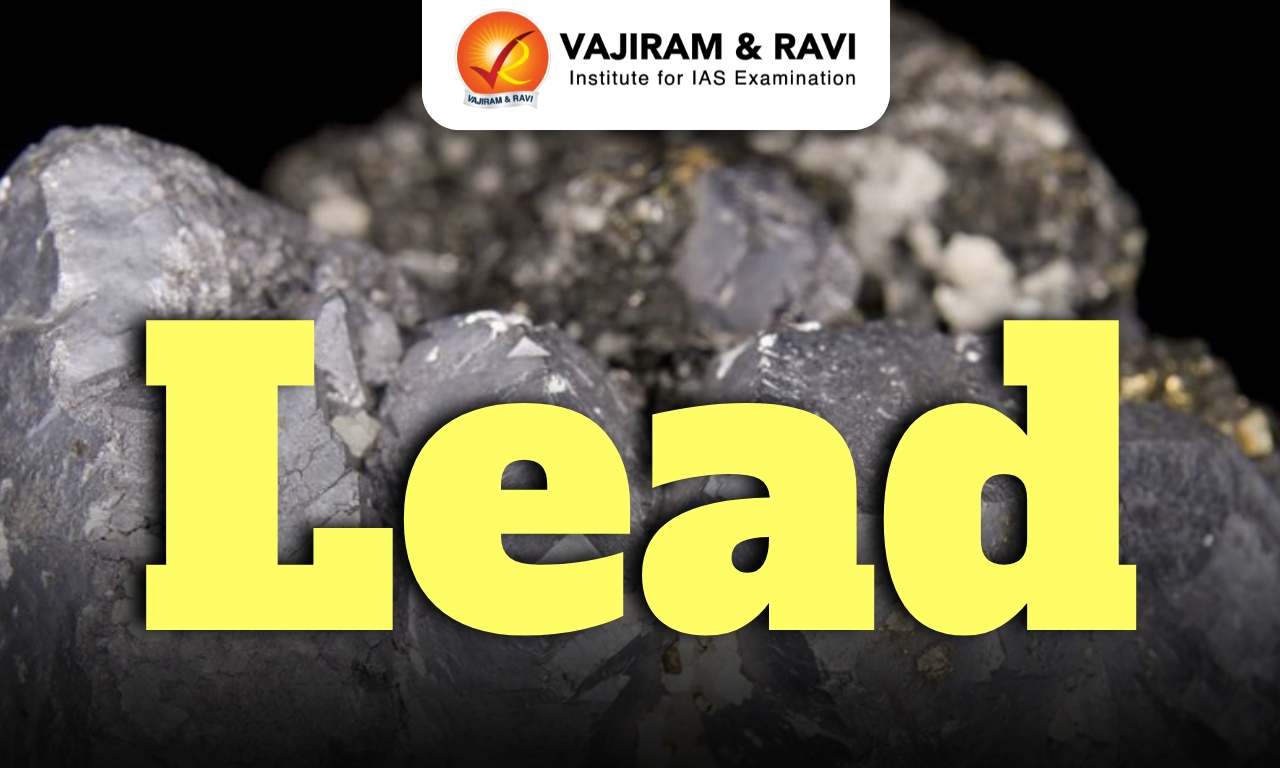
A study by Toxics Link, a Delhi-based research and advocacy group, has found high levels of lead contamination in soil near battery recycling units across Delhi-NCR.  

About Lead

  • It is a naturally occurring element found in small amounts in the earth’s crust.
  • Properties
    • It is a soft, silvery white or grayish metal in Group 14 (IVa) of the periodic table.
    • Lead has a bright lustre and is a dense, ductile, very soft, highly malleable, bluish-white metal that has poor electrical conductivity.
    • It is also highly resistant to corrosion and because of this property is used to contain corrosive liquids (e.g. sulphuric acid).
  • Occurrence: It is usually found in ore with zinc, silver and copper and is extracted together with these metals.
  • The main lead mineral is galena (PbS). Other common varieties include cerussite (PbCO3) and angelsite (PbSO4).
  • Uses of Lead
    • The principal use of lead is for lead-acid batteries for vehicles, backup emergency systems, the telecoms sector and fork lift trucks.
    •  Lead is also used in rolled and extruded products, compounds in the glass and plastics industries, shot and ammunition and for radiation shielding. 

Lead Impact on Human Health

  • It is highly toxic to humans and the environment.
  • Exposure to lead can affect multiple body systems and is particularly harmful to young children and women of child-bearing age.
  • Lead is distributed to the brain, liver, kidney and bones. It is stored in the teeth and bones, where it can accumulate over time.

Source: TH

Lead FAQ's

Q1: What is lead poisoning?

Ans: A condition caused by excessive lead in the body

Q2: Where is lead commonly found?

Ans: In the earth's crust, soil and dust.

Trade Receivables Discounting System

Trade Receivables Discounting System

Trade Receivables Discounting System Latest News

Recently, the Reserve Bank of India proposed to drop the due diligence requirement for MSMEs to onboard TReDS platforms to promote ease of doing business for micro, small and medium enterprises.

About Trade Receivables Discounting System

  • It is an electronic platform for facilitating the financing/discounting of trade receivables of Micro, Small, and Medium Enterprises (MSMEs) through multiple financiers. 
  • These receivables can be due from corporates and other buyers, including Government Departments and Public Sector Undertakings (PSUs).
  • Purpose: To allow MSME sellers to discount invoices raised against major corporations, which helps them manage their working capital demands. The platform enables MSMEs to receive payments more quickly.
  • Participants
    • Sellers, buyers, and financiers are the participants on a TReDS platform.
    • Only MSMEs can participate as sellers in TReDS.
    • Corporates, Government Departments, PSUs, and any other entity can participate as buyers in TReDS.
    • Banks, NBFC – Factors, and other financial institutions, as permitted by the RBI, can participate as financiers in TReDS.
    • RBI has not made it compulsory for any buyer, seller, or financier to participate in TReDS. 
  • The Government has made it compulsory for certain segments of companies to mandatorily register as buyers on the TReDS platform(s). 

Source: TH

Trade Receivables Discounting System FAQs

Q1: What is TReDS?

Ans: A platform for discounting trade receivables

Q2: What is the primary objective of TReDS?

Ans: To facilitate MSMEs in getting funds against their receivables

Indian Council of Agricultural Research

Indian Council of Agricultural Research

Indian Council of Agricultural Research Latest News

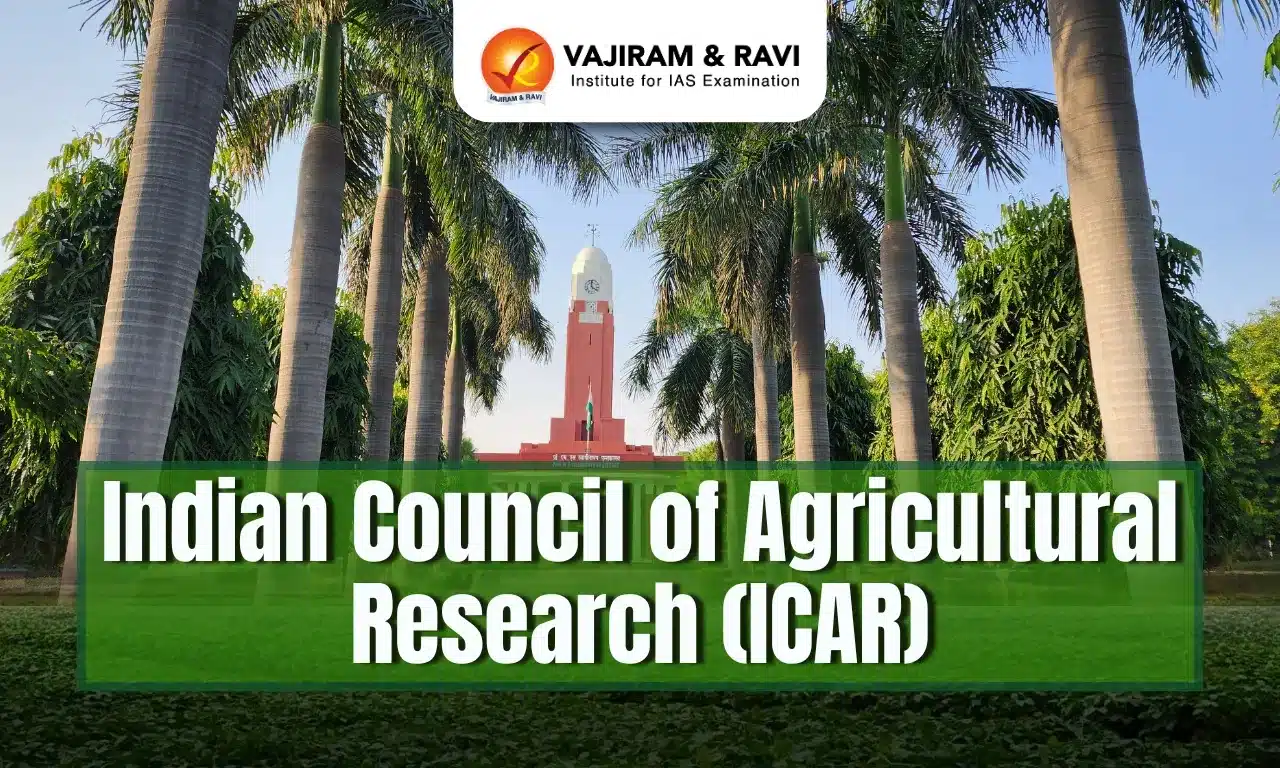
Recently, the Indian Council of Agricultural Research (ICAR) has established a high-level Special Task Force (STF) to formulate mitigating strategies for the agricultural sector. 

About Indian Council of Agricultural Research

  • It is an autonomous organisation under the Department of Agricultural Research and Education (DARE), Ministry of Agriculture and Farmers Welfare, Government of India. 
  • Background: It was established on 16 July, 1929 as a registered society under the Societies Registration Act, 1860.
    • It was started in pursuance of the report of the Royal Commission on Agriculture.
  • It is the apex body for coordinating, guiding, and managing research and education in agriculture, including horticulture, fisheries, and animal sciences, throughout the country.
  • It is responsible for guiding research institutes and universities in agriculture, horticulture, fisheries, and animal sciences.
  • Mandate: ICAR’s primary mandate focuses on the thematic areas of Crop Science, Horticultural Science, Natural Resource Management, Agricultural Engineering, Animal Science, Fisheries Science, Agricultural Education and Agricultural Extension.
    • The ICAR has played a pioneering role in ushering in the Green Revolution and subsequent developments in agriculture in India through its research and technology development. 
  • It has played a major role in promoting excellence in higher education in agriculture. 
  • It is engaged in cutting-edge areas of science and technology development and its scientists are internationally acknowledged in their fields.
  • Headquarters: New Delhi. 

Source: PIB

Indian Council of Agricultural Research FAQs

Q1: What is the primary objective of ICAR?

Ans: To enhance agricultural research and education

Q2: Under which ministry does ICAR operate?

Ans: Ministry of Agriculture and Farmers Welfare

Enquire Now