National Scheduled Tribes Finance and Development Corporation

National Scheduled Tribes Finance and Development Corporation

National Scheduled Tribes Finance and Development Corporation Latest News

The National Scheduled Tribes Finance and Development Corporation will celebrate its 25th Foundation Day on 10th April in New Delhi. 

About National Scheduled Tribes Finance and Development Corporation

  • It was established in 2001.
  • It is a Public Sector Undertaking under the Ministry of Tribal Affairs, Government of India.
  • Objects: To work for socio-economic and educational upliftment of Scheduled Tribes(STs), to provide better self-employment avenues so that they can become economically independent and self-reliant. 

Functions of National Scheduled Tribes Finance and Development Corporation

  • To generate awareness amongst the STs about NSTFDC concessional schemes
  • To provide assistance for skill development and capacity building of beneficiaries as well as officials of State Channelizing Agencies
  • To provide concessional finance for viable income generation scheme through SCAs and other agencies for socio-economic development of eligible Scheduled Tribes
  • To assist in market linkage of tribal produce

Composition of National Scheduled Tribes Finance and Development Corporation

  • The Corporation is managed by a Board of Directors with representatives from

Source: News On Air

National Scheduled Tribes Finance and Development Corporation FAQs

Q1: What is the primary objective of NSTFDC?

Ans: To offer loans for the development of tribal communities

Q2: Which ministry is NSTFDC under?

Ans: Ministry of Tribal Affairs
Fimbristylis wayanadensis

Fimbristylis wayanadensis

Fimbristylis wayanadensis Latest News

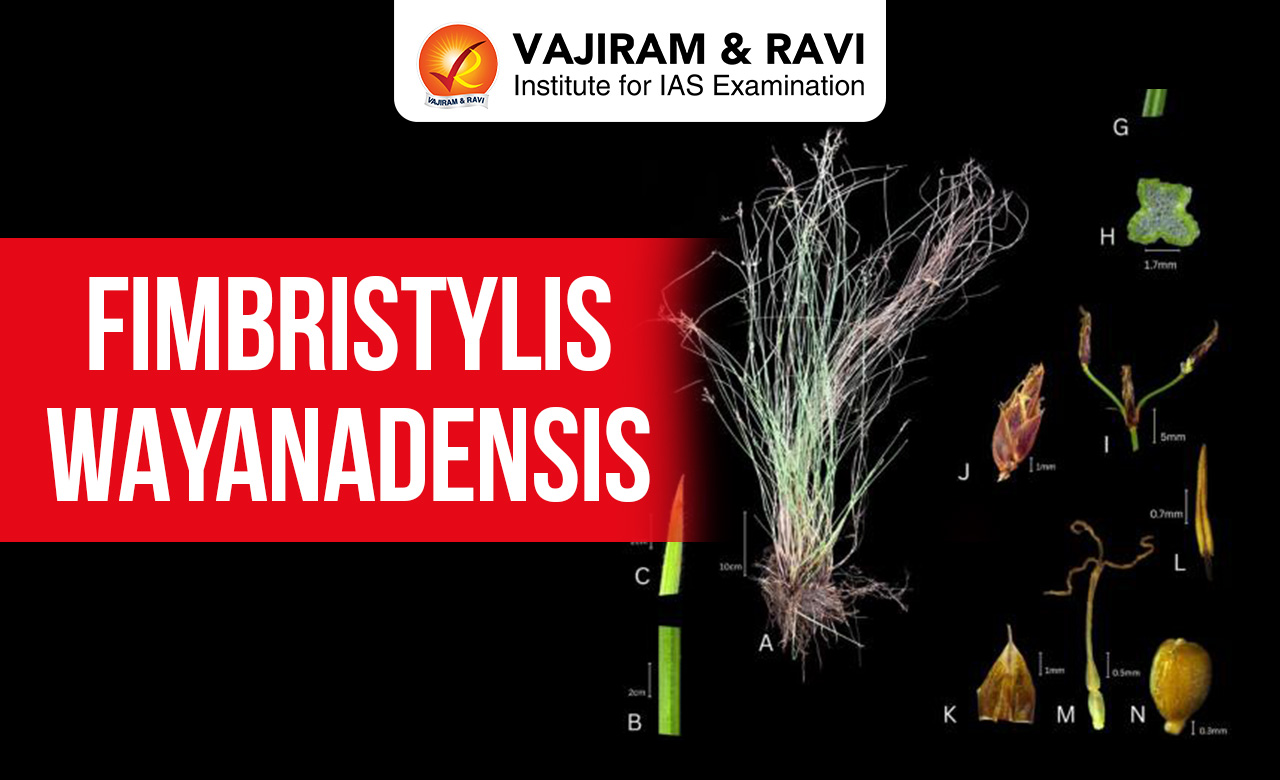
Researchers have discovered a new plant species in the high mountains of the Western Ghats and named it Fimbristylis wayanadensis.

About Fimbristylis wayanadensis

  • It is a grass-like plant, known as a sedge.
    • Sedges are grass-like plants that typically feature triangular stems, and this new species belongs to a highly diverse botanical family. 
  • It was identified during a recent expedition in the Wayanad district of Kerala. 
  • It is named to honour the place where it was first discovered.
  • Habitat: It was found clinging to life in the transitional zones between rocky landscapes and high-altitude grasslands.
  • It was found growing at elevations up to 1,900 meters.
  • Features
    • It possesses a unique set of characteristics like long leaves that stretch as tall as or taller than its hairy stems.
    • It also produces fewer flower clusters, known as spikelets, which are rich chestnut-brown rather than yellowish.
    • Furthermore, the tiny nuts it produces are larger and smoother, with microscopic rectangular patterns on their surfaces.

Source: RM

Fimbristylis wayanadensis FAQs

Q1: Where was Fimbristylis wayanadensis discovered?

Ans: Western Ghats, Kerala

Q2: What type of plant is Fimbristylis wayanadensis?

Ans: Grass-like sedge

Aluminium

Aluminium

Aluminium Latest News

New research has found aluminium can be made to behave in the same way that makes transition metals such as palladium, rhodium, and platinum.

About Aluminium

  • It is a chemical element with symbol Al and atomic number 13. 
  • It is classified as a post-transition metal
  • Aluminium Ore derived from bauxite, is one of the most abundant, versatile, and strategically important metals in the world.
  • The transformation of bauxite into aluminium is a two-stage industrial process:
    • Bayer Process: The raw bauxite is first crushed and treated with sodium hydroxide to separate aluminum hydroxide. This is then calcined (heated strongly) to produce alumina (Al₂O₃).
    • Hall- Héroult Process: The alumina is smelted using electrolytic reduction, requiring enormous amounts of electricity, which makes aluminium one of the most energy-intensive metals to produce.

Properties of Aluminium

  • It is a hard, strong, silvery-white metal with low density.
  • It has high thermal conductivity, excellent corrosion resistance.
  • It has high malleability and ductile properties.
  • Lightweight & corrosion-resistant: Ideal for transportation and construction.
  • Recyclable: Retains its original properties and requires only 5% of the energy compared to primary production.

Applications of Aluminium

  • Transport: Aircraft, automobiles, ships, and rail coaches.
  • Household & Packaging: Utensils, appliances, and aluminium foils.
  • Infrastructure: Doors, windows, screens, and cladding.
  • Electrical: Good conductor, used in transmission lines.
  • Strategic Applications: Defence, nuclear industries, and aerospace.

Source: TH

Aluminium FAQs

Q1: What is the most abundant metal in the Earth's crust?

Ans: Aluminium

Q2: Which process is used to extract aluminium from bauxite?

Ans: Electrolysis

Skills Outcomes Fund

Skills Outcomes Fund

Skills Outcomes Fund Latest News

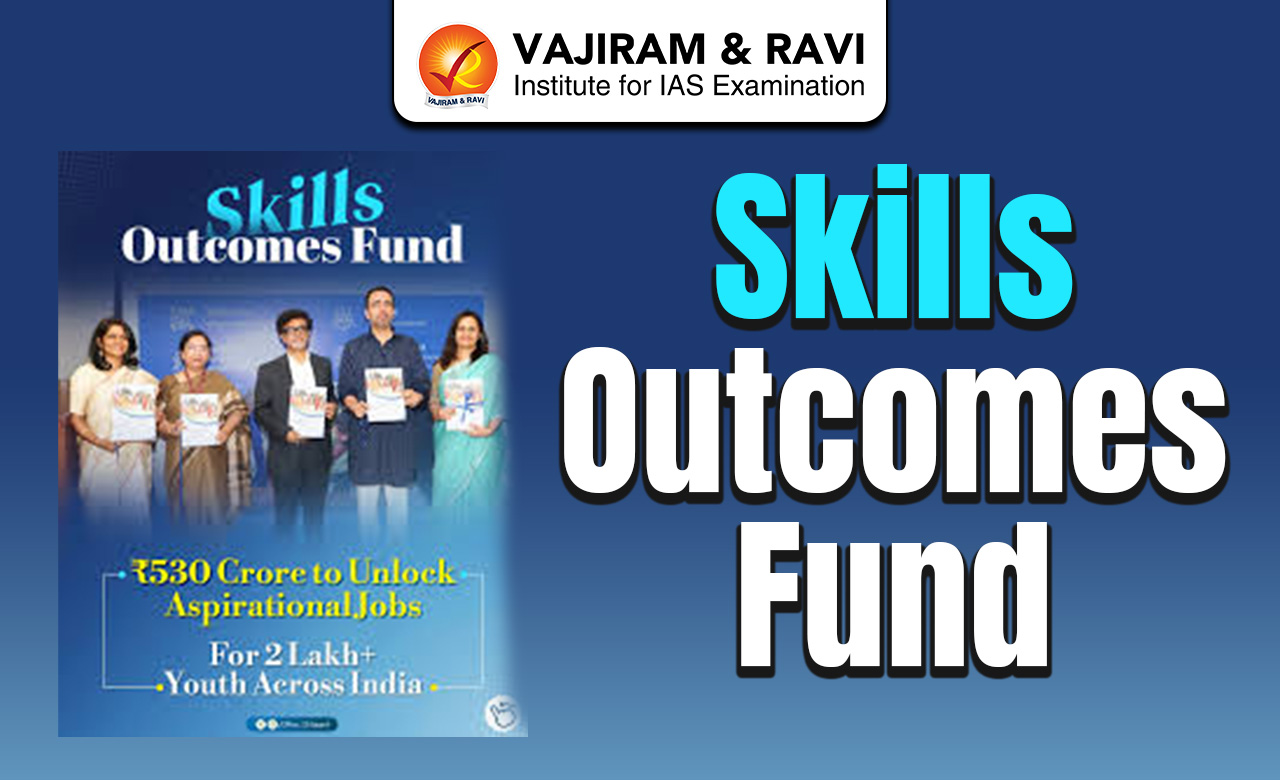
Minister of State for Education, Government of India, has launched a national campaign to establish the Skills Outcomes Fund.

About Skills Outcomes Fund

  • It is a first-of-its-kind initiative aimed at unlocking aspirational livelihoods for youth from low-income backgrounds.
  • The fund envisages to mobilise public and private capital to scale outcomes-based financing (OBF) in India’s skilling ecosystem, linking investments directly to verified employment outcomes.
  • It will be anchored by the National Skill Development Corporation (NSDC) under the aegis of the Ministry of Skill Development and Entrepreneurship (MSDE), in partnership with not-for-profit and philanthropic organizations /stakeholders.
  • It would build on the success of India’s first outcomes-based initiative, the Skill Impact Bond, launched by the National Skill Development Corporation (NSDC) in 2021.
  • A key innovation of the fund is its employer-led, demand-driven skilling model, ensuring alignment with industry needs. Training programs will focus on high-growth sectors including:
    • IT and IT-enabled services (IT-ITeS)
    • Banking, Financial Services, and Insurance (BFSI)
    • Automotive and manufacturing
    • Healthcare
    • Logistics and supply chains
    • Electronics and semiconductors
    • Green jobs and sustainability sectors

Source: PIB

Skills Outcomes Fund FAQs

Q1: What is the primary objective of the Skills Outcomes Fund?

Ans: To unlock aspirational livelihoods for youth from low-income backgrounds

Q2: Which model does the Skills Outcomes Fund follow?

Ans: Outcome-based financing model

Indrāvati Tiger Reserve

Indravati Tiger Reserve

Indrāvati Tiger Reserve Latest News

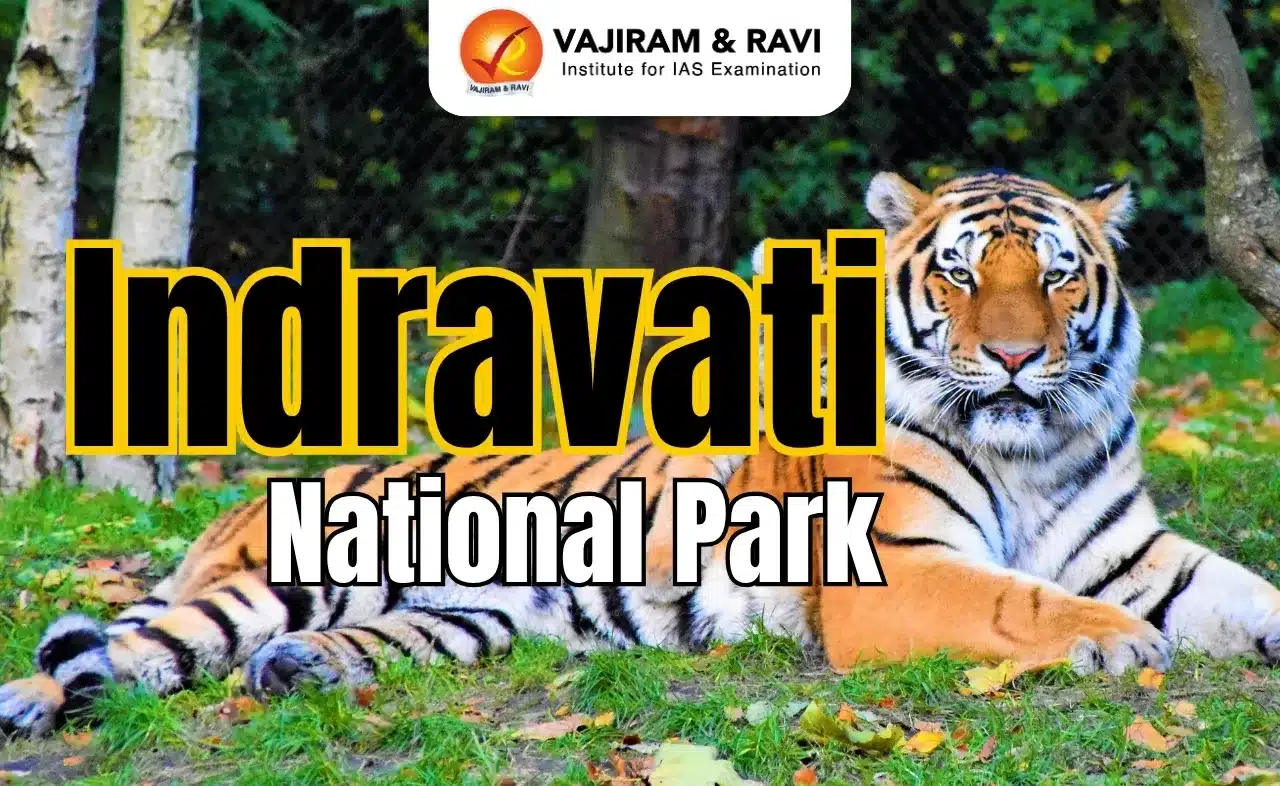
Indrāvati Tiger Reserve is set to reopen to tourists, marking a shift from years of conflict towards conservation and eco-tourism.

About Indrāvati Tiger Reserve

  • Location: It is located in the state of Chhattisgarh.
  • The tiger reserve and the Bhairamgarh and Pamed Wildlife Sanctuaries constitute the Indravati landscape. 
  • It has connectivity with several tiger reserves, viz. Kawal (Telangana), Tadoba (Maharashtra), and Kanha (Madhya Pradesh). 
  • River: The perennial river ‘Indravati’ forms the boundary of the reserve on the northern and western sides, which also happens to be the interstate boundary between Chhattisgarh and Maharashtra.
  • Vegetation: Southern Moist Mixed Deciduous Forest with Teak, Southern Moist Mixed Deciduous Forest without Teak, and Southern Dry Mixed Deciduous Forest are the major forest types found in the Reserve.
  • Flora: Some common species include teak, achar, karra, kullu, shisham, semal, haldu, arjun, bel, and Jamun.
  • Fauna: It is home to one of the last populations of rare wild buffalo, the state animal of Chhattisgarh.
    • Other animals include Nilgai, Black Buck, Sambar, Gaur, Tiger, Leopard, Chital, Sloth bears, etc.

Source: TOI

Indrāvati Tiger Reserve FAQs

Q1: Which river forms the northern boundary of Indravati Tiger Reserve?

Ans: Indravati River

Q2: What is Indravati Tiger Reserve famous for?

Ans: Rare wild buffalo

Turkiye

Turkiye

Turkiye Latest News

Recently, India and Turkiye held the 12th round of Foreign Office Consultations (FoC) to restore bilateral relations ruptured during the India-Pakistan conflict last year.

About Turkiye

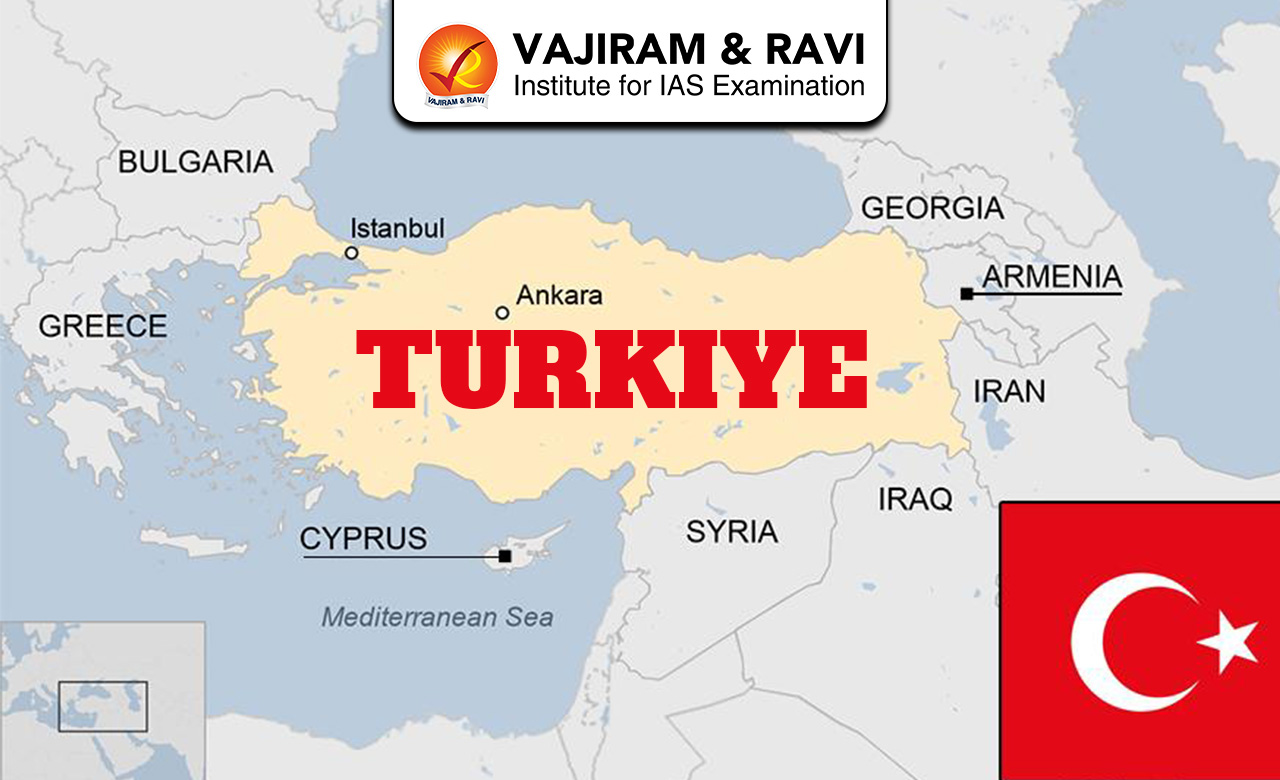
  • Location: It is a transcontinental Eurasian country.
    • The major part of the country lies in the Anatolian Plateau of Western Asia while a small part is located on Southeastern Europe's Balkan Peninsula. 
  • Bordering Countries: It is bordered by Greece and Bulgaria (northwest), Georgia (northeast), Armenia and Iran (east), Iraq (southeast), Syria (south).
  • Nakhchivan, an exclave of Azerbaijan, also borders Turkiye to the east.
  • Water Bodies: It is surrounded on three sides by the Black Sea, the Mediterranean Sea, and the Aegean Sea.
  • Capital: Ankara

Geographical Features of Turkiye

  • Rivers: Tigras, Kizilirmak, Sakarya, and Euphrates are the most significant rivers, 
  • Major Lake: Lake Van which is the largest alkaline lake in the world
  • Mountain Ranges: It includes the Taurus, Koroglu and Pontic ranges.
  • Highest Point: Turkey's highest point is Mt. Ararat which peaks at 16,948 ft
  • Straits: Bosporus, which connects the Black Sea with the Sea of Marmara, and the Dardanelles, which connect the Aegean Sea with the Sea of Marmara.
  • Natural Resources:  It mainly consists of chromite, iron ore, coal, lignite, bauxite, and copper.

Source: TH

Turkiye FAQs

Q1: What is the capital of Türkiye?

Ans: Ankara

Q2: In which continent is Türkiye located?

Ans: Both Asia and Europe

Commonwealth Parliamentary Association

Commonwealth Parliamentary Association

Commonwealth Parliamentary Association Latest News

Recently, the Commonwealth Parliamentary Association India Region Zone VII Conference was inaugurated in Goa by the Lok Sabha Speaker.

About Commonwealth Parliamentary Association

  • It is one of the oldest established organisations in the Commonwealth.
  • It was founded in 1911.
  • It is a membership association which brings together Members, who are united by community of interest, respect for the rule of law and individual rights and freedoms.
  • The Association is made up of over 180 Legislatures (or Branches) divided up between nine geographic regions of the Commonwealth. 
  • Its mission is to promote the advancement of parliamentary democracy by enhancing knowledge and understanding of democratic governance, youth engagement in democracy, gender equality and equal representation.
  • Headquarters: London, United Kingdom.

Key Facts about CPA India Region

  • It comprises a total of 32 Legislatures, After the Africa Region, India has the largest number of member Branches of the CPA. 
  • Administratively, the CPA India Region is divided into 9 zones.
    • Zone 1: Uttar Pradesh, Uttarakhand
    • Zone 2: Delhi, Haryana, Himachal Pradesh, Jammu & Kashmir, Punjab
    • Zone 3: Arunachal Pradesh, Assam, Manipur, Meghalaya, Mizoram, Nagaland, Sikkim, Tripura
    • Zone 4: Odisha, West Bengal
    • Zone 5:  Bihar, Jharkhand
    • Zone 6: Chhattisgarh, Madhya Pradesh, Rajasthan
    • Zone 7: Goa, Gujarat, Maharashtra
    • Zone 8: Andhra Pradesh, Karnataka, Telangana
    • Zone 9: Kerala, Puducherry (UT), Tamil Nadu
  • The CPA India Regional Chairperson: Lok Sabha Speaker, Parliament of India 
  • Secretariat: It is based within the Lok Sabha at the Parliament of India.

Source: News On Air

Commonwealth Parliamentary Association FAQs

Q1: When was the Commonwealth Parliamentary Association established?

Ans: 1911

Q2: Where is the CPA Secretariat located?

Ans: London, UK

Indian Council for Cultural Relations

Indian Council for Cultural Relations

Indian Council for Cultural Relations Latest News

The Minister of State for External Affairs, attended a community reception in Yangon, Myanmar and underscores Indian Council for Cultural Relations efforts in strengthening cultural ties.

About Indian Council for Cultural Relations

  • It is an autonomous body under the Ministry of External Affairs, Government of India.
  • ICCR was founded in 1950 by Maulana Abul Kalam Azad, independent India’s first Education Minister. 
  • It is involved in India’s external cultural relations through cultural exchange with other countries and their people.
  • It promotes, through its network of cultural centres, Indian culture abroad.
  • Objectives
    • To actively participate in the formulation and implementation of policies and programmes pertaining to India’s external cultural relations;
    • To foster and strengthen cultural relations and mutual understanding between India and other countries;
    • To promote cultural exchanges with other countries and people;
  • It administers various scholarship programs annually and awards about 3000+ scholarships under 21 different schemes to foreign students from about 180 countries.
    • Amongst these 21 schemes, six are funded by ICCR from its grant, and others are administered on behalf of MEA and the Ministry of Ayush.
    • The scholarships offer studies in a variety of courses from undergraduate to postdoctoral level in different leading universities and educational institutions spread all over India.

Source: News On Air

Indian Council for Cultural Relations FAQ's

Q1: Who founded the Indian Council for Cultural Relations?

Ans: Maulana Abul Kalam Azad

Q2: What is the primary objective of ICCR?

Ans: To promote Indian culture globally

Emperor Penguin

Emperor Penguins

Emperor Penguin Latest News

Recently, the International Union for Conservation of Nature (IUCN) Red List of Threatened Species has uplisted Emperor penguin (Aptenodytes forsteri) to Endangered category.

About Emperor Penguin

  • Emperor penguins are the tallest and heaviest penguin alive today.
  • They evolved about one million years ago, and are highly adapted to life in one of Earth’s harshest environments.
  • Distribution: They are found throughout the Antarctic continent and sub-Antarctic islands.
  • Habitat: It is the most ice-adapted of any penguin species, inhabiting pack ice and surrounding marine areas. They spend their entire lives on Antarctic ice and in its waters.

Features of Emperor Penguins

  • It is flightless, with a streamlined body, and wings stiffened and flattened into flippers for a marine habitat.
  • Adults are coloured black and white with areas of orange and yellow on the head, neck, and breast. 
  • They gain and lose weight rapidly during breeding and feeding seasons.
  • They have two layers of feathers, a good reserve of fat, and proportionally smaller beaks and flippers than other penguins to prevent heat loss.
  • They also huddle close together in large groups to keep themselves and each other warm.
  • They are capable of diving to depths of approximately 550 metres (1,800 feet) in search of food; they are the world’s deepest-diving birds.
  • Diet: It is a carnivore (piscivore and molluscivore), feeding exclusively upon aquatic animals.
  • Breeding: In breeding months (April to November), emperor penguin colonies are found between 66° and 78° south latitude along the Antarctic coastline.
  • Lifespan: 15 to 20 years
  • Conservation Status: IUCN Red List: Endangered

Source: DTE

Emperor Penguin FAQs

Q1: Where do Emperor Penguins primarily breed?

Ans: Antarctica

Q2: What is unique about Emperor Penguins' breeding behavior?

Ans: Males incubate eggs while females hunt

WAVES OTT Platform

WAVES OTT Platform

WAVES OTT Platform Latest News

Recently, the Publications Division has made its flagship journals Yojana, Kurukshetra available free of cost on Prasar Bharati’s WAVES OTT platform.

About WAVES OTT Platform

  • Waves is a digital platform developed by Prasar Bharati.
  • It aims to cater to India’s growing demand for streaming services.
  • It offers a wide range of content, including live TV, video on demand, games, radio streaming, and e-commerce options via the ONDC network. Its offerings include:
    • On-demand content: Movies, shows, ebooks, and historical visuals
    • Live events: Religious programmes, cricket tournaments, and other big events
    • Games: Suitable for all age groups
  • Currently, the app provides access to around 65 live channels, including private broadcasters.

What is Prasar Bharati?

  • It is the Public Service Broadcaster of the country.
  • It is a statutory autonomous body established in 1997 under the Prasar Bharati Act.
  • Objective: To conduct public broadcasting services intended to inform and entertain the public.
  • It comprises the Doordarshan Television Network and All India Radio, which were earlier media units of the Ministry of Information and Broadcasting.
  • Headquarter: New Delhi

Source: PIWAVES OTT PlatformB

WAVES OTT Platform FAQs

Q1: What is the name of the OTT platform launched by Prasar Bharati?

Ans: Waves

Q2: What type of content is available on Waves OTT platform?

Ans: Movies, live TV, games, and radio streaming

Enquire Now