World Crocodile Day 2026, Theme, Importance, Conservation Efforts

World Crocodile Day 2026

World Crocodile Day is observed every year on 17 June to spread awareness about crocodiles and the need to protect them. The day highlights the importance of conserving crocodiles, gharials, alligators, and other crocodilian species that play a vital role in maintaining healthy aquatic ecosystems. In 2026, World Crocodile Day will be celebrated on 17 June across the world.

World Crocodile Day 2026 Theme

The theme of World Crocodile Day 2026 is “Legacy in Every Scale.” Observed annually on 17 June, this global awareness campaign focuses on the conservation of crocodiles, gharials, alligators, and other crocodilian species. The theme highlights the rich evolutionary history of these ancient reptiles and emphasizes the importance of protecting their populations for future generations.

World Crocodile Day 2026 Importance

World Crocodile Day 2026 is an important global observance that raises awareness about crocodile conservation, protects aquatic ecosystems, and encourages efforts to safeguard endangered crocodilian species and their habitats.

  • Promotes awareness about crocodile conservation and wildlife protection.
  • Highlights the importance of wetlands, rivers, lakes, and mangrove ecosystems.
  • Encourages the protection of endangered crocodilian species across the world.
  • Supports biodiversity conservation by protecting species that share crocodile habitats.
  • Educates people about the ecological role of crocodiles as apex predators.
  • Raises awareness about threats such as habitat loss, pollution, and climate change.
  • Promotes scientific research and monitoring of crocodile populations.
  • Encourages community participation in wildlife conservation programs.
  • Helps reduce human-crocodile conflicts through education and awareness.
  • Supports the conservation of aquatic and coastal ecosystems.
  • Encourages governments to strengthen wildlife protection laws and policies.
  • Inspires students and young people to participate in environmental conservation efforts.
  • Highlights the need for sustainable management of natural resources.
  • Promotes global cooperation for the protection of threatened reptile species.

Major Threats Faced by Crocodiles

Crocodiles face several threats due to human activities and environmental changes, which have led to the decline of many crocodilian populations across the world.

  • Habitat Loss: Destruction of rivers, wetlands, mangroves, and swamps due to urbanization and development projects.
  • Wetland Degradation: Shrinking and pollution of aquatic habitats reduce suitable living and breeding areas.
  • Illegal Hunting and Poaching: Crocodiles are hunted for their skin, meat, and body parts.
  • Human-Wildlife Conflict: Encounters between humans and crocodiles often result in injury or death to crocodiles.
  • Pollution: Industrial waste, plastic pollution, and chemical contaminants harm crocodiles and their habitats.
  • Climate Change: Rising temperatures and changing rainfall patterns affect nesting and breeding success.
  • Loss of Nesting Sites: Sand mining, riverbank erosion, and human activities destroy important nesting areas.
  • Overfishing: Excessive fishing reduces the availability of prey for crocodiles.
  • Accidental Entanglement: Crocodiles may get trapped in fishing nets and other aquatic equipment.
  • Encroachment of Human Settlements: Expansion of agriculture and settlements near wetlands increases habitat disturbance.
  • Disturbance from Tourism: Unregulated tourism activities can disrupt crocodile behavior and breeding.
  • Invasive Species: Non-native species can compete with crocodiles for food and habitat resources.

Crocodile Conservation Efforts in India

India has been a global leader in crocodile conservation and has successfully revived crocodile populations through habitat protection, captive breeding programs, scientific research, and community participation. These efforts have helped protect the country's three crocodilian species, the Mugger Crocodile, Saltwater Crocodile, and Gharial.

  • The Government of India launched the Crocodile Conservation Project in 1975 to protect declining crocodile populations.
  • The project focused on captive breeding, rehabilitation, and habitat conservation of crocodilian species.
  • Several crocodile breeding and rearing centers were established across the country.
  • Special efforts were made to conserve the critically endangered Gharial in major river systems.
  • Important crocodile habitats were brought under the protection of National Parks, Wildlife Sanctuaries, and Protected Areas.
  • Bhitarkanika National Park (Odisha) became a major center for Saltwater Crocodile conservation.
  • The National Chambal Sanctuary was established to protect Gharials and other aquatic wildlife.
  • Conservation programs include regular population monitoring and scientific surveys.
  • Authorities protect nesting and breeding sites during the reproductive season.
  • Awareness campaigns educate local communities about the importance of crocodile conservation.
  • Efforts are being made to reduce human-crocodile conflict through community participation and safety measures.
  • Wetland, river, and mangrove restoration projects help improve crocodile habitats.
  • Crocodiles receive legal protection under the Wildlife (Protection) Act, 1972.
  • Research institutions and wildlife organizations conduct studies on crocodile ecology and behavior.
  • Conservation initiatives have significantly increased crocodile populations in several parts of India.

About Crocodile

Crocodiles are large, carnivorous reptiles that belong to the order Crocodylia. They are among the oldest living animals on Earth and have existed for more than 200 million years, making them one of the few species to survive major extinction events.

  • They are often called "living fossils" because their body structure has changed very little over millions of years.
  • Crocodiles are found in tropical and subtropical regions of Asia, Africa, Australia, and the Americas.
  • They are cold-blooded (ectothermic) animals and depend on external heat sources to regulate their body temperature.
  • Crocodiles are carnivores and feed on fish, birds, reptiles, and mammals.
  • They possess one of the strongest bite forces in the animal kingdom.
  • Their eyes, ears, and nostrils are located on top of the head, allowing them to stay mostly submerged while watching for prey.
  • Crocodiles are excellent swimmers and use their powerful tails for movement in water.
  • They can remain underwater for long periods by slowing their heart rate.
  • Female crocodiles lay eggs and protect their nests until the hatchlings emerge.
  • Crocodile mothers often carry their young to the water in their mouths for protection.
  • These reptiles play an important role as apex predators, helping maintain ecological balance in aquatic ecosystems.
  • Crocodiles can live for 50–70 years or more, depending on the species.
  • The Saltwater Crocodile (Crocodylus porosus) is the largest living reptile in the world.
  • Crocodiles have highly developed senses, including excellent night vision and hearing.
  • Crocodiles are considered keystone species because they help maintain healthy aquatic ecosystems.

World Crocodile Day 2026 FAQs

Q1: When is World Crocodile Day 2026 observed?

Ans: World Crocodile Day 2026 is observed on 17 June 2026 to raise awareness about crocodile conservation and the protection of aquatic ecosystems.

Q2: What is the theme of World Crocodile Day 2026?

Ans: The theme of World Crocodile Day 2026 is "Legacy in Every Scale." The theme highlights the long evolutionary history of crocodilians and the need to conserve them for future generations.

Q3: Why is World Crocodile Day celebrated?

Ans: The day is celebrated to promote awareness about crocodiles, highlight the threats they face, and encourage efforts to protect their habitats and populations.

Q4: Which animals are included in the crocodilian family?

Ans: The crocodilian family includes crocodiles, alligators, caimans, gharials, and false gharials.

Q5: Why are crocodiles important for ecosystems?

Ans: Crocodiles act as apex predators and help maintain ecological balance by controlling prey populations and supporting healthy aquatic ecosystems.

2-Bromo-4-Methylpropiophenone

2-Bromo-4-Methylpropiophenone

2-Bromo-4-Methylpropiophenone Latest News

Recently, the Department of Revenue has notified 2-Bromo-4-Methylpropiophenone as a “controlled” substance under the Narcotic Drugs and Psychotropic Substances (Regulation of Controlled Substances) Order, 2013. 

About 2-Bromo-4-Methylpropiophenone

  • It is an organic compound that falls under the category of aromatic ketones.
  • It is most widely known as the primary starting material for manufacturing mephedrone (4-methylmethcathinone), a synthetic stimulant and psychotropic substance.
  • It is primarily produced by specialised pharmaceutical manufacturers, as it’s highly valued in organic synthesis for several legal industrial applications.
  • Properties
    • It has a phenyl ring attached to a propiophenone group, substituted by a bromine atom at the 2-position and a methyl group at the 4-position.
    • Physically, 2-bromo-4-methylpropiophenone appears as a white or off-white crystalline powder.
    • It is sparingly soluble in water but exhibits good solubility in various organic solvents such as ethanol, acetone, and chloroform.
  • Applications
    • It acts as an important intermediate in the synthesis of various pharmaceuticals, agrochemicals, and fine chemicals.
    • It exhibits potential biological activities, including antimicrobial, antifungal, and anti-inflammatory effects.
    • It serves as a vital building block or intermediate for synthesising legal medical drugs, specifically analgesics, which are pain relievers, sedatives, and anticonvulsants (used to treat epilepsy and seizures). 

What is Controlled Substance?

  • A control substance is generally a drug or chemical whose manufacture, possession, or use is regulated by a government, such as illicitly used drugs or prescription medications that are designated by law. 

Source: TH

2-Bromo-4-Methylpropiophenone FAQs

Q1: Under which Act and Schedule was 2-Bromo-4-Methylpropiophenone notified as a 'controlled substance' in India?

Ans: NDPS Act, 1985 – Schedule A of NDPS (Regulation of Controlled Substances) Order, 2013; amended 2023

Q2: 2-Bromo-4-Methylpropiophenone is primarily known as a key precursor for manufacturing which category of substances?

Ans: Synthetic cathinones like Mephedrone

Hamataliwa mawlyngot

Hamataliwa mawlyngot

Hamataliwa mawlyngot Latest News

Researchers recently identified a new species of spider named Hamataliwa mawlyngot from Meghalaya’s East Khasi Hills.

About Hamataliwa mawlyngot

  • It is a new species of lynx spider.
  • It was discovered from a hillside shrub in Meghalaya’s East Khasi Hills.
  • Researchers found male and female specimens living on Molucca brambles growing along the slopes of the hills. 
  • It was named after Mawlyngot Village, where it was discovered. 
  • It marks the first recorded presence of the lynx spider genus Hamataliwa in Meghalaya.  
    • Lynx spiders are agile hunters that do not build webs to trap prey. 
    • Instead, they actively stalk insects among leaves and shrubs, relying on sharp vision and quick movements. 
    • Because they prey on a wide range of insects, they are considered important natural predators in ecosystems and may also contribute to biological pest control in agricultural landscapes. 
  • While several species of Hamataliwa have been recorded from parts of China, Southeast Asia, and southern India, northeastern India remains poorly studied.  
  • The finding also helps bridge a gap in the known distribution of the genus between the Indian subcontinent and Southeast Asia.

News: ME

Hamataliwa mawlyngot FAQs

Q1: What is Hamataliwa mawlyngot?

Ans: It is a newly discovered species of lynx spider.

Q2: Where was Hamataliwa mawlyngot discovered?

Ans: It was discovered in the East Khasi Hills of Meghalaya.

Q3: Do lynx spiders build webs to trap prey?

Ans: No, they do not build webs to trap prey.

Q4: How do lynx spiders capture their prey?

Ans: They actively stalk and hunt insects.

Venus Flytrap

Venus flytrap

Venus Flytrap Latest News

Recently, scientists have found the physical mechanism ‌behind the snapping action of Venus flytrap. 

About Venus Flytrap

  • It is a small perennial carnivorous plant of the sundew family.
  • Distribution: It is native to a limited region of North Carolina and South Carolina in the United States.
  • Characteristics
    • The plant grows in moist, acidic soil.
    • It grows in nutrient-poor environments and supplements its nutrition by capturing ​and digesting insects.
  • Mechanism of Snapping
    • The “trap” is made of two hinged lobes at the end of each leaf.
    • It uses specialized trigger hairs called trichomes located on the inner surface of the trap.
    • When an insect touches these hairs twice within a short period of time, the trap closes. ​Closure can occur in as little as one tenth of a second.
    • After the plant absorbs the nutrient-rich liquid produced by the digestive processes, the trap ​reopens, with the insect’s empty exoskeleton left behind.
    • This type of movement is called thigmonasty—a nondirectional plant response to being touched.

Findings of the new Study

  • The research says that when the trap is stimulated, the cell walls of the outer epidermal layer rapidly soften by roughly 30 to 40%, and the cell wall becomes more flexible.
  • This releases internal stresses stored in the ‌tissue and causes ⁠the trap to bend and close.
  • When the trap snaps shut, the insect is sealed inside for digestion.

Source: DD News

Venus Flytrap FAQs

Q1: Venus Flytrap (Dionaea muscipula) is a carnivorous plant native to which region?

Ans: Subtropical wetlands of North & South Carolina, USA

Q2: What type of electrical signal is generated when trigger hairs are touched, leading to trap closure?

Ans: Action potential – similar to animal neurons, causes rapid change in turgor pressure

Drop Shipping

Drop Shipping

Drop Shipping Latest News

The success of Amazon, the largest e-commerce retailer in the world, can be credited at least in part to drop shipping practices. 

About Drop Shipping

  • Dropshipping is a retail business model in which a seller accepts customer orders without keeping the products in stock. 
  • Instead, when a customer places an order, the seller purchases the product from a third-party supplier, who then ships it directly to the customer. 
  • A dropshipper is an intermediary between consumers and suppliers, curating and promoting the goods that suppliers ship to customers. 
  • Because they are middlemen, they may charge more money.  A dropshipper keeps the profits from the high sale price. 
  • Many businesses prefer dropshipping because it removes costs like warehouse storage and unsold inventory.
  • The dropshipping model is attractive to smaller retailers and entrepreneurs because it requires relatively little capital investment and overhead.  
  • Drop-shipping is not illegal, but there can be problems for buyers and sellers.

How Does Drop Shipping Work?

  • The company signs an agreement with a wholesaler, manufacturer, or other retailer to provide the goods it advertises.
  • Customers place orders online.
  • The company receives the order.
  • The customer receives an order confirmation.
  • The company forwards the order to the wholesaler, manufacturer, or other retailer.
  • The wholesaler, manufacturer, or other retailer ships the order.
  • Customers receive their product.

Drop Shipping Example

  • You list a phone case on your website for ₹500.
  • A customer buys it for ₹500.
  • You order it from a supplier for ₹300.
  • The supplier ships it directly to the customer.
  • Your gross profit is ₹200 (before marketing and other costs).

News: TH

Drop Shipping FAQs

Q1: What is dropshipping?

Ans: Dropshipping is a retail business model in which a seller accepts customer orders without keeping products in stock.

Q2: Who ships the product to the customer in a dropshipping model?

Ans: A third-party supplier ships the product directly to the customer.

Q3: Who is a dropshipper?

Ans: A dropshipper is an intermediary between consumers and suppliers.

Q4: Why may a dropshipper charge a higher price for products?

Ans: Because they act as middlemen and earn profits from the price difference.

Q5: Is dropshipping illegal?

Ans: No, dropshipping is not illegal.

San Andreas Fault

San Andreas Fault

San Andreas Fault Latest News

According to new research, stress along the San Andreas fault in Southern California has reached the highest levels in 1,000 years.

About San Andreas Fault

  • Location: It is a major continental transform boundary that is situated in the extreme western part of the continent of North America.
  • It is believed that the San Andreas Fault started to form about 30 million years ago in the mid-Cenozoic Era.
  • It forms the border between two principal tectonic plates: the North American Plate on the eastern side and the Pacific Plate on the western side.
  • Geologists classify the San Andreas Fault as a “strike-slip fault”, as the Pacific Plate slides laterally over the North American Plate in a northward direction.
  • It is one of the world’s largest and most extensively studied faults.
  • It extends in the northwestward direction for over 1,300km from the northern edge of the Gulf of California through the western part of the US State of California and passes out to the Pacific Ocean close to the city of San Francisco.
  • The northward movement along the San Andreas Fault had led to the creation of the Baja Peninsula.

What is Strike-Slip Fault?

  • It occurs in an area where two plates are sliding past horizontally with little to no vertical movement. 
  • Strike-slip faults are found in California, the San Andreas Fault being the most famous, which has caused many powerful earthquakes.

Source: IT

San Andreas Fault FAQs

Q1: San Andreas Fault is a famous geological feature located in which country and represents what type of plate boundary?

Ans: It is in USA, California – Transform boundary between Pacific Plate and North American Plate

Q2: What type of seismic waves are most destructive during earthquakes along the San Andreas Fault?

Ans: Surface waves

Indocolea devendrae

Indocolea devendrae

Indocolea devendrae Latest News

A team of researchers from Kerala recently identified a new genus of bryophyte plant named Indocolea devendrae from the forests of northern Kerala.

About Indocolea devendrae

  • It is a new species of bryophyte plant.
  • It was discovered in the  forests of northern Kerala.
  • It has been named 'Indocolea devendrae' in honour of noted bryologist and specialist in the study of non-flowering plants, Dr. Devendra Kumar Singh of the Botanical Survey of India (BSI). 
  • A unique feature of the newly identified plant is that it grows on the mushroom Phellinus fastuosus, which develops on tree trunks.  
  • Indocolea is an entirely new genus discovered in India and belongs to liverworts, a group within the bryophytes. 
    • The first such genus, Aitchisoniella, was discovered in the Western Himalayas in 1914 by renowned botanist Professor Shiv Ram Kashyap. 
    • It was followed by Sewardiella in 1915. 
    • Nearly a century later, Indopottia was discovered from Silent Valley in Kerala in 2013, while Udaria was reported from Himachal Pradesh in 2018 and later revised as Ramudaria in 2020. 

What is a Liverwort?

  • It is any of more than 9,000 species of small nonvascular (lacking xylem and phloem) spore-producing plants. 
  • They are closely related to mosses and hornworts. 
  • Unlike flowering plants, liverworts lack true roots, stems, and leaves. 
  • Rather than having distinct stems and leaves, liverworts have a combined structure called a ‘’thallus’’ that branches, creating flattened lobes.  
  • They absorb water and nutrients directly through their surface. 
  • Liverworts are distributed worldwide, though most commonly in the tropics. 
  • The plants are not economically important to humans but do provide food for animals, facilitate the decay of logs, and aid in the disintegration of rocks by their ability to retain moisture. 
  • Liverworts are among the oldest terrestrial plants on Earth, with fossil records dating back over 470 million years. 

News: ETVB

Indocolea devendrae FAQs

Q1: What is Indocolea devendrae?

Ans: It is a newly discovered species of bryophyte plant.

Q2: Where was Indocolea devendrae discovered?

Ans: It was discovered in the forests of northern Kerala.

Q3: To which group of plants does Indocolea devendrae belong?

Ans: It belongs to liverworts, a group within bryophytes.

Q4: What is the unique feature of Indocolea devendrae?

Ans: It grows on the mushroom Phellinus fastuosus.

New GI Tags

New GI Tags

New GI Tags Latest News

Recently, Jharkhand’s Bhagaiya silk, Kuchai silk, Munda jewellery and bamboo craft have been granted the prestigious Geographical Indication (GI) tag. 

About New GI Tags

  • Bhagaiya silk
    • It is a hand spun silk textile mainly woven by Santhal tribal women.
    • These silk varieties, deeply rooted in local knowledge systems and indigenous craftsmanship, represent generations of skill passed down within rural communities
  • Kuchai silk
    • It is produced by tussar silkworms cultivated on the trees of Asan and Arjun.
    • It is a part of ancient tradition of Jharkhand, which provides livelihood in rural areas.
    • It was started in the small village of Seraikela-Kharsawan – ‘Kuchai’ and is now spread all over Jharkhand.
  • Munda Jewellery
    • It is the distinctive artistic tradition of the Munda tribal community.
    • It is characterised by its unique motifs, craftsmanship and cultural significance, the jewellery embodies the rich tribal heritage of Jharkhand. 
  • Jharkhand bamboo craft
    • This product is made from locally available bamboo and will now be accessible to a wider market.
    • It involves creativity and craftsmanship of rural artisans who transform locally available bamboo resources into a wide range of utility and decorative products.

Source: NIE

New GI Tags FAQs

Q1: Bhagaiya Silk of Jharkhand is known for which specific characteristic?

Ans: Organic wild tussar silk

Q2: Which Jharkhand art form uses bamboo sticks and natural colours for wall painting during harvest festivals?

Ans: Sohrai Painting

Long Range Land Attack Cruise Missile

Long Range Land Attack Cruise Missile

Long Range Land Attack Cruise Missile Latest News

Recently, the Defence Research & Development Organisation conducted a successful flight-test of Long Range Land Attack Cruise Missile (LRLACM) from Dr APJ Abdul Kalam Island off the coast of Odisha. 

About Long Range Land Attack Cruise Missile

  • It is a subsonic, surface‑launched cruise missile designed to strike land targets at long distances with high precision.

Features of Long Range Land Attack Cruise Missile

  • Range: It is capable of striking targets at ranges approaching 1,000km while carrying a 450kg warhead.
  • It integrates a turbofan or turbojet propulsion unit for sustained flight, an advanced inertial navigation system augmented by satellite navigation for midcourse guidance, and a terminal seeker or terrain‑contour matching capability for accurate target engagement.
  • It is designed for low‑altitude, terrain‑hugging flight.
  • It minimises detection and interception risk while delivering a conventional warhead on designated high‑value targets.
  • It introduces a survivable terrain-hugging precision strike capability capable of threatening high-value command infrastructure, logistics hubs, radar installations, and naval assets.
  • It is developed by the Aeronautical Development Establishment (ADE) in Bengaluru and contributions from various DRDO laboratories and Indian Industry partners. 

Source: PIB

Long Range Land Attack Cruise Missile FAQs

Q1: What is the propulsion system used in DRDO’s LRLACM that enables long range subsonic cruise?

Ans: Small Turbofan Engine (STFE) called Manik

Q2: Which DRDO lab is the nodal agency for design and development of LRLACM?

Ans: Aeronautical Development Establishment (ADE), Bengaluru

Exercise Pitch Black

Exercise Pitch Black

Exercise Pitch Black Latest News

India will participate in Australia's Exercise Pitch Black 2026 from July 20 to August 7 alongside 18 other nations.

About Exercise Pitch Black

  • It is a biennial and multinational exercise hosted by the Royal Australian Air Force (RAAF).
  • It is the RAAF’s flagship international flying exercise. 
  • The name ‘Pitch Black’ was derived from the emphasis on nighttime flying over large unpopulated areas.
  • 2026 Edition:
    • It will run from July 20 to August 7, 2026, with operations based out of RAAF Bases Darwin and Tindal in the Northern Territory, as well as RAAF Base Amberley in Queensland. 
    • It features a massive assembly of global air forces, providing an unparalleled platform for interoperability. 19 nations, including India, with 100+ aircraft and 4,400+ personnel are participating in the exercise. 
    • The exercise focuses on highly complex aerial manoeuvres, including offensive counter-air operations, air defence tracking, and tactical coordination between completely different styles of aircraft and communication systems.  
    • The IAF has dispatched a highly capable multi-role task force to the exercise, ensuring robust participation across multiple operational spectrum.
    • For the IAF, training alongside advanced air assets from nations like the US, UK, Australia, France, and regional partners offers crucial exposure to contemporary air warfare tactics, electronic warfare defence, and modern network-centric operations. 
    • Previous participation of India: The IAF has previously participated in the 2018, 2022, and 2024 editions of this exercise.

News: IS

Exercise Pitch Black FAQ's

Q1: What is Exercise Pitch Black?

Ans: It is a biennial multinational air exercise hosted by the Royal Australian Air Force (RAAF).

Q2: Which country hosts Exercise Pitch Black?

Ans: Australia.

Q3: How often is Exercise Pitch Black conducted?

Ans: It is conducted biennially (every two years).

Q4: How many nations are participating in Exercise Pitch Black 2026?

Ans: Nineteen nations.

Q5: Is India participating in Exercise Pitch Black 2026?

Ans: Yes, India is one of the participating nations.

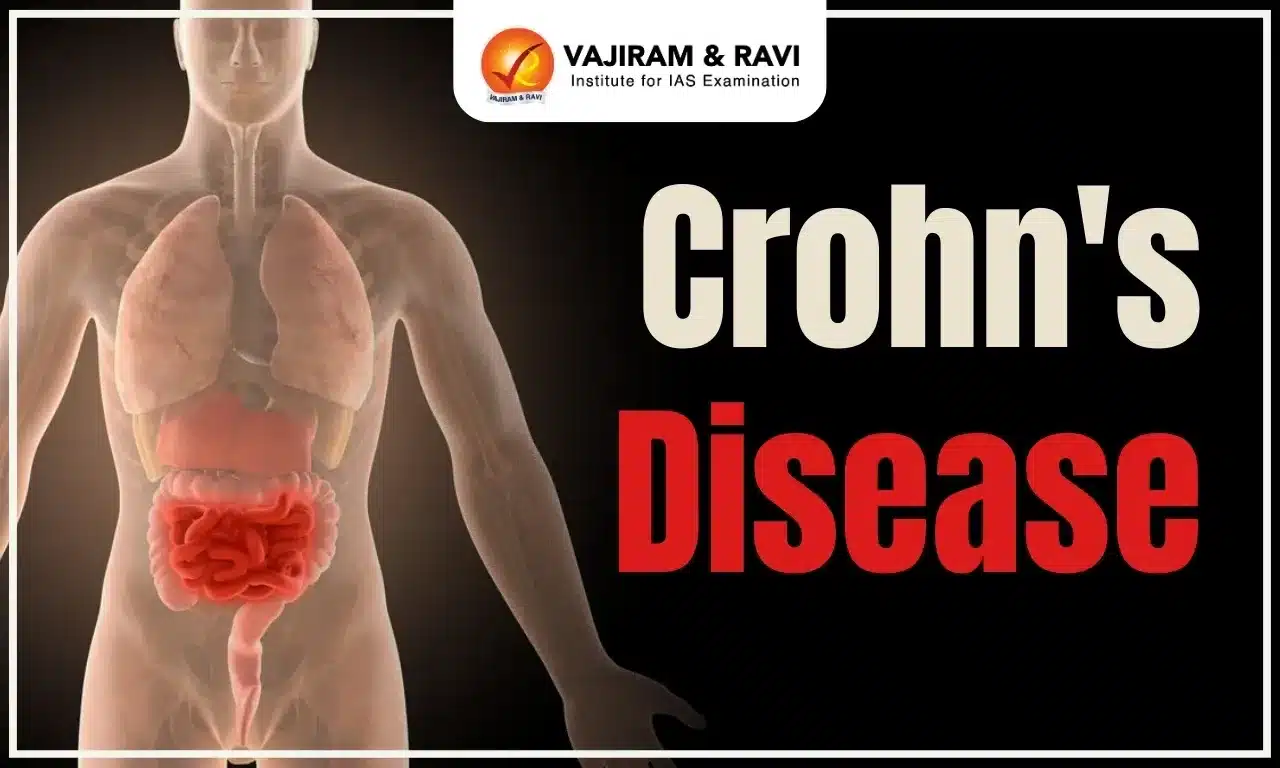
Crohn’s Disease

Crohn’s Disease

Crohn’s Disease Latest News

A detailed cellular study of Crohn’s disease recently mapped how gene activity changes across more than 50 cell types in the gut.

About Crohn’s Disease

  • It is a chronic inflammatory bowel disease (IBD) that causes swelling and irritation of the tissues, called inflammation, in the digestive tract. 
  • It can affect any part of your digestive tract, which runs from your mouth to your anus. But it usually affects the end of the small intestine and the beginning of the large intestine. 
  • The inflammation often spreads into the deeper layers of the bowel.
  • Crohn’s disease can be both painful and debilitating. Sometimes, it may lead to serious or life-threatening complications.

Crohn’s Disease Causes

  • Experts aren’t sure what causes Crohn’s disease but think genes, abnormal immune reactions, and the microbiome play a role.
  • People with a first-degree relative, such as a parent, sibling, or child, are at higher risk to have the disease.  
  • Crohn’s disease can develop at any age, but usually first appears in people aged in their 20s and 30s. 
  • It is more common in people living in the Western world, but it’s also becoming more common in developing countries.  

Crohn’s Disease Symptoms

  • The symptoms of Crohn’s disease can vary, depending on where and how severe your inflammation is. 
  • The most common symptoms include:
    • Diarrhea.
    • Fever.
    • Fatigue.
    • Belly pain and cramping.
    • Blood in the stool.
    • Mouth sores.
    • Reduced appetite and weight loss.
    • Pain or drainage near or around the anus due to inflammation from a tunnel into the skin, called a fistula.
  • These symptoms often come and go in cycles, called flares and remission.  

Crohn’s Disease Treatment

  • Crohn’s is a lifelong condition. There’s no known cure for Crohn’s disease.
  • But treatment can help you manage symptoms, reduce inflammation, and live an active life.

News: NM

Crohn’s Disease FAQs

Q1: What is Crohn’s disease?

Ans: Crohn’s disease is a chronic inflammatory bowel disease (IBD) that causes inflammation in the digestive tract.

Q2: What is the most common digestive symptom of Crohn’s disease?

Ans: Diarrhea.

Q3: Is Crohn’s disease a lifelong condition?

Ans: Yes, it is a lifelong condition.

Q4: Is there a known cure for Crohn’s disease?

Ans: No, there is no known cure.

Q5: What is the main goal of Crohn’s disease treatment?

Ans: To manage symptoms and reduce inflammation.

Enquire Now