Intron

Intron

Intron Latest News

Scientists visually tracked an RNA intron jumping from a predator to its prey, revealing insights into gene transfer across species.

About Intron

  • In some genes, not all of the DNA sequence is used to make protein.
  • Introns are noncoding sections of an RNA transcript, or the DNA encoding it, that are spliced out before the RNA molecule is translated into a protein. 
  • The sections of DNA (or RNA) that code for proteins are called exons
  • Following transcription, new, immature strands of messenger RNA, called pre-mRNA, may contain both introns and exons. 
  • The pre-mRNA molecule thus goes through a modification process in the nucleus called splicing during which the noncoding introns are cut out and only the coding exons remain. 
  • Splicing produces a mature messenger RNA molecule that is then translated into a protein. 
  • Introns are also referred to as intervening sequences. 
  • The length of introns differs among species and genes in the same species; mammals and flowering plants have multiple introns and are longer than exons. 
  • Introns may contain sequences that regulate how genes are expressed or transcribed and how mRNA is processed.

News: TH

Intron FAQs

Q1: What are introns?

Ans: Introns are noncoding sections of an RNA transcript or the DNA encoding it that are removed before protein synthesis.

Q2: Do introns code for proteins?

Ans: No, introns are noncoding sequences.

Q3: What are the protein-coding regions of a gene called?

Ans: Exons

Q4: What happens to pre-mRNA before it is translated into a protein?

Ans: Introns are removed and exons are joined together through splicing.

Greater Sand-Plover

Greater Sand-Plover

Greater Sand Plover Latest News

A Greater Sand Plover (Anarhynchus leschenaultii), a migratory shorebird typically found along coastal mudflats and estuaries, was recently spotted at Chandu village, marking the fifth documented record of the species in the region.

About Greater Sand Plover

  • It is a small wader in the plover family of birds.  
  • Scientific Name: Charadrius leschenaultii 

Greater Sand Plover Habitat and Distribution

  • Found from Turkey to Jordon, Central Asia, Siberia, Mongolia, and northern China, wintering along the coasts of Africa, the Middle East, the Indian subcontinent, southern China, Japan, Southeast Asia, and Australasia
  • It breeds in high-elevation areas, where it favors arid, open habitats, sometimes near water. 
  • Winters on coastal mudflats and estuaries.

Greater Sand Plover Features

  • It is a medium-sized plover with a long, hefty bill.
  • Breeding adults have a dark mask and orangish chest, neck, and forehead; females are duller than males.
  • Non-breeding birds and immatures are sandy brown above and white below, with a white throat and “eyebrows.”
  • Additionally, unlike some Lesser Sand-Plovers, Greater never has a black boundary around the throat.
  • There is a thin band over the white of the forehead.  

Greater Sand Plover Conservation Status

It is classified as 'Least Concern' under the IUCN Red List.

News: TOI

Greater Sand Plove FAQs

Q1: What type of bird is the Greater Sand Plover?

Ans: It is a small wader.

Q2: Where does the Greater Sand Plover breed?

Ans: In high-elevation areas from Turkey to Jordan, Central Asia, Siberia, Mongolia, and northern China.

Q3: Where does the Greater Sand Plover spend the winter?

Ans: Along the coasts of Africa, the Middle East, the Indian subcontinent, southern China, Japan, Southeast Asia, and Australasia.

Q4: What type of habitat does the Greater Sand Plover prefer during the breeding season?

Ans: Arid, open habitats, sometimes near water.

Q5: What is the IUCN Red List status of the Greater Sand Plover?

Ans: Least Concern.

Sulphur Dioxide

Sulphur Dioxide

Sulphur Dioxide Latest News

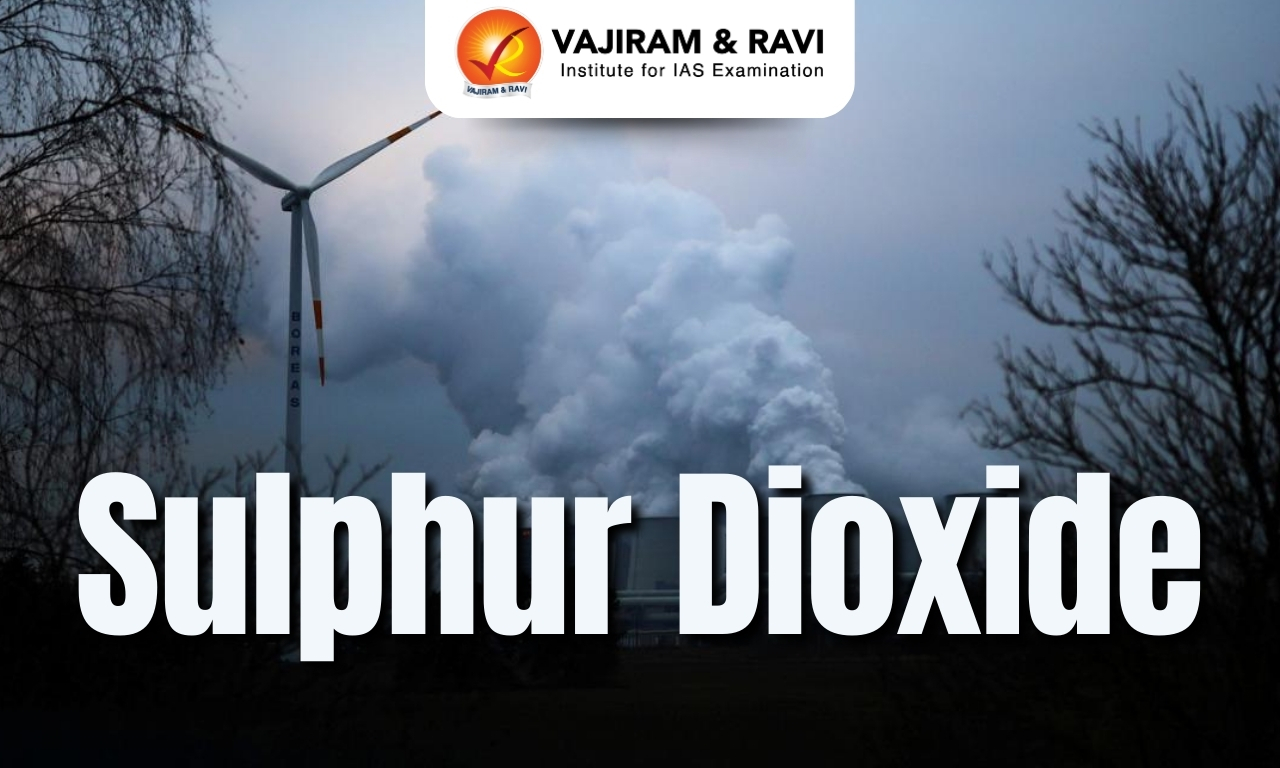
Recently, a new analysis showed that most sulphur dioxide around Delhi comes from coal plants which were exempted from pollution rules. 

About Sulphur Dioxide

  • It is an inorganic compound, a heavy, colorless, gas.
  • It is produced in huge quantities in intermediate steps of sulfuric acid manufacture.
  • Properties of Sulphur Dioxide
    • It is a colorless gas with a pungent odor.
    • It is a liquid when under pressure, and it dissolves in water very easily.
  • Applications: It is used to manufacture chemicals, in paper pulping, in metal and food processing.
  • Impacts of Sulphur Dioxide: It is harmful for human health, environment and climate.

Sources of Sulphur Dioxide

  • Burning of Coal: Sulfur dioxide in the air comes mainly from activities such as the burning of coal and oil at power plants or from copper smelting.
  • Industries: It is usually prepared industrially by the burning in air or oxygen of sulfur or such compounds of sulfur as iron pyrite or copper pyrite.
  • Natural Occurrence: In nature, sulfur dioxide can be released to the air from volcanic eruptions.
  • From Fossil Fuel burning: The largest source of SO2 in the atmosphere is the burning of fossil fuels by power plants and other industrial facilities.

Source: DTE 

Sulphur Dioxide FAQs

Q1: What is the chemical formula of Sulphur Dioxide ?

Ans: SO2​

Q2: SO2​ reacts with water to form which acid?

Ans: Sulphurous Acid

Valmiki Tiger Reserve

Valmiki Tiger Reserve (VTR)

Valmiki Tiger Reserve Latest News

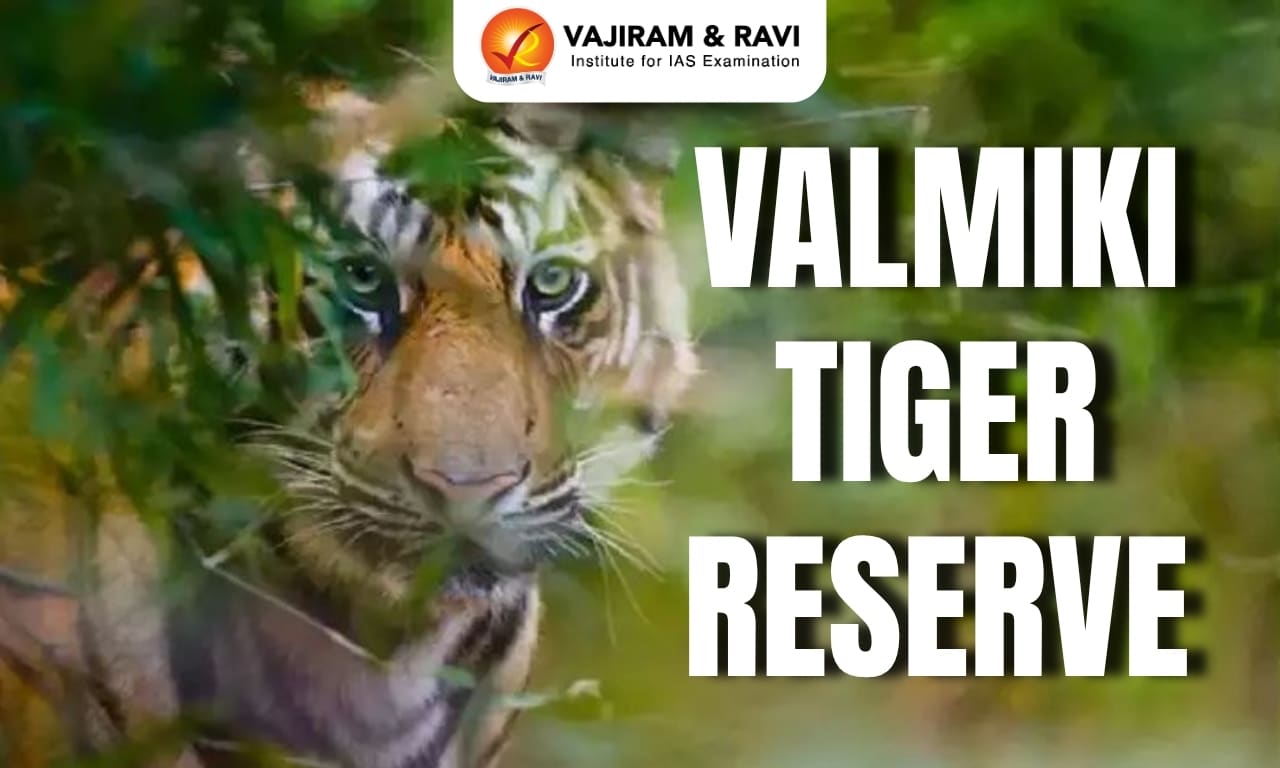
The Valmiki Tiger Reserve (VTR) in West Champaran is emerging as one of the state’s richest reptile habitats with more than 45 species of snakes recorded in its forests. 

About Valmiki Tiger Reserve

  • Location: It is located at the India-Nepal border in the northern part of the West Champaran District of Bihar. 
  • It forms the easternmost limit of the Himalayan Terai forests in India and is the only tiger reserve of Bihar.
  • It comprises the Valmiki National Park and the Valmiki Wild Sanctuary.
    • It is Situated in the Gangetic Plains bio-geographic zone of the country, the forest has a combination of Bhabar and Terai tracts.
  • Bordered by: It is surrounded by the Royal Chitwan National Park of Nepal in the north and the river Gandak on the western side.
  • Rivers: The Rivers Gandak, Pandai, Manor, Harha, Masan, and Bhapsa flow through various parts of the reserve.
  • Vegetation: The reserve boasts a variety of vegetation types, including tropical wet deciduous forests, grasslands, savannas, and riverine forests. 
  • Flora: Sal trees dominate the forests, but the region also features species like teak, bamboo, semal, and khair.
  • Fauna: Tiger, leopard, fishing cat, leopard cat, sambar, hog deer, spotted deer, black buck, gaur, sloth bear, langur, rhesus monkey, etc.

Source: TOI

Valmiki Tiger Reserve FAQs

Q1: Valmiki Tiger Reserve is located in which state?

Ans: Bihar

Q2: Valmiki TR shares its border with which country?

Ans: Nepal

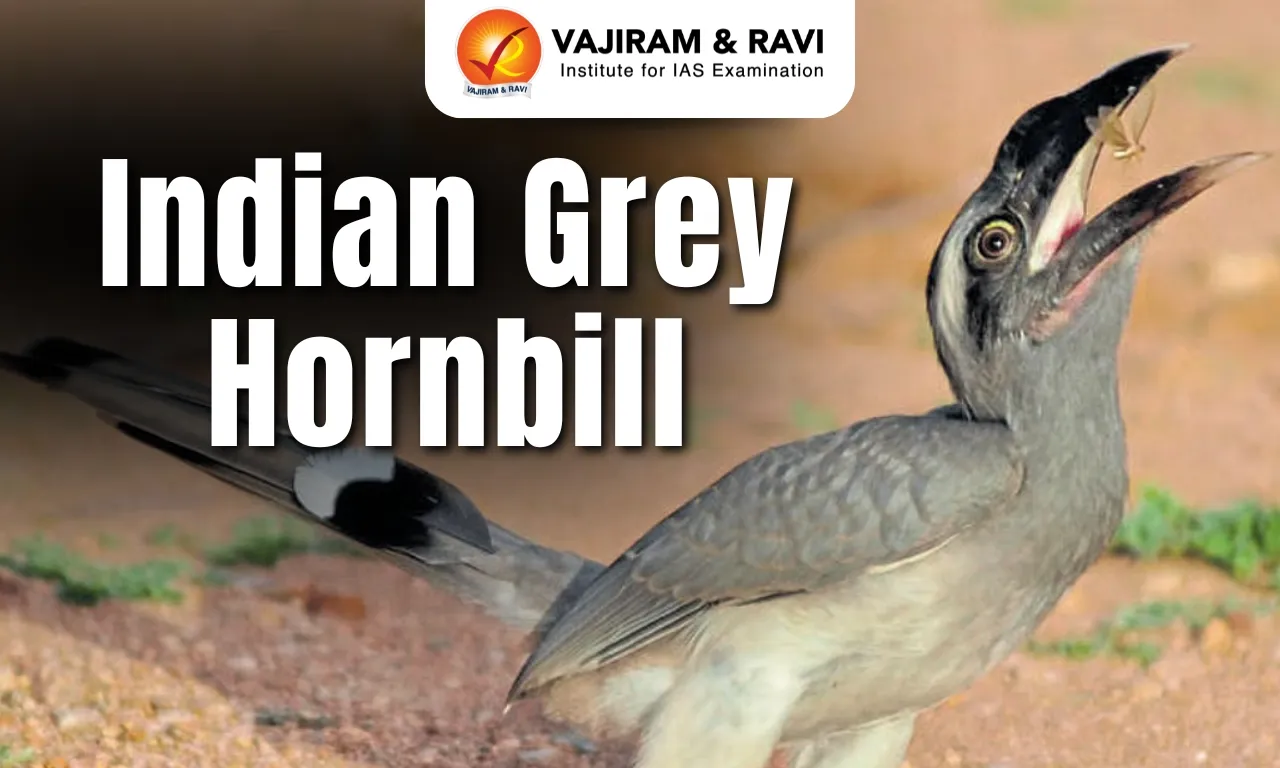
Indian Grey Hornbill

Indian Grey hornbill

Indian Grey Hornbill Latest News

Gujarat has added another landmark achievement to its growing conservation story with the successful return of the Indian Grey Hornbill to the Gir forests after an absence of more than 60 years. 

About Indian Grey Hornbill

  • The Indian gray hornbill (Ocyceros birostris) is a tropical bird that can be found on the Indian subcontinent.
  • It is commonly sighted in pairs.
  • These birds are known to be arboreal, i.e. spend most of their time on tall trees, but may descend for food and to collect mud pellets for nesting. 
  • Appearance
    • It has grey feathers all over the body with a light grey or dull white belly.
    • The horn is black or dark grey with a casque extending to the point of curvature of the horn.
    • Unlike a lot of other birds, the male and female look similar.
  • Habitat: It is mainly found in deciduous forests, open woodlands and thorn forest as well as rural cultivation and urban gardens and parks.
  • Distribution: Indian subcontinent; found from north-east Pakistan and south Nepal east to north-west Bangladesh and south throughout most of India except in Assam.
  • Behaviour: They have various social activities, including bill-grappling and aerial jousting. Indian grey hornbills are quite noisy producing squealing calls.
  • Diet: The food is mainly fruits, particularly figs.
  • Ecological Role: They play an essential role in the ecosystem as prime dispersers of seeds, helping regenerate forests by transporting seeds of fruit-bearing trees across large areas.
  • Conservation status: IUCN: Least Concern.

Source: TH

Indian Grey Hornbill FAQs

Q1: Indian Grey Hornbill is found in which type of habitat?

Ans: Dry deciduous forests, urban areas and gardens

Q2: Indian Grey Hornbill is native to which country?

Ans: India and Nepal

Enquire Now