Hara Mangrove Forest Latest News
Recent satellite images have revealed a major environmental threat to Hara mangrove forest due to an oil spill off Qeshm’s southern coast.
About Hara Mangrove Forest
- Location: The Hara forests are a vital ecological treasure of the Persian Gulf. Spanning the Strait of Hormuz,
- These mangrove forests consist mainly of grey mangrove trees (Avicennia marina).
- The forests are designated as a UNESCO Biosphere Reserve.
- Ecological Role
- They have a special filtration system in their roots that allows them to thrive in saline conditions.
- The same roots also protect the coast against erosion and are voluminous carbon sinks, sequestering significantly more carbon than terrestrial forests.
- They serve as an important nursery for marine life as they shelter shrimp, crabs, and numerous fish species that sustain the region’s fisheries.
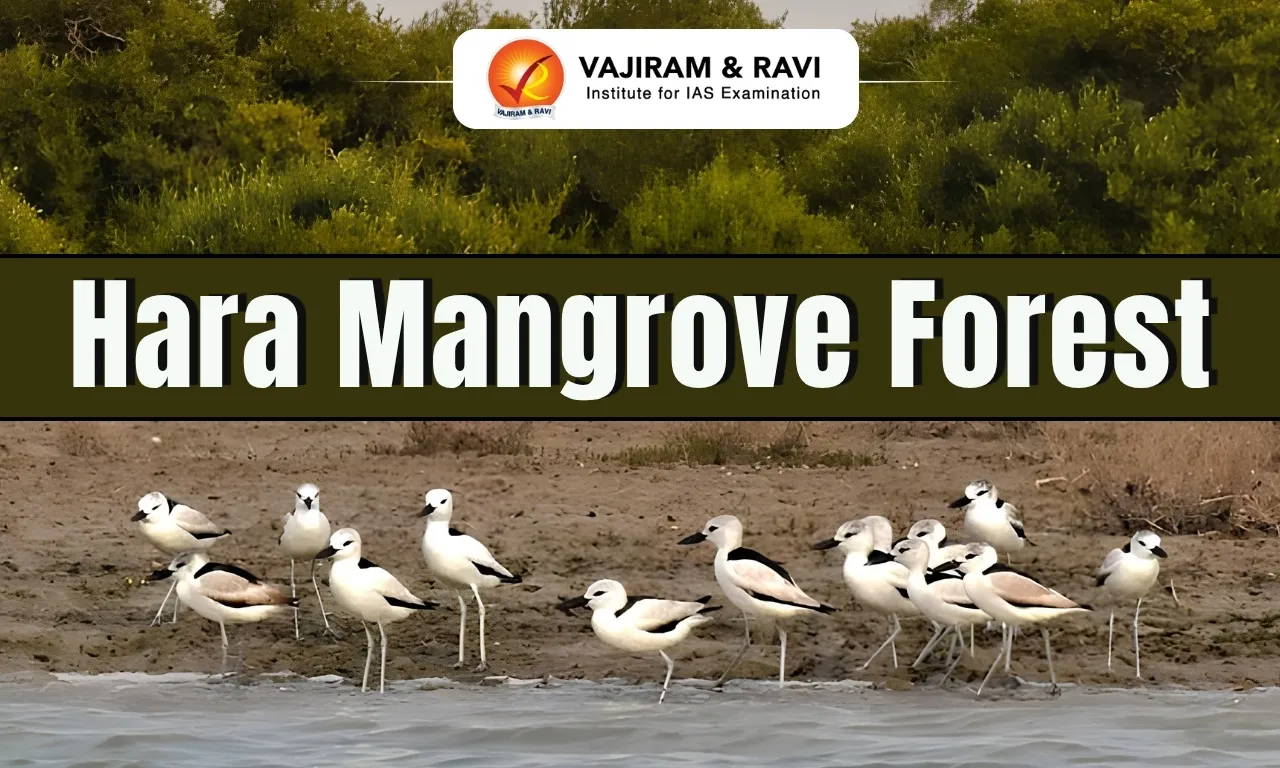
- The Hara forests’ canopy is also a major migratory hub for birds like the great stone-curlew and various herons.
- The mangroves are the backbone of the sustainable tourism programmes of Qeshm, an Iranian island in the Persian Gulf, and draw visitors to their labyrinthine waterways.
Source: TH
Hara Mangrove Forest FAQs
Q1: Hara Biosphere Reserve was designated by UNESCO in which year?
Ans: 1976
Q2: What is the advantage of Mangroves like Hara ?
Ans: They act as "Blue Carbon" ecosystem.