Narcolepsy

Narcolepsy

Narcolepsy Latest News

Two researchers who did groundbreaking work on narcolepsy, the neurological disorder that triggers sudden sleep attacks, won a prestigious science award recently.

About Narcolepsy

  • Narcolepsy is a sleep disorder that causes extreme daytime sleepiness and sudden “sleep attacks,” where you fall asleep without warning. These can happen at any time, even during regular activities. 
  • It affects your brain’s ability to control when you fall asleep and wake up.
  • The condition can disrupt your daily life, making it harder to work, study, or keep relationships. 
  • Narcolepsy is uncommon. But it’s a manageable lifelong condition.  
  • There are two main types:
    • Narcolepsy type 1: This type causes sudden muscle weakness (cataplexy) and/or very low levels of a brain chemical called hypocretin/orexin (helps control wakefulness and rapid eye movement (NREM) sleep).
    • Narcolepsy type 2: This type causes daytime sleepiness like type 1, but without cataplexy. 
  • A separate condition called secondary narcolepsy can happen due to a brain injury, lesion, or other medical or genetic disorder. 
    • It often comes with more severe symptoms and longer sleep times. 

Narcolepsy What Causes Narcolepsy?

  • The exact cause of narcolepsy is not known. 
  • People with type 1 narcolepsy have low levels of hypocretin, also called orexin. Hypocretin is a chemical in the brain that helps control being awake and entering REM sleep.
  • Hypocretin levels are low in people who have cataplexy. 
  • Exactly what causes the loss of hypocretin-producing cells in the brain isn't known. 
  • But experts suspect it's due to an autoimmune reaction. An autoimmune reaction is when the body's immune system destroys its own cells.
  • It's also likely that genetics plays a role in narcolepsy. But the risk of a parent passing this sleep condition to a child is very low—only about 1% to 2%.
  • Narcolepsy may be linked to exposure to the H1N1 flu, sometimes called the swine flu

Narcolepsy Symptoms

  • Narcolepsy can feel different for everyone. Common symptoms include: 
    • Excessive daytime sleepiness: Feeling very sleepy during the day or suddenly falling asleep without warning
    • Cataplexy: Sudden muscle weakness, triggered by strong emotion, which can make you drop things or fall
    • Hallucinations: Seeing or hearing things that aren’t really there as you drift into or out of sleep
    • Sleep paralysis: Not being able to move or speak for a short time when falling asleep or waking up
    • Automatic behaviors: Doing things like walking while half asleep and not remembering it later.
    • Poor nighttime sleep: Waking up often or not sleeping deeply, even if you fall asleep easily
  • Narcolepsy itself isn’t usually dangerous, but sudden sleep episodes or muscle weakness can lead to accidents or injuries. These risks are higher when driving, using machinery, or doing activities like swimming or climbing. 

Narcolepsy Treatment

  • There’s no cure for narcolepsy. 
  • But treatment can help you manage symptoms and improve daily life. 

News:MED

Narcolepsy FAQ's

Q1: What is narcolepsy?

Ans: Narcolepsy is a sleep disorder that causes extreme daytime sleepiness and sudden sleep attacks.

Q2: What are sleep attacks in narcolepsy?

Ans: Sleep attacks are sudden episodes in which a person falls asleep without warning, sometimes during regular activities.

Q3: How does narcolepsy affect the brain?

Ans: It affects the brain’s ability to control when a person falls asleep and wakes up.

Q4: What is secondary narcolepsy?

Ans: Secondary narcolepsy is a form of narcolepsy that can occur due to a brain injury, brain lesion, or another medical or genetic disorder.

Q5: Is the exact cause of narcolepsy known?

Ans: No, the exact cause of narcolepsy is not known.
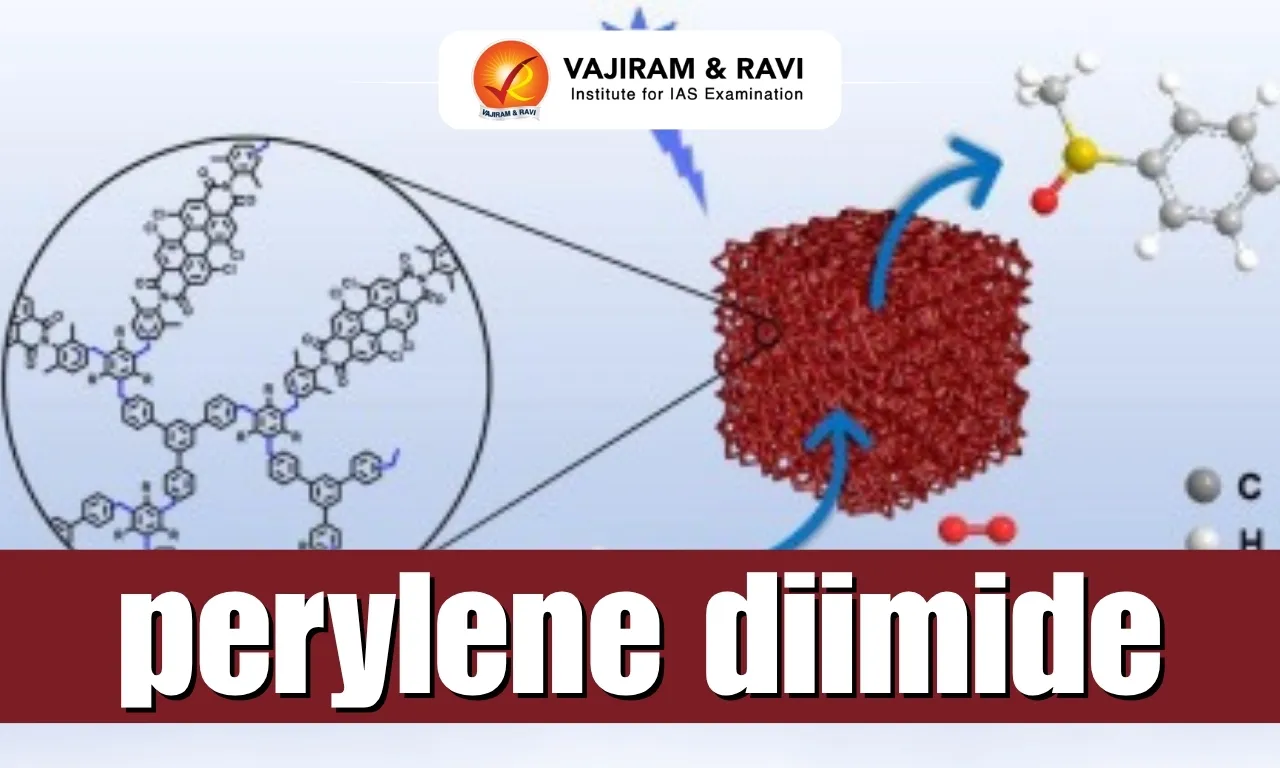
Perylene diimide

Perylene diimide

Perylene diimide Latest News

A team of researchers integrated amino acid (aspartic acid) with a light-absorbing organic molecule, perylene diimide (PDI) and allowed the molecules to spontaneously organize themselves through supramolecular self-assembly.

About Perylene diimide

  • It is a derivative of perylene.
  • Initially synthesized and explored as an organic dye, has since gained significant recognition for its outstanding optical and electronic properties.
  • Properties
    • PDIs exhibit exceptional optical characteristics.
    • It has strong absorption and high fluorescence quantum yield, along with remarkable electronic properties, such as high electron affinity and superior charge carrier mobility. 
    • It has a role as a fluorochrome. It is a dicarboximide and an organic heteropolycyclic compound.
    • The molecular architecture and electrical properties are closely related in semiconducting organic electronic materials.
  • Applications
    • PDI derivatives are considered as potential candidates for photovoltaic applications and organic electronics.
    • They behave as n-type organic semiconductor materials and have been used in fabrication of solar cells, photovoltaic devices, and dye lasers.

Source: PIB

Perylene diimide FAQs

Q1: What is Perylene diimide?

Ans: It is a derivative of perylene.

Q2: What are the applications of Perylene diimide?

Ans: It is used in fabrication of solar cells, photovoltaic devices, and dye lasers.

Navier-Stokes Equations

Navier-Stokes Equations

Navier-Stokes Equations Latest News

Recently, the mathematical community has been rocked by claims that OpenAI leveraged its enormous computing power — and potentially the private user data of academic researchers — to scoop a specific solution to the Navier-Stokes equations problem.

About Navier-Stokes Equations

  • The Navier-Stokes equations are a set of partial differential equations that describe the motion of viscous fluids. 
  • They are named after the French mathematician and physicist Claude-Louis Navier and the Irish mathematician and physicist George Gabriel Stokes, who developed them in the 19th century.
  • The Navier-Stokes equations are based on the conservation of mass, momentum, and energy
  • They use Newton’s second law of motion (F = m x a) to describe how fluids move. 
  • Importantly, they treat a fluid as a continuous medium rather than tracking individual molecules.  
  • Equation:
    • The Navier-Stokes equation, in modern notation, is 
      • ∂u/∂t + u·∇u = -∇P/ρ + v∇2 u
    • where u is the fluid velocity vector, P is the fluid pressure, ρ is the fluid density, υ is the kinematic viscosity, and ∇2 is the Laplacian operator.
  • Navier-Stokes equations have been used to model a wide variety of fluid flows, including the flow of water in pipes, the flow of air around airplanes, and the flow of blood in the human body. 
  • The Navier-Stokes equation is used in a wide variety of applications, including:
    • Weather forecasting
    • Climate modeling
    • Ocean circulation
    • Aerodynamics
    • Fluid dynamics
    • Hydraulics
    • Lubrication
    • Combustion
    • Chemical engineering
    • Biomedical engineering
  • There are a number of challenges associated with solving these equations, including: 
    • The equations are nonlinear, which means that they cannot be solved using linear methods.
    • The equations are coupled, which means that they cannot be solved independently of each other.
    • Whether smooth solutions in three dimensions continue to exist for all time — the problem of global existence and smoothness — is still an unsolved mathematical question.
  • Is the Navier-Stokes equation solved?
    • The Navier-Stokes equation is one of the most important unsolved problems in mathematics. 
    • In 2000, whether smooth, reasonable solutions to the Navier-Stokes equation in three dimensions exist was designated a Millennium Problem, one of seven mathematical problems selected by the Clay Mathematics Institute of Cambridge, Massachusetts, U.S., for a special award. 
    • The solution for each Millennium Problem is worth $1 million. 
    • Despite these challenges, there has been significant progress in solving the Navier-Stokes equations in recent years. 
      • This progress has been due in part to the development of new numerical methods and the use of high-performance computers.

News: nTH

Navier-Stokes Equations FAQs

Q1: What are the Navier–Stokes equations?

Ans: They are a set of partial differential equations that describe the motion of viscous fluids.

Q2: Which law of motion is used in the Navier–Stokes equations to describe fluid motion?

Ans: Newton’s second law of motion (F = ma).

Q3: How do the Navier–Stokes equations treat a fluid?

Ans: They treat a fluid as a continuous medium rather than tracking individual molecules.

Q4: Where are the Navier–Stokes equations used to model fluid flow?

Ans: They are used to model flows such as water in pipes, air around airplanes, and blood in the human body.

Q5: Why are the Navier–Stokes equations difficult to solve?

Ans: Because they are nonlinear and coupled equations.

INS Mysore

INS Mysore

INS Mysore Latest News

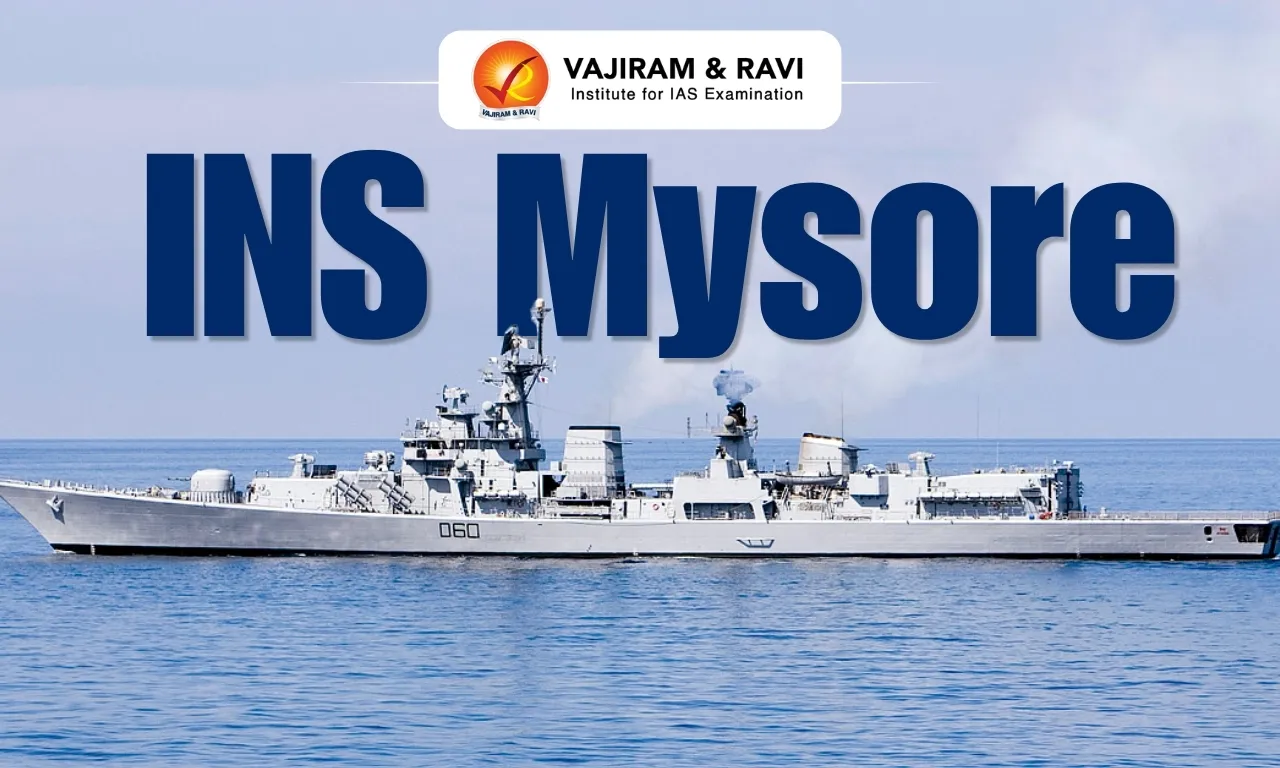
Strengthening maritime cooperation and enhancing interoperability, Indian Naval Ship (INS) Mysore arrived recently at Lumut Naval Base in Malaysia to participate in the bilateral exercise Samudra Laksamana.

About INS Mysore

  • INS Mysore (D60) is a Delhi-class guided missile destroyer of the Indian Navy.
  • It was built at Mazagon Dock Limited in Mumbai. It was commissioned on 2 June 1999
  • It is designed for multi-role naval operations, including air defence, anti-surface warfare, anti-submarine warfare, and fleet escort missions.   

INS Mysore Features

  • It has a displacement of 6,835 tons, a length of 535 feet, a beam of 56 feet, and a draft of 21 feet.
  • Power consists of 2 x 54,000 hp AM-50 gas turbines linked to 2 x 10,000 hp marine diesel engines driving 2 x axles. 
  • Gas turbines are used to provide the extra thrust, while diesel engines provide the required cruising power.
  • It has a speed of 32 knots and a range of 5,000 miles.
  • A pair of medium helicopters (and their matching crews) are also supported thanks to the combination of a hangar and helipad in the stern.
  • It is equipped with state-of-the-art radar, communications, and sensor equipment, as well as a hull-mounted variable depth sonar system.
  • Weapons include a mix of rocket and projectile-guided weapons. 
  • Four quadruple launchers service a stockpile of 16 SS-N-25 Surface-to-Surface MissileS (SSM) and two SA-N-7 Surface-to-Air MissileS (SAM) launchers to counter air threats from afar. 
  • There is a conventional 100 mm deck gun and 4 x AK-630 series 30 mm Close-In Weapon Systems (CIWSs) and turrets.
  • In addition, the warship is equipped with two RBU-6000 anti-submarine rocket (ASROC) launchers and five 21-inch (533 mm) torpedoes, deployed in quintuple launchers.

Key Facts about Exercise Samudra Laksamana

  • It is a joint naval exercise between the Indian Navy and the Royal Malaysian Navy (RMB).
  • The exercise aims to strengthen bonds and enhance interoperability between the Indian and Royal Malaysian Navy.
  • INS Mysore, along with RMN Ships KD Lekir and KD Gagah Samudera, will participate in the 2026 edition of the exercise.

News: DEF

INS Mysore FAQ's

Q1: What is INS Mysore?

Ans: INS Mysore is a Delhi-class guided missile destroyer of the Indian Navy.

Q2: Where was INS Mysore built?

Ans: It was built at Mazagon Dock Limited in Mumbai.

Q3: When was INS Mysore commissioned into the Indian Navy?

Ans: It was commissioned on 2 June 1999.

Q4: What are the major roles for which INS Mysore is designed?

Ans: It is designed for air defence, anti-surface warfare, anti-submarine warfare and fleet escort missions.

International Atomic Energy Agency

International Atomic Energy Agency

International Atomic Energy Agency Latest News

The International Atomic Energy Agency (IAEA) reported Iran to the UN Security Council for the first time in 20 years recently. 

About International Atomic Energy Agency 

  • It is the world’s leading intergovernmental organisation for scientific and technical cooperation in the nuclear field.
  • The Agency’s genesis was U.S. President Eisenhower’s “Atoms for Peace” address to the  United Nations General Assembly (UNGA) on 8 December 1953.
  • The IAEA Statute was approved on 23 October 1956 and came into force on 29 July 1957.
  • It is an autonomous organization within the United Nations system.
  • It reports to both the UNGA and the UN Security Council.
  • Its primary goal is to ensure that nuclear energy is not diverted for weapons purposes.
  • The IAEA works with its Member States and multiple partners worldwide to promote the safe, secure, and peaceful use of nuclear technologies.
  • It is widely known as the world’s “Atoms for Peace and Development”​ organization. 
  • Member Countries: The agency currently has 180 member states, reflecting its wide international mandate and credibility.
  • The IAEA is headquartered in Vienna, Austria, and has regional and liaison offices in Toronto, Tokyo, New York, and Geneva.  

International Atomic Energy Agency Functions

  • Promoting Peaceful Uses of Nuclear Energy: The IAEA encourages the use of nuclear technology for peaceful purposes, emphasizing sustainability and safety.
  • Safety and Security: The agency establishes safety standards and provides assistance to ensure that nuclear operations are conducted safely and securely.
  • Verification: The IAEA conducts inspections and monitoring to verify compliance with nuclear non-proliferation agreements.
    • The IAEA is not a party to the Treaty on the Non-Proliferation of Nuclear Weapons (NPT) but is entrusted with a key verification role under it.
    • As part of the NPT, all non-nuclear powers are required to negotiate a safeguards agreement with the IAEA; as part of that agreement, the IAEA is given authority to monitor nuclear programs and to inspect nuclear facilities. 
    • The IAEA has no power to force the cooperation of its member states; however, each state can choose to follow or ignore the guidelines set by the IAEA. 

International Atomic Energy Agency Governance Structure

  • General Conference: The General Conference, composed of all member states, meets annually to approve budgets and set general policy directions.
  • Board of Governors: The Board of Governors, comprising 35 members, meets about five times a year to: approve safeguards agreements, carry out statutory functions, and appoint the Director General.
  • Secretariat: The Secretariat, led by the Director General, handles the IAEA’s daily operations.

News: TH

International Atomic Energy Agency FAQs

Q1: What is the International Atomic Energy Agency (IAEA)?

Ans: The IAEA is the world’s leading intergovernmental organisation for scientific and technical cooperation in the nuclear field.

Q2: When did the International Atomic Energy Agency (IAEA) Statute come into force?

Ans: It came into force on 29 July 1957.

Q3: What is the primary goal of the International Atomic Energy Agency (IAEA)?

Ans: Its primary goal is to ensure that nuclear energy is not diverted for weapons purposes.

Q4: Where is the headquarters of the International Atomic Energy Agency (IAEA) located?

Ans: Its headquarters is located in Vienna, Austria.

ORV Sagar Manthan

ORV Sagar Manthan

ORV Sagar Manthan Latest News

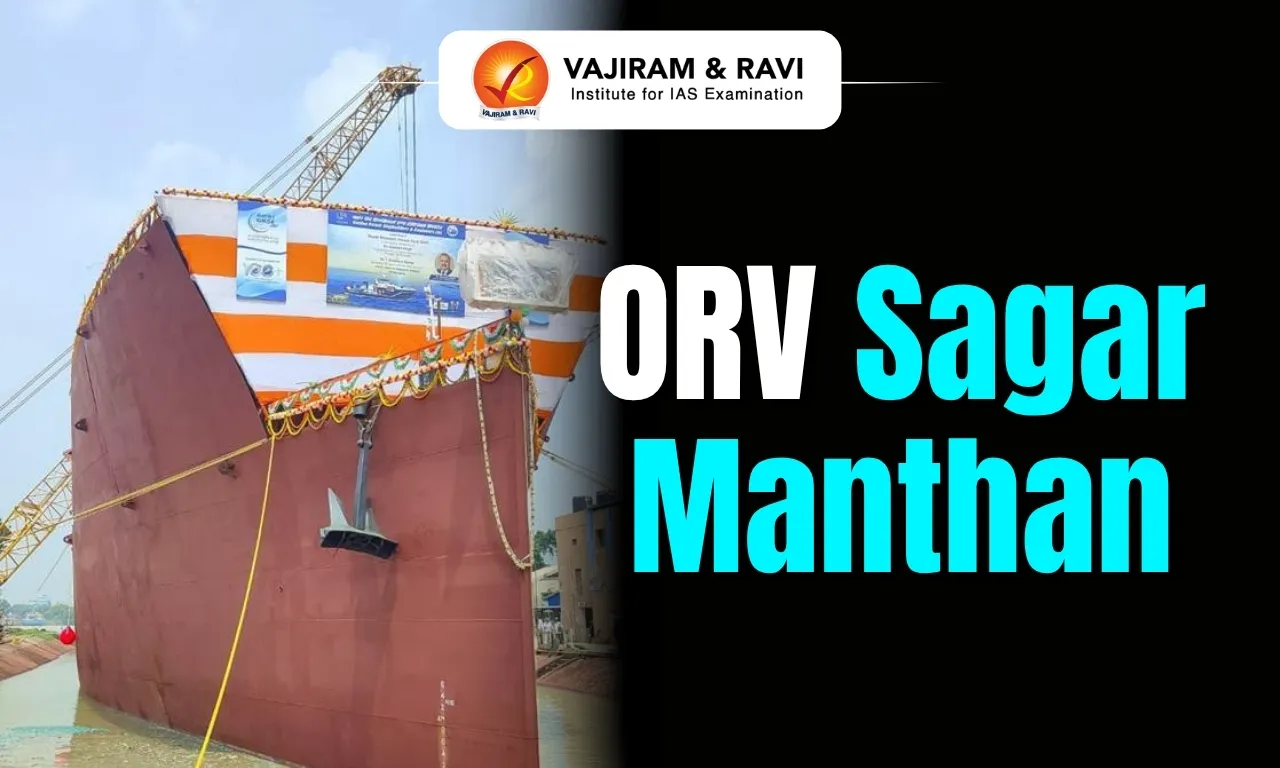
Recently, the Union Minister for Earth Sciences launched India’s advanced Ocean Research Vessel (ORV) ‘Sagar Manthan’ at Rishi Bankim Shipyard in Kolkata. 

About ORV Sagar Manthan

  • It is an indigenous ocean research vessel. 
  • It is an all-weather, multidisciplinary platform.
  • It is designed, engineered, and constructed by Garden Reach Shipbuilders & Engineers Limited (GRSE) for the National Centre for Polar and Ocean Research (NCPOR).
  • It is constructed under Vertical-4 (Deep Ocean Survey and Exploration) of the Government of India's flagship Deep Ocean Mission (DOM).
  • It is engineered to operate in extreme oceanic environments, including the Southern Ocean, with a projected service life of 30 years.

Key Technical & Operational Features of ORV Sagar Manthan

  • Advanced Equipment: It is integrated with dynamic positioning, multibeam bathymetry, multichannel seismic systems, sub-bottom profiling, weather radar, drop keels, and deployment facilities for Remotely Operated Vehicles (ROV) and Autonomous Underwater Vehicles (AUV).
  • Research Spectrum: It will support multidisciplinary exploration along the Indian Ocean mid-oceanic ridges to identify multi-metal hydrothermal sulphide mineralisation, establish environmental baselines, collect upper-air data, and undertake CTD profiling.
  • Dual-Class Certification: It is built in full compliance with international regulatory standards under dual-class certification by the Indian Register of Shipping (IRS) and the American Bureau of Shipping (ABS).

Source: PIB

ORV Sagar Manthan FAQs

Q1: What is ORV Sagar Manthan ?

Ans: It is an indigenous ocean research vessel. 

Q2: Which organisation designed the ORV Sagar Manthan ?

Ans: It is designed, engineered, and constructed by Garden Reach Shipbuilders & Engineers Limited.

Endometriosis

Endometriosis

Endometriosis Latest News

A latest study by the Indian Council of Medical Research-National Institute for Research on Women’s Health (ICMR-NIRWoH), Mumbai, has found that genetic factors contribute to a woman’s risk of developing endometriosis. 

About Endometriosis

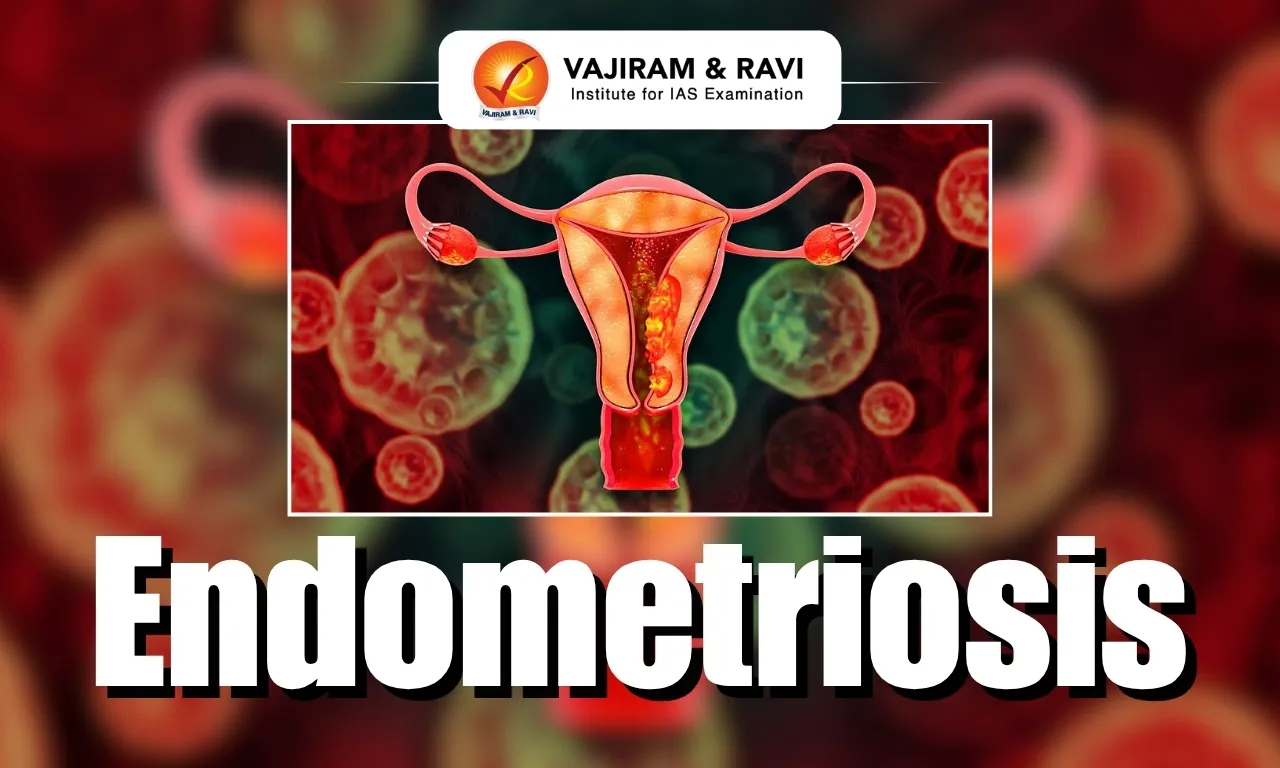
  • It is a complex disease where tissue lining the uterus overgrows outside it.
  • It affects many women, globally from the onset of their first period (menarche) through menopause.
  • It affects a woman’s physical, psychological, and social well-being.
  • It is caused by a mix of genetics, hormones, environment, and lifestyle.
  • Endometriosis can also affect transgender men and non-binary individuals who menstruate. 
  • People with endometriosis have higher rates of other immune-mediated conditions, such as lupus, multiple sclerosis, and inflammatory bowel disease.
  • Symptoms: It can cause severe period pain, chronic pelvic pain, painful intercourse, fatigue, infertility, anxiety, depression and a poor quality of life.
  • Treatment: There is no cure for endometriosis, but treatments are available for the symptoms and problems it causes.
  • It affects about 10 per cent of women of reproductive age globally; India accounts for an estimated 50 million cases, representing nearly 18 per cent of the global burden.

Endometriosis FAQ's

Q1: What is Endometriosis?

Ans: It is a complex disease where tissue lining the uterus overgrows outside it.

Q2: What are the symptoms of Endometriosis?

Ans: It can cause severe period pain, chronic pelvic pain, painful intercourse, fatigue, infertility, anxiety.

Resplendent Shrub Frog

Resplendent Shrub Frog

About Resplendent Shrub Frog 

  • It belongs to the family Rhacophoridae.
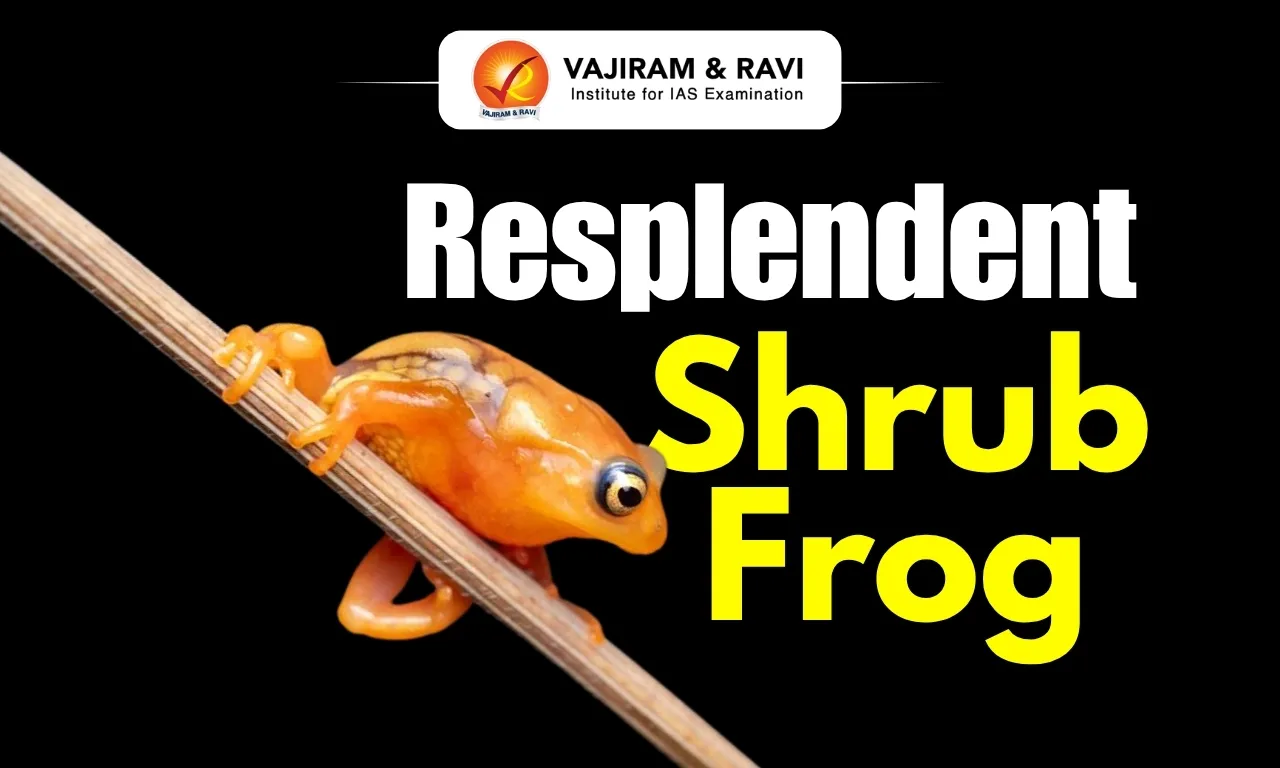
  • Appearance: It is remarkably small, measuring only about 2–3 cm in length. Its body is adorned with bold patterns along its limbs and flanks. The limbs are much shorter than in other species of this genus.
  • Habitat: Normally, cold-climate-adapted frogs move to higher elevations as temperatures rise.
  • Distribution: It is endemic to the high-altitude shola-grassland ecosystems of the Anamudi region in Kerala’s Eravikulam National Park.
  • Characteristics
    • It is characterized by pronounced crawling behaviour. It is a ground-dwelling species.
    • They are nocturnal and hide from artificial light sources.
    • Reproduction: It undergoes direct development, without a free swimming tadpole stage.
  • Conservation Status: IUCN Red List: Critically Endangered

Key Facts about Eravikulam National Park

  • Location: It is an important protected area located in the Western Ghats of Kerala.
  • It is also surrounded by other protected areas like Chinnar Wildlife Sanctuary, Pampadum Shola National Park, Anamudi Shola National Park, and Kurinjimala Sanctuary.
  • It is most famous for being the largest habitat of the endangered Nilgiri Tahr.
  • It is also known as the “Land of Neelakurinji”, a rare flower that blooms once every 12 years.
  • It is dominated by high-altitude grasslands and rolling plateaus, usually found above 2000 meters.
  • Anamudi Peak (2695 m), which is the highest peak in South India, often called the “Everest of South India” is present here.
  • It consists of three types of vegetation: Grasslands, Shrublands and Shola forests.
  • Flora: The Park supports a wide range of plant diversity, including grasses, shrubs, and trees adapted to high-altitude conditions.
  • Fauna: Elephants, Gaur, Sambar Deer, Leopard, Tiger, Sloth Bear, and Wild Dog.

Source: TH

Resplendent Shrub Frog FAQs

Q1: Where do we find Resplendent Shrub Frog ?

Ans: It is endemic to the high-altitude shola-grassland ecosystems of the Anamudi region in Kerala’s Eravikulam National Park.

Q2: What is the IUCN status of Resplendent Shrub Frog ?

Ans: Critically Endangered

Wildlife Crime Control Bureau

Wildlife Crime Control Bureau

Wildlife Crime Control Bureau Latest News

The Ministry of Environment, Forest & Climate Change recently constituted a 4-member inquiry team from WCCB to investigate the international organized crime linkage in the mysterious appearance of orangutan in the Balasore district.

About Wildlife Crime Control Bureau 

  • It is a statutory body established by the Government of India to combat organized wildlife crime in the country.
  • It was constituted under Section 38Y of the Wild Life (Protection) Act, 1972. It became operational in 2008.  
  • It is a multidisciplinary body with officials from Police, Forest, Customs, and other intelligence & enforcement agencies. 
  • It functions under the Ministry of Environment, Forests and Climate Change (MoEF&CC). 
  • Headquarter
    • Its headquarters is situated in New Delhi. 
    • There are five regional offices located at Delhi, Kolkata, Mumbai, Chennai, and Bhopal.  
  • Functions
    • Collect and collate intelligence related to organised wildlife crime activities and disseminate the same to state and other enforcement agencies for immediate action so as to apprehend the criminals and to establish a centralised wildlife crime data bank.
    • Coordination of actions by various officers, state governments, and other authorities in connection with the enforcement of the provisions of this Act, either directly or through regional and border units set up by the Bureau.
    • Implementation of obligations under various international conventions and protocols that are in force at present or which may be ratified or acceded to by India in the future.
    • Assistance to concerned authorities in foreign countries and concerned international organisations to facilitate coordination and universal action for wildlife crime control.
    • Develop infrastructure and capacity building for scientific and professional investigation into wildlife crimes and assist state governments to ensure success in prosecutions related to wildlife crimes.
    • Advise the government of India on issues relating to wildlife crimes having national and international ramifications, and suggest changes required in relevant policy and laws from time to time.
  • The WCCB assists in the enforcement of the CITES, to which India has been a party since 1976, and develops capacity through training programmes and species-identification support for frontline officers and prosecutors. 
  • It maintains liaison with the INTERPOL Environmental Crime Programme and the World Customs Organization to track cross-border trafficking routes. 
  • It has developed an online Wildlife Crime Database Management System to get real-time data in order to help analyse trends in crime and devise effective measures to prevent and detect wildlife crimes across India.
    • This system has been successfully used to analyse trends, helping put in preventive measures as well as for successfully carrying out operations such as Operation SAVE KURMA, THUNDERBIRD, WILDNET, LESKNOW, BIRBIL, THUNDERSTORM, LESKNOW-II

News: TOI

Wildlife Crime Control Bureau FAQs

Q1: What is the Wildlife Crime Control Bureau (WCCB)?

Ans: WCCB is a statutory body established by the Government of India to combat organised wildlife crime in the country.

Q2: Under which law was the Wildlife Crime Control Bureau (WCCB) constituted?

Ans: It was constituted under Section 38Y of the Wild Life (Protection) Act, 1972.

Q3: Where is the headquarters of the Wildlife Crime Control Bureau (WCCB) located?

Ans: Its headquarters is located in New Delhi.

Q4: Under which Union Ministry does the Wildlife Crime Control Bureau (WCCB) function?

Ans: It functions under the Ministry of Environment, Forests and Climate Change (MoEF&CC).

Foot-and-Mouth Disease

Foot-and-Mouth Disease

Foot-and-Mouth Disease Latest News

After around 60 years, a serotype of foot-and-mouth disease (FMD) is being reported again in parts of Europe and the Middle East.  

About Foot-and-Mouth Disease

  • It is a highly contagious viral infection that affects cloven-hoofed animals such as cattle, buffaloes, sheep and goats.
  • Cause: It is caused by an Aphthovirus of the family Picornaviridae.
  • Symptoms
    • It is characterised by fever and blister-like sores on the tongue and lips, in the mouth, on the teats and between the hooves.
    • The disease causes severe production losses, and, while the majority of affected animals recover, the disease often leaves them weakened and debilitated. 
    • The disease is rarely fatal in adult animals, but there is often high mortality in young animals due to myocarditis.
  • It is a transboundary animal disease (TAD) that deeply affects the production of livestock and disrupts regional and international trade in animals and animal products.
  • Intensively reared animals are more susceptible to the disease than traditional breeds.
  • Transmission: It is transmitted through
    • Infected animals newly introduced into a herd (carrying virus in their saliva, milk, semen, etc.); 
    • Contaminated pens/buildings or contaminated animal transport vehicles; 
    • Contaminated materials such as hay, feed, water, milk or biologics; 
    • Contaminated clothing, footwear, or equipment; 
    • Virus-infected meat or other contaminated animal products (if fed to animals when raw or improperly cooked); 
  • Treatment: Vaccination is the only effective preventive measure against FMD.

Source: IE

Foot-and-Mouth Disease FAQs

Q1: What is Foot-and-Mouth Disease?

Ans: It is a highly contagious viral infection.

Q2: What is the causative agent of Foot-and-Mouth Disease?

Ans: It is caused by an Aphthovirus of the family Picornaviridae.

Enquire Now