Rangeet River

Rangeet River

Rangeet River Latest News

Anglers in Sikkim will organise a three-day river festival on the banks of the Rangeet river near Jorethang  late this month, , seeking to blend catch-and-release fishing with river conservation, adventure tourism and local culture.

About Rangeet River

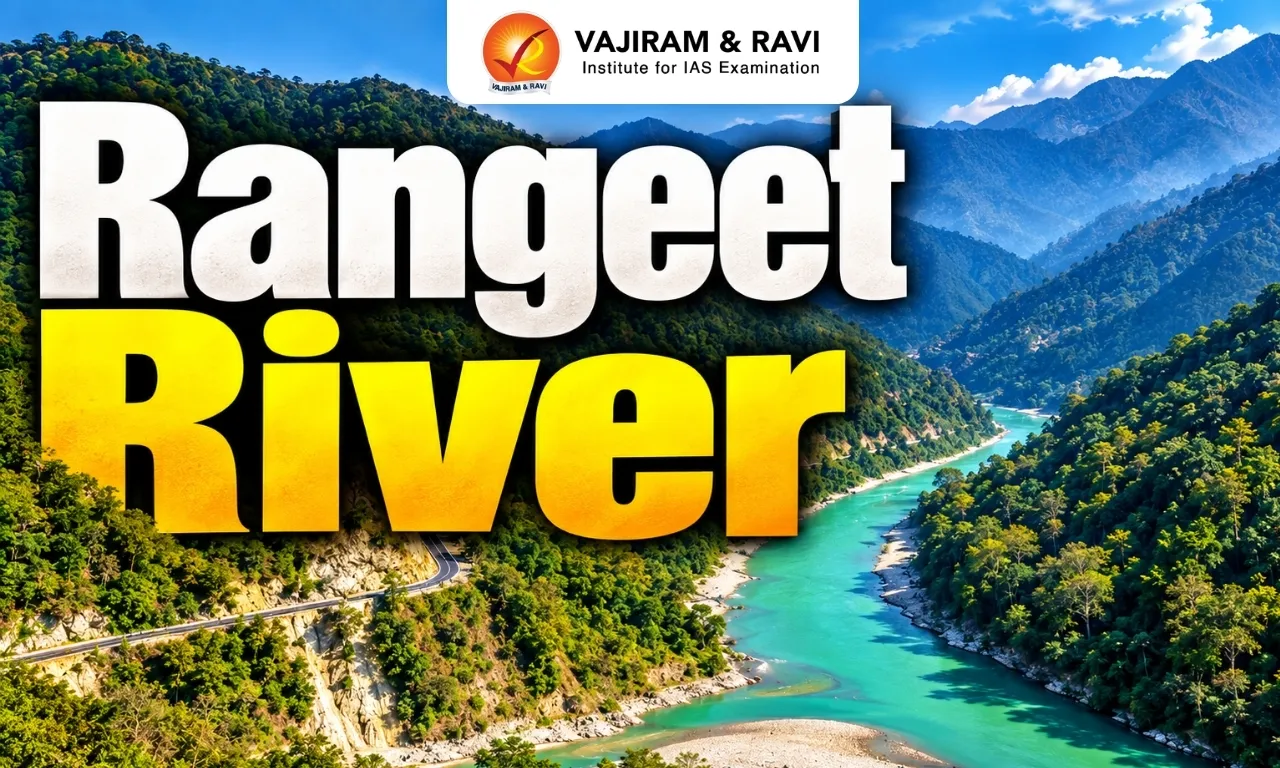
  • The Rangeet, or Rangit, is a major tributary of the Teesta River, the largest river in Sikkim. 
  • Course:
    • It originates from a glacier of Mount Kabru at the lower Kanchenjunga region. 
    • The river begins its course from the Himalayan Mountains in the West Sikkim district. 
    • A perpetual river, Rangeet is fed by the melting snow of the Himalayas in early summer and the monsoon rains in June-September. 
    • The convoluted river joins the Teesta at Teesta Bazaar on the periphery of West Bengal and Sikkim. 
    • During its final few kilometres, it forms the boundary between the Sikkim and Darjeeling districts of West Bengal.  
    • The river flows past the towns of Pelling, Jorethang, and Legship. 
  • It is important ecologically as a mountain river system that supports cold-water fisheries (notably trout), provides irrigation and freshwater to local communities, and supplies water for small hydropower projects.
  • The banks of the river are enveloped by thick forest cover. Certain areas of the banks are used for terrace farming. 
  • It is popular among white water rafting enthusiasts because of its turbulent waters. 
  • The Rangeet Dam is built on this river, which started operating in 2000.
    • It has a 60 MW capacity.   
    • It is a 45-metre-high concrete gravity structure of 100 metres length.

News: TP

Rangeet River FAQs

Q1: Which is the major river to which the Rangeet is a tributary?

Ans: The Teesta River.

Q2: Where does the Rangeet River originate?

Ans: It originates from a glacier of Mount Kabru in the lower Kanchenjunga region.

Q3: Where does the Rangeet River join the Teesta River?

Ans: Where does the Rangeet River join the Teesta River?

mBridge Project

mBridge Project

mBridge Project Latest News

Saudi Arabia quietly exited the China-led mBridge digital currency project in 2025, saying it was part of its original plan. 

About mBridge Project

  • mBridge is a cross-border payments platform designed to allow central banks to transact directly using central bank digital currencies (CBDCs). 
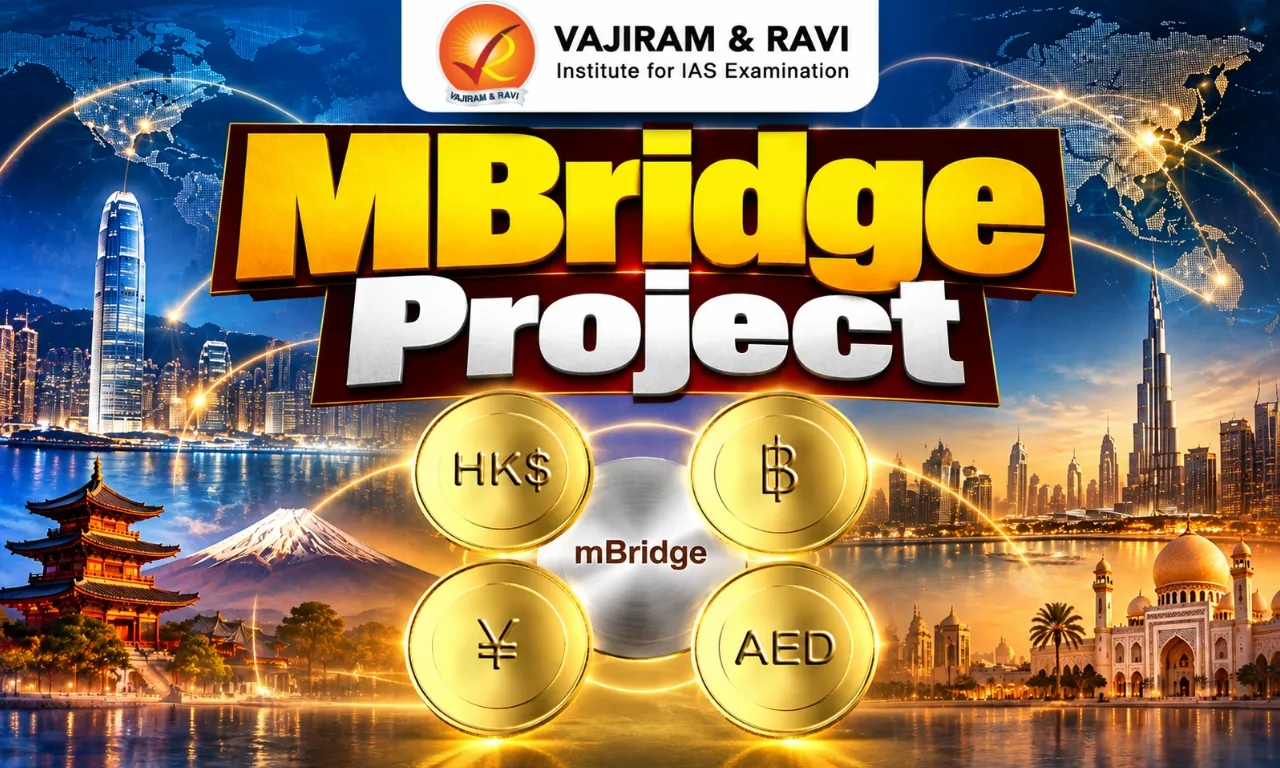
  • It is a joint project launched in 2021 between the Bank for International Settlements (BIS) innovation hub and the Bank of Thailand, the Central Bank of the United Arab Emirates, the Digital Currency Institute of the People’s Bank of China, and the Hong Kong Monetary Authority. 
  • The project aimed to explore a multi-CBDC platform shared among participating central banks and commercial banks, built on distributed ledger technology (DLT) to enable instant cross-border payments and settlement. 
  • Need for mBridge:
    • The project aimed to tackle key inefficiencies in cross-border payments, including high costs, low speed, and operational complexities. 
    • It also aims to address financial inclusion concerns, particularly in jurisdictions where correspondent banking (which connects countries to the global financial system) has been in retreat, causing additional costs and delays. 
    • The system is designed to potentially reduce the need for the US dollar to act as an intermediary currency.
  • How does mBridge work?
    • The platform uses blockchain technology, which makes all the participating banks connect to the same network, which is shared among them. 
    • The blockchain is a shared digital record which helps keep in tracking the transactions, including maintaining who has paid whom and how much. 
    • Participating central banks as well as monetary organisations use their own computers on the mBridge network, which are called as validating nodes.
    • They play a role in maintaining the transactions that have taken place as well as also help in maintaining the shared digital record to maintain clarity on the transactions that have taken place. 
    • This means that international payments no longer pass through several banks, rather they are settled directly through one shared platform, mBridge in this case.
  • Why is it seen as China-led?
    • The mBridge platform is often said to be a China-led cross-border digital currency project. 
    • China has been involved in this project since the very beginning in 2021, as the Digital Currency Institute of the People’s Bank of China was one of the founding partners.

News: MC

mBridge Project FAQs

Q1: What is the mBridge Project?

Ans: mBridge is a cross-border payments platform designed to enable central banks to transact directly using central bank digital currencies (CBDCs).

Q2: Which central banks and monetary authorities were founding partners of mBridge?

Ans: The Bank of Thailand, Central Bank of the United Arab Emirates, Digital Currency Institute of the People’s Bank of China, and Hong Kong Monetary Authority, along with the BIS Innovation Hub.

Q3: hat technology underpins the mBridge platform?

Ans: Distributed ledger technology (DLT), including blockchain-based technology.

Q4: What are the major inefficiencies in cross-border payments that mBridge seeks to address?

Ans: High costs, slow transaction speeds, and operational complexities.

Q5: What role does blockchain technology play in mBridge?

Ans: It provides a shared digital record of transactions among participating institutions.

Deen Dayal Upadhyaya- Grameen Kaushalya Yojana

Deen Dayal Upadhyaya- Grameen Kaushalya Yojana

Deen Dayal Upadhyaya- Grameen Kaushalya Yojana Latest News

The Ministry of Rural Development is set to roll out Deen Dayal Upadhyaya- Grameen Kaushalya Yojana (DDU-GKY) 2.0 training batches across most of the States/UTs from October 2026 

About Deen Dayal Upadhyaya- Grameen Kaushalya Yojana 

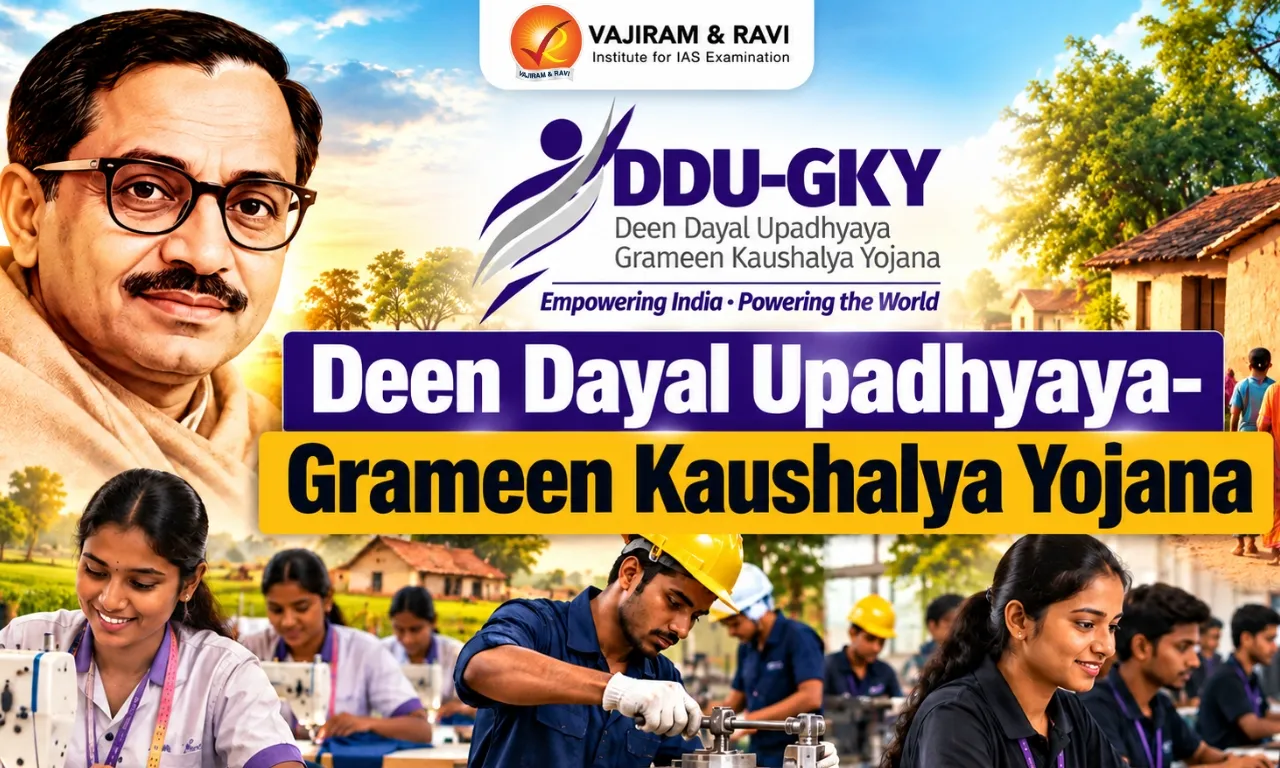
  • It is a Centrally Sponsored Scheme launched on 25 September 2014, under the National Rural Livelihoods Mission.
  • It provides placement linked skill training to poor rural youth.
  • Nodal Ministry: Ministry of Rural Development
  • Key Features
    • Target: It has been providing placement-linked skill training to rural youth aged 15-35 years from poor households.
    • Social Inclusion: It also promotes social inclusion through mandatory coverage of SC/ST communities (50%), women (33%), and persons with disabilities (5%).
    • The Government notified the upgraded DDU-GKY 2.0 Guidelines in May 2025 and the framework provides training across multiple sectors based on industry requirements, including aerospace and aviation, agriculture, beauty and wellness, green jobs, healthcare, textiles, and others.

Initiatives under DDU-GKY 2.0

  • Roshni 
    • It addresses the specific needs of Left-Wing Extremism (LWE)-affected districts notified by the Ministry of Home Affairs.
    • It mandates residential skill training, with 40% coverage for women candidates. The initiative has been extended to Aspirational Districts, focusing on local infrastructure, education, health, natural resources, and traditional skills.
  • Himayat
    • It is a special DDU-GKY scheme for Jammu & Kashmir and Ladakh. It covers rural and urban youth, including BPL and APL persons, and supports wage, self, and gig employment. 
    • It is 100% centrally funded and implemented with State support through dedicated Mission Management Units.
  • North East: Acknowledging the challenges of unique topography of the North Eastern States, out of the total allocation for DDU-GKY, 10% is earmarked for the North-Eastern States.
  • Hard to reach Areas: There is provision for Special Area Allowance where Project implementing agencies shall be eligible for a payment at the rate of an additional 10% of the Base training cost per candidate.

Source: PIB

Deen Dayal Upadhyaya- Grameen Kaushalya Yojana FAQs

Q1: What is Deen Dayal Upadhyaya- Grameen Kaushalya Yojana?

Ans: It is a Centrally Sponsored Scheme launched on 25 September 2014, under the National Rural Livelihoods Mission.

Q2: Which is the nodal ministry of Deen Dayal Upadhyaya- Grameen Kaushalya Yojana?

Ans: Ministry of Rural Development

Etruscan Civilization

Etruscan Civilization

Etruscan Civilization Latest News

Archaeologists recently unearthed a monumental 2,700-year-old tomb at Vulci, an important ancient Etruscan town north of Rome.

About Etruscan Civilization

  • They were a pre-Roman Mediterranean civilization that flourished between the 8th and 3rd centuries BCE.
  • The Etruscans, also known as the Tyrrhenians, inhabited the area that is now Italy.
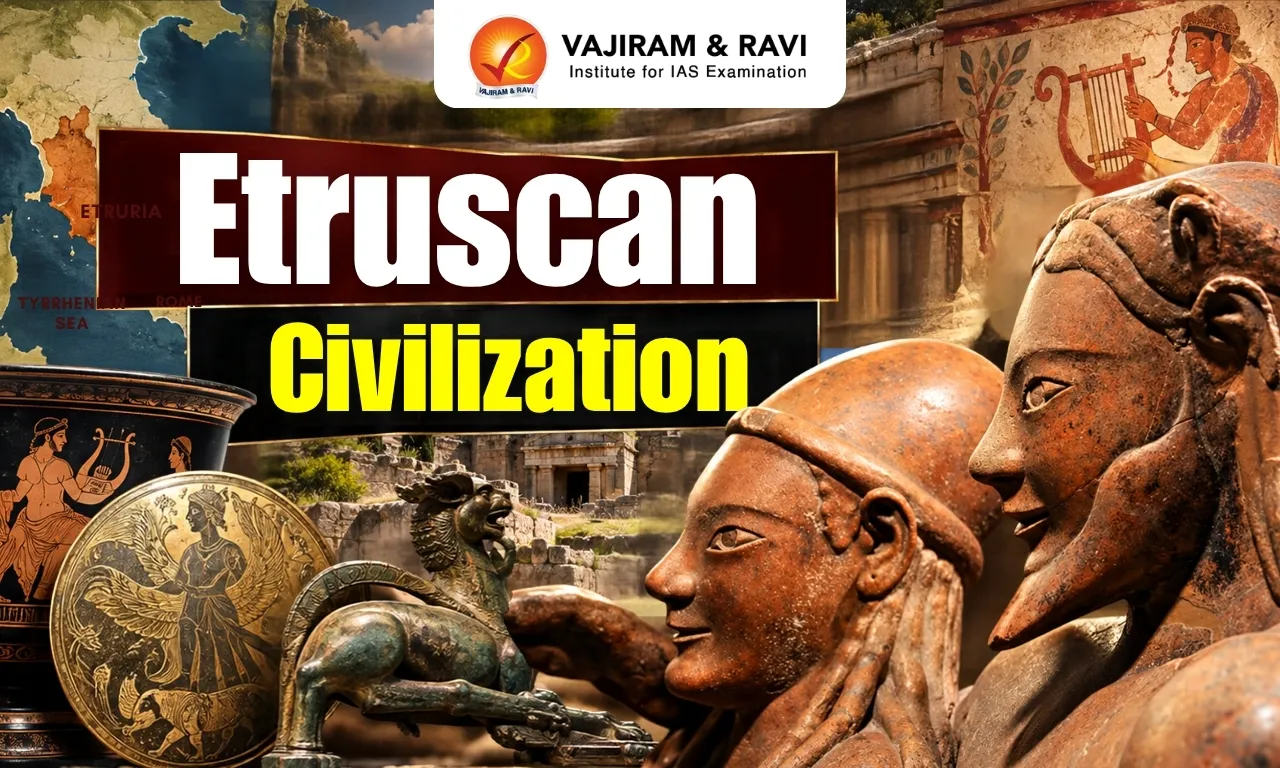
  • Their country was called Tuscia, or Etruria, which was located in the central part of the Italian peninsula. 
  • Etruria was bounded on the west by the Tyrrhenian Sea, on the north by the Arno River, and on the east and south by the Tiber River.
  • They played a significant role in the cultural and political development of early Rome. 
  • They established a confederation of twelve city-states. 
  • One of the key features of Etruscan society was their system of government. 
    • The Etruscans were ruled by a series of kings, who were elected by the members of the aristocratic families. 
    • This system of government was highly decentralised, with each city-state having its own king and its own system of laws and governance. 
  • Etruscan society was marked by a high degree of leisure and luxury, evident in their art, elaborate burial practices, and the status of women, who experienced more equality compared to many contemporary cultures. 
  • The Etruscans were skilled traders and builders, known for their wealth derived from local metal deposits and fertile agricultural land. 
  • The Etruscans possessed the biggest iron reserves in the whole of the western Mediterranean.
  • They had a strong navy and dominated the seas on the western coast of Italy.
  • They developed advanced architectural techniques, including the use of the arch and vault.
  • Etruscans were the first in the Mediterranean region to construct a city on the basis of a grid plan. 
    • In this plan, most of the streets were laid in a north-south direction with a few streets crossing them from the east-west direction. 
  • Despite their many accomplishments, the Etruscan civilization began to decline in the 5th c. BC, as they were gradually absorbed into the expanding Roman Republic. 
  • The Romans were heavily influenced by Etruscan culture and adopted many of their traditions and practices, such as their system of government, their religious beliefs, and urban planning.

News: LS

Etruscan Civilization FAQs

Q1: What was the Etruscan Civilization?

Ans: The Etruscan Civilization was a pre-Roman Mediterranean civilization that flourished between the 8th and 3rd centuries BCE.

Q2: Who were the Etruscans?

Ans: The Etruscans, also known as the Tyrrhenians, were a pre-Roman people who inhabited the region that is now Italy.

Q3: What was the country of the Etruscans called?

Ans: Their country was called Tuscia or Etruria.

Q4: How was the Etruscan system of government organised?

Ans: The Etruscans were ruled by kings who were elected by members of aristocratic families.

Q5: What was significant about Etruscan urban planning?

Ans: The Etruscans were among the first Mediterranean peoples to construct cities based on a grid plan.

National Commission for Allied and Healthcare Professions

National Commission for Allied and Healthcare Professions

National Commission for Allied and Healthcare Professions Latest News

Recently, the National Commission for Allied and Healthcare Professions (NCAHP) notified the Registration of Allied and Healthcare Professionals Regulations, 2026. 

About National Commission for Allied and Healthcare Professions

  • It is a statutory body established under the NCAHP Act 2021. 
  • It was established under the Ministry of Health and Family Welfare.
  • It aims to enhance the quality of healthcare services by ensuring that all practitioners in the allied health fields meet established national standards. 
  • It focuses on a broad range of professions which covers 57 Allied and Healthcare Professions categorized under 10 broad recognized categories.

Key Functions National Commission for Allied and Healthcare Professions 

  • Standardization: It provides a framework for the evaluation of educational institutions and training programs and ensures that practitioners are equipped with the necessary skills for high-quality patient care.
  • Registration and Accreditation: It oversees the registration, training, and accreditation of various allied healthcare practitioners. 
  • Continuous Professional Development:  It promotes continuous learning among allied healthcare professionals, encouraging them to update their skills in accordance with the latest advancements in the healthcare industry. 
  • Research and Development: It engages in research and development and adoption of latest scientific advancement and connected matters.

Source: TH

National Commission for Allied and Healthcare Professions FAQs

Q1: What is National Commission for Allied and Healthcare Professions?

Ans: It is a statutory body established under the NCAHP Act 2021. 

Q2: What is the aim of National Commission for Allied and Healthcare Professions?

Ans: It aims to enhance the quality of healthcare services by ensuring that all practitioners in the allied health fields meet established national standards. 

Tokay Gecko

Tokay Gecko

Tokay Gecko Latest News

Recently, the Directorate of Revenue Intelligence intercepted two persons at Bandar Chalia Gaon Ground, Mariani, Assam and seized 86 live Tokay Geckos from them.

About Tokay Gecko

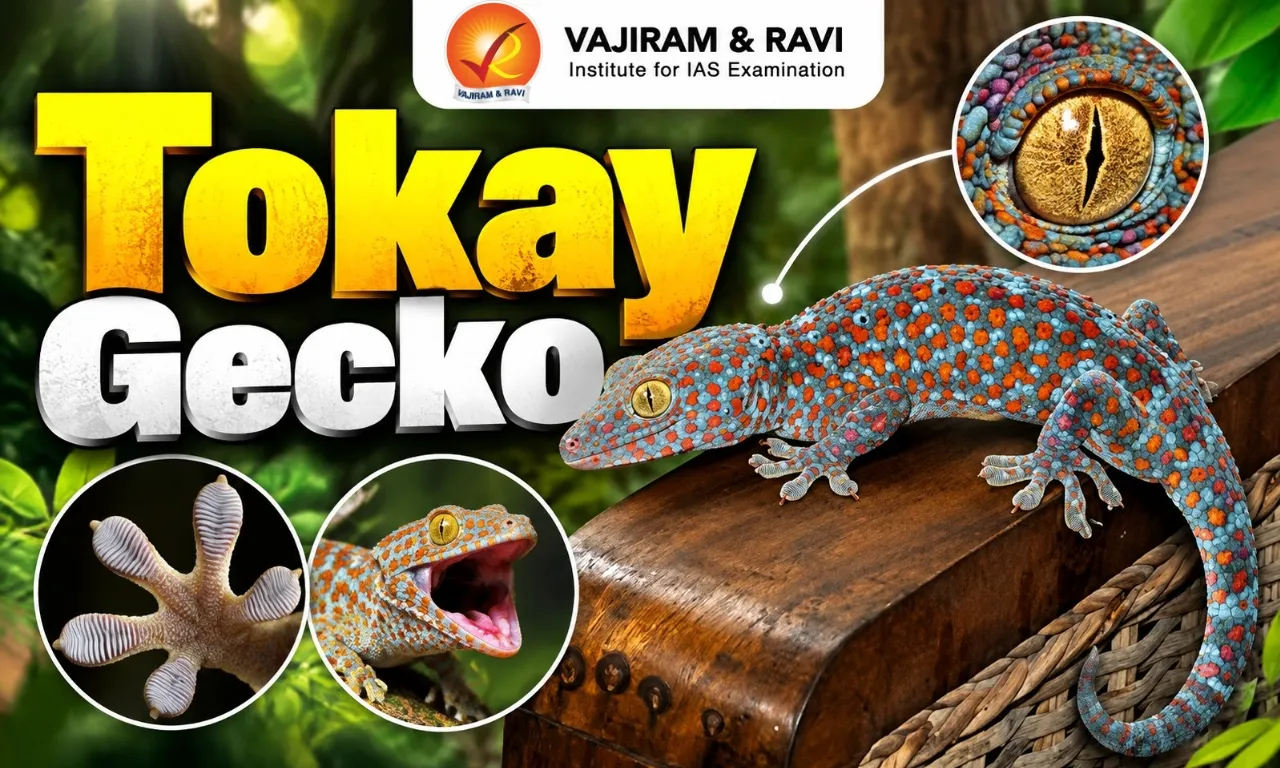
  • The tokay gecko or gekko gecko is an arboreal lizard species.
  • It is one of the largest gecko species.
  • There are two variants of tokay geckos: a red-spotted and a black-spotted.
  • Appearance: Its body is bluish-grey with bright orange, red, or yellow spots.
  • Habitat: They live in tropical rainforests, rock crevices or manmade environments with a variety of microhabitats. 
  • Distribution:  They are found across southeast and east Asia.

Characteristics of Tokay Gecko

  • Males are highly territorial and will defend their chosen area against other geckos and intruders.
  • They are solitary, nocturnal hunters and are more likely to sit and wait for prey than to actively forage.
  • They use their nostrils and tongues together to capture scent particles and transfer them to the Jacobson's organ, allowing them to effectively "taste" the air.
  • The tokay gecko can cast off its tail in defense, breaking it off at several sections.
  • Communication: This species communicates vocally, using calls to find members of the opposite sex during the breeding season and as a means of defense. 
  • Diet: They are carnivores (insectivores) that feed mainly on insects and small vertebrates. 

Conservation Status of Tokay Gecko

Source: PIB

Tokay Gecko FAQs

Q1: What is Tokay Gecko?

Ans: The tokay gecko or gekko gecko is an arboreal lizard species.

Q2: Where do we find Tokay Gecko?

Ans: They live in tropical rainforests, rock crevices or manmade environments with a variety of microhabitats. 

Technology Development Fund Scheme

Technology Development Fund Scheme

Technology Development Fund Scheme Latest News

Recently, the Defence Research and Development Organisation has signed the “first high-value deep tech project agreement” with a start-up, collaborating for indigenous development of a dilution refrigerator under the Technology Development Fund (TDF) scheme. 

About Technology Development Fund Scheme

  • It has been established to promote self-reliance in Defence Technology as a part of the ‘Make in India’ initiative.
  • Objective: It encourages the participation of public/private industries, especially MSMEs and startups, so as to create an ecosystem for enhancing cutting-edge technology capability in the defence sector.
  • Project Duration: The maximum development period will be four (4) years.
  • Nodal Ministry: Ministry of Defence.
  • It is executed by DRDO to promote self-reliance in cutting-edge defence and aerospace technologies.
  • Funding Support
    • The project cost of up to INR 50 crore will be considered for funding.
    • The funding may be up to 90% of the total project cost.

Eligibility Criteria of Technology Development Fund Scheme

  • Entity Type 
    • A public limited company, a private limited company, a partnership firm, a limited liability partnership, a one-person company, or a sole proprietorship registered as per applicable Indian laws registered in India especially MSMEs and Startups.
    • The industry must be owned and controlled by a resident Indian citizen.
    • An entity with excess of 49 percent foreign investment is not eligible.
  • Start up
    • Startups must be recognized by the Department for Promotion of Industry and Internal Trade (DPIIT) as per Government of India (GOI) guidelines.
    • Startups incorporated for less than three years from date of submission of application will be considered as nascent startups.
    • A nascent Startup should be incubated at one of the Central/State government assisted incubators.
    • Startups should not have received any grants/grants-in-aid by any government scheme for a similar technology.
    • The startup must be owned and controlled by a Resident Indian citizen with a shareholding of at least 51%.

Source: PIB

Technology Development Fund Scheme FAQs

Q1: What is Technology Development Fund Scheme?

Ans: It has been established to promote self-reliance in Defence Technology as a part of the ‘Make in India’ initiative.

Q2: Which organisation is executing the Technology Development Fund Scheme?

Ans: Defence Research and Development Organisation

Exercise Varuna

Exercise Varuna 2025

Exercise Varuna Latest News

Recently, INS Trishul reached Toulon, France to participate in the exercise ‘VARUNA’.

About Exercise Varuna

  • It is the bilateral maritime exercise conducted between the Indian Navy and the French Navy.
  • This year it is the 24th edition of exercise Varuna.
  • Phases: It will witness professional engagements in harbour and at sea, including cross-deck visits, operational interactions and sporting engagements.
  • These engagements will provide opportunities for both Navies to share experiences and Best Practices, enhance interoperability and foster greater mutual understanding.
  • Other India-France Military Exercises
    • FRINJEX: Army Joint Exercise.
    • GARUDA: Air Force Exercise.

Key Facts about INS Trishul

  • It is a front-line Talwar-class guided missile frigate of the Indian Navy,
  • It joined the arsenal of the Indian Navy in 2003.
  • It is equipped for multi-dimensional maritime operations.
  • Capacity: It has a carrying capacity of 3,700-tonne.
  • Speed: It has a top speed in excess of 30 knots and an endurance of 30 days at sea.
  • Armaments
    • Trishul became the second Indian warship to incorporate an eight cell KBSM 3S-14NE Vertical Launcher.
    • It was the first to upload the new Indian/Russian designed missile, the supersonic BrahMos PJ-10 AShCM (anti-sub/ship/surface cruise missile).

Source: PIB

Exercise Varuna FAQs

Q1: What is Exercise Varuna?

Ans: It is the bilateral maritime exercise conducted between the Indian Navy and the French Navy.

Q2: What is the significance of Exercise Varuna?

Ans: It enhance interoperability and foster greater mutual understanding.

Enquire Now