What’s in today’s article?
- Why in news?
- Committees of Parliament
- What are the different committees of the parliament?
- What is the significance of the Parliamentary committees?
- What are the various types of Committees of Parliament?
- News Summary: Vice-President Appoints Personal Staff Members to Standing Panels
- Why these appointments are criticised by the opposition?
Why in News?
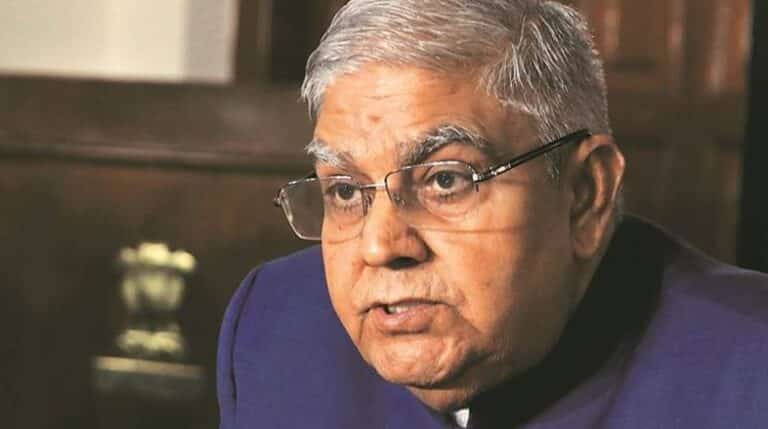
- Rajya Sabha chairperson Jagdeep Dhankhar has appointed at least eight of his personal staff to various house committees under the Upper House.
What are the different committees of the parliament?
- A Parliamentary Committee is a panel of MPs that is appointed or elected by the House or nominated by the Speaker.
- It works under the direction of the Speaker and presents its report to the House or to the Speaker.
- Parliamentary Committees have their origins in the British Parliament. They draw their authority from:
- Article 105, which deals with the privileges of MPs, and
- Article 118, which gives Parliament authority to make rules to regulate its procedure and conduct of business.
- Reports of Departmentally Related Standing Committees are recommendatory in nature.
- They are not binding on the government, but they do carry significant weight.





What is the significance of the Parliamentary committees?
- Limited time for discussion in Parliament
- The process of law-making is often complex, and Parliament has limited time for detailed discussions.
- Parliament has only around 100 sittings a year; Committee meetings are independent of Parliament’s calendar.
- MPs often do not get adequate time to put forward their views
- The time to speak on a Bill is allocated according to the size of the party in the House.
- Committees are small groups with relatively less demands on their time; hence, every MP gets a chance and the time to contribute to the discussion.
- Promotes real discussion
- Because the discussions are confidential and off-camera, party affiliations usually do not come in the way of MPs speaking their minds.
- Facilitates inter-ministerial coordination
- The Committees work closely with multiple Ministries, and facilitate inter-ministerial coordination.
- Bills that are referred to Committees often return to the House with significant value-addition.
What are the various types of Committees of Parliament?
- Parliamentary Committees can be classified into:
- Financial Committees
- It includes the Estimates Committee, Public Accounts Committee, and the Committee on Public Undertakings.
- Departmentally Related Standing Committees
- Seventeen Departmentally Related Standing Committees came into being in 1993 to examine budgetary proposals and crucial government policies.
- The aim was to increase Parliamentary scrutiny, and to give members more time and a wider role in examining important legislation.
- The number of Committees was subsequently increased to 24 (16 Committees for Lok Sabha and eight for Rajya Sabha).
- Each of these Committees has 31 members — 21 from Lok Sabha and 10 from Rajya Sabha.
- Every Committee has members from both Houses.
- Lok Sabha and Rajya Sabha panels are headed by members of these respective Houses.
- Ad hoc Committees
- Ad hoc Committees are appointed for a specific purpose.
- They cease to exist after they have completed the task assigned to them, and have submitted a report to the House.
- The principal Ad hoc Committees are the Select and Joint Committees on Bills.
- Committees like the Railway Convention Committee, Committee on Food Management and Security in Parliament House Complex, etc. also come under the category of Ad hoc Committees.
- JPC/Select committees
- Parliament can also constitute a Joint Parliamentary Committee (JPC) with a special purpose, with members from both Houses, for detailed scrutiny of a subject or Bill.
- Also, either of the two Houses can set up a Select Committee with members from that House.
- JPCs and Select Committees are usually chaired by ruling party MPs, and are disbanded after they have submitted their report.
- Financial Committees
News Summary: Vice-President Appoints Personal Staff Members to Standing Panels
- Vice-President Jagdeep Dhankar’s has appointed eight of his personal staff members to 12 parliamentary standing committees and eight departmental standing committees under the Rajya Sabha.
Why these appointments are criticised by the opposition?
- Departure from the existing tradition
- There is no rule under which the Speaker or the Chairman can appoint their personal staff to assist the committees.
- Constitutional experts claim that the definition of Parliamentary committees is very clear that they comprise only the members (MPs) and officers of the Lok Sabha or Rajya Sabha secretariat for assistance.
- Personal staff of the Speaker or the Chairman are not part of Parliamentary secretariats. So far, no such appointments have been made
- Centre’s interference
- The roles of these officials are to keep the Rajya Sabha Secretary General updated on the developments and deliberations of various committees.
Hence, many critics termed this move as an alleged attempt by the Centre to closely monitor parliamentary committees.
Q1) What is Public Account Committee (PAC)?
The Committee on Public Accounts is constituted by Parliament each year for examination of accounts showing the appropriation of sums granted by Parliament for expenditure of Government of India, the annual Finance Accounts of Government of India, and such other Accounts laid before Parliament as the Committee may deem fit, such as accounts of autonomous and semi-autonomous bodies (except those of Public Undertakings and Government Companies which come under the purview of the Committee on Public Undertakings).
Q2) What is Joint Parliamentary Committee (JPC)?
A Joint Parliamentary Committee (JPC) is an ad-hoc body. It is set up for a specific object and duration. Joint committees are set up by a motion passed in one house of Parliament and agreed to by the other. The details regarding membership and subjects are also decided by Parliament.
For example, the motion to constitute a JPC on the stock market scam (2001) and pesticide residues in soft drinks (2003) was moved by the government in the Lok Sabha.
Source: Vice President Dhankar Appoints Personal Staff On Rajya Sabha Panels In A Bizarre Move | Indian Express |NDTV

 Last updated on March, 2026
→ UPSC Final Result 2025 is now out.
→ UPSC has released UPSC Toppers List 2025 with the Civil Services final result on its official website.
→ Anuj Agnihotri secured AIR 1 in the UPSC Civil Services Examination 2025.
→ UPSC Marksheet 2025 is now out.
→ UPSC Notification 2026 & UPSC IFoS Notification 2026 is now out on the official website at upsconline.nic.in.
→ UPSC Calendar 2026 has been released.
→ Check out the latest UPSC Syllabus 2026 here.
→ UPSC Prelims 2026 will be conducted on 24th May, 2026 & UPSC Mains 2026 will be conducted on 21st August 2026.
→ The UPSC Selection Process is of 3 stages-Prelims, Mains and Interview.
→ Prepare effectively with Vajiram & Ravi’s UPSC Prelims Test Series 2026 featuring full-length mock tests, detailed solutions, and performance analysis.
→ Enroll in Vajiram & Ravi’s UPSC Mains Test Series 2026 for structured answer writing practice, expert evaluation, and exam-oriented feedback.
→ Join Vajiram & Ravi’s Best UPSC Mentorship Program for personalized guidance, strategy planning, and one-to-one support from experienced mentors.
→ Shakti Dubey secures AIR 1 in UPSC CSE Exam 2024.
→ Also check Best UPSC Coaching in India