About Non-Fungible Tokens (NFTs):
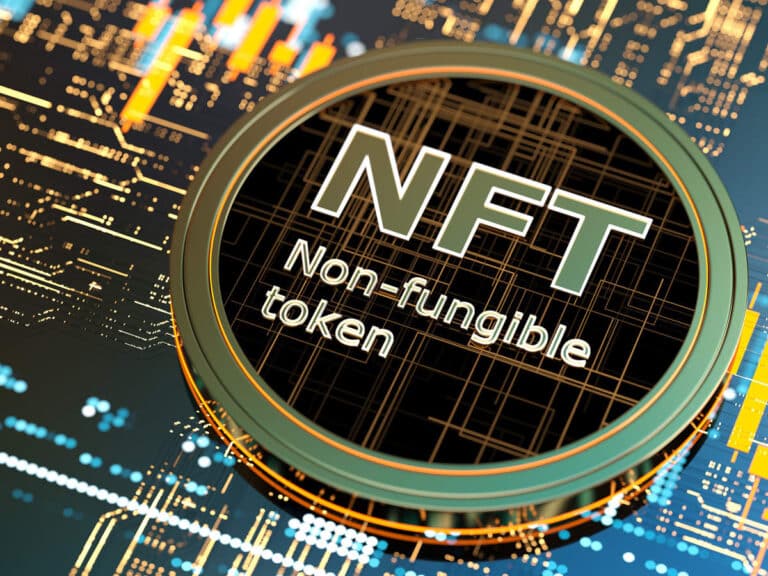
- NFTs are unique cryptographic tokens that exist on a blockchain and cannot be replicated.
- They can represent digital or real-world items like artwork, photograph, song, video, real estate, individuals’ identities, property rights, and more.
- Thus, NFTs are assets that have been tokenized via a blockchain. They are assigned unique identification codes and metadata that distinguish them from other tokens.
- The term ‘non-fungible’ simply means that each token is different as opposed to a fungible currency such as money (a ten-rupee note can be exchanged for another and so on).
- NFTs can be traded and exchanged for money, cryptocurrencies, or other NFTs—it all depends on the value the market and owners have placed on them.
- NFT transactions are recorded on blockchains, which is a digital public ledger, with most NFTs being a part of the Ethereum blockchain.
- NFTs became popular in 2021, when they were beginning to be seen by artists as a convenient way to monetise their work.
What is Blockchain Technology?
- A blockchain is essentially a digital ledger of transactions that is duplicated and distributed across the entire network of computer systems on the blockchain.
- Each block in the chain contains a number of transactions, and every time a new transaction occurs on the blockchain, a record of that transaction is added to every participant’s ledger.
- Decentralized blockchains are immutable, which means that the data entered is irreversible.
- This means if one block in one chain was changed, it would be immediately apparent it had been tampered with.
Q1) What are Cryptocurrencies?
A cryptocurrency is a digital or virtual currency secured by cryptography, which makes it nearly impossible to counterfeit or double-spend. Many cryptocurrencies are decentralized networks based on blockchain technology—a distributed ledger enforced by a disparate network of computers. A defining feature of cryptocurrencies is that they are generally not issued by any central authority, rendering them theoretically immune to government interference or manipulation.
Source: Google unveils NFT policy for Play Store to incorporate tokens into games






 Last updated on March, 2026
→ UPSC Final Result 2025 is now out.
→ UPSC has released UPSC Toppers List 2025 with the Civil Services final result on its official website.
→ Anuj Agnihotri secured AIR 1 in the UPSC Civil Services Examination 2025.
→ UPSC Marksheet 2025 is now out.
→ UPSC Notification 2026 & UPSC IFoS Notification 2026 is now out on the official website at upsconline.nic.in.
→ UPSC Calendar 2026 has been released.
→ Check out the latest UPSC Syllabus 2026 here.
→ UPSC Prelims 2026 will be conducted on 24th May, 2026 & UPSC Mains 2026 will be conducted on 21st August 2026.
→ The UPSC Selection Process is of 3 stages-Prelims, Mains and Interview.
→ Prepare effectively with Vajiram & Ravi’s UPSC Prelims Test Series 2026 featuring full-length mock tests, detailed solutions, and performance analysis.
→ Enroll in Vajiram & Ravi’s UPSC Mains Test Series 2026 for structured answer writing practice, expert evaluation, and exam-oriented feedback.
→ Join Vajiram & Ravi’s Best UPSC Mentorship Program for personalized guidance, strategy planning, and one-to-one support from experienced mentors.
→ Shakti Dubey secures AIR 1 in UPSC CSE Exam 2024.
→ Also check Best UPSC Coaching in India