What’s in today’s article?
- Background
- Unique Urbanisation Pathway in India
- Primary Challenges of Indian Urbanisation
- Environmental Challenges and Climate Impact
- Social Inequality & Segregation
- Governance & Decentralisation Issues
- Conclusion
Background
- With October 31 recognized globally as World Cities Day, this year’s theme is “Youth Climate Changemakers: Catalysing Local Action for Urban Sustainability,”.
- It aims to bring attention to the pressing issues affecting urban centres worldwide, particularly in India.
- With over 40% of India’s population residing in urban areas across approximately 9,000 towns, Indian cities face unique challenges exacerbated by rapid urbanization, socio-economic inequalities, and climate threats.


Unique Urbanisation Pathway in India
- Unlike Western nations, where urbanization followed industrialization and economic growth, India’s urban expansion is primarily “poverty-driven.”
- Economic distress pushes rural populations to urban areas, often without adequate infrastructure or employment opportunities.
- Migration patterns highlight infrastructure gaps.
- During the COVID-19 pandemic, reverse migration underscored the lack of essential services for urban residents and strained rural areas unprepared for the returning population.
Primary Challenges of Indian Urbanisation
- Outdated Spatial Planning:
- India’s urban planning often lags behind current needs, with many plans focusing on capital growth rather than human-centric development.
- Outmoded spatial plans fail to account for rising populations and housing demands.
- Deindustrialization and Employment:
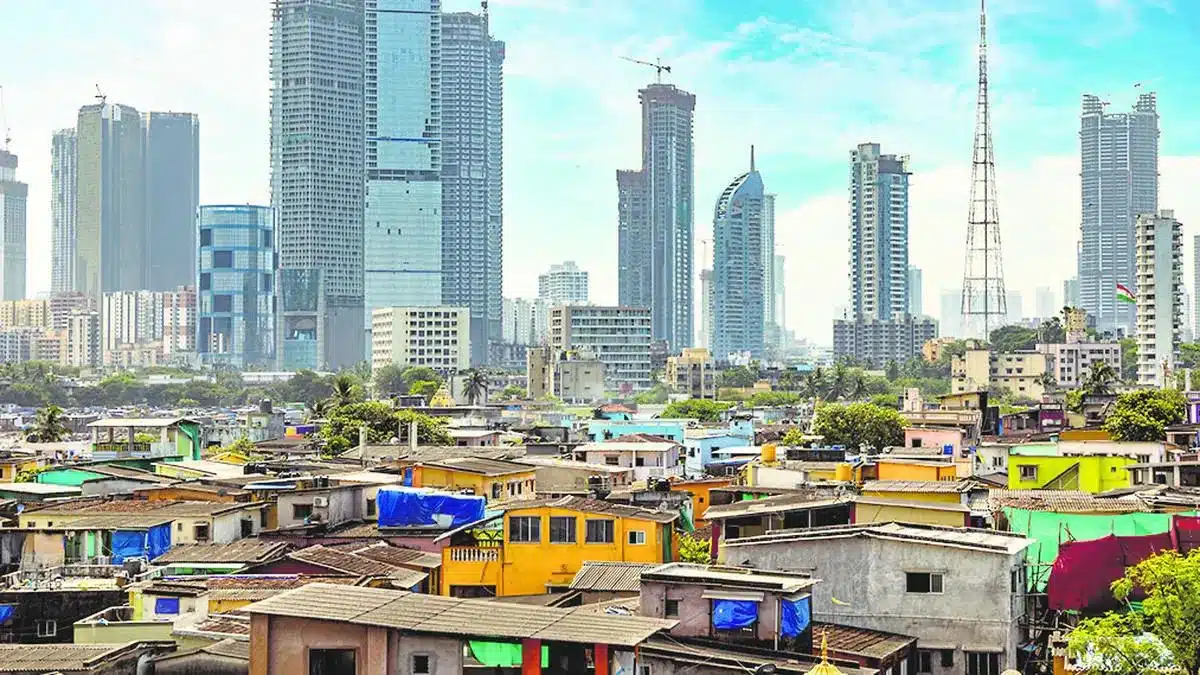
- Post-1980s deindustrialization in cities like Ahmedabad, Delhi, and Mumbai led to significant job losses, pushing displaced workers into peri-urban slums where nearly 40% of India’s urban population now resides.
- Employment remains mostly informal, with 90% of jobs lacking job security and adequate working conditions.
Environmental Challenges and Climate Impact
- Climate Vulnerabilities:
- Indian cities, particularly in the National Capital Region (NCR), experience severe air pollution, urban flooding, and the “urban heat island” effect.
- Among India’s ten most polluted cities, eight are located in the NCR, leading to substantial health risks and decreased quality of life.
- Urban Flooding and Extreme Heat:
- The increase in impervious surfaces and poor drainage systems make Indian cities prone to urban flooding.
- The dense construction exacerbates heat levels, significantly impacting public health and productivity.
Social Inequality & Segregation
- Growing Inequality:
- Cities are witnessing widening socio-economic disparities, with luxury housing projects such as DLF’s “The Dahlias” in Gurugram offering apartments starting at ₹100 crore, contrasting with millions living without basic shelter.
- Community Segregation:
- Contrary to the notion that cities dilute social and religious differences, urban areas in India are becoming increasingly segregated along these lines, leading to community isolation and tensions.
Governance & Decentralisation Issues
- Limited Local Authority:
- Despite the 74th Constitutional Amendment aiming for decentralized urban governance, most Indian cities lack control over urban planning and essential functions.
- Only a few cities have implemented more than three of the 18 mandated functions outlined in the 12th Schedule.
- Funding Constraints:
- Urban areas receive minimal financial support from intergovernmental transfers, with cities allocated only 0.5% of the GDP, limiting their capacity for sustainable development and infrastructure improvements.
Conclusion
- Indian cities face complex, interwoven challenges requiring coordinated national interventions and empowered local governance to create inclusive, resilient, and sustainable urban environments.
- Comprehensive solutions involving updated spatial planning, adequate resource allocation, and localized climate action are crucial to addressing these issues and ensuring a more equitable future for India’s urban population.
Q1. What is an Urban Heat Island?
An urban heat island (UHI) is a city or urban area that experiences higher temperatures than the surrounding rural areas.
Q2. What is an Urban Sprawl?
Urban sprawl is defined as “the spreading of urban developments on undeveloped land near a more or less densely populated city”.
News: What are the major challenges faced by Indian cities? | Explained

 Last updated on Oct, 2026
→ UPSC 2027 Notification will be released on 13 January 2027 at upsconline.nic.in.
→ Check Nobel Prize 2026 Winners List here.
→ Download PIB PRiSM Monthly Magazine 2026 here.
→ Check UPSC Monthly Current Affairs Magazine The Recitals here.
→ Check out the latest UPSC Syllabus here.
→ Download UPSC Model Answers for Mains 2026
→ UPSC Mains Question Paper 2026 is out now for Essay & GS Paper 1, 2, 3 & 4.
→ UPSC Calendar 2027 has been released.
→ Enroll in Vajiram & Ravi’s UPSC Mains Test Series 2027 for structured answer writing practice, expert evaluation, and exam-oriented feedback.
→ Join Vajiram & Ravi’s UPSC Mentorship Program 2027 for personalized guidance, strategy planning, and one-to-one support from experienced mentors.
→ Go through the UPSC Mains Previous Year Papers to enhance your preparation.
→ UPSC has released UPSC Toppers List 2025 with the Civil Services final result on its official website.
→ Also check Best UPSC Coaching in India