About Mitochondrial coxiella effector F (MceF):
- It is a bacterial protein capable of keeping human cells healthy even when the cells have a heavy bacterial burden.
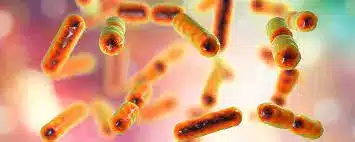
- It is produced by Coxiella burnetii, a Gram-negative intracellular bacterium.
- After invading host cells, Coxiella burnetii releases MceF into cells.
- MceF interacts with glutathione peroxidase 4 (GPX4), an anti-oxidant enzyme located in the mitochondria, to improve mitochondrial function by promoting an anti-oxidizing effect that averts cell damage and death, which may occur when pathogens replicate inside mammalian cells.
Key Facts about Coxiella burnetii:
- It is a Gram-negative intracellular bacterium.
- It is the causative agent of a serious infection called Q fever, a zoonotic disease that can affect humans and animals.
- The bacterium is primarily transmitted to humans through the inhalation of contaminated aerosols from infected animals, particularly through the air-borne particles from placental tissues, urine, feces, and milk of infected domestic animals like cattle, sheep, and goats.
- It causes atypical pneumonia in humans and coxiellosis in some animals, such as cattle, sheep, and goats.
- It is highly adapted to invade and control macrophages and monocytes–white blood cells that are part of the organism’s front-line immune defense–inhibiting the host’s responses to the infection.
· Unlike other bacteria, which cause disease only when they multiply to reach large numbers, a single C. burnetii is enough to make a healthy person sick.
Q1: What is Mitochondria?
Mitochondria are membrane-bound cell organelles (mitochondrion, singular) that generate most of the chemical energy needed to power the cell’s biochemical reactions. Chemical energy produced by the mitochondria is stored in a small molecule called adenosine triphosphate (ATP). Mitochondria contain their own small chromosomes. Generally, mitochondria, and therefore mitochondrial DNA, are inherited only from the mother.
Source:Scientists Have Discovered a Previously Unknown Protein Capable of Keeping Human Cells Healthy






 Last updated on March, 2026
→ UPSC Final Result 2025 is now out.
→ UPSC has released UPSC Toppers List 2025 with the Civil Services final result on its official website.
→ Anuj Agnihotri secured AIR 1 in the UPSC Civil Services Examination 2025.
→ UPSC Marksheet 2025 is now out.
→ UPSC Notification 2026 & UPSC IFoS Notification 2026 is now out on the official website at upsconline.nic.in.
→ UPSC Calendar 2026 has been released.
→ Check out the latest UPSC Syllabus 2026 here.
→ UPSC Prelims 2026 will be conducted on 24th May, 2026 & UPSC Mains 2026 will be conducted on 21st August 2026.
→ The UPSC Selection Process is of 3 stages-Prelims, Mains and Interview.
→ Prepare effectively with Vajiram & Ravi’s UPSC Prelims Test Series 2026 featuring full-length mock tests, detailed solutions, and performance analysis.
→ Enroll in Vajiram & Ravi’s UPSC Mains Test Series 2026 for structured answer writing practice, expert evaluation, and exam-oriented feedback.
→ Join Vajiram & Ravi’s Best UPSC Mentorship Program for personalized guidance, strategy planning, and one-to-one support from experienced mentors.
→ Shakti Dubey secures AIR 1 in UPSC CSE Exam 2024.
→ Also check Best UPSC Coaching in India