About Nagoya Protocol:
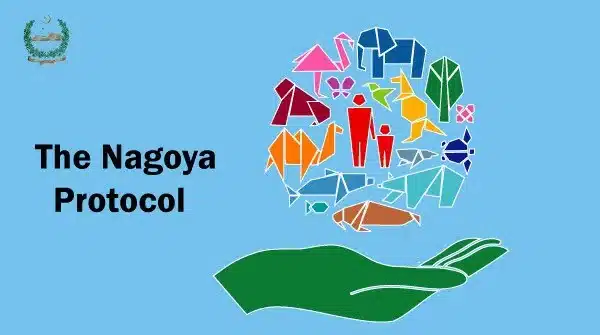
- The Nagoya Protocol on Access to Genetic Resources and the Fair and Equitable Sharing of Benefits Arising from their Utilization (the Protocol) is a legally binding global agreement that implements the access and benefit-sharing obligations of the Convention on Biological Diversity (CBD).
- It was adopted by the CBD in Nagoya, Japan, in October 2010 and entered into force on October 12, 2014, 90 days after the deposit of the fiftieth instrument of ratification.
- It provides a transparent legal framework for the effective implementation of one of the three objectives of the CBD: the fair and equitable sharing of benefits arising out of the utilization of genetic resources.
What are the benefits?
- It establishes a framework that helps researchers access genetic resources for biotechnology research, development, and other activities, in return for a fair share of any benefits from their use.
- This provides the research and development sector with the certainty they need to invest in biodiversity-based research.
- Indigenous and local communities may receive benefits through a legal framework that respects the value of traditional knowledge associated with genetic resources.
What does the Nagoya Protocol cover?
- It applies to genetic resources that are covered by the CBD, and to the benefits arising from their utilization.
- It also covers traditional knowledge (TK) associated with genetic resources that are covered by the CBD and the benefits arising from their utilization.
Key Facts about Convention on Biological Diversity (CBD):
- CBD, with currently 196 contracting parties, is the most comprehensive binding international agreementin the field of nature conservation and the sustainable use of natural resources.
- It was opened for signing at the UN Conference on Environment and Development in Rio de Janeiro in 1992.
It has three overarching objectives:
- The conservation of biological diversity (genetic diversity, species diversity, and habitat diversity).
- The sustainable use of biological diversity.
- The fair and equitable sharing of the benefits arising out of the utilisation of genetic resources.
- It covers biodiversity at all levels: ecosystems, species, and genetic resources.
- The Conference of the Parties (COP) isthe highest political decision-making body of the Convention.
- The Secretariat is based in Montreal, Canada.
- To support implementation of the CBD objectives, two internationally binding agreements were adopted within the framework of the Convention on Biological Diversity.
- The Cartagena Protocol, which was adopted in 2000 and entered into force in 2003, regulates the transboundary movement of living modified organisms (LMOs).
- The Nagoya Protocol, adopted in 2010, establishes a legally binding framework for access to genetic resources and the fair and equitable sharing of the benefits arising from their use.
Q1: What are living modified organisms (LMOs)?
“Living modified organism” means any living organism that possesses a novel combination of genetic material obtained through the use of modern biotechnology. LMOs are also commonly referred to as genetically modified organisms (GMOs).
Source:Cameroon adopts Nagoya Protocol to benefit from its rich biodiversity





 Last updated on March, 2026
→ UPSC Final Result 2025 is now out.
→ UPSC has released UPSC Toppers List 2025 with the Civil Services final result on its official website.
→ Anuj Agnihotri secured AIR 1 in the UPSC Civil Services Examination 2025.
→ UPSC Marksheet 2025 is now out.
→ UPSC Notification 2026 & UPSC IFoS Notification 2026 is now out on the official website at upsconline.nic.in.
→ UPSC Calendar 2026 has been released.
→ Check out the latest UPSC Syllabus 2026 here.
→ UPSC Prelims 2026 will be conducted on 24th May, 2026 & UPSC Mains 2026 will be conducted on 21st August 2026.
→ The UPSC Selection Process is of 3 stages-Prelims, Mains and Interview.
→ Prepare effectively with Vajiram & Ravi’s UPSC Prelims Test Series 2026 featuring full-length mock tests, detailed solutions, and performance analysis.
→ Enroll in Vajiram & Ravi’s UPSC Mains Test Series 2026 for structured answer writing practice, expert evaluation, and exam-oriented feedback.
→ Join Vajiram & Ravi’s Best UPSC Mentorship Program for personalized guidance, strategy planning, and one-to-one support from experienced mentors.
→ Shakti Dubey secures AIR 1 in UPSC CSE Exam 2024.
→ Also check Best UPSC Coaching in India