About:
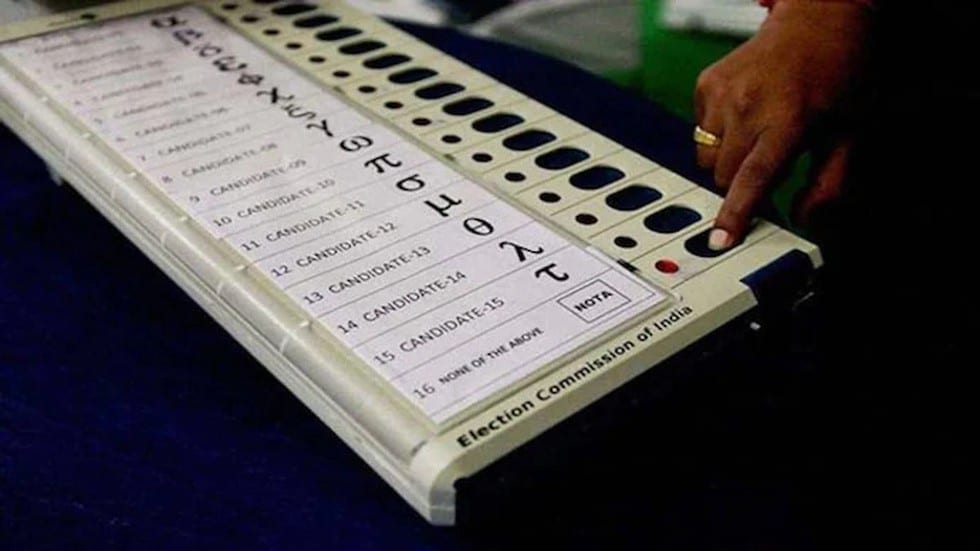
What is Remote Electronic Voting Machine?
- The new RVM prototype will enable a voter, who is listed in constituencies, to exercise voting rights from a single machine.
- The multi-constituency remote EVM, developed by a public sector undertaking, can handle up to 72 constituencies from a single remote polling booth.
- Migrant voters would not need to travel to their home districts to exercise their franchise if the remote electronic voting machine is implemented properly.
- The remote e-voting machine will be a standalone device which doesn’t need connectivity to operate.
- The Representation of the People Act, The Conduct of Election Rules and The Registration of Electors Rules will need to be amended to introduce remote voting.
How does it work?
- The RVMs will have the same security system and voting experience as the EVM, with the modification of an electronic ballot display with candidates and symbols instead of a fixed ballot paper sheet.
- When the voter scans his/her constituency card in the presence of the Presiding Officer at the station, their respective constituency and candidate list will appear on the RVM display.
- As for counting the votes, the electronic system will also count and store the votes for each candidate in a constituency.
Need:
- As per the 2011 census, 45.36 crore Indians (37% of the population) were internal migrants, settled in a place different from that of their registered residence.
- While 67.4% of the eligible 91.2 crore Indians voted in the 2019 Lok Sabha election, about one-third or close to 30 crore voters did not cast their vote.
- Inability to vote due to internal migration (domestic migrants) is one of the prominent reasons to be addressed to improve voter turnout and ensure participative elections.
Q1) What is an electronic voting machine (EVM)?
EVM is a microcontroller-based instrument designed to modernise the election procedure and there is no scope for invalid votes total secrecy of voting data is maintained and it also facilitates quick and accurate counting.
Source: Explained | Will migrants be able to vote remotely?


 Last updated on Oct, 2026
→ UPSC 2027 Notification will be released on 13 January 2027 at upsconline.nic.in.
→ Check Nobel Prize 2026 Winners List here.
→ Download PIB PRiSM Monthly Magazine 2026 here.
→ Check UPSC Monthly Current Affairs Magazine The Recitals here.
→ Check out the latest UPSC Syllabus here.
→ Download UPSC Model Answers for Mains 2026
→ UPSC Mains Question Paper 2026 is out now for Essay & GS Paper 1, 2, 3 & 4.
→ UPSC Calendar 2027 has been released.
→ Enroll in Vajiram & Ravi’s UPSC Mains Test Series 2027 for structured answer writing practice, expert evaluation, and exam-oriented feedback.
→ Join Vajiram & Ravi’s UPSC Mentorship Program 2027 for personalized guidance, strategy planning, and one-to-one support from experienced mentors.
→ Go through the UPSC Mains Previous Year Papers to enhance your preparation.
→ UPSC has released UPSC Toppers List 2025 with the Civil Services final result on its official website.
→ Also check Best UPSC Coaching in India