About Black Carbon Aerosols:
- Black carbon aerosols are produced by the incomplete combustion of fossil fuels and biomass, and are characterised by strong light absorption.
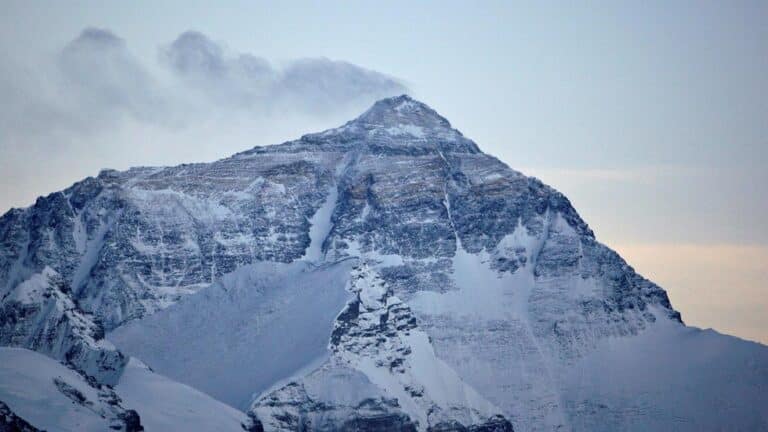
- The South Asia region adjacent to the Tibetan Plateau has among the highest levels of black carbon emission in the world.
- Many studies have emphasised black carbon aerosols from South Asia can be transported across the Himalayas to the inland region of the Tibetan Plateau.
- Black carbon deposition in snow reduces the albedo of surfaces — a measure of how much of Sun’s radiations are reflected — which may accelerate the melting of glaciers and snow cover, thus changing the hydrological process and water resources in the region.
- Black carbon aerosols in South Asia heat up the middle and upper atmosphere, thus increasing the North–South temperature gradient.
- Accordingly, the convective activity in South Asia is enhanced, which causes convergence of water vapour in South Asia. Meanwhile, black carbon also increases the number of cloud condensation nuclei in the atmosphere.
- These changes in meteorological conditions caused by black carbon aerosols make more water vapour form precipitation in South Asia, and the northward transport to the Tibetan Plateau was weakened.
- As a result, precipitation in the central and the southern Tibetan Plateau decreases during the monsoon, especially in the southern Tibetan Plateau.
- The decrease in precipitation further leads to a decrease of mass gain of glaciers.
- From 2007 to 2016, the reduced mass gain by precipitation decrease accounted for 11% of the average glacier mass loss on the Tibetan Plateau and 22.1% in the Himalaya.
Q1) What is the significance of the Tibetan plateau to india?
Tibetan plateau helps in initiation of Indian Monsoon. Heating of the plateau creates a low pressure in summer which gets coupled with Massacarene High pressure area and thus helps India to get enough rain.
Source: South Asian black carbon aerosols increase glacial mass loss over Tibetan plateau: Study






 Last updated on March, 2026
→ UPSC Final Result 2025 is now out.
→ UPSC has released UPSC Toppers List 2025 with the Civil Services final result on its official website.
→ Anuj Agnihotri secured AIR 1 in the UPSC Civil Services Examination 2025.
→ UPSC Marksheet 2025 is now out.
→ UPSC Notification 2026 & UPSC IFoS Notification 2026 is now out on the official website at upsconline.nic.in.
→ UPSC Calendar 2026 has been released.
→ Check out the latest UPSC Syllabus 2026 here.
→ UPSC Prelims 2026 will be conducted on 24th May, 2026 & UPSC Mains 2026 will be conducted on 21st August 2026.
→ The UPSC Selection Process is of 3 stages-Prelims, Mains and Interview.
→ Prepare effectively with Vajiram & Ravi’s UPSC Prelims Test Series 2026 featuring full-length mock tests, detailed solutions, and performance analysis.
→ Enroll in Vajiram & Ravi’s UPSC Mains Test Series 2026 for structured answer writing practice, expert evaluation, and exam-oriented feedback.
→ Join Vajiram & Ravi’s Best UPSC Mentorship Program for personalized guidance, strategy planning, and one-to-one support from experienced mentors.
→ Shakti Dubey secures AIR 1 in UPSC CSE Exam 2024.
→ Also check Best UPSC Coaching in India