What’s in today’s article?
- Why in News?
- What is the Twin Balance Sheet Problem?
- Twin Balance Sheet Problem in India
- Steps Taken by Government/RBI to Address the Issue of NPA and TBS
- News Summary
- How is Twin Balance Sheet an Advantage Right Now?
Why in News?
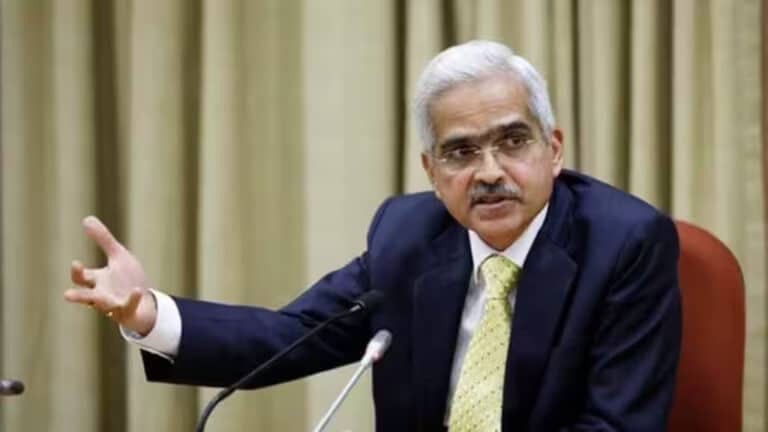
- In the Financial Stability Report released last month, the RBI Governor Shaktikanta Das talked about how India is on the cusp of a ‘twin balance sheet advantage for growth’.
What is the Twin Balance Sheet Problem?
- In order to understand the Twin Balance Sheet problem, you must be aware of a balance sheet.
- A balance sheet is a financial statement of an institution at any point, which shows the assets, liabilities, and stake holding of a company.
- The twin balance sheet problem in India deals with the balance sheets of Indian companies and Indian Banks.
- A twin balance sheet is a scenario where banks are under severe stress and the corporates are overleveraged to the extent that they cannot repay their loans.
- The Economic Survey of 2017-18 had put it in very simple terms.
- During a boom period and the economic growth is robust, corporates are encouraged to invest and expand aggressively.
- A twin balance sheet problem follows a standard path.
- Their companies expand during a boom, leaving them with obligations that they cannot repay.
- So, they default on their debts, leaving bank balance sheets impaired, as well.





Twin Balance Sheet Problem in India
- The occurrence of the Twin Balance Sheet (TBS) problem in India goes back to 2000 when the country’s economic growth was at its peak.
- With corporate profitability at its highest, India Inc launched massive projects worth lakhs of crores and were riding on huge amounts of debt, mostly financed by banks.
- By 2007-08, the investment to GDP ratio reached almost 38% and the amount of non-food bank credit doubled from 2004-05 to 2008-09.
- However, following the global financial crisis, growth and revenue projections fell and finance costs went up due to higher interest rates.
- This resulted in stress on the books of both corporates and banks. The RBI had to step in to control the damage to the economy.
Steps Taken by Government/RBI to Address the Issue of NPA and TBS
- In June 2015, the GOI launched the Strategic Debt Restructuring (SDR) scheme, which allows banks to take over the firms which are unable to repay their loan and sell them to new owners.
- Under the 5/25 Refinancing of Infrastructure Scheme, the GOI provided a larger window to the borrowers.
- Under this scheme, the amortization period was extended to 25 years in which the interest rates were adjusted for each consecutive 5 years.
- The GOI also took the help of the Scheme for Sustainable Structuring of Stressed Assets (S4A), under which a bank can hire an independent agency, which will decide on the sustainable debt of a company., while converting the unsustainable one into equity.
- The GOI also tried to recover the loan amount from Private Asset Reconstruction Companies (ARCs).
- In which NPAs of banks are acquired by ARCs and then they try to resolve them by using their asset resolution powers under SARFAESI Act.
- The RBI suggests banks, conduct Asset Quality Review (AQR), before issuing a loan amount to the borrower.
News Summary
- In the Financial Stability Report (FSR) released last month, the RBI Governor Shaktikanta Das talked about how India is on the cusp of a ‘twin balance sheet advantage for growth’.
- A few days later, finance minister Nirmala Sitharaman also mentioned it while predicting a robust economic growth.
How is Twin Balance Sheet an Advantage Right Now?
- The FSR says both banking and corporate sector balance sheets have strengthened.
- Banks have bolstered their capital base, with the capital to risk-weighted assets ratio and the common equity tier 1 capital ratio reaching historical highs of 17.1% and 13.9%, respectively, in March 2023.
- Banks have also improved their returns on assets and returns on equity.
- Moreover, the profit after tax of banks grew by 38.4% in 2022-23.
- The corporate balance sheet is said to be at its healthiest in 10 years.
- Most sectors have deleveraged their balance sheets by using profits and excess funds to repay debt.
- In fact, an RBI report states that the debt-to-equity ratio of private (non-financial) companies fell from ~55% to 35% between FY15 and FY23.
- All this means they are in a better position to expand business now.
Q1) What do you mean by NPA in Banking?
Non-Performing Assets (NPAs) are loans or advances issued by banks or financial institutions that no longer bring in money for the lender since the borrower has failed to make payments on the principal and interest of the loan for at least 90 days.
Q2) What is the basic difference between Repo Rate and Bank Rate?
Simply put, repo rate is the rate at which the RBI lends to commercial banks by purchasing securities while bank rate is the lending rate at which commercial banks can borrow from the RBI without providing any security.

 Last updated on March, 2026
→ UPSC Final Result 2025 is now out.
→ UPSC has released UPSC Toppers List 2025 with the Civil Services final result on its official website.
→ Anuj Agnihotri secured AIR 1 in the UPSC Civil Services Examination 2025.
→ UPSC Marksheet 2025 is now out.
→ UPSC Notification 2026 & UPSC IFoS Notification 2026 is now out on the official website at upsconline.nic.in.
→ UPSC Calendar 2026 has been released.
→ Check out the latest UPSC Syllabus 2026 here.
→ UPSC Prelims 2026 will be conducted on 24th May, 2026 & UPSC Mains 2026 will be conducted on 21st August 2026.
→ The UPSC Selection Process is of 3 stages-Prelims, Mains and Interview.
→ Prepare effectively with Vajiram & Ravi’s UPSC Prelims Test Series 2026 featuring full-length mock tests, detailed solutions, and performance analysis.
→ Enroll in Vajiram & Ravi’s UPSC Mains Test Series 2026 for structured answer writing practice, expert evaluation, and exam-oriented feedback.
→ Join Vajiram & Ravi’s Best UPSC Mentorship Program for personalized guidance, strategy planning, and one-to-one support from experienced mentors.
→ Shakti Dubey secures AIR 1 in UPSC CSE Exam 2024.
→ Also check Best UPSC Coaching in India