


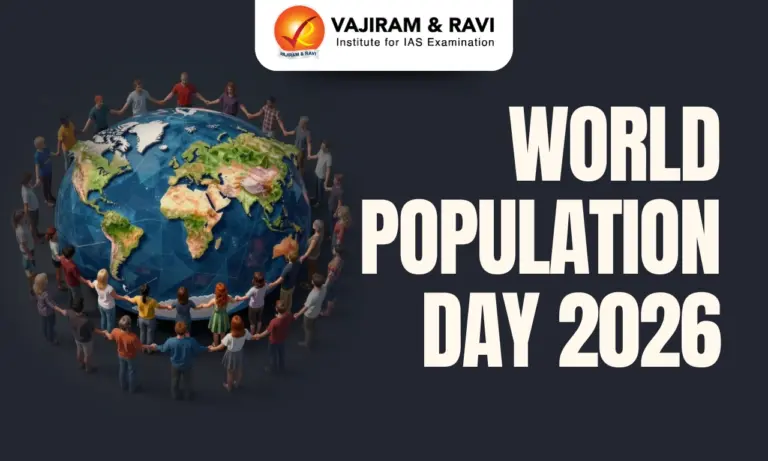
World Population Day 2026 will be observed on Saturday, July 11, 2026, to raise awareness about population-related issues, including reproductive health, gender equality, maternal healthcare, family planning, and sustainable development. The day also highlights the opportunities and challenges associated with a growing global population.
World Population Day 2026
World Population Day 2026 comes at a time when the world’s population is projected to exceed 8.3 billion, making population planning, education, healthcare, employment, and environmental sustainability more important than ever. Through World Population Day 2026, the United Nations (UN) and the United Nations Population Fund (UNFPA) encourage governments, organizations, and individuals to work together to ensure that every person, especially young people, has the opportunity to lead a healthy, dignified, and fulfilling life.
World Population Day 2026 Overview
World Population Day is observed annually on 11 July to spread awareness about global population challenges and promote sustainable, inclusive, and people-centered development through informed policy and public participation.
| Particular | Details |
|---|---|
| Event Name | World Population Day 2026 |
| Date | 11 July 2026 (Saturday) |
| Observed By | United Nations (UN), United Nations Population Fund (UNFPA), governments, NGOs, educational institutions, and civil society organizations |
| Origin | Inspired by the “Day of Five Billion” on 11 July 1987, when the world’s population reached approximately 5 billion. The United Nations established World Population Day in 1989. |
| First Observed | 11 July 1990 |
| Objective | To raise awareness about global population issues and their impact on sustainable development, reproductive health, gender equality, education, and resource management. |
| World Population Day 2026 Theme | “Realizing the hopes and aspirations of young people – today and for the future.” |
| Theme Selection | The annual theme is announced by the United Nations Population Fund (UNFPA) in coordination with the United Nations. |
| Significance | Encourages informed discussions on population growth, youth empowerment, family planning, maternal health, and achieving the Sustainable Development Goals (SDGs). |
| Key Focus Areas | Population dynamics, reproductive rights, women’s empowerment, youth development, healthcare access, education, and environmental sustainability. |


World Population Day 2026 Theme
The World Population Day 2026 Theme is “Realizing the hopes and aspirations of young people – today and for the future.” The theme highlights the importance of youth empowerment, reproductive rights, maternal health, education, and gender equality in building a sustainable future. It encourages governments and communities to invest in young people so they can achieve their goals and contribute to sustainable development.
History of World Population Day
The history of World Population Day began after the world’s population reached 5 billion on 11 July 1987, an event known as the “Day of Five Billion.” In response to growing concerns about population growth, the United Nations Development Programme (UNDP) established World Population Day in 1989, and it has been observed every year on 11 July since then.
- The milestone sparked global discussions on population growth and development.
- 1989: The United Nations Development Programme (UNDP) officially established World Population Day.
- The day has been observed annually on 11 July since 1989.
- It aims to raise awareness about population issues, reproductive health, and family planning.
- Today, UNFPA leads global campaigns highlighting population, youth, gender equality, and sustainable development.
World Population Day 2026 Objectives
World Population Day 2026 aims to raise awareness about population-related issues and promote sustainable development by ensuring better health, education, and equal opportunities for everyone.
- To raise awareness about global population challenges and their impact on society.
- To promote family planning and informed reproductive choices.
- To improve access to quality reproductive and maternal healthcare services.
- To empower young people to achieve their hopes and aspirations.
- To promote gender equality and protect the rights of women and girls.
- To encourage responsible parenthood and healthy family practices.
- To ensure universal access to education, healthcare, and essential services.
- To support adolescent health and informed decision-making.
- To promote the sustainable use of natural resources and protect the environment.
- To contribute to achieving the Sustainable Development Goals (SDGs) through inclusive and sustainable population policies.
How World Population Day 2026 is Celebrated?
World Population Day 2026 Significance
World Population Day 2026 highlights the importance of addressing population-related challenges while ensuring that every individual has access to healthcare, education, and equal opportunities. It also emphasizes youth empowerment, reproductive rights, and sustainable development as the global population surpasses 8.3 billion.
- Promotes awareness about global population growth and its impact.
- Highlights the need for reproductive health and family planning services.
- Encourages maternal and child healthcare for healthier communities.
- Supports youth empowerment and the aspirations of young people.
- Promotes gender equality and the protection of reproductive rights.
- Raises awareness about the sustainable use of natural resources.
- Encourages governments to adopt people-centric population policies.
- Supports progress towards the Sustainable Development Goals (SDGs).
- Draws attention to challenges such as urbanization, unemployment, poverty, and climate change linked to population dynamics.
- Inspires individuals and communities to contribute to a healthy, inclusive, and sustainable future.
Global Population Statistics in 2026
In 2026, the global population is estimated to be approximately 8.3 billion, growing at an annual rate of around 0.83%. Although the world’s population continues to increase, the pace of growth has slowed significantly compared to previous decades.
According to current projections, the global population is expected to reach 9 billion by 2037, highlighting the need for sustainable development, improved healthcare, and efficient resource management.
- Population Increase: Nearly 68.87 million people are added every year.
- Future Projection: The global population is expected to reach 9 billion by 2037.
- Most Populous Country: India remains the world’s most populous country with over 1.47 billion people.
- Second Most Populous Country: China ranks second, followed by the United States.
- Most Populous Continent: Asia is home to about 4.85 billion people, accounting for more than half of the world’s population.
- Population Growth Trend: The global population growth rate has been steadily declining since reaching its peak in 1963.
- Key Challenges: Rapid urbanization, aging populations in some regions, youth employment, food security, climate change, and sustainable resource management remain major global concerns.
- Importance: These statistics emphasize the need for balanced population policies, investment in education and healthcare, and progress toward the Sustainable Development Goals (SDGs).
Challenges of Rapid Population Growth
Rapid population growth continues to place significant pressure on economies, public services, and the environment. In 2026, the global population is estimated at around 8.3 billion, with nearly 68.87 million people added every year. Although the global population growth rate has slowed to around 0.83% annually, rising population levels continue to create challenges for governments in ensuring sustainable development and improving the quality of life.
- Pressure on Natural Resources: More than 8.3 billion people increase the demand for fresh water, agricultural land, energy, and minerals, putting natural resources under stress.
- Food Security: Feeding a growing global population requires higher agricultural productivity while protecting forests, soil, and biodiversity.
- Housing and Urbanization: Rapid population growth contributes to urban overcrowding, the expansion of informal settlements, and increased demand for affordable housing.
- Healthcare Burden: More people require greater investment in hospitals, healthcare workers, medicines, and maternal and child health services.
- Education Challenges: Growing populations increase the need for schools, teachers, digital education, and skill development, particularly in developing countries.
- Unemployment: Millions of young people enter the workforce every year, making job creation essential for economic stability.
- Environmental Degradation: Increased consumption leads to deforestation, air and water pollution, loss of biodiversity, and land degradation.
- Climate Change: Higher population levels increase energy consumption and greenhouse gas emissions, making climate action more urgent.
- Pressure on Infrastructure: Governments must expand roads, public transport, sanitation systems, electricity, and clean drinking water to meet rising demand.
- Waste Management: Larger populations generate more solid waste, plastic waste, and wastewater, requiring efficient recycling and disposal systems.
- Poverty and Inequality: Rapid population growth can widen income inequality and strain social welfare programs if economic growth does not keep pace.

 Last updated on Oct, 2026
→ UPSC 2027 Notification will be released on 13 January 2027 at upsconline.nic.in.
→ Check Nobel Prize 2026 Winners List here.
→ Download PIB PRiSM Monthly Magazine 2026 here.
→ Check UPSC Monthly Current Affairs Magazine The Recitals here.
→ Check out the latest UPSC Syllabus here.
→ Download UPSC Model Answers for Mains 2026
→ UPSC Mains Question Paper 2026 is out now for Essay & GS Paper 1, 2, 3 & 4.
→ UPSC Calendar 2027 has been released.
→ Enroll in Vajiram & Ravi’s UPSC Mains Test Series 2027 for structured answer writing practice, expert evaluation, and exam-oriented feedback.
→ Join Vajiram & Ravi’s UPSC Mentorship Program 2027 for personalized guidance, strategy planning, and one-to-one support from experienced mentors.
→ Go through the UPSC Mains Previous Year Papers to enhance your preparation.
→ UPSC has released UPSC Toppers List 2025 with the Civil Services final result on its official website.
→ Also check Best UPSC Coaching in India
World Population Day 2026 FAQs
Q1. When is World Population Day 2026 observed?+
Q2. What is the theme of World Population Day 2026?+
Q3. Why is World Population Day celebrated?+
Q4. Who started World Population Day?+
Q5. Which organization leads World Population Day campaigns?+
Tags: important day important day 2026 important day july 2026 world population day world population day 2026











