About X-Chromosome:
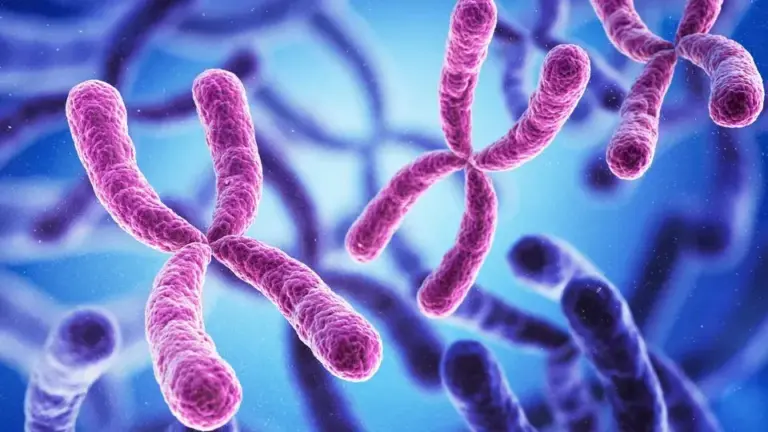
- It is one of the two sex chromosomes in humans (the other is the Y chromosome).
- There are 23 pairs of chromosomes in the human body. This includes 22 pairs of autosomal or somatic chromosomes that are common to both men and women and one chromosome that differs according to what gender a person is (sex chromosomes).
- Each person usually has one pair of sex chromosomes in each cell. Females typically have two X chromosomes, while males typically have one X and one Y chromosome.
- Men inherit the X chromosome they have from their mother and the Y chromosomefrom their father, while women inherit one X chromosome from the mother and the other from the father.
- In women, the X chromosome represents almost 5% of the total DNA, and in men, who have only one X chromosome, it represents about 2.5% of the total DNA.
- Early in the embryonic development of people with two X chromosomes, one of the X chromosomes is randomly and permanently inactivatedin cells other than egg cells. This phenomenon is called X-inactivation or lyonization.
- X-inactivation ensures that people with two X chromosomes have only one functional copy of the X chromosome in each cell.
- Because X-inactivation is random, normally, the X chromosome inherited from one parent is active in some cells, and the X chromosome inherited from the other parent is active in other cells.
- The X chromosome likely contains 900 to 1,400 genes that provide instructions for making proteins.
- Genetic disorders that arise from missing, additional, or malformed copies of the X chromosome are termed numerical disorders.
- Examples include Klinefelter’s syndrome, where a male has one or more extra copies; Triple X syndrome, where a female has one extra copy and Turner syndrome, where a female has one normal X chromosome and one missing or abnormal one.
Q1: What’s an Autoimmune Disease?
Autoimmune diseases result when your immune system is overactive, causing it to attack and damage your body’s own tissues. Normally, your immune system creates proteins called antibodies that work to protect you against harmful substances such as viruses, cancer cells, and toxins. But with autoimmune disorders, your immune system can’t tell the difference between invaders and healthy cells.
Source: X chromosome revival in older women increases autoimmune disease risk






 Last updated on March, 2026
→ UPSC Final Result 2025 is now out.
→ UPSC has released UPSC Toppers List 2025 with the Civil Services final result on its official website.
→ Anuj Agnihotri secured AIR 1 in the UPSC Civil Services Examination 2025.
→ UPSC Marksheet 2025 is now out.
→ UPSC Notification 2026 & UPSC IFoS Notification 2026 is now out on the official website at upsconline.nic.in.
→ UPSC Calendar 2026 has been released.
→ Check out the latest UPSC Syllabus 2026 here.
→ UPSC Prelims 2026 will be conducted on 24th May, 2026 & UPSC Mains 2026 will be conducted on 21st August 2026.
→ The UPSC Selection Process is of 3 stages-Prelims, Mains and Interview.
→ Prepare effectively with Vajiram & Ravi’s UPSC Prelims Test Series 2026 featuring full-length mock tests, detailed solutions, and performance analysis.
→ Enroll in Vajiram & Ravi’s UPSC Mains Test Series 2026 for structured answer writing practice, expert evaluation, and exam-oriented feedback.
→ Join Vajiram & Ravi’s Best UPSC Mentorship Program for personalized guidance, strategy planning, and one-to-one support from experienced mentors.
→ Shakti Dubey secures AIR 1 in UPSC CSE Exam 2024.
→ Also check Best UPSC Coaching in India