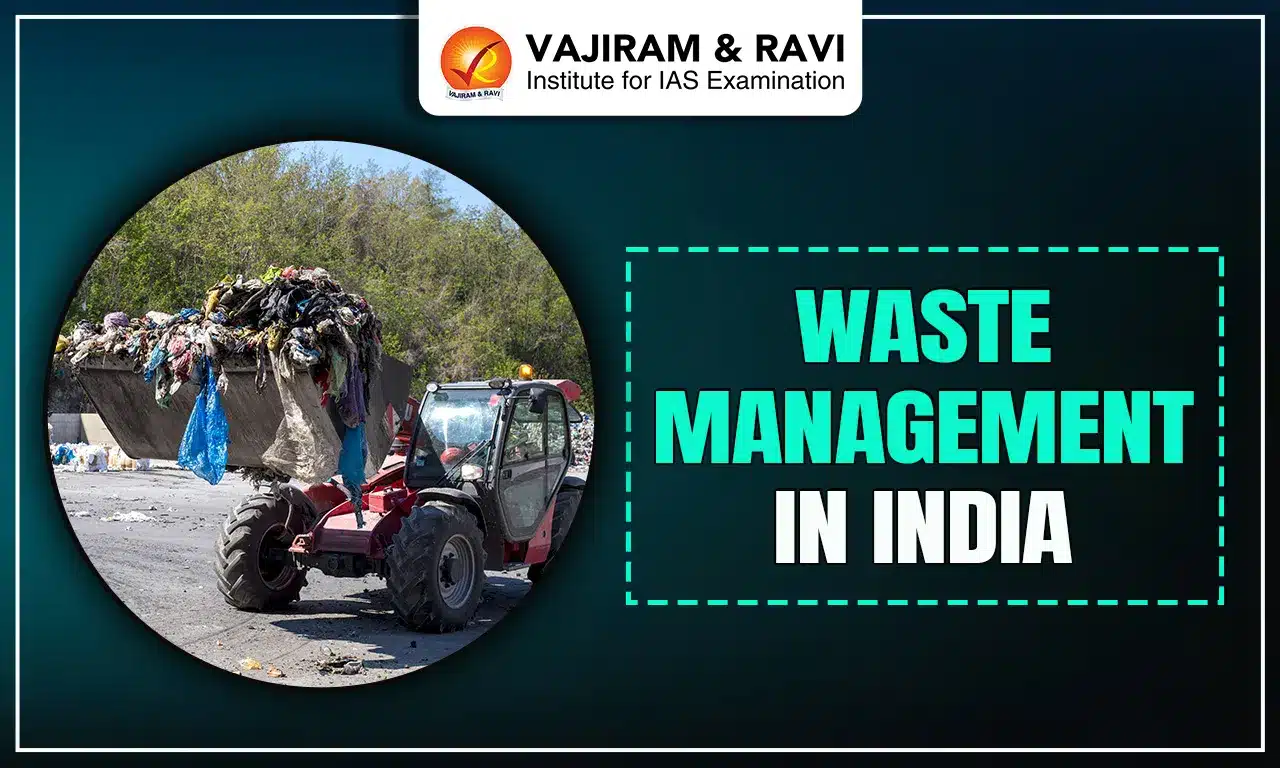
Waste management in India encompasses the collection, segregation, transport, treatment, recycling, and disposal of waste from households, industries, hospitals, agriculture, construction, electronics, and hazardous sources. Its main aim is to reduce landfill use, prevent pollution, conserve resources, and promote a circular economy by recovering and reusing materials.
The system operates through formal agencies and the informal sector of waste pickers and recyclers, who together ensure efficient collection and high recycling rates. Key initiatives include the Swachh Bharat Mission, Waste-to-Energy programs, GOBAR-Dhan, and the NAMASTE scheme.
Waste Meaning
Waste refers to any material that is discarded after primary use or is considered no longer useful. It originates from various human activities and can be categorised by physical state, source, and composition.
- By physical state: Solid (garbage, sludge), Liquid (wastewater), Gas (emissions).
- By source: Household, industrial, biomedical, construction, agricultural, electronic, hazardous, radioactive waste.
- By composition: Biodegradable (food, garden waste), Non-biodegradable (plastics, metals), Hazardous (toxic, flammable), Bulk (furniture, tyres), Ashes/residues.
Waste Management Constitutional Provisions
The Indian Constitution provides the foundational mandate for environmental protection and waste management:
- Article 48-A (Directive Principles of State Policy): Directs the State to protect and improve the environment, including forests and wildlife.
- Article 51-A(g) (Fundamental Duties): Obligates citizens to protect and improve the natural environment, covering water bodies, forests, and public spaces.
- Article 243W and Schedule 12: Empowers municipalities and urban local bodies to manage sanitation, solid waste, and public health.
Waste Management Meaning
Waste management refers to the systematic process of collecting, segregating, transporting, treating, recycling, recovering, and safely disposing of waste generated from human activities to minimise its environmental and health impacts. Its primary objective is to reduce adverse effects on human health, ecosystems, and natural resources, while promoting sustainability and efficient resource use.
Waste Management Principles
Waste management is guided by key principles that aim to minimise environmental impact, optimise resource use, and promote sustainability. The main principles include:
- Waste Hierarchy: The waste hierarchy, often illustrated as a pyramid, represents the preferred order of waste management practices aimed at minimising waste and maximising resource efficiency. It is founded on the “3 Rs” – Reduce, Reuse, and Recycle – and extended to include Recovery and Disposal as the last resort.

- Life-Cycle of a Product: A product’s life cycle encompasses design, manufacturing, distribution, use, and end-of-life management. Life-cycle analysis ensures efficient resource use and minimises environmental impacts through key interventions such as:
- Rethinking product necessity to reduce waste generation.
- Redesigning products to minimise waste potential.
- Extending product use through reuse, repair, or refurbishment.
- Resource Efficiency: Promotes sustainable use of materials, energy, and water during production and consumption. It reduces dependency on finite resources, lowers pollution, and supports economic growth while limiting environmental damage.
- Polluter Pays Principle: Holds waste generators financially responsible for the proper disposal and treatment of their waste. This principle ensures accountability, encourages waste reduction, and promotes environmentally sound management.


Waste Management Methods
Effective waste management covers the entire waste lifecycle from waste prevention and resource optimisation to energy recovery and final disposal. Key waste management methods widely applied globally and in India include:

- Source Reduction (Waste Minimisation): Focuses on minimising waste at the source by promoting eco-friendly product design, minimal packaging, durable goods, and digital alternatives. It also extends product life through reuse and recycling.
- Composting: Aerobic decomposition of organic waste into nutrient-rich manure improves soil fertility, water retention, and microbial health. Vermicomposting employs earthworms to accelerate decomposition and enhance nutrient quality.
-
- Anaerobic Digestion (Biogas Generation): Organic waste is broken down in oxygen-free digesters, producing biogas (a renewable energy source) and a nutrient-rich digestate that can be used as an organic fertilizer, thereby closing the nutrient loop sustainably.
- Incineration: Controlled combustion of non-recyclable or hazardous waste at high temperatures reduces waste volume and recovers energy. Modern incinerators include emission control systems to minimise toxic pollutants.
-
- Waste-to-Energy (Energy Recovery): Converts non-recyclable waste into electricity, heat, or fuel through technologies such as incineration, gasification, pyrolysis, or refuse-derived fuel (RDF), reducing landfill dependency.
- Landfilling: Engineered disposal of residual waste in designated sites with systems for leachate management and methane capture. Open dumping is environmentally harmful and remains the least preferred option.
Waste Management in India Regulatory Framework
Waste management in India is governed under the Environment (Protection) Act, 1986 and implemented by the Ministry of Environment, Forest and Climate Change (MoEFCC) through the Central Pollution Control Board (CPCB) and State Pollution Control Boards (SPCBs).
-
- Solid Waste Management Rules, 2016: Apply to urban and rural areas, focusing on source segregation, door-to-door collection, composting, recycling, and scientific disposal.
- Plastic Waste Management Rules, 2016: Regulate plastic production and use, ban single-use plastics, and introduce Extended Producer Responsibility (EPR). Producers and importers must register with CPCB and ensure proper recycling or reuse of plastic packaging.
- E-Waste Management Rules, 2022: Cover around 106 electronic items, including solar PV waste. Producers are mandated to collect, recycle, and dispose of e-waste scientifically under EPR using a digital traceability system.
- Battery Waste Management Rules, 2022: Apply to all battery types, including electric vehicle batteries. Producers must collect and recycle waste batteries and use recovered materials in new production.
- Hazardous and Other Wastes (Management and Transboundary Movement) Rules, 2016: Ensure safe handling, storage, and cross-border movement of hazardous waste, permitting import/export only for recycling and recovery in line with the Basel Convention.
- Bio-Medical Waste Management Rules, 2016: Apply to all healthcare facilities, requiring colour-coded segregation, barcoding, and GPS tracking for safe collection, treatment, and disposal through authorised facilities.
- Construction and Demolition Waste Management Rules, 2016: Promote reuse and recycling of building materials, with revised rules introducing EPR obligations and environmental compensation to ensure accountability.
- Supporting Regulations:
-
- Fly Ash Utilisation Notification, 2021 mandates 100% use of ash from thermal power plants within 3–5 years.
- Chemical Safety Rules such as Manufacture, Storage and Import of Hazardous Chemicals Rules (MSIHC Rules), 1989 and Chemical Accidents (Emergency Planning, Preparedness and Response) Rules, 1996) ensure industrial accident prevention.
- Public Liability Insurance Act, 1991 provides immediate compensation for accidents involving hazardous substances.
Waste Management in India Importance
Waste management in India aims to reduce landfill waste, extend product lifecycles, and recover or reuse materials wherever possible. By doing so, it transforms waste into a valuable resource, supporting sustainable development and promoting a circular economy.
- Protects Human Health and Environment: Proper waste management reduces pollution, contamination, and the risk of diseases from unmanaged or hazardous waste. It safeguards soil, water, and air, helping to preserve ecosystems and biodiversity.
- Supports Circular Economy: By promoting recycling, reuse, and resource recovery, waste management enables a circular economy, reducing reliance on raw materials, minimizing waste, and enhancing sustainable production and consumption.
- Climate Change Mitigation: Effective waste management lowers greenhouse gas emissions from landfills and promotes composting of organic waste, while enhancing carbon sequestration in soils, contributing to climate action.
- Resource and Energy Conservation: Recycling and reusing materials conserve finite natural resources and reduce the need for virgin raw materials. Efficient waste management saves energy and limits environmental degradation, contributing to the circular economy.
- Job Creation and Economic Development: The waste sector employs collection, segregation, recycling, and marketing. It promotes inclusive economic growth by formalising roles for informal workers, providing training, protection, and social equity.
Waste Management in India Current Status
India generates 60–65 million tonnes annually, projected to reach 160–170 million tonnes by 2030. About 75% is collected, but only 25% is treated or processed, leaving much in landfills, open dumps, or water bodies.
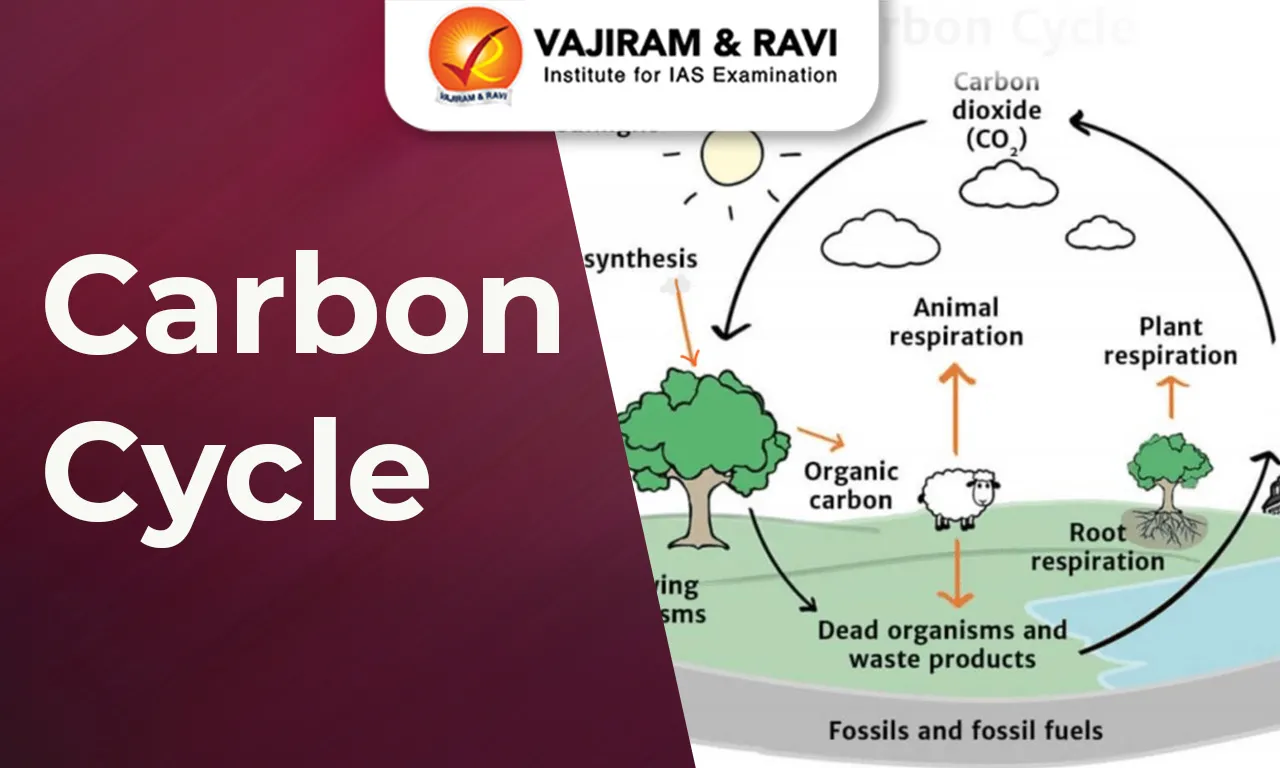
- Organic Waste: Organic waste makes up 50–55% of MSW, providing significant potential for composting and biogas generation.
- Plastic Waste: India generates around 3–4 million tonnes of plastic waste annually, but only about 9% is recycled, causing drain blockages, river pollution, and threats to wildlife.
- E-Waste: Over 1.5 million tonnes of electronic waste are generated yearly, mostly handled by the informal sector, exposing workers to toxic chemicals and health hazards.
- Biomedical Waste: Hospitals and clinics produce around 500–600 tonnes of biomedical waste daily, and improper disposal increases the risk of infections and disease spread.
- Industrial and Hazardous Waste: India produces 7–8 million tonnes of industrial and hazardous waste per year, much of which is disposed of unsafely, contaminating soil and water sources.
- Urban–Rural Disparities: While urban areas have partial infrastructure for collection and processing, rural regions largely rely on open dumping or burning of waste, worsening environmental pollution and public health risks.
Waste Management in India Challenges
Waste management in India faces deep-rooted structural, behavioural, and infrastructural challenges, intensified by rapid urbanisation, industrial expansion, and population growth. Despite progressive policies such as the Solid Waste Management Rules 2016 and the Swachh Bharat Mission, implementation remains fragmented and uneven.
- Poor Infrastructure: Many cities rely on open dumping and outdated landfills. Limited waste processing facilities and low adoption of technologies like composting, biomethanation, and waste-to-energy plants hinder sustainable management.
- Inadequate Source Segregation: Lack of segregation at households and institutions results in mixed waste, obstructing recycling and scientific treatment, increasing methane emissions, and contaminating soil and water.
- Weak Municipal Capacity: Financial, technical, and manpower shortages in local bodies reduce efficiency in treatment, disposal, and adoption of innovative waste management solutions.
- Data Deficiency: Inconsistent or limited data on waste generation, composition, and processing hampers planning, investment, and effective decision-making.
- Hazardous Waste Mismanagement: Improper handling of biomedical, electronic, and industrial hazardous waste poses serious health and environmental risks, highlighted during crises like COVID-19.
Waste Management in India Initiatives
Waste management in India has undertaken several government-led campaigns, technology-driven projects, and community-based initiatives to promote sustainable and effective waste management. These efforts aim to reduce landfill dependence, encourage recycling, recover resources, and foster a circular economy.
- Swachh Bharat Mission (SBM): SBM is India’s flagship cleanliness campaign which focuses on eliminating open defecation, promoting waste segregation, scientific disposal, and improving sanitation.
- Swachhata Hi Seva 2025: It targets dumpsite remediation using biomining, bioremediation, and afforestation, reclaiming land for green and community use.
- Waste-to-Energy Programs: WTE programs convert municipal solid waste into electricity, bio-CNG, and compost, reducing landfill load and generating renewable energy.
- Example: Cities like Indore, Delhi, and Pune have established WTE plants that also provide employment opportunities.
- GOBAR-Dhan Scheme: Converts cattle dung and organic waste into biogas, bio-CNG, and organic manure, promoting sustainable rural waste management and rural employment.
- NAMASTE scheme: Formalises waste collectors by providing training, social security, and integration into the formal system, improving efficiency, safety, and social equity.
- Plastic Waste Management Projects: These projects collect and recycle plastic waste using innovative and technology-driven methods, integrating recovery with resource efficiency.
Waste Management in India Way Forward
Waste management in India requires robust infrastructure, strict source segregation, and technology-driven monitoring, supported by effective public-private partnerships. Strengthening municipal capacity, formalising informal workers, promoting sustainable treatment, and enforcing regulations can transform waste into a valuable resource, delivering environmental, economic, and social benefits.
- Infrastructure Investment: Major investment in waste treatment plants, recycling facilities, material recovery centers, and composting units is essential to reduce landfill dependency. Regionally suitable technologies like biomethanation and waste-to-energy enhance processing capacity and promote resource recovery.
- Enhanced Source Segregation: Enforcing segregation at source—biodegradable, recyclable, hazardous, and sanitary waste—alongside public awareness campaigns and incentives, increases recycling efficiency and reduces environmental contamination.
- Regulatory Strengthening: Strengthening enforcement of existing laws, implementing Extended Producer Responsibility (EPR), and leveraging judicial mandates enhance accountability and support evidence-based waste management.
- Informal Sector Integration: Formalise waste pickers with training, safety measures, and social security to improve recycling rates and working conditions.
- Organic Waste Management: Promote household composting and centralized biogas plants to handle organic waste sustainably, enhance soil health, and reduce methane emissions.
Waste Management in India UPSC PYQs
Question 1: In India, ‘extend producer responsibility’ was introduced as an important feature in which of the following? (UPSC Prelims 2019)
(a) The Bio-medical Waste (Management and Handling) Rules, 1998
(b) The Recycled Plastic (Manufacturing and Usage) Rules, 1999
(c) The e-Waste (Management and Handling) Rules, 2011
(d) The Food Safety and Standard Regulations, 2011
Ans: (c)
Question 2: What are the impediments in disposing the huge quantities of discarded solid waste which are continuously being generated? How do we remove safely the toxic wastes that have been accumulating in our habitable environment? (UPSC Mains 2018)

 Last updated on Oct, 2026
→ UPSC 2027 Notification will be released on 13 January 2027 at upsconline.nic.in.
→ Check Nobel Prize 2026 Winners List here.
→ Download PIB PRiSM Monthly Magazine 2026 here.
→ Check UPSC Monthly Current Affairs Magazine The Recitals here.
→ Check out the latest UPSC Syllabus here.
→ Download UPSC Model Answers for Mains 2026
→ UPSC Mains Question Paper 2026 is out now for Essay & GS Paper 1, 2, 3 & 4.
→ UPSC Calendar 2027 has been released.
→ Enroll in Vajiram & Ravi’s UPSC Mains Test Series 2027 for structured answer writing practice, expert evaluation, and exam-oriented feedback.
→ Join Vajiram & Ravi’s UPSC Mentorship Program 2027 for personalized guidance, strategy planning, and one-to-one support from experienced mentors.
→ Go through the UPSC Mains Previous Year Papers to enhance your preparation.
→ UPSC has released UPSC Toppers List 2025 with the Civil Services final result on its official website.
→ Also check Best UPSC Coaching in India
Waste Management in India FAQs
Q1. How is waste management in India?+
Q2. What are the 4 types of waste management?+
Q3. What are the 7 steps in managing wastes?+
Q4. Which city in India is best for waste management?+
Q5. Who started waste management in India?+
Tags: waste management in india