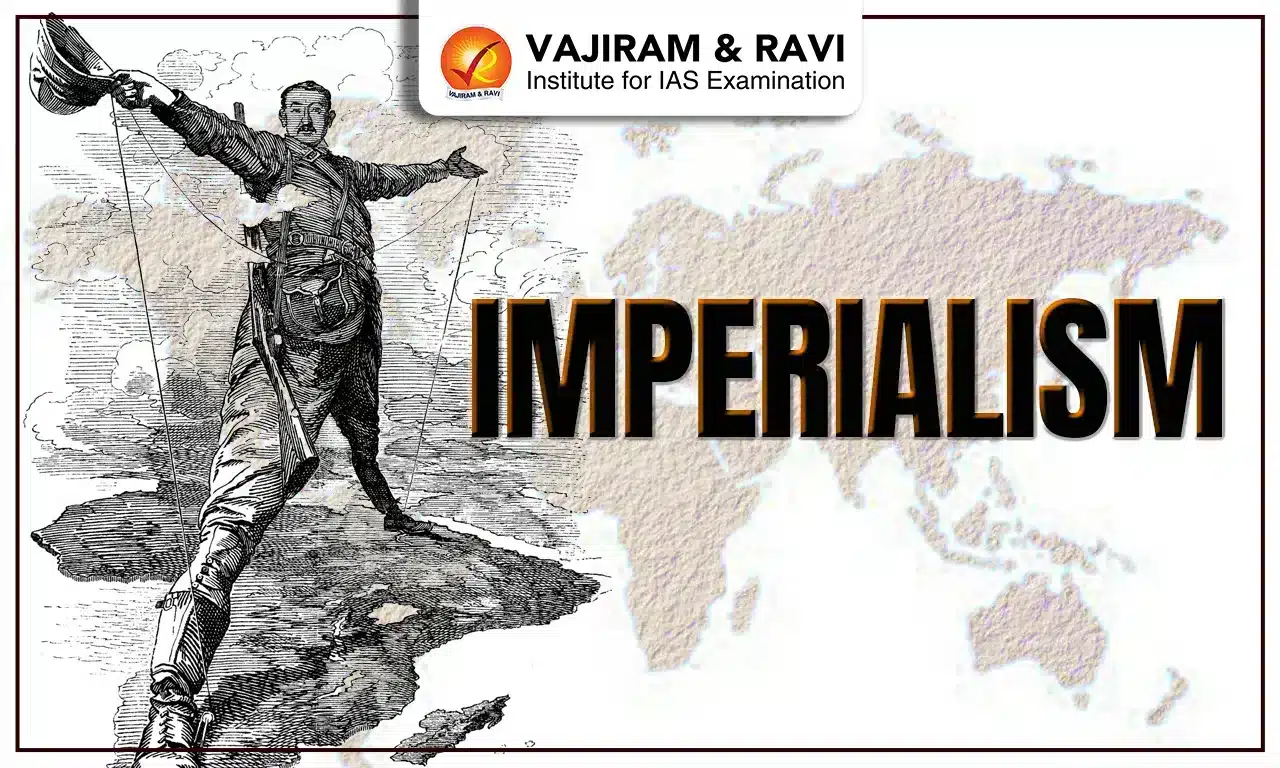
Imperialism is the policy by which powerful nations extend control over weaker regions politically, economically, and culturally, often to secure resources, markets, and strategic advantage. Historically, it began with early trading empires, expanded during the Industrial Revolution, and later included economic, political, and cultural dominance.
Imperialism was fueled by economic ambition, industrialisation, nationalism, and cultural motives, reshaped societies by bringing infrastructure and education while also causing exploitation, oppression, and cultural erosion. In India, British rule reflected these impacts through trade, political control, and social changes. Over time, rising nationalism, world wars, and decolonisation led to its decline, though economic and political influence continues in new forms today.
Imperialism Definition
Imperialism broadly can be defined as the process of capitalist development, which leads the capitalist countries to conquer and dominate pre-capitalist countries of the world. However, there is no single, standard definition for imperialism, as scholars interpret it from different perspectives.
- Political Definition: Imperialism is the system of political control exercised by the metropolis over the domestic and foreign policy and over the domestic politics of another polity, which we shall call the periphery (countries at the margins of the economic hierarchy).
- Historical Definition: Some scholars describe imperialism as a distinct phase of mature capitalism beginning in the late 19th century, marked by industrial competition, colonial expansion, and rivalry among advanced powers for global markets and territories.
Imperialism History
Imperialism developed over several stages, evolving from early trading empires rooted in mercantilism to the complex interplay of industrial and financial domination. Each stage mirrors technological advancements, economic transformations, and shifts in global power dynamics.
- Ancient and Classical Empires (6th BCE – 5th CE): Early imperialism emerged with the Assyrian, Babylonian, and Persian empires, which expanded through conquest and administration.
- Alexander the Great’s empire (356–323 BCE) and the Roman Empire (27 BCE – 476 CE) extended control across Europe, Asia, and Africa, establishing models of governance, trade, and cultural integration.
- Medieval Period (5th – 15th centuries CE): After Rome’s fall, the Byzantine Empire (330–1453 CE) preserved imperial traditions, while Islamic Caliphates (7th–13th centuries) spread influence from the Middle East to Spain.
- The Ottoman Empire (1299–1922) later dominated parts of Europe, Asia, and Africa through military and cultural control.
- Age of Discovery (15th – 18th centuries): Modern imperialism began with European maritime exploration. Portugal’s conquest of Ceuta (1415) and Columbus’s voyage (1492) opened new trade routes.
- The Treaty of Tordesillas (1494) divided overseas territories between Spain and Portugal. Britain, France, and the Netherlands followed, establishing colonies for trade, resource extraction, and mercantilism.
- New Imperialism (19th century): The Industrial Revolution intensified global competition as European powers sought raw materials and markets.
- The Scramble for Africa (1880s), formalised at the Berlin Conference (1884–85), divided the continent among European powers.
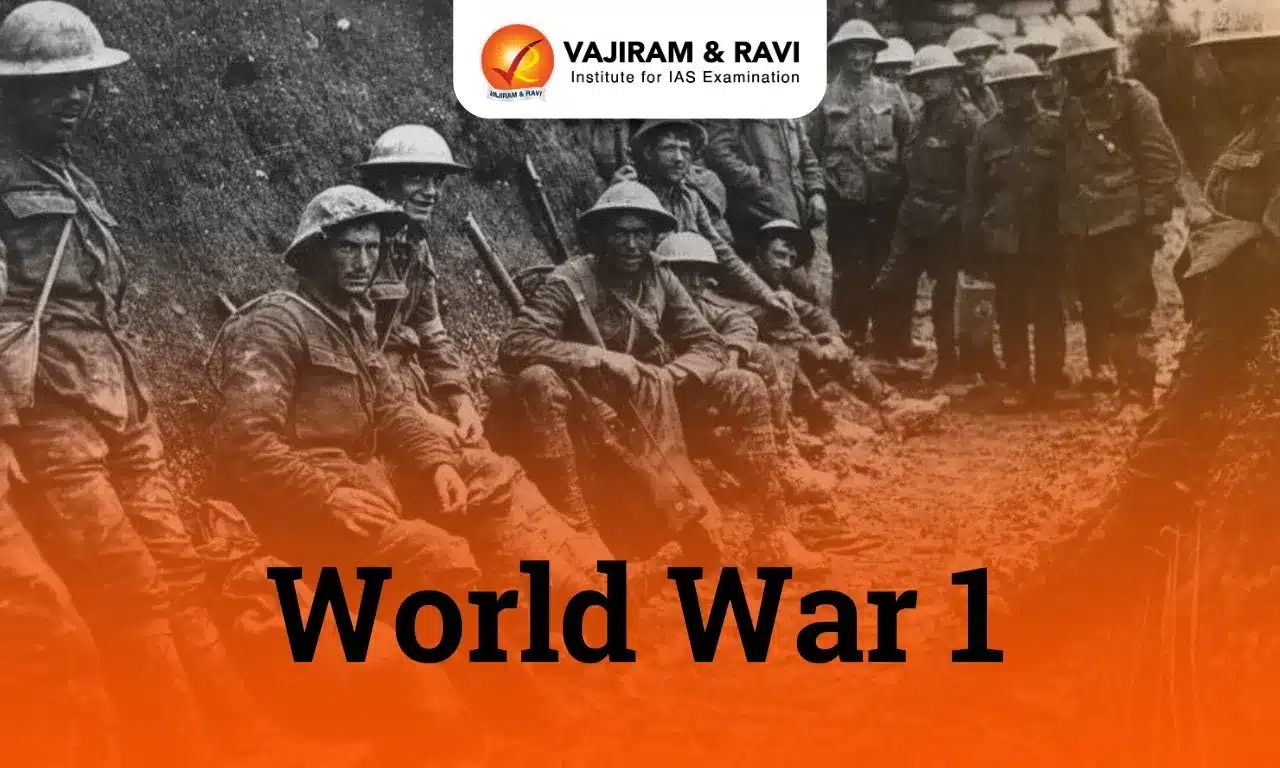
- Germany, Italy, Belgium, Japan, and the United States joined Britain and France, heightening rivalries that contributed to World War I (1914–1918).
- 20th Century and Decline (1918 – 1991): After World War I, empires such as the Ottoman and Austro-Hungarian collapsed.
- Post-World War II, decolonisation accelerated through nationalist movements and United Nations advocacy for self-determination.
- Despite independence, economic imperialism and neocolonial influence persisted in the Global South.
Imperialism Types
Imperialism can take multiple forms depending on how power is exercised, whether through direct political control, economic dominance, cultural influence, or environmental impact. Each type shows a different strategy used by powerful nations to extend their authority over others.
- Colonial Imperialism: Direct political and administrative control where the imperial power governs a territory, imposes its laws, and controls governance, economy, and culture.
- Protectorates: Territories maintain local governments but cede foreign policy and defense to the imperial power, with limited autonomy under supervision.
- Example: In the Niger River Delta (late 19th–early 20th century), Britain maintained local chiefs but controlled trade and strategic decisions to secure economic and political influence.
- Spheres of Influence: Regions where imperial powers claim exclusive economic privileges without full political control, dividing territories to avoid conflict.
- Economic Imperialism: Dominance of a country's economy by foreign corporations or interests without direct political rule, creating dependency via monopolies and resource exploitation.
- Example: East India Company (17th–19th century) monopolised trade, exploited resources, and deindustrialised local economies, turning India into a raw material supplier and dependent market.
- Cultural Imperialism: Imposition of a dominant power's culture, language, and values, shaping education, media, and norms to maintain control and perpetuate cultural dominance.
- Ecological Imperialism: Colonisation causing environmental degradation, ecosystem disruption, and health hazards, termed as “ecological terrorism” by Alfred Crosby.
- New Imperialism: Late 19th to early 20th-century aggressive territorial expansion by emerging industrial powers like the US and Japan alongside European empires.


Imperialism Features
Imperialism seeks to extend the power, influence, and control of a nation over foreign territories. Its objectives are multifaceted, combining economic, political, ideological, religious, and strategic motives.
-
- Territorial Expansion: Imperialism often involves acquiring new lands through military conquest or colonisation to increase geographical reach and secure control over resources.
- Economic Exploitation: Imperial powers extract raw materials, use cheap labour, and create new markets for their goods. Unequal trade, resource extraction, and monopolistic practices enrich the imperial nation while hindering local development.
-
- Political Domination: Control may be direct or indirect, with imperial powers installing puppet governments, suppressing political opposition, and weakening indigenous institutions.
- Military Power: Armed forces are essential for acquiring and maintaining imperial territories, suppressing resistance, and safeguarding strategic interests globally.
- Cultural Hegemony and Ideological Justification: Imperial powers promote their language, religion, culture, and political ideas, often justified through notions of racial superiority and the “civilising mission,” marginalising local traditions.
- Religious Motives: Missionary activities aim to convert indigenous populations to dominant religions like Christianity, which helps in moulding societies according to imperial ideals and consolidating control.
- Competition Among Imperial Powers: Rivalries and alliances between imperial nations (like Britain, France, and later the U.S.) motivate territorial acquisitions and resource control, often leading to conflicts like the Scramble for Africa.
- Modern Monopoly Capitalism: At present, imperialism is marked by multinational corporations and financial institutions exerting economic control, deepening inequalities, and influencing global politics.
- Informal and Neo-Imperialism: Not all control involves direct occupation; economic dependency, loans, trade agreements, and political influence are used as means of imposing dominance without formal colonisation.
Imperialism Causes
The rise of imperialism in the 18th and 19th centuries was driven by a combination of economic ambitions, political rivalries, cultural beliefs, and religious motives. Industrialisation, nationalism, and competition among European powers created a global race for colonies and influence.
- Economic Causes: Industrialisation created a strong demand for raw materials, cheap labour, and new markets. Colonies supplied essential resources and served as markets for finished goods, ensuring steady profits for the imperial powers.
- Control over trade routes and investment opportunities further strengthened their economic dominance.
- Colonisation and Population Pressure: Rapid population growth in Europe led to unemployment and overcrowding. Colonisation provided an outlet for migration and settlement, reducing social pressures at home while expanding imperial control abroad.
- Religious Causes: Missionaries played a major role in spreading Christianity and Western values. Their work often aligned with imperial goals, promoting the idea of a “civilising mission” to justify foreign rule.
- Ethnocentric and Ideological Causes: Beliefs in European racial and cultural superiority, supported by ideas like Social Darwinism, portrayed imperialism as a duty to “civilise” other societies. Such ideologies gave moral cover to exploitation and domination.
- Political and Prestige Causes: Nationalism and rivalry among European powers fuelled competition for colonies. Possessing overseas territories was seen as a mark of prestige and strength. The race for dominance, especially in Africa and Asia, became central to foreign policy.
Imperialism Impacts
Imperialism profoundly transformed politics, economies, societies, and cultures worldwide. Though it introduced modern infrastructure, education, and global connectivity, it also led to exploitation, cultural domination, and lasting inequalities.
Positive Impacts
Imperialism introduced modern infrastructure, education, technology, and healthcare, which facilitated economic growth, administration, and global connectivity in colonies.
- Infrastructure: Imperial powers introduced railways, roads, ports, telegraphs, and irrigation systems, which improved trade, transport, and connectivity.
- These developments later supported post-colonial economic growth and administration.
- Education: Western-style educational institutions spread literacy and governance knowledge, producing an educated elite who eventually led reform and independence movements.
- Technological Exposure: Colonies adopted modern industries, farming techniques, and tools, boosting productivity and facilitating integration into the global economy.
- Healthcare Improvements: Hospitals, vaccination campaigns, and sanitation initiatives reduced mortality rates and improved public health standards.
- Unification: Fragmented regions were often unified under centralised administrations, laying the foundations for modern state governance.
Negative Impacts
Imperialism caused economic exploitation, political oppression, cultural erosion, social divisions, and environmental damage, leaving long-term inequalities and societal challenges.
- Economic Exploitation: Colonies supplied raw materials, cheap labor, and markets that propelled imperial economies, while indigenous industries were undermined and economic dependency created.
- Political Oppression: Local political structures were dismantled, autonomy was denied, and colonies were ruled via foreign administrators or puppet regimes.
- Cultural and Social Disruption: Indigenous languages, traditions, and social systems were marginalised or destroyed. Racial hierarchies and imposed foreign social norms fostered social cleavages that endured beyond independence.
- Environmental and Human Costs: Extensively extractive practices caused deforestation, soil erosion, and ecological imbalance. Forced labor, disease, and violent suppression led to demographic decline and societal trauma.
- Ideological and Psychological Impacts: Imperial ideologies propagated a sense of inferiority among colonised peoples but also inspired anti-colonial nationalism and resistance movements.
Imperialism in India
British imperialism transformed India economically, politically, and socially, beginning with trade and evolving into full-scale political domination.
- Early Trade: The East India Company, established in 1600, first traded spices, silk, cotton, tea, and opium, establishing a foothold in Surat after negotiations with the Mughal Empire.
- Political Control: British dominance was cemented after the 1757 Battle of Plassey, with Bengal’s wealth financing Britain’s Industrial Revolution.
- Economic Exploitation: Policies like the 1813 ‘One Way Free Trade’ heavily taxed Indian exports while allowing untaxed British imports, undermining local industries and increasing unemployment.
- British Raj and Administration: After the Revolt of 1857, the British Crown assumed direct control, dismantling traditional governance and crafts, integrating India into the global imperial economy.
- Socio-Cultural Impact: English education and colonial policies reinforced class divisions, social hierarchies, and cultural inferiority.
- Military and Hardship: Indian soldiers served British campaigns worldwide, while resource extraction and wartime priorities caused famines and widespread suffering, leaving lasting economic and social impacts.
Imperialism Decline
The decline of imperialism was gradual, driven by economic, political, social, and global factors, marking a shift from direct colonial control to new forms of influence.
- Rise of Nationalism: Colonised peoples increasingly demanded self-rule, inspired by ideals of liberty, equality, and sovereignty across Asia, Africa, and the Middle East.
- World Wars: World War 1 and World War 2 weakened European powers economically and militarily, highlighting the contradiction between democratic ideals and colonial oppression, and strengthening anti-colonial sentiment.
- Global Power Shift: The rise of the United States and the Soviet Union, both opposed to colonialism, reshaped international dynamics and supported decolonisation efforts.
- Economic Pressures: Maintaining distant colonies became increasingly costly, while developing local industries in colonies reduced their dependence on imperial powers.
- International Pressure: The formation of the United Nations and rising emphasis on human rights increased pressure on empires to grant independence.
- Decolonisation: From the late 1940s to the 1970s, large-scale decolonisation took place. Countries including India, Pakistan, and many African and Southeast Asian nations gained independence, ending formal colonial rule.
- Neo-Imperialism: Despite the end of territorial empires, imperial influence persisted through economic dominance, multinational corporations, and strategic geopolitical alliances.
Contemporary Relevance of Imperialism
Imperialism today continues to shape global politics, economics, and societies, though it has shifted from the classical colonial model to more complex, interconnected forms.
- Economic Domination in a Globalised World: Multinational corporations, international financial institutions, and unequal trade relations control resources, labour, and markets in weaker nations, creating dependency and limiting development.
- Political and Military Influence: Major powers exert authority through diplomacy, strategic alliances, and military interventions. Global bases and partnerships allow projection of power and protection of interests.
- Cultural Influence and Hegemony: Western culture, values, and media shape education, lifestyles, and social norms, often overshadowing local traditions and identities.
- Financialisation and Monopoly Capitalism: Multinational corporations and financial institutions centralise economic power, controlling production and consumption patterns, and reinforcing inequalities.
- Geopolitical Rivalries and Collective Imperialism: Contemporary imperialism is marked by both cooperation and competition among dominant powers, often the United States, Europe, and Japan, as they manage global capitalism and intervene in weaker regions to maintain control.
Resistance and Alternatives: Nations in the Global South challenge imperial domination by pursuing autonomy, alternative economic models, and equitable development.

 Last updated on Sep, 2026
→ UPSC 2027 Notification will be released on 13 January 2027 at upsconline.nic.in.
→ Check out the latest UPSC Syllabus here.
→ Download UPSC Model Answers for Mains 2026
→ UPSC Mains Question Paper 2026 is out now for Essay & GS Paper 1, 2, 3 & 4.
→ UPSC Calendar 2027 has been released.
→ Enroll in Vajiram & Ravi’s UPSC Mains Test Series 2027 for structured answer writing practice, expert evaluation, and exam-oriented feedback.
→ Join Vajiram & Ravi’s UPSC Mentorship Program 2027 for personalized guidance, strategy planning, and one-to-one support from experienced mentors.
→ Go through the UPSC Mains Previous Year Papers to enhance your preparation.
→ UPSC has released UPSC Toppers List 2025 with the Civil Services final result on its official website.
→ Also check Best UPSC Coaching in India
Imperialism FAQs
Q1. What is imperialism in simple words?+
Q2. What was British Imperialism in India?+
Q3. What are the three stages of imperialism?+
Q4. What is the modern form of imperialism?+
Q5. What is one example of imperialism?+
Tags: imperialism