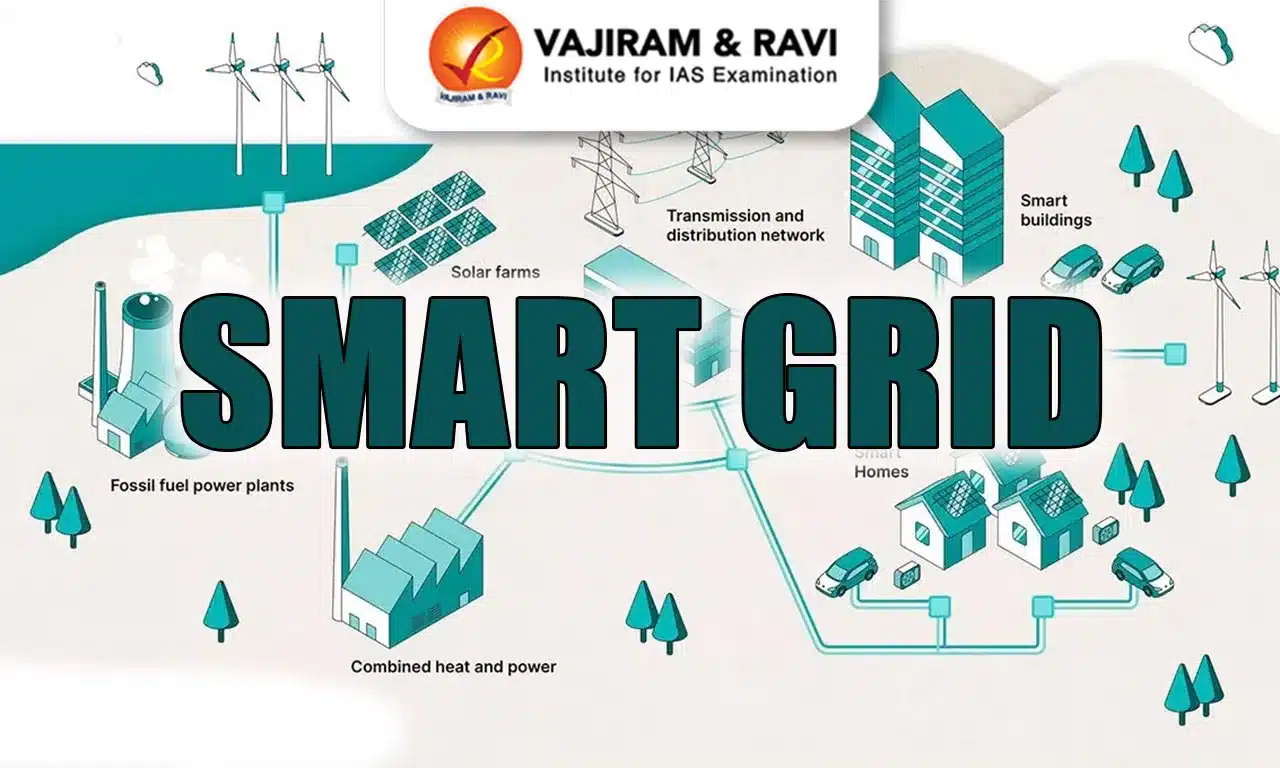
A smart grid is an electric power grid that uses digital communications technology and information systems to detect and react to local changes in usage. Smart grids allow for two-way communication between the utility and consumers, enabling more efficient transmission and distribution of electricity.
The goal is to improve reliability, optimise assets, and empower consumers to manage their energy usage. Smart grid technologies are seen as essential for building a modern, sustainable, and resilient power system.
What is a Smart Grid?
A Smart Grid is an electrical grid integrated with automation, communication, and information technologies to monitor and control power flows in real time, identify losses, and enable appropriate actions to reduce losses and incorporate renewable energy through distributed generation.
Features of Smart Grid
- Advanced metering infrastructure: Smart meters enable real-time monitoring of energy consumption and automatic meter readings.
- Distribution management systems: These systems use computer-based remote control, automation, and monitoring to enhance reliability and efficiency.
- Smart appliances: They optimise energy use via demand response.
- Energy storage systems: This helps in grid stabilisation and peak load management.
- Renewable energy integration: Renewables are integrated through forecasting, storage, and demand response.
- Wide area monitoring systems: These systems enhance visualisation and stability.
- Outage management systems
- Electronic billing systems and customer care systems


Benefits of Smart Grid Technology
The benefits of smart grid for different stakeholders in India are:
- Utilities:
- Reduction of Transmission & Distribution losses.
- Peak load management.
- Reduction in power purchase cost.
- Accommodation of renewable energy sources.
- Consumers:
- Accessibility, reliability, and improved QoS
- User-friendly and transparent interface
- Increased choices for consumers
- Government and Regulators
- Satisfied customers and financially sound utilities
- Help meet INDC obligations
Challenges related to Smart Grid Technology
The challenges related to Smart Grid Technology includes
- Interoperability: Lack of common standards and protocols for components from different vendors to seamlessly integrate.
- Cybersecurity risks: Expanding networks need robust security.
- Privacy concerns over data sharing
- Cost: Modernising ageing infrastructure requires investment.
- Skilled workforce: Shortage of skilled manpower trained in smart grid technologies.
- Scalability: Scaling pilot projects into full nationwide deployments is challenging.
Measures taken in India to promote Smart Grids
India's Smart Grid Vision aims to transform the Indian power industry into a safe, adaptable, sustainable, and digitally connected ecosystem that offers reliable and quality energy for all with active stakeholder engagement. The Indian government is promoting smart grids through various programs which provide funding and support for state power utilities to invest in smart meters, sensors, automation, analytics, and control systems.
Some of them are listed below:
- National Smart Grid Mission: It was launched in 2015 to accelerate smart grid deployment across India by providing financial support and guidance.
- Smart Meter National Programme: Launched by the Ministry of Power in 2021 to install 250 million smart meters across India by 2025.
- Virtual SMART Grid Knowledge Center: It was launched by POWERGRID and the Power Ministry, and aims to foster innovation, entrepreneurship, and research in smart grid technologies
- Other initiatives: Smart Cities Mission, Green Energy Corridor, PM SAUBHAGYA, etc.
Smart Grid Pilot Projects in India
The Smart Grid pilot projects sanctioned by the Ministry of Power are as follows:
Smart Grid UPSC PYQs
Question 1: In which of the following areas can GPS technology be used?
- Mobile phone operations
- Banking operations
- Controlling the power grids
Select the correct answer using the code given below : (UPSC Prelims 2018)
- 1 only
- 2 & 3 only
- 1 & 2 only
- 1, 2 & 3
Answer: (d)

 Last updated on Oct, 2026
→ UPSC 2027 Notification will be released on 13 January 2027 at upsconline.nic.in.
→ Check Nobel Prize 2026 Winners List here.
→ Download PIB PRiSM Monthly Magazine 2026 here.
→ Check UPSC Monthly Current Affairs Magazine The Recitals here.
→ Check out the latest UPSC Syllabus here.
→ Download UPSC Model Answers for Mains 2026
→ UPSC Mains Question Paper 2026 is out now for Essay & GS Paper 1, 2, 3 & 4.
→ UPSC Calendar 2027 has been released.
→ Enroll in Vajiram & Ravi’s UPSC Mains Test Series 2027 for structured answer writing practice, expert evaluation, and exam-oriented feedback.
→ Join Vajiram & Ravi’s UPSC Mentorship Program 2027 for personalized guidance, strategy planning, and one-to-one support from experienced mentors.
→ Go through the UPSC Mains Previous Year Papers to enhance your preparation.
→ UPSC has released UPSC Toppers List 2025 with the Civil Services final result on its official website.
→ Also check Best UPSC Coaching in India
Smart Grid FAQs
Q1. What is the Smart Grid?+
Q2. What are the characteristics of Smart Grid?+
Q3. What is the aim of Smart Grid?+
Q4. What are some government programs promoting smart grid technology in India?+
Tags: quest smart grid