
Question
An endangered tribe has developed a severe skeletal deformity. A university research has identified a mineral supplement as a possible remedy, though clinical trials are yet to be conducted. Should the District Magistrate (DM) use this research on the tribe? Discuss from the perspective of medical and administrative ethics.
Detailed Solution
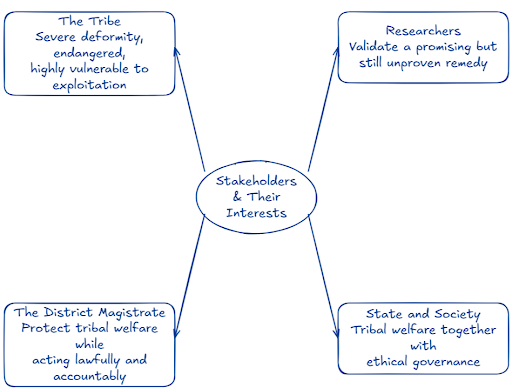
The DM faces a dilemma between urgently relieving a suffering, endangered tribe and safeguarding it from an unproven intervention. The ethically sound course is not to administer the untested supplement directly but to pursue relief through a rigorous, consent-based scientific process.
Core Ethical Issues At Stake
- Welfare versus risk: Urgency to help against the danger of an untested mineral supplement.
- Vulnerability and consent: Whether an isolated tribe can give genuine informed consent.

- Experimentation on humans: The risk of treating people as means to a research end.
Medical Ethics Counsels Caution and Rigorous Safeguards
- Non-maleficence first: "Do no harm" - an untrialled supplement could worsen health, violating the foremost medical duty.
- Informed consent is mandatory: The Nuremberg Code and Declaration of Helsinki make voluntary, informed consent non-negotiable; illiteracy and isolation make this hard to secure genuinely.
- Clinical equipoise: Without clinical trials, safety and efficacy are unknown, so administering it is experimentation, not treatment.
- Protection of the vulnerable: ICMR ethical guidelines demand heightened safeguards for vulnerable groups against being used as convenient research subjects.
- Beneficence properly pursued: Genuine benefit requires validated science, not a well-intentioned gamble.
Administrative Ethics Demands Responsibility, Not Haste
- Duty of care: The DM must protect citizens' lives, not expose them to avoidable risk.
- Precautionary principle: Where harm is uncertain but possible, restraint is the prudent administrative choice.
- Non-exploitation: Using a powerless tribe as test subjects would breach constitutional values of dignity (Article 21) and justice.
- Accountability: The DM is legally and morally answerable for any adverse outcome from an unauthorized intervention.
- Avoiding paternalism: Acting "for their own good" without consent undermines autonomy and public trust.
The ethically balanced course of action for the DM
- Do not administer directly: Reject unsupervised use of the untested supplement.
- Fast-track ethical trials: Facilitate ICMR-approved clinical trials with Ethics Committee clearance and expert medical oversight.
- Provide interim relief: Offer proven palliative care, nutrition, and specialist medical support meanwhile.
- Secure genuine consent: Use interpreters and community elders to ensure culturally sensitive, informed participation.
- Protect and monitor: Safeguard the tribe's health, dignity and habitat throughout, with continuous evaluation.
Compassion and caution are not opposites here. The DM best serves the tribe by channelling urgency into ethical, consent-based science, upholding both the healer's creed of "do no harm" and the administrator's duty to protect the most vulnerable with dignity and accountability.
Last updated on Oct, 2026







