




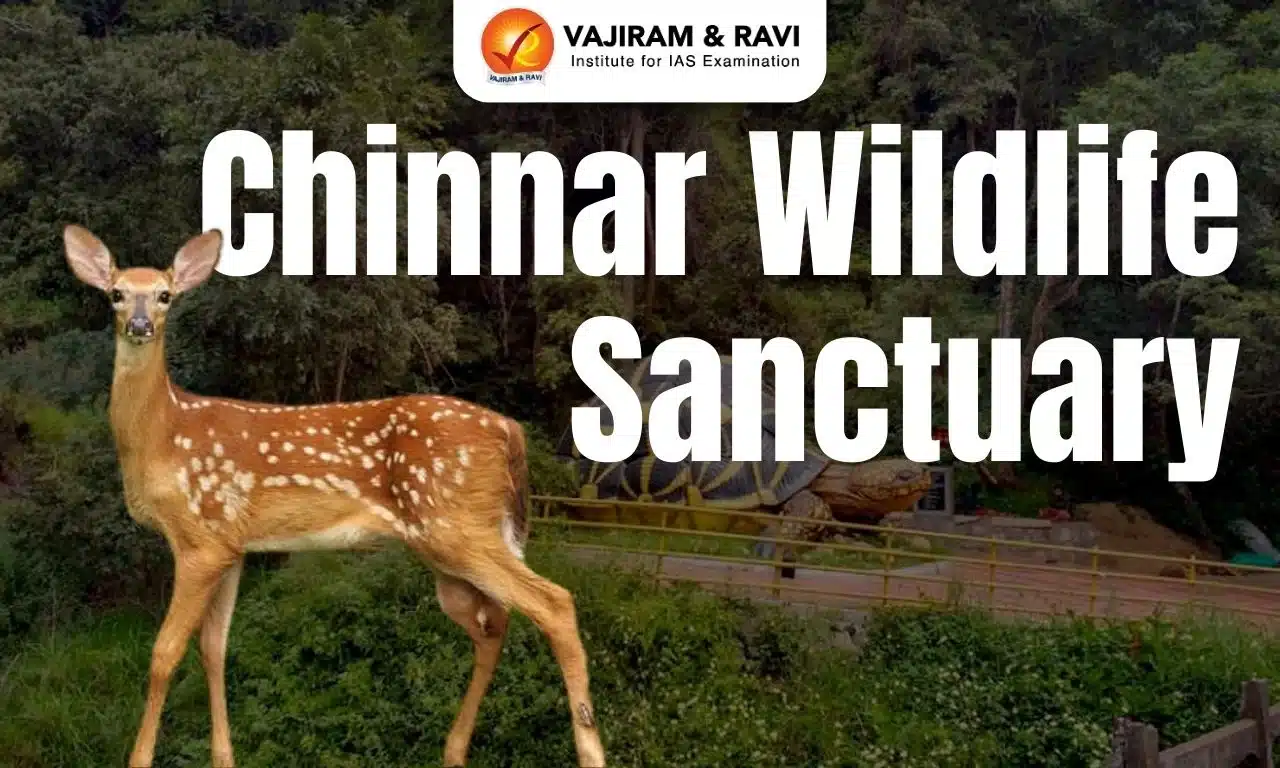
Chinnar Wildlife Sanctuary is located in Kerala as a protected area within the Western Ghats, a UNESCO-recognized biodiversity hotspot. Unlike most of Kerala, Chinnar Wildlife Sanctuary lies in a rain-shadow region, receiving minimal rainfall. The sanctuary features diverse ecosystems, including dry deciduous forests, thorny scrublands, grasslands, and riparian habitats. It is home to a variety of birds, reptiles, and mammals, including the only Indian star tortoise rehabilitation center in India. With rocky terrains, hillocks, and valleys, Chinnar offers eco-tourism and trekking opportunities, allowing visitors to explore its rich wildlife and serene landscapes.
Chinnar Wildlife Sanctuary History
Chinnar Wildlife Sanctuary was originally known as Chinnar Reserve Forest which was part of the Marayoor Range within the Munnar Forest Division. Recognizing its ecological and biodiversity significance, it was declared as Chinnar Wildlife Sanctuary in 1984 to protect its unique natural heritage. Unlike other Kerala sanctuaries, Chinnar features a thorn scrub jungle ecosystem, making it ecologically distinctive. This habitat supports a rich diversity of flora and fauna, contributing significantly to the Western Ghats’ biodiversity.
Chinnar Wildlife Sanctuary Flora
Chinnar Wildlife Sanctuary includes 963 species of flowering plants across diverse ecosystems. The sanctuary primarily consists of grasslands and wet grasslands, with montane rain forests at higher elevations, featuring species like Rhododendron nilagiricum and Strobilanthes kunthiana. Moist deciduous forests transition into dry deciduous forests at mid-elevations, home to Santalum album, Tectona grandis, and Cassia fistula. The thorny scrub forests on the drier eastern edges include Acacia arabica and Prosopis juliflora. The Marayoor Sandalwood Forest is also part of Chinnar Wildlife Sanctuary.





Chinnar Wildlife Sanctuary Fauna
Chinnar Wildlife Sanctuary hosts 34 mammal species, including the Nilgiri tahr, rusty-spotted cat, Indian leopard, spotted deer, elephant, gaur, Bengal tiger, sambar deer, common langur, bonnet macaque, gray langur, and grizzled giant squirrel. It is home to 36 reptile species, such as snakes, the Indian star tortoise, and Kerala’s largest population of mugger crocodiles. The Chinnar Wildlife Sanctuary provides shelter to 245 bird species, including the yellow-throated bulbul. The Chinnar and Pambar rivers support 42 fish species, including the endangered Deccan mahseer. Other than this, there are 22 amphibian species, more than 240 insect varieties, and 101 recorded spider species according to 2016.

 Last updated on March, 2026
→ UPSC Final Result 2025 is now out.
→ UPSC has released UPSC Toppers List 2025 with the Civil Services final result on its official website.
→ Anuj Agnihotri secured AIR 1 in the UPSC Civil Services Examination 2025.
→ UPSC Marksheet 2025 is now out.
→ UPSC Notification 2026 & UPSC IFoS Notification 2026 is now out on the official website at upsconline.nic.in.
→ UPSC Calendar 2026 has been released.
→ Check out the latest UPSC Syllabus 2026 here.
→ UPSC Prelims 2026 will be conducted on 24th May, 2026 & UPSC Mains 2026 will be conducted on 21st August 2026.
→ The UPSC Selection Process is of 3 stages-Prelims, Mains and Interview.
→ Prepare effectively with Vajiram & Ravi’s UPSC Prelims Test Series 2026 featuring full-length mock tests, detailed solutions, and performance analysis.
→ Enroll in Vajiram & Ravi’s UPSC Mains Test Series 2026 for structured answer writing practice, expert evaluation, and exam-oriented feedback.
→ Join Vajiram & Ravi’s Best UPSC Mentorship Program for personalized guidance, strategy planning, and one-to-one support from experienced mentors.
→ Shakti Dubey secures AIR 1 in UPSC CSE Exam 2024.
→ Also check Best UPSC Coaching in India
Chinnar Wildlife Sanctuary FAQs
Q1. What animals are in Chinnar Wildlife Sanctuary?+
Q2. What is the entry fee for Chinnar Wildlife Sanctuary?+
Q3. Which animal is found in a wildlife sanctuary?+
Q4. Which district is Chinnar in?+
Q5. Why is Chinnar Wildlife Sanctuary famous?+
Tags: Chinnar Wildlife Sanctuary