
Will 28% GST on Online Gaming Affect its Growth?

Will 28% GST on Online Gaming Affect its Growth?

What’s in today’s article?

  • Why in News?
  • What is Online Gaming? What is the Real-Money Online Gaming Industry?
  • How will the Taxation Work?
  • What will be the Likely Impact of the High GST Rate?
  • How Online Gaming is Taxed in Other Countries?


Why in News?

  • At the recently concluded 50th GST Council meeting, it was decided that online gaming would be taxed at 28% on the full-face value of the placed bets.


What is Online Gaming? What is the Real-Money Online Gaming Industry?

  • The Ministry of Electronics and information Technology (MeitY) in its draft regulation has defined online game “as a game that is offered on the Internet and is accessible by a user through a computer resource or an intermediary.”
  • Real money online games are where the user deposits cash or kind with the expectation of earning winnings on that deposit.
  • These online gaming platforms can be fantasy, e-sports, or skill-based online gaming platforms.
  • Cards-based games such as poker or rummy are also a part of it.
  • India’s gaming industry is expected to become a $5 billion industry by 2025, growing at a compounded annual growth rate of 28-30 per cent.
  • The real-money gaming segment generated over Rs 10,000 crore in revenue in 2022.
  • Some of the prominent companies in the sector are Games 24*7 which also operates Rummy Circle, Dream 11, MPL, Ace2Three, Gameskraft, apart from several others.


How will the Taxation Work?

  • Gaming platforms charge an entry fee from the user to allow them to participate in a particular game.
  • The platform operator deducts a certain amount of entry fee to run the game and the overall platform, known as the Gross Gaming Revenue (GGR). The rest is transferred to the prize pool.
  • For example, the entry fee is Rs 100 and the GGR is Rs 20.
  • Currently, online gaming platforms pay the government a GST of 18 per cent levied on the GGR. This implied the operator would have to pay Rs 3.6 as taxes.
    • Besides this, TDS of 30 per cent is deducted on the winnings.
  • However, with the decision of taxing 28% on the entry fee itself (Rs 100), the taxation amount would be increased to Rs 28.


What will be the Likely Impact of the High GST Rate?

  • The high tax rate will make it more expensive for players to participate in online gaming.
    • A gamer will have to pay 28 per cent GST on the amount deposited to play the game.
    • Besides this, he will have to pay the platform fee and bear 30 per cent TDS on net winnings.
  • This could lead to players seeking out offshore or illegitimate platforms that do not charge GST, or that charge a lower rate.
  • This would be a major setback for the legitimate online gaming industry in India, as it would allow these offshore and illegitimate platforms to gain an unfair advantage.
  • The Internet and Mobile Association of India (IAMAI) said that it is deeply concerned by the GST Council’s decision to levy 28 per cent GST on the full face-value of the consideration instead of just the platform fee.
  • The IAMAI said that net effect of this levy will result in an approximate 1,000 per cent increase in GST on the industry and will cause irreversible damage to the $2.5 billion investments in the Indian online gaming start-up ecosystem.
  • Government’s Argument –
    • The government is clear that this is a mechanism to discourage gambling specially by youngsters and thus the levy.
    • The government has stated that it would be making suitable amendments to include online gaming and horse racing in Schedule-III of the Central Goods and Services Tax Act (2017), deeming them as taxable actionable claims.
    • This will bunch online gaming together with gambling.


How Online Gaming is Taxed in Other Countries?

  • United States of America –
    • In the US, a flat tax is deducted on earnings from e-sports and online gaming but the exact rate depends on which state you are in.
    • Online gaming is usually taxed at 10 percent in most states. But 30 percent tax is imposed on any winnings through online gaming and e-sports winning.
  • United Kingdom –
    • In the UK a variable tax slab is applied, starting at 15 percent for the first $3.5 million earned on the GGR, and going up to 50 percent for amounts over $17.8 million earned.
    • While winnings on gambling are tax-free in the country, tax rates for e-sports are set at 40-45 percent.
  • European Union –
    • The situation in the EU is slightly more complicated, but the tax rate revenue is set at 15-20 percent while taxation on winning is anywhere between 15-50 percent depending on the amount and the member state.


Q1) How many GST (Goods and Services Tax) slabs are there?

GST rates in India for various goods and services are divided into four slabs: 5% GST, 12% GST, 18% GST, and 28% GST.


Q2) What are the items not covered under GST?

Petrol, high-speed diesel, aviation turbine fuel, crude oil, Electricity, Alcohol used for human consumption, Natural Gas.


Source: 
Comprehensive and Progressive Agreement for Trans-Pacific Partnership (CPTPP)

Comprehensive and Progressive Agreement for Trans-Pacific Partnership (CPTPP)

About Comprehensive and Progressive Agreement for Trans-Pacific Partnership (CPTPP):


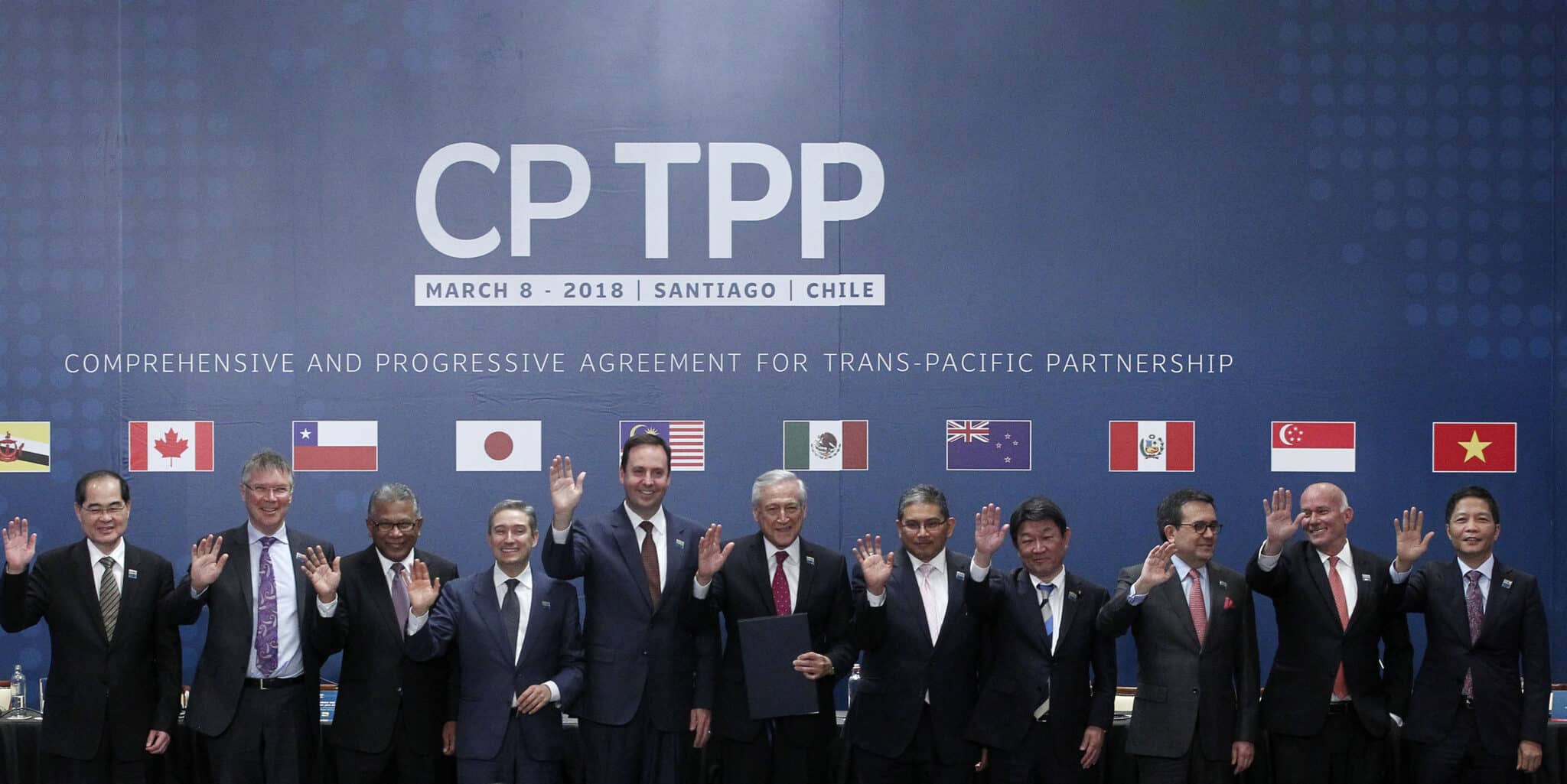
  • It is a free trade agreement (FTA) between 11 nations: Australia, Brunei, Canada, Chile, Japan, Malaysia, Mexico, New Zealand, Peru, Singapore and Vietnam.
  • It was signed in March 2018.
  • It succeeded the Trans-Pacific Partnership (TPP) after the United States withdrew from the TPP in 2017.
  • All 11 countries of CPTPP are members of the Asia-Pacific Economic Cooperation (APEC). 
  • The rights and obligations under the CPTPP fall into two categories:
    • Rules: for example, on how countries should make new food safety regulations or whether they can ban the transfer of data to other CPTPP members. These are the same for all CPTPP parties (including any new members that may join).
    • Market access: how far each CPTPP member will cut its tariffs, open up its services markets, liberalise visa conditions for business travellers, and so on. Each member has its own schedules of commitments. In some cases, the commitments are offered to all other members, while in others, they are restricted to specific negotiating partners.


What is the Asia-Pacific Economic Cooperation (APEC)?

  • It is a forum of 21 Asia-Pacific economies established in 1989.
  • Members: Australia; Brunei Darussalam; Canada; Chile; People's Republic of China; Hong Kong, China; Indonesia; Japan; Republic of Korea; Malaysia; Mexico; New Zealand; Papua New Guinea; Peru; the Philippines; the Russian Federation; Singapore; Chinese Taipei; Thailand; the United States of America; Vietnam.
  • It seeks to promote free trade and economic cooperation throughout the Asia-Pacific region.
  • The APEC Secretariat, headquartered in Singapore, provides advisory and logistic services as well as research and analysis.
  • APEC decisions are reached by consensus, and commitments are made on a voluntary basis.


Q1) What is a Free Trade Agreement (FTA)?

A free trade agreement is a pact between two or more nations to reduce barriers to imports and exports among them. Under a free trade policy, goods and services can be bought and sold across international borders with little or no government tariffs, quotas, subsidies, or prohibitions to inhibit their exchange.

Source: UK formally agrees to join major Indo-Pacific trade bloc, marking largest post-Brexit deal

Umiam Dam

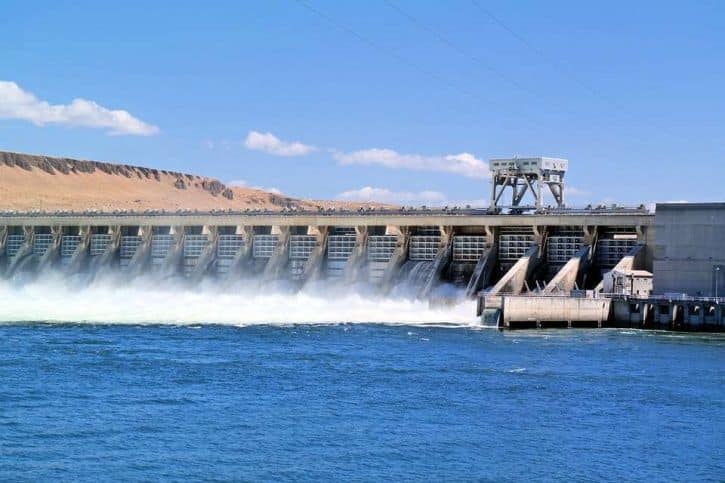
Umiam Dam

About Umiam Dam:


  • Location:
    • The Umiam Dam, also known as the Barapani Dam, is a large reservoir located in the state of Meghalaya in northeastern India.
    • It is situated on the Umiam River, about 15 kilometers north of Shillong, the capital city of Meghalaya.
  • Purpose: The primary purpose of the Umiam Dam is to provide hydroelectric power generation and supply drinking water to the region. It serves as a major water source for Shillong and its surrounding areas.
  • Construction:
    • The construction of the dam began in 1964 and was completed in 1965.
    • It was built by the Assam State Electricity Board (ASEB) with technical assistance from the North Eastern Electric Power Corporation Limited (NEEPCO).
  • Reservoir Capacity: The dam creates a reservoir known as the Umiam Lake, which has a storage capacity of approximately 9.6 billion cubic feet of water. The lake stretches over an area of about 220 square kilometers.
  • Hydroelectric Power Generation: The Umiam Dam has a hydroelectric power station with a total installed capacity of 2x30 megawatts.


Q1) Where is the origin of the Umiam River?

The River Umiam takes its origin from the Shillong Peak, the highest point in Meghalaya and then flows south through the high plateau of regions of Nongkrem, Smit, Nongkynrih, Laitlyngkot, Umtyngar and Mawphlang. The river passes through Mawphu, Thieddieng, Nongsteng areas and enters the River Umiam Shella Basin at Synnei and Umtlang Elakas then down to Sohlap, a locality of Shella, crossing the international border into Bangladesh.

Source: Meghalaya: Alert issued as water level rises in Umiam Dam

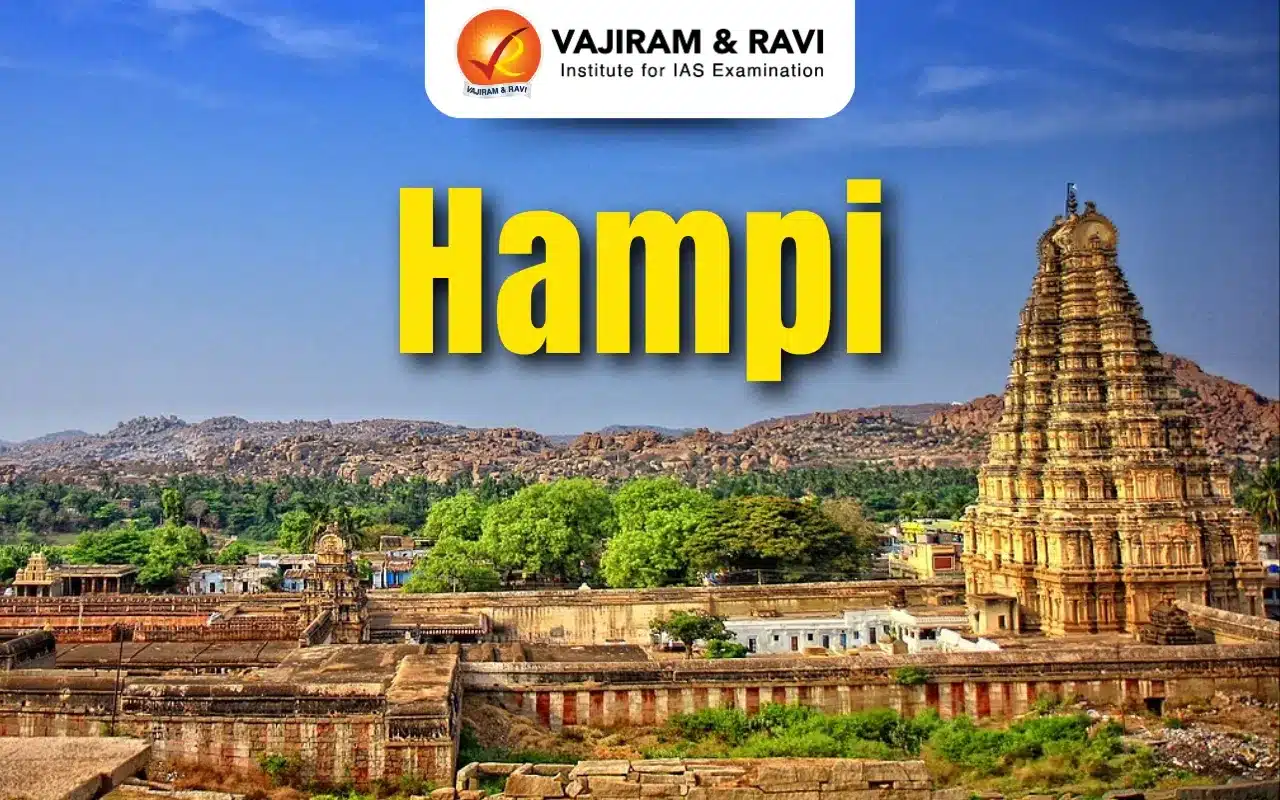
Hampi

Hampi_e10e4279a3 (1)

Hampi Latest News

Recently, a mantapa at Virupaksha Temple collapsed due to heavy rain, sparking concerns over neglect.

About Hampi

  • Hampi was the capital city of the Vijayanagara Empire, established in 1336 CE by Harihara I and Bukka Raya I of the Sangama Dynasty.
  • Location: Traditionally known as Pampakshetra of Kishkindha, Hampi is located in central Karnataka on the banks of the Tungabhadra River.
  • Foreign travellers like Domingo Paes described Vijayanagara as “as large and beautiful as Rome”, highlighting its architectural grandeur and prosperity.
  • The empire fell in 1565 CE after the Battle of Talikota, where the Deccan Sultanates defeated Rama Raya, leading to mass destruction. The city reportedly burned for six months.
  • Hampi remained forgotten until the late 18th century when British antiquarian Colin Mackenzie mapped it in 1799, creating the first cartographic records.
  • Early photographs and restoration attempts were made by British officials like Alexander Greenlaw, showcasing colonial-era interest in Indian heritage.
  • The first major conservation initiative, the Hampi National Project, was launched in 1976.
  • Excavations revealed key sites such as the Vitthala Temple bazaarPushkarini (stepped tank), and Paan-supari bazaar.
    • Prominent landmarks include the Virupaksha Temple, Lotus Mahal, Queen's Bath, and Elephant Stables.
  • Hampi was declared a UNESCO World Heritage Site in 1986, recognising it as one of India’s largest archaeological zones, covering 250 sq. km and housing over 1,600 monuments.

Hampi FAQs

Q1. Why is Hampi famous in Indian history?
Ans. Hampi was the capital of the Vijayanagara Empire, a UNESCO World Heritage Site known for its rich Dravidian architecture and historic significance.

Q2. Where is Hampi located?
Ans. Hampi is located in the Ballari district of Karnataka, India, along the banks of the Tungabhadra River.

Q3. Which dynasty is associated with Hampi?
Ans. The Vijayanagara dynasty ruled from Hampi, making it a key cultural and political center between the 14th and 16th centuries.

Source: IE

What is the Windfall Tax?

What is the Windfall Tax?

About Windfall Tax:


  • What is it? It is a higher tax levied by the government on specific industries when they experience unexpected and above-average profits.
  • When is it imposed?
    • When the government notices a sudden increase in an industry's revenue, they impose this tax.
    • However, these revenues cannot be linked to anything the company actively pursued, such as its business strategy or expansion.
    • Consequently, a Windfall Tax is imposed on an industry's profits when it experiences a sharp increase in revenue due to unrelated external events.
  • Rationale behind the imposition of windfall tax:
    • Redistribution of unexpected gains, when high prices benefit producers at the expense of consumers;
    • To fund social welfare schemes;
    • As a supplementary revenue stream for the government;
    • As a way for the Government to narrow the country’s widened trade deficit.


Q1) What is a Direct Tax?

A direct tax is a tax that a person or organization pays directly to the entity that imposed it. Examples include income tax, real property tax, personal property tax, and taxes on assets, all of which are paid by an individual taxpayer directly to the government.

Source: India reimposes windfall tax on petroleum crude after two months

Forest (Conservation) Amendment Bill

Forest (Conservation) Amendment Bill

What’s in today’s article?

  • Why in News?
  • Forest Conservation Laws in India
  • Achievements of the Forest Conservation Act 1980
  • Issues in the Forest Conservation Act 1980
  • The Key Changes to the Act
  • Significance of these Amendments
  • What are the Objections to the Changes?
  • The Government’s Response


Why in News?

  • The Forest (Conservation) Amendment Bill 2023 is likely to be tabled in the monsoon session of Parliament.


Forest Conservation Laws in India:

  • The Forest Conservation Act 1980 was enacted -
    • To protect India’s forests and
    • Empowers the Central government to regulate the extraction of forest resources (from timber and bamboo to coal and minerals) by industries as well as forest-dwelling communities.
  • The Forest Rights Act 2006 protects the rights of tribals and forest-dwellers dependent on forests for their livelihood.
  • India’s forest policy (1988) prescribes a third of the country’s geographical area to be under forests.


Achievements of the Forest Conservation Act 1980:

  • From 1951-1975, about 4 million hectares of forest land has been diverted for various non-forestry purposes.
  • From 1980 to 2023, only a million hectares have been diverted - a sign of its impact in reducing the pace of forest appropriation.


Issues in the Forest Conservation Act 1980:

  • Such protection was only available for areas already marked out as ‘forest’ in Central or State government records.
  • A Supreme Court judgement (in the 1996 Godavarman Thirumulpad case) expanded the scope of such protection.
    • Under it, even areas not formally notified as ‘forests’ but conforming to the ‘dictionary’ meaning of forests were protected.
    • As there is no all-encompassing definition of a ‘forest’, the apex court directed States to define and demarcate forests using their own criteria. However, not all States did.
  • At present, only 21% is under such cover and it is about 24% if one also accounts for tree cover outside areas under recorded forest, plantations, orchards.
  • According to the Environment Ministry, to address these issues the Forest (Conservation) Amendment Bill seeks to amend the Forest Conservation Act 1980.


The Key Changes to the Act:

  • Inserting a ‘preamble’: That underlines -
    • India’s commitment to preserving forests, their biodiversity and tackling challenges from climate change and
    • Amending the name of the Act to Van (Sanrakshan Evam Samvardhan) Adhiniyam (translated as Forest Conservation and Augmentation) from the existing Forest (Conservation) Act.
  • The Act would only apply to: Lands notified in any government record as ‘forest’ on or after 1980.
  • Exemptions: The Act would not apply -
    • If notified, forest land was legally diverted between 1980 and 1996, for non-forest use.
    • To forest land situated 100 km away from international borders and to be used for “strategic projects of national importance” or
    • To land ranging from 5-10 hectares for security and defence projects.


Significance of these Amendments:

  • It will incentivise private parties who want to develop plantations in degraded forests or restore tree patches.
    • Earlier, a private plantation/ a reforested land that wasn’t officially marked out as forest could be retrospectively earmarked, forcing the developer of such a plantation to lose rights associated with that patch.
    • This was an ‘impediment’ to India’s plans of developing a ‘carbon sink’ of three billion tonnes by 2030 in line with its commitments under the Paris Agreement.
  • It will stop States from apportioning forest tracts meant for plantations to companies for mining operations.
  • It will craft new solutions beyond the Act’s original intent of only keeping forests from being exploited for industrial uses and to aid reforestation.


What are the Objections to the Changes?

  • No changes suggested by the JPC: A Joint Parliamentary Committee (JPC) which was looking at amendments to the Bill has approved the version sent by the government with almost no comment, revisions or suggestions.
  • Exemptions could be detrimental: To significant forests in the Himalayan, trans-Himalayan and northeastern regions.
  • Dissent against the move to rename the bill: On the grounds that it was “sanskritik terminology and untenable.”
  • The Act waters down the Godavarman judgement.
  • The amendments tilted the balance towards the Centre. Forest conservation is in the Concurrent List, which means it comes under the domain of both the Centre and States.
  • Other objections: Restricting the legislation’s ambit only to areas recorded as forests on or after October 25, 1980 would mean leaving out significant sections of forest land and many biodiversity hotspots.


The Government’s Response:

  • The Environment Ministry has submitted detailed explanations to the Committee, trying to address concerns that have been raised.
  • It emphasises that the new amendments do not dilute the Godavarman judgement and that there are provisions in place to ensure that land will not be “misused.”
  • The proposed exemptions are not generic and would be restricted to “specific linear projects of strategic importance” identified by the Central government.
  • These exemptions wouldn’t be available to private entities


Q1) What is the difference between the Forest Conservation Act (1980) and the Indian Forest Act 1927?

The Forest (Conservation) Act 1980 came into force to address deforestation. Though the Indian Forest Act 1927 is already in operation, it is more focused on controlling the extraction of timber and not aimed at preserving forests or addressing deforestation.


Q2) What is the Environment Protection Act 1986?

The Environment Protection Act 1986 empowers the Central Government to establish authorities charged with the mandate of preventing environmental pollution in all its forms and to tackle specific environmental problems that are peculiar to different parts of the country.


Source: Explained | Why is there a controversy on the forest Bill?

PM Modi’s State Visit to UAE

PM Modi’s State Visit to UAE

What’s in today’s article?

  • Why in news?
  • India – UAE Bilateral Relationship
  • Political relations between India and UAE
  • Trade Relation between India and UAE
  • Comprehensive Economic Partnership Agreement (CEPA) between India and UAE
  • Investment between India and UAE
  • NRI Remittances from UAE to India
  • Energy Cooperation between India and UAE
  • News Summary: PM Modi’s State Visit to UAE
  • Key highlights of the visit


Why in news?

  • After concluding his visit to France, the Prime Minister Modi departed for UAE and reached there on 15th of July.
  • This was his fifth visit to the UAE since he assumed office in 2014.


India – UAE Bilateral Relationship

Political relations between India and UAE

  • India and the UAE established diplomatic relations in 1972. Since then, their relationship has grown manifold.
  • In January 2017, India and UAE signed a Comprehensive Strategic Partnership Agreement.
  • The strong bilateral relations have received impetus from time-to-time with exchange of high-level visits from both sides.
    • In February 2019, UAE invited India as the "Guest of Honour” to address the Inaugural Plenary of 46th Session of the Organisation of Islamic Cooperation.
    • PM Modi paid his third visit to the UAE in August 2019. He was awarded the highest civilian award of UAE called 'Order of Zayed'.
    • Crown Prince of UAE visited India for the second time in January 2017 as the Chief Guest at India’s Republic Day celebrations.
  • The foundation stone laying ceremony for the first traditional Hindu Temple in Abu Dhabi was held in April 2019.
  • In February 2022, PM Modi and Crown Prince of Abu Dhabi HH Sheikh Mohammed bin Zayed Al Nahyan held a Virtual Summit. 
    • Both the leaders issued a Joint Vision Statement – “Advancing the India and UAE Comprehensive Strategic Partnership: New Frontiers, New Milestone”.
  • UAE is the guest country at G-20, being held under India’s presidency.


Trade Relation between India and UAE

  • India-UAE trade rose to USD 85 billion in 2022, making the UAE India’s third-largest trading partner for 2022-23 and India’s second-largest export destination
    • India is the UAE’s second largest trading partner.
  • Both the countries are expecting to achieve the target of USD 100 billion in trade before the G-20 meeting in Delhi in September 2023.


Comprehensive Economic Partnership Agreement (CEPA) between India and UAE

  • India-UAE CEPA was signed on 18 February 2022 in New Delhi during the India-UAE Virtual Summit.
    • In March 2022, India announced the unveiling of the CEPA with the UAE.
  • It covers almost all the tariff lines dealt in by India (11,908 tariff lines) and the UAE (7581 tariff lines) respectively.


Investment between India and UAE

  • Since the signing of CEPA, UAE has emerged as the fourth largest investor in India during 2022-23. It was seventh largest investor in 2021-22.
  • In the last fiscal, FDI from the UAE to India jumped over three-fold to $3.35 billion from $1.03 billion in 2021-22.


NRI Remittances from UAE to India

  • The annual remittances made by the large Indian community in UAE (estimated to be around 3.3 million) amount to US$ 17.56 billion for year 2018.


Energy Cooperation between India and UAE

  • In 2017, the Abu Dhabi National Oil Company (ADNOC) and the Indian Strategic Petroleum Reserves Ltd. (ISPRL) signed an MoU to establish a strategic crude oil reserve in the city of Mangalore (Karnataka).
  • ADNOC is also involved in exploring the possibility of storing its crude oil at ISPRL’s underground oil storage facility at Padur in Karnataka.
  • A consortium led by ONGC including Indian Oil and Bharat PetroResources, has been awarded a 10 per cent stake in the Lower Zakum Concession.


News Summary: PM Modi’s State Visit to UAE

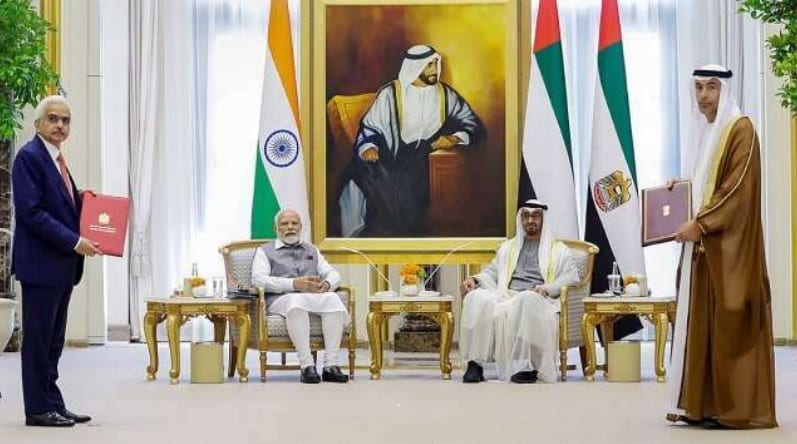
  • Prime Minister Modi held talks with UAE President Sheikh Mohamed bin Zayed Al Nahyan to further deepen the multifaceted bilateral ties.


Key highlights of the visit

  • Trade settlement in local currencies
    • India and the United Arab Emirates have agreed to start trade settlement in local currencies.
    • In this regard, an MoU between RBI and UAE Central Bank for the establishment of a framework to promote the use of local currencies (INR - AED) for cross-border transactions was signed.
      • The MoU aims to put in place a Local Currency Settlement System (LCSS) to promote the use of INR and AED bilaterally.
      • Creation of the LCSS would enable exporters and importers to invoice and pay in their respective domestic currencies.
      • This in turn would enable the development of an INR-AED foreign exchange market.
      • The use of local currencies would optimise transaction costs and settlement time for transactions, including for remittances from Indians residing in UAE.
  • Linking of Fast Payment Systems of both the countries
    • India and the UAE agreed to link the Indian Unified Payments Interface with the Gulf country's Instant Payment Platform (IPP).
    • In this regard, RBI and the Central Bank of the UAE signed MoU for cooperation for interlinking their payment and messaging systems.
  • IIT Delhi to open campus in Abu Dhabi
    • India signs MoU with Education and Knowledge dept of Abu Dhabi for setting up IIT Delhi campus there.
  • India’s full support for UAE’s COP-28 presidency
    • PM Modi assured India’s full support for UAE’s COP-28 presidency.
      • The 2023 United Nations Climate Change Conference or Conference of the Parties of the UNFCCC, more commonly referred to as COP28, will be held from November 30 until December 12 at the Expo City, Dubai.
  • Joint Statements issued
    • A Joint Statement was issued after the meeting. 
    • A separate Joint Statement on Climate Change was also issued.
      • In a joint statement on climate change, India and the UAE highlighted the importance of the global stocktake of collective action to achieve the goals of the Paris Agreement.
      • Both sides also said that there was an urgent need for developed countries to fulfil the USD 100 billion delivery plan to mitigate and adapt to the effects of climate change.


Q1) What is UNFCCC?

The UNFCCC stands for the United Nations Framework Convention on Climate Change. It is an international environmental treaty that was adopted at the Earth Summit in Rio de Janeiro, Brazil, in 1992. The UNFCCC aims to address global climate change and its impacts by promoting cooperation among countries. The ultimate objective of the UNFCCC is to stabilize greenhouse gas concentrations in the atmosphere at a level that will prevent dangerous human interference with the climate system. It recognizes that climate change is a global issue and that its effects are felt by countries worldwide, but the responsibility for addressing it differs between developed and developing countries.


Q2) What is Indian Strategic Petroleum Reserves Ltd. (ISPRL)? 

Indian Strategic Petroleum Reserves Ltd. (ISPRL) is a special purpose vehicle (SPV) established by the Government of India under the Ministry of Petroleum and Natural Gas. It is responsible for building and maintaining strategic petroleum reserves (SPRs) in India. The primary objective of ISPRL is to ensure energy security and to mitigate any potential disruptions in oil supplies. India, as one of the world's largest consumers of oil, recognizes the importance of having strategic reserves to safeguard against supply disruptions caused by geopolitical events, natural disasters, or any other emergencies that may impact oil availability.


Source: India, UAE sign pacts on use of local currencies in cross-border transactions, IIT campus in Abu Dhabi | Ministry of External Affairs | PIB | The Hindu | Indian Express

What is Namda Art?

What is Namda Art?

Why in news? 


  • The Namda craft of Kashmir is being successfully revived under a Skill India’s Pilot Project as part of the Pradhan Mantri Kaushal Vikas Yojana (PMKVY), with nearly 2,200 candidates from across six districts of the state, receiving training in the dying art form.


About Namda Art:

  • It is said to have begun in the 16th century when Mughal Emperor Akbar wanted to get a covering for his horses to protect them from the cold.
  • It was introduced by a Sufi saint named Shah-e-Hamdan to Kashmiris.
  • Namda is a type of traditional Kashmiri felted carpet that is created using sheep wool and has colourful hand embroidery.
  • The distinct feature of this Kashmiri craft is that wool is felted and not woven.
  • How it is made?
    • It is usually a sandwich of many layers of wool flattened over each other.
    • After a layer is spread, it is sprinkled homogeneously with water and pressed with a tool known as ‘pinjra’ (woven willow wicker). 
  • Unique themes and floral patterns provide the themes for these masterpieces and flowers and leaves, buds and fruits are the essence of the designs.
  • It is practised as a craft in several cultures, especially in the countries throughout Asia, viz. Iran, Afghanistan and India.


Q1) What is Pradhan Mantri Kaushal Vikas Yojana (PMKVY)?

Pradhan Mantri Kaushal Vikas Yojana (PMKVY) is a flagship skill development program launched by the Government of India. It aims to empower the country's youth by providing them with industry-relevant skills to enhance employability and bridge the skill gap in various sectors.

Source: Skill India project successfully revives the dying Namda Art of Jammu and Kashmir

What is Atal Mission for Rejuvenation and Urban Transformation (AMRUT) 2.0?

What is Atal Mission for Rejuvenation and Urban Transformation (AMRUT) 2.0?

What’s in today’s article?

  • Why in news?
  • What is Atal Mission for Rejuvenation and Urban Transformation (AMRUT)?
  • What is AMRUT 2.0?
  • News Summary: Focus on flooding and groundwater, Govt plans to revive stepwells, borewells
  • Key highlights of the pilot projects


Why in news?

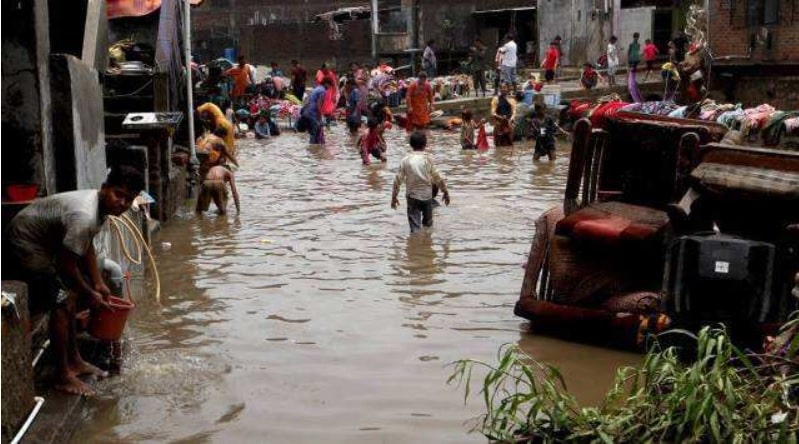
  • 10 cities across the country are getting ready to revive defunct borewells, neglected heritage stepwells and other shallow aquifers in a pilot project to recharge the groundwater as well as mitigate flooding.
  • The pilot project will be executed under the Atal Mission for Rejuvenation and Urban Transformation (AMRUT) 2.0.


What is Atal Mission for Rejuvenation and Urban Transformation (AMRUT)?

About

  • AMRUT was launched in 2015 to provide basic civic amenities like water supply, sewerage, urban transport, parks as to improve the quality of life for all especially the poor and the disadvantaged. 
  • The focus of the Mission is on infrastructure creation that has a direct link to provision of better services to the citizens.

Image Caption: Key Features of AMRUT

  • Objective
  • The objective of the mission is to: 
    • ensure that every household has access to a tap with assured supply of water and a sewerage connection 
    • increase the amenity value of cities by developing greenery and well-maintained open spaces e.g., parks and 
    • reduce pollution by switching to public transport or constructing facilities for non-motorized transport e.g., walking and cycling.
  • Coverage
    • The Mission covers covering 500 cities that includes all cities and towns with a population of over one lakh with notified Municipalities.
  • Achievements
    • AMRUT has been ensuring water security by adding 1.1 crore household water tap connections and 85 lakh sewer connections, thus benefiting more than 4 crore people.


What is AMRUT 2.0?

  • About
    • The target in the second phase of AMRUT is to
      • improve sewage and septic management, 
      • make our cities water safe cities and 
      • ensure that no sewage drains anywhere in our rivers’
    • In other words, AMRUT 2.0 will focus on enhancing sewerage and septic management and to make all Indian cities water secure.
  • Aim
    • Amrut 2.0 aims at 
      • providing 100% coverage of water supply to all households in around 4,700 urban local bodies by providing about 2.68 crore tap connections and 
      • 100% coverage of sewerage and septage in 500 AMRUT cities by providing around 2.64 crore sewer or septage connections
  • Principles and Mechanism
    • AMRUT 2.0 will adopt the principles of circular economy and promote conservation and rejuvenation of surface and groundwater bodies. 
    • The Mission will promote data led governance in water management and Technology Sub-Mission to leverage latest global technologies and skills. 
    • ‘Pey Jal Survekshan’ will be conducted to promote progressive competition among cities. 
  • Coverage 
    • The Amrut 2.0 will extends coverage from 500 cities under the first phase to 4,700 cities and towns.
    • It will provide water tap connections to 26.8 million urban households.
    • It will benefit more than 10.5 crore people in urban areas.


News Summary: Focus on flooding and groundwater, Govt plans to revive stepwells, borewells

Key highlights of the pilot projects

  • Cities covered
    • The cities — Jaipur, Gwalior, Dhanbad, Kolkata, Rajkot, Thane, Pune, Hyderabad, Bengaluru and Chennai — were selected.
    • These cities were selected due to their historical dependence on shallow aquifer systems and the local urban bodies’ interest in implementing the project.
  • Technical partner for the project
    • National Institute of Urban Affairs (NIUA) along with not-for-profit ACWADAM and Biome Environmental Solutions.
  • Idea behind this project
    • Ranging from 3 metres to 5 metres in depth, the shallow aquifers can be recharged relatively quicker, and by using less energy, compared to the deeper ones.
    • Once recharged, the water can be used by the local communities. Informal settlements tend to rely on shallow aquifers for water supply.
  • Need for such project
    • While Indian cities depend on surface water supply, like rivers, about 40 per cent of the supply comes from groundwater.
    • The level of groundwater is fast depleting and needs to be recharged.
      • The United Nations World Water Development Report 2022 said India was the largest groundwater user globally.
    • Also, water scarcity as well as the flooding situation can be addressed by recharging the groundwater.


Q1) What is National Institute of Urban Affairs (NIUA)?

The National Institute of Urban Affairs (NIUA) is a premier research and capacity-building institution in India that focuses on urban development. It was established in 1976 as an autonomous body under the Ministry of Housing and Urban Affairs, Government of India The primary objective of NIUA is to promote sustainable and equitable urban development in India. It undertakes research, policy analysis, and advocacy on various urban-related issues, aiming to provide evidence-based insights and recommendations for urban policymakers, practitioners, and stakeholders.


Q2) What is United Nations World Water Development Report?

The United Nations World Water Development Report (WWDR) is a flagship publication produced by the United Nations World Water Assessment Programme (WWAP). It is released every three years and provides a comprehensive overview of the world's freshwater resources, their management, and the challenges and opportunities related to water and sanitation.


Source: Focus on flooding and groundwater, Govt plans to revive stepwells, borewells | PIB | India Today

Production Linked Incentive Scheme 2.0

Production Linked Incentive Scheme 2.0

About Production Linked Incentive Scheme 2.0:


  • The scheme proposes a financial incentive to boost domestic manufacturing and attract large investments in the value chain.
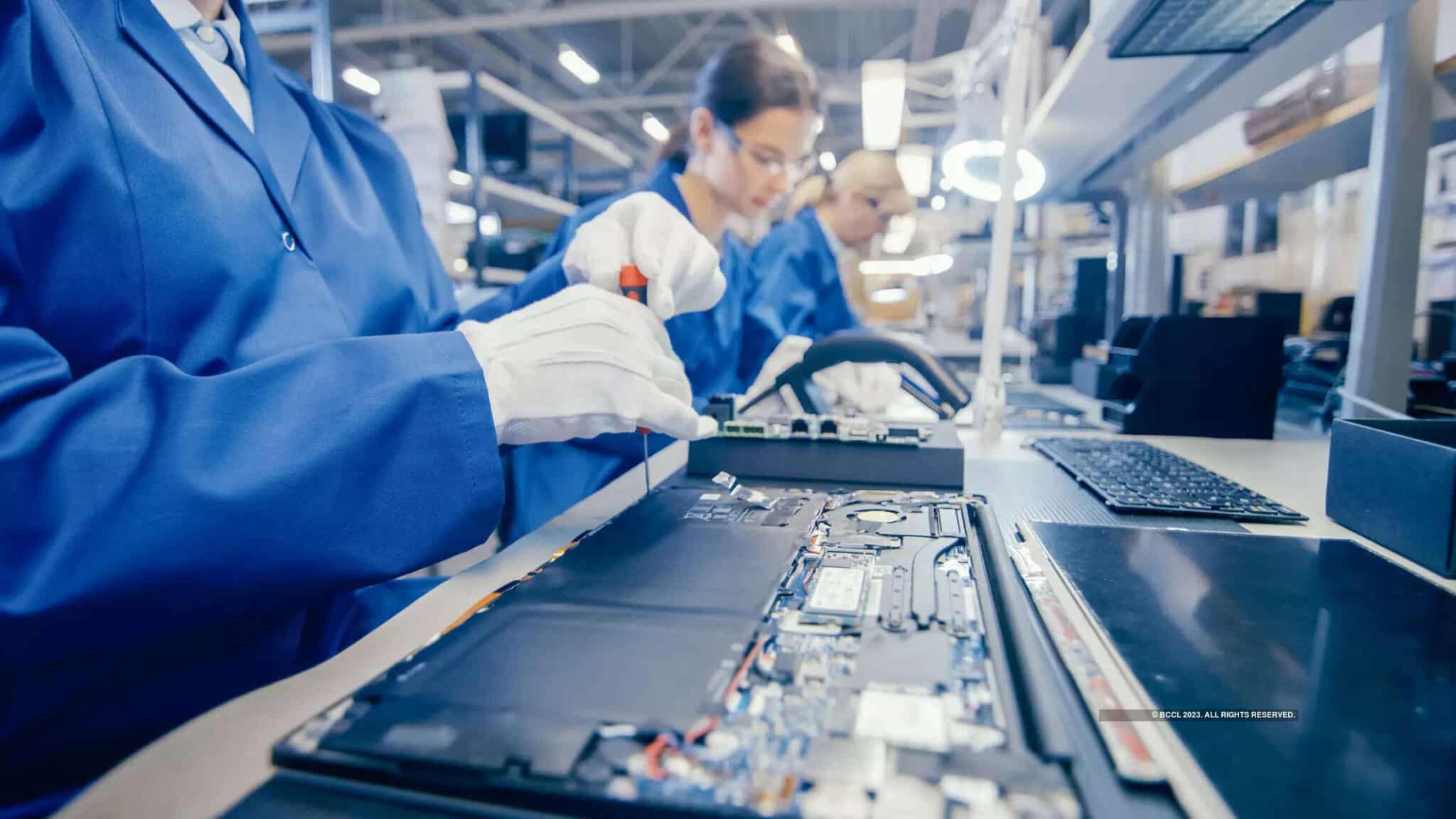
  • The target segments under PLI 2.0 Scheme shall include Laptops, Tablets ,All-in-One PCs and Servers and Ultra Small Form Factor.
  • Implementation: Companies, both global and domestic, that meet the eligibility criteria specified in the PLI 2.0 Scheme guidelines will receive support for manufacturing goods in India within the specified target segment.
    • The classification of applicants into the Hybrid (Global/Domestic) category will be determined by whether the company is domestic or global.
    • A comprehensive ranking of all applicants will be maintained based on the eligibility criteria outlined in the scheme guidelines.
    • Subsequently, the selection of applicants in each category—global, hybrid, and domestic—will be based on their ranking and overall PLI projection, subject to the availability of the budget.
  • Tenure: The incentives provided under the PLI 2.0 Scheme will be applicable for a period of 6 years
  • Base year: For the calculation of net incremental sales of manufactured goods, the base year will be the financial year 2022-23.
  • Incentives payout:
    • The incentive granted to each company will be based on the net incremental sales of manufactured goods in the target segment, compared to the base year.
    • The maximum incentive amounts will be capped at INR 45 billion for global companies, INR 22.50 billion for hybrid (global/domestic) companies, and INR 5 billion for domestic companies.


Q1) What is the objective of the Production Linked Incentive Scheme?

The Production Linked Incentive (PLI) Scheme is an initiative launched by the Government of India to boost manufacturing and attract investments in specific sectors. The scheme aims to enhance India's manufacturing capabilities, create job opportunities, and increase exports.

Source: Guidelines for Operationalisation of Production Linked Incentive Scheme 2.0 for IT Hardware approved

Enquire Now