European Union’s Artificial Intelligence Act

European Union’s Artificial Intelligence Act

What’s in today’s article?

  • Why in News?
  • About Artificial Intelligence
  • Difference between AI and Regular Programming
  • Experts’ Concern with Artificial Intelligence
  • Should AI be Regulated before it’s too late?
  • Benefits of Regulating AI outweigh Potential Losses
  • News Summary
  • Where Does Global AI Governance Currently Stand?


Why in News?

  • Members of the European Parliament reached a preliminary deal this week on a new draft of the European Union’s ambitious Artificial Intelligence Act.


About Artificial Intelligence

  • Artificial intelligence (AI) is the ability of a computer or a robot controlled by a computer to do tasks that are usually done by humans because they require human intelligence and discernment.
  • The term is frequently applied to the project of developing systems endowed with the intellectual processes characteristic of humans, such as the ability to reason, discover meaning, generalize, or learn from past experience.
  • AI algorithms are trained using large datasets so that they can identify patterns, make predictions and recommend actions, much like a human would, just faster and better.


Difference between AI and Regular Programming

  • Regular programs define all possible scenarios and only operate within those defined scenarios.
  • AI ‘trains’ a program for a specific task and allows it to explore and improve on its own.
  • A good AI programme ‘figures out’ what to do when met with unfamiliar situations.
  • For example, Microsoft Word cannot improve on its own, but facial recognition software can get better at recognizing faces the longer it runs.


Experts’ Concern with Artificial Intelligence

  • Recently, a group of more than 1,000 AI experts, including Elon Musk, have written an open letter calling for a six-month pause in developing systems more powerful than OpenAI’s newly launched GPT-4.
  • This AI moratorium has been requested because “powerful AI systems should be developed only once we are confident that their effects will be positive and their risks will be manageable,” according to the letter.
  • An example of why there is a need for AI moratorium –
  • As many as 300 million full-time jobs around the world could be automated in some way by the latest AI, according to Goldman Sachs economists.


Should AI be Regulated before it’s too late?

  • Artificial Intelligence is already suffering from three key issues – privacy, bias and discrimination.
  • Currently, governments do not have any policy tools to halt work in AI development.
  • If left unchecked, it can start infringing on – and ultimately take control of – people’s lives.
  • Businesses across industries are increasingly deploying AI to analyse preferences and personalize user experiences, boost productivity, and fight fraud.
    • For example, ChatGPT Plus, has already been integrated by Snapchat, Unreal Engine and Shopify in their applications.
  • This growing use of AI has already transformed the way the global economy works and how businesses interact with their consumers.
    • However, in some cases it is also beginning to infringe on people’s privacy.
  • Hence, AI should be regulated so that the entities using the technology act responsible and are held accountable.
  • Laws and policies should be developed that broadly govern the algorithms which will help promote responsible use of AI and make businesses accountable.
  • Mandatory regulations on AI can go a long way in preventing technology from infringing human rights.
  • They can also help ensure that technology is used for the benefit of end users instead of negatively affecting their lives.


Benefits of Regulating AI outweigh Potential Losses

  • It is true that regulating AI may adversely impact business interests. It may slow down technological growth and suppress competition.
  • However, taking a cue from General Data Protection Regulation (GDPR), the governments can create a more AI-focused regulations and have a positive long-term impact.
    • GDPR is the European Union’s law which ensures the protection of individuals with regard to the processing of personal data and on the free movement of such data.
  • Governments must engage in meaningful dialogues with other countries on a common international regulation of AI.


News Summary

  • Members of the European Parliament reached a preliminary deal this week on a new draft of the European Union’s ambitious Artificial Intelligence Act.
  • The AI Act was drafted in 2021 with the aim of bringing transparency, trust, and accountability to AI.
  • It also aims to create a framework to mitigate risks to the safety, health, fundamental rights, and democratic values of the EU.
  • Following a risk-based approach, it regulates the prohibition of certain AI systems, and sets out several obligations for the development, placing on the market and use of AI systems.
  • The Act envisages establishing an EU-wide database of high-risk AI systems and setting parameters so that future technologies can be included if they meet the high-risk criteria.
  • The legislation seeks to strike a balance between promoting “the uptake of AI while mitigating or preventing harms associated with certain uses of the technology”.
  • The EU’s AI Act mainly addresses providers of AI systems.


Where Does Global AI Governance Currently Stand?

  • The rapidly evolving pace of AI development has led to diverging global views on how to regulate these technologies.
  • The U.S. does not currently have comprehensive AI regulation and has taken a fairly hands-off approach.
  • On the other end of the spectrum, China over the last year came out with some of the world’s first nationally binding regulations targeting specific types of algorithms and AI.
  • It enacted a law to regulate recommendation algorithms with a focus on how they disseminate information.
  • In case of India, the Union Minister for Electronics and Information Technology, Shri Ahwini Vaishnaw, said that the government is not considering any law to regulate the growth of AI in India.


Q1) From where does ChatGPT get its data?

ChatGPT is an AI language model that was trained on a large body of text from a variety of sources (e.g., Wikipedia, books, news articles, scientific journals).


Q2) Does Artificial Intelligence have a legal personhood in India?

Unlike a corporation, AI have not been granted the status of legal personhood and so it does not the recognition for its work, rather the person for whom it performed the task gets the reward and recognition for it.


Source: Explained | What is the EU’s Artificial Intelligence Act and how does it plan to rein in tech like ChatGPT? | computer world  
Central Counterparties (CCPs)

Central Counterparties (CCPs)

What’s in today’s article?

  • Why in news?
  • What is a CCP?
  • What is the Issue?
  • What will be the Impact of the Move?


Why in news?

The European Securities and Markets Authority (ESMA), the European Union (EU’s) financial markets regulator has derecognised six Indian central counterparties (CCPs) from April 30, 2023.


What is a CCP?

  • It is a financial institution that perform two main functions as the intermediary in a market transaction -
    • Clearing and settlement for trades in foreign exchange, securities, options, and derivative contracts.
    • Guarantee the terms of trade.
  • CCP is a system provider, who by way of novation (act of replacing an obligation with another) -
    • Interposes between system participants in the transactions admitted for settlement,
    • Thereby becoming the buyer to every seller and the seller to every buyer, for the purpose of effecting settlement of their transactions.
  • CCPs are highly regulated institutions that specialise in managing counterparty credit risk.
  • In India, a CCP is authorised by the Reserve Bank of India (RBI) to operate under the Payment and Settlement Systems Act, 2007.


What is the Issue?

  • The six CCPs derecognised are:
    • The Clearing Corporation of India (CCIL),
    • Indian Clearing Corporation Ltd (ICCL),
    • NSE Clearing Ltd (NSCCL),
    • Multi Commodity Exchange Clearing (MCXCCL),
    • India International Clearing Corporation (IFSC) Ltd (IICC) and
    • NSE IFSC Clearing Corporation Ltd (NICCL).
  • Why are they derecognised?
    • As per the European Market Infrastructure Regulations (EMIR), a CCP in a third country (TC-CCPs) can provide clearing services to European banks only if it is recognised by ESMA.
    • The decision to derecognise Indian CCPs came due to ‘no cooperation arrangements’ between ESMA and Indian regulators - the RBI, the SEBI and the International Financial Services Centres Authority (IFSCA).
  • Regulations of CCPs:
    • According to the Financial Stability Report 2022 (RBI), after the global financial crisis of 2007-09, the legislations governing CCPs were enacted in some advanced jurisdictions to give them an extra-territorial reach.
    • Such regulations created a parallel maze of laws with overlapping requirements or restrictions and showed a lack of trust in the capabilities and quality of oversight exercised by other regulators.
  • Argument of Indian regulators:
    • Since these domestic CCPs operate in India and not in the EU, these entities cannot be subjected to the ESMA regulations.
    • These CCPs have robust risk management and there is no need for a foreign regulator to inspect them.


What will be the Impact of the Move?

  • On the TC-CCPs: With the withdrawal of recognition, these TC-CCPs will no longer be able to provide services to clearing members and trading venues established in the EU.
  • On the lenders (European banks): They will have to set aside additional capital to trade in the domestic market.
  • On the clearing members: They will also be impacted by way of higher capital requirements, enhanced credit risk, etc.
  • On the Indian economy: Of the total foreign portfolio investors (FPI) registered in India, close to 20% are from Europe. However, the SEBI has said that the derecognition is unlikely to have any impact.


Q1) What is the Payment and Settlement Systems Act 2007?

It is an Act to provide for the regulation and supervision of payment systems in India and to designate the Reserve Bank of India as the authority for that purpose.


Q2) What is the International Financial Services Centres Authority (IFSCA)?

IFSCA is a unified regulator responsible for the development and regulation of financial products, financial services and institutions in the IFSCs.


Source: Derecognition of six Indian central counterparties by EU regulator: What will be the impact?


World Bank Group

World Bank Group

About World Bank Group:

  • The WB is an international financial institution that provides loans and grants to the governments of low and middle-income/developing countries for the purpose of pursuing capital projects.
  • It was established along with the IMF at the 1944 Bretton Woods Conference.
  • The WB is the collective name for the International Bank for Reconstruction and Development (IBRD) and International Development Association (IDA), two of five international organisations owned by the WB Group.
  • The WB Group, which is the parent organisation of the WB, includes -
  1. IBRD: It provides loans, credits and grants.
  2. IDA: It provides low or no-interest loans to low-income countries.
  3. International Finance Corporation (IFC):It provides investment, advice and asset management to private companies and governments.
  4. Multilateral Guarantee Agency (MIGA): It insures lenders and investors against political risk such as war.
  5. International Centre for the Settlement of Investment Disputes (ICSID): It settles investment-disputes between investors and countries.
  • These all serve the dual objectives of the WB Group, which are to end extreme poverty by 2030 and increase shared prosperity for the bottom 40% of the population worldwide.
  • As of 2022, the WB is run by a President and 25 executive directors. IBRD and IDA have 189 and 174 member countries, respectively, and the S., Japan, China, Germany and the U.K. have the largest voting power.

What is the Leadership of the WB?

  • The President of the WB, who is the President of the entire WB Group, is responsible for chairing meetings of the boards of directors and for overall management of the Bank.
  • Traditionally, the President of the Bank has always been a U.S. citizen nominated by the US, the largest shareholder in the bank.
  • The nominee is subject to confirmation by the board of executive directors to serve a five-year, renewable term.
  • The boards of directors consist of the WB Group President and 25 executive directors. The President is the presiding officer and ordinarily has no vote except to break a tie.
  • The executive directors as individuals cannot exercise any power or commit or represent the Bank unless the boards specifically authorised them to do so.  


Q1) What is the Bretton Woods Conference known as?

The conference, formally known as the United Nations Monetary and Financial Conference, convened on July 1, 1944, and was attended by 730 delegates.

Source: Indian origin Ajay Banga set to be next President of World Bank 

Protection of Children from Sexual Offences Act (POCSO Act)

Protection of Children from Sexual Offences Act (POCSO Act)

About Protection of Children from Sexual Offences Act (POCSO Act):

  • It is the first comprehensive law in India dealing specifically with the sexual abuse of children, enacted in 2012.
  • It is administered by the Ministry of Women and Child Development (MoWCD).
  • Objective: The Act was designed to protect children aged less than 18 from sexual assault, sexual harassment and pornography offences and provide for the establishment of Special Courts for the trial of such offences and related matters and incidents.
  • Salient Features:
    • Gender-neutral law: The POCSO Act establishes a gender-neutral tone for the legal framework available to child sexual abuse victims by defining a child as “any person” under the age of 18.
    • It defines various types of sexual abuse, such as penetrative and non-penetrative assault, as well as sexual harassment and pornography.
    • It considers a sexual assault to be aggravated in certain circumstances, such as when the abused child is mentally ill or when the abuse is committed by someone in a position of trust or authority over the child, such as a family member, etc.
    • People who traffic children for sexual purposes are also punishable under the provisions relating to abetment in the Act. 
    • The attempt to commit an offence under the Act has been made liable for punishment for upto half the punishment prescribed for the commission of the offence.
    • No time limit for reporting abuse: A victim can report an offence at any time, even a number of years after the abuse has been committed.
    • Mandatory reporting: The Act also makes it the legal duty of a person aware of the offence to report sexual abuse. In case s/he fails to do so, the person can be punished with six months imprisonment or a fine.
    • Safeguards to victims: The Act incorporates child-friendly procedures for reporting, recording of evidence, investigation and trial of offences. These include:
      • Recording the statement of the child at the residence of the child or at the place of his choice, preferably by a woman police officer not below the rank of sub-inspector.
      • No child is to be detained in the police station at night for any reason.
      • Police officers to not be in uniform while recording the statement of the child.
      • The statement of the child is to be recorded as spoken by the child.
      • Medical examination of the child is to be conducted in the presence of the parent of the child or any other person in whom the child has trust or confidence.
      • No aggressive questioning or character assassination of the child in-camera trial of cases.
      • The Act specifically laid down that the child victim should not see the accused at the time of testifying and that the trial be held in camera.
      • It also required that the Special Court complete the trial, as far as possible, within a period of one year from the date of cognisance.

Amendment to the Act:

  • The Act was amended for the first time in 2019 to enhance the punishments for specific offences in order to deter abusers and ensure a dignified childhood.
  • This amendment enhanced the punishment to include the death penalty for aggravated penetrative sexual assault of the child.
  • It also provides for levy of fines and imprisonment of up to 20 years to curb child pornography.


Q1) What is the Nirbhaya Act?

Nirbhaya Act, also known as the Criminal Law (Amendment) Act 2013, is an Indian Legislation that came into force on the 3rd of February 2013.The amendment act of 2013 inserted a new section in IPC and amended the old ones. The definition of rape got amended and expanded to include oral sex and the insertion of any other body part or any other body part into a woman’s vagina, urethra, or anus.. The act recognises acts as Acid attacks, Sexual harassment, Voyeurism, stalking as an offence.

Source: POCSO Act enacted not to punish minors in consensual relations and brand them as criminals, says HC

World Press Freedom Index 2023

World Press Freedom Index 2023

About World Press Freedom Index 2023:

  • It is an annual report published by the global media watchdog Reporters Without Borders (RSF).
  • Purpose: Compare the level of freedom enjoyed by journalists and media in 180 countries and territories.
  • The ranking is based on five categories --  political, legislative, economic, sociocultural and safety of journalists.
  • Highlights of the 2023 Report:
    • India is ranked 161 out of 180 countries. Press freedom in India has gone from “problematic” to “very bad”, with the country slipping 11 ranks since the 2022 report.
    • Except for Bangladesh (163), Myanmar (173) and China (179), all other neighbours have a better rank than India -- Bhutan (90), Nepal (95), Sri Lanka (135), Pakistan (150), Afghanistan (152).
    • India was positioned 169 in political indicators while it was 144 in legislative, 155 in economic, 143 in social indicators and 172 in the safety of journalists.
    • Norway is ranked first for the seventh consecutive year. 

Key Facts about Reporters Without Borders (RSF):

  • It is an international NGO whose self-proclaimed aim is to defend and promote media freedom.
  • Headquarters: Paris, France.
  • It has consultative status with the United Nations.
  • RSF defines press freedom as “the ability of journalists as individuals and collectives to select, produce, and disseminate news in the public interest independent of political, economic, legal and social interference and in   the absence of threats to their physical and mental safety.”


Q1) What are four fundamental freedoms?

The four freedoms relate to freedom of speech, freedom of worship, freedom from want and freedom from fear. They are sometimes simply referred to as freedom from fear and freedom from want.

Source: India slips in World Press Freedom Index, ranks 161 out of 180 countries

What are Channapatna Toys?

What are Channapatna Toys?

About Channapatna Toys:

  • Channapatna toys are a particular form of wooden toys and dolls that are manufactured in the town of Channapatna in the Ramanagara district of Karnataka.
  • Channapatna is also known as Gombegala Ooru (toy-town).
  • History:
    • The historic ruler of Mysore, Tipu Sultan, is the one attributed to introducing these wooden toys to the current town of Channapatna.
    • He invited artists from Persia to train the local artists in wooden toy making, which then helped this industry thrive locally.
  • Features:
    • Most of these toys are handmade.
    • They are also painted in organic colours extracted from vegetables and plants and natural dyes, making the Channapatna Toys 100% chemical free. 
    • Traditionally, they are mostly made of Ivory Wood. However, nowadays, sandalwood and mango wood are also used. 
    • Their shapes are mostly round and cubes with blunt edges, so they are completely safe for kids.
  • They received the geographical indication (GI) tag in 2005.


Q1) What is the Geographical Indication (GI) tag?

A geographical indication (GI) is a sign used on products that have a specific geographical origin and possess qualities or a reputation that are due to that origin. In order to function as a GI, a sign must identify a product as originating in a given place.

Source: Centre’s ban on import of toys from China increased our profits, say Channapatna toy makers

Sherpa

Sherpa

About Sherpa:

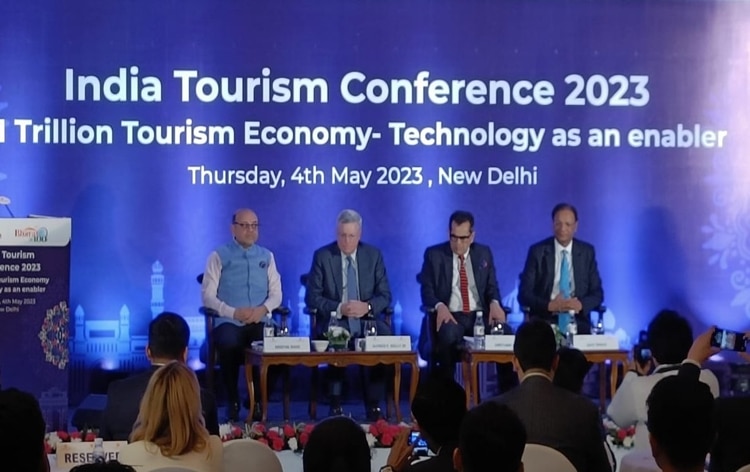
  • Who are they? A Sherpa is a personal representative of the leader of a member country at an international Summit meeting such as the G8, G20, the Nuclear Security Summit etc.
  • Task: The Sherpa engages in planning, negotiation and implementation tasks through the Summit. They coordinate the agenda, seek consensus at the highest political levels, and participate in a series of pre-Summit consultations to help negotiate their leaders’ positions.
  • Who are appointed Sherpas? Sherpas are career diplomats or senior government officials appointed by the leaders of their countries.
  • Etymology: The term is derived from the Nepalese Sherpa people, who serve as guides for mountaineers in the Himalayas.


Q1) What is the motto of the G20 Summit 2023?

Vasudhaiva Kutumbakam, which translates to "One Earth, One Family, One Future," is the theme of India's G20 presidency. It is inspired from the Maha Upanishad, an old Sanskrit scripture.

Source: India's G20 Sherpa Amitabh Kant addresses India Tourism Conference 2023 in New Delhi

Heat Index

Heat Index

 About Heat index:

  • Heat index is a measure of how hot it feels when humidity is factored in along with the air temperature, and the figures were calculated using data from the India Meteorological Department (IMD).
  • It is also known as the apparent temperature.
  • When the body gets too hot, it begins to perspire or sweat to cool itself off.
  • If the perspiration is not able to evaporate, the body cannot regulate its temperature.
  • Evaporation is a cooling process. When perspiration is evaporated off the body, it effectively reduces the body's temperature.  When the atmospheric moisture content (i.e. relative humidity) is high, the rate of evaporation from the body decreases. 
  • In other words, the human body feels warmer in humid conditions. The opposite is true when the relative humidity decreases because the rate of perspiration increases. 
  • The body actually feels cooler in arid conditions.
  • There is direct relationship between the air temperature and relative humidity and the heat index, meaning as the air temperature and relative humidity increase (decrease), the heat index increases (decreases). 


Q1) Meteorological Department What does it do?

To take meteorological observations and to provide current and forecast meteorological information for optimum operation of weather-sensitive activities like agriculture, irrigation, shipping, aviation, offshore oil explorations, etc

Source: India to launch its own heat index next year to quantify heat hazard, generate impact-based heat wave alerts for specific locations

Tawang Monastery

Tawang Monastery

About Tawang Monastery:

  • Location:
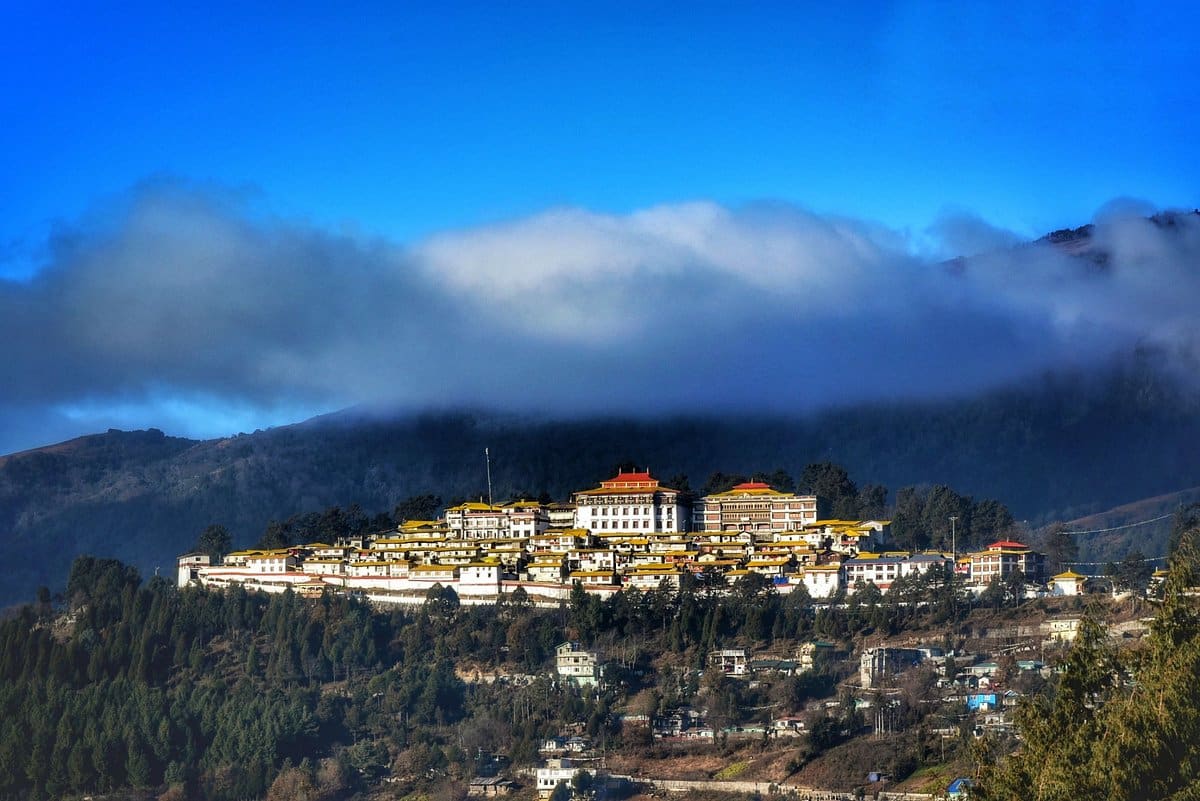
    • It is located in the Tawang district in Arunachal Pradesh.
    • It is situated on a mountain in the town of Tawang at an altitude of over 3000 m.
  • It is the largest monastery in India and the second largest in the world after the Potala Palace in Lhasa, Tibet.
  • It is known in Tibetan as GaldenNamgeyLhatse, which translates to "celestial paradise in a clear night."
  • It was founded by Merak Lama LodreGyatso in 1680-1681 in accordance with the wishes of the 5th Dalai Lama, NgawangLobsangGyatso.
  • It belongs to the Gelug school of Mahayana Buddhism.
  • Structure:
    • The monastery is three stories high and is enclosed by a 282 m-long compound wall.
    • The 8 m high gilded statue of Lord Buddha dominates the sanctum.
    • It has a residential building for the monks, a library, a museum and a school for basic education.
    • The monastery has many ancient scriptures, including the Kangyur, a collection of the teachings of the Buddha, and the Tengyur, a collection of commentaries on the teachings of the Buddha.

Gelug school of Mahayana Buddhism:

  • The Gelug or Gelug-pa, also known as the Yellow Hat sect, is the newest of the four major schools of Tibetan Buddhism.
  • It was founded by Je Tsongkhapa (1357–1419), a Tibetan philosopher, tantric yogi and lama, and further expanded and developed by his disciples
  • It emerged as the pre-eminent Buddhist school in Tibet since the end of the 16th century.
  • The Dalai Lamas are often mostly associated with this school.
  • The Ganden Tripa ("Ganden Throne Holder") is the official head of the school, though its most influential figure is the Dalai Lama.
  • Gelug school placed special emphasis on monastic training and study, as well as practice.


Q1) What is Mahayana Buddhism?

Mahayana Buddhism is the largest Buddhist sect in the world, and its beliefs and practices are what most non-adherents recognize as "Buddhism" in the modern era. It developed as a school of thought sometime after 383 BCE, possibly from the earlier school known as Mahasanghika, though that claim has been challenged.

Source: Tawang Monastery Expresses Discontent Over China Renaming Places in Arunachal Pradesh

Food Street Project

Food Street Project

About Food Street Project  :

  • It is aimed at developing 100 healthy and hygienic food-streets across the country.
  • The project seeks to encourage safe and healthy food practices, reduce foodborne illnesses and improve overall health outcomes.
  • To operationalize the food streets, the National Health Mission will provide assistance of one crore rupees per food street.
  • Financial assistance would be provided for activities such as the provision of safe drinking water, hand washing, toilet facilities, and appropriate liquid and solid waste disposal.
  • The initiative will be implemented through NHM in convergence with the Ministry of Housing and Urban Affairs.
  • The Health Ministry has taken various steps to improve the hygiene and food safety standards protocols for food street hubs.
  • These initiatives include training of food handlers, independent third-party audits, and certification under the Clean Street Food Hub initiative of the Eat Right India movement.  


Q1) What are foodborne illnesses called?

Foodborne illness (food poisoning) is caused by consuming contaminated food, beverages, or water and can be a variety of bacteria, parasites, viruses and/or toxins. Many of these pathogens can be acquired through more than just food, beverages, or water.

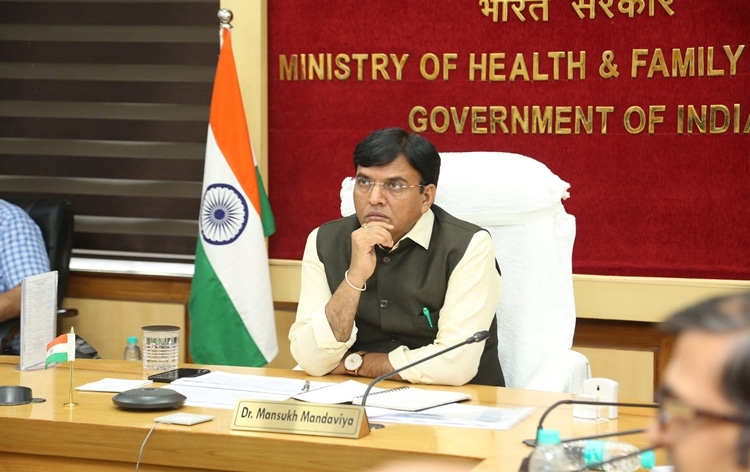
Source: Health Minister Mansukh Mandaviya reviews ‘Food Street Project’ to develop 100 healthy, hygienic Food Streets across the country

Indian Defence Minister’s visit to Maldives

Indian Defence Minister’s visit to Maldives

What’s in today’s article?

  • Why in news?
  • India - Maldives Bilateral relation
  • India’s interest in Maldives
  • India and Maldives Bilateral relation: In Brief
  • Challenges in the relationship between India and Maldives
  • News Summary: Indian Defence Minister’s visit to Maldives
  • Key highlights of the visit of Indian Defence Minister’s visit to Maldives


Why in news?

  • Raksha Mantri Shri Rajnath Singh paid a 3-day official visit to Maldives.
  • As a special gesture, reflecting the warmth in the bilateral relations, the Defence Minister of Maldives broke protocol and personally received the Raksha Mantri upon arrival at the airport.


India - Maldives Bilateral relation

India’s interest in Maldives

  • Strategic Importance
    • Maldives is barely 70 nautical miles away from Minicoy and 300 nautical miles away from India’s West coast.
    • It is situated at the hub of commercial sea‐lanes running through Indian Ocean (particularly the 8° N and 1 ½° N channels).
  • Geo-political interest
    • Securing sea lanes of communication;
    • Fighting piracy and sea-based terrorism;
    • Making Indian Ocean a conflict free zone and restoring its status as sea of tranquil;
    • Exploring blue economy and Enhancing trade
  • China Angle
    • China’s strategic footprint in India’s neighbourhood has increased.
    • The Maldives has emerged as an important 'pearl' in China’s “String of Pearls” construct in South Asia.
  • Internal security angle: Radicalisation
    • In the past, the number of Maldivians drawn towards terrorist groups like the Islamic State (IS) had increased.
    • Political instability and socio-economic uncertainty are further fuelling the rise of Islamist radicalism in the island nation.
    • This gives rise to the possibility of remote Maldivian islands being used as a launch pad for terror attacks against India and Indian interests.


India and Maldives Bilateral relation: In Brief

  • Political Relation
    • PM Modi, on his first overseas visit after taking oath of the office for his second term, visited Maldives in June 2019.
    • During this visit, he addressed a session of the newly constituted People’s Majlis.
    • He was only the second foreign Head of State or Government to address the People’s Majlis in its 86-year history.
  • Trade and economic cooperation
    • India-Maldives bilateral trade stood at crossed the USD 300 million mark for the first time in 2021, reaching an impressive USD 323.9 million.
      • Bilateral trade is heavily favoured towards India.
    • India emerged as Maldives’ 3rd largest trade partner in 2021.
  • Cooperation during the COVID -19 Pandemic
    • Operation Sanjeevani – Under this operation, India, in April 2020, supplied 6.2 tonnes of essential medicines to Maldives.
    • Indian Government has also evacuated nine Maldives nationals from Wuhan, China, where the COVID-19 was first identified.
    • In January 2021, India delivered 1 lakh doses of Made in India COVID-19 Vaccines to Maldives under the “Vaccine Maitri” initiative.
  • Security & defence cooperation
    • India provides the largest number of training opportunities for Maldivian National Defence Force (MNDF), meeting around 70% of their defence training requirements.
    • Key projects in the Defence Sector includes Composite Training Centre for MNDF, Coastal Radar System (CRS) and construction of new Ministry of Defence Headquarters.
    • India and the Maldives signed a pact for the development of the coast guard facility in 2021 when New Delhi also extended a $50 million line of credit to the Maldives for defence projects.


Challenges in the relationship between India and Maldives

  • India out campaign
    • The campaign is backed by the country’s Opposition leader Abdulla Yameen.
    • It aims to fuel more hatred by creating scepticism for India’s investments in Maldives, the defence partnerships between the two, and India’s net-security provisions.
    • It accuses the government of Maldives of allowing Indian boots on the ground, and thereby compromising the sovereignty of the island nation.
  • Radicalisation in Maldives
    • The Maldives has become the country with the highest rate of foreign fighters per capita in the world.
    • This has been revealed by a 2020 report by the European Foundation for South Asian Studies.
  • Presence of China
    • China is increasing its presence in Indian Ocean region.


News Summary: Indian Defence Minister’s visit to Maldives

  • Defence Minister of India visited Male on the invitation of his Maldivian Counterpart Defence Minister Ms Mariya Didi.


Key highlights of the visit of Indian Defence Minister’s visit to Maldives

  • Launched construction of a harbour for the Coast Guard of the Maldives National Defence Force (MNDF)
    • The foundation stone for the Coast Guard ‘Ekatha Harbour’ was laid by Defence Minister and his Maldivian counterpart.
    • The foundation stone was laid at Sifavaru in Uthuru Thila Falhu (UTF) atoll, where India is assisting in construction of a naval dockyard.
      • The UTF Harbour Project is among the biggest Indian grant-in-aid projects in Maldives.
      • The coast guard facility is expected to end the practice of the Maldives sending its vessels abroad for maintenance.
  • Handed over a Fast Patrol Vessel and a Landing Craft Assault ship to the MNDF
    • During this visit, Indian Defence Minister handed over a Fast Patrol Vessel and a Landing Craft Assault ship to the Maldives National Defence Forces (MNDF).
    • The Fast Patrol Vessel, capable of coastal and offshore surveillance at high speeds, was commissioned as MNDF Coast Guard ship Huravee.
  • Highlighted India’s strong defence cooperation with Maldives
    • Indian Defence Minister asserted that the ties emanate from the twin policies of ‘Neighbourhood First’ and ‘SAGAR’ (Security and Growth for All in the Region).


Q1) What is the geographical location of Maldives?

The Maldives is a South Asian Island country located in the Indian Ocean, southwest of Sri Lanka and India. It is composed of a double chain of twenty-six atolls, oriented north-south, that lie between Minicoy Island (the southernmost part of Lakshadweep, India) and the Chagos Archipelago. The country's capital and largest city is Malé, located on the southern edge of North Malé Atoll.


Q2) What is ‘SAGAR’ (Security and Growth for All in the Region)?

SAGAR' (Security and Growth for All in the Region) is a foreign policy doctrine of the Indian government that was announced by Indian Prime Minister Narendra Modi in 2015. The doctrine aims to strengthen India's relationships and cooperation with the countries of the Indian Ocean region, particularly in the areas of security, economic development, and cultural ties.


Source: Rajnath, Maldives minister launch Delhi-assisted harbour construction | Indian High Commission in Male | PIB

About Mahatma Gandhi National Rural Employment Guarantee Scheme (MGNREGS)

Mahatma Gandhi National Rural Employment Guarantee Scheme (MGNREGS)

What’s in today’s article?

  • Why in news?
  • What is Mahatma Gandhi National Rural Employment Guarantee Scheme (MGNREGS)?
  • What are the Salient Features of the MGNREGS?
  • Performance of the MGNREGS in last 3 years:
  • News Summary: Facing flak over NREGS rule changes, govt holds talks on its initiatives
  • Background:

Why in news?

  • Recently, the Centre held a Samvaad (dialogue) with civil society organisations on the good governance initiatives taken under the rural job guarantee scheme - Mahatma Gandhi National Rural Employment Guarantee Scheme (MGNREGS).
    • This was first such initiative taken by the Centre.
  • This dialogue was organised after criticism over mandatory use of the National Mobile Monitoring System (NMMS) app.
    • The app captures attendance of those claiming work under MGNREGS.

What is Mahatma Gandhi National Rural Employment Guarantee Scheme (MGNREGS)?

  • The National Rural Employment Guarantee Act (NREGA) was notified in September, 2005.
  • In 2009, an amendment was made in the Act to change the name to Mahatma Gandhi National Rural Employment Guarantee Act (MGNREGA).
  • Mandate: To provide at least 100 days of guaranteed wage employment in a financial year to every rural household whose adult members volunteer to do unskilled manual work.
  • The Mahatma Gandhi National Rural Employment Guarantee Scheme (Mahatma Gandhi NREGS) was created as directed in Mahatma Gandhi NREGA and the means to implement the Act so that the guarantee comes into effect.
  • MGNREGS is a Centrally-Sponsored Scheme i.e., the scheme is jointly funded by the Central government and the State governments.
  • Concerned Ministry: Ministry of Rural Development

What are the Salient Features of the MGNREGS?

  • Legal Right to Work –
    • The MGNREGA provides a legal guarantee for wage employment.
    • Every rural household has the right to register under MGNREGA.
    • Also, at least one-third of the beneficiaries of the scheme have to be women.
    • There are legal provisions for allowances and compensation both in cases of failure to provide work on demand and delays in payment of wages for work undertaken.
  • Demand-Driven –
    • It is a demand-driven programme where provision of work is triggered by the demand for work by wage-seekers.
  • Decentralized mode of implementation –
    • The State governments have powers to make rules and amend the concerned State scheme.
    • Gram Panchayats (GPs) are to implement at least 50 per cent of the works in terms of cost.
    • Plans and decisions regarding the nature and choice of works to be undertaken, the order in which each work is to be triggered, site selection etc. are all to be made in open assemblies of the Gram Sabha and ratified by the GP.
  • Annual Report tabled in the Parliament –
    • An Annual Report prepared by the Central Employment Guarantee Council (CEGC), on the outcomes of MGNREGA is required to be presented annually by the Central Government to Parliament.
      • CEGS is a statutory body set up under Section 10 of the MGNREGA.
      • It is chaired by the Union Minister for Rural Development.
  • The MGNERGA covers the entire country with the exception of districts that have a hundred percent urban population.

Performance of the MGNREGS in last 3 years:

  • As per the data available on the scheme portal, 7.55 crore families availed the scheme during 2020-21. However, the number came down marginally to 7.26 families during 2021-22.
  • Economic Survey 2022-23 on MGNREG Scheme 
    • The Economic Survey 2022-23, said there has been a Year-on-Year (YoY) decline in monthly demand for MGNREGS.
      • The reason behind this is that the rural economy is normalising due to strong agricultural growth and a swift bounce-back from Covid-19 pandemic.
    • In FY23, as on 24 January 2023, 6.49 crore households demanded employment under MGNREGS, and 6.48 crore households were offered employment out of which 5.7 crore availed employment.

News Summary: Facing flak over NREGS rule changes, govt holds talks on its initiatives

  • Recently, Centre held dialogue with civil society organisations on the good governance initiatives taken under the MGNREGS.

Image Caption: Topics for Samvaad Process

Background:

  • Changes were introduced recently in the NREGS attendance and payment system.
  • Following these change, NREGS workers, under the banner of ‘NREGA Sangharsh Morcha’, are demanding rollback of the two decisions:
    • making the NMMS app mandatory from January 1, and
    • the requirement of wages to be made through Aadhaar-Based Payment System (ABPS).
  • While the government says the changes were brought in to check corruption and for transparency, critics call it unfeasible.
  • Poor network and connectivity in hinterlands, digital illiteracy, besides lack of awareness and even access to smartphones and internet for many, make it difficult for the rural workers getting jobs under NREGS.

Q1) What is Aadhaar-Based Payment System (ABPS)?

The Aadhaar-Based Payment System (ABPS) is a digital payment system developed by the National Payments Corporation of India (NPCI) that enables people to make payments using their Aadhaar number and biometric authentication. Aadhaar is a 12-digit unique identification number issued by the Indian government to all residents of India based on their demographic and biometric data.

Q2) What is Central Employment Guarantee Council (CEGC)?

The Central Employment Guarantee Council (CEGC) is a statutory body established by the Government of India under the Mahatma Gandhi National Rural Employment Guarantee Act (MGNREGA) of 2005. The council serves as an advisory body to the central government on matters related to the implementation of MGNREGA, which is a flagship program aimed at providing employment opportunities to rural households across the country.


Source: IE

The US Federal Reserve

The US Federal Reserve

 About the US Federal Reserve:

  • The US Federal Reserve, often referred to in short as "The Fed", is the central banking system of the United States of America, created in 1913.
  • Events such as the Great Depression (1930s) and the Great Recession (2000s) have resulted in its roles and responsibilities expanding over time.
  • It consists of three major entities - the Board of Governors, the Federal Reserve Banks and the Federal Open Market Committee (FOMC).
  • The Fed takes the Monetary policy actions (such as raising or reducing the benchmark interest rate) to influence the availability and cost of money and credit to help promote national economic goals.


Q1) When was the great depression?

The longest and deepest downturn in the history of the United States and the modern industrial economy lasted more than a decade, beginning in 1929 and ending during World War II in 1941.

Source: US Federal Reserve hikes interest rate by 25 basis points to check inflation 

Key Facts About Meitei Community

Key Facts About Meitei Community

About Meitei Community:

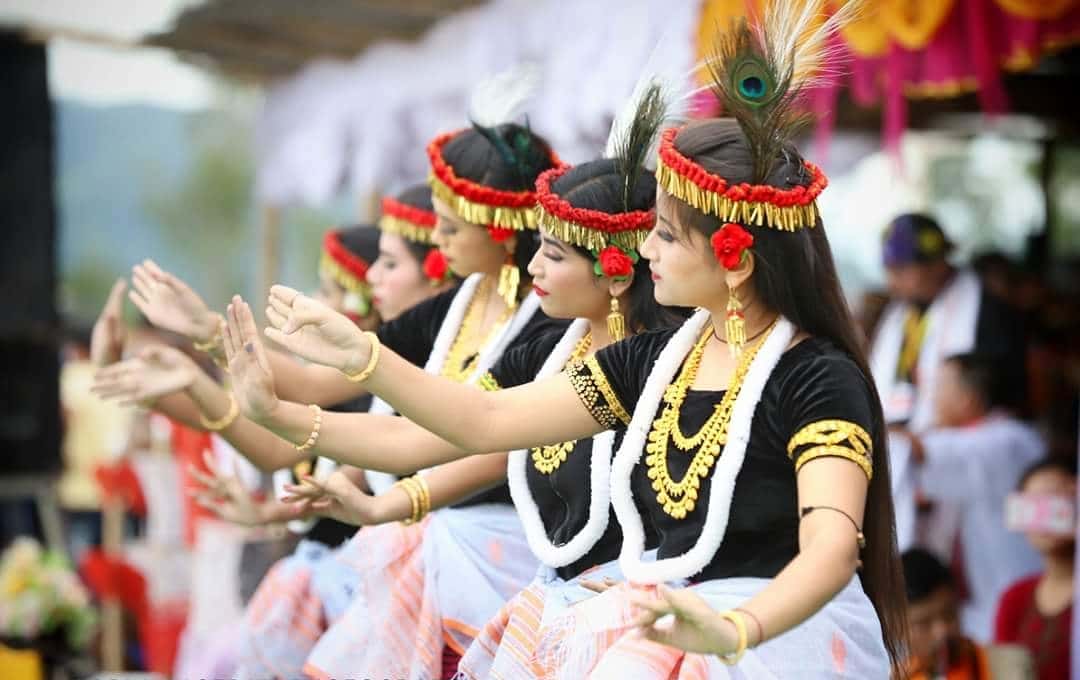
  • The Meitei people, also known as the Manipuri people, are the predominant ethnic group of Manipur State.
  • They speak the Meitei language (officially called Manipuri), one of the 22 official languages of India and the sole official language of Manipur State.
  • Distribution:
    • The Meiteis primarily settled in the Imphal Valley region in modern-day Manipur, though a sizable population has settled in the other Indian states of Assam, Tripura, Nagaland, Meghalaya, and Mizoram. 
    • There is also a notable presence of Meitei in the neighbouring countries of Myanmar and Bangladesh. 
    • The Meitei ethnic group represents about 53% of Manipur's population.
  • Clans: They are divided into clans, the members of which do not intermarry.
  • Economy: Rice cultivation on irrigated fields is the basis of their economy
  • Religion: A majority follow Hinduism, while more than 8% are Muslims.

What is Yaoshang Festival?

  • It is celebrated by the Meitei people at the same time as Holi and is known as ‘Manipur’s version of Holi’.
  • The five-day-long celebration begins with the burning of ‘yaoshang’ (a small thatch hut/straw hut), which is constructed with bamboo and straws on the first day.
  • The highlight of the festival is the ThabalChongba, a traditional Manipuri folk dance where boys and girls hold hands and sing and dance in a circle. 
  • The festival marks the rejuvenation of the spirit of life and commemorates the birthday of Chaitanya Mahaprabhu.


Q1) Which are the major ethnic groups in Manipur?

Broadly speaking, three main ethnic groups are found in the State viz. Meitei, Naga and Kuki-Chin-Mizo or Kuki-Chin or popularly the Kukis in short. The tribal groups (Scheduled Tribes) in Manipur are classified into two- the Naga and Kuki.

Source: Manipur: After Violence During Protest Marches, Curfew Imposed, Mobile Internet Suspended

Enquire Now