What are Aerogels?

Aerogels

About Aerogel: 

  • Aerogels are among the lightest solid materials.
  • They are created by combining a polymer with a solvent to form a gel, and then removing the liquid from the gel and replacing it with air.
  • Properties: They are extremely porous and very low in density and they offer advantages like adjustable surface chemistry
  • They are also known as ‘solid air’ or ‘frozen smoke’ are excellent adsorbents (a solid substance used to remove contaminants) and are incredibly lightweight solids composed mostly of air.
  • Aerogels are most preferred in environment and oil spill clean up, for insulation purposes
Key facts about the newly developed Hybrid Aerogel
  • Researchers have designed and synthesised aerogel: the sponge-like absorbents, light in weight and porous synthetic materials for this purpose.
  • The aerogel’s unique structural composition was treated with iron nitrate salts and maintained at room temperature for about two to five minutes.
  • This specially designed aerogel was found to be effective in extracting and retrieving upto 99 per cent of gold ions from the e-waste.
  • In daylight, the hybrid aerogel could extract 1689mg/gram of e-waste and 2349mg / gram under blue light.
  • As there were dual processes involved, that of adsorption and reduction — the quality of the recovered gold was reasonably pure thereby reducing the need for further purifying processes.

Q1: What is Porosity?

The porosity or void fraction is a measurement of the void or empty spaces of a material and is defined as the ratio between the volume of voids and the total volume. News: IE

Quantum Satellite

Quantum Satellite

About Quantum Satellite:

  • Definition: A quantum satellite is a communications satellite that uses quantum physics to secure its signals.
  • Purpose:
    • Enhance Signal Security: Protect against threats from quantum computing.
    • Facilitate Quantum Key Distribution (QKD): Enable unbreakable encryption through QKD.

Quantum Cryptography and Quantum Key Distribution (QKD)

  • Quantum Cryptography: Uses the principles of quantum physics to secure messages.
  • Quantum Key Distribution (QKD):
    • Function: Securely share encryption keys such that any eavesdropping can be detected, aborting the transmission if compromised.
    • Mechanisms:
      • Quantum Measurement: Measuring a photon changes its state, thus revealing any eavesdropping.
      • Quantum Entanglement: Entangled photons instantly reflect changes in one another, ensuring secure key distribution.

National Quantum Mission (NQM)

  • Objective: The NQM is a program by the Department of Science & Technology designed to accelerate the use of quantum physics in developing advanced communication and sensing systems.
  • Budget and Duration: The Union Cabinet approved it in April 2023, with a budget of ₹6,000 crore, to be implemented from 2023 to 2031.

Micius

  • The world's first quantum communications satellite was launched by China in 2016.
  • Function: Acts as the source of pairs of entangled photons, whose properties remain intertwined regardless of the distance.
  • Significance: This entanglement forms the basis of the most secure forms of quantum cryptography.

Q1: What is Quantum Technology, and how does it work?

Quantum technology harnesses the principles of quantum mechanics, such as superposition, entanglement, and quantum tunnelling, to develop advanced technologies. Unlike classical systems, quantum systems can process information exponentially faster, offering breakthroughs in computing, secure communication, and sensing. Source: TH

Rann Utsav

Rann Utsav

About Rann Utsav

  • Rann Utsav is an annual cultural festival organized by the Gujarat Tourism Department in the Great Rann of Kutch, India's largest salt desert.
  • It celebrates the cultural and artistic heritage of Kutch, attracting domestic and international tourists.

About the Rann of Kutch

  • Location: The Rann of Kutch is a vast area of salt marshes, straddling the border between India and Pakistan.
    • It is primarily located in the Kutch district of Gujarat, with a smaller portion in the Sindh province of Pakistan.
  • Divisions:
    • Great Rann of Kutch: The larger portion, stretching east to west.
      • Bordered by the Thar Desert to the north and Kutch Hills to the south.
    • Little Rann of Kutch: Located southeast of the Great Rann, extending southwards to the Gulf of Kutch.
  • Geographical features: It lies close to sea level, connected to the Arabian Sea via the Kori Creek (west) and the Gulf of Kutch (east).
    • It is the only large flooded grassland zone in the Indomalayan realm, a biogeographic region extending across South and Southeast Asia.
  • Climate:
    • Summer: Temperatures average 44°C, peaking at 50°C.
    • Winter: Temperatures can drop to freezing levels or below.

Ecological significance

  • Flora and Fauna:
    • Indian Wild Ass (Khur): The Little Rann of Kutch is home to this endangered species.
    • Ecosystems include mangroves, desert vegetation, and grass-covered patches (baits), vital for local wildlife.
    • The region is part of the Wild Ass Wildlife Sanctuary, India’s largest wildlife sanctuary.
  • Unique biodiversity: It supports diverse ecosystems with desert on one side and the sea on the other, fostering unique plant and animal life.
  • Historical and cultural significance: The Rann has seen neolithic settlements and later became a centre for the Indus Valley Civilization. It has been part of historic empires like the Mauryas and Guptas, reflecting its rich historical lineage.

Kutch Desert

  • The Kutch Desert spans vast areas, bordered by:
    • Sindh (Pakistan) in the northwest.
    • Arabian Sea to the southwest.
    • Rajasthan in the northeast.
  • It provides an example of Holocene sedimentation, showcasing geological and environmental diversity.

Q1: What is Holocene sedimentation?

Holocene sedimentation refers to the deposition of sediments during the Holocene epoch, which began approximately 11,700 years ago after the last Ice Age. This period is marked by significant climatic stability and human activities, influencing sediment deposition in rivers, lakes, coastal areas, and other environments.

News: https://pib.gov.in/PressReleseDetail.aspx?PRID=2086702&reg=3&lang=1

SMILE Programme

SMILE Programme

About SMILE Programme: 

  • The Strengthening Multimodal and Integrated Logistics Ecosystem (SMILE) is a programmatic policy-based loan (PBL) to support the government in undertaking wide-ranging reforms in the logistics sector in India.
  • The programmatic approach comprises two subprograms, which aim to expand India’s manufacturing sector and improve the resilience of its supply chains.
  • This initiative is in collaboration with the Department of Economic Affairs (DEA) under the Ministry of Finance, the Department for Promotion of Industry and Internal Trade (DPIIT) under the Ministry of Commerce and Industry, and ADB.
  • Key pillars of the programme:
    • Strengthening institutional frameworks: Developing capacities at national, state, and city levels for the seamless integration of multimodal logistics infrastructure.
    • Standardising warehousing: Establishing uniform standards to streamline supply chains and attract private investment.
    • Improving trade logistics: Enhancing the efficiency of India’s external trade operations.
    • Promoting smart, low-emission systems: Leveraging advanced technologies to boost efficiency while reducing environmental impact.

Q1: What is the Asian Development Bank (ADB)?

It is a multilateral development bank established on 19th December 1966. It is the principal international development finance institution for the Asia-Pacific region. Source: BS

Hydroxychloroquine

Hydroxychloroquine

Background of the Study:

  • The controversial study by French researcher Didier Raoult, published on March 20, 2020, claimed that hydroxychloroquine (HCQ) and HCQ combined with azithromycin significantly reduced SARS-CoV-2 viral load.
  • The paper was retracted on December 17, 2024, due to concerns about ethical approval and methodological issues.

About Hydroxychloroquine (HCQ)

  • Hydroxychloroquine is a medication primarily used to treat malaria, rheumatoid arthritis, and systemic lupus erythematosus (SLE).
  • It reduces immune system activity or kills the malaria-causing parasites from Anopheles mosquito bites.

Use in Autoimmune Disorders:

  • Effective in managing rheumatoid arthritis by reducing joint inflammation.
  • Helps treat lupus by controlling the overactive immune response.

HCQ and COVID-19:

  • Early studies claimed HCQ could reduce SARS-CoV-2 viral loads, especially in combination with azithromycin.
  • Proposed as a prophylactic to prevent COVID-19 infection; however, large-scale use raised concerns due to:
    • Cardiac arrhythmia risks
    • Liver damage
    • Potential weakening of the immune system’s response to infection.

Q1: Is Hydroxychloroquine effective against COVID-19?

Hydroxychloroquine was initially studied as a potential treatment for COVID-19. However, subsequent research showed limited or no significant benefit, and its use for COVID-19 is not widely recommended by health authorities. Source: TH

Dinga Disease

Dinga Disease

About Dinga Disease: 

  • It is locally called 'Dinga Dinga', meaning 'shaking like dancing'.
  • It predominantly impacts women and girls, is characterized by fever and excessive body shaking.
  • It is marked by fever and uncontrollable body shaking, severely impairing mobility and severe cases, people are also experiencing paralysis.
  • The cause of Dinga Dinga remains a mystery. Despite efforts to identify the virus responsible, health experts have yet to pinpoint its source.
  • The symptoms of Dinga Dinga are as unusual as they are distressing:
    • Uncontrollable body shaking: The most striking feature of the illness is violent, involuntary movements that resemble dancing.
    • Fever and extreme weakness: Patients often report high fever and overwhelming fatigue.
    • Paralysis-like immobility: Some experience a sensation of paralysis, with even basic movements like walking becoming impossible.
  • Treatment: The illness is currently being treated with antibiotics.

Q1: What are antibiotics?

Antibiotics are medicines that fight bacterial infections in people and animals. They work by killing the bacteria or by making it hard for the bacteria to grow and multiply. Source: FE

Sahitya Akademi Award

Sahitya Akademi Award

About Sahitya Akademi Awards: 

  • It is awarded for the most outstanding books of literary merit published in any of the major Indian languages recognised by the Akademi.
  • Along with the 22 languages enumerated in the Constitution of India, the Sahitya Akademi has recognised English and Rajasthani as languages in which its programme may be implemented.
  • The authors and poets will receive a plaque, a shawl and an amount of ₹1 lakh in an award.

Key facts about the Sahitya Akademi

  • It was formally inaugurated by the Government of India on 12 March 1954.
  • It was registered as a society under the Societies Registration Act, 1860.
  • It is the central institution for literary dialogue, publication and promotion in the country and the only institution that undertakes literary activities in 24 Indian languages, including English.
  • Ministry: An autonomous organization under the Ministry of Culture.
  • Head office: New Delhi

Q1: What is Literature?

It is a body of written works. It has traditionally been applied to those imaginative works of poetry and prose distinguished by the intentions of their authors and the perceived aesthetic excellence of their execution. Source: TH

Free Trade Agreement (FTA)

Free Trade Agreement

About Free Trade Agreements (FTAs)

  • Definition: Free Trade Agreements are comprehensive trade deals between two or more countries, aimed at reducing or eliminating trade barriers such as tariffs and import/export restrictions. These agreements provide preferential access to markets by offering tariff concessions and lowering non-tariff barriers.
  • Key features:
    • FTAs cover trade in goods (agricultural and industrial products) and trade in services (banking, IT, construction).
    • Advanced FTAs may include chapters on investment, intellectual property rights (IPRs), government procurement, and competition policy.
  • Types of Trade Agreements:
    • Partial Scope Agreements (PSA): Focus on a limited number of goods.
    • Free Trade Agreements (FTA): Reduce tariffs between member countries while retaining individual tariff policies with non-members.
    • Customs Union: Includes a common external tariff for non-members.
    • Common Market: Facilitates free movement of goods, services, and factors of production.
    • Economic Union: Coordinates macroeconomic and exchange rate policies among member nations.
  • Major Trade Agreements of India: India-ASEAN FTA, India-South Korea CEPA, and proposed agreements like India-UK and India-EU.

Q1: What is a Comprehensive Economic Cooperation Agreement (CECA)?

A CECA is a type of trade agreement between countries that covers a broad range of economic activities, including trade in goods and services, investment, intellectual property rights, and economic cooperation. Unlike traditional Free Trade Agreements (FTAs), CECAs often involve deeper commitments in economic collaboration and regulatory alignment. Source: BS

Denali Fault

Denali Fault

Key Findings on the Denali Fault

  • Denali Fault, located in southern Alaska, has played a crucial role in shaping Earth's geological history.
  • A study reveals that three sites along the Denali Fault were once part of a single geologic feature, symbolizing the final joining of two landmasses millions of years ago.
  • Over 483 km of horizontal movement along the fault tore apart this united feature due to millions of years of tectonic activity.
  • These three locations once formed a terminal suture zone, indicating the last phase of tectonic plate integration into a larger mass.

About Fault Lines

Definition: A fault line is the visible intersection of a geological fault with the Earth's surface. It refers to a fracture or zone of fractures between two blocks of rock caused by stresses generated by tectonic plate movements.

Characteristics of Faults

  • Faults are closely associated with the movement of Earth's tectonic plates.
  • The largest faults are found along plate boundaries.
  • Movement along faults can occur rapidly, resulting in earthquakes, or gradually, in the form of creep.
  • Faults vary in length from a few millimetres to thousands of kilometres, such as the San Andreas Fault in California or the Anatolian Fault in Turkey.
  • Fault surfaces can be horizontal, vertical, or inclined at various angles.
  • Earth scientists classify faults based on the angle of the fault relative to the surface (known as the dip) and the direction of movement along the fault.

Types of Faults

  • Strike-Slip Faults: These faults occur when tectonic plates slide past each other horizontally, with little to no vertical movement.
    • These faults are commonly found in regions where lateral stress dominates.
    • A well-known example is the San Andreas Fault in California, which has caused several powerful earthquakes.
  • Normal Faults: These faults occur when one block of rock slides downward, pulling away from the adjacent block.
    • These faults create space by stretching the Earth's crust, often leading to the formation of valleys.
    • Examples of normal faults include the Basin and Range Province in North America and the East African Rift Zone.
  • Reverse Faults (Thrust Faults): These faults occur when one block of crust moves upward and overlaps the other.
    • This process is associated with compression and often leads to the formation of mountain ranges.
    • Examples include the Himalayas, formed due to the collision of the Indian and Eurasian plates, and the Rocky Mountains in North America.

Q1: What is the Pacific Ring of Fire?

The Pacific Ring of Fire is a horseshoe-shaped zone of intense seismic and volcanic activity encircling the Pacific Ocean. It is home to 75% of the world's active and dormant volcanoes and experiences about 90% of the planet's earthquakes due to tectonic plate movements. Source: PO

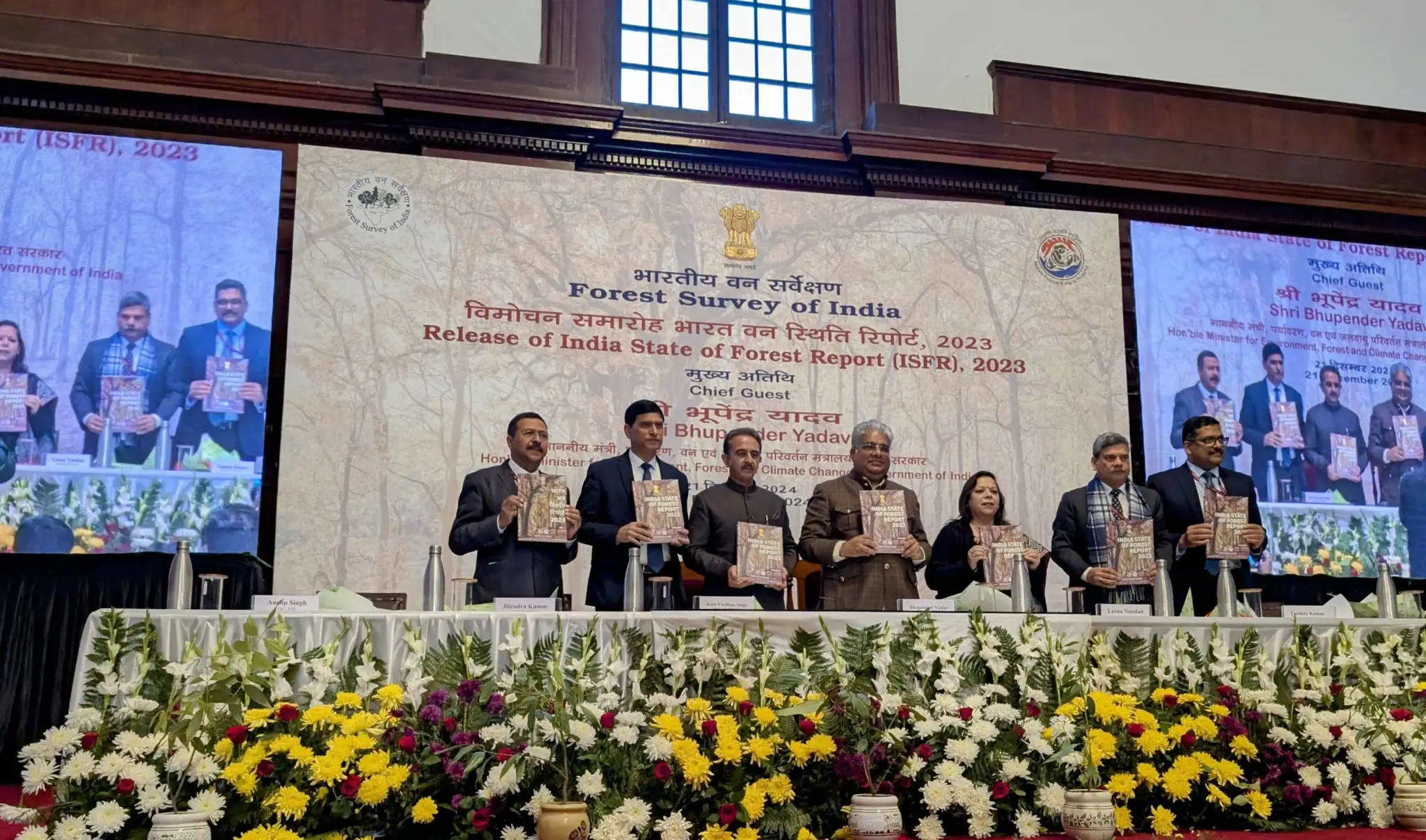
India State of Forest Report

India State of Forest Report

About India State of Forest Report: 

  • It has been published by the Forest Survey of India (FSI) on a biennial basis since 1987.
  • It carries out an in-depth assessment of the forest and tree resources of the country based on interpretation of Remote Sensing satellite data and field based National Forest Inventory (NFI).
  • The India State of Forest Report 2023 is 18th such report in the series.
  • The report contains information on forest cover, tree cover, mangrove cover, growing stock, carbon stock in India’s forests, instances of forest fire, Agroforestry, etc.

Highlights of India State of Forest Report 2023

  • The Forest and Tree cover of India is 25.17 percent of the geographical area and in that 21.76% is forest cover and 3.41% is tree cover.
  • As compared to assessment of 2021, there is an increase in the forest and tree cover of the country.
  • Top four states showing maximum increase in forest and tree cover are Chhattisgarh, Uttar Pradesh, Odisha and Rajasthan.
  • Top three states showing maximum increase in forest cover are Mizoram, Gujarat and Odisha.
  • Area wise top three states having largest forest and tree cover are Madhya Pradesh, Arunachal Pradesh and Maharashtra
  • Area wise top three states having largest forest cover are Madhya Pradesh, Arunachal Pradesh and Chhattisgarh.
  • In terms of percentage of forest cover with respect to total geographical area, Lakshadweep (91.33 percent) has the highest forest cover followed by Mizoram and Andaman & Nicobar Island
  • The present assessment also reveals that 19 states/UTs have above 33 percent of the geographical area under forest cover. Out of these, eight states/UTs namely Mizoram, Lakshadweep, A & N Island, Arunachal Pradesh, Nagaland, Meghalaya, Tripura, and Manipur have forest cover above 75 percent.
  • The total mangrove cover is 4,992 sq km in the country.
  • The extent of bamboo bearing area for the country has been increased as compared to the last assessment done in 2021.
  • There is an increase in the carbon stock of the country as compared to the last assessment.
  • India’s carbon stock has reached 30.43 billion tonnes of CO2 equivalent; which indicates that as compared to the base year of 2005, India has already reached 2.29 billion tonnes of additional carbon sink as against the target of 2.5 to 3.0 billion tonnes by 2030.

Q1: What is Forest Survey of India (FSI)?

It is an organisation under the Ministry of Environment & Forests, Government of India Its principal mandate is to conduct survey and assessment of forest resources in the country. Source: PIB

Automated & Intelligent Machine-aided Construction (AIMC) System

AIMC

What is AIMC?

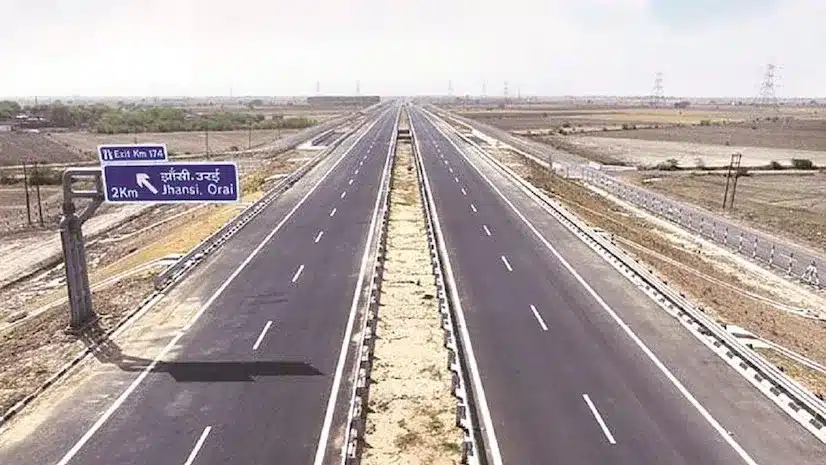
  • India’s National Highway network spans 1.46 lakh km, with 3,000 km of high-speed corridors.
  • By 2047, the Ministry aims to expand the network by an additional 45,000 km, ensuring a robust and efficient infrastructure system.

What is AIMC?

  • AIMC (Automated & Intelligent Machine-aided Construction) is an advanced system being implemented by the Ministry of Road Transport & Highways (MoRTH) for efficient National Highway construction.
  • It integrates intelligent machines and real-time data sharing to expedite construction and enhance road quality.

Objective of AIMC

  • To increase productivity, ensure durable and long-lasting roads, and reduce dependency on traditional surveys post-construction.
  • To tackle challenges such as outdated technologies, uncoordinated data, and poor contractor performance that lead to project delays.

Types of AIMC Machines

  • GPS-Aided Motor Grader (3D Machine Control Technology): It uses Global Navigation Satellite System (GNSS) data and angle sensors to position the grader’s blade with precision.
    • Processes data in real-time to ensure alignment with digital design plans.
  • Intelligent Compaction Roller (IC Roller): It assists in minimizing post-construction consolidation.
    • Reduces air pockets or water voids in materials, preventing damage to roads.
  • Single Drum/Tandem Vibratory Roller: This ensures proper soil and base layer compaction for road stability.

Q1: What is FASTag, and how does it work?

FASTag is an electronic toll collection system in India that uses Radio Frequency Identification (RFID) technology to automatically deduct toll charges when vehicles pass through toll plazas. It is linked to a prepaid account, ensuring seamless travel without stopping for cash payments. Source: IE

Next Generation DNA Sequencing

Next Generation DNA Sequencing

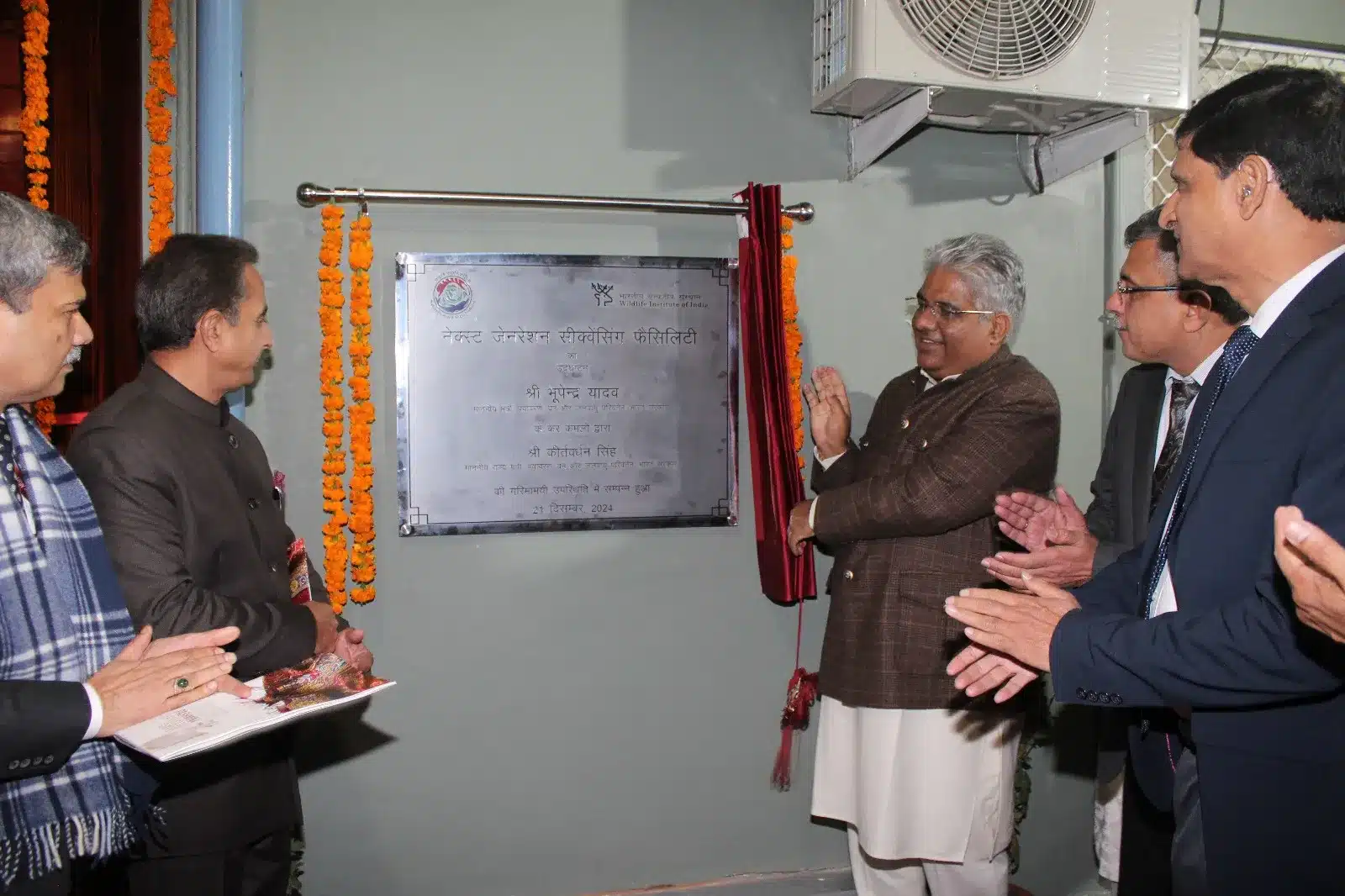
About Next Generation DNA Sequencing: 

  • It is a revolutionary technology that enables the rapid and high-throughput decoding of entire genomes, analyzing millions of DNA sequences simultaneously.
  • This allows researchers to gain deeper insights into genetic diversity, evolutionary relationships, and population health.
    • In wildlife conservation, NGS plays a pivotal role in identifying population genetic health with respect to genetic diversity, information on genetic barriers and their effect on populations, unique adaptations and species with unique evolutionary histories, understanding disease outbreaks, detecting illegal wildlife trade, and studying the effects of climate change on biodiversity.
  • This cutting-edge NGS facility positions the Wildlife Institute of India as a leading centre for molecular and genetic research in wildlife conservation.

Key points about the Pashmina Certification Centre

  • It was established under a Public-Private Partnership (PPP) model between WII and the Export Promotion Council for Handicrafts (EPCH).
  • It was set up to
    • To streamline the Pashmina Trade.
    • To provide a one-stop testing facility to certify genuine Pashmina Product free from any prohibited fibres to the associated manufacturers, exporters, and traders.
    • All the tested products will be labelled with a traceable unique id tag with individual e-certificates, enabling a seamless trade of such products in national and international markets.
  • The upgraded Advanced Facility for Pashmina Certification now includes a dedicated Scanning Electron Microscope (SEM) with Energy Dispersive Spectroscopy (EDS), which enhances the precision and reliability of wool testing and certification.
  • The upgraded facility offers:
    • Advanced Fiber Analysis: SEM-EDS technology to accurately identify and authenticate Pashmina fibers.
    • Streamlined Certification: Unique ID tagging and e-certificates for traceability and quality assurance.
    • Global Trade Facilitation: Hassle-free movement of certified products, eliminating delays and financial losses due to fibre scrutiny at exit points.

Q1:What is the Genome India project?

The Genome India Project is a gene mapping project sanctioned by the Department of Biotechnology. It was launched with the goal of creating a comprehensive database of genetic variations among the Indian population. Source: PIB

Vice President Removal

Vice President Removal

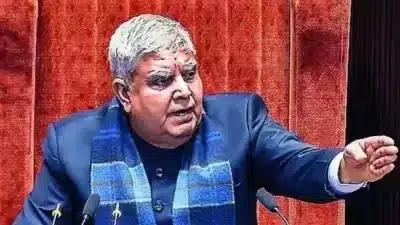
About the Vice President of India

  • Constitutional status: The Vice President holds the position of the second-highest constitutional office in India, after the President.
    • Article 63 of the Constitution mandates the existence of the Vice President's office.
    • The Vice President of India serves a dual role, modelled on the lines of the American Vice President.
  • Eligibility criteria: According to Article 66 of the Constitution, a person must meet the following conditions to be eligible for the office of Vice President:
    • The candidate must be an Indian citizen.
    • The individual must be at least 35 years of age.
    • The candidate must be qualified to be elected as a member of the Rajya Sabha.
    • The candidate must not hold any office of profit under the Union, state government, or any local or public authority.

Election Process

  • The Vice President is elected through a proportional representation system by an electoral college that includes both elected and nominated members of the Lok Sabha and Rajya Sabha. This differs from the Presidential election process, which also includes state legislative assemblies.
  • The election is conducted using a single transferable vote system, and voting is carried out by secret ballot.
  • Any doubts or disputes regarding the election of the Vice President are adjudicated by the Supreme Court, and its decision is final.

Tenure and Removal

  • Tenure: The Vice President serves a five-year term, starting from the date they assume office.
    • The Vice President can continue in office until a successor takes charge, even after the completion of the term.
    • The Vice President is eligible for re-election.
  • Resignation: The Vice President can resign by submitting a formal resignation letter to the President of India.
  • Removal process: According to Article 67(b), the Vice President can be removed through a resolution passed by the Rajya Sabha with an effective majority (majority of all the then members).
    • This resolution must also be agreed to by the Lok Sabha with a simple majority.
    • A 14-day notice is required before moving the resolution.

Q1: What is impeachment?

Impeachment is the process by which the President of India can be removed from office for "violation of the Constitution." It is a quasi-judicial procedure initiated by Parliament, requiring a special majority in both Houses after thorough investigation and discussion.

News: TH

What are Aerogels?

Aerogels

About Aerogel: 

  • Aerogels are among the lightest solid materials.
  • They are created by combining a polymer with a solvent to form a gel, and then removing the liquid from the gel and replacing it with air.
  • Properties: They are extremely porous and very low in density and they offer advantages like adjustable surface chemistry
  • They are also known as ‘solid air’ or ‘frozen smoke’ are excellent adsorbents (a solid substance used to remove contaminants) and are incredibly lightweight solids composed mostly of air.
  • Aerogels are most preferred in environment and oil spill clean up, for insulation purposes
Key facts about the newly developed Hybrid Aerogel
  • Researchers have designed and synthesised aerogel: the sponge-like absorbents, light in weight and porous synthetic materials for this purpose.
  • The aerogel’s unique structural composition was treated with iron nitrate salts and maintained at room temperature for about two to five minutes.
  • This specially designed aerogel was found to be effective in extracting and retrieving upto 99 per cent of gold ions from the e-waste.
  • In daylight, the hybrid aerogel could extract 1689mg/gram of e-waste and 2349mg / gram under blue light.
  • As there were dual processes involved, that of adsorption and reduction — the quality of the recovered gold was reasonably pure thereby reducing the need for further purifying processes.

Q1: What is Porosity?

The porosity or void fraction is a measurement of the void or empty spaces of a material and is defined as the ratio between the volume of voids and the total volume. News: IE

Ethiopian Wolf

Ethiopian Wolf

Key Features of the Ethiopian Wolf

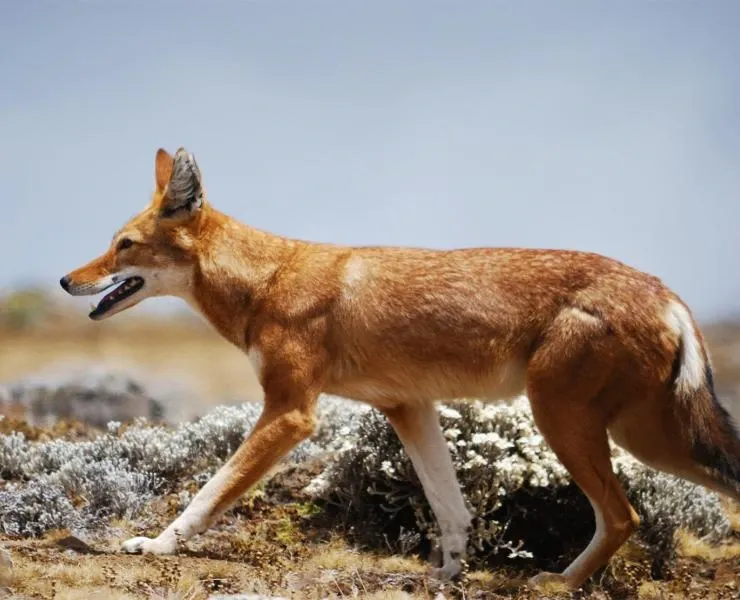
  • Specialized habitat and role: The Ethiopian wolf is a specialized rodent hunter in Afroalpine ecosystems and unique African high-altitude regions.
    • These ecosystems, located mainly in the Ethiopian Highlands, exist at altitudes of 3,200 meters above sea level and are characterized by cold and harsh climates.
  • Physical characteristics: The wolf is about the size of a large dog, with a reddish coat, white throat and chest markings, and a bushy black tail.
  • Population status: With fewer than 500 individuals remaining, the Ethiopian wolf is Africa's most endangered carnivore.
  • Habitat specificity: It resides in isolated “sky islands”, high-altitude regions above tropical forests, surrounded by drastically different lowland environments.
Ethiopian Wolf’s Role as a Pollinator
  • Interaction with Ethiopian red hot poker flower: The wolf feeds on the nectar of the red and yellow Ethiopian red hot poker flower, a plant that produces sweet nectar attracting multiple pollinators.
    • As the wolf moves between flowers, pollen dusts its muzzle, potentially aiding in pollination.
  • Behavioural observations: Researchers observed wolves spending significant time in flower fields, with one wolf visiting 30 flower heads in 1.5 hours.
    • This behaviour indicates that the wolf actively seeks nectar, a rare trait for large carnivores.

Q1: What is pollination?

Pollination is the transfer of pollen grains from the male part (anther) of a flower to the female part (stigma) of the same or another flower, enabling fertilization and the production of seeds. It is essential for plant reproduction, biodiversity, and the production of fruits, vegetables, and seeds that sustain ecosystems and agriculture. Source: DTE

Cephalopods

Cephalopods

About Cephalopods:

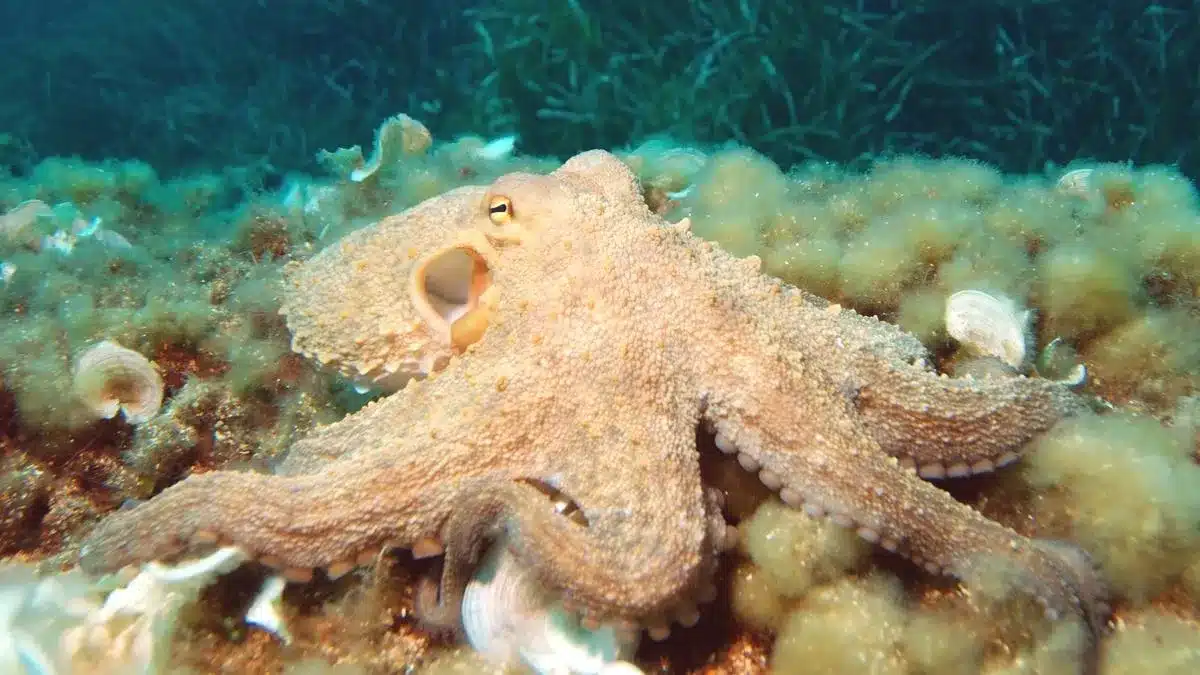
  • It is the most morphologically and behaviorally complex class in phylum Mollusca.
  • Characteristics
    • They are characterized by a completely merged head and foot, with a ring of arms and/or tentacles surrounding the head. The arms, tentacles, and funnel are all derivatives of the foot.
    • Locomotion in cephalopods is accomplished mainly by jet propulsion.
    • Diet: All cephalopods are carnivorous. Many are skilled hunters, but some feed passively on floating debris.
    • They possess well-developed nervous systems and complex sensory organs.
    • They contain pigment-rich cells in the epidermis surrounded by cells containing contractile fibers.
    • One of the highly complex behaviours that many cephalopods show is visual camouflage. They can open and close tiny sacs just below their skin that contain coloured pigments and reflectors, revealing specific colours.
    • The Australian giant cuttlefish, Sepia apama, uses its chromatophores to communicate, creating patterns that attract mates and warn off aggressors.
    • This ability can also come in handy for hunting; many cephalopods are ambush predators that blend into the background or even lure their prey.
  • It includes the coleoids cuttlefish, octopus and squid – as well as the chambered nautilus.
  • Some Cephalopods live alone in the nearly featureless darkness of the deep ocean; others live socially on active, sunny coral reefs.
  • Some cephalopods may be capable of more complicated forms of learning, such as reversal learning – learning to flexibly adjust behaviour when different stimuli signal reward.

Q1: What are Corals?

These are invertebrate animals belonging to a large group of colourful and fascinating animals called Cnidaria. Other animals in this group that you may have seen in rock pools or on the beach include jelly fish and sea anemones. News: TH

Youth Co:Lab

Youth Co:Lab

About Youth Co:Lab:

  • It was co-created in 2017 by UNDP and Citi Foundation, aims to empower and invest in youth to accelerate the implementation of the Sustainable Development Goals (SDGs) through leadership, social innovation and entrepreneurship.
  • In India, Youth Co: Lab was launched in 2019 in collaboration with Atal Innovation Mission, NITI Aayog.
  • As of the end of 2024, Youth Co:Lab has conducted six national theme-specific youth social innovation and entrepreneurship dialogues in India through this collaboration.
  • This year, the Youth Co: Lab National Innovation Challenge 2024-2025, held in collaboration with AssisTech Foundation (ATF).
    • It will focus on empowering young entrepreneurs and entrepreneurs with disabilities innovating for solutions that “Enhance access to opportunities and well-being of Persons with Disabilities”, across the following sub-categories: Inclusive and Accessible Assistive Technology (AT), Inclusive Educational Technology and Skilling Solutions and Accessible and Inclusive Care Models.
Key facts about Atal Innovation Mission(AIM)
  • It is a flagship initiative set up by the NITI Aayog in 2016.
  • Objective: To create and encourage an environment of innovation and entrepreneurship across schools, educational organisations, research institutes, and industries, including MSMEs.
  • Functions
    • Promote entrepreneurship by encouraging innovators to become entrepreneurs through financial support as well as mentorship.
    • Promote innovation by creating a platform where ideas are generated through like-minded individuals.
  • AIM has created four programs to support these functions: Atal Tinkering Labs, Atal Incubation Centres, Atal New India Challenges and Atal Grand Challenges.
  • All the initiatives of AIM are currently monitored and managed systematically using real-time MIS systems and dynamic dashboards.
  • AIM is also currently having its programs reviewed by third party agencies for ensuring continuous improvements.

Q1: What is NITI Aayog?

The National Institution for Transforming India, established on January 1, 2015, is the policy think tank of the Indian government, replacing the Planning Commission. It focuses on inclusive development, cooperative federalism, and sustainable growth. The organization is led by the Prime Minister and members include state representatives and experts. News: PIB

Kashmiri Papier-mâché

Kashmiri Papier mache

About Kashmiri Papier-mâché

  • Kashmiri Papier-mâché is a traditional handicraft of the Kashmir Valley.
  • It was introduced in the 14th century by Muslim saint Mir Sayyid Ali Hamadani from Persia.
  • This craft is known for its intricate designs and use of paper pulp to create colourful, richly decorated items.
Features of Kashmiri Papier-mâché
  • Materials and process: Made primarily from paper pulp. Items are handcrafted in homes and workshops, mainly in Srinagar and other parts of the Kashmir Valley.
  • Common products: Vases, bowls, cups (with or without metal rims), boxes, trays, and lamp bases.
    • Recently, products like papier-mâché models of extinct birds (e.g., dodos) have also gained attention.
  • Artistic elements: The designs feature floral motifs, forest prints, and other intricate patterns symbolizing cultural and ecological themes.
  • Market: While the products have a significant domestic market, they are also highly demanded internationally in Europe, Mauritius, and other regions.
Legal and Cultural Recognition
  • Protected under the Geographical Indication (GI) Act, 1999, ensuring authenticity and cultural preservation.
  • Registered by the Controller General of Patents, Designs, and Trademarks.
The Dodo Connection
  • Christmas exports: Over 50,000 papier-mâché dodo models were shipped to markets in Europe and Mauritius for Christmas.
    • Dodos, extinct since 1681, are the national emblem of Mauritius, making these items culturally significant.

Q1: What is a GI Tag?

A Geographical Indication (GI) tag is a certification granted to products that are uniquely associated with a specific geographical location, region, or community. It signifies the product's origin, quality, or reputation, which is intrinsically linked to its place of origin. Examples include Darjeeling Tea and Pashmina Shawls. News: TH

U.N. Internal Justice Council

U.N. Internal Justice Council

About U.N. Internal Justice Council:

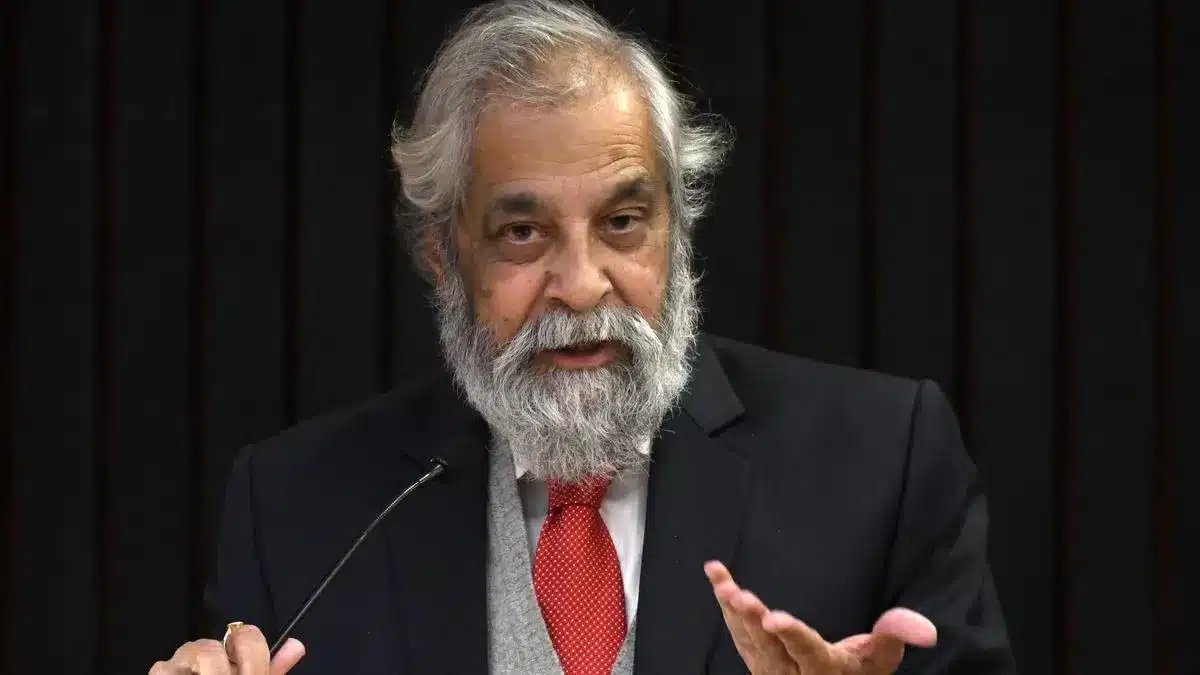
  • It was established by the UN General Assembly as part of the new internal justice system in order to help ensure independence, professionalism and accountability in the administration of the justice system of the United Nations.
  • The IJC members are appointed by the Secretary General.
  • It is composed of five members consisting of
    • A staff representative
    • A management representative
    • Two distinguished external jurists, one nominated by the staff and one by management, and
    • Chaired by a distinguished jurist chosen by consensus by the four other members.
  • Functions
    • It is tasked to undertake the search for suitable candidates for the positions of judges when there is a vacancy on the UN Dispute Tribunal (UNDT) and the UN Appeals Tribunal (UNAT)
    • To recommend General Assembly two or three candidates for each vacancy with due regard to geographical distribution.
    • To provide its views on the implementation of the system of administration of justice to the General Assembly.
    • The judges of the UN Dispute Tribunal and the UN Appeals Tribunal are appointed by the General Assembly on the recommendation of suitable candidates by the IJC.

Q1: What is the United Nations Dispute Tribunal (UNDT)?

It is “first instance tribunal” of the UN’s internal justice system, is the tribunal UN system staff members apply to when they decide to challenge an administrative decision made by an entity over which the UNDT has Jurisdiction, and which the Applicant believes violates their rights as a staff member due to non-compliance with the terms of their appointment or contract of employment. News: TH

Kerala’s Thrissur Pooram

Kerala’s Thrissur Pooram

About Thrissur Pooram

  • Cultural significance: Thrissur Pooram is a grand festival showcasing Kerala’s cultural and spiritual essence.
    • It is celebrated annually in the Malayalam month of Medam (April-May) at the Thekkinkadu Maidanam in Thrissur.
    • Often referred to as the “mother of all Poorams”, it is one of the largest temple festivals in Kerala.
  • Historical origin: Initiated by Raja Rama Varma, famously known as Sakthan Thampuran, the Maharaja of Cochin (1790–1805).
    • Features the participation of 10 different temples, replacing the earlier Arattupuzha Pooram, which was Kerala’s largest festival before Thrissur Pooram.
  • Key highlights:
    • Majestic elephants, adorned in traditional attire, are a central attraction.
    • Traditional orchestra music (Panchavadyam) adds vibrancy to the festival.
Kerala High Court Directives
  • The High Court issued guidelines aimed at ensuring the safety of elephants, the public, and artists during the festival.
  • Key directives included:
    • Minimum distance requirements are 3 metres between two elephants, 8 metres between elephants and the public or percussion displays, and a 100 metres buffer zone near areas of fireworks usage.
    • Rest period:  Elephants must have a minimum of three days’ rest between public appearances.

Q1: Who was Raja Rama Varma?

Raja Rama Varma, also known as Shakthan Thampuran, was a notable ruler of the Kingdom of Cochin (reigned 1790–1805). He is remembered for his administrative reforms, promotion of trade and commerce, and efforts to modernize the state. He played a key role in strengthening Cochin's economy and ensuring political stability during his rule. News: HT

Farmers Producer Organisations (FPOs)

Farmers Producer Organisations

What is a Farmers Producer Organisation (FPO)?

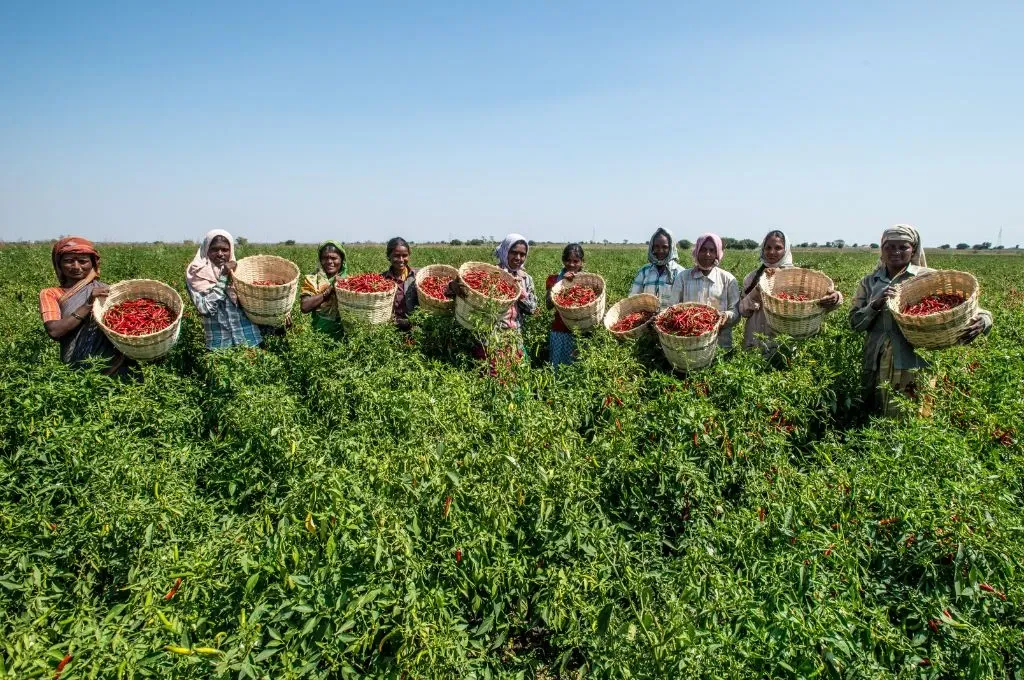
  • Definition: An FPO is a type of Producer Organisation (PO) formed by farmers. It operates as an organisation of the producers, by the producers, and for the producers.
  • Supporting institution: The Small Farmers’ Agribusiness Consortium (SFAC) plays a vital role in promoting FPOs across India.
  • Purpose: A PO represents producers of various goods, including agricultural products, non-farm items, and artisan goods.
    • It can adopt legal forms such as producer companies, cooperative societies, or other entities that allow members to share profits and benefits.
  • Ownership: The ownership of an FPO lies entirely with its member farmers.It operates on the principle of shared decision-making and benefits.
Legal Framework for FPOs
  • Registration under Legal Acts: FPOs can be registered under the following:
    • Companies Act, 1956 or Companies Act, 2013.
    • Societies Registration Act, 1860.
    • Public Trusts Act, 1882.

Q1: What is ICRIER?

ICRIER (Indian Council for Research on International Economic Relations) is an autonomous, policy-oriented, not-for-profit think tank based in India. Established in 1981, it researches various economic policy issues to inform and influence policymaking in India, particularly in areas such as trade, investment, macroeconomics, and technology. News: FE

Sagar Island

Sagar Island

About Sagar Island:

  • It is also known as Ganga Sagar or Sagardwip is located in the Ganges delta, lying on the continental shelf of Bay of Bengal.
  • It consists of 43 villages. Sagar and Mahisani Islands are separated by River Muriganga Batala.
  • This island along with the Mahisani and Ghoramara islands are classified under the sand group category.
  • This Island is a religious place for Hindus, where pilgrims celebrate Makar Sankranti festival in honour of the Sun.
  • The Kapil Muni temple on the island is a popular pilgrim centre.
Who is Kapil Muni?
  • Kapila or Maharishi Kapila is a Vedic sage traditionally considered to be the original proponent of the Samkhya system of Indian philosophy.
  • He is said to have lived in the Indian subcontinent, around the sixth or seventh century B.C.E.
  • He is known for teaching a process of liberation known as bhakti yoga.

Q1: What are Deltas?

These are areas near the mouth of a river or estuary, where these moving bodies of water deposit large amounts of sediment. News: DTE

Bitumen

Bitumen

About Bio-bitumen:

  • It is a petroleum-free alternative to bitumen, or asphalt.
  • It is a sustainable alternative to traditional asphalt and it’s designed to lower the carbon footprint of road construction. 
  • It’s made using non-petroleum-based renewable resources and can be made from vegetable oils, synthetic polymers, or both, making it a more sustainable model long term.
  • Advantages
    • Sustainable: It is generated from renewable materials. This makes it a more environmentally friendly alternative to petroleum-based bitumen, which is derived from limited resources.
    • Low Carbon Footprint: As it is derived from organic materials that have absorbed carbon dioxide during their development, it often has a lower environmental impact than standard bitumen.
    • Improved environmental performance: It is less toxic and detrimental to the environment than regular bitumen. It contains fewer heavy metals and other hazardous pollutants.
  • Applications: It isversatile and may be utilised in a variety of applications, including road paving, roofing, and waterproofing.
What is Bitumen?
  • It is a dense, highly viscous, petroleum-based hydrocarbon.
  • It is found in deposits such as oil sands and pitch lakes (natural bitumen) or is obtained as a residue of the distillation of crude oil.

Q1:What Is a Hydrocarbon?

The term hydrocarbon refers to an organic chemical compound that is composed exclusively of hydrogen and carbon atoms. Hydrocarbons are naturally-occurring and form the basis of crude oil, natural gas, coal, and other important energy sources. News: TOI

Governor

Governor

About the Governor

  • The Governor is the chief executive head of a state.
  • The Canadian model inspires the office and is an independent constitutional authority.

Appointment Process

  • Presidential appointment: The Governor is appointed by the President under warrant and seal, not elected directly or indirectly.
    • He holds office at the pleasure of the President but enjoys independence in his role.
  • Consultation: Conventionally, the President consults the Chief Minister of the concerned state to ensure smooth governance.

Supreme Court Judgments

  • Surya Narain v. Union of India (1982): The pleasure of the President is not justiciable.
  • Hargovind Pant v. Raghukul Tilak: The Governor’s office is an independent constitutional office and not an employment under the Central government.

Conditions of the Governor’s Office

  • Entitlements:
    • Use of official residence (Raj Bhavan) without rent.
    • Emoluments, allowances, and privileges determined by Parliament.
  • Protections and Immunities:
    • Under Article 361, the Governor enjoys personal immunity from legal liability for official acts.
    • Criminal proceedings are not allowed during their tenure, and they cannot be arrested or imprisoned.
  • Oath of Office: The Governor takes an oath to:
    • Faithfully execute the office.
    • Preserve, protect, and defend the Constitution.
    • Serve the well-being of the state’s people.
    • Administered by the Chief Justice of the concerned state’s High Court.

Constitutional Provisions Related to the Governor

  • Article 153: Mandates a Governor for each state.
    • A single person can serve as Governor for multiple states (as per the Sarkaria Commission).
  • Articles 157 and 158: Outline eligibility criteria for the Governor’s office.
  • Article 163: Establishes a Council of Ministers, led by the Chief Minister, to aid and advise the Governor, except in discretionary matters.

Recent Appointments

  • Ajay Bhalla, former Union Home Secretary, has been appointed as the Governor of Manipur.
  • General V.K. Singh (Retd.), a former Union Minister, has been appointed as the Governor of Mizoram.
  • Kerala Governor Arif Mohammed Khan has been transferred to Bihar, with Rajendra Vishwanath Arlekar, the incumbent Bihar Governor, appointed as the new Kerala Governor.
  • Hari Babu Kambhampati, the Governor of Mizoram, has been appointed as the Governor of Odisha.

Q1. What is the President’s role in India?

The President of India is the constitutional head of the state and the supreme commander of the armed forces. They act on the advice of the Council of Ministers, as per Article 74 of the Constitution. Source: IE

What are Archaea?

Default Image

About Archaea

  • Archaea, which means "ancient things" in Greek, are one of the oldest forms of life on Earth and belong to a group called the third domain of life.
  • Archaea (singular archaeon) are a primitive group of microorganisms.
  • These slow-growing organisms are also present in the human gut, and have a potential relationship with human health.
  • They are known for producing antimicrobial molecules, and for anti-oxidant activity with applications in eco-friendly waste-water treatment.
  • Archaea are extremely difficult to culture due to challenges in providing natural conditions in a laboratory setting,
  • Habitat: They were originally discovered and described in extreme environments, such as hydrothermal vents and terrestrial hot springs. They were also found in a diverse range of highly saline, acidic, and anaerobic environments.

Key points of the research

  • Researchers studied a specific TA system in a heat-loving archaeon called Sulfolobus acidocaldarius to understand how it helps these organisms.
  • S. acidocaldarius, which lives in hot volcanic pools like Barren Island in the Andaman & Nicobar Islands in India and some other volcanic areas in the world, that can get as hot as 90 degree Celsius, the research highlights its unique challenges and how it survives.
  • The detailed analysis of the VapBC4 TA system that helps survival in the high temperature environment, shows its important role during heat stress.
  • It is revealed that several functions of the VapC4 toxin, such as stopping protein production, helping the organism form resilient cells, and influencing biofilm creation.
  • When the cell faces heat stress, a stress-activated protease may break down VapB4 protein. Once VapB4 is gone, the VapC4 toxin is released and can stop protein production.
  • This block in protein production is part of a survival strategy that helps cells form "persister cells" during stress.
  • These persister cells go into resting state, conserving energy and avoiding making damaged proteins. This dormancy helps them survive tough conditions until the environment improves.

Q1: What are Antioxidants?

These are man-made or natural substances that may prevent or delay some types of cell damage. Antioxidants are found in many foods, including fruits and vegetables. They are also available as dietary supplements. Source: PIB

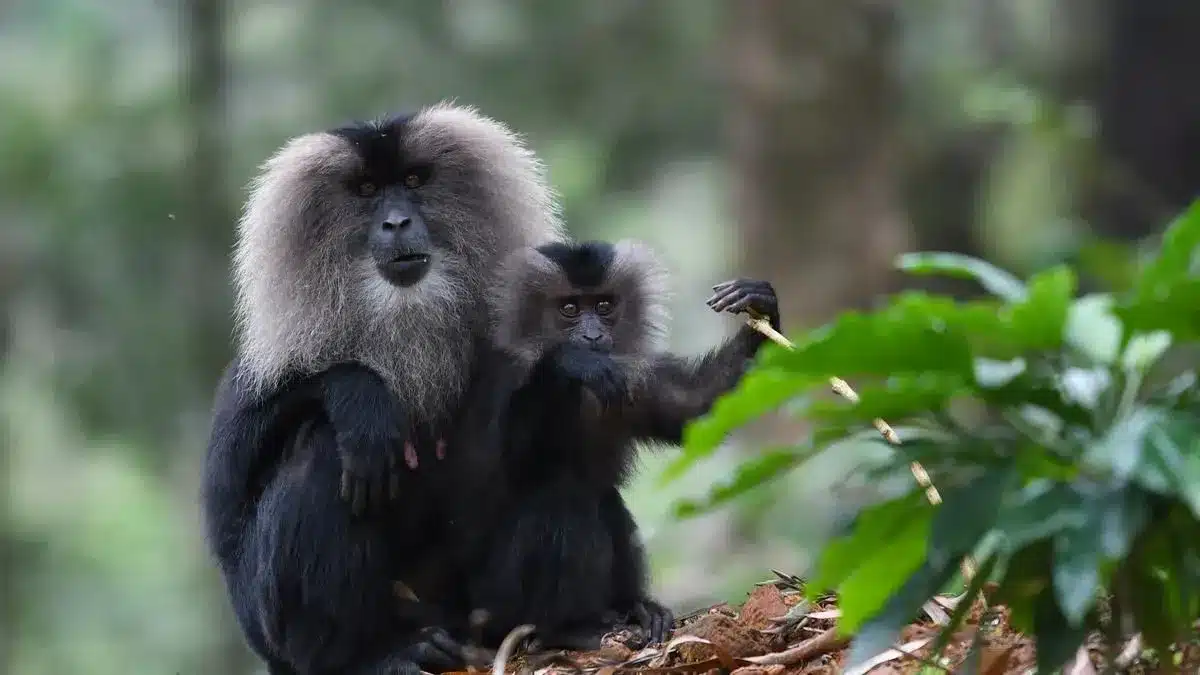
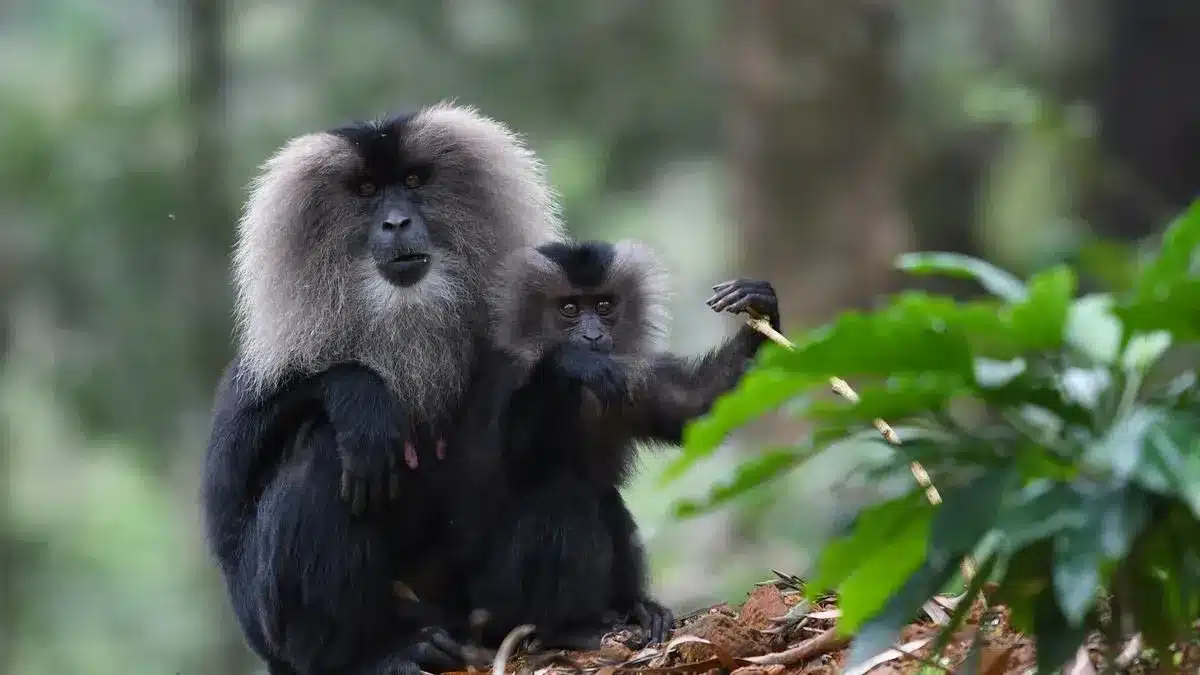
Lion-Tailed Macaque

Lion-Tailed Macaque

About Lion-tailed Macaque

  • It is an Old World monkey.
  • It is an arboreal and diurnal creature, they sleep at night in trees (typically, high in the canopy of rainforest).
  • These macaques are territorial and very communicative animals. One of the distinguishing features of this species is that males define the boundaries of their home ranges by calls.
  • Overall, their communication system contains as many as 17 vocalisations.
  • Diet: It is omnivorous and feed upon a wide variety of food, although fruits form the major part of their diet.
  • Appearance
    • The magnificent Lion-tailed macaque is named due to its lion-like, long, thin, and tufted tail. Also they are characterised by the grey mane around their face.
    • In the meantime, this animal is one of the smallest macaque species in the world.
  • Distribution: It is endemic to evergreen rainforests of the southern part in Western Ghats, with its range passing through the three states of Karnataka, Kerala and Tamil Nadu.
  • Conservation Status
    • IUCN: Critically Endangered
    • CITES: Appendix I
    • The Wildlife (Protection) Act, 1972: Schedule I
  • Threats: Its population faces threats from habitat loss, fragmentation, and human encroachment.

Q1: Where is Western Ghats located?

It is a mountain range (in a stretch of 1,600 Km) parallel to the western coast of the Indian peninsula. It is a UNESCO World Heritage Site and is one of the 36 biodiversity hotspots in the world. Source: TH

California Ground Squirrels

Default Image

About California Ground Squirrels

  • Scientific Name: Otospermophilus beecheyi.
  • Common Name: Beechey ground squirrel.
  • Habitat: Predominantly found in the western United States, including regions like Briones Regional Park in California.
  • Physical Characteristics:
    • Mottled fur with shades of grey, light and dark brown, and white.
    • Typically live up to 6 years in the wild.
  • Predators: Commonly preyed upon by rattlesnakes, eagles, raccoons, foxes, badgers, and weasels.
  • Conservation Status:
    • IUCN Red List: Least Concern.
    • CITES: No special status.

Key Study Findings on Squirrels’ Behavior

  • Research Origins: Led by the University of Wisconsin-Eau Claire and the University of California, Davis, as part of the Long-term Behavioral Ecology of California Ground Squirrels Project.
  • Observation:
    • Squirrels previously believed to be herbivores are now identified as opportunistic omnivores.
    • They actively hunt, kill, and eat voles (small rodents).
    • Out of 74 observed interactions, 42% involved active hunting behaviour.

Q1. What is the IUCN Red List?

The IUCN Red List is a comprehensive inventory evaluating the conservation status of plant and animal species. It categorizes species into groups like Critically Endangered, Endangered, or Vulnerable, aiding global efforts to protect biodiversity. Source: DOE

Annual Survey of Unincorporated Sector Enterprises

Default Image

About Annual Survey of Unincorporated Sector Enterprises:

  • It is carried out with the primary objective of measuring various economic and operational characteristics of unincorporated non-agricultural establishments in manufacturing, trade and other services sectors (excluding construction).
  • The survey collects data on various economic characteristics of this sector including number of workers, GVA, emoluments paid, fixed asset owned, outstanding loan, besides, different types of operational characteristics such as type of ownership, nature of operation, registration status, use of ICT, etc.
  • Significance: The data serves as a key input for policymaking, supporting National Accounts Statistics, fulfilling the requirements of Ministries such as M/o Micro, Small and Medium Enterprise (MSME), Textiles, Labour & Employment, and empowering stakeholders to make informed, data-driven decisions.

Key highlights

  • The ASUSE 2023-24 results highlight significant growth in establishments, employment, and productivity in the unincorporated non-agricultural sector.
    • The total number of establishments in the sector increased substantially from 6.50 crore in 2022-23 to 7.34 crore in 2023-24, representing a healthy12.84% growth.
    • Among the broad sectors covered, the number of establishments in the "Other Services" sector recorded a growth of 23.55% followed by a 13% increase witnessed by the manufacturing sector.
    • During the same period, the Gross Value Added (GVA) which is a key indicator of economic performance rose by16.52% driven by a 26.17% growth in other services sector.
    • The percentage of female-owned proprietary establishments has increased from 22.9% in 2022-23 to 26.2%
    • The average emolument per hired worker also increased by 13% in 2023-24 compared to the previous year, 2022-23, signaling improvements in wage levels.
    • Percentage of establishments using internet has also grown significantly from 21.1% in 2022-23 to 26.7% in ASUSE 2023-24.

Q1: What Is Gross Value Added (GVA)?

Gross value added (GVA) is an economic productivity metric that measures the contribution of a corporate subsidiary, company, or municipality to an economy, producer, sector, or region. Source: PIB

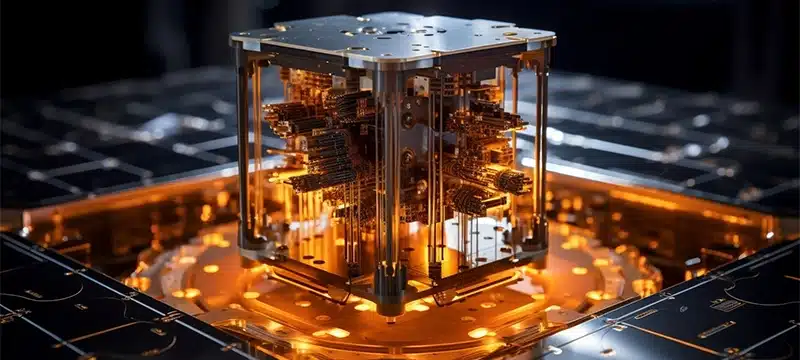
What is Quantum Computing?

Quantum Computing

About Quantum Computing

  • Quantum computing is a cutting-edge technology leveraging the principles of quantum mechanics to solve problems too complex for traditional computers.

Quantum Mechanics

  • A branch of physics deals with the behaviour of particles such as atoms, electrons, and photons at molecular and sub-molecular levels.
  • It introduces phenomena like superposition and entanglement, enabling quantum computing's revolutionary capabilities.

Key Features

  • Fundamentally Different from Classical Computing: Classical computers process information in binary bits (0 or 1).
    • Quantum computers use quantum bits (qubits), which can exist in states 0, 1, or both simultaneously (superposition).
  • Superposition: It enables qubits to hold multiple states at once, allowing quantum computers to perform exponentially more calculations compared to classical systems.
    • Example: Like a spinning coin, a qubit can represent both heads and tails until measured.
  • Entanglement: A phenomenon where qubits remain intrinsically linked, regardless of distance.
    • Changing the state of one qubit instantly affects its entangled counterpart, enhancing computational speed.
  • Unprecedented computational power: Quantum computers can solve problems that are impossible or time-prohibitive for classical systems, such as cryptographic algorithms, simulations, and optimization tasks.

Milestones in Quantum Computing

  • Origin: Proposed in 1982 by Richard Feynman to simulate quantum systems, as classical computers struggled with such complexity.
  • Breakthrough algorithms: Shor’s Algorithm (1994): Revolutionized cryptography by factoring large numbers exponentially faster than classical methods.
  • Technological advancements
    • IBM Q System One (2019): The first circuit-based commercial quantum computer.
    • Google Sycamore Processor (2019): Demonstrated quantum supremacy by solving a task in 200 seconds, which would take classical supercomputers 10,000 years.
    • Google Willow Quantum Chip (2023): Introduced scalable error-corrected qubits, finishing calculations in minutes that would otherwise take billions of years for classical systems.

Q1. What is Quantum Technology?

Quantum technology leverages the principles of quantum mechanics, such as superposition, entanglement, and quantum tunnelling, to develop advanced tools and applications.

About Pradhan Mantri Rashtriya Bal Puraskar

Default Image

About Pradhan Mantri Rashtriya Bal Puraskar

  • It is organized to celebrate the energy, determination, ability, zeal and enthusiasm of our children.
  • It is the highest civilian honor for children in India.
  • The Pradhan Mantri Rashtriya Bal Puraskar organized by The Ministry of Women and Child Development Government of India
  • It is awarded annually to children for exceptional achievements in seven categories:
    • Art & Culture, Bravery, Innovation, Science & Technology, Social Service, Sports, and Environment.

Eligibility

  • A child should be an Indian Citizen.
  • A child above the age of 5 years and not exceeding 18 years (as of 31st July of respective year).
  • The act/incident/achievement should have been within 2 years of the last date of receipt of application/nomination for the year of consideration.
  • Number of Award will be 25, however, any relaxation to this maximum number may be permitted at the discretion of the National Selection Committee.
  • Each awardee will receive a medal, certificate and citation booklet.

Q1: What is art?

It is a visual object or experience consciously created through an expression of skill or imagination. Source: ET

Supreme Court Restrains ED from Accessing Seized Digital Devices

Supreme Court Restrains ED from Accessing Seized Digital Devices

What’s in today’s article?

  • Why in News?
  • What is the Enforcement Directorate (ED)?
  • What is the Case Background?
  • Supreme Court's Order
  • Implications for ED Investigations
  • Broader Concerns
  • Conclusion

Why in News?

  • In a landmark decision, the SC has prohibited the Enforcement Directorate (ED) from accessing and copying data from electronic devices seized during a raid on Santiago Martin, known as the "lottery king," his relatives, and employees.
  • The decision emphasises the protection of fundamental rights, including the right to privacy, and could influence future guidelines on digital device seizures.

What is the Enforcement Directorate (ED)?

  • Background:
    • The origin of the Directorate can be traced back to 1956, when an ‘Enforcement Unit’ was formed, in the Department of Economic Affairs, for handling Exchange Control Laws violations under Foreign Exchange Regulation Act, 1947.
    • In 1957, this Unit was renamed as ‘Enforcement Directorate’ and the administrative control of the Directorate was transferred from Department of Economic Affairs to Department of Revenue in 1960.
  • About:
    • Directorate of Enforcement (ED) is a specialised financial investigation agency under the Department of Revenue, Ministry of Finance, Government of India, which enforces the following laws: -
      • Foreign Exchange Management Act,1999 (FEMA) - A Civil Law.
      • Prevention of Money Laundering Act, 2002 (PMLA) - A Criminal Law.
    • The ED (Headquartered at New Delhi) is governed under the Central Vigilance Commission (CVC) Act, 2003.
  • Composition:
    • It is composed of officers from the Indian Revenue Service, the Indian Police Service and the Indian Administrative Service, as well as officers promoted from its own cadre.
    • It is headed by the Director of Enforcement, who is appointed by the Central government and has been provided security of two-year tenure in office by the CVC Act, 2003.

What is the Case Background?

  • The ED's operation:
    • In November, ED conducted searches at 22 locations across six states based on a complaint by Meghalaya Police.
    • Allegations were made against Future Gaming and Hotel Services Pvt Ltd for illegally monopolising the lottery business in Meghalaya.
    • The raids uncovered ₹12.41 crore in cash.
  • Future Gaming’s political contributions:
    • The company was the largest purchaser of electoral bonds, totaling ₹1,368 crore between 2019 and 2024.
    • Donations were made across party lines:
      • Trinamool Congress: ₹542 crore
      • DMK: ₹503 crore
      • YSR Congress: ₹154 crore
      • BJP: ₹100 crore

Supreme Court's Order:

  • Content and directives:
    • A two-page order by Justices Abhay S Oka and Pankaj Mithal directed ED not to access or copy data from seized devices belonging to Santiago Martin and his associates.
    • The order also stayed summons under the Prevention of Money Laundering Act (PMLA) requiring individuals to appear for data extraction purposes.
    • The Future Gaming case was ordered to be heard alongside other cases related to digital device seizures, including Amazon India and Newsclick petitions.
  • Petitioners’ argument:
    • The plea emphasized the violation of privacy and constitutional rights due to unrestricted access to sensitive personal and business data.
    • It highlighted the absence of procedural safeguards against "fishing expeditions" by investigative agencies.

Implications for ED Investigations:

  • ED’s response:
    • Senior officials described the SC's restraint as “unprecedented” but maintained it would not hinder their investigations due to other evidence and property attachments worth ₹622 crore.
    • They cited adherence to CBI guidelines on digital evidence.
  • Legal implications:
    • Lawyers, including former Attorney General Mukul Rohatgi, argued for interim relief, highlighting the infringement of privacy and the need for defined procedures in such cases.
    • The decision sets a potential precedent for limiting access to sensitive data and protecting against self-incrimination.

Broader Concerns:

  • Nature of seized devices: The petition detailed the seizure of 17 mobile phones, hard disks, pen drives, and email backups containing sensitive financial, medical, and business information.
  • Tax compliance: Future Gaming disclosed having paid ₹28,205 crore in GST for operating state lotteries, reinforcing its compliance record.
  • Call for guidelines: The petition advocates for clear procedures to ensure privacy rights are respected during digital device seizures and investigations.

Conclusion:

  • The Supreme Court’s order underscores the growing importance of safeguarding digital privacy in legal investigations.
  • As the case progresses, it may establish new standards for balancing law enforcement objectives with constitutional rights, particularly in an era where personal and business data is increasingly digitised.

Q.1. What is 'Right to Privacy' in India?

In the Justice K.S. Puttaswamy case (2017), commonly known as the Right to Privacy verdict, the SC held that the right to privacy is protected as a fundamental right under Articles 14, 19 and 21 of the Constitution of India.

Q.2. What is the Prevention of Money Laundering Act, 2002 (PMLA)?

The PMLA is a law that prevents money laundering and confiscated property involved in money laundering. It came into effect on July 1, 2005.

Source: Santiago Martin case — SC red line for ED: Can’t copy, access content from laptop, mobile phones

Lion-Tailed Macaque

Lion-Tailed Macaque

About Lion-tailed Macaque

  • It is an Old World monkey.
  • It is an arboreal and diurnal creature, they sleep at night in trees (typically, high in the canopy of rainforest).
  • These macaques are territorial and very communicative animals. One of the distinguishing features of this species is that males define the boundaries of their home ranges by calls. 
  • Overall, their communication system contains as many as 17 vocalisations. 
  • Diet: It is omnivorous and feed upon a wide variety of food, although fruits form the major part of their diet.
  • Appearance
    • The magnificent Lion-tailed macaque is named due to its lion-like, long, thin, and tufted tail. Also they are characterised by the grey mane around their face.
    • In the meantime, this animal is one of the smallest macaque species in the world.
  • Distribution: It is endemic to evergreen rainforests of the southern part in Western Ghats, with its range passing through the three states of Karnataka, Kerala and Tamil Nadu.
  • Conservation Status
    • IUCN: Critically Endangered
    • CITES: Appendix I
    • The Wildlife (Protection) Act, 1972: Schedule I
  • Threats: Its population faces threats from habitat loss, fragmentation, and human encroachment.

Q1: Where is Western Ghats located?

It is a mountain range (in a stretch of 1,600 Km) parallel to the western coast of the Indian peninsula. It is a UNESCO World Heritage Site and is one of the 36 biodiversity hotspots in the world.

Source: TH

Governor

Governor

About the Governor

  • The Governor is the chief executive head of a state.
  • The Canadian model inspires the office and is an independent constitutional authority.

Appointment Process

  • Presidential appointment: The Governor is appointed by the President under warrant and seal, not elected directly or indirectly.
    • He holds office at the pleasure of the President but enjoys independence in his role.
  • Consultation: Conventionally, the President consults the Chief Minister of the concerned state to ensure smooth governance.

Supreme Court Judgments

  • Surya Narain v. Union of India (1982): The pleasure of the President is not justiciable.
  • Hargovind Pant v. Raghukul Tilak: The Governor’s office is an independent constitutional office and not an employment under the Central government.

Conditions of the Governor’s Office

  • Entitlements:
    • Use of official residence (Raj Bhavan) without rent.
    • Emoluments, allowances, and privileges determined by Parliament.
  • Protections and Immunities:
    • Under Article 361, the Governor enjoys personal immunity from legal liability for official acts.
    • Criminal proceedings are not allowed during their tenure, and they cannot be arrested or imprisoned.
  • Oath of Office: The Governor takes an oath to:
    • Faithfully execute the office.
    • Preserve, protect, and defend the Constitution.
    • Serve the well-being of the state’s people.
    • Administered by the Chief Justice of the concerned state’s High Court.

Constitutional Provisions Related to the Governor

  • Article 153: Mandates a Governor for each state.
    • A single person can serve as Governor for multiple states (as per the Sarkaria Commission).
  • Articles 157 and 158: Outline eligibility criteria for the Governor’s office.
  • Article 163: Establishes a Council of Ministers, led by the Chief Minister, to aid and advise the Governor, except in discretionary matters.

Recent Appointments

  • Ajay Bhalla, former Union Home Secretary, has been appointed as the Governor of Manipur.
  • General V.K. Singh (Retd.), a former Union Minister, has been appointed as the Governor of Mizoram.
  • Kerala Governor Arif Mohammed Khan has been transferred to Bihar, with Rajendra Vishwanath Arlekar, the incumbent Bihar Governor, appointed as the new Kerala Governor.
  • Hari Babu Kambhampati, the Governor of Mizoram, has been appointed as the Governor of Odisha.

Q1. What is the President’s role in India?

The President of India is the constitutional head of the state and the supreme commander of the armed forces. They act on the advice of the Council of Ministers, as per Article 74 of the Constitution.

Source: IE
 

Centenary of 1924 Belgaum Congress Session: Gandhi’s Vision of Non-Violence, Swaraj, and Unity

Centenary of 1924 Belgaum Congress Session: Gandhi’s Vision of Non-Violence, Swaraj, and Unity

What’s in today’s article?

  • Why in News?
  • 1924 session

Why in News?

The Congress is organizing a two-day event in Belagavi (previously Belgaum), Karnataka, on December 26-27 to mark the centenary of Mahatma Gandhi presiding over its historic Belgaum session in 1924.

The event includes an extended session of the Congress Working Committee (CWC) and a rally.

1924 session

  • Backdrop against which 1924 Belgaum Session was held
    • After his release from prison in February 1924, Mahatma Gandhi was troubled by the lack of Hindu-Muslim unity in the freedom struggle and Congress factionalism.
  • Mahatma Gandhi was in prison in February 1924 for his involvement in the Non-Cooperation Movement against British rule.
  • He was arrested in 1922 on charges of sedition for writing three articles in Young India that criticized British policies.
  • Gandhi was sentenced to six years in prison but was released early in February 1924 after serving about two years due to health concerns.
    • To address these issues, he undertook a 21-day fast from September 18 to October 8 that year.
  • Participants in the 1924 Congress session
    • The session was attended by several senior Congress leaders including Jawaharlal Nehru, Sardar Vallabhbhai Patel, Sarojini Naidu, and Khilafat movement leaders Muhammad Ali Jauhar and Shaukat Ali, among others.
  • Significance of 1924 Session
    • Mahatma Gandhi presided over the 1924 Congress session in the erstwhile Bombay state, marking the only time he held the position of Congress president.
    • During this session, Gandhi presented his ideas on non-violence, communal harmony, and "swaraj" (self-rule).
    • He served as the Congress president from December 1924 to April 1925.
  • Gandhi’s message to the 1924 conclave
  • Gandhi on Non-Violence and Non-Cooperation Movement
    • Mahatma Gandhi discussed his philosophy of non-violence.
    • He explained that although the Non-Cooperation Movement was called off in 1922 after the Chauri Chaura incident, it had been an effective strategy for India’s path to independence.
    • He highlighted that the boycotts, such as those of government institutions and foreign cloth, were not fully successful but had reduced the prestige of these institutions.
    • Gandhi emphasized that non-violence, rather than revolutionary violence, was a more effective force for change, as it came from goodwill and gentleness.
  • Hindu-Muslim Unity and Untouchability
    • Gandhi stressed that the removal of untouchability was as essential for swaraj (self-rule) as Hindu-Muslim unity.
    • He argued that Hindus could not claim swaraj until they restored the liberty of the suppressed classes, underscoring the importance of social reform in the freedom struggle.
  • Self-Rule and Reforms
    • Gandhi suggested reforms to achieve swaraj, including moving the final court of appeals from London to Delhi and adopting Hindustani as the official language in provincial governments and courts.
    • He urged the people to become "perfect satyagrahis," emphasizing that satyagraha (non-violent resistance) was an attainable quality for all, vital for achieving truth and justice.
  • Khadi and Self-Reliance
    • Gandhi called on the masses to take up spinning and weaving khadi, asserting that true swaraj could only be achieved when the people embraced self-reliance, symbolized by the use of khadi fabric.
  • Impact of 1924 session on the freedom movement
    • Historians believe that the session was a step towards the promotion of peasant consciousness.
    • This resulted in the spread of khadi with village industries getting traction in Karnataka and other parts of the country.
    • It also saw increased participation of peasants in the Congress-led initiatives.

Q.1. Why was Gandhi in prison in 1924?

Gandhi was imprisoned in 1922 for sedition after criticizing British policies in Young India. He was released in 1924 due to health concerns after serving about two years of his six-year sentence.

Q.2. What was the significance of the 1924 Belgaum Session?

The session marked Gandhi’s only term as Congress president, where he emphasized non-violence, Hindu-Muslim unity, and self-rule. It influenced social reforms, including the spread of khadi and increased peasant participation in the independence movement.

Source: IE

Beginner’s Guide to Quantum Computing: Key Concepts, Milestones, and Future

Beginner's Guide to Quantum Computing: Key Concepts, Milestones, and Future

What’s in today’s article?

  • Why in News?
  • What is Quantum computing?
  • Significant Milestones in Quantum Computing
  • Present Limitations of Quantum Computing
  • National Quantum Mission: India’s Commitment (2023)
  • The Road Ahead

Why in News?

Quantum computing, rooted in quantum mechanics, promises to solve complex problems beyond the reach of classical computers. Proposed by Richard Feynman in 1982 to simulate quantum systems, it emerged as a solution to classical computers' limitations.

Since then, progress includes the development of qubits (using superposition and entanglement), improved error correction, and scalable hardware, paving the way for applications in cryptography, optimization, and drug discovery.

What is Quantum computing?

  • Classical Computing: Bits as Units of Information
    • Classical computers operate based on principles of classical physics.
    • The basic unit of information is the bit, which can be either 0 or 1.
    • All types of information can be represented using combinations of 0s and 1s in the binary system.
  • Quantum Computing: Qubits as Fundamental Units
    • Quantum computers rely on quantum bits, or qubits, for computations.
    • Qubits can represent 0, 1, or a state that is partly 0 and partly 1 simultaneously.
    • This ability to exist in multiple states is unique to qubits and enables quantum computations.
  • Key Principles
  • Superposition: A Key Quantum Principle
    • Qubits can exist in a state of superposition, holding both 0 and 1 at the same time.
    • Example: A spinning coin that represents both heads and tails simultaneously until it collapses to one state when observed.
    • Superposition allows quantum computers to perform multiple computations at once.
  • Entanglement: Quantum Correlation
    • Qubits can be entangled, meaning their states are intrinsically linked, even if they are far apart.
    • Measuring one qubit instantly provides information about the other, regardless of distance.
    • Example: If a pair of gloves are kept in separate boxes, opening one reveals the other’s state instantly.
    • Entanglement enables faster information processing through shared states.
  • Advantages of Quantum Principles
    • Superposition allows quantum computers to process exponentially more data than classical computers.
    • Entanglement facilitates simultaneous information sharing, speeding up computations.
    • These principles, rooted in quantum mechanics, unlock the immense potential of quantum computing, beyond the scope of classical physics.

Significant Milestones in Quantum Computing

  • Quantum Computers vs. Classical Computers
    • Quantum computers are technologically advanced but may not always outperform classical computers in every task.
    • Specific tasks have been developed to demonstrate the unique capabilities of quantum computing.
  • Shor’s Algorithm: Revolutionizing Factorization (1994)
    • Created by Peter Shor, this algorithm can factorize large numbers in moments, compared to millions of years required by classical computers.
    • Major implications for data security, as it can quickly solve problems like large-number factorization, which are used to secure encrypted data.
  • IBM’s Q System One: The First Commercial Quantum Computer (2019)
    • IBM introduced Q System One, the world’s first circuit-based commercial quantum computer.
    • Circuit-based designs with quantum gates are versatile and suited for general quantum-computing applications.
  • Google's Sycamore Processor: Achieving Quantum Supremacy (2019)
    • Google’s 53-qubit Sycamore processor solved a problem in 200 seconds that would take a supercomputer 10,000 years.
    • This milestone marked quantum supremacy, where quantum computers outperform classical counterparts for specific tasks.
  • Google’s Willow Quantum Chip: Scaling with Error Correction (2024)
    • Google unveiled Willow, the first quantum processor with error-corrected qubits that improve as they scale.
    • Quantum error correction is critical to maintaining quantum states long enough for meaningful calculations.
    • Willow completed a standard test in 5 minutes, a task that would take the best supercomputers 10 trillion trillion years.
  • Progress and Potential
    • These milestones illustrate the rapid advancement of quantum computing, showcasing its potential to solve complex problems far beyond the reach of classical systems.

Present Limitations of Quantum Computing

  • High Cost and Complexity
    • Building quantum computers is extremely expensive and technically complex.
    • Maintaining the stability of qubits is challenging due to high error rates and issues like decoherence caused by environmental noise.
  • Need for Larger-Scale Quantum Systems
    • Current quantum computers have limited qubits, but solving major problems (e.g., drug discovery, astronomical research) requires millions of qubits.
    • Scaling quantum systems to such levels remains a significant hurdle.

National Quantum Mission: India’s Commitment (2023)

  • Recognizing the potential of quantum computing, India launched the National Quantum Mission.
  • The government allocated ₹6,000 crore over eight years to advance quantum technology and develop quantum computers.

The Road Ahead

  • While the challenges are substantial, the advancements and investments highlight the clear potential and promise of quantum computing.

Q.1. What is quantum computing?

Quantum computing uses qubits instead of bits for computation. Unlike classical bits, qubits can represent 0, 1, or both simultaneously, thanks to superposition, enabling quantum computers to process data exponentially faster than classical computers.

Q.2. What is India’s National Quantum Mission?

Launched in 2023, India’s National Quantum Mission is a government initiative to invest ₹6,000 crore over eight years, advancing quantum technology and developing quantum computers, showcasing India’s commitment to the future of quantum computing.

News: A beginner’s guide to quantum computing | Explained

Kilauea Volcano

Kilauea Volcano

About Kilauea Volcano

  • Location: Southern part of Hawaii's Big Island, within Hawai'i Volcanoes National Park, U.S.A.
  • Type: Youngest and most active Hawaiian shield volcano, renowned for frequent eruptions.
  • Eruption zones: Erupts from vents at its summit caldera or along rift zones.
  • Mythological significance: The central crater, Halemaumau, is believed to be the home of the Hawaiian fire goddess Pele.
  • Historical activity:
    • Contained a lava lake until 1924.
    • Nearly continuous activity was recorded in the 19th and early 20th centuries.
    • 34 eruptions since 1952; near-continuous eruptions occurred from 1983 to 2018 in the East Rift Zone.

Key features

  • Summit Caldera: Kilauea's summit caldera, a large depression formed by the partial collapse of the volcano after releasing most of its magma chamber, spans approximately 3 miles in length and 2 miles in width, covering an area of over 4 square miles.
  • Proximity to Mauna Loa: Kilauea's slopes seamlessly merge with those of Mauna Loa, another massive shield volcano, making the region home to the summits of two of the world's most active volcanoes.

What is a Shield Volcano?

  • Definition: A type of volcano characterized by broad, gentle slopes formed from highly fluid basalt lava.
  • Features:
    • Unlike conical peaks of composite volcanoes, shield volcanoes appear elongated and dome-shaped.
    • Eruptions are usually low in explosivity, forming cinder cones and spatter cones at vents.
    • Explosions occur only if water enters the vent.
  • Examples: Hawaiian shield volcanoes like Kilauea and Mauna Loa.

Volcanoes in India

  • Barren Island (Andaman Islands): India's only active volcano.
  • Narcondam (Andaman Islands): Dormant volcano.
  • Baratang (Andaman Islands): Known for mud volcanoes.
  • Deccan Traps (Maharashtra): Vast volcanic plateau formed by ancient eruptions.
  • Dhinodhar Hills (Gujarat): Extinct volcano.
  • Dhosi Hill (Haryana): Ancient volcanic site with historical significance.

Q1: What are the types of volcanoes?

Volcanoes are classified into Shield, Composite, Cinder Cone, and Lava Domes. Shield volcanoes have gentle slopes, while Composite volcanoes have steep sides. Cinder cones are small, and Lava Domes form from slow magma extrusion.

Source: AP News

Annual Survey of Unincorporated Sector Enterprises

Default Image

About Annual Survey of Unincorporated Sector Enterprises:

  • It is carried out with the primary objective of measuring various economic and operational characteristics of unincorporated non-agricultural establishments in manufacturing, trade and other services sectors (excluding construction).
  • The survey collects data on various economic characteristics of this sector including number of workers, GVA, emoluments paid, fixed asset owned, outstanding loan, besides, different types of operational characteristics such as type of ownership, nature of operation, registration status, use of ICT, etc.
  • Significance: The data serves as a key input for policymaking, supporting National Accounts Statistics, fulfilling the requirements of Ministries such as M/o Micro, Small and Medium Enterprise (MSME), Textiles, Labour & Employment, and empowering stakeholders to make informed, data-driven decisions.

Key highlights

  • The ASUSE 2023-24 results highlight significant growth in establishments, employment, and productivity in the unincorporated non-agricultural sector.
    • The total number of establishments in the sector increased substantially from 6.50 crore in 2022-23 to 7.34 crore in 2023-24, representing a healthy12.84% growth.
    • Among the broad sectors covered, the number of establishments in the "Other Services" sector recorded a growth of 23.55% followed by a 13% increase witnessed by the manufacturing sector.
    • During the same period, the Gross Value Added (GVA) which is a key indicator of economic performance rose by16.52% driven by a 26.17% growth in other services sector.
    • The percentage of female-owned proprietary establishments has increased from 22.9% in 2022-23 to 26.2% 
    • The average emolument per hired worker also increased by 13% in 2023-24 compared to the previous year, 2022-23, signaling improvements in wage levels. 
    • Percentage of establishments using internet has also grown significantly from 21.1% in 2022-23 to 26.7% in ASUSE 2023-24. 

Q1: What Is Gross Value Added (GVA)?

Gross value added (GVA) is an economic productivity metric that measures the contribution of a corporate subsidiary, company, or municipality to an economy, producer, sector, or region.

Source: PIB

California Ground Squirrels

Default Image

About California Ground Squirrels

  • Scientific Name: Otospermophilus beecheyi.
  • Common Name: Beechey ground squirrel.
  • Habitat: Predominantly found in the western United States, including regions like Briones Regional Park in California.
  • Physical Characteristics:
    • Mottled fur with shades of grey, light and dark brown, and white.
    • Typically live up to 6 years in the wild.
  • Predators: Commonly preyed upon by rattlesnakes, eagles, raccoons, foxes, badgers, and weasels.
  • Conservation Status:
    • IUCN Red List: Least Concern.
    • CITES: No special status.

Key Study Findings on Squirrels’ Behavior

  • Research Origins: Led by the University of Wisconsin-Eau Claire and the University of California, Davis, as part of the Long-term Behavioral Ecology of California Ground Squirrels Project.
  • Observation:
    • Squirrels previously believed to be herbivores are now identified as opportunistic omnivores.
    • They actively hunt, kill, and eat voles (small rodents).
    • Out of 74 observed interactions, 42% involved active hunting behaviour.

Q1. What is the IUCN Red List?

The IUCN Red List is a comprehensive inventory evaluating the conservation status of plant and animal species. It categorizes species into groups like Critically Endangered, Endangered, or Vulnerable, aiding global efforts to protect biodiversity.

Source: DOE

Indias Push for Self Reliance in it Hardware Manufacturing

Indias Push for Self Reliance in it Hardware Manufacturing

What’s in today’s article?

  • Introduction
  • Strategic Policy Measures
  • WTO Commitments and Global Trade Concerns
  • India’s Import Dependency
  • Domestic Production Challenges
  • Way Forward

Introduction

  • India's heavy reliance on imported IT hardware, such as laptops and PCs, has driven the government to explore strategies to boost domestic manufacturing.
  • This includes linking import permissions to domestic capacity expansion and introducing a credit system for imports once production meets critical thresholds.

Strategic Policy Measures

  • Import Restrictions Tied to Domestic Manufacturing:
    • The government plans to emulate the successful strategy used in the tyre manufacturing sector.
    • In 2020, restrictions on new pneumatic tyre imports led to global players like Bridgestone, Michelin, and Goodyear investing over ₹1,100 crore in local facilities.
    • A similar conditional easing of import norms is being considered for laptops and PCs, tied to commitments for domestic production.
  • Credit System for Imports:
    • A credit system for IT hardware imports may be introduced, with detailed policies expected as domestic production gains momentum.

WTO Commitments and Global Trade Concerns

  • WTO Constraints:
    • India cannot impose higher duties on IT products, as they are bound by zero-duty commitments under the WTO’s Information Technology Agreement (1997).
  • Global Pressure:
    • China dominates the global IT hardware market, with an 81% share of PCs and laptops and exports worth $163 billion in 2022.
    • Leading US-based companies like Apple, Dell, and HP, which produce in China, have raised concerns about India’s import monitoring system.
    • Japan and China have also formally expressed opposition to India’s laptop import licensing measures.
  • India's Security Goals:
    • While trade partners fear trade restrictions, the Indian government emphasizes that its policies aim to achieve self-reliance for national security, not impose undue barriers.

India’s Import Dependency

  • In FY24, India imported electronic components worth $34.4 billion, making it the fifth-largest imported commodity.
  • Imports from China ($12 billion) and Hong Kong ($6 billion) accounted for over 50% of total electronic imports.
  • Over the last five years, imports from China and Hong Kong have far exceeded those from South Korea, Japan, Taiwan, and ASEAN nations combined.

Domestic Production Challenges

  • Slow Progress in IT Hardware Manufacturing:
    • Despite initiatives like the revamped Production Linked Incentive (PLI) scheme (2023), domestic production of laptops and tablets has yet to scale up significantly.
    • 27 companies, including Dell, HP, Lenovo, and Foxconn, have been approved under PLI 2.0 but are still in the early stages of production.
  • Extended Import Authorizations:
    • Import restrictions under the Import Management System (IMS) have been extended until December 31, 2025, to prevent shortages and price hikes.

Way Forward

  • To reduce import dependency and achieve self-reliance, the government is pursuing a multi-faceted approach:
  • Strengthening Local Manufacturing:
    • Accelerating PLI incentives and enforcing policies that link imports with domestic capacity expansion.
  • Diversifying Trade:
    • Exploring alternative supply chains to reduce dependence on China and Hong Kong.
  • Encouraging Investments:
    • Creating a favourable ecosystem for both domestic and foreign players to invest in manufacturing facilities.
  • Balancing Global Commitments and Domestic Needs:
    • Aligning policies with WTO obligations while protecting strategic interests.

Q1. When was the WTO established?

The WTO began life on 1 January 1995, but its trading system is half a century older. Since 1948, the General Agreement on Tariffs and Trade (GATT) had provided the rules for the system. (The second WTO ministerial meeting, held in Geneva in May 1998, included a celebration of the 50th anniversary of the system.)

Q2. What is the basic difference between Custom Duty and Excise Duty?

Excise duty refers to the taxes levied on the manufacture of goods within the country, as opposed to custom duty that is levied on goods coming from outside the country.

News: Laptop manufacturing: Import nods likely to be linked to local capacity

What is Quantum Computing?

What is Quantum Computing?

About Quantum Computing

  • Quantum computing is a cutting-edge technology leveraging the principles of quantum mechanics to solve problems too complex for traditional computers.

Quantum Mechanics

  • A branch of physics deals with the behaviour of particles such as atoms, electrons, and photons at molecular and sub-molecular levels.
  • It introduces phenomena like superposition and entanglement, enabling quantum computing's revolutionary capabilities.

Key Features

  • Fundamentally Different from Classical Computing: Classical computers process information in binary bits (0 or 1).
    • Quantum computers use quantum bits (qubits), which can exist in states 0, 1, or both simultaneously (superposition).
  • Superposition: It enables qubits to hold multiple states at once, allowing quantum computers to perform exponentially more calculations compared to classical systems.
    • Example: Like a spinning coin, a qubit can represent both heads and tails until measured.
  • Entanglement: A phenomenon where qubits remain intrinsically linked, regardless of distance.
    • Changing the state of one qubit instantly affects its entangled counterpart, enhancing computational speed.
  • Unprecedented computational power: Quantum computers can solve problems that are impossible or time-prohibitive for classical systems, such as cryptographic algorithms, simulations, and optimization tasks.

Milestones in Quantum Computing

  • Origin: Proposed in 1982 by Richard Feynman to simulate quantum systems, as classical computers struggled with such complexity.
  • Breakthrough algorithms: Shor’s Algorithm (1994): Revolutionized cryptography by factoring large numbers exponentially faster than classical methods.
  • Technological advancements
    • IBM Q System One (2019): The first circuit-based commercial quantum computer.
    • Google Sycamore Processor (2019): Demonstrated quantum supremacy by solving a task in 200 seconds, which would take classical supercomputers 10,000 years.
    • Google Willow Quantum Chip (2023): Introduced scalable error-corrected qubits, finishing calculations in minutes that would otherwise take billions of years for classical systems.

Q1. What is Quantum Technology?

Quantum technology leverages the principles of quantum mechanics, such as superposition, entanglement, and quantum tunnelling, to develop advanced tools and applications.

What are Archaea?

Default Image

About Archaea

  • Archaea, which means "ancient things" in Greek, are one of the oldest forms of life on Earth and belong to a group called the third domain of life.
  • Archaea (singular archaeon) are a primitive group of microorganisms.
  • These slow-growing organisms are also present in the human gut, and have a potential relationship with human health.
  • They are known for producing antimicrobial molecules, and for anti-oxidant activity with applications in eco-friendly waste-water treatment.
  • Archaea are extremely difficult to culture due to challenges in providing natural conditions in a laboratory setting,
  • Habitat: They were originally discovered and described in extreme environments, such as hydrothermal vents and terrestrial hot springs. They were also found in a diverse range of highly saline, acidic, and anaerobic environments.

Key points of the research

  • Researchers studied a specific TA system in a heat-loving archaeon called Sulfolobus acidocaldarius to understand how it helps these organisms.
  • S. acidocaldarius, which lives in hot volcanic pools like Barren Island in the Andaman & Nicobar Islands in India and some other volcanic areas in the world, that can get as hot as 90 degree Celsius, the research highlights its unique challenges and how it survives.
  • The detailed analysis of the VapBC4 TA system that helps survival in the high temperature environment, shows its important role during heat stress.
  • It is revealed that several functions of the VapC4 toxin, such as stopping protein production, helping the organism form resilient cells, and influencing biofilm creation.
  • When the cell faces heat stress, a stress-activated protease may break down VapB4 protein. Once VapB4 is gone, the VapC4 toxin is released and can stop protein production.
  • This block in protein production is part of a survival strategy that helps cells form "persister cells" during stress.
  • These persister cells go into resting state, conserving energy and avoiding making damaged proteins. This dormancy helps them survive tough conditions until the environment improves.

Q1: What are Antioxidants?

These are man-made or natural substances that may prevent or delay some types of cell damage. Antioxidants are found in many foods, including fruits and vegetables. They are also available as dietary supplements.

Source: PIB

Enquire Now